The Native Oregon Perennials Gardeners Are Planting Before Summer Heat Arrives
Spring in Oregon has a funny way of making gardeners feel like it is go time all at once. The rain starts easing up, the soil begins to warm, and suddenly every empty patch of ground looks full of possibility.
Honestly, it is hard not to start plotting new planting projects over morning coffee. This is also a great moment to get native perennials settled in before summer dryness starts showing up.
With Oregon’s mix of soggier west side gardens, breezy valleys, and drier foothill spots, picking the right plant for the right place can make a big difference. Native perennials come with a nice head start because they already belong here.
They are built for Oregon’s rhythms, support local wildlife, and can bring beauty without acting overly dramatic when conditions shift.
And let’s be real, any plant that looks good and keeps garden stress a little lower deserves some serious appreciation.
1. Oregon Iris Brings Color To Dry Garden Spots
Few plants reward low-maintenance gardeners quite like Oregon Iris, a tough and graceful native that thrives in conditions many ornamental plants struggle to survive.
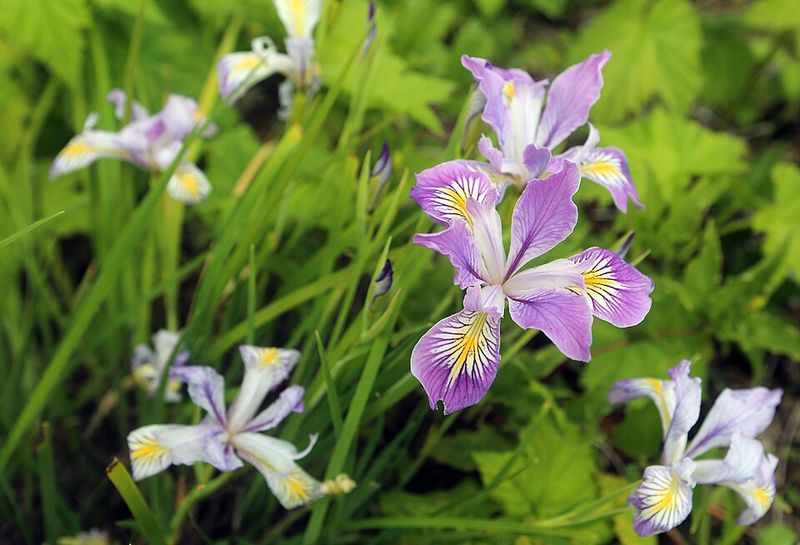
Known botanically as Iris tenax, this compact iris grows naturally in open meadows, grassy slopes, and woodland edges across western Oregon.
Its blooms range from pale lavender to deep violet, sometimes with white or yellow accents, and they typically appear in mid to late spring before summer heat fully arrives.
Planting Oregon Iris before the dry season gives roots time to anchor into well-drained soil without the stress of intense heat.
It handles drought well once established, which makes it a solid choice for sunny beds, dry slopes, and naturalistic plantings where irrigation is minimal.
The plant stays relatively low growing, reaching about one to two feet tall, and its grass-like foliage adds texture even after blooms fade.
Oregon gardeners who want to attract native bees and early pollinators will find this iris earns its spot quickly. It spreads gradually over time through offsets and self-seeding, slowly filling in bare patches without becoming aggressive.
Planting in groups of three or more creates a stronger visual impact and supports better pollinator visits. Well-drained soil and a sunny to partly shaded location are the main things to keep in mind when adding this native to an Oregon home garden.
2. Western Columbine Lights Up Shady Gardens
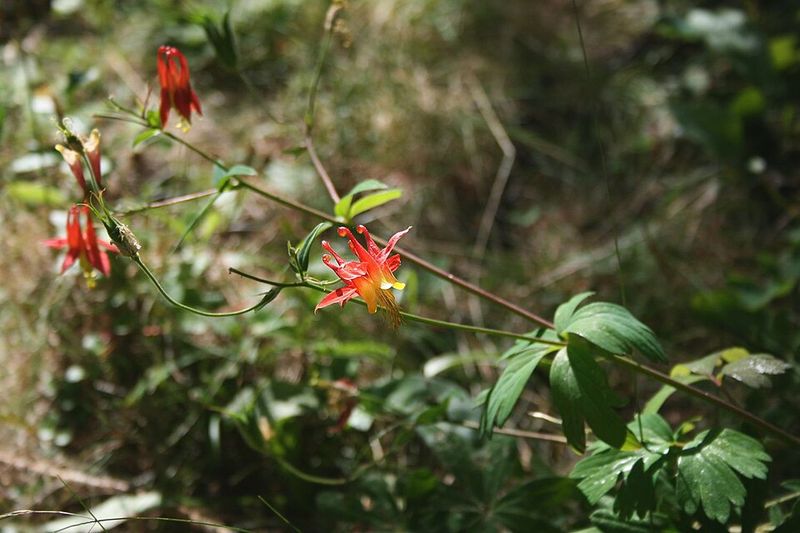
There is something almost magical about the way Western Columbine catches light in a shaded garden. Its nodding red and yellow flowers dangle from slender stems like little lanterns, drawing in hummingbirds almost immediately after blooming begins.
Aquilegia formosa is one of Oregon’s most beloved native wildflowers, appearing naturally in moist woodland openings, stream banks, and forest edges from the coast to the mountains.
Getting this perennial into the ground before summer arrives makes a real difference. Moist spring soil helps young plants develop their root systems without drying out, and the cooler temperatures reduce transplant stress.
Your Oregon Garden Changes Every Week. Your Plan Should Too.
Gardening in Oregon changes quickly throughout the season. Every Friday you’ll receive a simple weekly plan showing exactly what to plant, prune, fertilize, harvest, and protect so you never miss the right timing.
Western Columbine tends to prefer partial to full shade, though it can handle some morning sun in cooler, wetter parts of Oregon. It blooms from late spring into early summer and grows to about two to three feet tall.
Gardeners often appreciate how easily Western Columbine self-seeds, gradually spreading through a shaded bed or woodland border without needing much encouragement.
Leaving spent flower heads in place allows seeds to drop naturally and fill in gaps over time.
The ferny blue-green foliage stays attractive even when the plant is not in bloom, adding softness to borders and woodland plantings.
Pairing it with native ferns or bleeding heart creates a layered, naturalistic look that feels right at home in an Oregon shade garden.
Hummingbirds and native bumblebees are frequent visitors throughout the bloom period.
3. Camas Brings Classic Northwest Spring Color
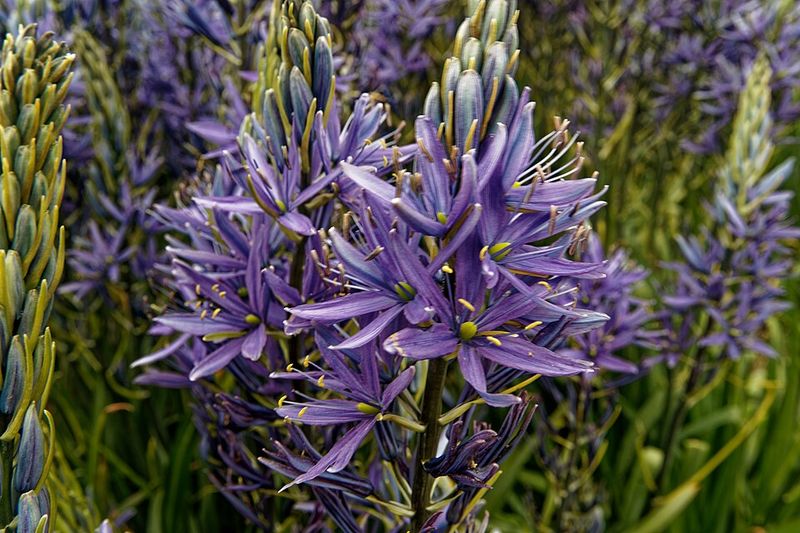
Walk through a moist Oregon meadow in late spring and you may come across sheets of blue-violet flowers that seem to turn the ground into a reflection of the sky.
That striking sight belongs to Camas, or Camassia quamash, a bulb-forming perennial with deep roots in Pacific Northwest ecology and Indigenous cultural history.
The flowers rise on tall spikes above strap-like leaves and bloom in a range of blue to violet tones that few native plants can match.
Camas grows naturally in wet meadows, valley floors, and seasonally moist areas throughout western Oregon.
In the garden, it thrives in spots that stay moist through spring but can dry out somewhat in summer, making it a good match for rain gardens, low spots, or areas near downspouts.
Planting in fall is traditional for bulbs, but container-grown plants set out in early spring can still establish well if watered consistently until summer dryness arrives.
The ecological value of Camas extends well beyond its good looks.
Native bees, butterflies, and other pollinators visit the flowers heavily during bloom, and the plant has long held cultural significance for Oregon’s Indigenous peoples, who harvested the nutritious bulbs as a food source.
Grouping Camas in clusters of five or more creates a bold visual statement in the spring garden. It naturalizes over time, slowly increasing in patches that grow more impressive each season without requiring much from the gardener.
4. Western Bleeding Heart Adds Woodland Charm
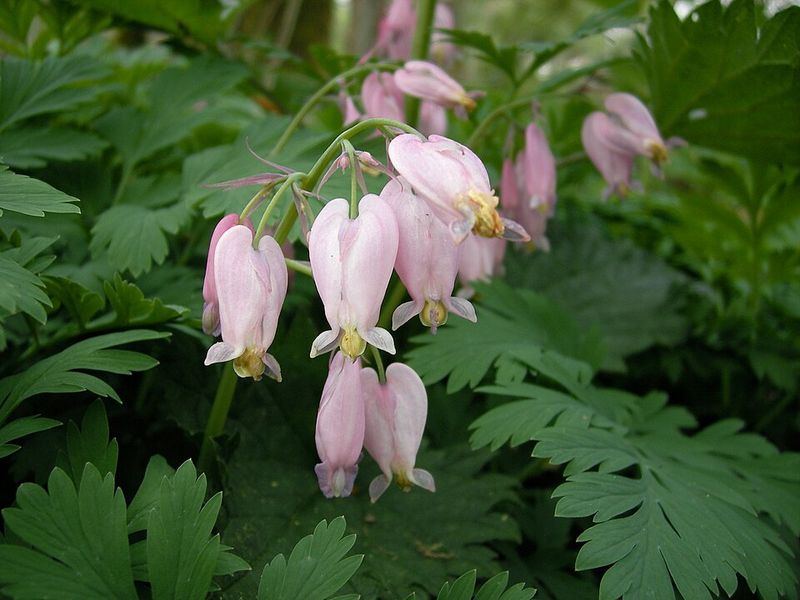
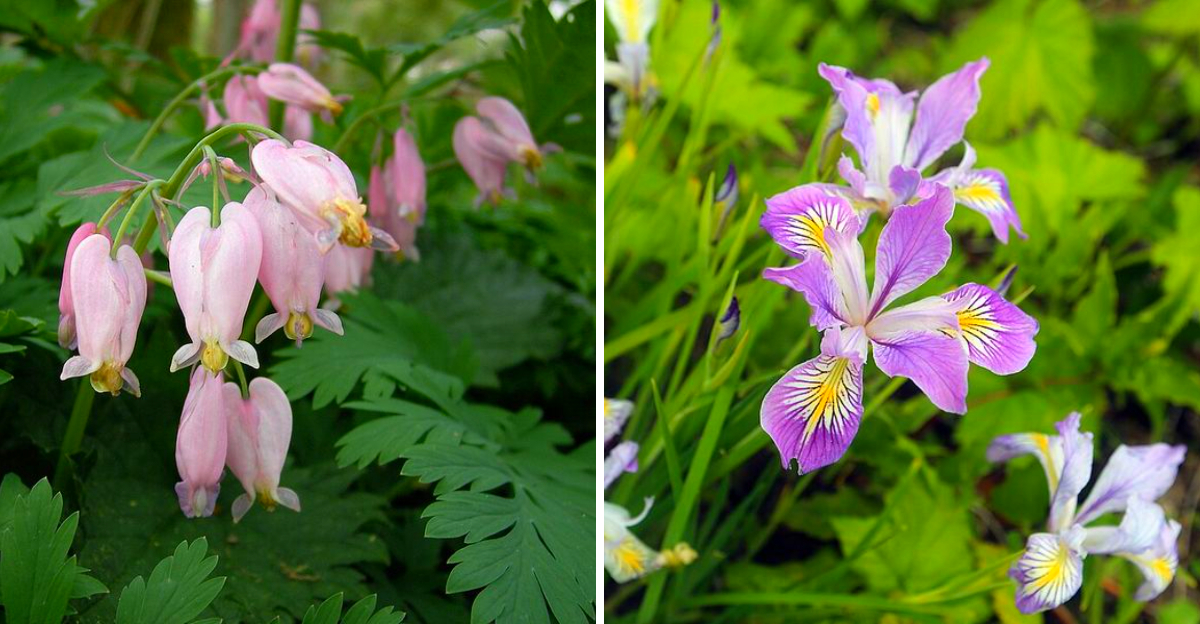
Soft, ferny foliage and clusters of rosy pink heart-shaped flowers make Western Bleeding Heart one of the most charming additions to any shaded Oregon garden.
Dicentra formosa grows naturally along stream banks, in moist forest understories, and beneath the canopy of Oregon’s coastal and mountain forests.
It brings a graceful, delicate look to woodland borders that feels effortless and entirely at home in the Pacific Northwest landscape.
Planting Western Bleeding Heart in spring, while the soil still holds moisture from Oregon’s rainy season, gives it the best possible start. It prefers moist, humus-rich soil and dappled to full shade, though it can tolerate brief periods of dryness once established.
In consistently moist spots, the ferny foliage may stay attractive well into summer. In drier conditions, the plant tends to go dormant by midsummer, which is a natural response rather than a cause for concern.
This perennial spreads gently by rhizomes, gradually filling in shaded areas with a soft carpet of blue-green leaves and spring blooms. It pairs beautifully with native ferns, trillium, and other woodland perennials in naturalistic plantings.
Hummingbirds occasionally visit the tubular flowers, and native bumblebees find them useful as well.
Oregon gardeners who want a low-effort, high-reward plant for a shaded corner will find Western Bleeding Heart delivers season after season with very little maintenance needed beyond keeping the soil reasonably moist during its active growing period.
5. Pacific Coast Iris Adds Evergreen Elegance
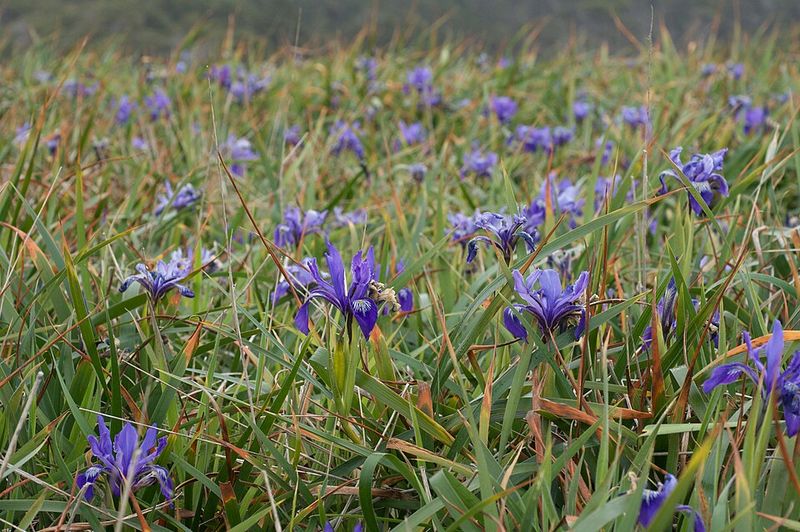
Among Oregon’s native iris species, Pacific Coast Iris hybrids stand out for their stunning flower patterns and their ability to stay green through the year.
These plants are crosses involving several native Oregon and California iris species, including Iris douglasiana and Iris innominata, and they produce flowers in an extraordinary range of colors, from creamy white and soft yellow to deep purple and burgundy with intricate veining.
Spring planting works especially well for Pacific Coast Iris because the mild, moist conditions allow roots to settle before summer arrives.
These irises prefer well-drained soil and can handle dry summers once established, which suits much of Oregon’s west side climate well.
They tend to do best in partial shade to full sun and actually struggle in overly wet, heavy clay soils, so good drainage is worth paying attention to before planting.
The evergreen foliage of Pacific Coast Iris adds structure to the garden even when the plants are not in bloom, which typically happens in mid to late spring. The narrow, arching leaves provide year-round texture in borders, dry slopes, and woodland edges.
Established clumps may be divided every few years to maintain vigor, though they are generally slow to establish after division and may need a season or two to bloom again.
Oregon gardeners who want a tough, beautiful, and ecologically connected iris for a dry to moderate garden bed will find Pacific Coast Iris a rewarding long-term choice.
6. Creeping Phlox Spreads Color Across Sunny Spaces
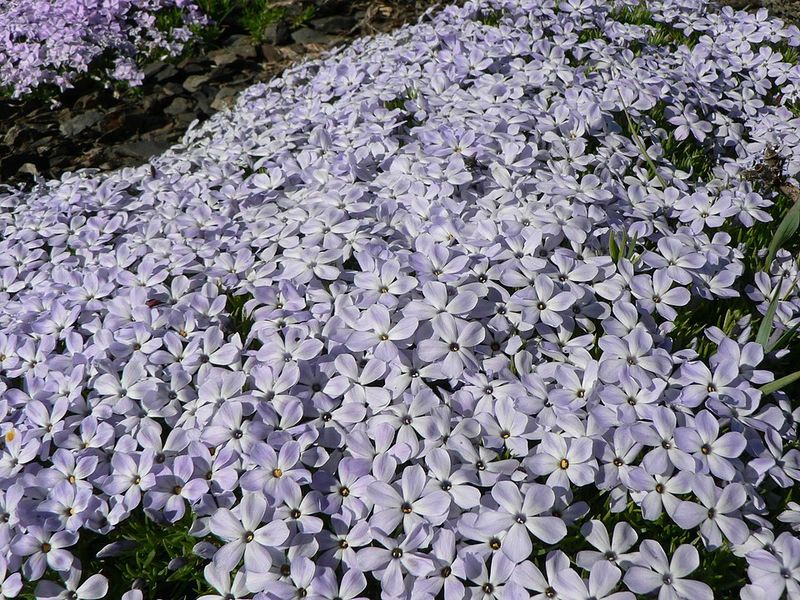
When spring arrives in Oregon and sunny slopes start to warm up, Creeping Phlox puts on one of the most reliable color shows in the native garden toolkit.
While several phlox species are sold in nurseries, Phlox diffusa is the native Oregon species, growing naturally on rocky slopes, open ridges, and dry mountain meadows across the state.
Its low, mat-forming habit makes it a natural groundcover for sunny, well-drained spots where other plants may struggle.
Getting Creeping Phlox established before summer heat is a smart move because young plants need consistent moisture to root in properly.
Once rooted, the plant handles dry conditions well and does not need much supplemental water through Oregon’s summer dry season.
It thrives in full sun and lean, rocky, or sandy soil, and it tends to perform poorly in heavy, wet conditions. Planting on a slope, along a rock wall, or in a raised bed gives it the drainage it needs to thrive long-term.
The bloom display in spring is genuinely impressive, with masses of small five-petaled flowers in shades of pink, lavender, or white nearly covering the foliage. Native bees and early butterflies visit the flowers enthusiastically.
After bloom, the needle-like foliage stays compact and green, giving the plant a tidy appearance through summer and fall.
Creeping Phlox is a low-maintenance groundcover that suppresses weeds, stabilizes slopes, and adds real seasonal beauty to Oregon’s sunnier garden spaces without demanding much in return.
7. Lupine Brings Bold Native Garden Color
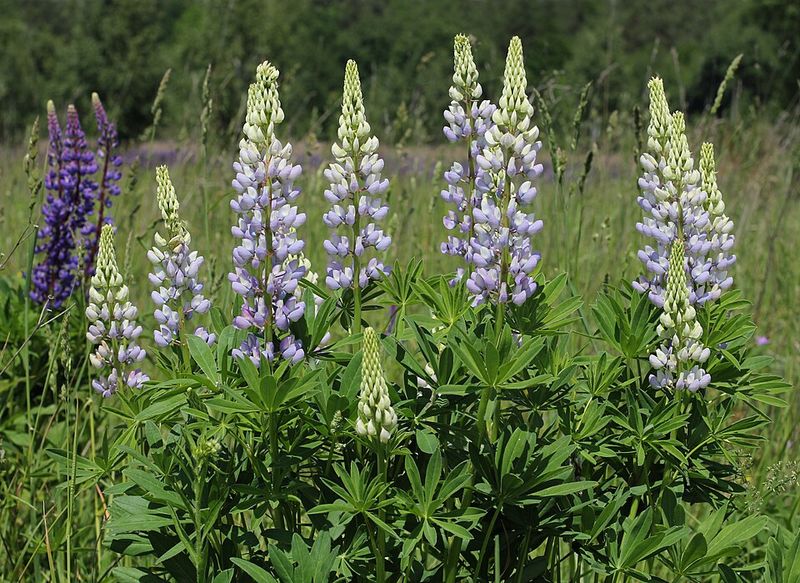
Bold and vertical, Lupine is the kind of plant that makes a statement the moment it blooms.
Oregon is home to several native lupine species, with Lupinus polyphyllus, the Large-leaved Lupine, being one of the most commonly grown in Pacific Northwest gardens.
Its tall spikes of blue to purple flowers rise dramatically above the attractive palmate foliage in late spring and early summer, creating a striking visual presence in meadow gardens, native plantings, and sunny borders.
Planting Lupine in spring while the soil still holds moisture helps young plants settle in before summer heat reduces available water. Lupine generally prefers full sun and well-drained to moderately moist soil.
It tends to grow naturally along stream banks, moist meadows, and open hillsides in Oregon, which gives a good sense of where it performs best in the garden. Avoid heavy, poorly drained clay soils, which can cause root problems over time.
One of Lupine’s most valuable garden traits is its ability to fix nitrogen from the air into the soil through a relationship with soil bacteria, which can gradually benefit neighboring plants.
Native bumblebees are strongly attracted to Lupine flowers and are among its most important pollinators.
The seeds also provide food for some native birds. Lupine can self-seed readily in open soil, so giving it room to spread or deadheading spent spikes helps manage its presence in the garden.
It is a rewarding, ecologically rich perennial for Oregon’s sunnier planting areas.
8. Oregon Sunshine Brightens Dry Beds
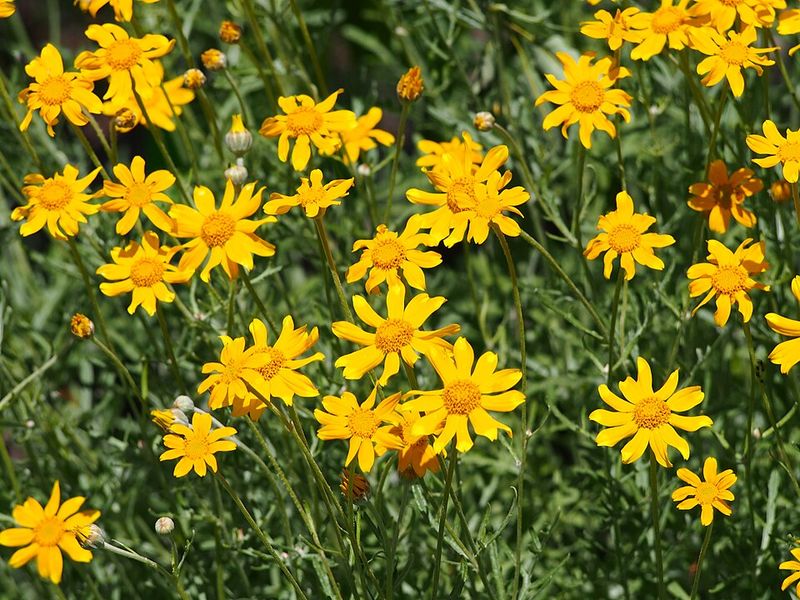
Cheerful golden flowers and silvery-woolly foliage make Oregon Sunshine one of the most visually distinctive native perennials available to Oregon gardeners.
Eriophyllum lanatum earns its common name honestly, producing clusters of bright yellow daisy-like blooms that seem to radiate warmth even on cooler spring days.
It grows naturally on dry, rocky slopes, open meadows, and well-drained hillsides throughout Oregon, from the coast ranges to the Cascades.
Getting Oregon Sunshine into the ground before summer arrives is wise because the plant needs time to root into dry, lean soil before temperatures climb.
It is remarkably drought-tolerant once established and actually thrives in conditions that would stress many garden plants, including poor, rocky, or sandy soils with excellent drainage.
Avoid rich, moist soils, which tend to cause this plant to grow floppy and reduce its long-term vigor. Full sun is a must for the best performance.
The silvery foliage is a standout feature even before bloom begins, reflecting light and adding texture to dry beds, rock gardens, and sunny native plantings.
Bloom typically runs from late spring through early summer, and deadheading spent flowers can encourage additional blooming.
Native bees and small butterflies are drawn to the flowers throughout the season.
Oregon Sunshine stays relatively compact, usually reaching about one foot tall and spreading two feet wide, making it a tidy and attractive front-of-border plant for gardeners working with sunny, dry conditions in Oregon’s drier garden zones.