Plant These 15 Blue Flowering Perennials For A Stunning Oregon Garden
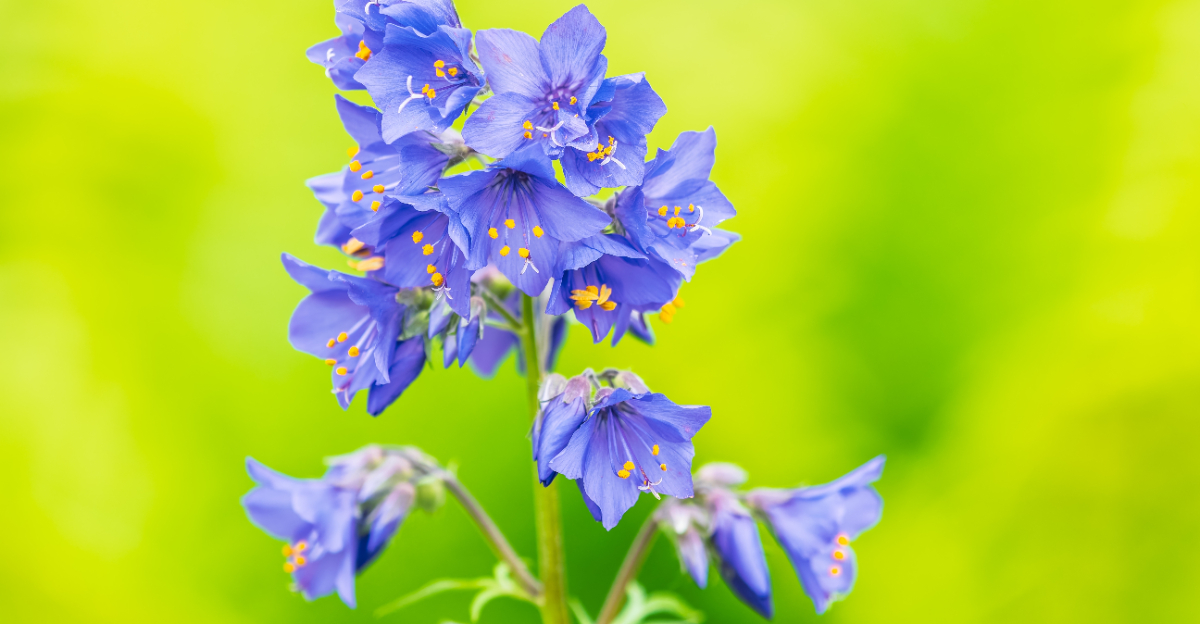
Blue is the rarest color in the plant kingdom. Did you know that? True blue flowers are genuinely hard to come by, which makes a garden full of them feel like something special. Something intentional.
The kind of planting scheme that stops people mid-walk and makes them do a double take at your yard because they can’t quite believe what they’re seeing. Oregon gardeners are in a surprisingly great position when it comes to growing blue flowering perennials.
The Pacific Northwest’s reliable moisture, rich soil, and mild temperatures suit a lot of these plants perfectly, and perennials mean you put in the work once and enjoy the payoff for years.
Stack enough of the right varieties together and you get this incredible, cool-toned garden that looks sophisticated without trying too hard.
Blue flowers also pair beautifully with basically everything, which makes designing around them way easier than you’d expect. Your garden is about to get a whole lot more interesting.
1. Blue Star
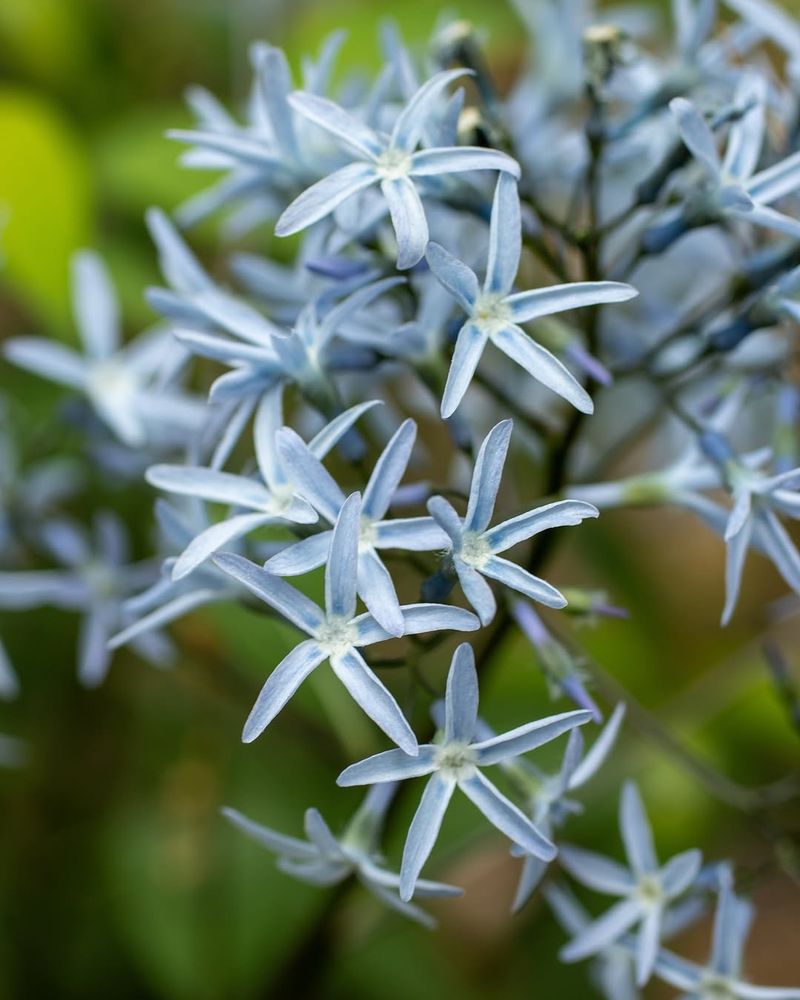
Few plants earn their name as honestly as Blue Star. Those tiny, five-petaled blooms look exactly like little stars scattered across arching stems.
Native to parts of North America, Blue Star has been winning over gardeners for generations, and it is easy to see why.
In Oregon, this perennial thrives beautifully in both sunny and partly shaded spots. It blooms in late spring, filling your garden with soft, sky-blue flowers that last for several weeks.
The foliage stays attractive all season long, and in fall, the leaves turn a brilliant golden yellow.
Blue Star grows about two to three feet tall and wide, making it a solid mid-border plant. It handles Oregon’s rainy winters without complaint and bounces back strong every spring.
Plant it alongside yellow or orange flowers for a stunning color contrast that really pops in the landscape.
One great thing about Blue Star is that deer tend to avoid it. That is a big bonus for Oregon gardeners in rural or suburban areas where deer are a common problem.
Water it regularly during its first season, and after that, it becomes quite drought-tolerant and nearly self-sufficient.
2. Siberian Iris
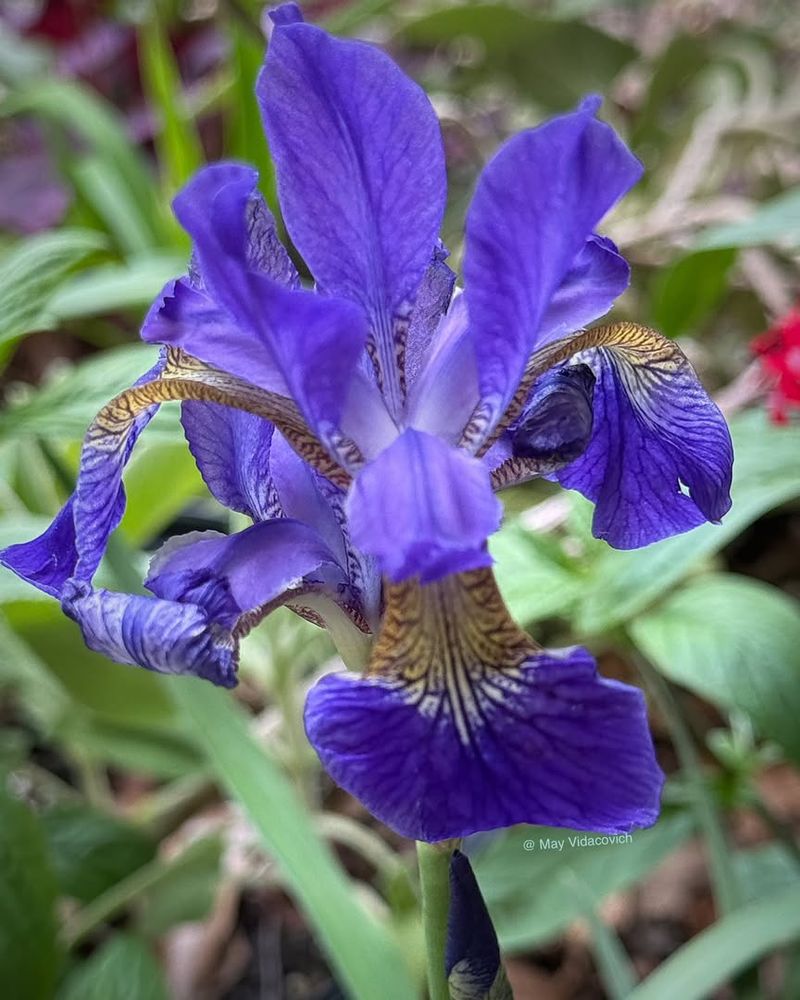
There is something almost magical about a Siberian Iris in full bloom. The flowers are delicate and ruffled, with rich shades of blue and violet that seem to glow in the morning light.
Unlike bearded irises, the Siberian variety is sleek, upright, and incredibly graceful.
Oregon’s climate suits Siberian Iris very well. It loves moisture and can even handle boggy soil near ponds or rain gardens, which makes it a smart choice for the wet western side of the state.
Plant it in full sun to partial shade for the best flowering results.
These plants grow in clumps that get bigger and more beautiful each year. They bloom in late spring to early summer, producing several flowers per stem.
After blooming, the tall, grass-like foliage stays attractive and adds a vertical element to garden borders all the way through fall.
Your Oregon Garden Changes Every Week. Your Plan Should Too.
Gardening in Oregon changes quickly throughout the season. Every Friday you’ll receive a simple weekly plan showing exactly what to plant, prune, fertilize, harvest, and protect so you never miss the right timing.
Dividing your Siberian Iris every four to five years keeps them blooming vigorously. It is a simple task that also gives you extra plants to spread around the yard or share with neighbors.
Few perennials offer this combination of elegance, toughness, and easy care that gardeners in Oregon have come to appreciate.
3. Delphinium
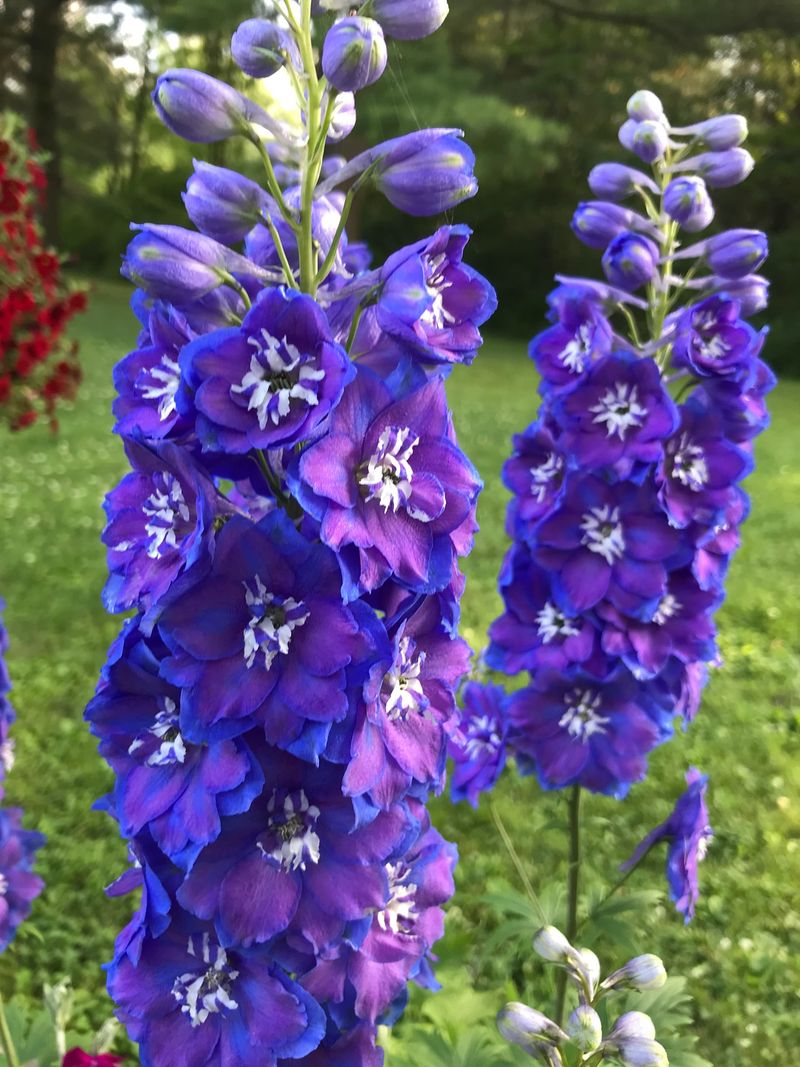
Nothing in the garden commands attention quite like a Delphinium in full bloom. Those tall, dramatic spikes loaded with deep blue flowers can reach five to six feet high, turning any garden bed into a showstopper.
Cottage gardens across the Pacific Northwest are famous for their delphiniums, and Oregon is no exception.
The cool, moist summers in western Oregon are nearly perfect for growing these beauties. They prefer full sun and rich, well-drained soil.
Give them a spot protected from strong winds, because those tall flower spikes can topple over if conditions get rough. Staking them is a simple fix that pays off big.
Delphiniums bloom in early to midsummer, and if you cut the spent flower spikes back after blooming, you can often encourage a second flush of flowers in late summer. That double bloom season makes them especially valuable in the Oregon garden.
Did you know that delphiniums have been cultivated for hundreds of years and were prized by Victorian gardeners? Their rich history adds an extra layer of charm.
Water them consistently and fertilize in spring for the tallest, most colorful spikes. These are truly one of the most dramatic blue perennials you can grow in Oregon.
4. Salvia
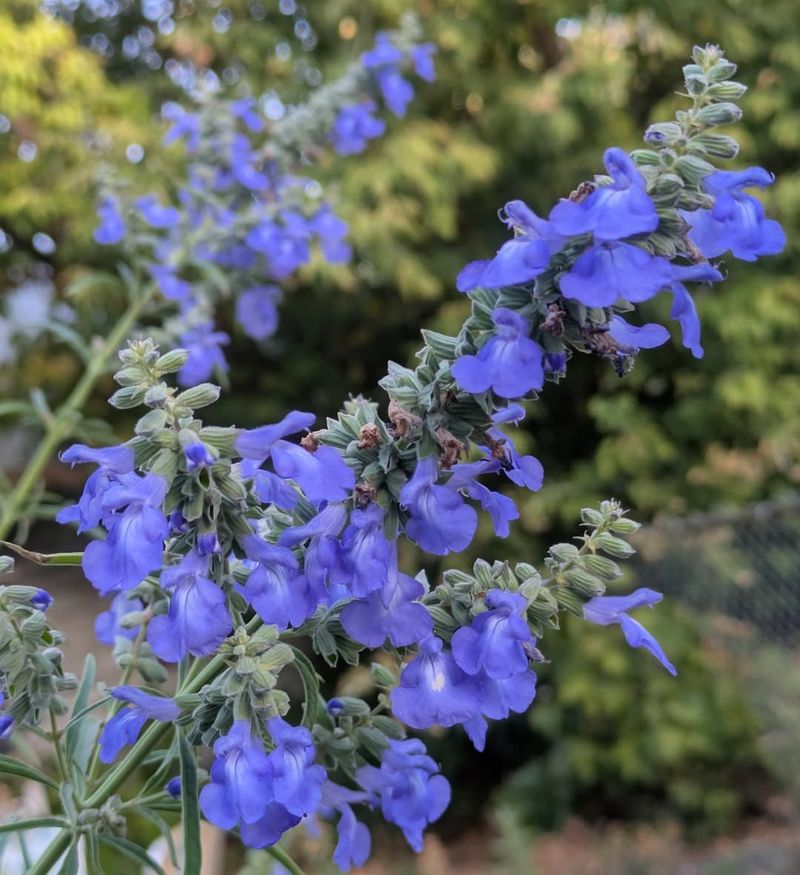
Walk past a blooming Salvia on a warm Oregon afternoon and you will almost certainly hear the hum of bumblebees. This plant is a pollinator magnet, and the long, slender spikes of blue-purple flowers are as beautiful as they are useful for the local ecosystem.
Salvia is one of the hardest-working plants in any garden.
Perennial salvias are incredibly adaptable across Oregon. They handle dry summers in eastern Oregon just as well as the wetter conditions west of the Cascades.
Plant them in full sun and well-drained soil for the best performance. Once established, they are surprisingly drought-tolerant and low-maintenance.
Most perennial salvias bloom from late spring through fall, especially if you trim them back after the first flush of flowers. That long season of color is one of the biggest reasons Oregon gardeners love them so much.
They pair beautifully with ornamental grasses, coneflowers, and yellow rudbeckias.
Salvia comes in many varieties, from the compact ‘May Night’ to the taller ‘Blue Hill.’ Each one offers slightly different shades of blue and violet. They are also deer-resistant and rabbit-resistant, which is a welcome bonus.
If you only have room for a handful of perennials in your Oregon garden, Salvia absolutely deserves a spot on your list.
5. Catmint
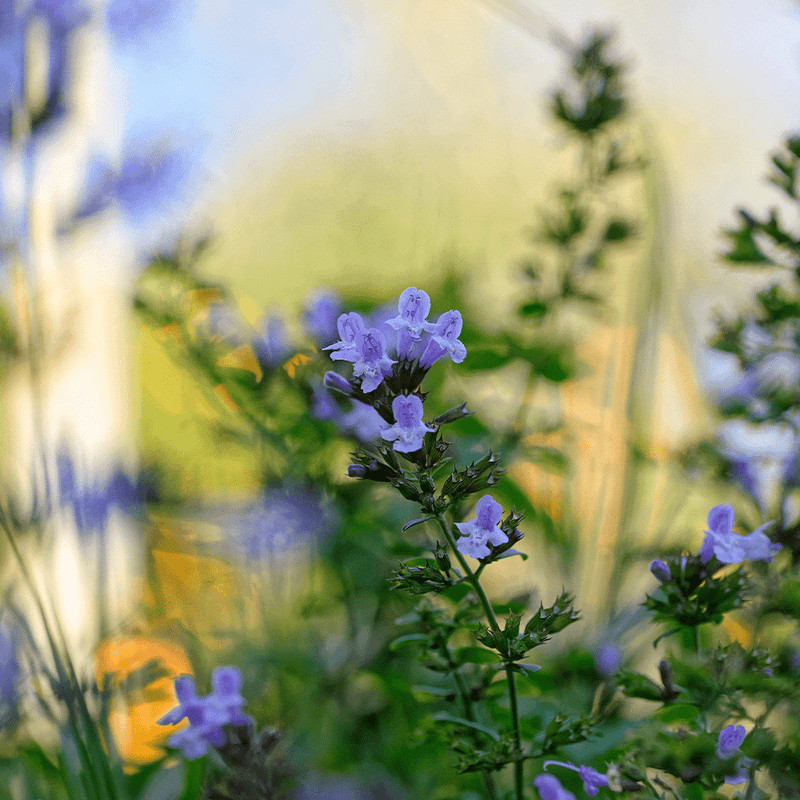
Catmint is one of those plants that makes every garden look effortlessly beautiful. Its soft, lavender-blue flowers billow out in loose, airy clouds above silvery-green foliage.
It has an almost dreamy, cottage-garden quality that works just as well in modern landscapes as it does in traditional ones.
Across Oregon, catmint performs like a champion. It thrives in full sun and tolerates dry conditions once established, which makes it a great fit for both western and eastern parts of the state.
It is also remarkably cold-hardy, bouncing back reliably after Oregon’s occasionally frosty winters.
This perennial blooms heavily in late spring and early summer. If you shear it back by about half after the first bloom, it will rebound quickly and flower again in late summer.
That second round of blooms is one of the best tricks in the Oregon gardener’s playbook.
Catmint grows about one to three feet tall depending on the variety, making it ideal for edging paths, borders, or draping over retaining walls. ‘Walker’s Low’ is a fan favorite for its compact size and generous blooms. Cats are famously attracted to this plant, so watch out for curious feline visitors rolling around in your garden beds!
6. Blue Flax
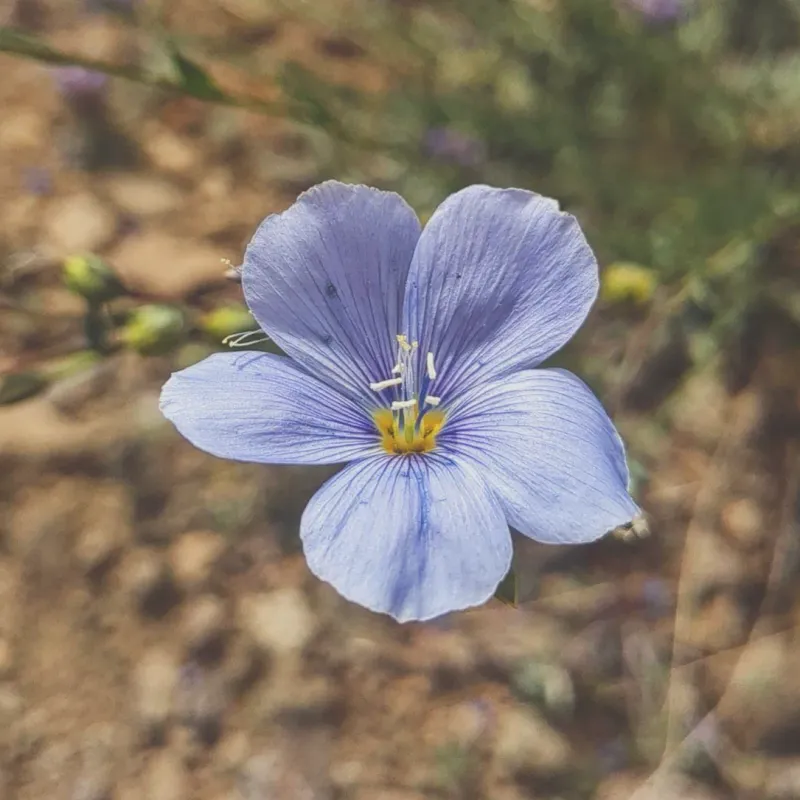
There is a lightness to Blue Flax that feels almost poetic. The tiny, round, sky-blue flowers perch on slender, wiry stems and flutter in the breeze like little blue butterflies.
Each flower only lasts a day, but new ones open every morning throughout a long blooming season, keeping the show going for weeks.
Native to western North America, Blue Flax feels completely at home in Oregon gardens. It thrives in sunny, dry spots and well-drained soil, making it an excellent choice for rock gardens, slopes, or any area where other plants struggle.
It handles Oregon’s dry summers on the east side of the Cascades with ease.
Blue Flax self-seeds freely, which means it will naturally spread and fill in gaps in your garden over time. Some gardeners love this quality, while others prefer to deadhead the spent flowers to keep it more contained.
Either approach works well depending on your garden style.
Growing about two feet tall, Blue Flax looks lovely when planted in drifts or masses. The blue-green, needle-like foliage is attractive even when the plant is not in bloom.
It is one of those honest, unpretentious plants that just does its job quietly and beautifully every single year in Oregon landscapes.
7. Balloon Flower
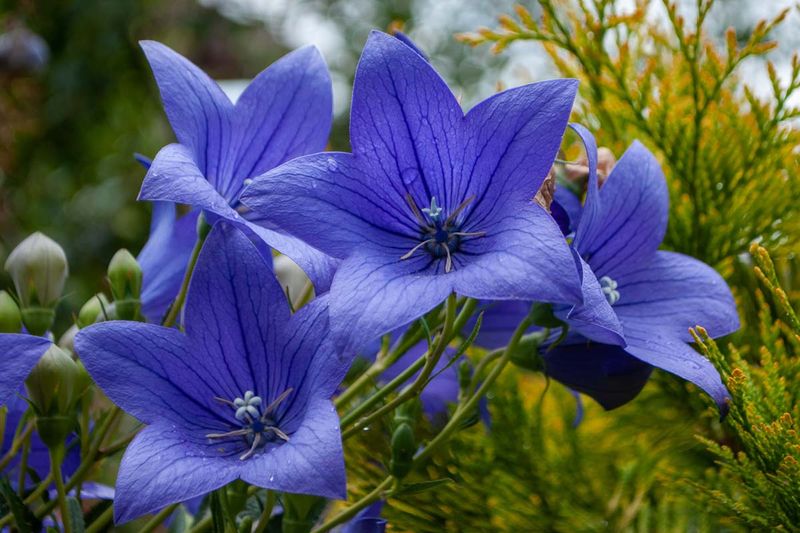
Before Balloon Flower opens, its buds puff up into perfect little round balloons, and watching them pop open into five-pointed stars is one of the most satisfying things in the summer garden. Kids especially love this quirky feature, making Balloon Flower a fun and family-friendly plant to grow in any Oregon yard.
Botanically known as Platycodon, Balloon Flower is a tough and long-lived perennial. It adapts well to Oregon’s varied climate zones, growing happily in both the rainy west and the drier east.
Plant it in full sun to partial shade in well-drained soil for the strongest, most floriferous plants.
Blooming from midsummer into fall, Balloon Flower fills the gap when many spring bloomers have finished their show. The flowers come in shades of deep blue, violet, pink, and white, but the blue varieties are especially striking.
Plants grow about one to two feet tall, making them ideal for the middle or front of a border.
One thing to keep in mind is that Balloon Flower is slow to emerge in spring. Mark its location so you do not accidentally dig it up thinking nothing is there.
Once it gets going, though, it blooms reliably for many years with very little fuss, rewarding patient Oregon gardeners season after season.
8. Lungwort
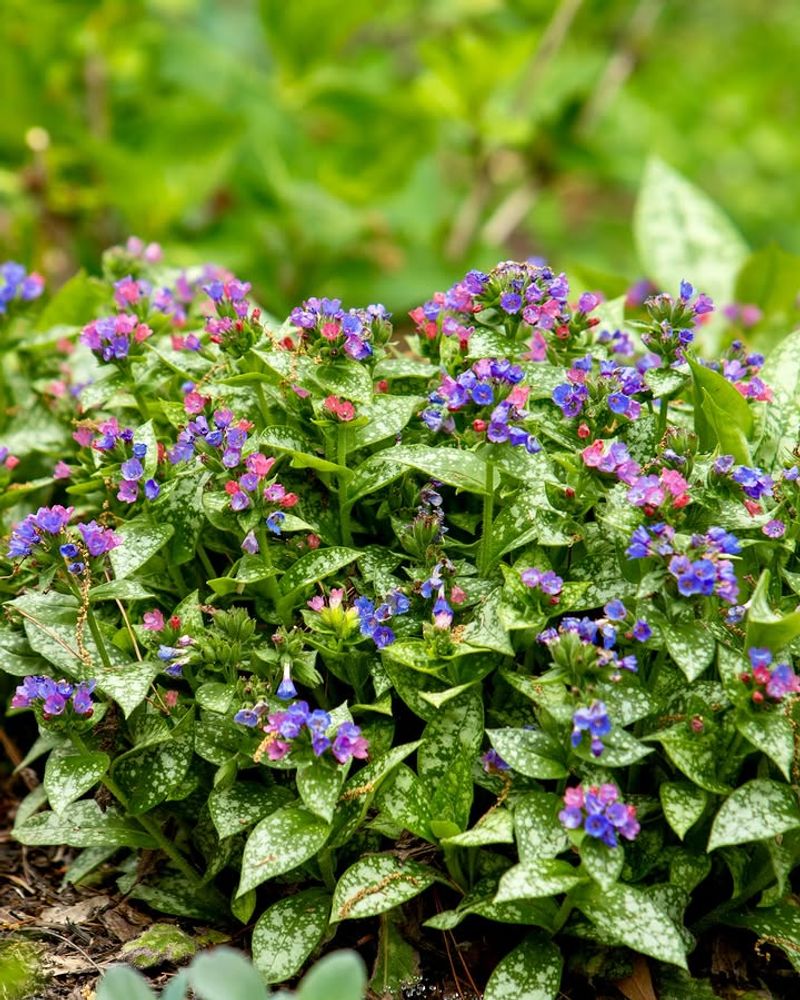
Shady corners of the garden can be tough to fill with color, but Lungwort handles them beautifully. This low-growing perennial thrives in deep shade and rewards you with clusters of small, tubular flowers in shades of blue, purple, and pink, often all at the same time on the same plant.
It is one of the earliest bloomers of the Oregon spring.
Beyond the flowers, Lungwort’s foliage is genuinely stunning. The large, heart-shaped leaves are spotted or splashed with silver, and they look attractive from spring all the way through fall.
In fact, many gardeners grow Lungwort primarily as a foliage plant, treating the flowers as a bonus.
Oregon’s shaded woodland gardens under Douglas firs and big-leaf maples are tailor-made for Lungwort. It loves moisture and humus-rich soil, conditions that are easy to find in many parts of western Oregon.
Pair it with hostas, ferns, and bleeding heart for a lush, layered shade garden look.
Lungwort spreads slowly by rhizomes and can be divided every few years to create new plants. Varieties like ‘Trevi Fountain’ and ‘Sissinghurst White’ are especially popular with Oregon gardeners.
Few plants do as much work in a shady spot with so little effort, making Lungwort a true unsung hero of the perennial garden.
9. Brunnera
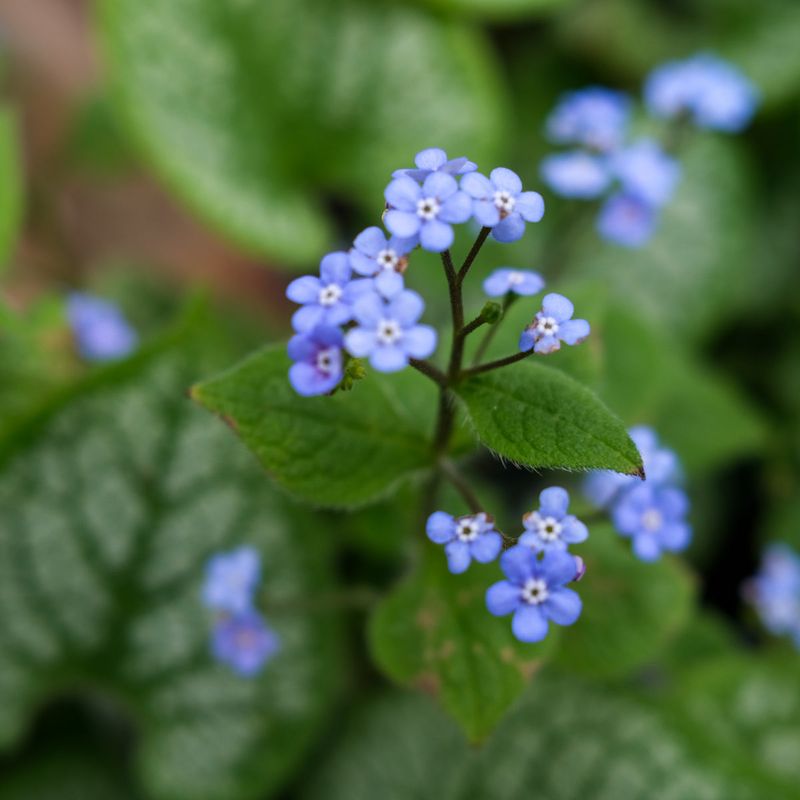
Sometimes called Siberian Bugloss, Brunnera is one of those plants that looks like it belongs in a fairy tale. In early spring, it covers itself with sprays of tiny, brilliant blue flowers that look exactly like forget-me-nots.
Beneath those delicate blooms, the large heart-shaped leaves are nothing short of spectacular.
The most popular varieties, like ‘Jack Frost’ and ‘Looking Glass,’ have leaves that are almost entirely silver with just a thin green outline. They shimmer in the dappled light of an Oregon woodland garden and brighten up dark corners in a way few other plants can match.
Brunnera is perfectly suited to the cool, moist conditions found throughout much of western Oregon. It prefers partial to full shade and consistently moist, humus-rich soil.
In shadier spots, it can tolerate more sun, but in the bright Oregon summers, it definitely appreciates protection from the afternoon heat.
This perennial is also deer-resistant, which is a significant advantage for gardeners in many parts of Oregon where deer pressure is high. It grows about twelve to eighteen inches tall and wide, making it ideal for groundcover use under trees or in shaded borders.
Once planted, Brunnera asks for very little and gives back so much beauty every single year.
10. Jacob’s Ladder
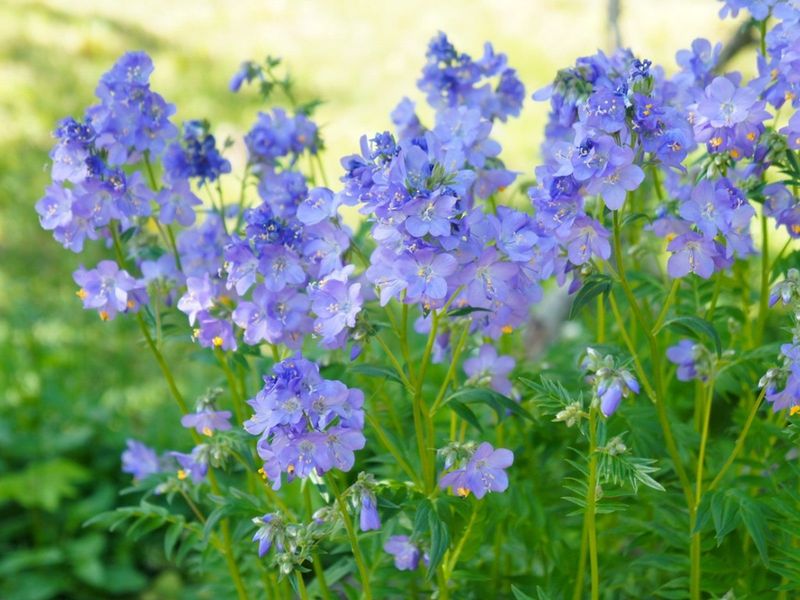
The name Jacob’s Ladder comes from the plant’s distinctive leaves, which are arranged in pairs along the stem like the rungs of a ladder. It is a charming detail that makes this perennial easy to identify and even easier to love.
The flowers themselves are equally appealing, forming loose clusters of bell-shaped blooms in shades of soft to deep blue.
Native to woodland areas of North America, Jacob’s Ladder feels right at home in Oregon’s shaded gardens. It thrives under the canopy of trees where many other flowering plants struggle.
Give it moist, well-drained, humus-rich soil and partial shade, and it will reward you with weeks of beautiful blooms in late spring.
This perennial grows about one to two feet tall and has a naturally tidy, well-behaved habit. It rarely needs staking or much intervention.
After blooming, the foliage remains attractive throughout the summer, and the plant self-seeds modestly to create small colonies over time.
Jacob’s Ladder pairs wonderfully with Brunnera, hostas, and astilbes in a shaded border. The combination of textures and blues creates a cool, restful palette that feels perfectly suited to Oregon’s lush, green landscape.
Varieties like ‘Stairway to Heaven’ add extra flair with colorful variegated foliage that makes the plant stand out even when not in bloom.
11. Monkshood
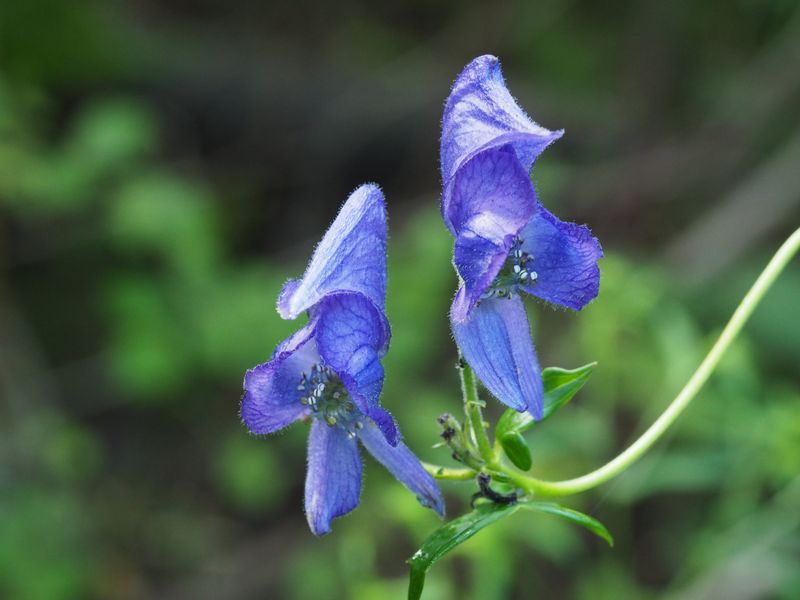
With its tall, elegant spikes of deep blue-purple, hooded flowers, Monkshood looks like something out of a medieval apothecary garden. It blooms in late summer and fall, a time when most blue perennials have already finished, making it an invaluable source of late-season color in Oregon gardens.
The flowers have a mysterious, old-world quality that is hard to replicate with any other plant.
Monkshood, or Aconitum, thrives in the cool, moist conditions that western Oregon provides so naturally. It grows best in partial shade with consistently moist soil.
Along stream banks, in woodland gardens, or in the shadier parts of a mixed border, it finds its ideal home.
Growing three to five feet tall, Monkshood adds impressive vertical structure to the late-season garden. It pairs beautifully with ornamental grasses, asters, and Japanese anemones for a rich, textured fall display.
The deep blue flowers look stunning against golden or burgundy foliage as Oregon’s autumn colors begin to emerge.
Keep in mind that all parts of this plant are toxic if ingested, so plant it in areas away from young children and pets. Always wear gloves when handling it.
With that simple precaution in place, Monkshood is an extraordinary, long-lived perennial that brings dramatic beauty to Oregon gardens every fall.
12. Cranesbill Geranium
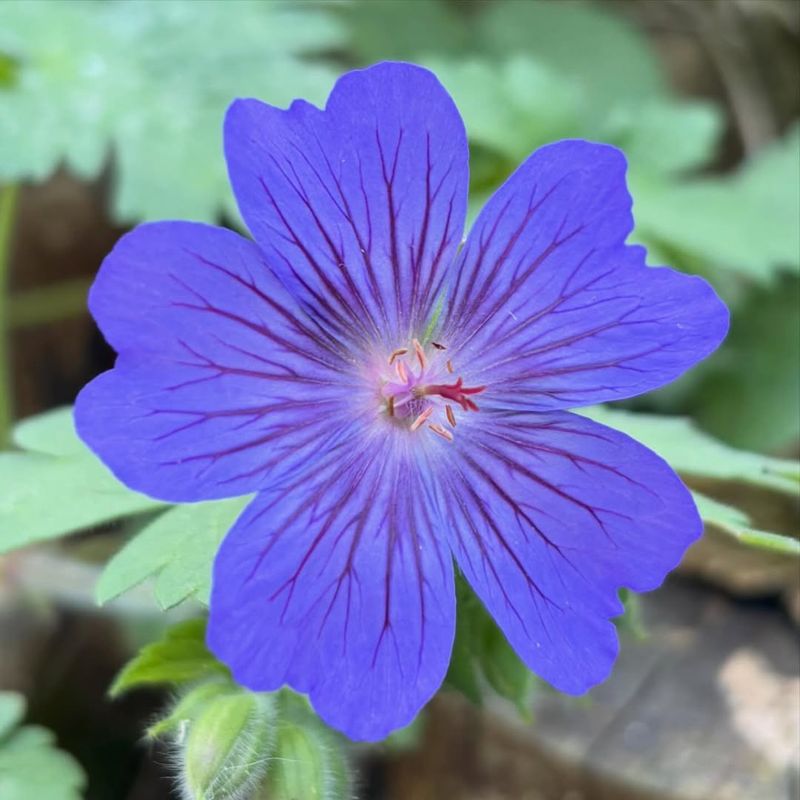
Hardy Cranesbill Geraniums are about as easygoing as perennials get. Unlike their tender, pot-grown cousins, these tough little plants come back reliably year after year, spreading into attractive, weed-suppressing mounds of deeply lobed, aromatic foliage.
When they bloom, the saucer-shaped flowers in shades of blue, violet, and lavender are simply charming.
Oregon’s climate suits Cranesbill Geraniums very well. They are adaptable plants that grow in sun or partial shade and tolerate a wide range of soil conditions.
From the rainy Willamette Valley to the rockier soils of southern Oregon, these geraniums find a way to thrive wherever they are planted.
Most varieties bloom in late spring and early summer. Cutting them back hard after the first flush of flowers often triggers a second bloom later in the season. ‘Rozanne’ is one of the most popular varieties, offering violet-blue flowers with white centers from late spring all the way through fall, one of the longest bloom seasons of any hardy geranium.
Cranesbill Geraniums work beautifully as edging plants, groundcovers, or fillers between larger perennials and shrubs. They knit together quickly and create a seamless, naturalistic look.
Deer tend to avoid them, and they require almost no maintenance once established, making them a true workhorse for busy Oregon gardeners who want maximum beauty with minimum effort.
13. Agapanthus
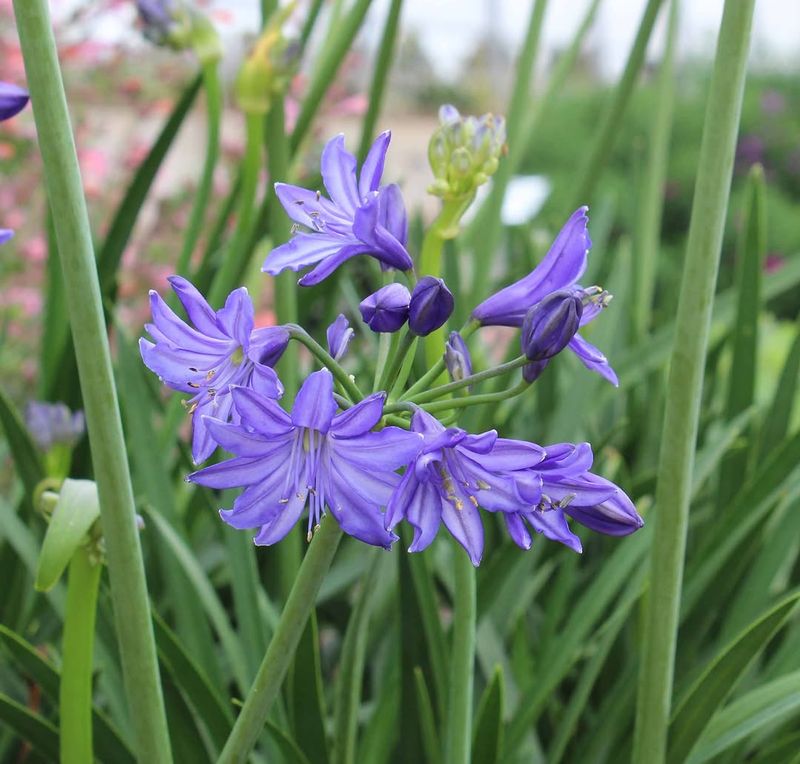
Agapanthus brings a touch of the exotic to Oregon gardens. Also called Lily of the Nile, this striking perennial produces large, rounded clusters of tubular blue flowers on tall, sturdy stems that rise well above the strap-like foliage.
When it blooms in midsummer, it looks like something straight out of a Mediterranean courtyard.
In Oregon, Agapanthus grows best in the warmer parts of the state, particularly in the Willamette Valley and southern Oregon. It loves full sun and well-drained soil.
In colder inland areas, planting it near a south-facing wall provides extra warmth and protection during frosty winters.
Evergreen varieties are less cold-hardy and may need winter protection or container growing in colder Oregon locations. Deciduous varieties, like the popular ‘Headbourne Hybrids,’ are hardier and better suited to areas that experience harder freezes.
Either way, the payoff in summer is absolutely worth the extra attention.
Agapanthus makes a bold statement at the back of a border or as a focal point in a mixed planting. The tall flower stems can reach three feet or more, and the flowers last for several weeks.
After blooming, the attractive seed heads add structural interest well into fall. Few perennials deliver this level of drama and sophistication in the Oregon summer garden.
14. Blue-Eyed Grass
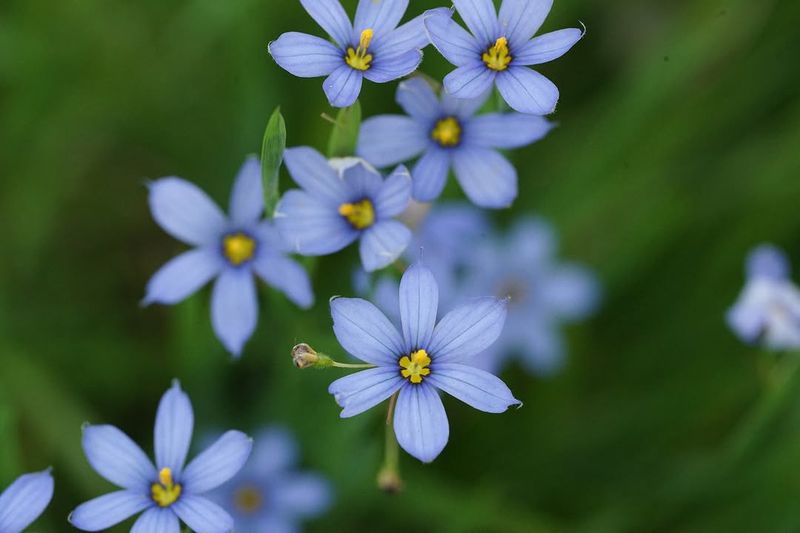
Do not let the name fool you. Blue-Eyed Grass is not actually a grass at all.
It is a member of the iris family, and when you look closely at the small, star-shaped flowers with their bright yellow centers, the family resemblance is clear. It is one of those wonderful little plants that surprises you the more you get to know it.
Native to North American meadows and prairies, Blue-Eyed Grass is naturally at home in Oregon’s varied landscapes. It grows well in both moist and moderately dry conditions, making it adaptable to different garden settings across the state.
Full sun is preferred, but it tolerates light shade without much fuss.
Growing only about six to twelve inches tall, Blue-Eyed Grass is perfect for the front of a border, rock gardens, or naturalized meadow plantings. It blooms in late spring and early summer, producing a cheerful display of small blue flowers over slender, upright foliage.
It self-seeds gently, gradually spreading to form lovely, natural-looking colonies.
Pairing Blue-Eyed Grass with low-growing sedums, creeping thyme, or other small perennials creates a beautiful tapestry effect at ground level. Oregon native plant gardens especially benefit from including this charming little plant.
It is also a great choice for rain gardens and bioswales, where its tolerance for occasional wet feet is a real advantage.
15. Virginia Bluebells
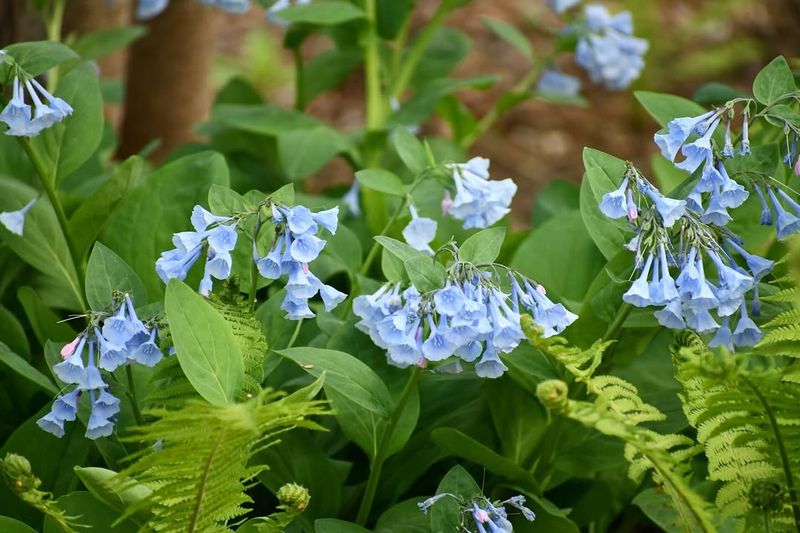
Every spring in Oregon, before most perennials have even woken up, Virginia Bluebells put on one of the most breathtaking shows in the garden. Clusters of nodding, trumpet-shaped flowers in the softest, clearest sky blue imaginable hang from arching stems above smooth, blue-green foliage.
It is the kind of display that stops you in your tracks.
Virginia Bluebells are a classic spring ephemeral, meaning they bloom in spring and then go completely dormant by summer. That might sound like a drawback, but it is actually a wonderful quality.
You can plant summer perennials like hostas or ferns in the same spot to fill the gap after the bluebells fade.
In Oregon, they grow best in partial to full shade with consistently moist, rich soil. Woodland gardens, stream banks, and shaded borders under deciduous trees are ideal locations.
They naturalize beautifully over time, spreading by both seeds and rhizomes to create large, sweeping drifts of blue in the spring landscape.
Few sights in the Oregon spring garden are as purely joyful as a large drift of Virginia Bluebells in full bloom. Planting them alongside daffodils, trilliums, and bleeding hearts creates a spring garden that feels wild, lush, and deeply connected to the natural beauty of the Pacific Northwest.
Once established, they come back stronger and more beautiful with every passing year.