The Small Evergreen Trees Every Washington Yard Needs
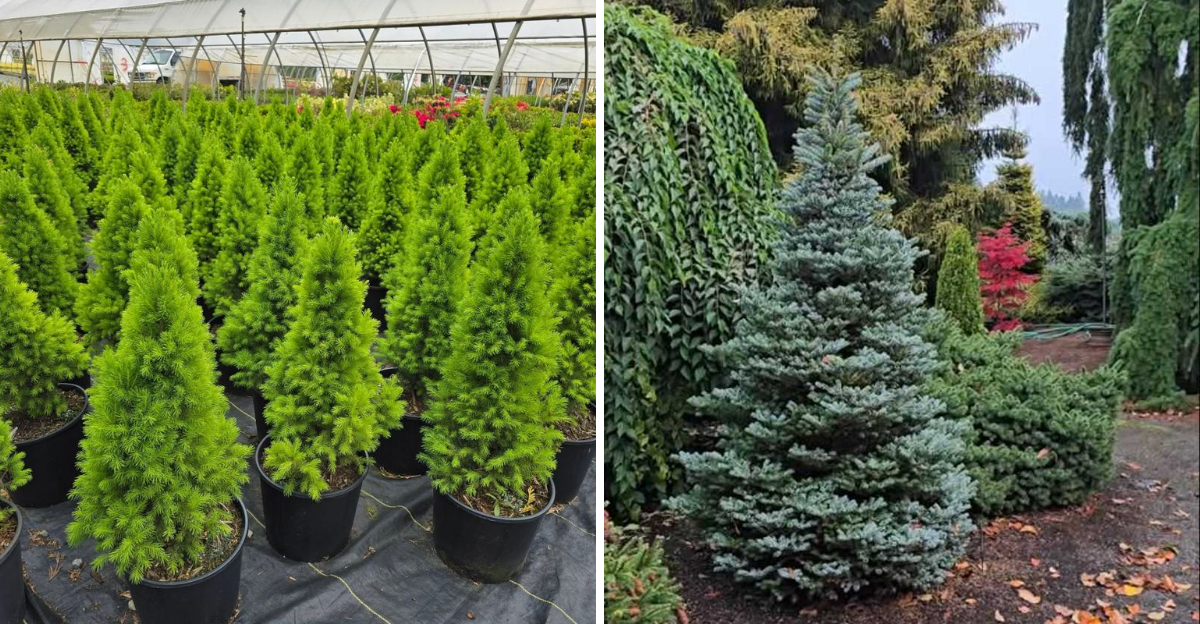
Washington gardens have a secret advantage.
Small evergreen trees bring year-round beauty without hogging all the space.
Evergreen gardens have a way of feeling alive even in the quietest seasons, and in Washington’s cool misty climate they truly come into their own.
Small evergreen trees are the secret stars here, bringing structure, color, and personality without ever overwhelming the space.
They stand like little guardians of the garden, steady and stylish through rain, fog, and the occasional burst of sunshine.
From compact conifers to glossy-leafed beauties, these trees know how to make a statement while keeping things effortlessly manageable.
They fit neatly into cozy urban yards, woodland-inspired spaces, and everything in between, offering year-round charm without demanding constant attention.
Think of them as the garden’s dependable yet fashionable companions, always dressed in green and always ready to impress.
1. Dwarf Alberta Spruce
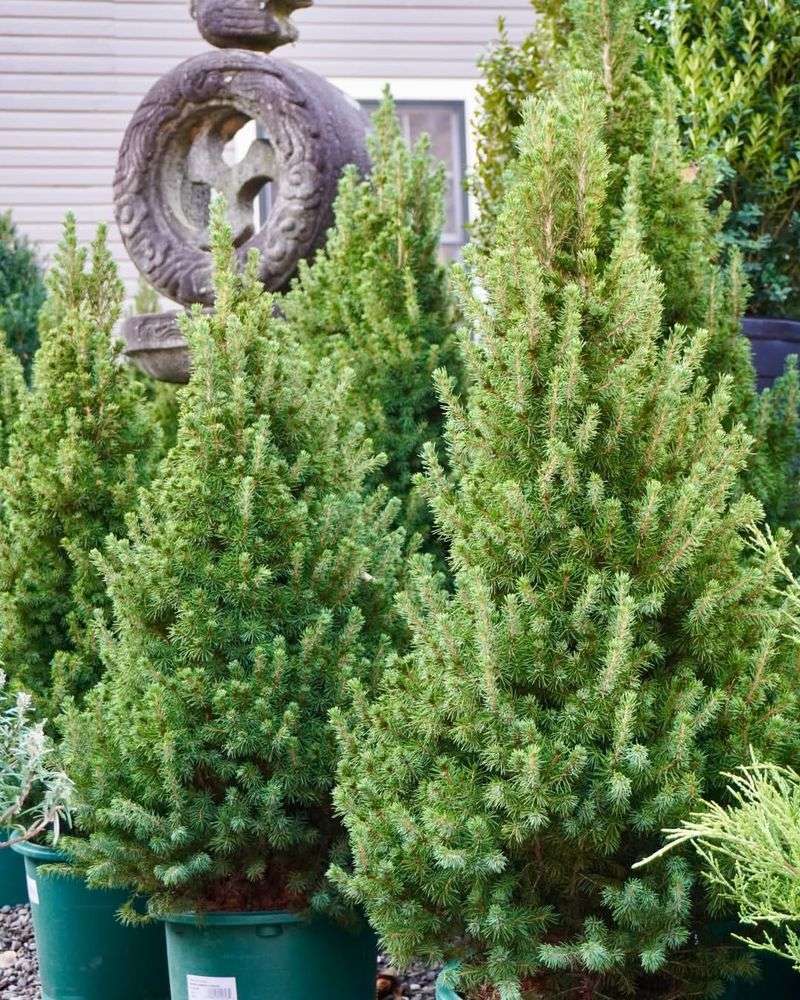
Picture a perfectly miniature Christmas tree that stays compact forever.
That’s the Dwarf Alberta Spruce in a nutshell.
This cone-shaped cutie maxes out around six to eight feet tall, making it absolutely perfect for tight corners or flanking your front door without swallowing the entire entryway.
My neighbor planted two of these by her mailbox three years ago.
They still look like perfectly trimmed shrubs even though she’s never touched them with shears.
The dense, bright green needles grow so tightly packed that the tree practically maintains its own shape, which is fantastic news if you’re not into constant pruning.
Dwarf Alberta spruce can sometime struggle in wet, mild Washington areas if drainage is poor.
With proper drainage and good air circulation, it can thrive, but wet lowland gardens often present challenges for healthy growth.
Plant it in full sun for the best growth, though it’ll handle a bit of afternoon shade if your yard leans toward the shady side.
The slow growth rate is actually a bonus here.
You won’t wake up one morning to find it’s blocking your windows or scratching against the siding.
It grows maybe three inches per year, so you can plan your landscape knowing exactly what you’re getting into.
One quick tip: give it decent drainage.
These spruces hate soggy feet, so avoid planting in low spots where water pools after heavy rain.
A slightly raised bed with good soil does wonders.
2. Mugo Pine
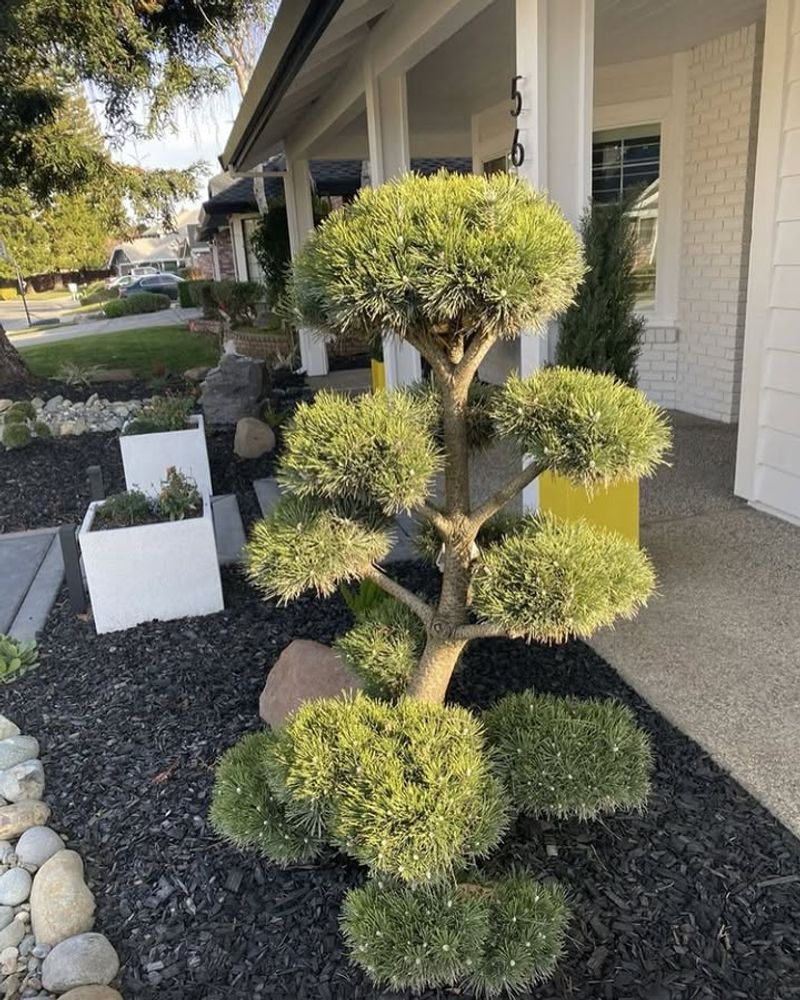
Rugged doesn’t even begin to cover it.
Mugo Pine laughs at whatever Washington weather throws its way, from January downpours to August heat waves.
This low-growing evergreen spreads wider than it grows tall, creating a lush green mound that looks intentional without requiring any effort.
Most varieties stay under four feet tall but can spread six feet wide, perfect for filling empty spaces or softening harsh landscape edges.
The needles come in darker green shades that add serious depth to your garden palette, especially when planted near lighter-colored flowers or golden foliage plants.
Here’s what sold me on this tree: zero fuss maintenance.
It doesn’t need pruning, doesn’t attract pests, and honestly doesn’t care if you forget to water it occasionally. The thick, twisted branches give it character that develops more personality as the tree ages, kind of like a wise old garden gnome but, you know, an actual tree.
Your Illinois Garden Changes Every Week. Your Plan Should Too.
Gardening in Illinois changes quickly throughout the season. Every Friday you’ll receive a simple weekly plan showing exactly what to plant, prune, fertilize, harvest, and protect so you never miss the right timing.
Rock gardens and slopes are where Mugo Pine truly shines.
The spreading root system holds soil beautifully, making it excellent for erosion control on those tricky hillside spots.
Plus, it pairs wonderfully with boulders and gravel pathways, adding softness to hardscape features.
Plant it where you want year-round structure without the drama.
Full sun keeps it happiest, though it tolerates partial shade better than most pines.
Just give it room to spread, and it’ll reward you with decades of reliable evergreen beauty.
3. Japanese Cedar Globosa Nana
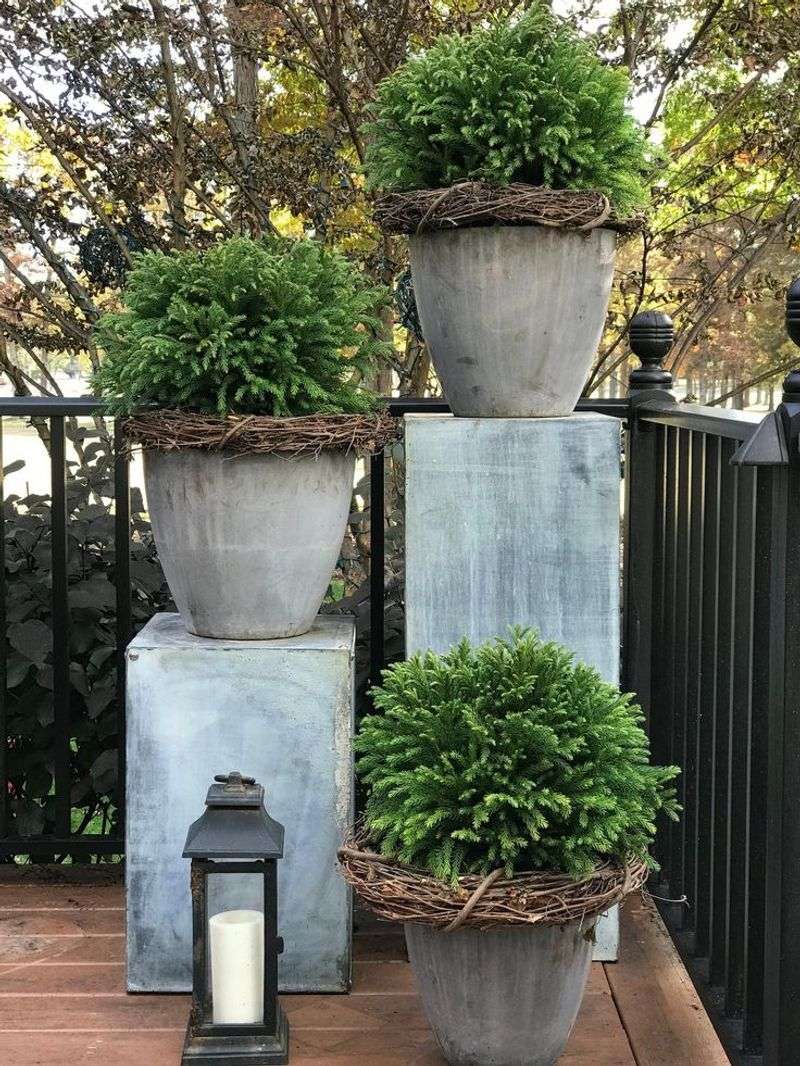
Forget everything you think you know about cedar trees.
Japanese Cedar Globosa Nana breaks all the rules by growing into a perfect green ball instead of shooting skyward.
This quirky little character stays under three feet tall and equally wide, making it ridiculously easy to tuck into almost any garden spot.
The foliage texture is where things get interesting.
Soft, feathery needles cluster densely together, creating a plush appearance that practically begs you to run your hands over it.
During winter, the green takes on bronze-purple tones that add unexpected color when most plants look half-asleep.
Container gardening? This cedar nails it.
The compact root system adapts beautifully to pots, letting apartment dwellers and patio gardeners enjoy evergreen elegance without needing a full yard.
Just use a decent-sized container with drainage holes, and you’re golden.
Washington’s climate suits this Japanese native perfectly.
It handles our rainfall without complaint and doesn’t pitch a fit during summer’s drier months.
Partial shade to full sun both work fine, though afternoon shade helps prevent winter burn in exposed locations.
Garden designers love using Globosa Nana as a textural accent among perennials or along pathways.
The spherical shape provides consistent form year-round, anchoring beds that might otherwise look chaotic when other plants die back.
Plus, pairing several together in odd-numbered groups creates stunning repetition without feeling boring or overly formal in that stuffy way nobody actually wants.
4. Korean Fir Silberlocke
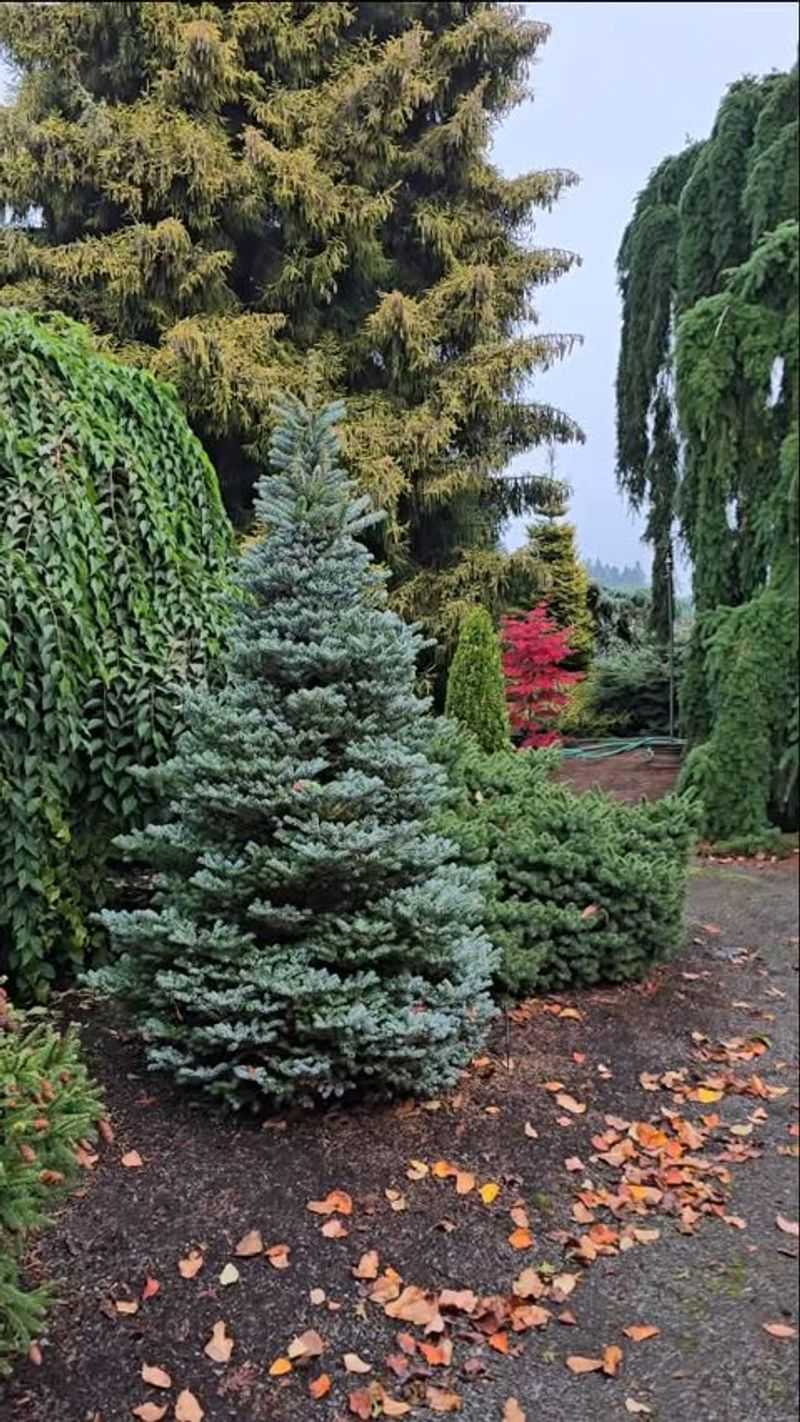
Silver linings exist in tree form, apparently.
Korean Fir Silberlocke sports needles that curl upward, revealing stunning silvery-white undersides that catch light like tiny mirrors.
This architectural showstopper grows slowly to about ten feet, giving you years to enjoy its compact size before it reaches full height.
Korean fir thrives in cool, moist environments and prefers stable conditions with consistent moisture.
It struggles in heat, drought, and dry exposure, which can cause stress and poor growth.
In warmer climates, it benefits from shade, mulching, and regular watering to maintain health and vibrant evergreen foliage.
The needle curl isn’t a fluke or disease.
It’s the tree’s signature move, creating a frosted appearance that stands out dramatically against darker evergreens.
Garden visitors always stop and stare at this one, trying to figure out if it’s real or if you’ve somehow spray-painted a regular fir silver.
Washington gardeners hit the jackpot with this tree because it actually prefers our cool, moist climate.
Hot, dry summers stress it out, but our typical Pacific Northwest weather? Perfect match.
Plant it where it gets morning sun and afternoon shade for absolute peak performance.
The pyramidal shape develops naturally without any trimming or shaping required.
Just let it do its thing, and you’ll get that classic Christmas tree silhouette with way more visual interest than standard firs.
Young purple cones appear on mature trees, adding another decorative element to the already impressive display.
The silvery needles practically glow next to dark leaves, creating those professional-looking combinations that make neighbors think you hired a fancy landscape designer when you totally just winged it yourself.
5. Pacific Wax Myrtle
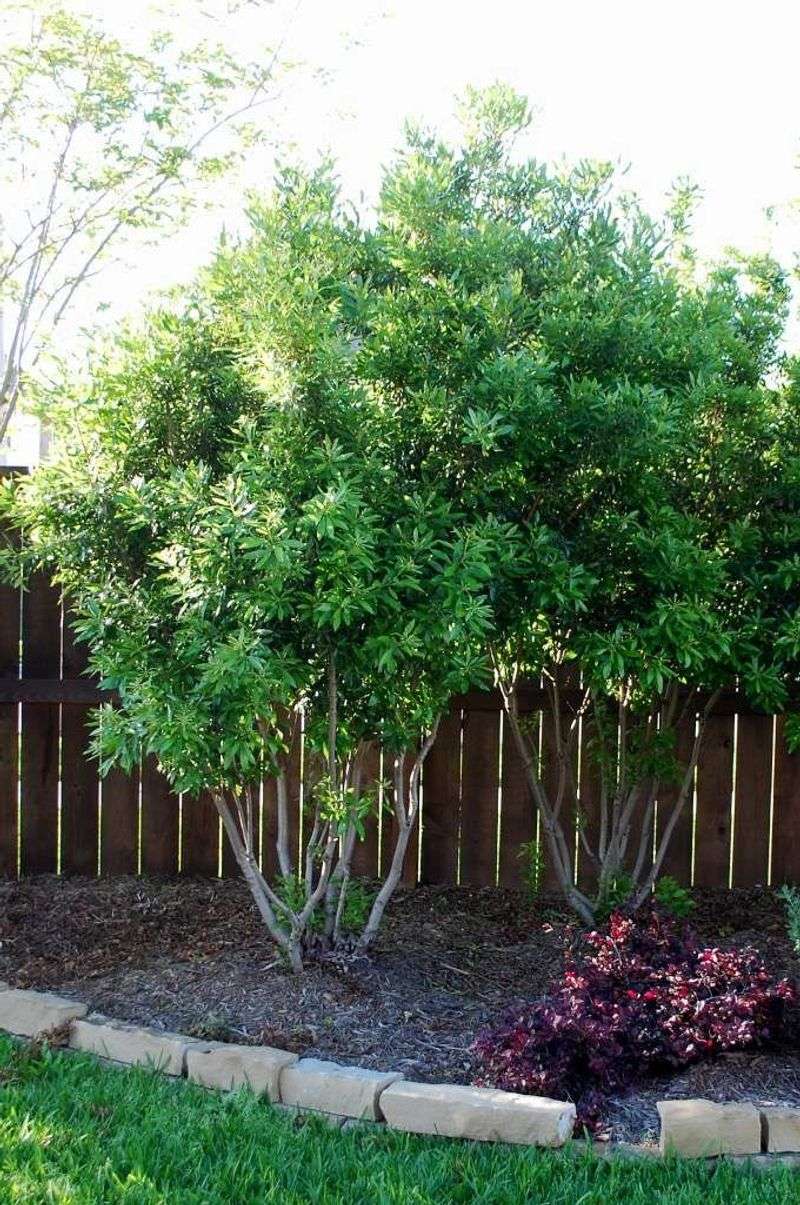
Native plants for the win! Pacific Wax Myrtle grows naturally along Washington’s coast, which means it’s practically engineered for our specific climate quirks.
This broadleaf evergreen can be pruned into a small tree or left as a large shrub, giving you flexibility depending on your garden’s needs.
Glossy, olive-green leaves cover branches year-round, emitting a spicy fragrance when crushed that smells vaguely like bay leaves mixed with something woodsy.
Birds absolutely adore the waxy blue berries that appear on female plants, turning your yard into a wildlife sanctuary without any extra effort.
I planted one near my kitchen window four years back, and the songbird action is legitimately better than television.
Warblers, chickadees, and towhees treat it like an all-you-can-eat buffet from fall through spring.
The dense foliage also provides excellent nesting spots, so you might host tiny feathered families without even realizing it.
Maintenance? Barely registers on the to-do list.
Pacific Wax Myrtle tolerates salt spray, wind, drought, and poor soil like a champion.
It actually fixes nitrogen in the soil through its roots, meaning it improves dirt quality while growing. How many trees actively make your garden better just by existing?
Screen planting works beautifully with these because they grow quickly and fill in densely.
Space several six feet apart, and within a few years, you’ll have a living privacy fence that requires zero upkeep while supporting local ecosystems and looking fantastic through every season.
6. Strawberry Tree Arbutus
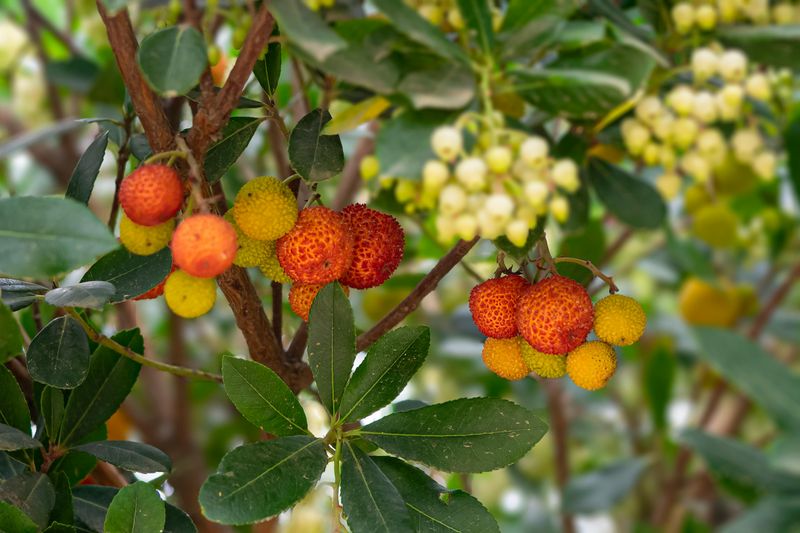
Hold onto your garden gloves because this tree produces actual edible fruit that looks like strawberries but grows on branches.
Arbutus unedo delivers year-round interest with peeling cinnamon-colored bark that reveals smooth terra-cotta underneath, creating a living sculpture even when nothing else happens.
White, bell-shaped flowers dangle in clusters during fall, right when most trees call it quits for the season. The flowers eventually become round, bumpy fruits that ripen from yellow to red, decorating branches throughout winter.
They’re technically edible but pretty bland, though birds don’t seem to mind the taste.
Mediterranean origins mean this tree adores Washington’s mild winters and dry summers.
It actually struggles in constantly wet soil, making it perfect for those well-drained spots where other plants sulk.
Full sun produces the best flowering and fruiting, though partial shade works if your yard leans shady.
The multi-stemmed growth habit creates an informal, artistic appearance that fits beautifully into modern or cottage garden styles.
7. Cascara
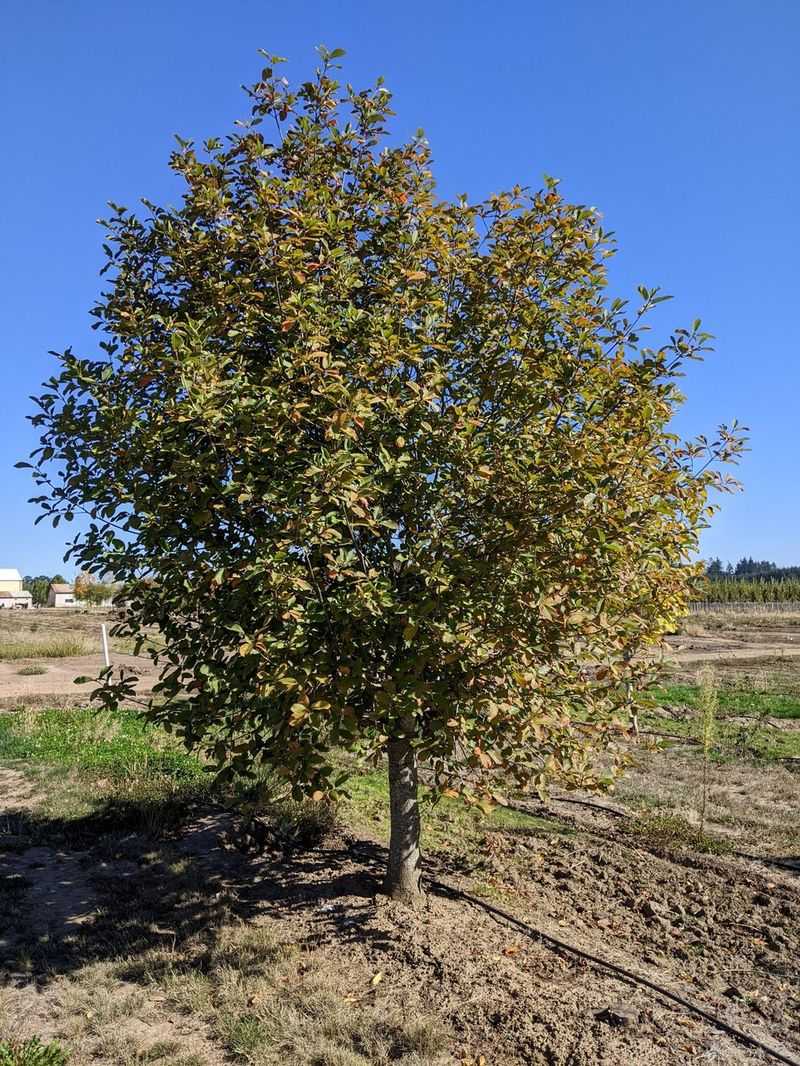
Cascara is a native Washington tree that grows fifteen to thirty feet tall with a naturally upright, open canopy that filters light gracefully without blocking it entirely.
The bark is its most distinctive feature, silvery gray and smooth on younger branches, developing attractive furrowing with age. In a garden setting it provides structure without bulk, presence without dominance.
Small clusters of tiny yellow-green flowers appear in spring, modest in size but generous in purpose.
Native bees visit them consistently during a season when reliable forage plants are still limited.
By late summer, clusters of small berries ripen from red to deep purple-black, and the birds arrive immediately.
Band-tailed pigeons, robins, and cedar waxwings treat a fruiting Cascara like a scheduled appointment.
Cascara grows in full sun to part shade and handles Washington’s moist, mild climate west of the Cascades with complete ease. It establishes reliably, requires minimal pruning, and develops genuine character over time.
Plant it at a woodland edge, alongside a fence, or as an understory tree beneath larger conifers. It fits naturally because in Washington, it genuinely is natural.
8. Stewartia
Most trees peak once and call it a year.
I started paying attention to Stewartia after watching one bloom in a neighbor’s garden on a hot July afternoon while everything around it looked tired and ordinary.
The flowers were white, cup-shaped, and centered with a burst of orange-yellow stamens that made the whole tree look like it was trying to start a conversation.
I went home and ordered one the same evening.
Stewartia, blooms in June and July when most flowering trees have long finished.
The white camellia-like flowers open in succession over several weeks, meaning the display lasts longer than a single dramatic flush.
Each flower is around two inches across, delicate and clean against the dark green foliage.
On a warm morning with good light behind it, the tree looks luminous.
The effect is striking against a winter sky and gives the tree serious visual presence during the months when most of the garden has gone quiet.
Running a hand along the smooth exposed patches is the kind of sensory detail that makes a garden feel worth being in.
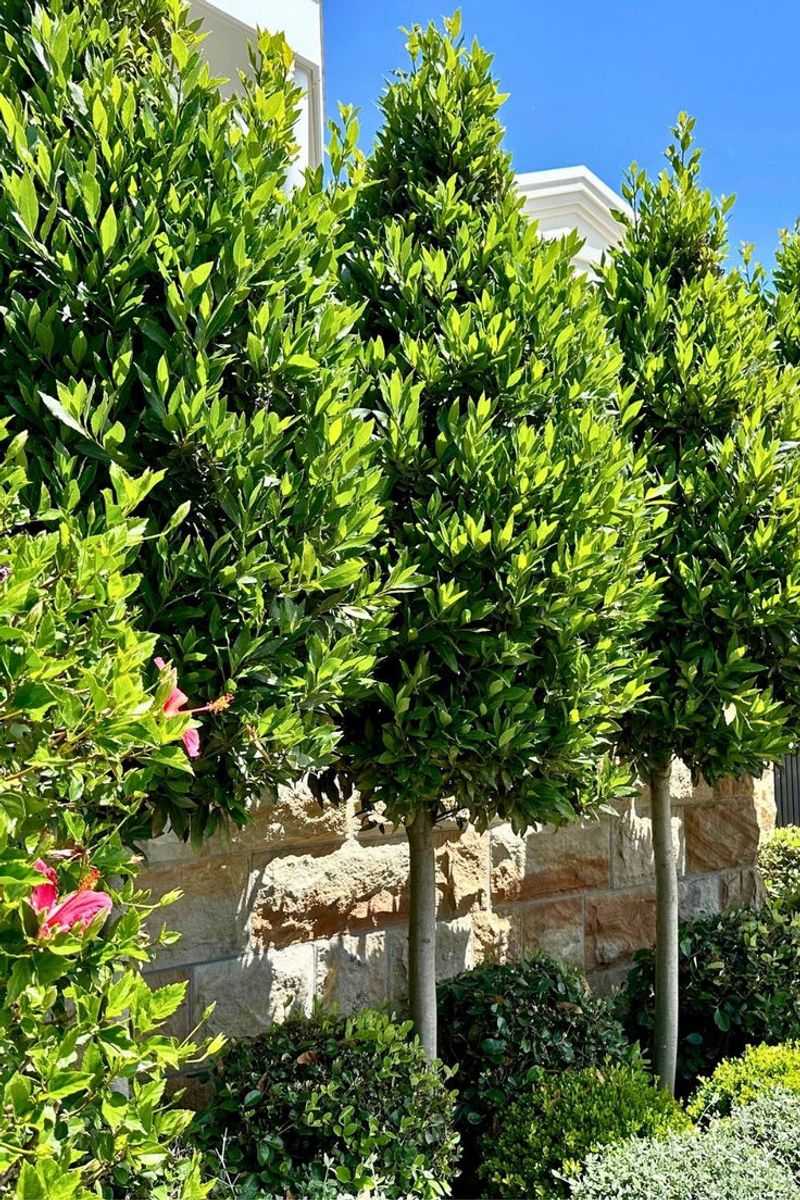
Stewartia grows fifteen to twenty-five feet tall with a naturally pyramidal form and prefers the cool, moist conditions that Washington’s climate west of the Cascades provides reliably.
It performs best in part shade with moist, acidic, well-drained soil.
Fall color adds one final flourish, with leaves turning orange and red before dropping to reveal that extraordinary bark underneath.
Four seasons of genuine interest in a single tree is a difficult argument to resist.