Different Plants Called “Jasmine” And How To Grow Them In California
Walk into a California garden center and the jasmine section can get confusing fast. One plant climbs, another sprawls, one smells amazing, and another is simply borrowing the name and hoping nobody asks too many questions.
It is a little botanical identity crisis, honestly.
The tricky part is that these plants are not interchangeable, even though the labels can make them seem that way.
Some are true jasmines in the genus Jasminum, while others are only jasmine by nickname. That matters a lot once you bring one home.
Growth habit, flower color, fragrance, sun needs, and cold tolerance can all be surprisingly different. A vine that looks perfect for a fence may behave nothing like the ground cover sitting right next to it at the nursery.
In California gardens, jasmine-named plants show up on trellises, slopes, patios, and walls, but they do not all play the same role.
Knowing which one you are actually growing makes everything easier, and saves a lot of future guesswork.
1. Star Jasmine Is California’s Most Familiar “Jasmine”
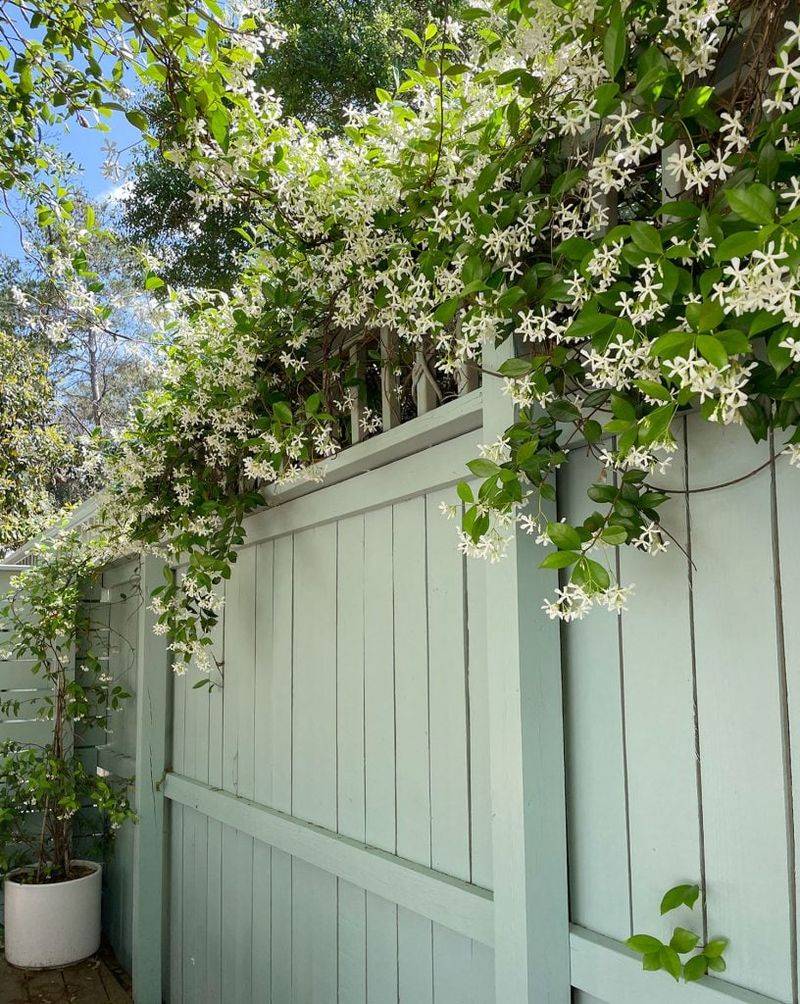
Walk past almost any fence in a California suburb in late spring, and there is a good chance that sweet, unmistakable fragrance drifting through the air is coming from star jasmine. Despite its name and its popularity, star jasmine is not a true jasmine at all.
It belongs to the genus Trachelospermum, not Jasminum, though that does not make it any less loved by California gardeners.
Star jasmine, known botanically as Trachelospermum jasminoides, is a woody, twining vine with glossy dark green leaves and clusters of small white flowers shaped like pinwheels. The fragrance is intense and sweet, especially on warm evenings.
It blooms heavily in late spring and early summer, and scattered blooms can appear again later in the season depending on the location.
In California, it grows well across most of the state, from coastal gardens to warmer inland valleys. It tolerates heat reasonably well and handles mild frost without much trouble, though hard freezes can damage it.
Star jasmine works beautifully on fences, trellises, and walls, and it is also widely used as a ground cover on slopes where it fills in thickly over time.
Planting in full sun to partial shade gives the best results. Regular watering during the first year or two helps it establish a strong root system.
Once settled in, it becomes fairly drought tolerant, especially in coastal areas. Light pruning after the main bloom period keeps the growth tidy and manageable without reducing next season’s flowers.
2. Pink Jasmine Fills Spring With Fragrance And Fast Growth
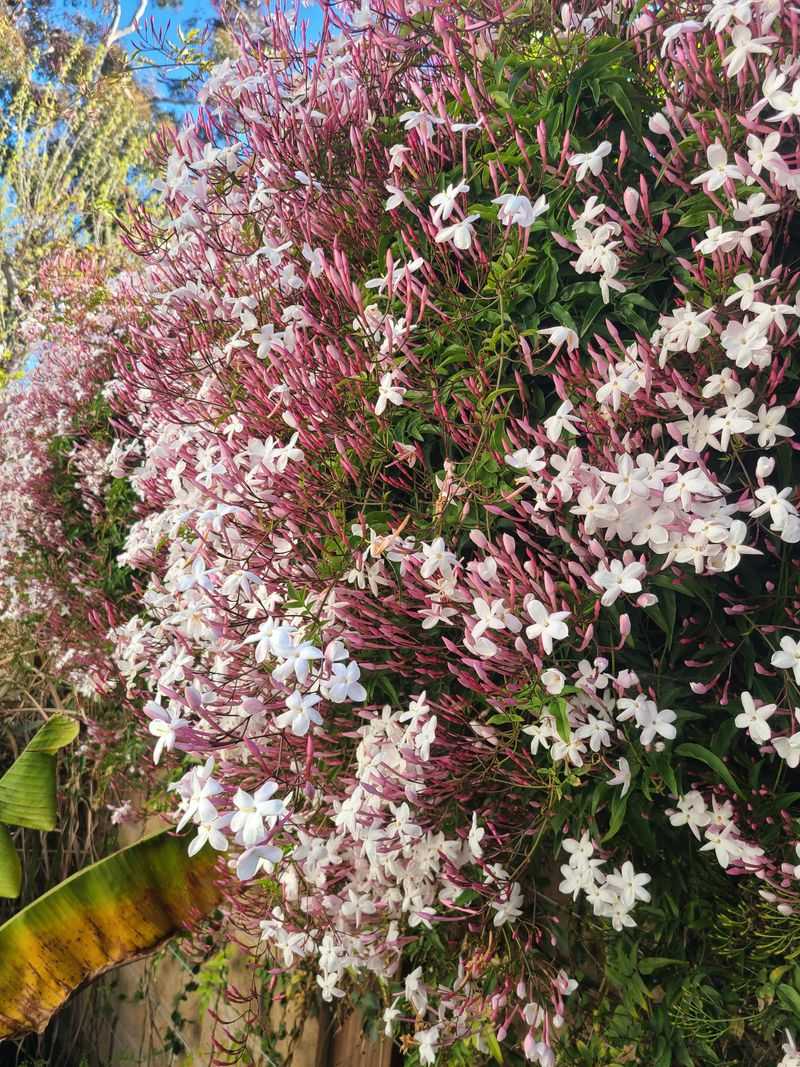
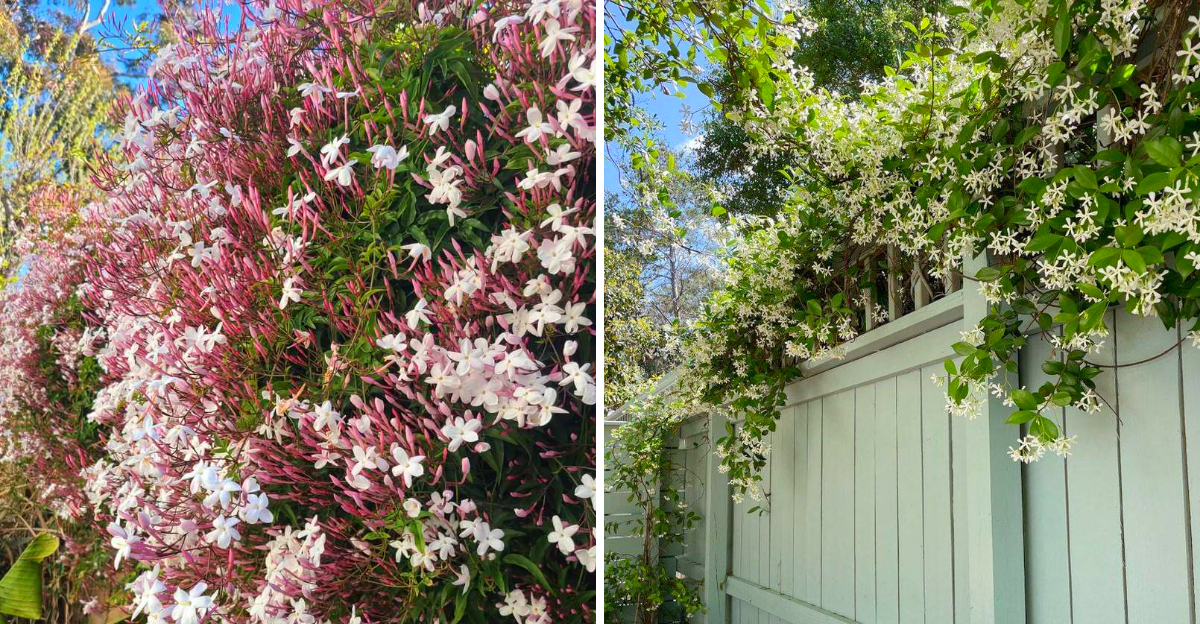
Few vines announce the arrival of spring in California quite as dramatically as pink jasmine, with its cascading clusters of buds that open from rosy pink to creamy white and release a fragrance that can stop people in their tracks.
This one actually is a true jasmine, belonging to the genus Jasminum, and it goes by the botanical name Jasminum polyanthum.
California gardeners along the coast and in mild inland areas have grown it for decades.
Your California Garden Changes Every Week. Your Plan Should Too.
Gardening in California changes quickly throughout the season. Every Friday you’ll receive a simple weekly plan showing exactly what to plant, prune, fertilize, harvest, and protect so you never miss the right timing.
Pink jasmine is a vigorous, fast-growing vine that can cover a fence or trellis in a relatively short time. The flowers appear in large, airy clusters, usually starting in late winter or early spring, which makes it one of the earliest fragrant bloomers in California gardens.
The fragrance is strong and sweet, and on a warm afternoon it can carry quite a distance.
Because it grows so quickly, pink jasmine needs sturdy support and regular pruning to keep it from becoming a tangled mass.
Pruning right after the main bloom period is a sensible approach, cutting back the long, whippy stems to encourage a denser, tidier plant.
Without pruning it can become quite heavy and difficult to manage on a lightweight structure.
In California, pink jasmine does best in areas that stay relatively mild through winter. Hard frost can damage or set it back significantly.
Coastal gardens and protected spots in warmer inland valleys tend to suit it well. It prefers well-draining soil and regular water during establishment, tapering off once it is settled in.
3. Primrose Jasmine Brings Golden Flowers And A Looser Shrubby Shape
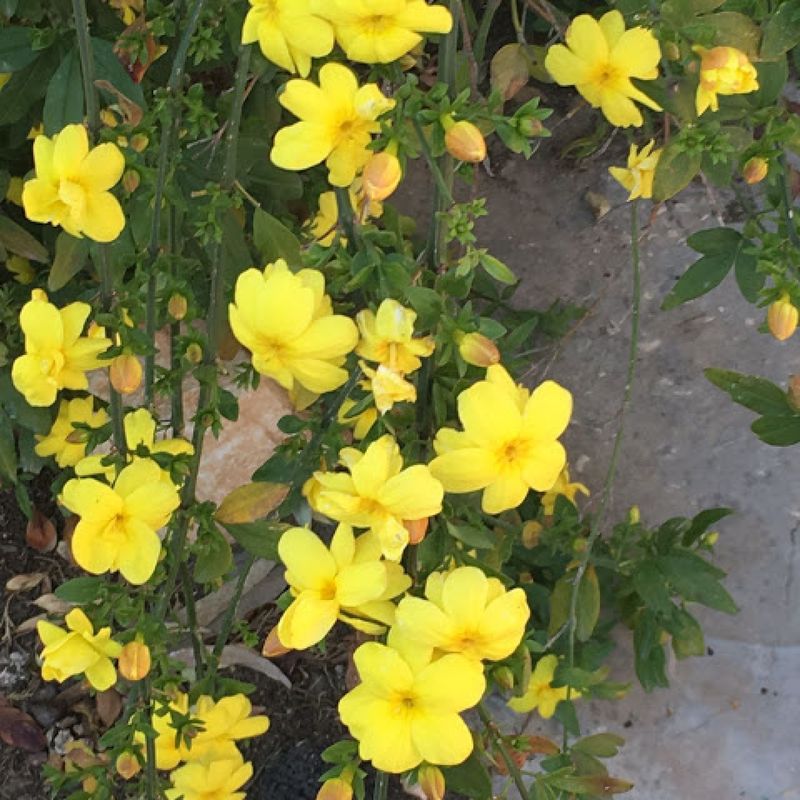
Bright yellow flowers on long, arching stems give primrose jasmine a cheerful, informal look that sets it apart from the white-flowering jasmines most California gardeners are used to seeing.
This plant is a true jasmine, Jasminum mesnyi, and it behaves more like a large, loose shrub than a climbing vine.
That growth habit surprises some gardeners who expect it to behave like its twining relatives.
Primrose jasmine produces semi-double, butter-yellow flowers that appear in late winter and early spring, sometimes as early as January in warmer parts of California.
The blooms are cheerful and plentiful, covering the long, cascading stems before much else in the garden has started to wake up.
Unlike pink jasmine or common jasmine, primrose jasmine has little to no fragrance, so gardeners who want scent should keep that in mind before planting it.
The plant can grow quite large, reaching heights and spreads of six feet or more if left unpruned. It works well as an informal hedge, a slope cover, or a sprawling accent plant in a mixed border.
Its arching stems also drape attractively over retaining walls or raised planters. In California, it grows well across a wide range of climates, from the coast to warmer inland areas, and it handles drought reasonably well once established.
Pruning after bloom helps keep the size manageable and encourages fresh, vigorous growth for the following season.
It tolerates a range of soil types as long as drainage is decent, and it generally asks for little fuss once it has settled into a California garden.
4. Arabian Jasmine Offers Rich Fragrance In California’s Mildest Gardens
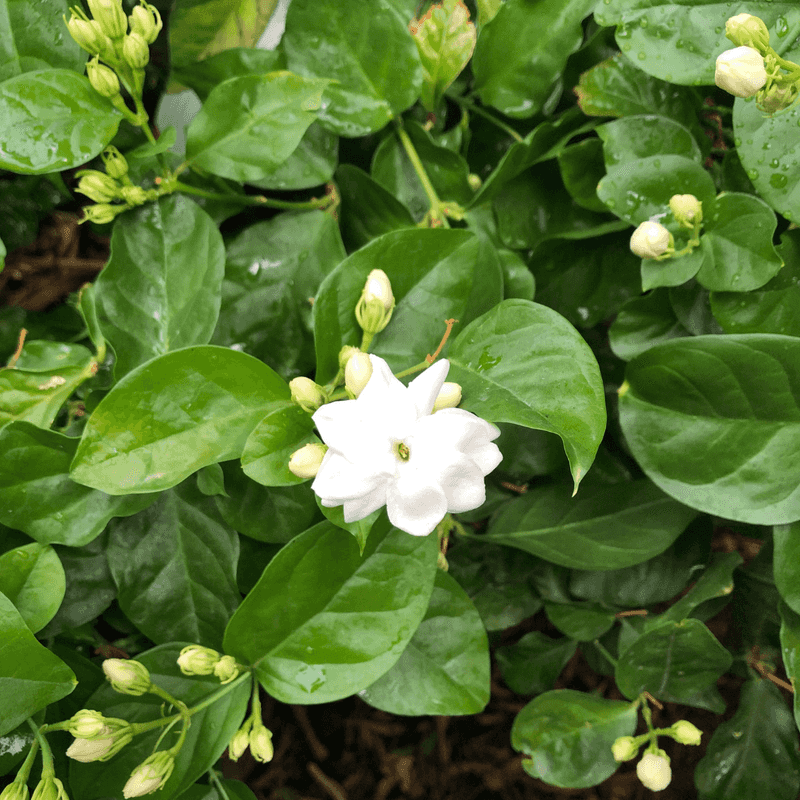
The fragrance of Arabian jasmine is the kind that stays with you long after you have walked away from the plant. Rich, heady, and almost tropical in character, it is the scent used in traditional jasmine teas and many classic perfumes.
Jasminum sambac, as it is known botanically, is a true jasmine and one of the most aromatic of the entire genus, though it comes with a catch for California gardeners.
Arabian jasmine is a tropical plant at heart, and it needs warmth to truly thrive.
In California, it grows best in the warmest, most frost-protected locations, including Southern California coastal gardens, the warmer parts of the Central Valley, and sheltered microclimates in the Bay Area.
In cooler coastal zones or areas that receive regular frost, it is often grown in containers so it can be moved to a protected spot during cold snaps.
The plant grows as a rounded shrub or a loosely scrambling vine, depending on how it is trained and supported. Flowers are small, white, and intensely fragrant, appearing repeatedly through the warm months.
The variety called Maid of Orleans is one of the most commonly grown in California and produces single flowers over a long season.
Growing Arabian jasmine well in California means giving it heat, good drainage, and consistent moisture during the growing season. It appreciates a sheltered spot away from cold winds.
Regular feeding during the growing season supports strong flowering, and light pruning after bloom flushes helps maintain a tidy, productive plant without sacrificing too many future blooms.
5. Winter Jasmine Brightens Bare Branches With Early Color
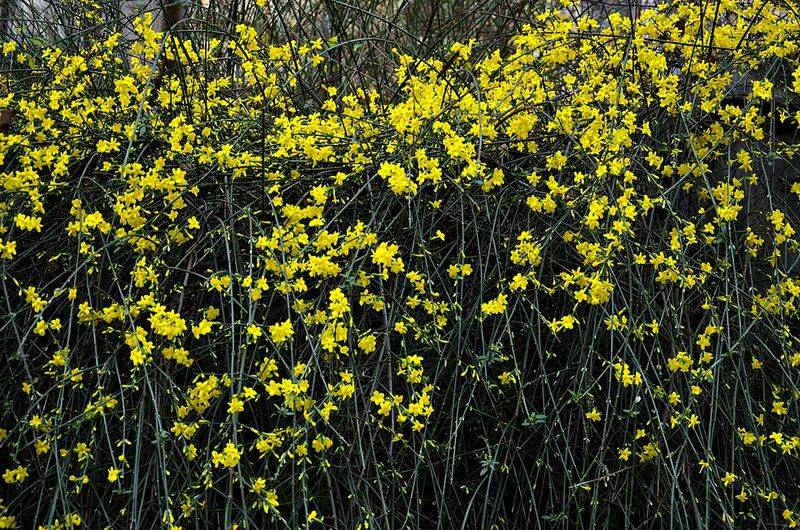
Seeing bright yellow flowers on bare, leafless stems in the middle of winter is a welcome surprise, and that is exactly what winter jasmine delivers to California gardens that welcome a bit of off-season color.
Jasminum nudiflorum is a true jasmine, though it behaves quite differently from the fragrant, twining types most gardeners associate with the name.
The flowers have little to no scent, but they appear so early in the season that the cheerful yellow color alone makes the plant worth growing.
Winter jasmine has slender, bright green stems that arch outward and downward in a cascading pattern.
The yellow flowers appear directly on these bare stems from late fall through late winter, depending on the location, well before any leaves emerge.
Once the flowers fade, small green leaves fill in along the stems and give the plant a pleasant, airy appearance through the rest of the growing season.
In California, winter jasmine works particularly well on slopes, over retaining walls, or in raised planters where the long, trailing stems can cascade freely.
It can also be trained against a fence or wall with some effort, though it does not twine on its own and needs to be tied to a support.
It tolerates cold better than most jasmines, making it a reasonable choice for inland California gardens that experience regular winter frost.
Pruning right after bloom, before new growth flushes in, is the most effective approach for keeping the plant looking neat. It grows in a range of soils and handles moderate drought once established, asking for little beyond occasional shaping.
6. Asiatic Jasmine Spreads Low And Works More Like A Ground Cover
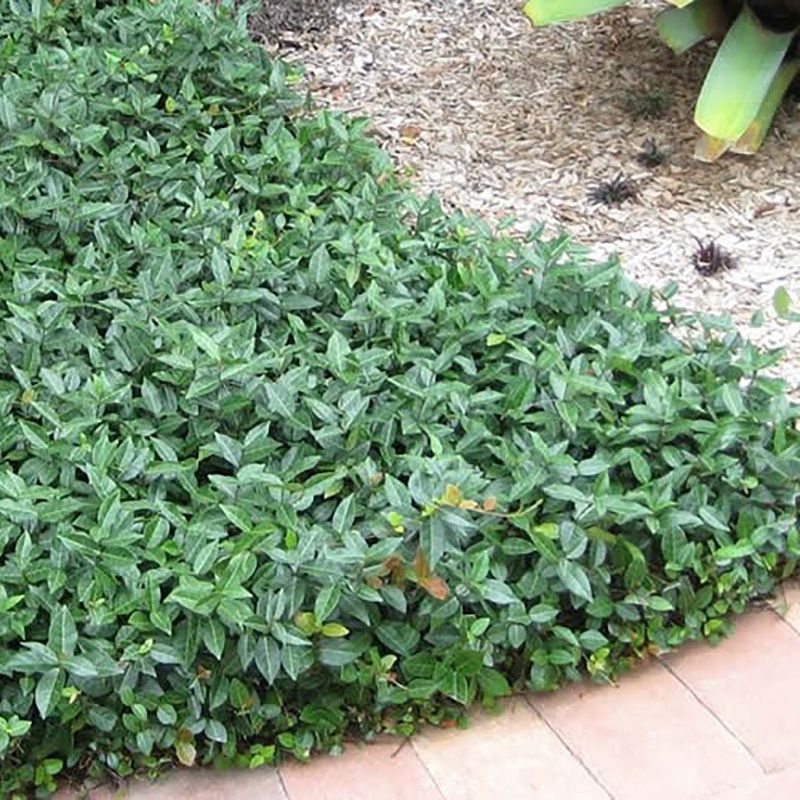
Ground covers are unsung heroes in California landscaping, and Asiatic jasmine quietly earns its place among the most reliable of them.
Often sold in California garden centers under the jasmine name, Trachelospermum asiaticum is not a true jasmine at all.
It is a close relative of star jasmine, sharing the same genus, and it behaves in a similar low, spreading way that makes it far more useful as a ground cover than as a climbing vine.
Asiatic jasmine has smaller, darker leaves than star jasmine, giving it a finer, more refined texture. It grows low to the ground, spreading outward rather than climbing upward, and it fills in densely over time to create a weed-suppressing mat.
Flowers do appear, but they are small, creamy yellow to white, and not particularly showy. Fragrance is minimal compared to star jasmine, so gardeners who want strong scent may prefer other options.
In California, Asiatic jasmine works well under trees, along pathways, on gentle slopes, and in areas where a low-maintenance, evergreen ground cover is needed.
It tolerates shade better than many ground covers, making it a practical choice beneath established trees where grass tends to struggle.
It also handles heat reasonably well in inland areas when given adequate water during establishment.
Once settled in, Asiatic jasmine is relatively low maintenance. Occasional trimming with a lawn mower set to a higher blade height, or a light shearing, keeps it from mounding too thickly in the center.
It grows in most well-draining soils and becomes reasonably drought tolerant once its root system is firmly established in the California landscape.
7. Carolina Jessamine Adds Golden Blooms But Is Not A True Jasmine
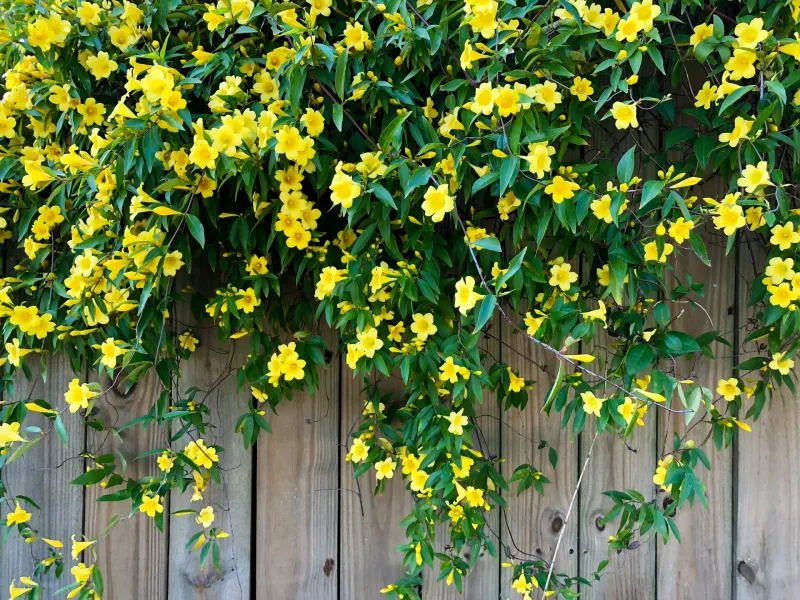
Bright golden-yellow, trumpet-shaped flowers cascading over a fence in late winter or early spring often turn out to be Carolina jessamine, a plant that surprises many California gardeners because it looks so much like something in the jasmine family. It is not.
Gelsemium sempervirens belongs to its own plant family entirely and has no botanical connection to true jasmines, though it is sometimes sold or discussed under a jasmine-adjacent name in casual conversation.
Carolina jessamine is a twining vine with glossy, lance-shaped leaves and clusters of fragrant yellow flowers that bloom from late winter into early spring.
The fragrance is light and pleasant, not as intense as pink jasmine or Arabian jasmine, but noticeable on warm days.
The plant climbs readily by twining around fences, trellises, and wire supports, and it can grow quite vigorously once established.
One important note for California gardeners with children or pets is that all parts of Carolina jessamine are considered toxic if ingested. That is worth knowing before choosing where to plant it in a home landscape.
It is best placed in areas where curious kids or animals are less likely to come into contact with the plant.
In California, Carolina jessamine grows well across a range of climates, from coastal gardens to moderate inland areas. It handles light frost without much trouble and appreciates full sun to partial shade.
Pruning after the main bloom period encourages fresh growth and helps keep the vine at a manageable size on fences and trellises.
Regular water during establishment is helpful, and once rooted it becomes reasonably drought adapted in many California garden settings.