These Are The Only Roses That Actually Thrive In Arizona Heat
Rose bushes can look incredible early in the season, then suddenly fall apart once Arizona heat starts pushing temperatures into extreme territory.
Fresh blooms fade faster, petals burn around the edges, and entire plants can start looking exhausted long before summer is even halfway over.
Plenty of yards end up with roses that survive the heat but stop looking attractive once conditions become brutal.
Strong rose varieties stand out immediately once summer reaches full force because the difference becomes impossible to ignore.
Healthy color, fuller blooms, and stronger growth hold on much longer while weaker roses struggle through nonstop sun and dry air.
Arizona conditions leave very little room for the wrong choice. One variety may stay beautiful through intense heat while another turns into constant frustration after only a few weeks of real summer weather.
1. Belinda’s Dream Handles Extreme Heat Surprisingly Well
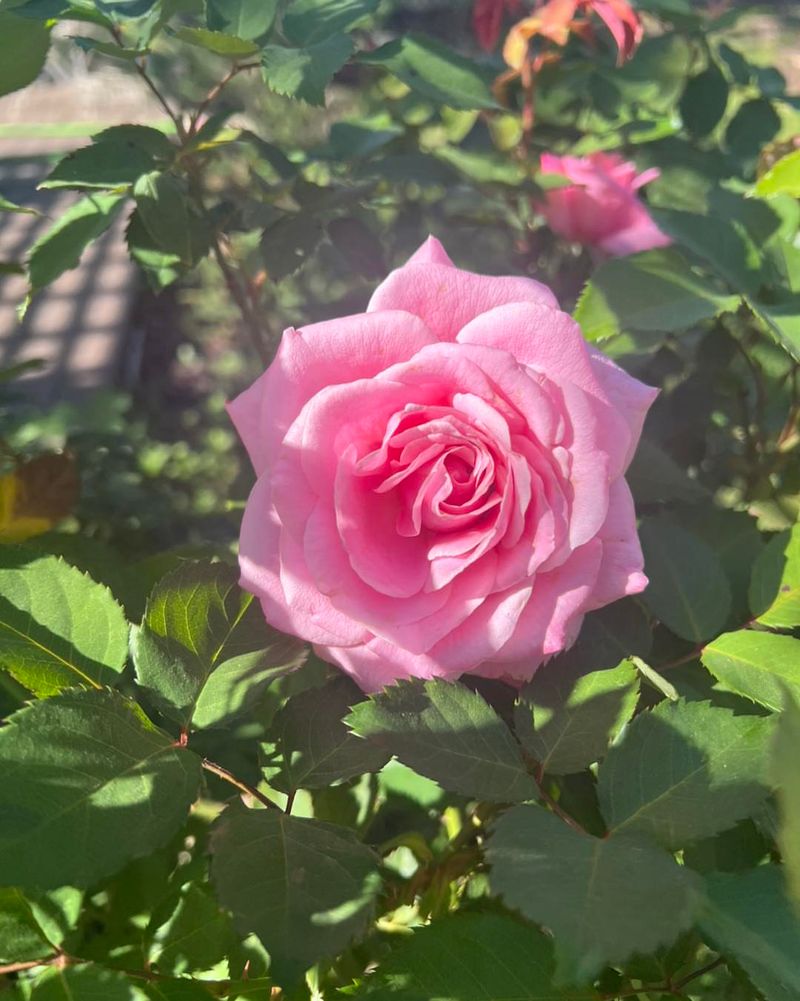
Most gardeners are shocked the first time they see Belinda’s Dream push out full, cabbage-style blooms in the middle of an Arizona summer.
Introduced in Texas and bred to handle brutal Southern heat, this rose carries those same strengths straight into the desert Southwest.
Large, soft pink flowers appear repeatedly throughout the growing season, and the plant does not sulk between bloom cycles the way many hybrid teas tend to do.
Belinda’s Dream is classified as a Carefree Beauty type, which means it was developed with low-maintenance gardeners in mind. Root structure on this rose runs deep, which helps it pull moisture from lower soil layers during dry stretches.
In Phoenix or Tucson, that kind of drought tolerance makes a real difference when summer temperatures are relentless for weeks at a stretch.
Give it full sun, well-draining soil, and a deep watering schedule rather than frequent shallow sprinkles. Mulching heavily around the base helps lock in soil moisture and keeps roots from overheating.
Fertilize lightly in early spring and again after the first bloom flush. Avoid heavy pruning during peak summer heat, since the foliage actually acts as a natural shield for the canes.
With basic care, Belinda’s Dream rewards Arizona gardeners with consistent color even when everything else looks stressed and wilted.
2. Lady Banks Rose Thrives With Very Little Water
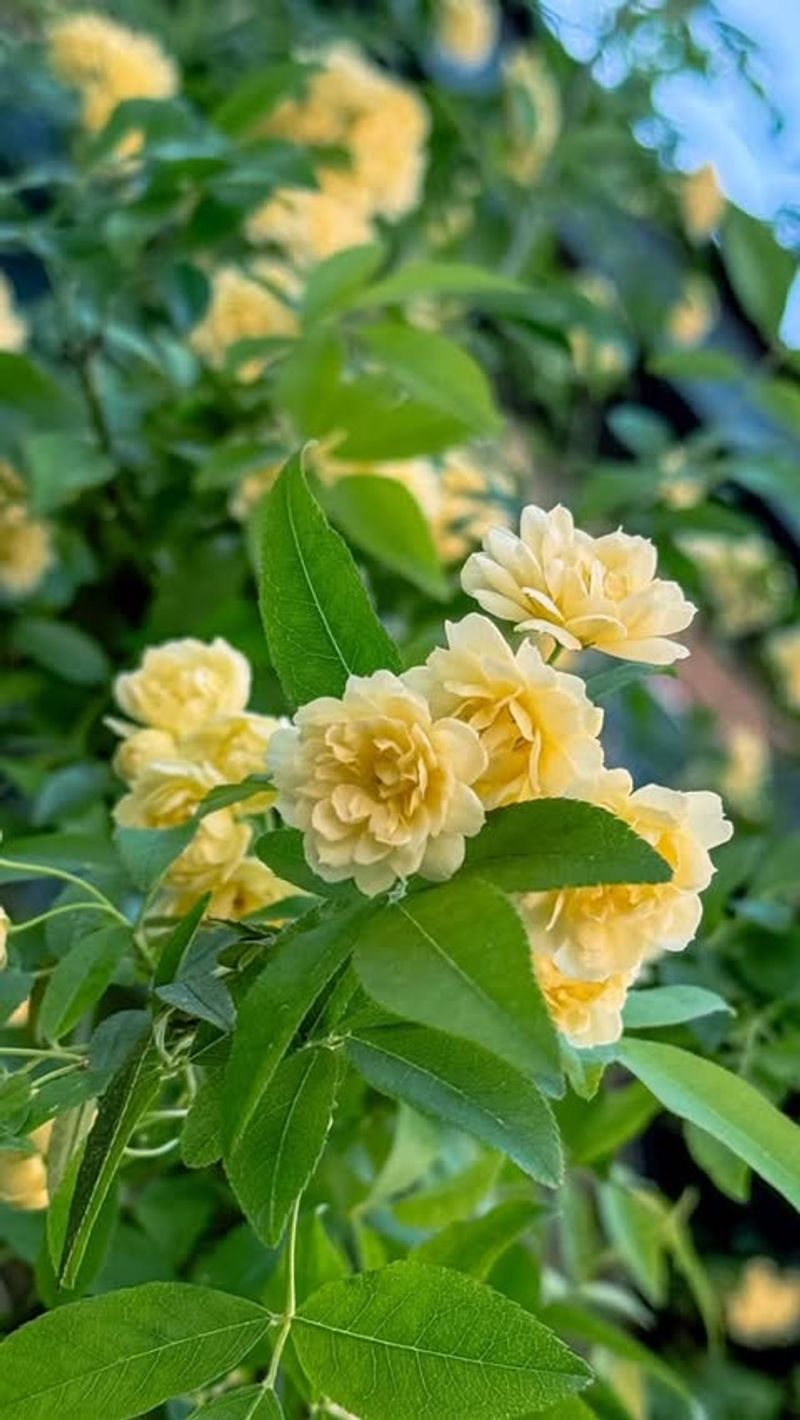
Walk through almost any established Arizona neighborhood in spring and you will likely spot a Lady Banks rose exploding over a fence or arbor in a waterfall of tiny yellow or white blooms.
Few climbing roses perform as reliably in the desert as this one, and its water needs are genuinely low once the plant gets established.
That combination of drought tolerance and vigorous growth makes it a standout choice for Arizona gardeners who want maximum impact with minimal irrigation.
Lady Banks rose is thornless, which is a bonus when you are training it over a gate or pergola. Bloom time typically arrives in late winter through early spring in Arizona, giving the garden a burst of color before the brutal summer heat sets in.
Once temperatures rise sharply, flowering slows, but the dense evergreen foliage stays attractive and keeps providing shade for walls and structures throughout the hot months.
Your Arizona Garden Changes Every Week. Your Plan Should Too.
Gardening in Arizona changes quickly throughout the season. Every Friday you’ll receive a simple weekly plan showing exactly what to plant, prune, fertilize, harvest, and protect so you never miss the right timing.
Establishment takes about one to two full seasons, but after that, supplemental watering can be reduced significantly. Plant in a spot with good air circulation to minimize fungal issues, which can appear during Arizona’s monsoon humidity.
Avoid overwatering, since standing moisture around roots causes more problems than dry soil ever would. In Tucson and Phoenix, Lady Banks rose is practically a garden staple, and for good reason.
It earns its space every single year.
3. Iceberg Rose Keeps Blooming Through Long Hot Summers
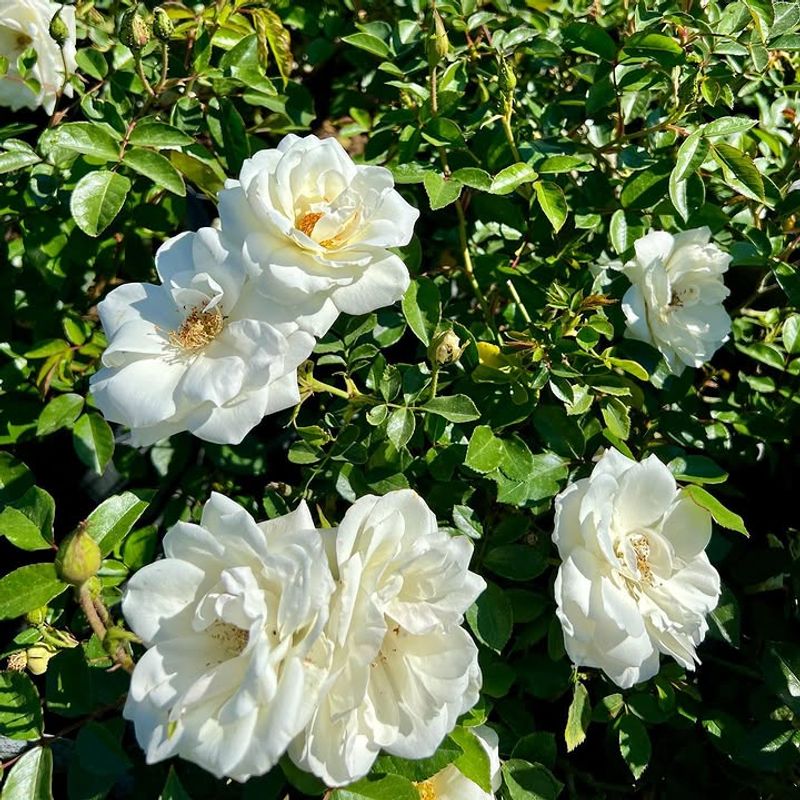
Iceberg rose has one of the longest bloom seasons of any rose variety available to Arizona gardeners, and that track record is hard to argue with. White, clustered flowers appear in waves from early spring all the way through fall, with only a brief slowdown during the very peak of summer.
Even that slowdown is modest compared to what most other roses do when triple-digit temperatures arrive across the Phoenix metro area.
Originally bred in Germany in the 1950s, Iceberg has spent decades proving itself in hot climates around the world. A climbing form is also available, which works well on trellises and fences in Arizona landscapes.
Both forms share the same heat-tolerant genetics and the same reliable re-blooming habit that gardeners depend on from late February through November in most Arizona growing zones.
Iceberg prefers full sun but tolerates some afternoon shade, which can actually help preserve bloom quality during the hottest weeks of summer. Water deeply and consistently rather than lightly and frequently, since deep watering encourages stronger root systems.
Deadheading spent blooms encourages the next flush to arrive faster. Black spot resistance is decent but not perfect, so watch foliage during humid monsoon periods.
Overall, Iceberg rose is one of the most dependable choices for Arizona gardeners who want consistent white color throughout the longest growing season in the country.
4. Knock Out Rose Produces Steady Flowers In Heat
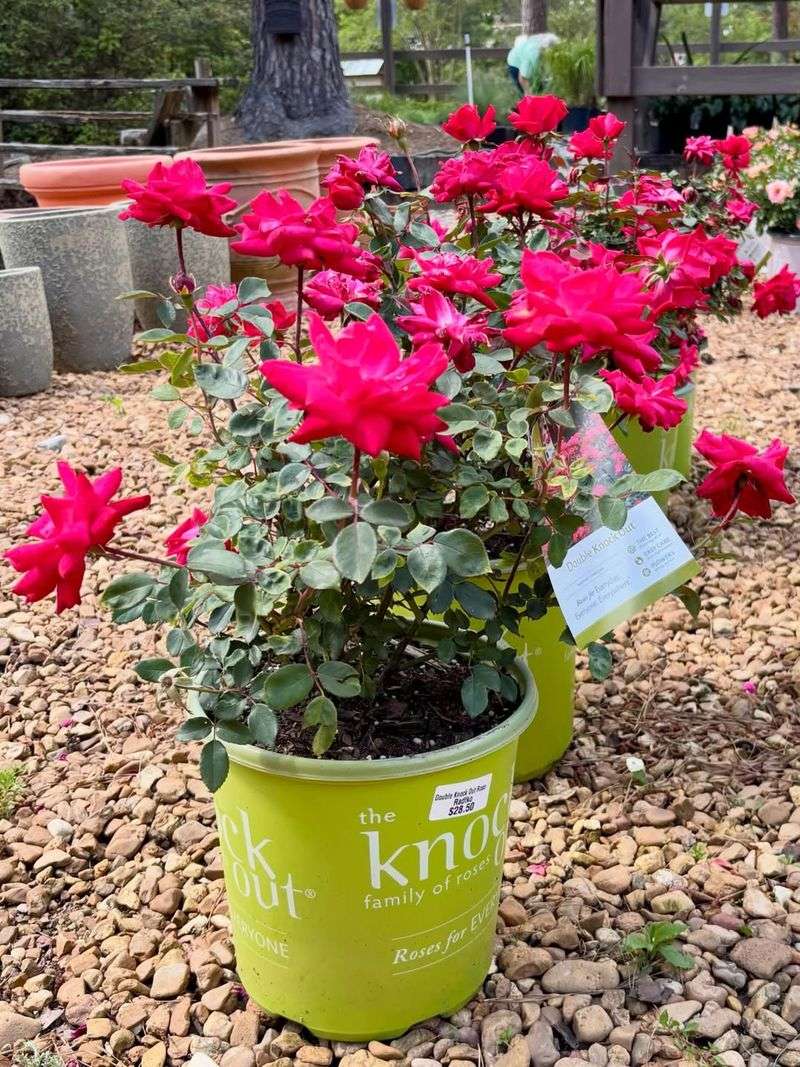
Knock Out rose changed how a lot of people think about growing roses in tough climates, and Arizona is a perfect example of where that reputation holds up under real conditions.
Released in 2000, Knock Out was specifically bred for disease resistance and low-maintenance performance, and those qualities translate directly into reliable color for desert gardeners.
Cherry red, pink, and blush varieties are all available, giving Arizona homeowners options that fit different landscape color schemes.
One of the biggest advantages Knock Out brings to Arizona gardens is its self-cleaning habit. Spent blooms drop on their own without requiring constant deadheading, which means less maintenance during the hottest and most draining weeks of summer.
Bloom cycles repeat roughly every five to six weeks, so there is almost always some color happening on the plant from early spring through late fall in most parts of Arizona.
Plant Knock Out in full sun with well-draining soil amended with compost. Deep watering twice a week during summer is generally sufficient for established plants in Arizona conditions.
Avoid wetting foliage during evening hours to reduce fungal pressure, especially during the monsoon season. Annual pruning in late January or early February keeps the plant compact and encourages vigorous new growth.
Knock Out rose is widely available at Arizona garden centers, and its consistent performance makes it one of the most recommended varieties by local nursery professionals across the state.
5. Mutabilis Rose Handles Dry Conditions With Ease
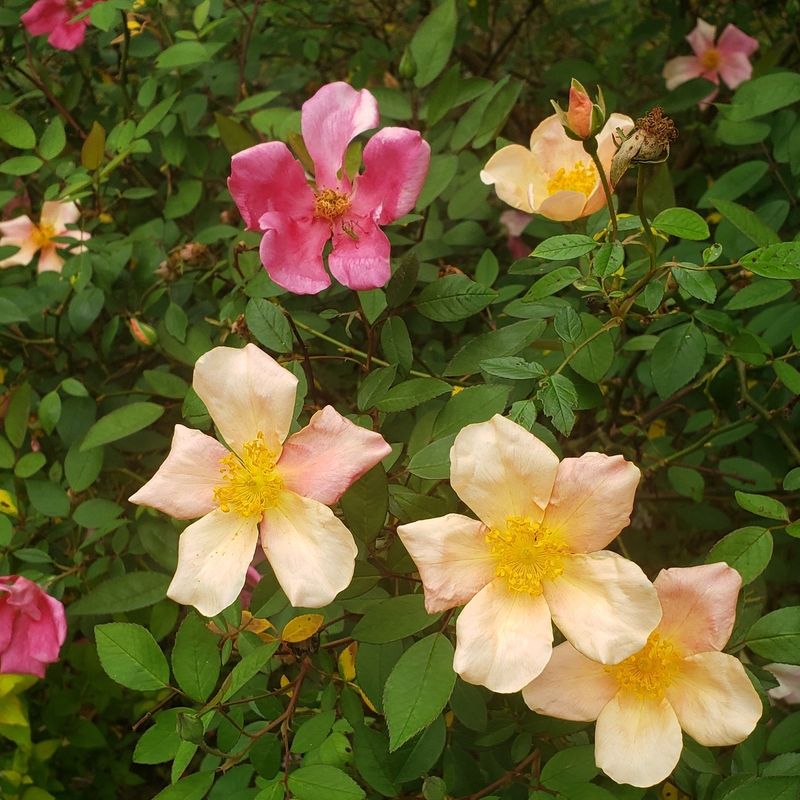
Mutabilis rose does something almost no other rose can do: it changes flower color as each bloom ages, shifting from pale yellow to soft pink to deep crimson on the same plant at the same time.
Beyond that visual trick, Mutabilis is genuinely one of the toughest roses available for Arizona gardeners, handling drought, heat, and poor soil with very little complaint.
Its origins trace back to China, where it was cultivated for centuries before reaching Western gardens.
In Arizona, Mutabilis can grow into a large, arching shrub reaching six feet or taller in warm, sheltered spots. Single-petaled flowers bloom almost continuously from spring through fall, attracting pollinators throughout the season.
Because the blooms are single rather than densely petaled, they hold up better in extreme heat than full, heavy roses that tend to ball and refuse to open when temperatures spike.
Established plants in Tucson and Phoenix tolerate significant drought, though occasional deep watering during the hottest months improves bloom production noticeably. Mutabilis grows well in both amended garden beds and native Arizona soil as long as drainage is adequate.
Pruning can be minimal since the plant has a naturally attractive shape. It is rarely bothered by black spot or powdery mildew, which is a significant advantage during Arizona’s humid monsoon months.
For gardeners who want color, movement, and toughness all in one plant, Mutabilis delivers every season.
6. Julia Child Rose Performs Well In Hot Climates
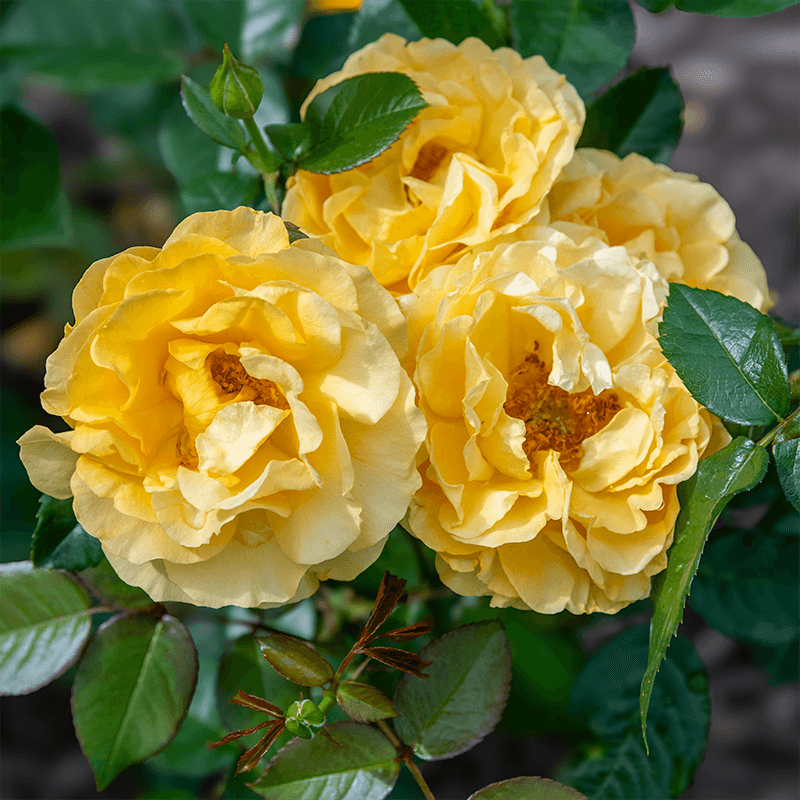
Named after the legendary chef herself, Julia Child rose brings buttery golden yellow blooms and a surprisingly strong licorice fragrance to Arizona gardens.
Released in 2006, the variety was bred with disease resistance and heat performance as priorities, which makes it more practical for desert climates than many fragrant roses that look great in catalogs but struggle in intense heat.
The rounded, fully double flowers are consistently attractive and hold their color well even during warm Arizona afternoons.
Julia Child blooms repeatedly from spring through fall without requiring a lot of intervention from the gardener.
The plant stays relatively compact, typically reaching three to four feet tall, making it suitable for smaller Arizona garden spaces, raised beds, or container plantings on covered patios.
Compact size also means it heats up and cools down more evenly than large shrubs, which can be an advantage during extreme temperature swings.
Plant in a location with at least six hours of direct sun daily, which is easy to achieve almost anywhere in Arizona. Water deeply two to three times per week during peak summer months and reduce frequency as temperatures drop in fall.
Fertilize with a balanced rose food in early spring and again after the first major bloom cycle. Deadheading regularly keeps new buds forming at a faster pace.
Julia Child rose is a favorite among Arizona rose enthusiasts who want fragrance and reliable performance without constant troubleshooting throughout the growing season.
7. Livin Easy Rose Keeps Blooming In Summer Heat
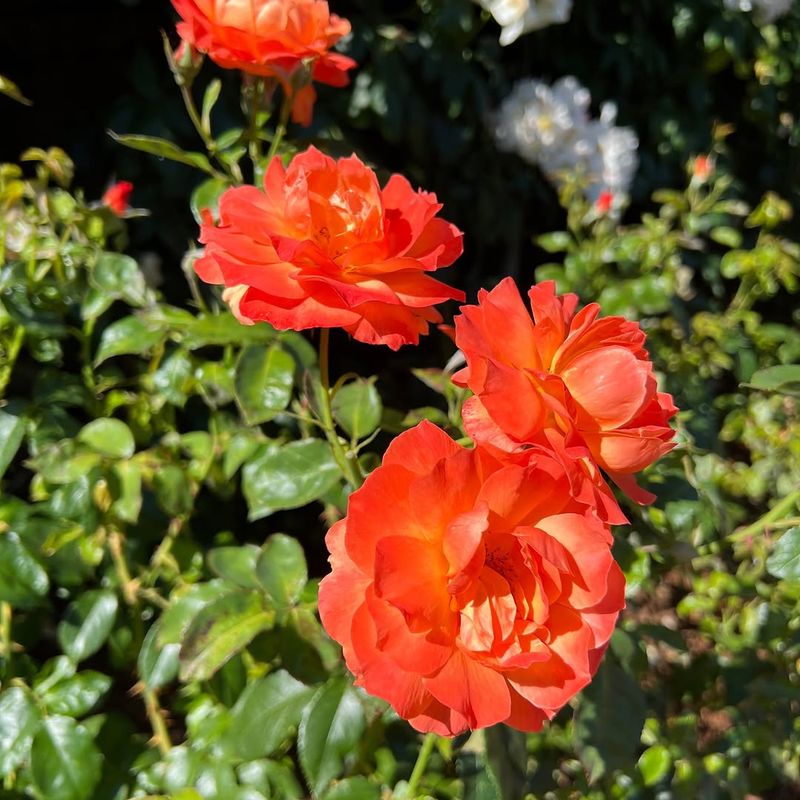
Apricot and orange are not the easiest colors to find in heat-tolerant roses, which is exactly what makes Livin Easy stand out for Arizona gardeners who want something beyond the usual reds and pinks.
Clusters of warm-toned blooms appear repeatedly throughout the season, and the plant maintains decent foliage health even when monsoon humidity arrives and puts pressure on less resistant varieties.
Livin Easy earned the All-America Rose Selections award in 1996, and its performance in hot regions helped build that reputation.
Growth habit is bushy and upright, usually staying between three and four feet tall in Arizona landscapes.
The cluster-flowered style means each stem produces multiple blooms at once, which gives the plant a fuller, more colorful appearance compared to hybrid teas that produce a single bloom per stem.
During the hottest weeks in Phoenix or Tucson, bloom size may reduce slightly, but the plant keeps producing rather than shutting down entirely.
Livin Easy performs best in full sun with consistent moisture during summer months. Avoid letting the soil dry out completely between waterings, especially during June and July when heat stress peaks across Arizona.
A two to three inch layer of organic mulch around the base makes a noticeable difference in moisture retention and root temperature. Prune lightly after each bloom cycle to encourage faster re-blooming.
Livin Easy is not the most commonly discussed variety, but Arizona gardeners who grow it tend to keep it in their gardens for years.
8. Spice Rose Grows Reliably In Desert Conditions
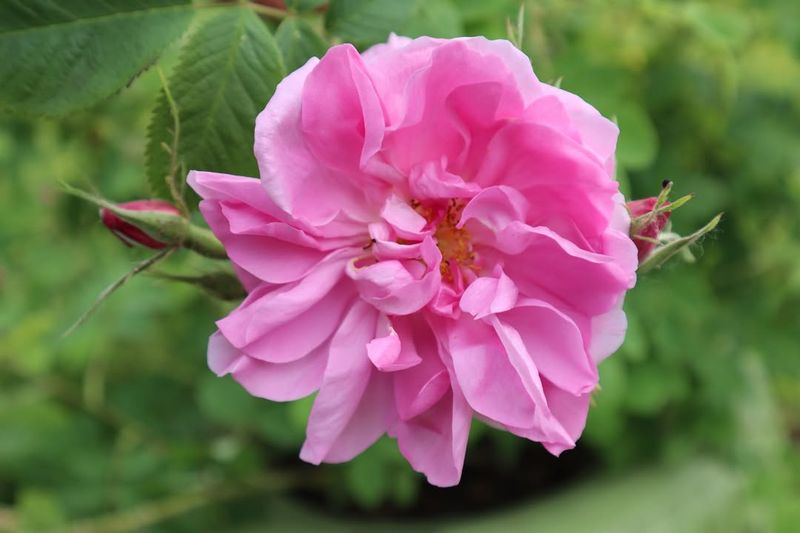
Old roses tend to get overlooked in favor of newer introductions, but Spice rose has been quietly performing in hot, dry climates for a very long time.
Sometimes listed under the species Rosa foetida or grouped with ancient garden roses, Spice rose carries genetics that predate modern breeding programs entirely.
That old-world toughness translates into real resilience under Arizona conditions, where newer varieties sometimes struggle during the most brutal stretches of summer heat.
Bloom clusters are smaller and more informal than modern hybrid roses, but they carry a distinctive spicy, clove-like fragrance that is noticeably stronger than most contemporary varieties. Flowering peaks in spring and again in fall, with lighter bloom activity during the hottest months.
The plant handles Arizona’s alkaline soil better than many roses, which is a practical advantage since amending desert soil takes real effort and expense over time.
Spice rose grows best with full sun exposure and infrequent but deep watering once fully established in the garden.
Avoid overhead irrigation to minimize fungal issues during Arizona’s monsoon season, which brings humidity that can catch gardeners off guard after months of dry conditions.
Pruning in late winter encourages vigorous spring growth and keeps the plant from becoming too woody.
Spice rose will not give you the perfectly formed blooms of a modern show rose, but in a Tucson or Phoenix garden, its reliability and fragrance make it genuinely worth planting.