What To Do With Your Arizona Saguaro Cactus In Spring Before Monsoon Season
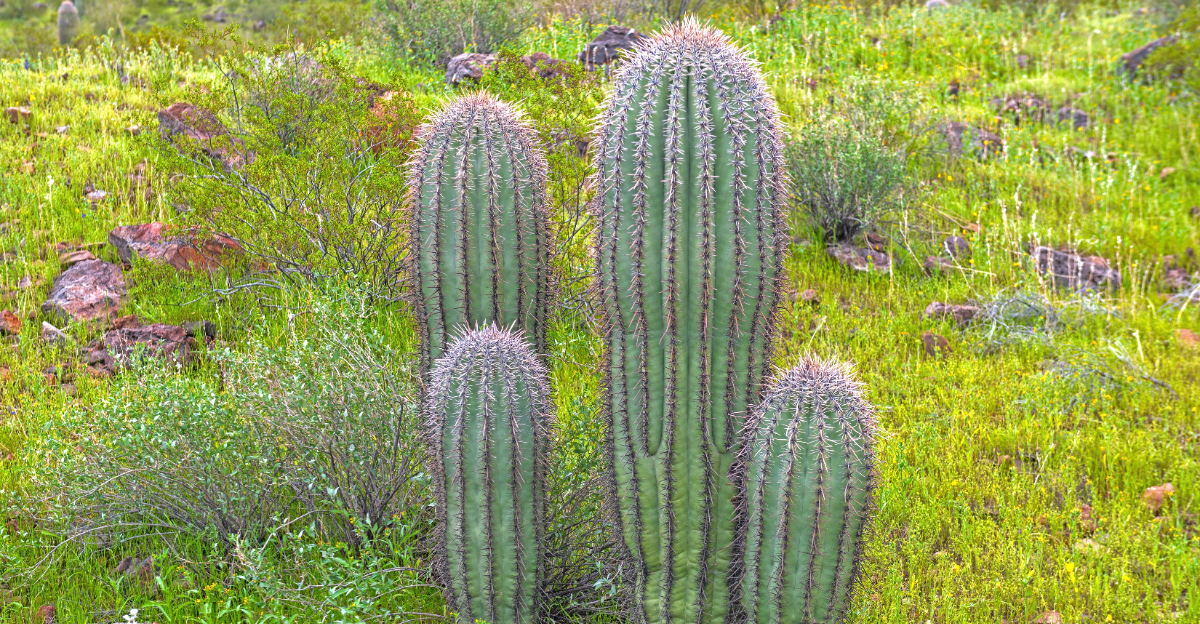
Desert days start heating up fast in Arizona, and every plant feels it, even the iconic Saguaro cactus standing tall in the yard. Strong sun, dry soil, and rising temperatures quietly push it toward a stressful stretch.
Many people assume nothing needs attention, then notice issues once summer hits hard. Right now creates a small window where simple care makes a real difference later.
Water habits, soil condition, and even nearby plants can affect how well it handles what comes next. Monsoon season will bring sudden rain and wind, and preparation ahead of that shift matters more than expected.
Small adjustments during spring help keep growth steady and reduce the risk of damage. Changes do not need to feel complicated, yet timing matters more than anything.
Knowing what to focus on now can help a saguaro move through the toughest part of the year without problems.
1. Check For Signs Of Winter Damage Or Soft Spots
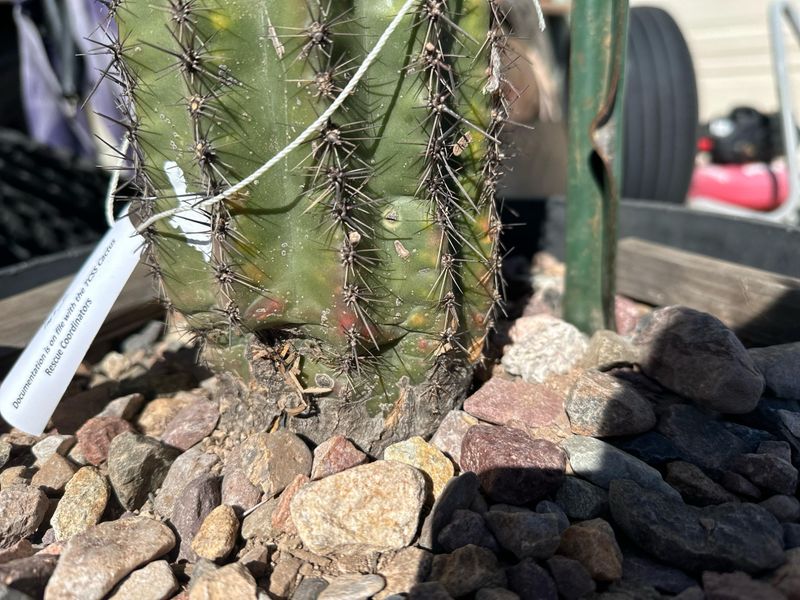
Not every saguaro comes through an Arizona winter without a scratch. Cold nights, occasional frost, and even brief freezing temperatures can leave behind damage that is not always obvious until you look closely.
Walking around your cactus slowly and pressing gently on the skin in different spots is one of the most useful things you can do in early spring.
Soft spots feel noticeably different from the firm, slightly waxy texture of healthy tissue. If an area gives under light pressure or looks sunken, discolored, or mushy, that is a sign something went wrong during the colder months.
Bacterial rot often starts quietly and spreads from the inside out, so catching it early matters.
Brown or black patches near the base or along the ribs can also signal cold injury.
Not every discolored spot means serious trouble, but any area that looks wet, smells off, or is actively weeping dark fluid needs a closer look from someone with experience in Sonoran Desert plants.
A local Arizona cactus specialist or county extension office can help you figure out whether the damage is superficial or deeper.
2. Avoid Watering Unless Conditions Stay Extremely Dry
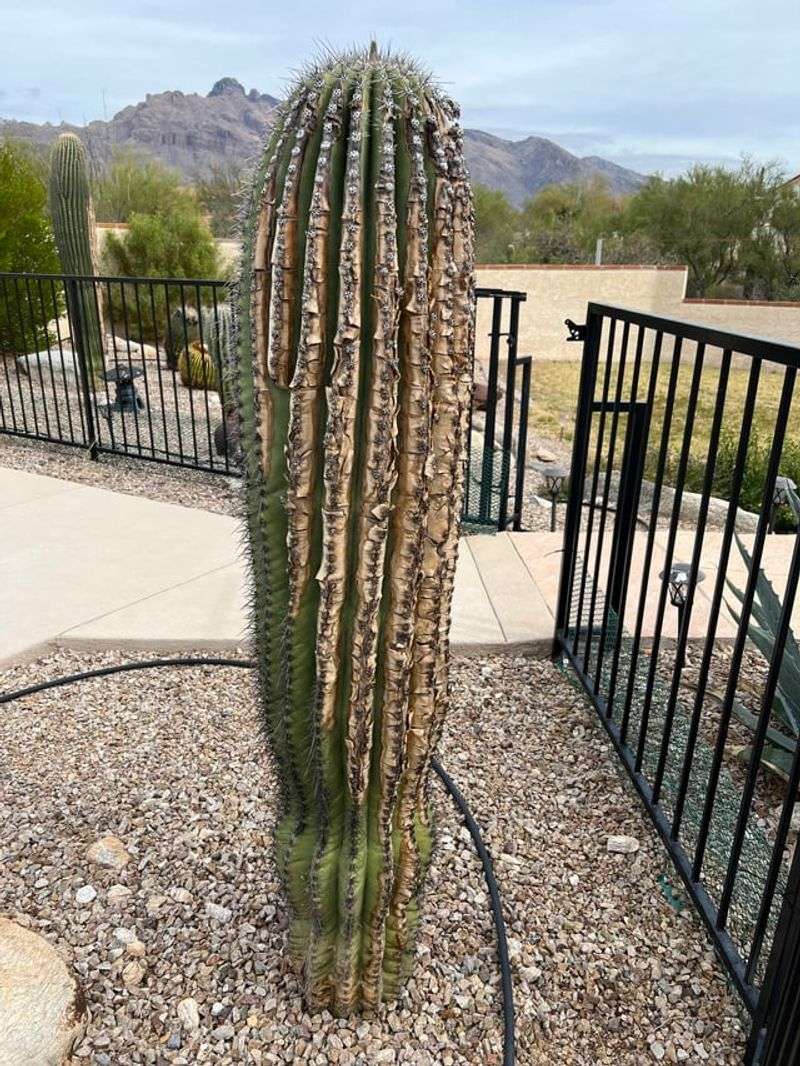
Saguaros in the Sonoran Desert are built to wait. Their entire root system and accordion-like skin are designed to absorb water fast when it comes and hold it for months when it does not.
Watering too often, especially heading into monsoon season, is one of the more common mistakes Arizona homeowners make with established saguaros in their yards.
Spring in Arizona typically brings some moisture, and even without significant rain, the soil around a saguaro stays damp longer than it might look. Roots spread wide and shallow, pulling in whatever is available.
Adding water on top of soil that has not fully dried out pushes the risk of root rot significantly higher.
If you have had a dry winter and spring with almost no rainfall, and the soil around your saguaro is bone dry several inches down, one slow, deep watering placed a few feet away from the base can help. But this is an exception, not a routine.
Your Arizona Garden Changes Every Week. Your Plan Should Too.
Gardening in Arizona changes quickly throughout the season. Every Friday you’ll receive a simple weekly plan showing exactly what to plant, prune, fertilize, harvest, and protect so you never miss the right timing.
Most healthy saguaros in Arizona yards do not need supplemental water in spring at all.
Watch the cactus itself for clues. A saguaro that looks slightly thinner or whose ribs appear more pronounced than usual may be drawing on stored water, which is completely normal.
3. Clear Debris Around The Base To Prevent Rot
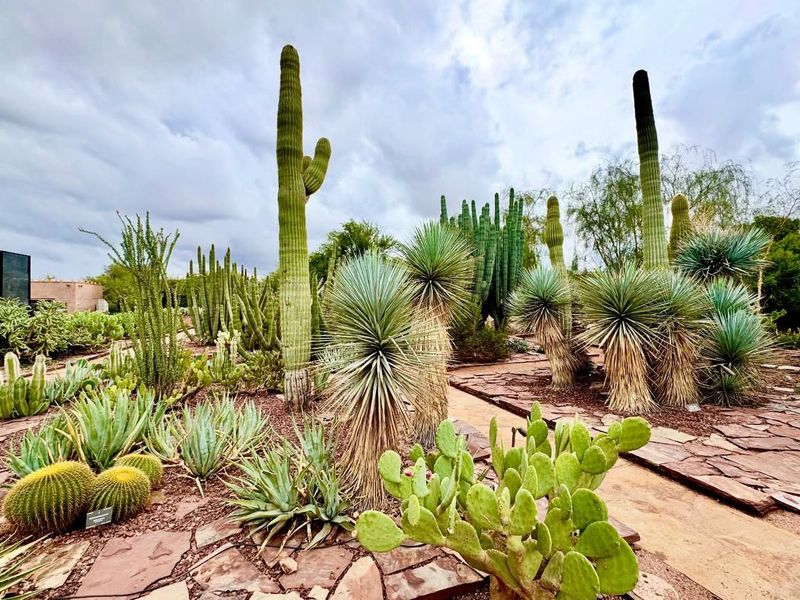
Fallen leaves, dried plant material, rocks pushed by wind, and general yard debris have a way of collecting right at the base of a saguaro without anyone noticing.
It seems harmless, but that layer of organic matter holds moisture against the cactus skin and the root zone in a way that creates real problems over time.
Saguaro roots sit close to the surface and fan out widely, but the crown where roots meet the base of the cactus is particularly sensitive to prolonged moisture.
When debris piles up and traps water there, especially during the wet months that follow Arizona’s spring dry spell, fungal and bacterial issues can take hold more easily.
Clearing the area around your saguaro does not need to be complicated. Pull back anything within about a foot or two of the base, including decorative gravel that may have shifted, mulch from nearby plants, or leaves blown in from other parts of the yard.
Leave the soil around the base open and exposed so it can drain and dry quickly after rain.
While you are cleaning up, look at the ground itself. If the soil around the base is compacted or holds water in a slight depression, that is worth addressing before monsoon season arrives.
4. Inspect For Pests Like Scale Or Mealybugs
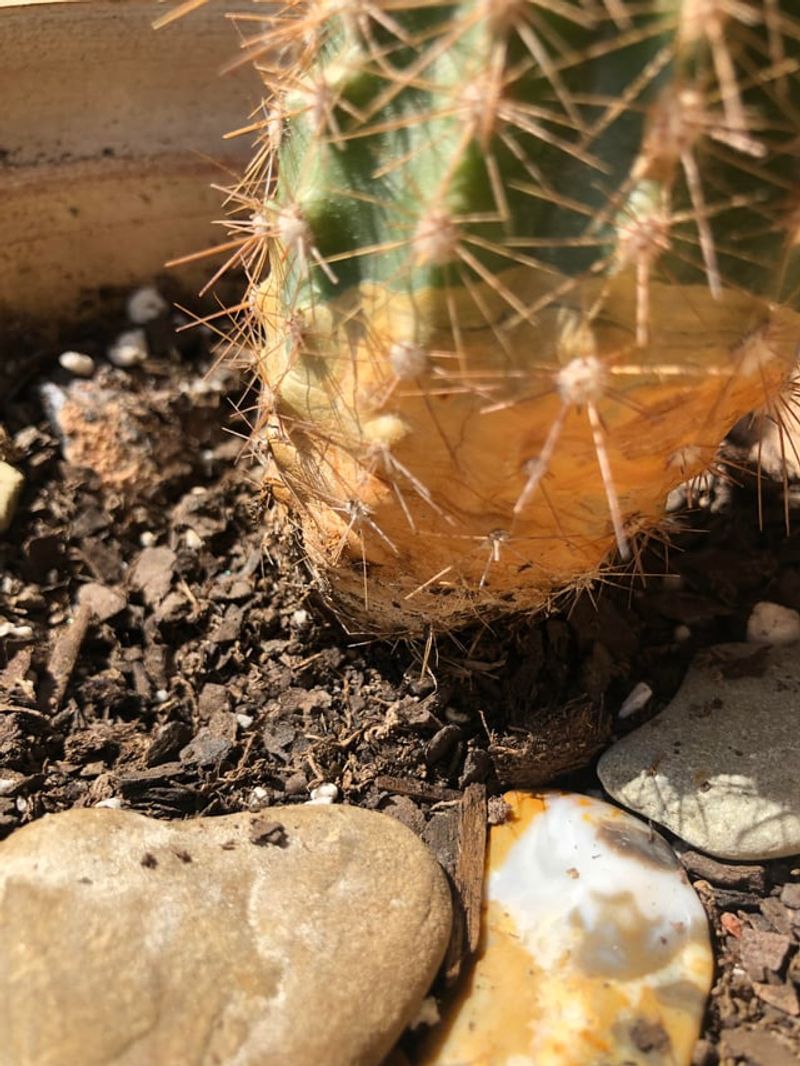
Scale insects and mealybugs are two of the most common pests that show up on saguaros in Arizona, and spring is when populations start building before summer heat pushes them into overdrive.
Both are easy to miss at first glance because they blend in with the cactus skin or look like dust and residue rather than living insects.
Scale insects appear as small, flat, brownish or grayish bumps attached firmly to the surface of the cactus. Mealybugs are fuzzier, leaving behind a white cottony residue, often tucked into the grooves between ribs or near the areoles where spines emerge.
A slow walk around the plant and a close look at the lower sections is usually enough to spot an early infestation.
Catching either pest early makes a difference. Small colonies can sometimes be removed manually with a stiff brush or a targeted spray of water, though saguaros require a careful touch given their spines.
Insecticidal soap or neem oil applied carefully to affected areas has worked for some Arizona gardeners, but results vary depending on the severity and the specific pest involved.
Avoiding overwatering and keeping the area around the cactus clear of dense plant material helps reduce conditions that attract pests in the first place.
5. Do Not Fertilize As Saguaros Do Not Need Feeding
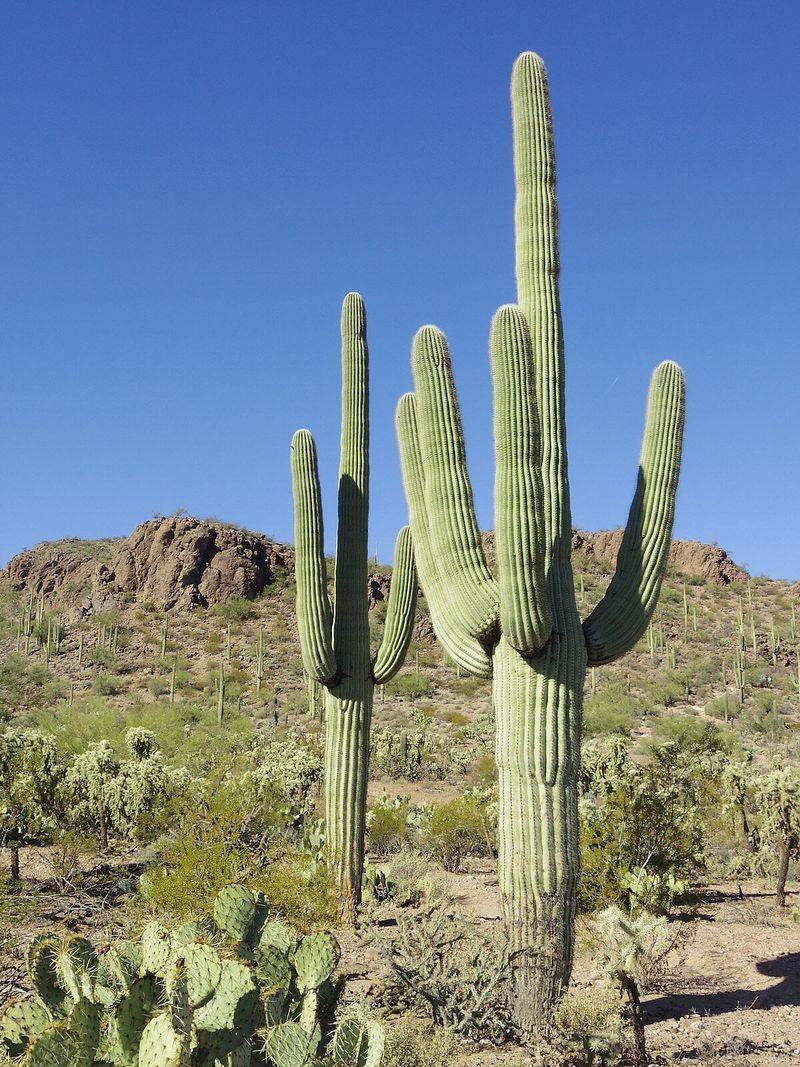
Saguaros have been growing across the Sonoran Desert for thousands of years without anyone adding fertilizer to the ground around them.
They are fully adapted to nutrient-poor desert soil, and that adaptation is part of what makes them so well-suited to Arizona’s conditions.
Adding fertilizer, even products labeled specifically for cacti, can do more harm than good with an established saguaro.
High-nitrogen fertilizers push rapid, soft growth that does not hold up well under stress. Saguaro tissue that grows too fast tends to be weaker, more prone to cracking, and less capable of storing water efficiently.
Heading into monsoon season with artificially stimulated new growth puts the plant in a more vulnerable position, not a stronger one.
Some gardeners assume that because they fertilize their other desert plants, the saguaro should get the same treatment. Saguaros are in a different category entirely.
Their growth is naturally slow, measured in inches per decade during their early years, and that pace is not a problem to fix. Trying to speed it up with nutrients the plant did not evolve to need creates an imbalance rather than a benefit.
If your saguaro looks healthy and is growing at a normal rate for its size and age, the soil is doing its job.
6. Watch For Leaning Or Instability After Winter
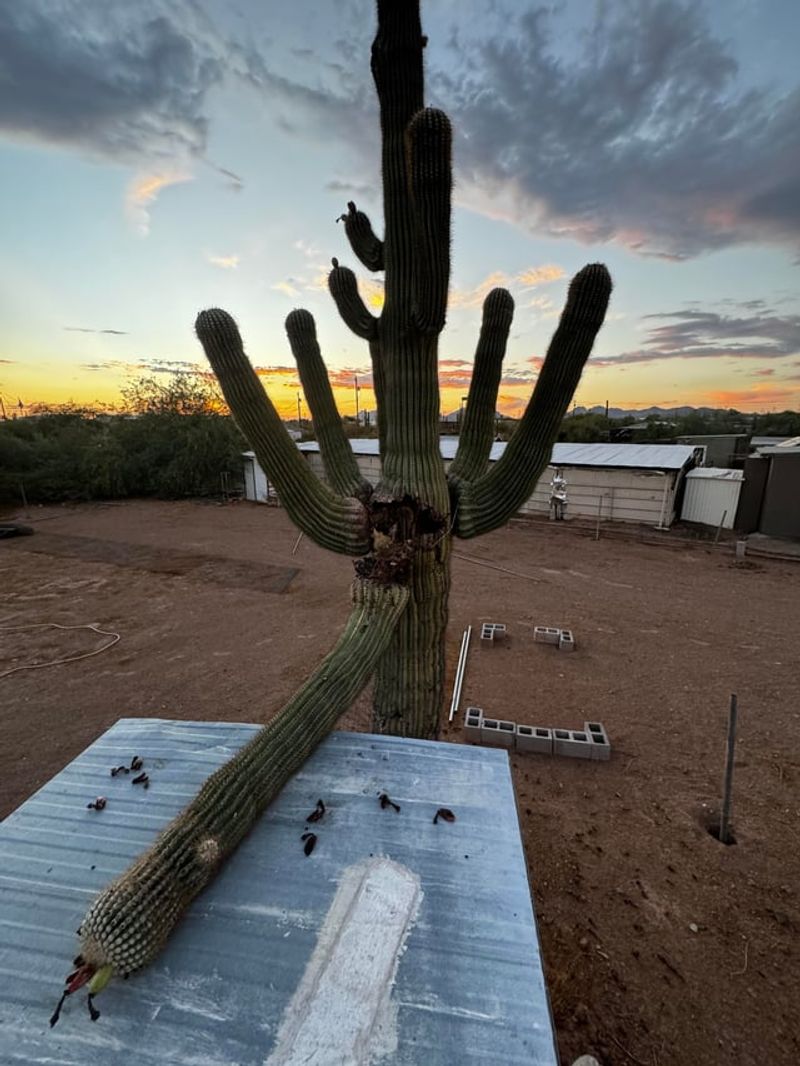
A saguaro that has developed a noticeable lean since last fall is worth paying attention to before monsoon season starts. High winds, saturated soil from winter rains, and temperature fluctuations can all shift how a cactus sits in the ground over several months.
What looks like a minor tilt in spring can become a real structural problem when monsoon storms push heavy winds against a plant that is already off-balance.
Walk around your saguaro and look at it from multiple angles. A slight natural curve is common and not necessarily a concern, but a lean that seems new or is pointing toward a house, fence, or walkway deserves a closer evaluation.
Gently pressing against the base while watching for any movement in the soil around the roots can give you a rough sense of how stable the root system is.
Saguaros rely on a central taproot and a wide network of lateral roots for anchoring. If soil has shifted, eroded, or become compacted unevenly, the root system may not be holding as firmly as it should.
This is especially relevant for saguaros planted in yards where irrigation from nearby lawn areas has repeatedly saturated the surrounding soil.
Consulting with an Arizona arborist or a licensed contractor experienced with large cacti is the safest route if you spot real instability.
7. Protect From Late Cold Snaps If Temperatures Drop
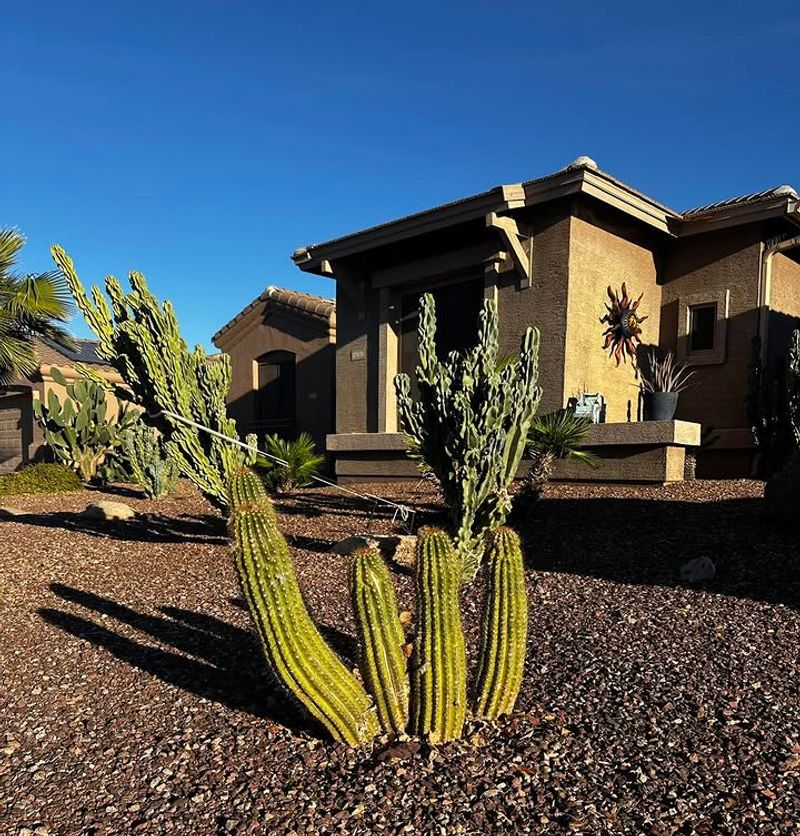
Arizona springs can fool you. Warm afternoons in March and April sometimes give way to overnight lows that drop well below what most people expect, especially at higher elevations around Tucson or in areas north of Phoenix.
A late cold snap landing on a saguaro that has already started pushing new growth can cause real setbacks that show up weeks later as soft or discolored tissue.
Younger saguaros, generally those under about four feet tall, are far more sensitive to cold than their larger counterparts. A mature saguaro standing fifteen feet or taller has significantly more mass and stored water to buffer against a single cold night.
Smaller plants in your yard deserve more attention when a late-season frost advisory pops up on the weather app.
Frost cloth, also called garden fabric or row cover, can be draped loosely over a small saguaro for the night and removed the next morning once temperatures rise.
Avoid using plastic sheeting directly against the cactus, as it can trap heat during the day and create a different kind of stress.
The goal is a light buffer, not a sealed enclosure.
Checking the extended forecast in late February and throughout March is a habit worth building if you live in Arizona and have younger saguaros in your yard.