7 Blue Flowering Perennials That Thrive In Arizona Gardens
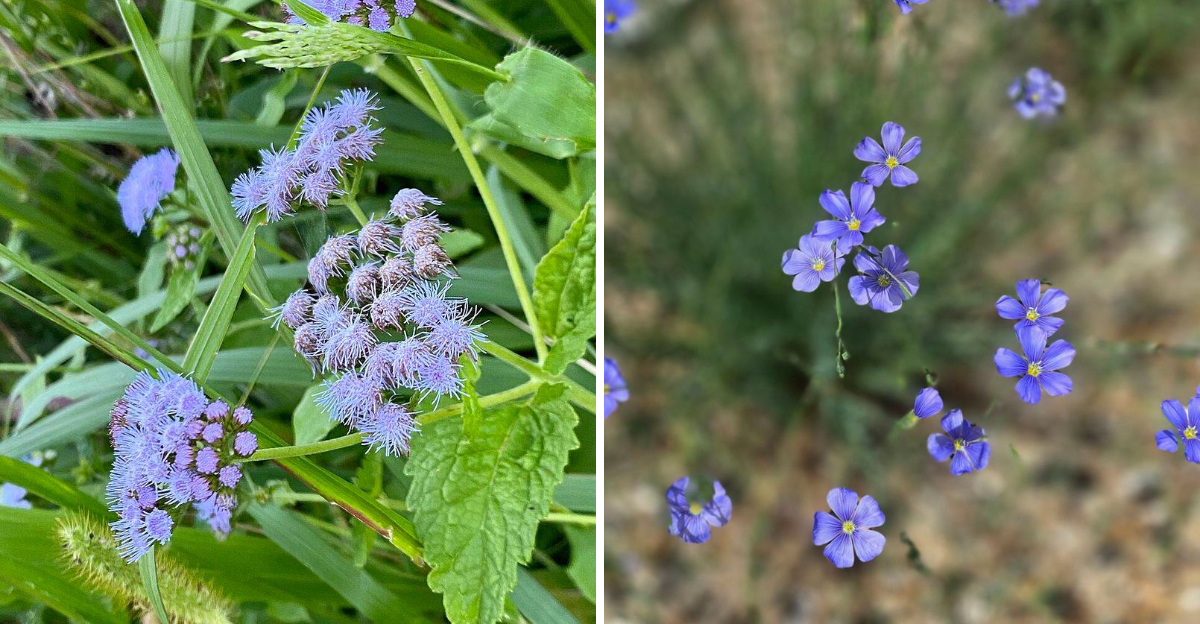
Blue flowers have a way of standing out instantly in Arizona gardens once summer color starts fading across the landscape.
Bright blooms catch attention against gravel, stone, and dry surroundings far more than many softer shades, especially during the hottest part of the season when everything else begins looking dull or tired.
Keeping that color around for more than a few weeks is usually where the real challenge begins. Plenty of flowering plants start strong in spring, then lose their impact once intense heat settles in day after day.
Long lasting perennials make a huge difference once temperatures stay high and the garden needs color the most.
Strong blue blooms can completely change the feel of an Arizona yard during summer without turning flower beds into constant work or extra maintenance.
1. Blue Sage Produces Rich Blue Flowers In Heat
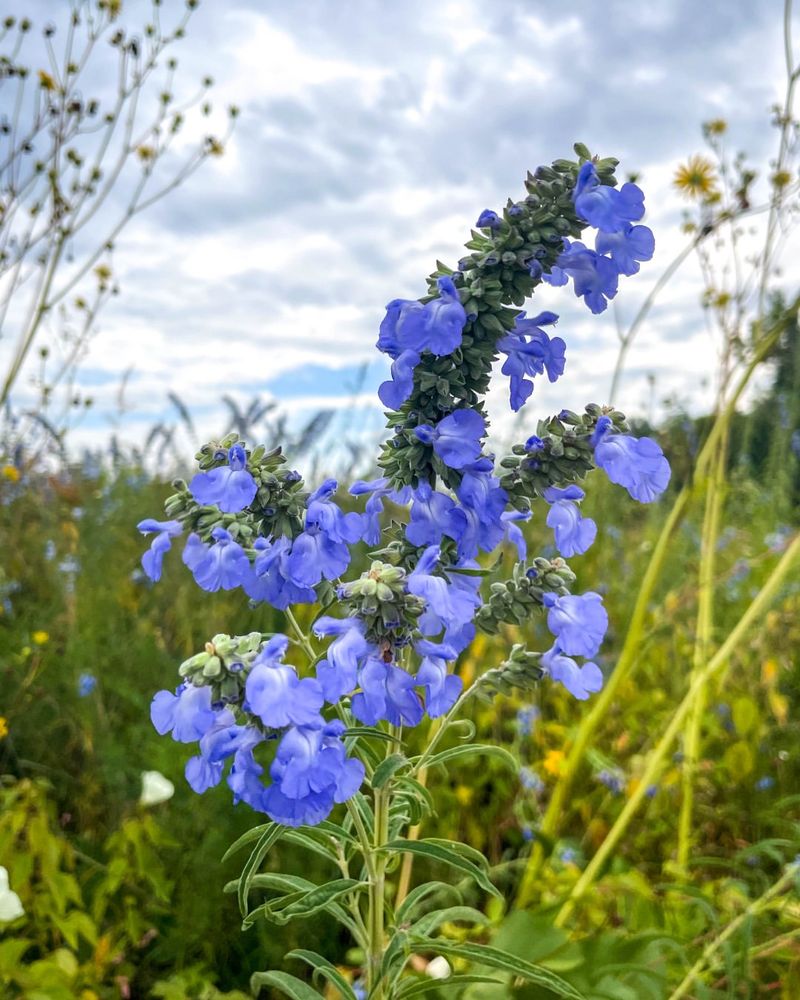
Few plants look as bold and alive in the middle of an Arizona summer as Blue Sage. Salvia azurea, commonly called Blue Sage, pushes out vivid true-blue flower spikes even when temperatures climb well past 100 degrees.
That kind of heat tolerance is rare, and Arizona gardeners who have grown it tend to stick with it season after season.
Blue Sage grows best in full sun with well-drained soil, which makes it a natural fit for the desert Southwest. Sandy or rocky soil works just fine, and once established, it requires very little supplemental watering.
Overwatering is actually more of a problem than drought, so leaning toward the dry side keeps roots healthy and strong.
Plants typically reach three to four feet tall and spread about two feet wide. That upright habit makes Blue Sage useful along borders, in mixed perennial beds, or as a backdrop behind shorter plants.
Hummingbirds and butterflies visit regularly, which adds extra life to any Arizona garden space.
Cutting plants back by about one-third in late winter encourages fresh growth and better blooming the following season. Blue Sage may look a bit ragged after a hard freeze, but it reliably rebounds once warmer weather returns in spring.
Mulching the base lightly through winter helps protect roots during colder stretches in higher elevation Arizona locations like Flagstaff or Prescott.
Long bloom periods are one of the biggest reasons Blue Sage stands out in Arizona landscapes, especially when many other perennials begin slowing down in extreme heat.
2. Blue Flax Blooms With Soft Sky Blue Flowers
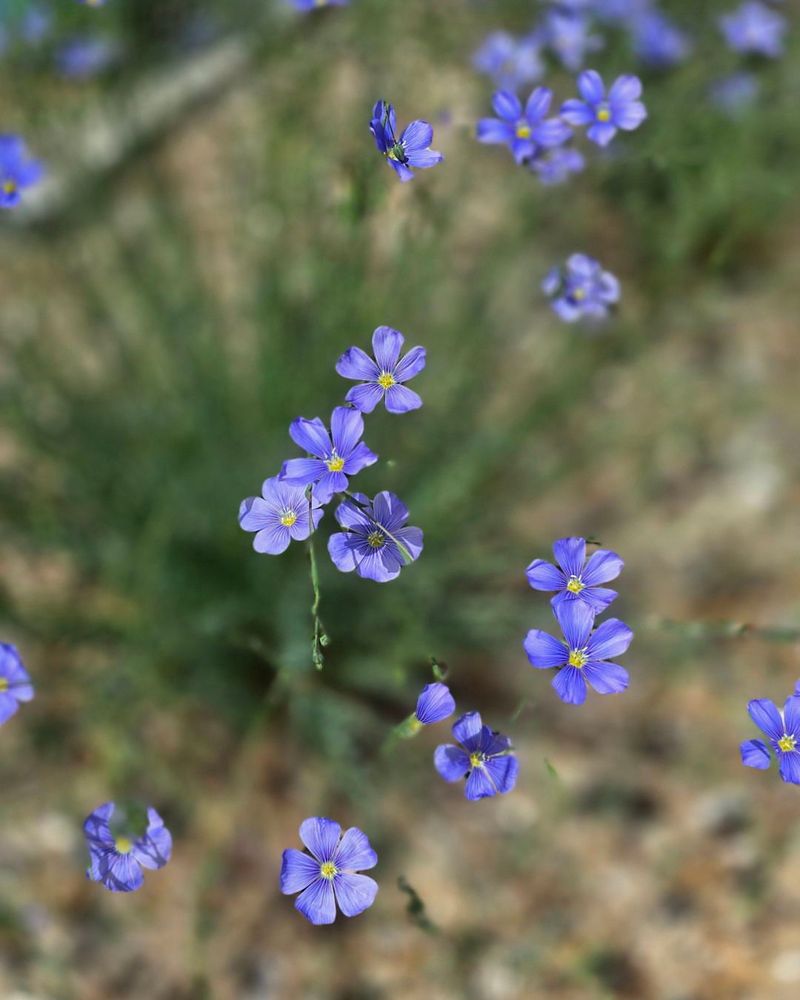
Waking up to a patch of Blue Flax in full bloom feels like finding a piece of sky that landed in your garden. Linum lewisii, native to western North America, produces hundreds of small, round, sky-blue flowers that open in the morning and close by afternoon.
Each individual flower only lasts a day, but the plant keeps sending up new buds for weeks, so the show goes on.
Blue Flax handles Arizona conditions surprisingly well for such a delicate-looking plant. Full sun, rocky or sandy soil, and low water are exactly what it prefers.
Established plants in Phoenix or Tucson landscapes rarely need extra irrigation once the monsoon season kicks in during July and August.
Your Arizona Garden Changes Every Week. Your Plan Should Too.
Gardening in Arizona changes quickly throughout the season. Every Friday you’ll receive a simple weekly plan showing exactly what to plant, prune, fertilize, harvest, and protect so you never miss the right timing.
Growing about one to two feet tall, Blue Flax works well scattered through native plant gardens or mixed into wildflower meadow plantings. It self-seeds freely, which means a small planting can spread naturally over time and fill in bare spots without any extra effort from the gardener.
Deadheading spent flowers is optional since allowing seed heads to form encourages natural reseeding. Cutting plants back after the main spring bloom can trigger a second flush of flowers in fall when Arizona temperatures cool down again.
Blue Flax pairs beautifully with yellow desert marigold or orange globemallow, creating a vibrant color contrast that looks natural and effortless across sunny Arizona landscapes.
Thin stems move easily in the wind, which gives Blue Flax plantings a soft, flowing look that fits naturally into Arizona wildflower gardens.
3. Mealy Blue Sage Keeps Flowering Through Summer
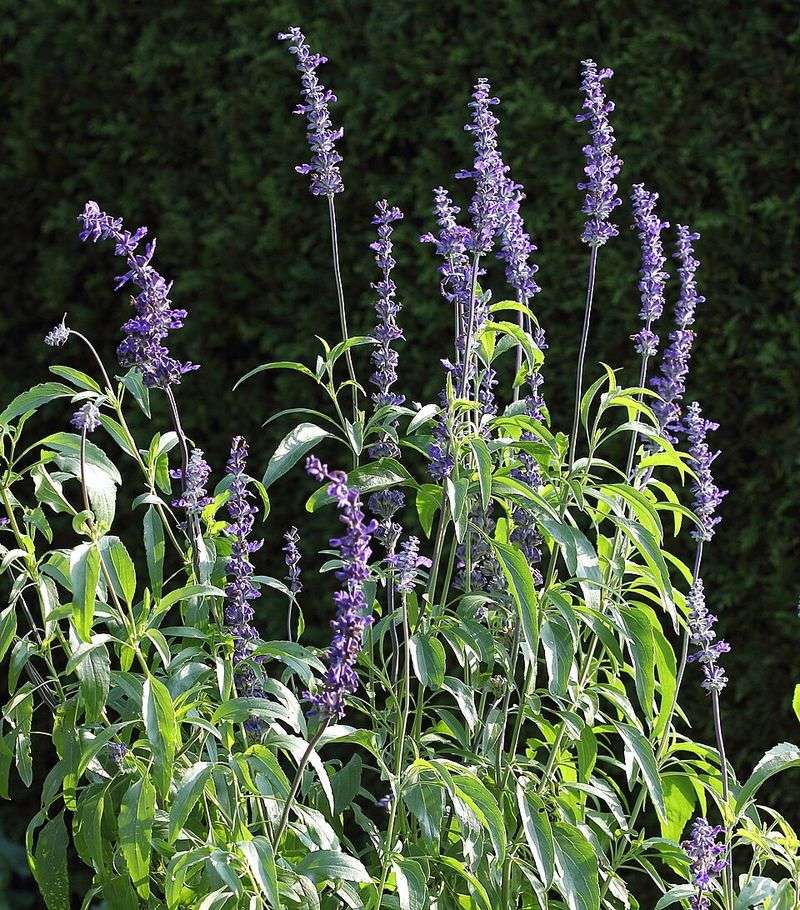
Salvia farinacea, known as Mealy Blue Sage, earned its place in Arizona gardens by doing something most flowering plants refuse to do: bloom persistently through the brutal summer months.
While other perennials pause or go dormant during peak heat, Mealy Blue Sage keeps pushing out fresh spikes of soft blue-violet flowers from spring straight through fall.
That kind of reliability matters a lot in a desert climate.
Native to Texas and northern Mexico, Mealy Blue Sage adapts easily to the low desert conditions found across much of Arizona. Full sun and well-drained soil are the main requirements.
Plants tolerate reflected heat from walls and pavement, making them a solid choice for patios, entryways, and streetside planting strips in Scottsdale or Mesa neighborhoods.
Reaching about two to three feet in height, Mealy Blue Sage stays compact enough for smaller garden spaces. Bees absolutely love the flowers, visiting throughout the day whenever blooms are open.
Hummingbirds also stop by regularly, especially during their migration periods through the Arizona region in spring and fall.
Light shearing after each major bloom cycle encourages the plant to branch out and produce even more flower spikes. Water needs are low once established, though a deep soak every week or two during the hottest stretches of summer keeps plants looking their best.
Mealy Blue Sage also works well in containers placed on shaded patios where it can get morning sun without excessive afternoon exposure.
Gray-green foliage stays attractive even between bloom cycles, which helps Mealy Blue Sage continue looking full and healthy in Arizona gardens through long stretches of heat.
4. Cape Plumbago Covers Shrubs With Pale Blue Blooms
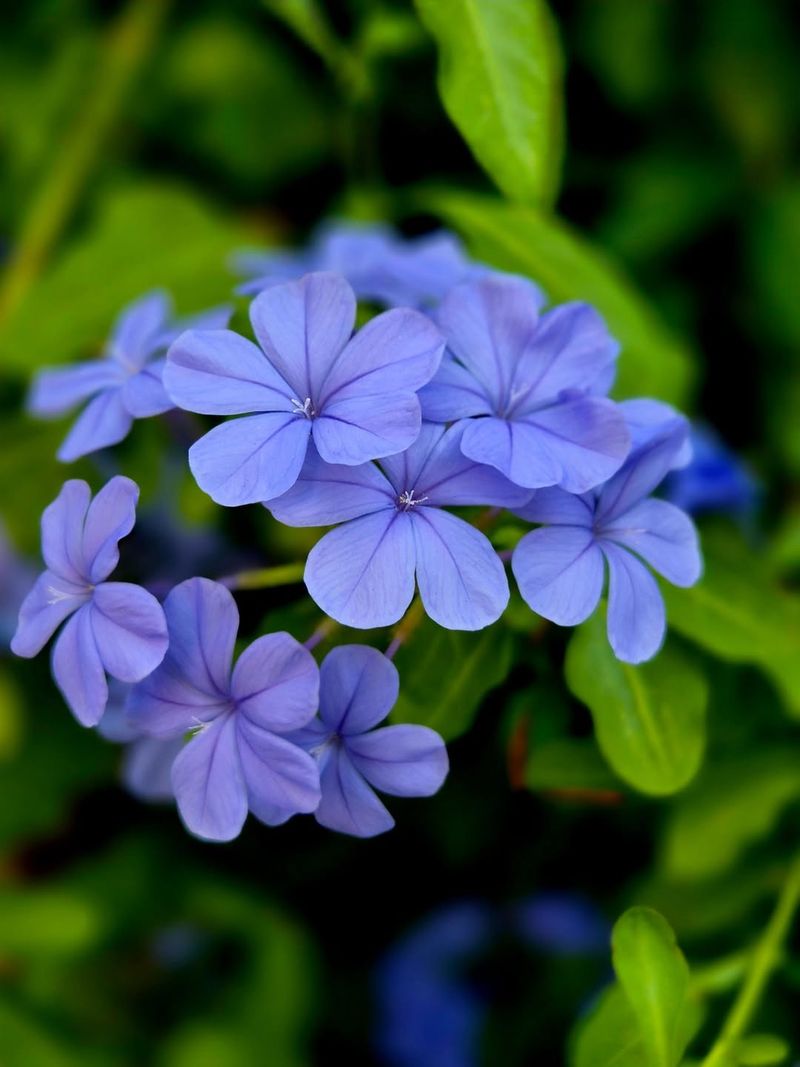
Cape Plumbago is one of those plants that earns every compliment it gets.
Plumbago auriculata drapes itself in clusters of pale, powder-blue flowers for months at a time, creating a soft, almost dreamy look that feels unexpected in the middle of a harsh Arizona landscape.
It blooms heavily in spring and fall, with lighter flowering continuing through summer in most low desert areas.
Growing as a sprawling shrub or trained along a wall or fence, Cape Plumbago can reach four to six feet tall and spread even wider with time. Full sun to partial shade both work well, though plants in full sun tend to bloom more freely.
Sandy or loamy soil suits it best, and once established in an Arizona yard, it needs only occasional deep watering during dry spells.
Butterflies are drawn to the flowers consistently, and the pale blue color holds up well even under intense afternoon sunlight. Plumbago looks especially striking planted against adobe walls or alongside bold desert plants like red bird of paradise or yellow lantana, where the cool blue tones create a strong visual contrast.
Hard freezes can damage stems and foliage in colder parts of Arizona, but roots usually survive and resprout vigorously in spring. Cutting frost-damaged stems back to healthy wood in late winter is all the cleanup most plants need.
In frost-free areas of Yuma or lower Tucson elevations, Cape Plumbago may stay evergreen and bloom almost year-round with minimal care.
Cape Plumbago responds well to occasional pruning, which helps control its size and encourages denser flowering throughout the growing season.
5. Blue Mistflower Produces Clusters Of Soft Blue Flowers
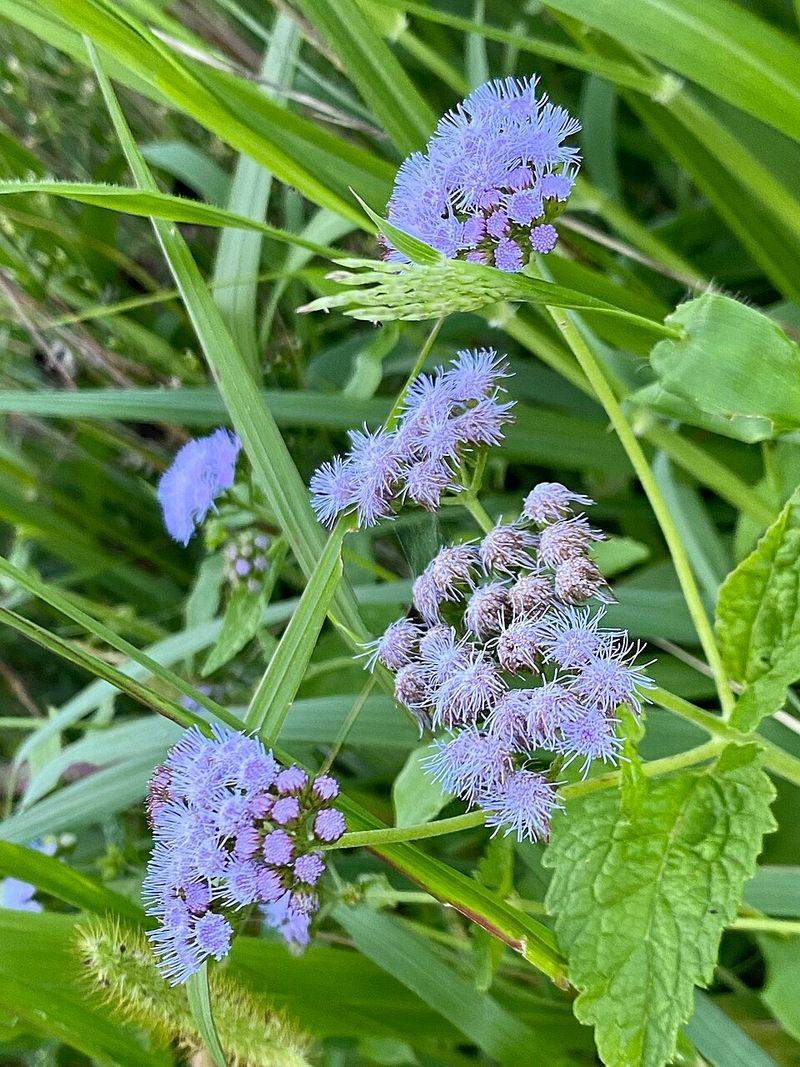
Blue Mistflower goes by the botanical name Conoclinium coelestinum, but Arizona gardeners who know it usually just call it one of the best fall bloomers in the desert.
Right when most summer plants start looking worn out, Blue Mistflower kicks into gear and covers itself with fluffy clusters of soft blue-purple flowers.
Monarch butterflies migrating through Arizona in autumn seek it out almost immediately.
Unlike many blue perennials that demand full sun, Blue Mistflower actually prefers some shade or filtered light. Under trees, along north-facing walls, or tucked beside a porch are all spots where it tends to thrive.
Moist, well-amended soil helps it grow more vigorously than pure desert conditions, so adding compost at planting time makes a noticeable difference.
Plants spread by underground runners, gradually forming a patch over several seasons. That spreading habit can be useful for filling shaded corners where other plants struggle, but it helps to keep an eye on the edges and pull back any runners that push too far.
Growing about two to three feet tall, Blue Mistflower stays manageable with minimal pruning.
Cutting plants back to the ground in late winter encourages strong, fresh growth each spring. Water needs are moderate compared to most Arizona perennials, so grouping Blue Mistflower with other medium-water plants makes irrigation more efficient.
In the Tucson area, it pairs beautifully with autumn sage and desert marigold for a layered, wildlife-friendly planting that peaks in color right through October.
Blue Mistflower tends to look its fullest and healthiest when protected from harsh late afternoon sun during the hottest parts of an Arizona summer.
6. Evolution Salvia Brings Deep Violet Blue Flower Spikes
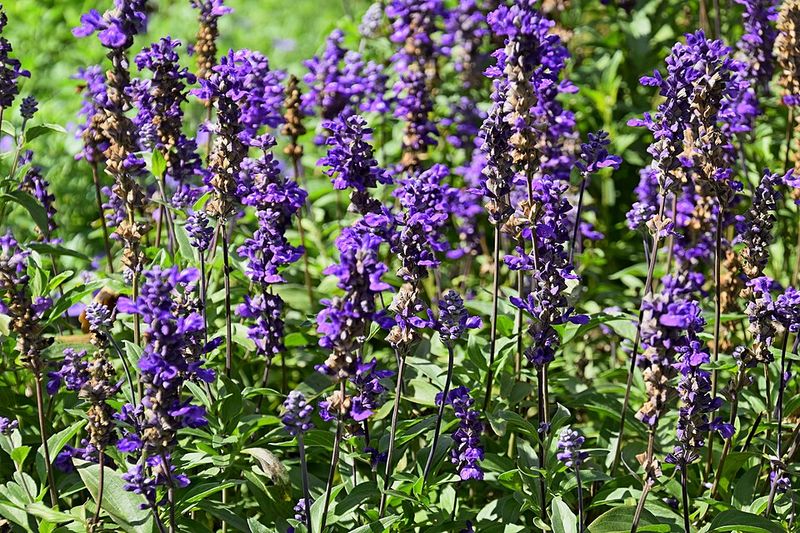
Bold, vertical, and impossible to ignore, Evolution Salvia stops people in their tracks.
A hybrid salvia developed for heat and drought tolerance, Evolution produces tall spikes of deep violet-blue flowers that stand out sharply against the warm earth tones typical of Arizona landscapes.
Nurseries across the Phoenix metro area carry it regularly because demand stays high once gardeners see it in bloom.
Evolution Salvia performs best in full sun with fast-draining soil. Gravel mulch suits it well, and it handles reflected heat from walls and patios without flinching.
Watering every seven to ten days during summer is usually enough once the plant establishes, though younger plants need slightly more attention during their first hot season.
Growing two to four feet tall depending on conditions, Evolution Salvia adds strong vertical structure to mixed perennial beds and xeriscape designs. Hummingbirds and large bees visit the long flower spikes regularly, making it a functional plant for supporting local pollinators across Arizona.
The deep violet-blue color also photographs beautifully, which is a bonus for anyone documenting their garden.
Deadheading spent flower spikes encourages the plant to push out new blooms rather than putting energy into seed production. Cutting back by one-third after the main spring flush keeps plants tidy and promotes repeat flowering through fall.
Evolution Salvia is hardy enough to handle light frosts but benefits from a protective layer of gravel mulch around the base during colder winters in central Arizona locations like Prescott or higher-elevation Tucson neighborhoods.
Strong stems help Evolution Salvia stay upright through Arizona wind and summer storms without collapsing or needing much support.
7. Parrys Penstemon Produces Blue Purple Spring Blooms
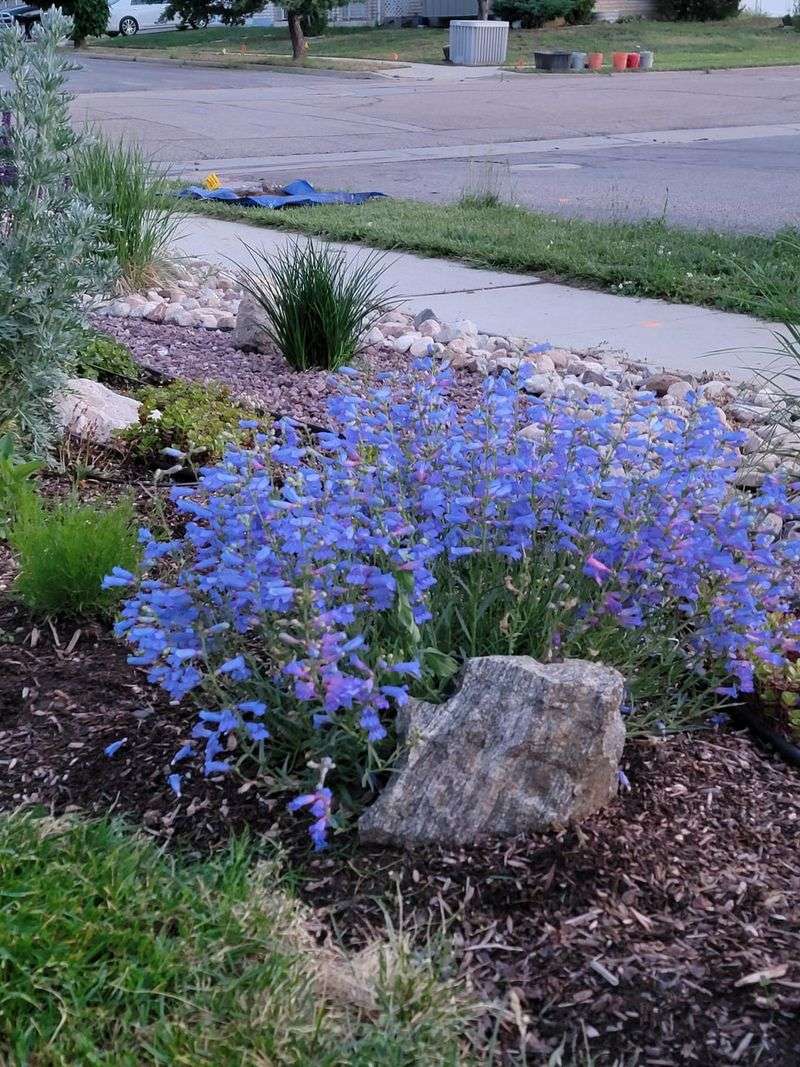
Parry’s Penstemon is as Arizona as it gets. Penstemon parryi grows wild across the Sonoran Desert, and its tall spikes of tubular blue-purple flowers are one of the clearest signs that spring has arrived in the low desert.
Blooming from February through April, it coincides perfectly with hummingbird migration, and those birds find the flowers almost immediately after they appear.
Rocky, well-drained soil is where Parry’s Penstemon truly shines. Slopes, gravel gardens, and decomposed granite landscapes provide the drainage it needs to thrive long-term.
Planting in heavy clay or poorly drained soil leads to root problems, so amending the planting area or choosing a naturally rocky spot gives the best results across most Arizona properties.
Plants grow three to five feet tall when blooming, creating a dramatic vertical display that works well in naturalistic garden designs.
After flowering finishes, the foliage stays as a low rosette of gray-green leaves through summer, which takes up minimal space and blends quietly into the surrounding landscape until the next spring season arrives.
Watering every two to three weeks during the dry season is usually sufficient for established plants.
Parry’s Penstemon is native to Arizona and adapted to the natural rainfall patterns of the Sonoran Desert, so it rarely needs heavy supplemental irrigation.
Collecting and scattering seeds after the seed heads dry out in late spring is an easy way to establish new plants across different areas of your Arizona garden without spending extra money at the nursery.
Morning sun and cooler nighttime desert temperatures during spring help Parry’s Penstemon produce its strongest flower color and tallest bloom spikes.