These 11 Sun-Seeking Flowers Thrive In California Gardens
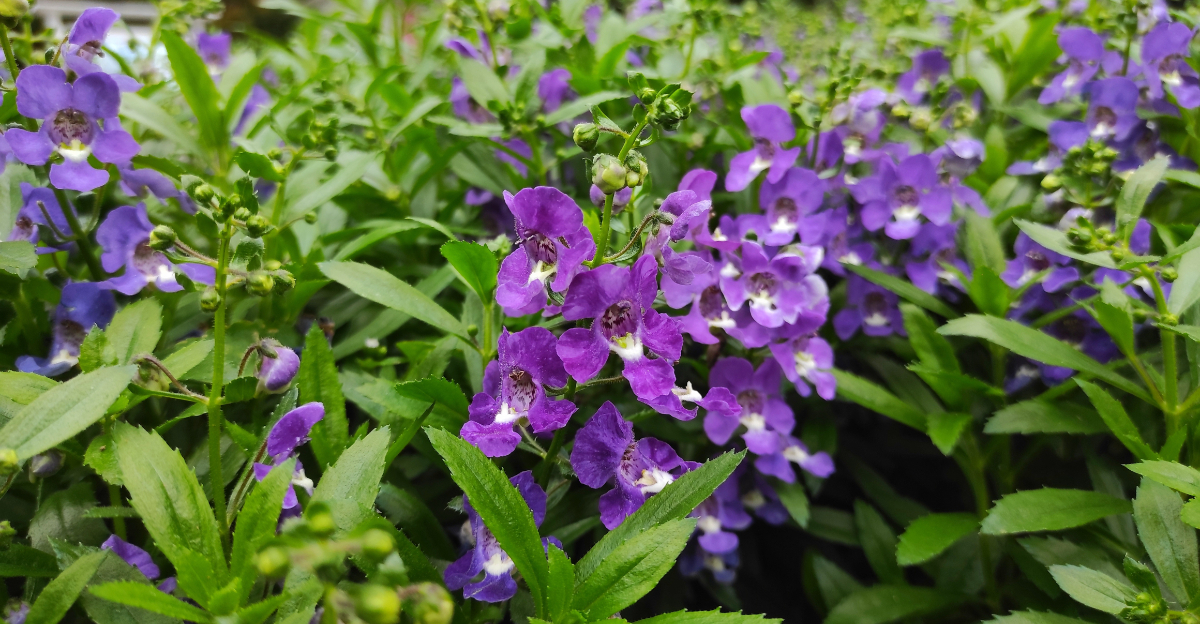
California sun is not for the faint of heart. It shows up early, stays late, and by July it is absolutely cooking everything in its path.
Most gardeners spend a lot of energy trying to protect their plants from it, rigging up shade cloth and fretting over wilting leaves.
But there’s a whole category of flowers out there that look at a blazing California summer and see exactly the conditions they were built for. Sun-loving flowers are not all created equal though. Some tolerate heat.
Others genuinely need it to hit their peak, producing more blooms, richer color, and stronger stems the hotter and brighter things get. Those are the ones worth tracking down.
Plant them in your sunniest spots and instead of a problem area you’ve got a showstopper. The parts of your yard that bake all day and kill everything else?
That’s prime real estate for the right flower. California’s intense sunshine is about to become your biggest gardening asset.
1. Gazania
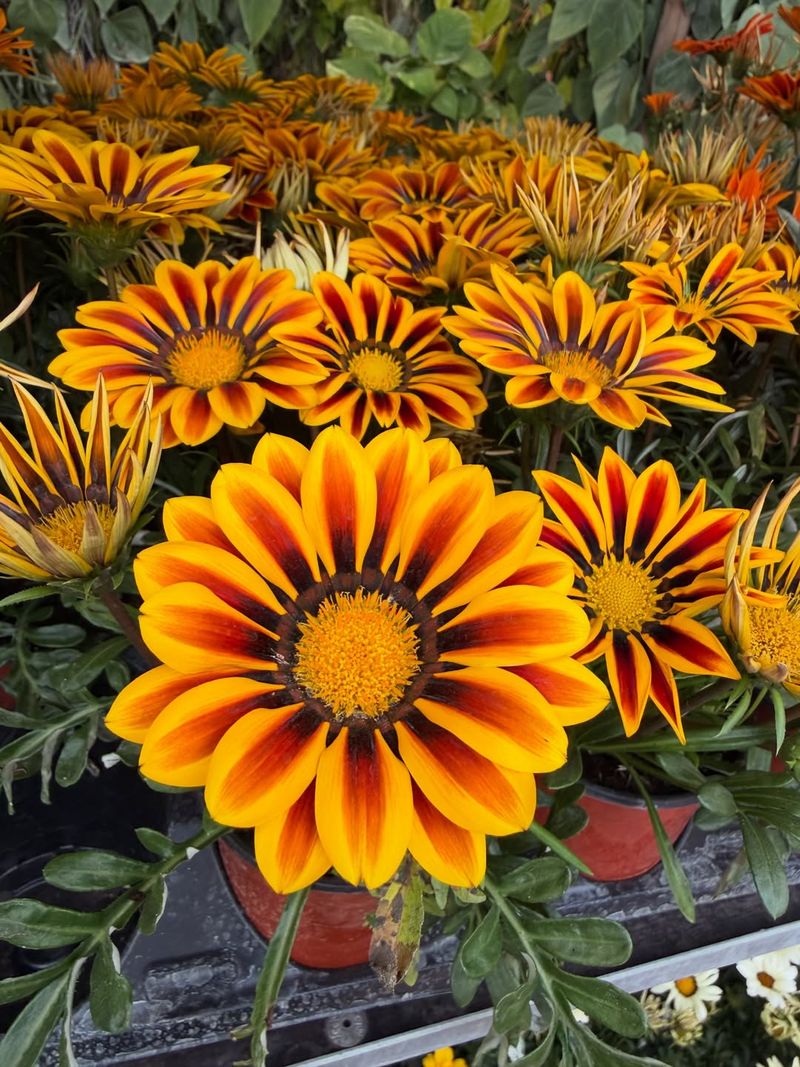
Few flowers put on a show quite like Gazania. Sometimes called the treasure flower, this South African native absolutely thrives in California gardens where the sun shines strong and the soil stays dry.
It is one of those plants that gets happier the hotter things get.
Gazanias come in bold shades of orange, yellow, red, and pink, often with striking dark centers that make them look almost painted. They bloom heavily from spring through fall, which is a long season of color for any garden.
One fun fact: Gazania flowers close at night and on cloudy days, then reopen when the sun comes back out.
Plant them in well-draining soil and give them full sun for the best results. They are very drought-tolerant once established, making them a smart choice for water-conscious California gardeners.
You can use them as ground cover, border plants, or in containers on a sunny porch. They need very little care, which is always a bonus.
Even beginners can grow Gazanias successfully with just a little attention at the start.
2. Rockrose
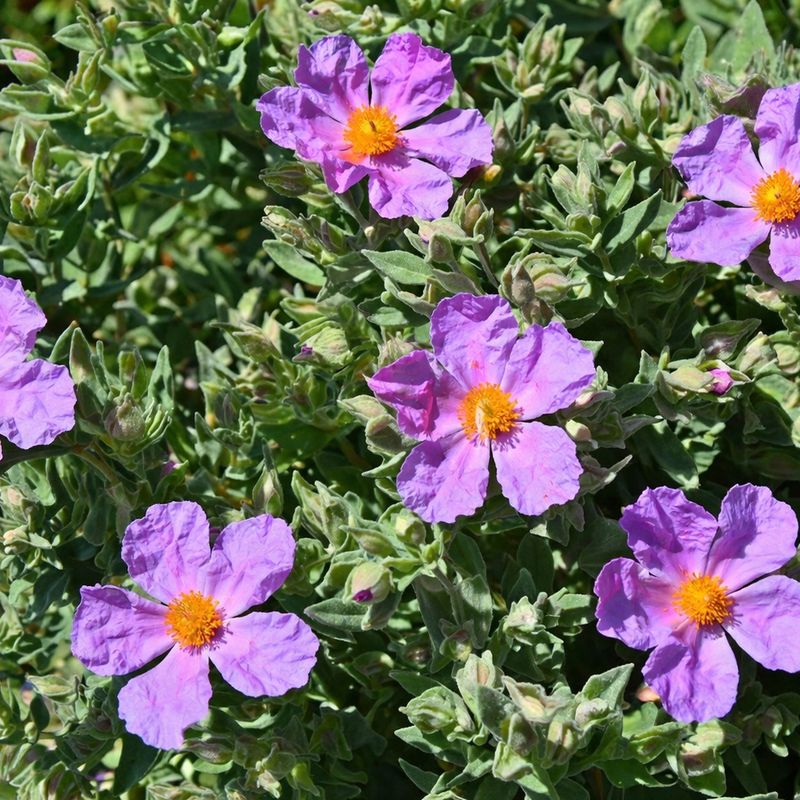
Tough, beautiful, and surprisingly low-maintenance, Rockrose is a shrub that feels right at home in California. It is native to the Mediterranean region, which means it was practically made for the Golden State’s dry summers and mild winters.
Once it gets settled in, it barely needs any help from you.
Rockrose produces papery, rose-like flowers in shades of pink, white, and purple. The blooms appear in spring and last for several weeks, covering the plant in color.
Even when it is not flowering, the plant has attractive gray-green foliage that looks great year-round in California landscapes.
This plant loves full sun and handles drought conditions like a champ. It grows well on slopes and hillsides where other plants might struggle, making it a popular choice for erosion control in California.
Plant it in rocky or sandy soil with good drainage, and avoid overwatering. Rockrose does not like wet roots.
It can grow three to five feet tall and wide, so give it some space to spread. Trim lightly after blooming to keep the shape tidy.
Your California Garden Changes Every Week. Your Plan Should Too.
Gardening in California changes quickly throughout the season. Every Friday you’ll receive a simple weekly plan showing exactly what to plant, prune, fertilize, harvest, and protect so you never miss the right timing.
It is a reliable, long-lived plant that rewards patient gardeners beautifully.
3. Kangaroo Paws
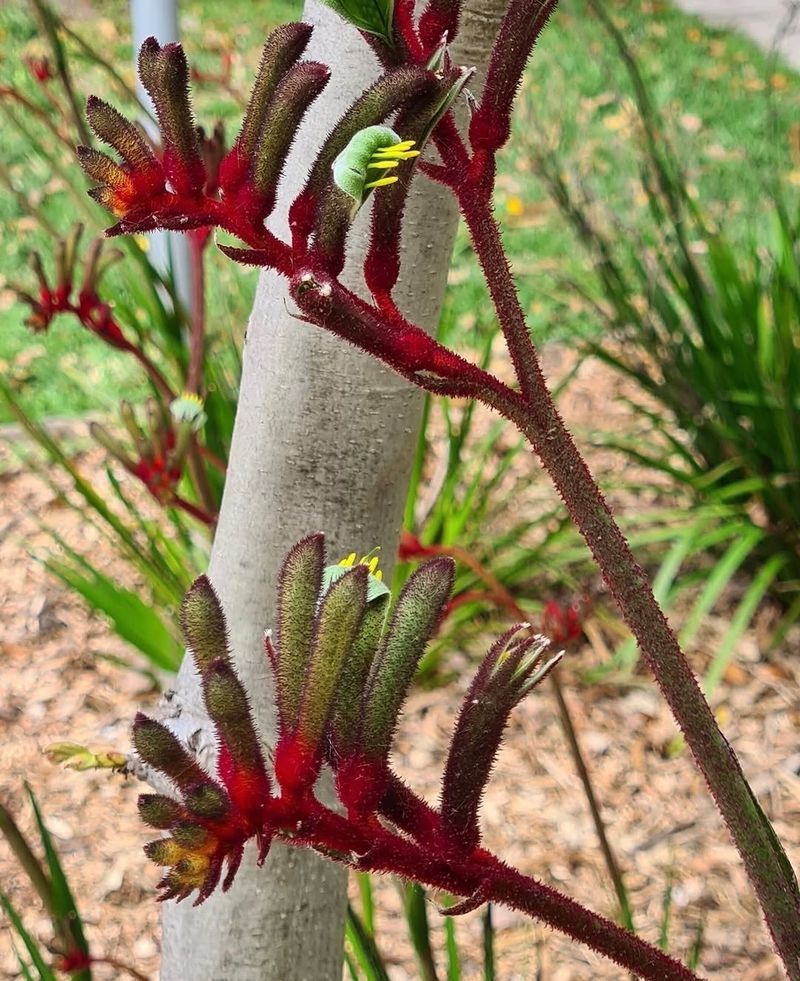
Named for their fuzzy, claw-shaped flowers, Kangaroo Paws bring a truly unique look to any California garden. Originally from Australia, these plants feel right at home in the warm, dry conditions that much of California offers throughout the year.
The flowers grow on tall, slender stalks and come in fiery shades of red, orange, yellow, and even black. They are tubular and covered in soft, velvety fuzz, which gives them that signature kangaroo paw look.
Hummingbirds absolutely love them, so planting a few is a great way to attract wildlife to your yard.
Kangaroo Paws grow best in full sun with well-draining soil. They are drought-tolerant once established, which makes them a smart pick for California’s water-wise gardening goals.
Plant them in raised beds or containers if your soil tends to hold moisture. Cut back the old flower stalks after blooming to encourage fresh new growth.
They typically bloom from late spring through summer. In warmer parts of California, they may bloom almost year-round.
With the right spot and minimal care, Kangaroo Paws will reward you with bold, exotic-looking color season after season.
4. Society Garlic
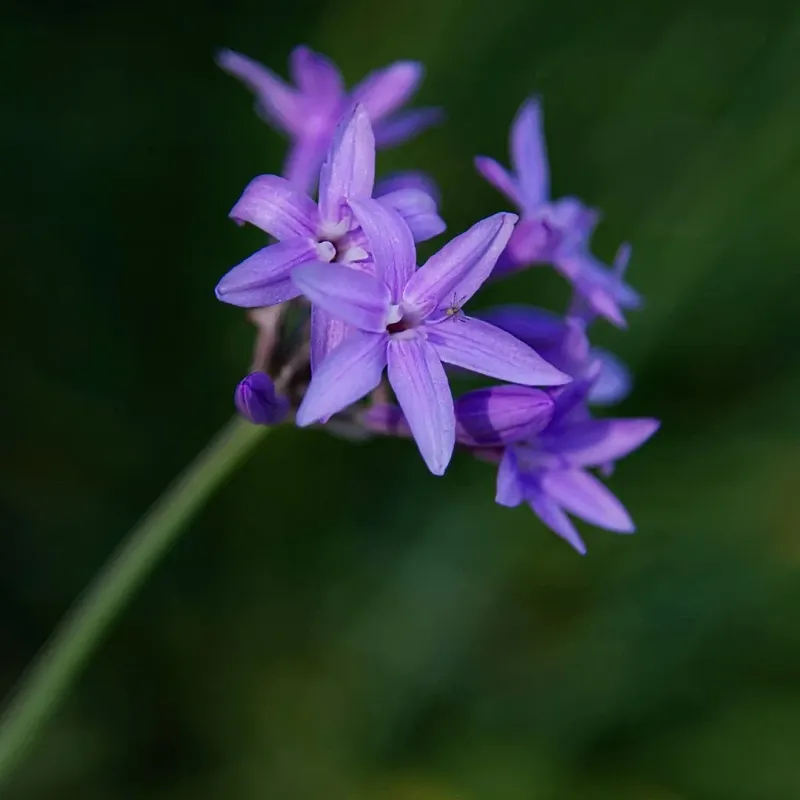
Society Garlic has one of the best names in the plant world, and it lives up to the intrigue. It smells like garlic when the leaves are crushed, but the flowers are sweet and pretty enough to earn a spot in any stylish California garden.
It is a plant that works hard and looks good doing it.
The flowers are small, star-shaped, and lavender-purple, growing in clusters on tall stems. They bloom from spring all the way through fall, giving you months of reliable color.
The strappy, grass-like leaves stay green year-round in most parts of California, which means your garden always has some structure even between bloom cycles.
Society Garlic loves full sun and handles drought well once it is established. It is also deer-resistant, which is a big plus in many California neighborhoods and hillside communities.
Plant it along borders, pathways, or in mass groupings for the best visual impact. It spreads slowly over time and forms tidy clumps.
Divide the clumps every few years to keep the plant healthy and to create new plants for other spots in your yard. It is one of the most dependable flowers for California gardeners who want beauty without a lot of fuss.
5. Globe Amaranth
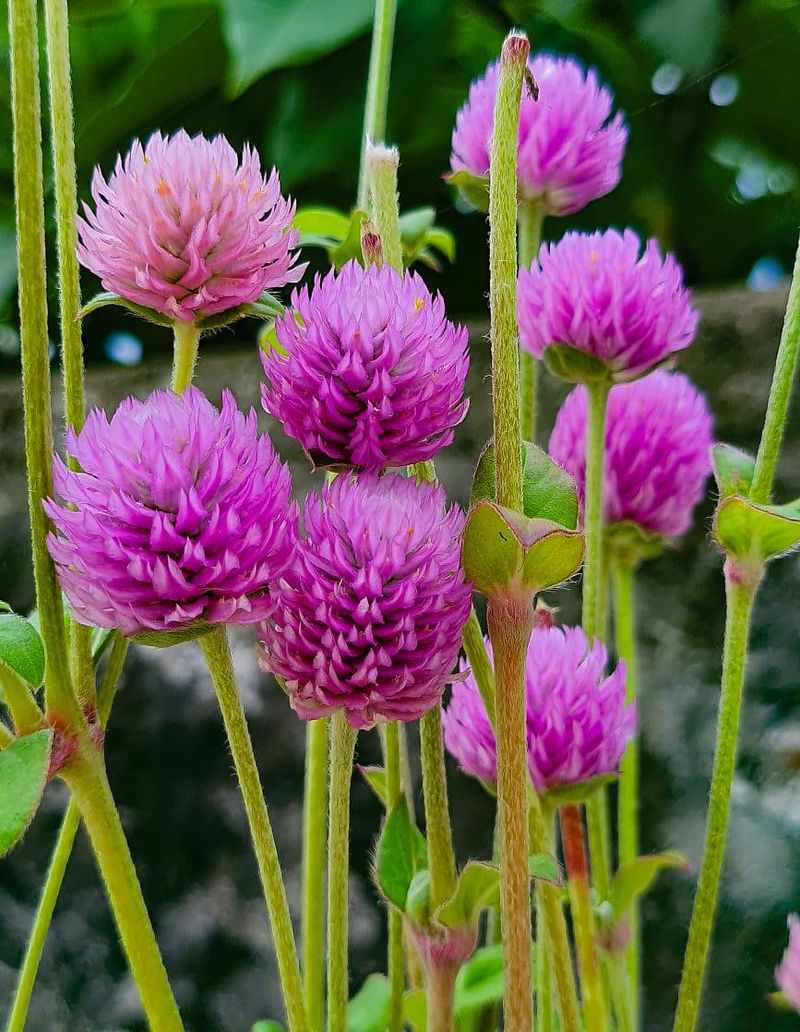
Round, bright, and cheerful, Globe Amaranth is one of those flowers that makes people stop and smile. The blooms look like tiny colorful clover heads, and they come in shades of magenta, pink, purple, orange, and white.
They hold their color beautifully, even after cutting, which is why they are so popular in dried flower arrangements.
Globe Amaranth is a warm-season annual that thrives in California’s long, hot summers. It loves full sun and actually performs better when temperatures rise.
While some flowers struggle in intense heat, Globe Amaranth just keeps going. It blooms from early summer all the way to the first cool nights of fall.
Plant it in well-draining soil and water regularly until it gets established. After that, it becomes fairly drought-tolerant and needs less attention.
Deadheading, which means removing old blooms, encourages the plant to keep producing fresh flowers. Globe Amaranth works well in garden beds, containers, and cottage-style gardens.
It also attracts butterflies, making it a great addition to any California pollinator garden. Start seeds indoors a few weeks before your last frost date, or plant nursery starts directly outdoors once the weather warms up in spring.
6. Portulaca
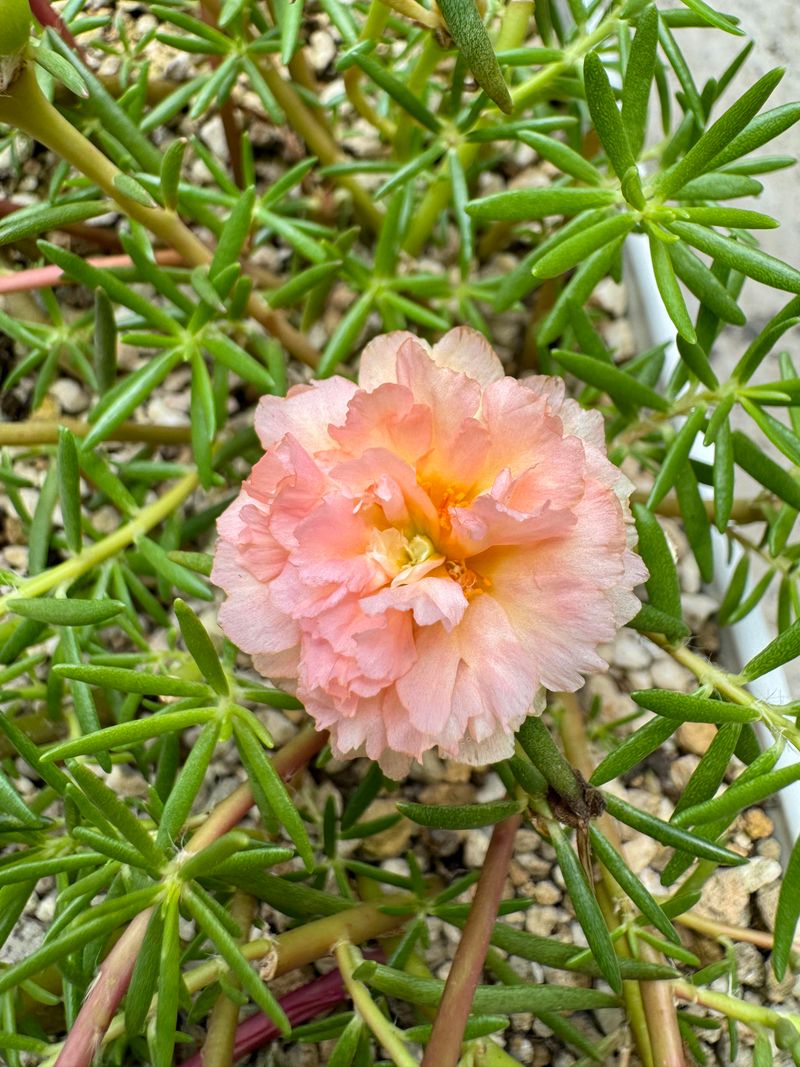
If you have a hot, dry spot where nothing else seems to grow, Portulaca might just be your answer. Also known as moss rose, this low-growing annual is one of the most heat-tolerant flowers you can plant in California.
It actually seems to thrive on neglect, which makes it perfect for busy gardeners.
The flowers are small, silky, and come in a rainbow of colors including red, pink, yellow, orange, white, and bi-colors. They open in full sun and close in the evening or on cloudy days.
The succulent-like leaves store water, which is how the plant handles California’s dry spells so well.
Portulaca grows only a few inches tall, making it ideal for ground cover, rock gardens, containers, and hanging baskets. Plant it in sandy or gravelly, well-draining soil and give it as much sun as possible.
It does not like wet soil or shade. Water sparingly once established.
Seeds can be scattered directly on the soil surface in spring after the last frost. They are tiny and need light to germinate, so do not cover them with soil.
Portulaca is one of the most carefree flowers a California gardener can grow.
7. Coneflowers
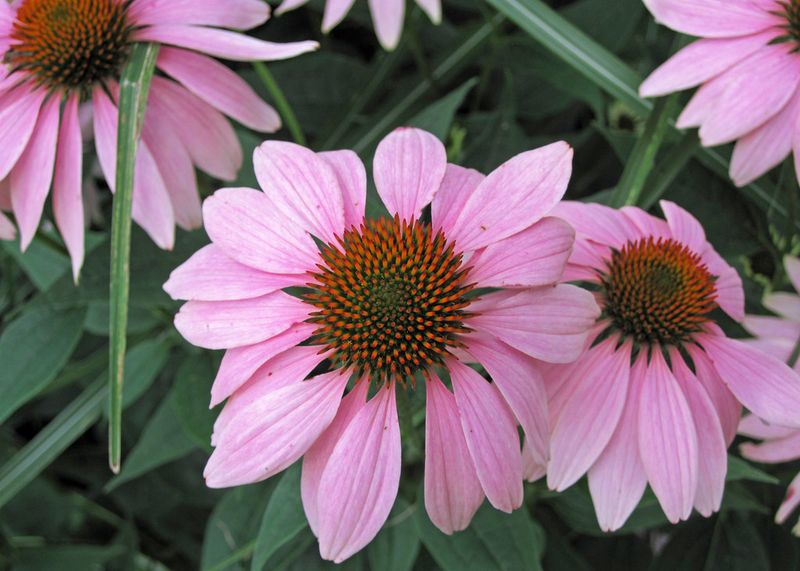
Bold, cheerful, and practically indestructible, Coneflowers have earned their place in California gardens many times over. Known scientifically as Echinacea, these prairie natives adapt surprisingly well to the California climate, especially in areas with hot, dry summers and mild winters.
The classic coneflower has purple petals surrounding a spiky orange-brown center cone. But modern varieties come in yellow, white, pink, red, and even coral.
They bloom from early summer into fall, and the seed heads left behind attract birds like goldfinches during the cooler months. It is a plant that keeps giving long after the petals fall.
Coneflowers grow best in full sun with well-draining soil. They are drought-tolerant once established, though they appreciate occasional deep watering during California’s dry season.
Plant them in garden borders, meadow-style gardens, or mixed beds. They pair beautifully with ornamental grasses and other sun-loving perennials.
Divide clumps every three to four years to keep them vigorous and to spread them to new areas of your yard. Coneflowers are also magnets for butterflies and bees, making them a top pick for anyone building a pollinator-friendly California garden.
They come back year after year with almost no extra effort needed.
8. Angelonia
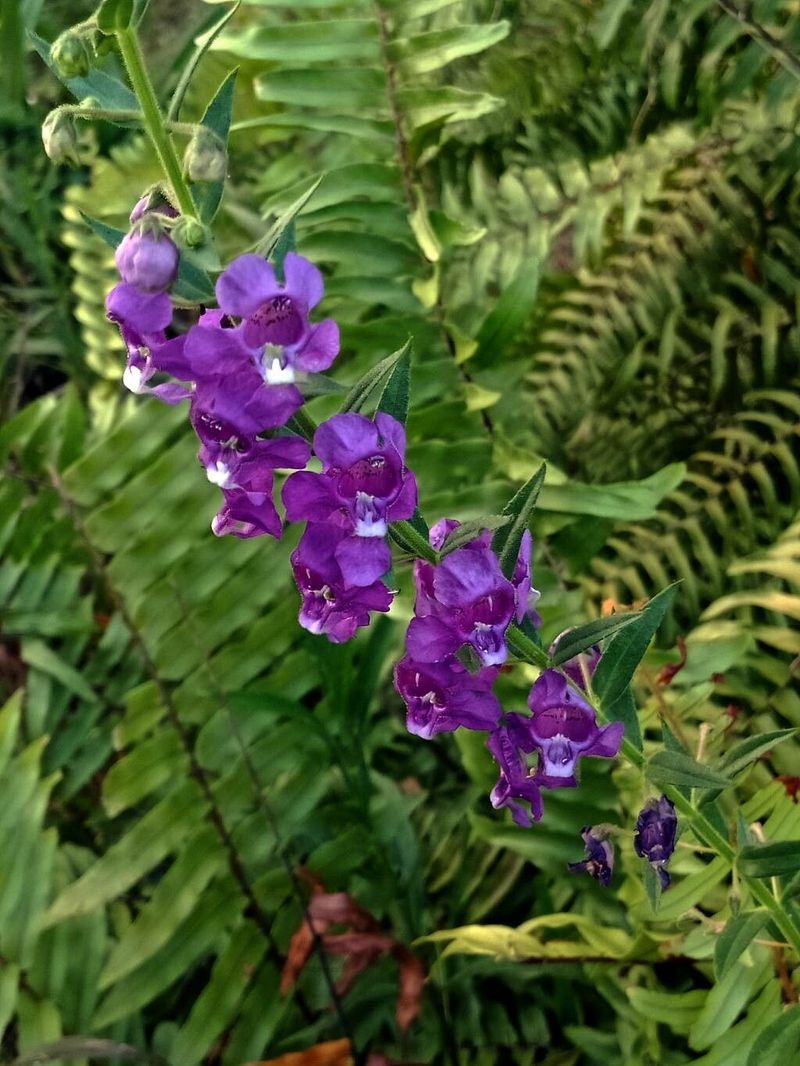
Sometimes called summer snapdragon, Angelonia is a flower that loves heat and keeps blooming even when California summers get intense. It has a light, sweet fragrance that is pleasant without being overwhelming, and the tall flower spikes add nice vertical interest to garden beds and containers.
The blooms are small and orchid-like, growing along upright stems that can reach one to two feet tall. Colors include purple, pink, white, and bi-color varieties.
Angelonia blooms continuously from spring through fall without needing much deadheading, which makes it one of the easier flowers to maintain in a California garden.
Plant Angelonia in full sun for the best performance. It handles heat and humidity well, and it is more drought-tolerant than it looks.
Water regularly when young, then ease back once it is established. It grows well in garden beds, borders, and containers.
Pair it with other summer bloomers like Portulaca or Globe Amaranth for a colorful, low-maintenance display. Angelonia is also resistant to deer and most common garden pests, which is a real advantage in many California communities.
If you want a flower that looks elegant but does not demand constant attention, Angelonia is an excellent choice for your sunny California space.
9. Mexican Bush Sage
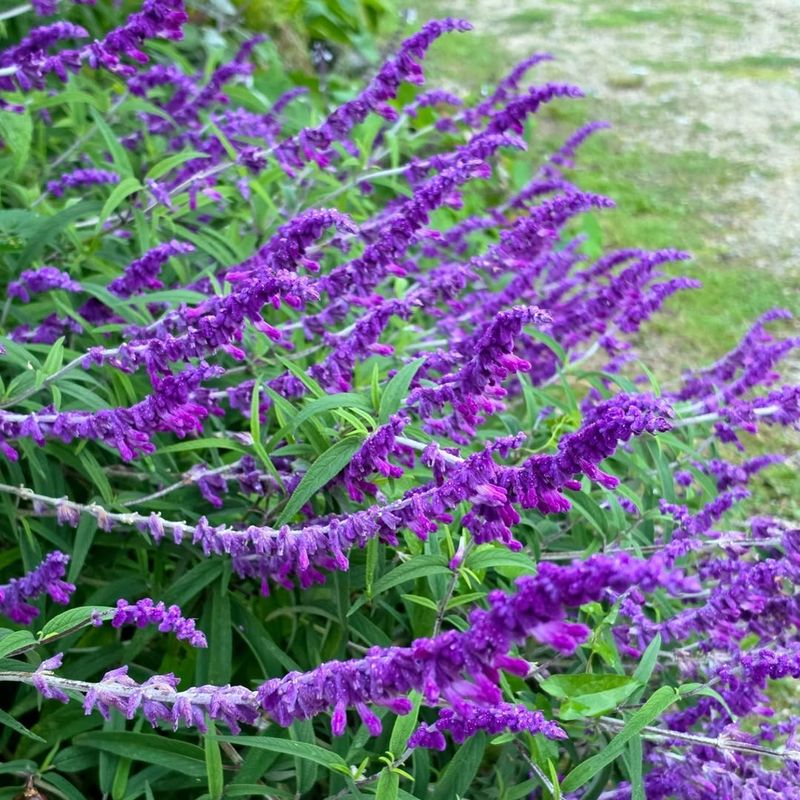
Walk past a Mexican Bush Sage in full bloom and you will likely stop to take a second look. The long, arching stems covered in velvety purple and white flower spikes are hard to miss.
This plant is a showstopper in the fall garden, right when many other flowers are starting to fade in California.
Mexican Bush Sage, or Salvia leucantha, is a tough perennial that handles heat, drought, and poor soil with ease. It grows three to four feet tall and wide, so it makes a bold statement at the back of a garden bed or along a fence line.
Hummingbirds and butterflies are drawn to it, which adds extra life and movement to any yard.
Plant it in full sun and well-draining soil. Once established, it needs very little water, making it ideal for California’s water-conscious gardeners.
Cut it back hard in late winter to encourage fresh, bushy growth in spring. It may look bare for a while after pruning, but it comes back strong.
Mexican Bush Sage is semi-evergreen in warmer parts of California, meaning it keeps some foliage through winter. It is one of the most reliable and dramatic late-season bloomers you can add to a California garden.
10. Sea Lavender
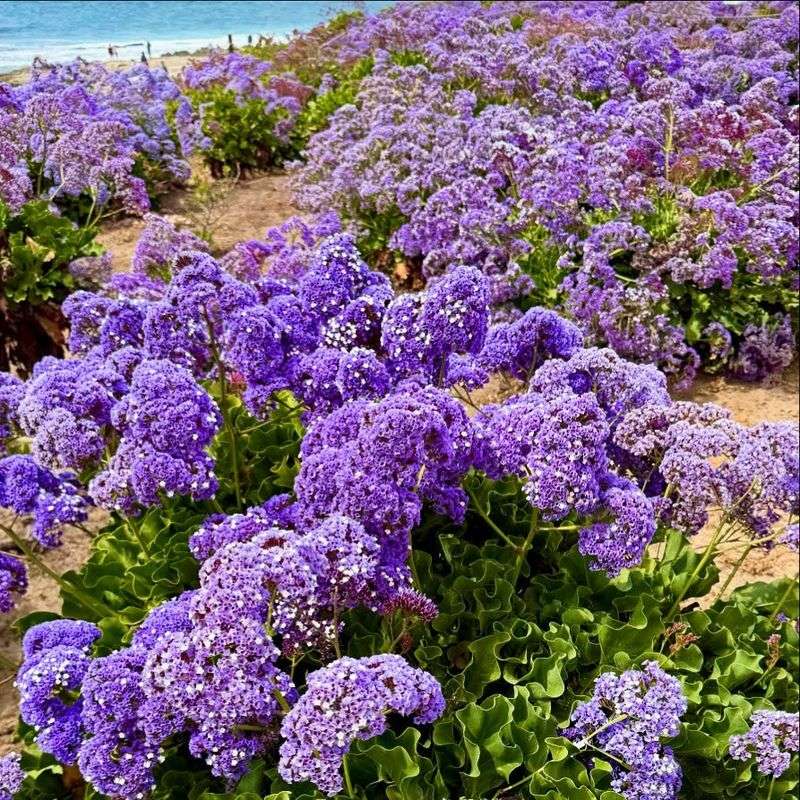
There is something dreamy about Sea Lavender. The tiny, papery flowers form soft, airy clouds of purple, lavender, and white above stiff, branching stems.
It looks delicate, but do not let that fool you. Sea Lavender, also known as Statice or Limonium, is one of the toughest flowers you can grow in California.
It thrives in coastal gardens where salt air and sandy soil challenge most other plants. That makes it especially popular in California communities near the Pacific coast.
It blooms from summer into fall, and the flowers dry naturally on the plant, holding their color for weeks. Dried branches are also popular in floral arrangements and crafts.
Sea Lavender grows best in full sun and well-draining, even sandy soil. It is extremely drought-tolerant once established and handles heat well.
Avoid heavy clay soils and areas with poor drainage. Water deeply but infrequently, especially during California’s dry summer months.
It grows about one to two feet tall and spreads into a nice mound over time. Plant it in borders, coastal rock gardens, or mixed beds with other drought-tolerant flowers.
Sea Lavender is also a great cut flower. It requires almost no maintenance once it is settled in, which makes it a favorite among California gardeners who want beauty with minimal effort.
11. Four O’Clocks
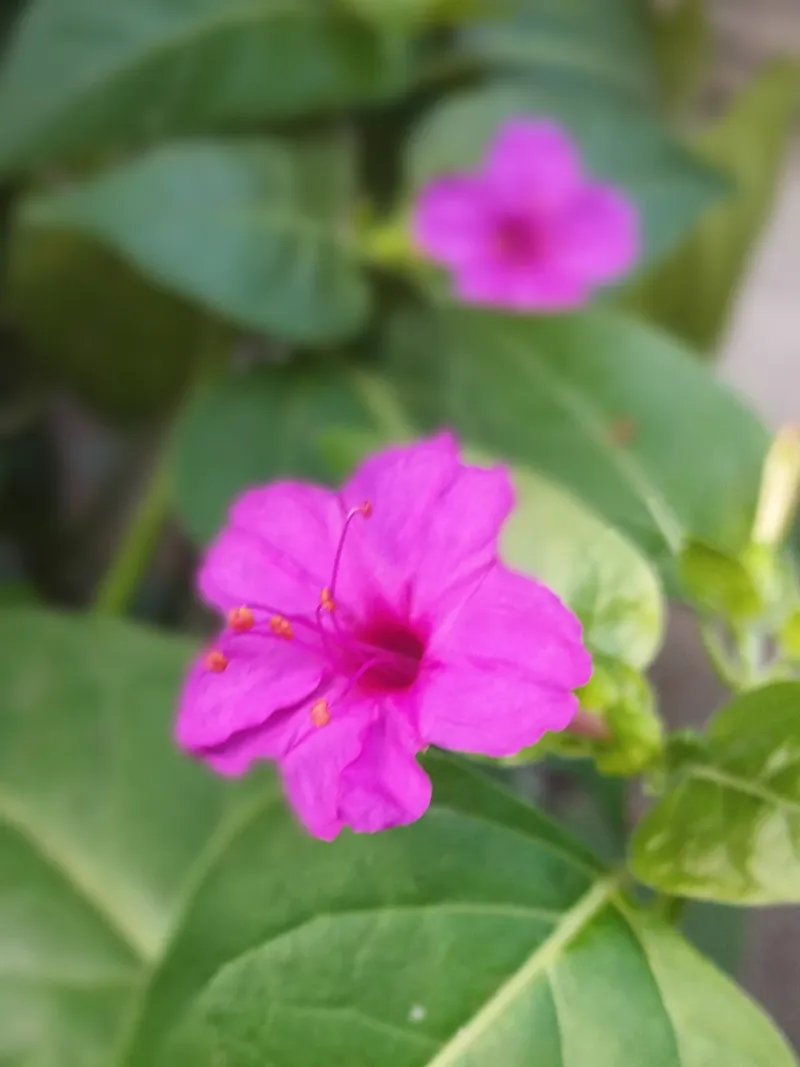
Named for the time of day they open, Four O’Clocks are one of the most charming and old-fashioned flowers you can grow in California. Every afternoon, usually around four o’clock, the trumpet-shaped blooms pop open and fill the garden with a sweet, jasmine-like fragrance that carries through the warm evening air.
The flowers come in vivid shades of pink, magenta, yellow, white, and even striped bi-colors. One plant can produce flowers of more than one color at the same time, which makes them endlessly interesting.
They attract hummingbirds and sphinx moths, especially in the evening hours, adding a magical quality to California backyards at dusk.
Four O’Clocks grow from large, dark seeds or tuberous roots that can be saved and replanted each year. They prefer full sun but can handle partial shade in the hottest parts of California.
Plant them in average, well-draining soil and water regularly during the growing season. They grow two to four feet tall and spread easily.
In warmer California climates, the roots may survive winter underground and return the following spring. They are easy to grow, fast to bloom, and bring a nostalgic, cottage-garden feel to any outdoor space in the Golden State.