What To Do With Ohio Lilacs After They Bloom So Next Year’s Flowers Aren’t Lost
Lilac season in Ohio is over in a blink and most gardeners just walk away and call it done until next year. That is exactly how next year’s blooms get quietly sabotaged.
What happens in the weeks right after those flowers fade is more important than anything you did before they opened, and skipping this window is a mistake that compounds itself every single season.
Ohio lilacs are generous plants that reward the gardeners who pay attention at the right moment and punish the ones who assume the job is finished when the petals drop.
Next year’s flower buds are already in the works right now, and every decision you make in the coming weeks either protects them or puts them at risk.
Pruning at the wrong time, on the wrong branches, with the wrong approach, and a full season of blooms disappears before it ever had a chance.
Getting this right is simpler than most people think, but the timing is everything.
1. Prune Right After The Flowers Fade
Timing is the single most important thing to get right with lilacs, and the window is shorter than most people expect. Lilacs bloom on old wood, which means the flower buds for next spring are going to form on the new shoots that grow after this year’s bloom ends.
If you wait too long to prune, you may remove the new growth that would carry next spring’s flowers.
Ohio gardeners should aim to prune soon after the flowers fade, before summer growth has had much time to mature.
Southern Ohio tends to bloom a little earlier than northern counties near Lake Erie, so watch your own shrub rather than following a fixed calendar date.
The moment the flowers start looking brown and droopy is your cue to get the pruners out.
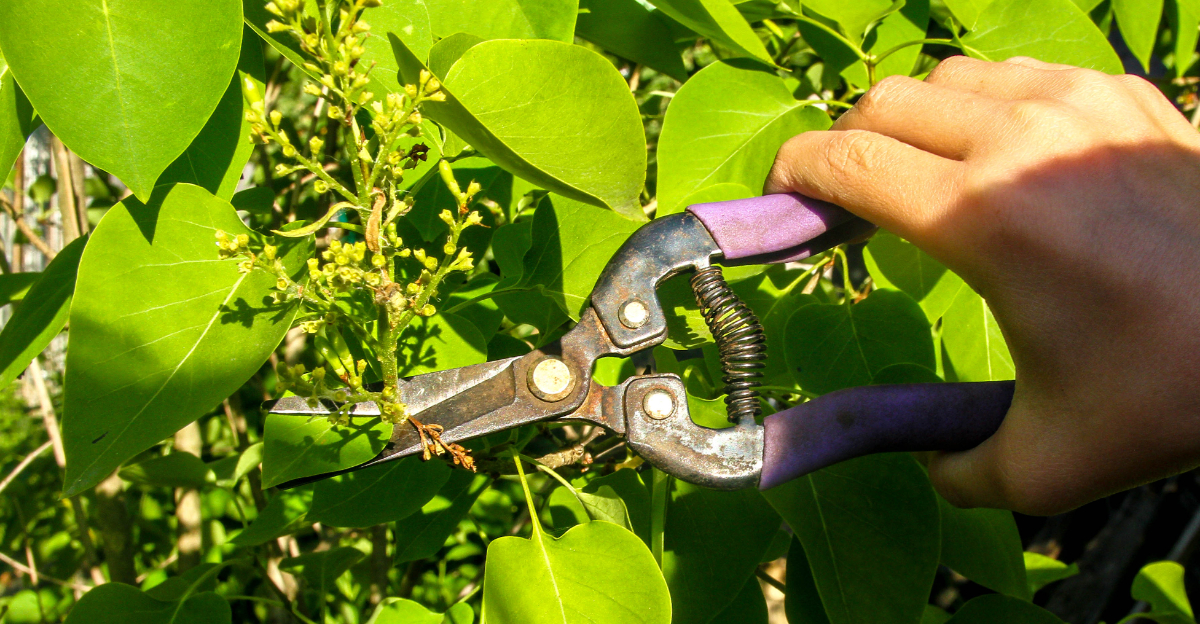
Focus on removing crossing or rubbing branches, weak twiggy growth, and any stems that crowd the center of the plant. If your shrub is older and some of the thickest stems are no longer producing good bloom clusters, you can remove one or two at ground level.
Keep cuts clean and avoid leaving stubs. Most healthy, well-maintained lilacs don’t need aggressive pruning every year, just a light, purposeful tidy right after bloom to keep the structure sound and the new growth on track.
2. Remove Spent Blooms Without Cutting New Buds
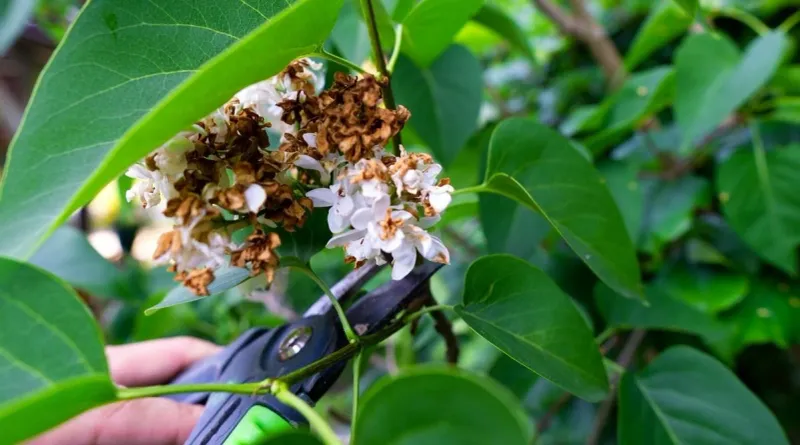
A freshly bloomed lilac is gorgeous. A lilac covered in brown, dried-out flower clusters a week later?
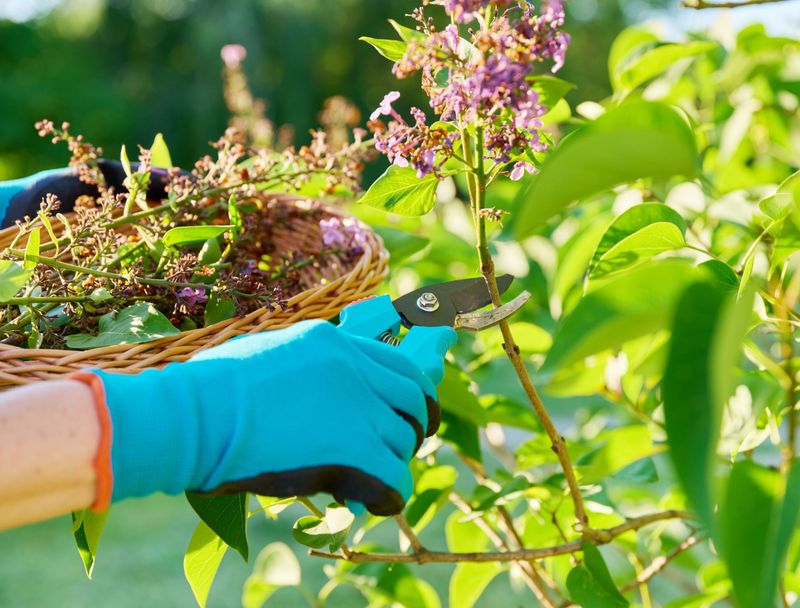
Not so much. Removing those spent blooms, a practice called deadheading, can tidy the plant up quickly and may help the shrub direct its energy toward healthy new growth instead of producing seeds.
The key is cutting in the right spot. Snip just below the base of the faded flower cluster, right where it meets the stem.
Look carefully before you cut because small new shoots often appear just below the old bloom. Those little shoots are exactly where next year’s flower buds will eventually form, so cutting too far down the stem could remove them entirely.
Your Ohio Garden Changes Every Week. Your Plan Should Too.
Gardening in Ohio changes quickly throughout the season. Every Friday you’ll receive a simple weekly plan showing exactly what to plant, prune, fertilize, harvest, and protect so you never miss the right timing.
A sharp pair of hand pruners or even clean scissors works fine for this job.
Deadheading matters most on younger shrubs and smaller plants where every bit of energy counts. A large, mature lilac that has been in the ground for twenty years can handle a few spent blooms left in place without much trouble.
Still, if you have the time, going through the shrub and removing the old clusters right after bloom is a satisfying and genuinely useful task.
Just stay close to the bloom head with your cut, keep your pruners clean to avoid spreading any disease, and let those new shoots below the cut grow freely through the summer.
3. Thin Old Stems To Let Sunlight In
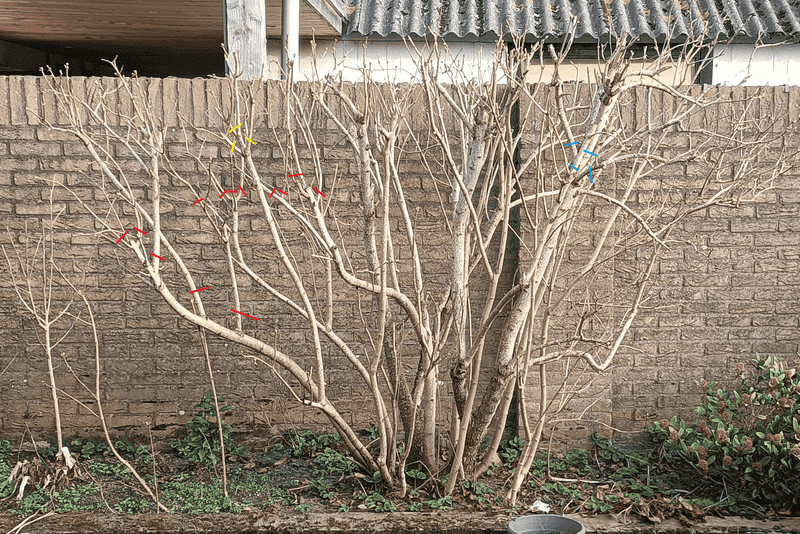
Walk up to an old lilac that hasn’t been thinned in years and you’ll often notice the inside of the plant is a dark tangle of crossing stems, withered wood, and leaves that barely see sunlight.
Crowded lilacs can bloom less over time because light reaches fewer young shoots, and poor airflow can make powdery mildew more noticeable in Ohio’s humid summers.
Renewal pruning is the answer, and it works best as a gradual process rather than a one-time drastic cutback. Right after bloom ends, identify the oldest and thickest stems, typically the ones with rough, grayish bark and few productive side shoots.
Remove one to three of those stems at or near ground level using sharp loppers or a pruning saw. Doing this over three to five years slowly replaces the oldest wood with younger, more productive stems without shocking the shrub or removing too much at once.
Opening up the center of the plant lets sunlight reach the new growth that will carry next year’s buds. Better airflow also helps moisture evaporate from leaves faster after rain, which reduces the humidity that powdery mildew thrives on.
Ohio’s warm, muggy summers make this especially relevant from June through August.
Thinning is not the same as shearing or topping, and it should always be done right after bloom, never in late summer or fall when bud removal becomes a real risk.
4. Shape Gently Instead Of Shearing Hard

Picture a lilac sheared into a tight green box. It might look tidy from the street, but inside that dense shell, the shrub is struggling.
Hard shearing removes the ends of branches indiscriminately, which often cuts off the very tips where flower buds are forming. The result is a plant that pushes out a thick wall of leafy outer growth while the interior gets darker and less productive every year.
Lilacs naturally grow in a graceful, open, vase-like shape, and that form actually helps them bloom better. Keeping that shape means making selective cuts rather than running a hedge trimmer along the outside.
After bloom, step back and look at the overall outline of the shrub. Find any branches that are reaching in awkward directions or sticking out past the natural silhouette, then cut each one back to a side branch or an outward-facing shoot.
That single cut redirects growth without creating a wall of dense regrowth.
Light shaping right after bloom is perfectly fine and can make the shrub look polished through summer. The mistake is going too far or coming back with shears in August.
By midsummer, new growth is already maturing and flower buds may be developing along those shoots. Removing them at that stage means fewer blooms next spring, plain and simple.
Keep shaping sessions short, selective, and timed to the weeks immediately following bloom for the best results in Ohio gardens.
5. Skip Late Summer And Fall Pruning
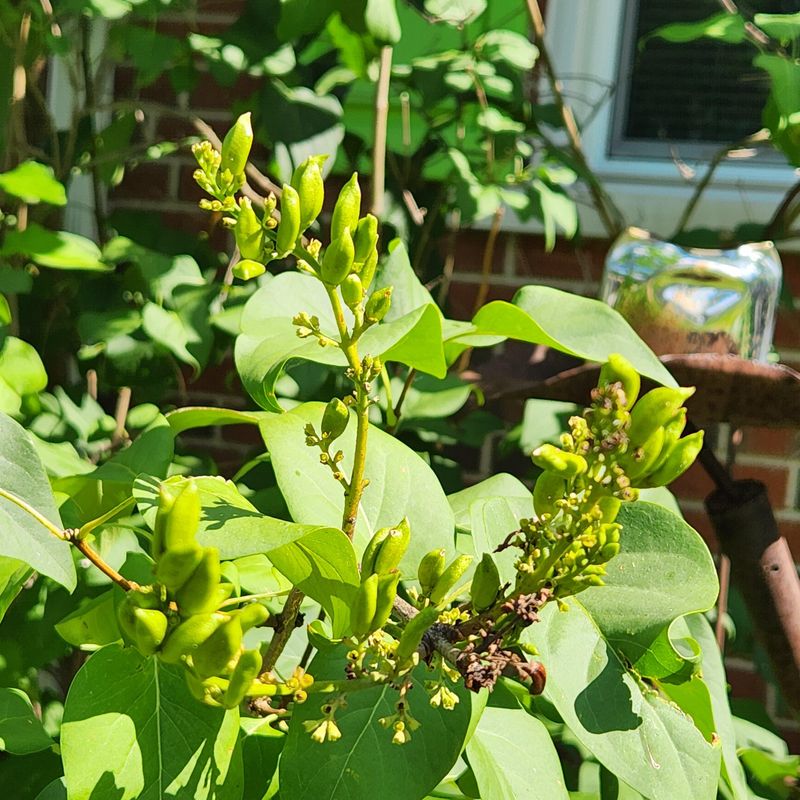
Here’s a scenario that plays out in Ohio yards every year. A gardener notices the lilac looking a little shaggy in September and decides to grab the pruners for a quick cleanup.
The shrub looks neater going into fall. But the following May, it barely blooms.
What happened? Those late-season cuts removed the flower buds that had already formed over the summer.
By late summer, lilacs may already have flower buds developing on the season’s growth, so pruning then can remove next spring’s bloom potential.
By the time September arrives, those buds are already in place along the stems, small and easy to miss if you’re not looking carefully.
Pruning at that point doesn’t just tidy the plant, it removes next year’s flowers before they ever get a chance to open.
The only exception to this rule is removing wood that is clearly broken, diseased, or poses a safety concern. A stem snapped by a summer storm can come off any time.
A branch showing signs of borer damage or serious disease can also be removed when you spot it, regardless of season. But routine shaping, thinning, or size reduction should never happen in late summer or fall on a healthy lilac.
Mark your calendar, set a reminder, do whatever it takes to keep the pruners away from your lilac after midsummer and you’ll protect the bloom display you’re counting on next spring.
6. Feed Lightly After Bloom If Growth Looks Weak

Lilacs are not heavy feeders, and in many Ohio soils, they don’t need fertilizer at all.
Throwing down a high-nitrogen lawn fertilizer near the base of your lilac might seem like a helpful gesture, but it can actually push the shrub to produce lush, leafy growth at the expense of flowers.
More leaves, fewer blooms is not the trade most gardeners are hoping for.
That said, if your lilac’s new growth looks pale, short, or thin after bloom, a light feeding can help. Compost worked gently into the soil around the root zone is a safe and effective option that improves soil structure over time without overdoing the nitrogen.
A balanced, modest granular fertilizer applied right after bloom is another option if compost isn’t available.
Ohio State University Extension recommends getting a soil test before adding any amendments, since Ohio soils vary widely from clay-heavy areas in the northeast to sandier soils in other regions.
Full sun and proper pruning honestly do more for lilac bloom quality than fertilizer ever will. A lilac sitting in partial shade or crowded by other shrubs won’t respond to feeding the way a well-sited, properly pruned plant will.
If growth looks healthy and the shrub bloomed well, skip the fertilizer entirely. Save the effort and money for a year when the plant is genuinely showing signs that it needs a boost, and always feed right after bloom, not in fall.
7. Water Deeply During Dry Ohio Spells
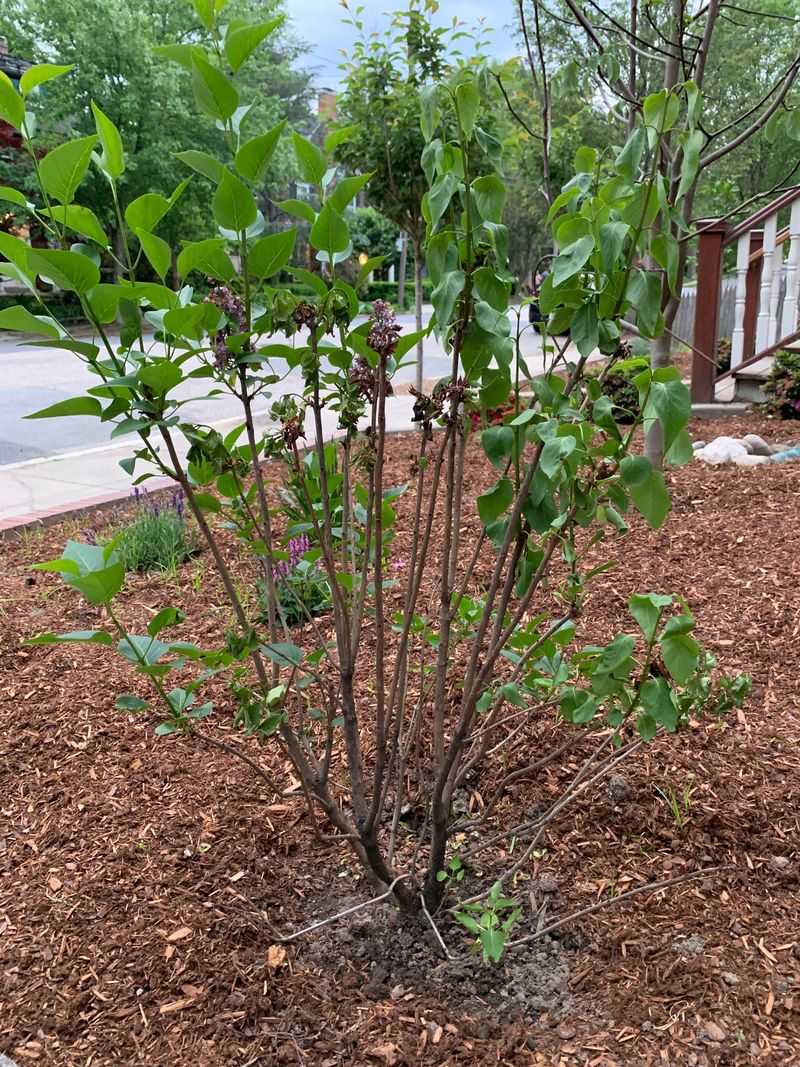
Ohio summers can swing between stretches of good rainfall and surprisingly dry spells, especially in July and August.
Those dry periods hit lilacs at a critical time because the shrub is actively growing new wood and forming the buds that will become next spring’s flowers.
Consistent moisture during summer supports that process in a way that shallow, frequent watering simply cannot match.
Deep watering encourages roots to grow downward where soil moisture stays more stable. Aim to soak the root zone thoroughly, then let the soil partially dry before watering again.
A slow trickle from a garden hose at the base of the shrub works better than a quick spray across the leaves, but timing depends on soil type, plant size, and how dry the root zone is.
Wet foliage in Ohio’s humid summers also invites powdery mildew, so keeping water at the root zone rather than overhead is a smart habit.
Mulch is one of the most practical tools for keeping soil moisture consistent between rain events. A two to three inch layer of wood chips or shredded bark around the base of the shrub slows evaporation, moderates soil temperature, and reduces weed competition.
Pull the mulch back a few inches from the main stems so it isn’t piled directly against the bark.
Newly planted lilacs need more consistent attention to watering than established shrubs, but even a ten-year-old plant benefits from a deep drink during a two-week dry stretch in midsummer.
8. Watch For Mildew And Borers Before They Spread
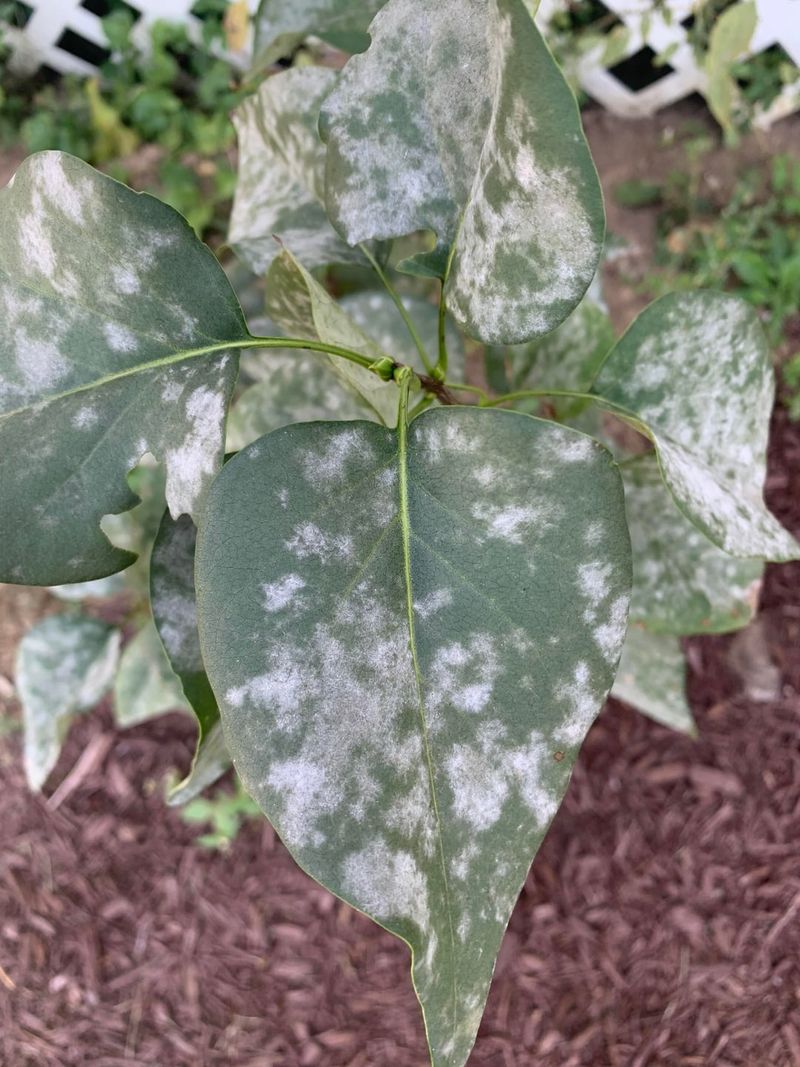
By midsummer in Ohio, some lilacs start showing a white, powdery coating on their leaves.
That is powdery mildew, a common lilac issue that often becomes noticeable in summer, especially where plants are crowded, shaded, or poorly ventilated.
The good news is that powdery mildew on lilacs is usually more of a cosmetic problem than a serious health threat. The shrub typically survives just fine, but repeated heavy infections year after year can weaken the plant over time.
The best long-term response to mildew is improving conditions rather than spraying. Thinning crowded stems after bloom, making sure the shrub gets full sun, and avoiding overhead watering all reduce the environment that mildew needs to spread.
Ohio State University Extension notes that proper spacing and airflow are the most reliable preventive measures for common lilac diseases.
If mildew appears late in the season, removing and discarding affected leaves at the end of the year can reduce spore load going into next spring.
Lilac borers are a separate concern and worth watching for on stressed or older shrubs. Signs include wilting branch tips, small holes in the bark, and sawdust-like frass near the base of stems.
Pruning out affected stems as soon as you notice them, cutting well below the damaged area, is the recommended approach according to Extension resources.
Keeping your lilac healthy through good pruning, sun exposure, and consistent moisture is the most effective way to reduce borer pressure over the long term.