Florida Croton Looking Dull In May? Try These 10 Simple Fixes
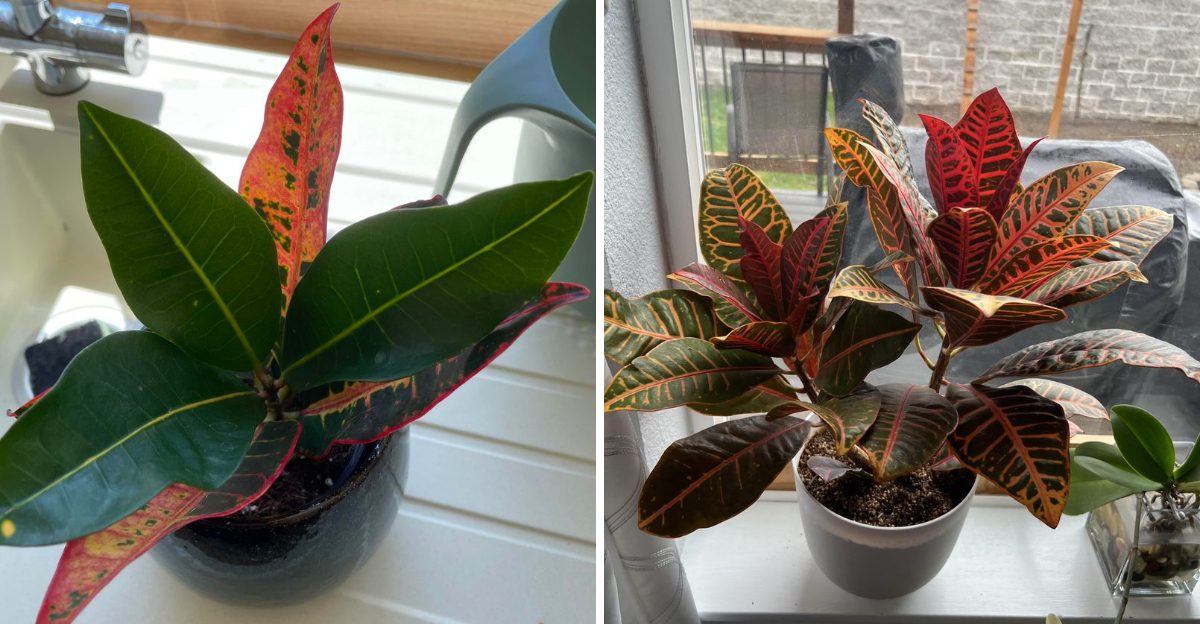
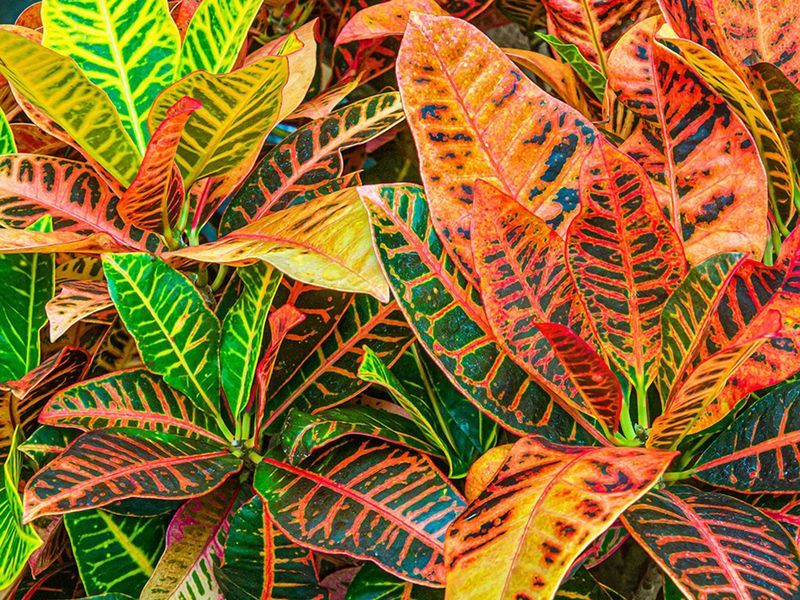
Crotons are the drama queens of the Florida plant world, and honestly, they have earned the title. Those wild reds, oranges, yellows, greens, and splashy patterns can make a patio pot or tropical bed look like it hired a stylist.
Then May rolls in, the sun gets stronger, the heat climbs, and suddenly those flashy leaves look a little tired. Rude, but common.
A dull croton may be reacting to low light, harsh afternoon sun, uneven watering, poor drainage, pests, or a quick move that shocked its tropical little soul.
The nice part? Most color problems give you clues.
Once you read the leaves, your croton can start looking bold, glossy, and ready for its Florida summer spotlight again.
1. Crotons Should Look Vibrant In May, So What Is Going Wrong?
May in Florida brings longer days, rising temperatures, and stronger sun angles that can catch even experienced gardeners off guard.
Crotons, which are tropical plants that naturally thrive in warm, bright conditions, should technically be at their most colorful right now.
So when the leaves start looking faded, washed out, or just flat, it is worth pausing to figure out why.
Color in croton leaves depends on a mix of factors working together at the same time. Light exposure plays a major role, but watering habits, drainage, pest pressure, soil nutrition, and even the age of individual leaves all contribute to how vivid or dull a plant looks.
A croton growing in a Florida landscape bed, a patio container, or a bright indoor corner can each face different challenges in May.
Sudden shifts in the environment are especially common this time of year. Plants moved from indoors to a sunny porch, or from shade to a brighter spot, often show color changes before they adjust.
Identifying the specific cause matters more than applying a single quick fix, because croton dullness in May rarely comes from just one problem.
2. Move It Into Brighter Indirect Light
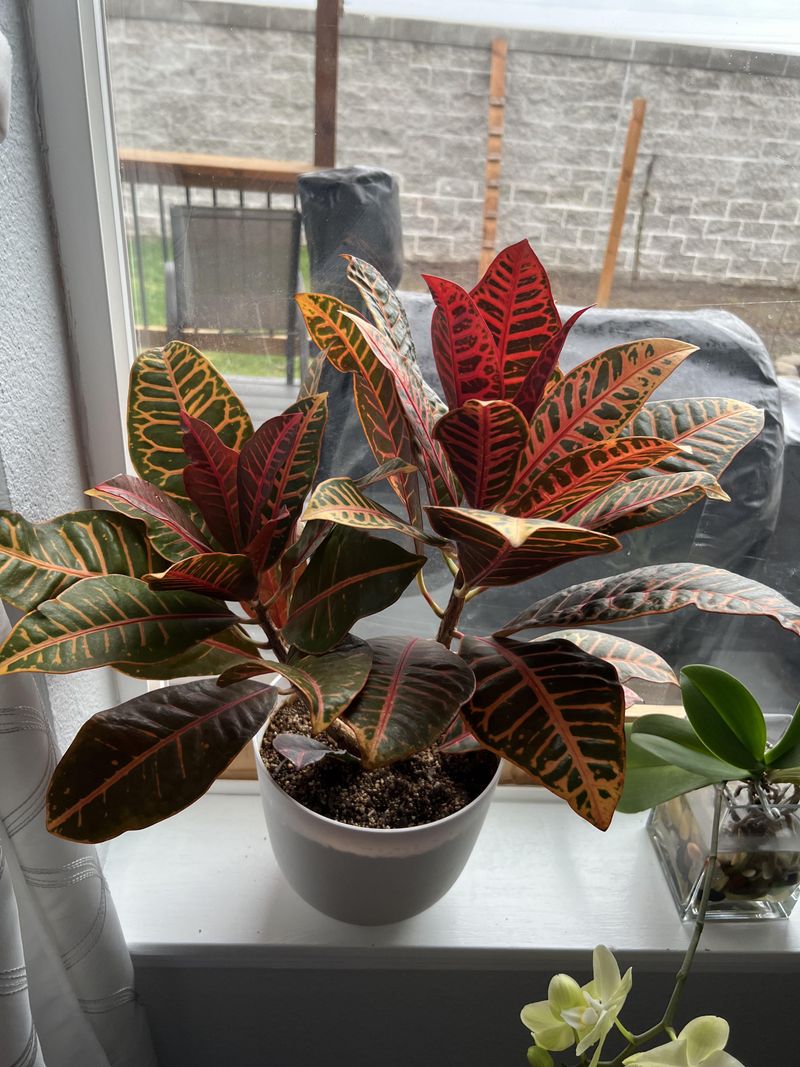
Soft, indirect light streaming through a south or east-facing window can do more for a croton’s color than almost anything else you try indoors.
Crotons need bright light to produce the pigments responsible for their vivid leaf patterns, and when that light level drops too low, the plant responds by fading.
In Florida homes during May, interior light levels can actually feel deceptive because the outdoor sun is so strong.
A croton sitting several feet away from a window, or placed in a room with filtered or north-facing light, may not be receiving enough brightness to maintain strong color.
Moving the plant closer to a bright window, without placing it directly against hot glass, can make a noticeable difference within a few weeks.
Sheer curtains can help soften intense midday light while still allowing plenty of brightness to reach the leaves.
Outdoor crotons in shaded landscape beds sometimes face the same issue. If a tree has filled in with new spring growth and is now casting heavier shade than it did in winter, the croton below it may be receiving significantly less light than before.
Your Florida Garden Changes Every Week. Your Plan Should Too.
Gardening in Florida changes quickly throughout the season. Every Friday you’ll receive a simple weekly plan showing exactly what to plant, prune, fertilize, harvest, and protect so you never miss the right timing.
Pruning overhead branches or relocating the plant to a brighter spot can help restore color over time.
3. Protect Leaves From Harsh Afternoon Sun
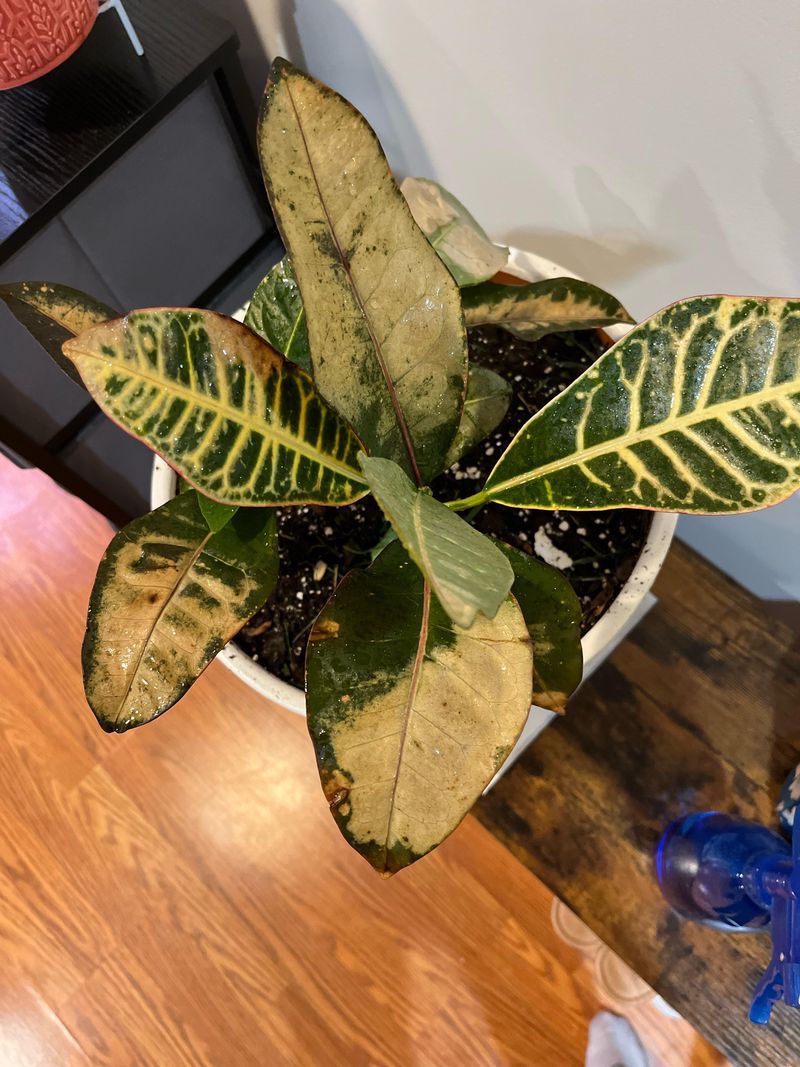
Afternoon sun in Florida during May can be surprisingly intense, especially on west-facing patios, open balconies, and exposed planting beds with no overhead cover.
While crotons need bright light to stay colorful, direct afternoon sun can actually bleach leaves rather than deepen their color.
Pale, washed-out patches or dry, papery leaf edges are common signs that a croton is receiving more direct sun than it can handle comfortably.
Plants that were recently moved from indoors to a sunny outdoor spot are especially vulnerable.
Croton leaves that developed in lower light conditions are not hardened to intense sun exposure, and they can show stress quickly when placed in full afternoon sun without a gradual adjustment period.
This kind of sudden change often gets mistaken for a watering problem because the leaves may droop or look dull at the same time.
Filtered shade from a shade cloth, a pergola, or a nearby tree can protect crotons from the harshest afternoon hours while still providing the bright conditions they prefer.
Morning sun tends to be gentler and more beneficial for crotons than the strong afternoon rays common across Florida in late spring.
Repositioning a container croton to catch morning light instead of afternoon sun can improve leaf appearance noticeably.
4. Check Soil Moisture Before Watering Again
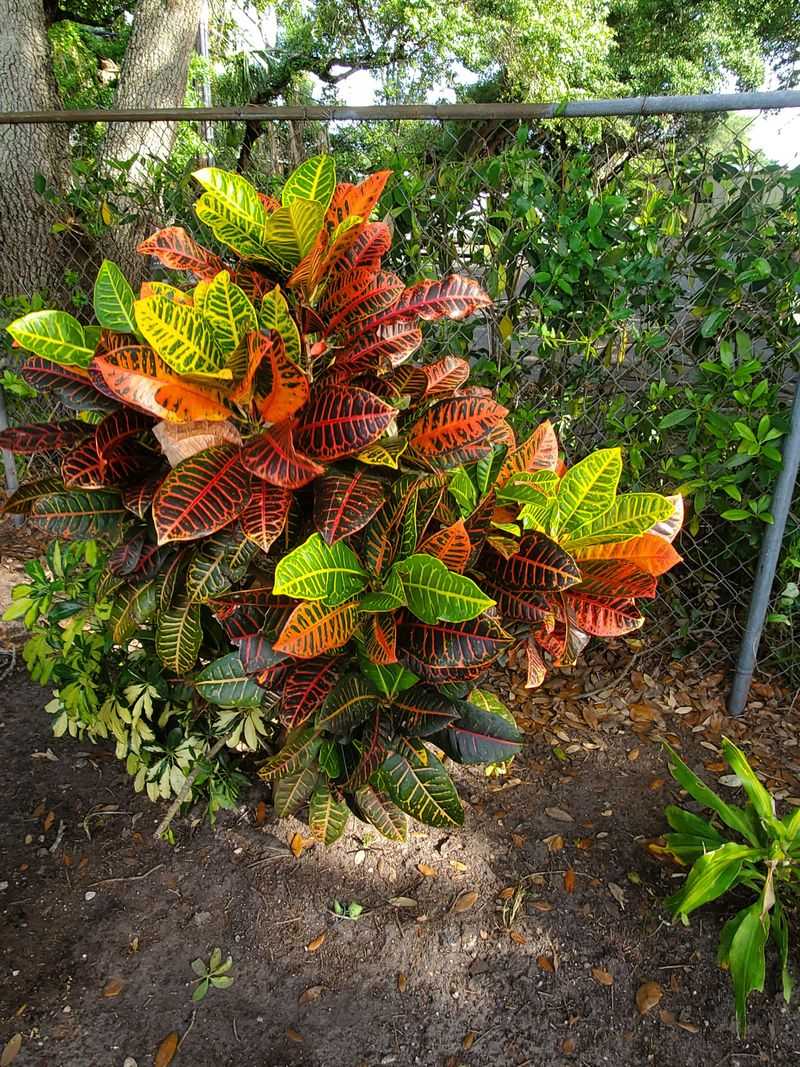
Watering habits have a bigger impact on croton color than many people expect. Crotons generally prefer soil that stays evenly moist but never waterlogged, and inconsistent watering is one of the more common reasons leaves start looking dull or stressed in May.
Both overwatering and underwatering can produce similar symptoms, which makes it easy to misread what the plant actually needs.
Before reaching for the watering can, press a finger about an inch into the soil. If it still feels damp, the plant likely does not need water yet.
If it feels dry at that depth, it is time to water thoroughly until moisture drains from the bottom of the pot.
In Florida’s May heat, container crotons may dry out faster than expected, but the same plant on a shaded porch might retain moisture longer than expected.
Inconsistent watering over time can stress croton roots and reduce the plant’s ability to move nutrients efficiently through its leaves. That stress often shows up as faded color, drooping foliage, or leaves that look lackluster even in good light.
Building a consistent watering routine based on actual soil moisture rather than a fixed schedule tends to produce better results for crotons growing in Florida’s warm spring conditions.
5. Improve Drainage Before Summer Rain Builds
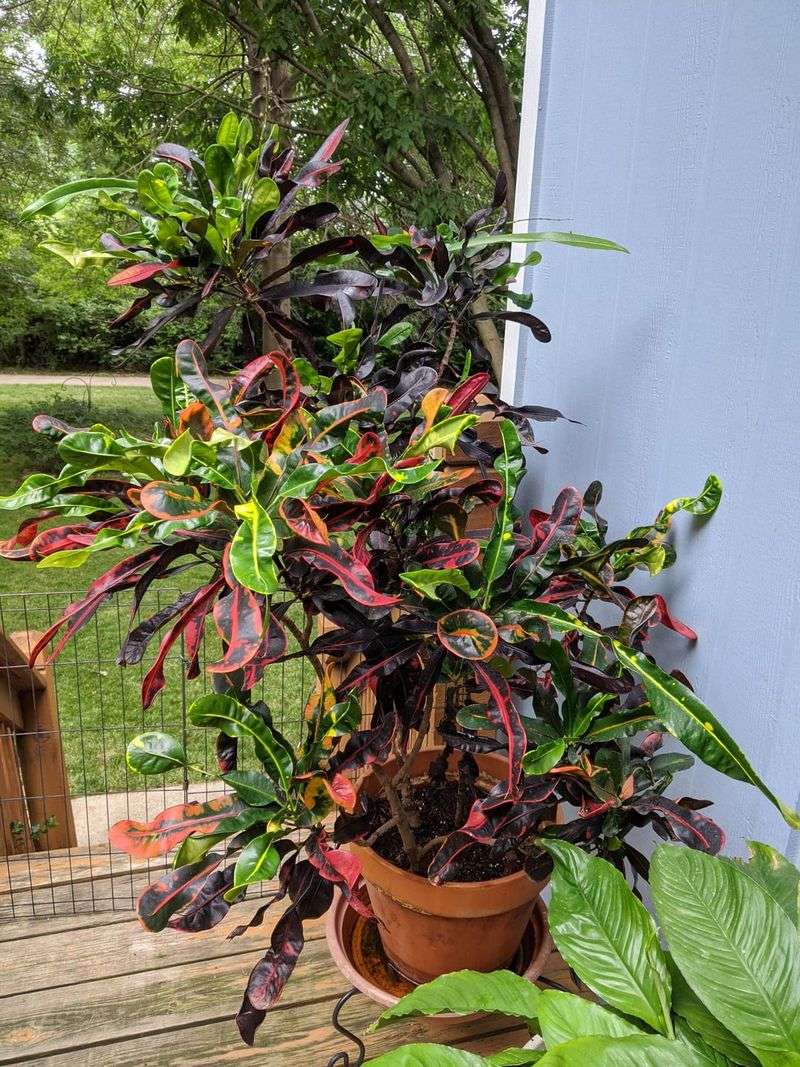
Florida’s summer rainy season typically begins in June, but May often brings early afternoon storms and rising soil moisture that can catch gardeners off guard.
Crotons sitting in pots without adequate drainage holes, or planted in low spots where water pools after rain, are at risk of root stress that shows up as dull, yellowing, or dropping leaves.
Good drainage is one of the most overlooked factors in croton care.
Container crotons should always be in pots with drainage holes, and the saucers beneath them should not be allowed to hold standing water for extended periods.
Soil that stays soggy for too long limits the amount of oxygen available to roots, which reduces the plant’s ability to absorb nutrients and maintain strong leaf color.
Swapping out heavy, compacted potting mix for a well-draining blend can make a meaningful difference.
In landscape beds, crotons planted in Florida’s naturally sandy soils often drain well on their own, but clay-heavy or compacted areas can hold excess moisture after heavy rain.
Adding organic matter or creating a slightly raised planting area can improve drainage before summer storms arrive.
Addressing drainage issues now, before the rainy season fully kicks in, gives croton roots a much better chance of staying healthy and keeping leaves colorful through the summer.
6. Feed Lightly During Active Spring Growth
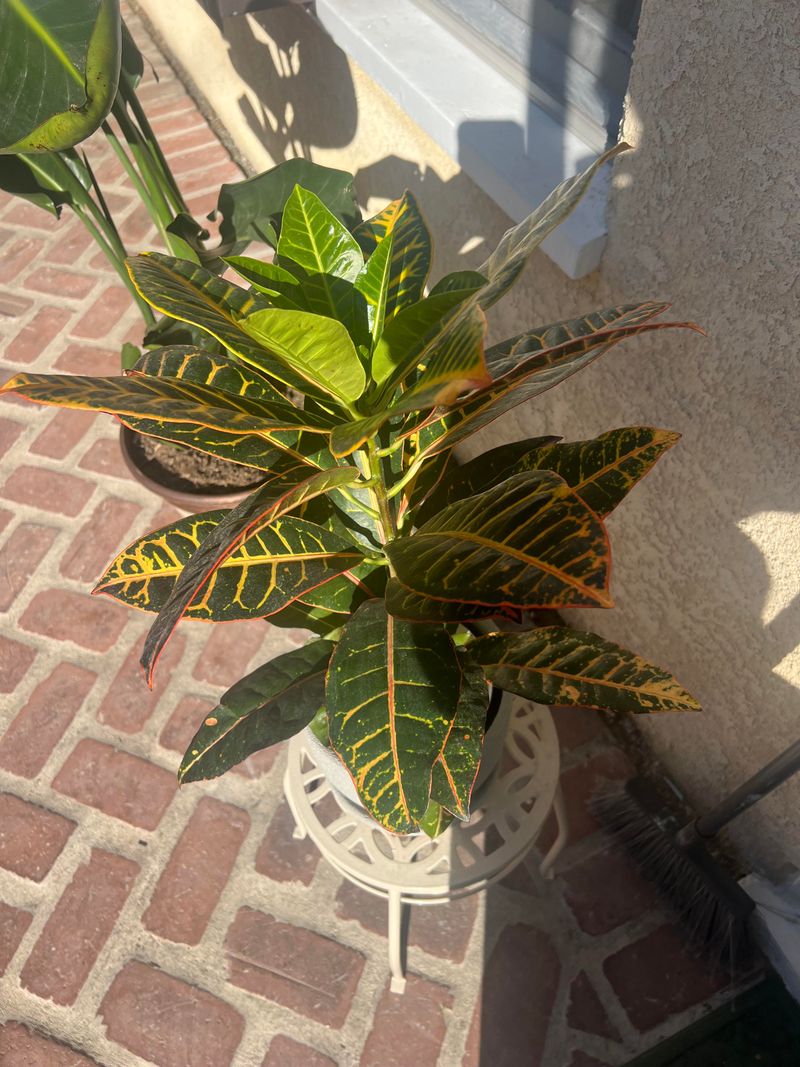
Spring is an active growing period for crotons in Florida, and a light feeding in May can support the new leaf development that comes with warmer temperatures and longer days. However, the word “lightly” matters here.
Overfeeding, especially with high-nitrogen fertilizers, can push fast, soft growth that lacks strong color. Too much nitrogen tends to favor green over the reds, oranges, and yellows that make crotons so striking.
A balanced, slow-release fertilizer applied according to label directions is a reasonable option for crotons showing signs of nutrient deficiency, such as pale or uniformly faded leaves.
Liquid fertilizers can also be used at a reduced rate during the growing season.
Feeding too frequently or at too high a concentration can cause leaf tip burn or create other stress symptoms that look similar to light or watering problems.
Crotons planted in Florida landscape beds with regular mulch and organic matter may need less supplemental feeding than container plants, which lose nutrients more quickly through regular watering.
Checking the plant for other issues before reaching for fertilizer is worth the effort, since feeding a stressed plant with root problems or pest damage rarely improves its appearance.
Addressing the root cause first usually produces better results than fertilizing alone.
7. Watch For Mites, Scale, Thrips, And Mealybugs
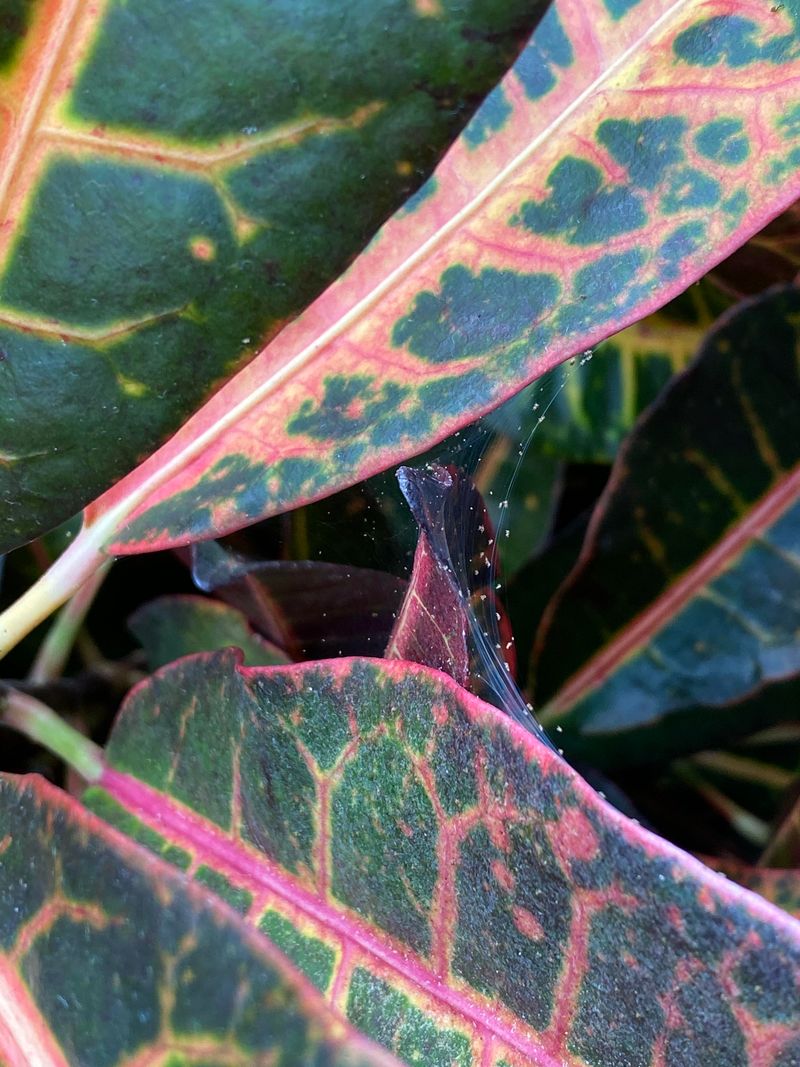
Pest pressure on crotons tends to increase as Florida temperatures rise in spring, and May is a month when several common pests become more active.
Spider mites, scale insects, thrips, and mealybugs can all affect croton leaves in ways that look like dullness, discoloration, or fading rather than obvious pest damage at first glance.
Catching them early makes management much easier.
Spider mites often leave fine webbing on the undersides of leaves and cause a stippled, dusty appearance on the upper surface. Scale insects look like small bumps along stems and leaf veins, and they feed by sucking sap from the plant.
Thrips cause silvery streaking or distorted new growth, while mealybugs appear as white cottony clusters at leaf joints and on stems. All of these pests reduce the plant’s ability to photosynthesize and maintain vibrant color.
Inspecting croton leaves regularly, including the undersides, is one of the most effective ways to catch pest problems before they become widespread. A strong spray of water can dislodge mites and light infestations.
Horticultural oil or insecticidal soap, applied carefully according to label directions, can help manage heavier pest pressure.
Avoiding pesticide applications during the hottest part of a Florida May afternoon reduces the risk of additional leaf stress from chemical exposure.
8. Give Container Crotons Extra Attention In May Heat
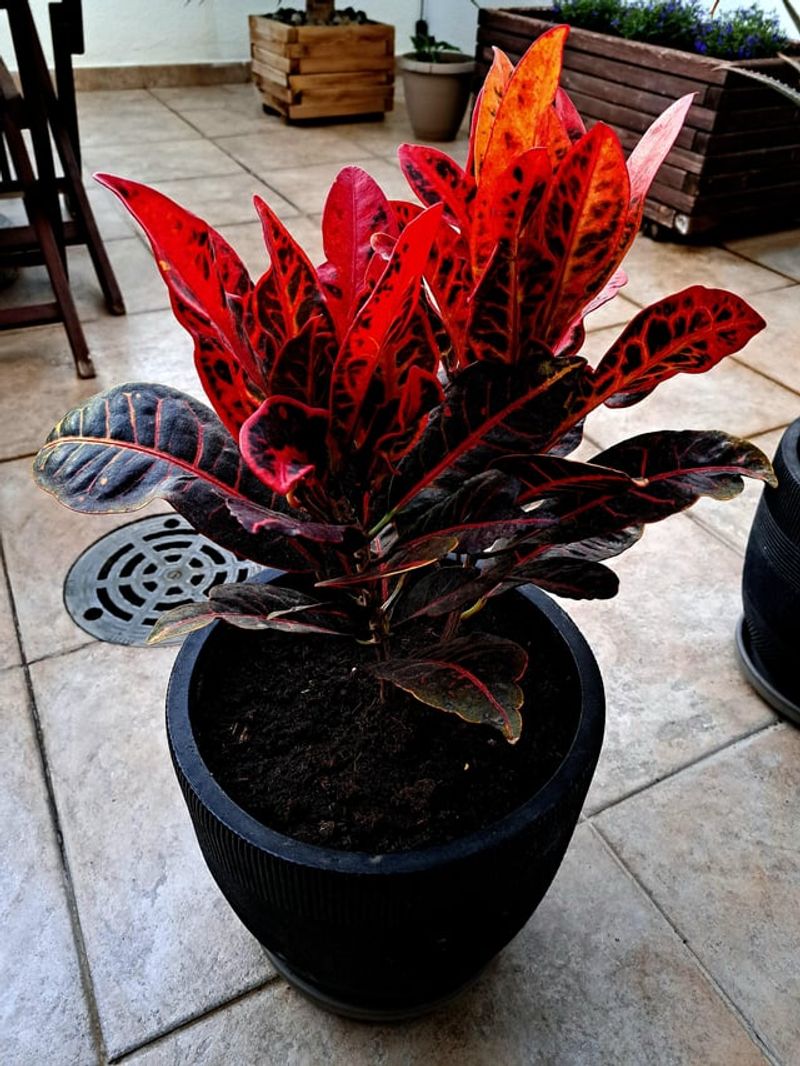
Patio containers in Florida heat up much faster than in-ground planting beds, and by May, afternoon temperatures can push container soil to extremes that stress croton roots quickly.
Dark-colored pots absorb more heat and can raise soil temperatures significantly, which affects root health and the plant’s overall ability to move water and nutrients.
Container crotons in these conditions often look dull or droopy even when watering seems adequate.
Switching to a lighter-colored pot, wrapping a dark container with a reflective material, or grouping containers together to shade each other’s sides can help moderate soil temperature.
Moving a container croton to a spot with morning sun and afternoon shade during the hottest weeks of late spring can also reduce heat stress noticeably.
The goal is to keep the root zone from getting excessively hot while still providing enough light for good color.
Container plants also tend to dry out faster in May heat, so checking soil moisture more frequently than during cooler months makes sense.
Humidity levels on Florida patios vary, but during dry spring stretches before the rainy season, air can pull moisture from leaves faster than roots can replace it.
Misting leaves or grouping plants together can help raise local humidity slightly around container crotons during these drier periods.
9. Refresh Mulch Around Outdoor Crotons
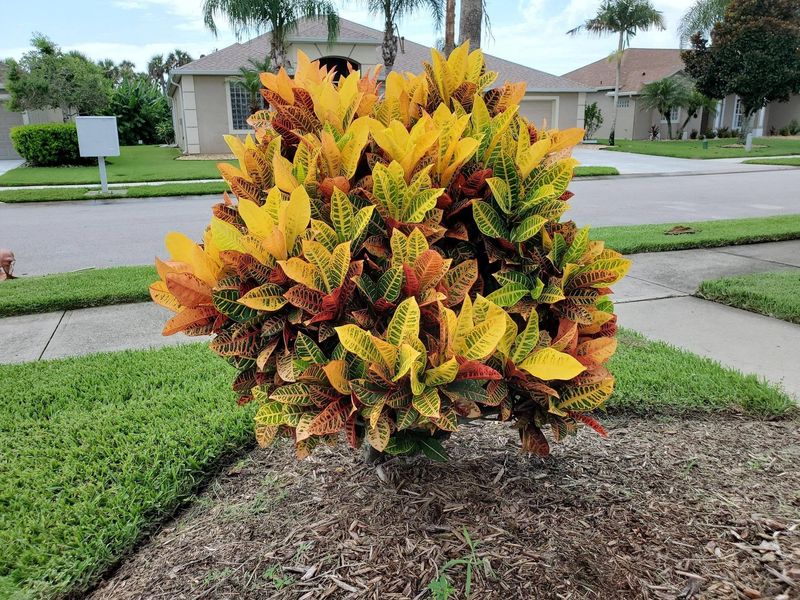
Mulch is one of the simplest tools available for keeping outdoor crotons healthier through Florida’s warm season, and May is a practical time to refresh what is already in place before summer rains arrive.
A two-to-three-inch layer of organic mulch around the base of landscape crotons helps regulate soil moisture, moderate soil temperature, and reduce competition from weeds that would otherwise compete for nutrients and water.
Over the course of winter and early spring, mulch breaks down and thins out. By May, what started as a healthy layer may have decomposed to the point where it no longer provides much benefit.
Topping it off with fresh mulch before the rainy season begins helps maintain consistent soil conditions that crotons prefer. Keeping mulch a few inches away from the plant’s stem reduces the risk of rot and pest harborage at the base.
Organic mulch options such as shredded leaves, pine bark, or wood chips gradually improve soil structure as they break down, which benefits the root systems of established croton plantings.
In Florida landscapes where sandy soil drains quickly, mulch plays an especially important role in holding moisture between rainfall events.
Well-mulched crotons tend to handle the transition from dry spring conditions to the rainy season more smoothly than plants growing in bare soil.
10. Let New Leaves Mature Before Judging The Color
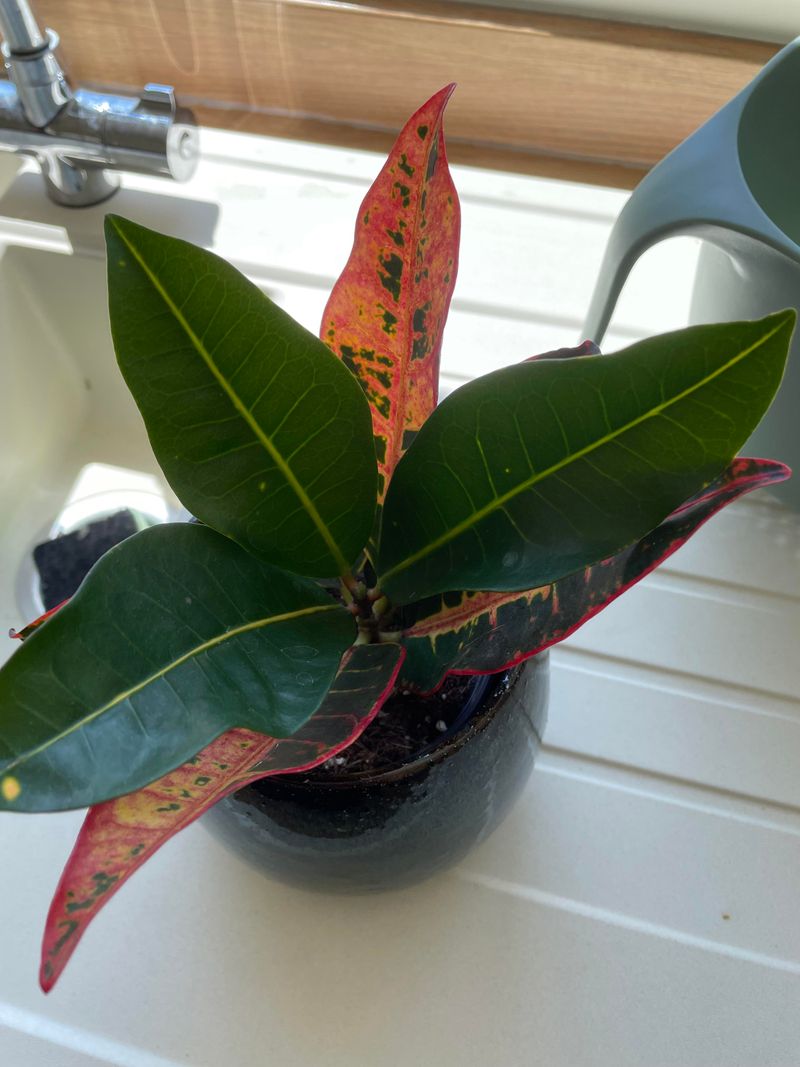
One of the more surprising reasons a croton can look dull in May is simply that it is actively growing. New leaves on a croton often emerge pale green, yellowish, or even nearly white before they develop their full color.
This is completely normal and does not mean the plant is unhealthy. Mistaking new growth for fading or decline can lead to unnecessary changes in care that may actually cause more stress.
As new leaves mature and receive consistent light, their full pigmentation develops over a period of days to weeks depending on the variety and growing conditions.
Crotons with naturally deep reds and oranges may show quite pale new growth before those colors appear.
Bright, indirect light during this maturation period supports stronger color development compared to low-light conditions where pigments tend to stay muted.
In Florida during May, crotons often push a flush of new growth in response to warmer temperatures and longer days.
Seeing a mix of pale new leaves alongside richly colored mature leaves is a sign the plant is actively growing rather than declining.
Giving the plant time to cycle through its natural growth stages, while keeping light, water, and drainage conditions consistent, tends to produce the most satisfying results without unnecessary intervention.
11. Avoid Sudden Moves Between Indoors And Outdoors
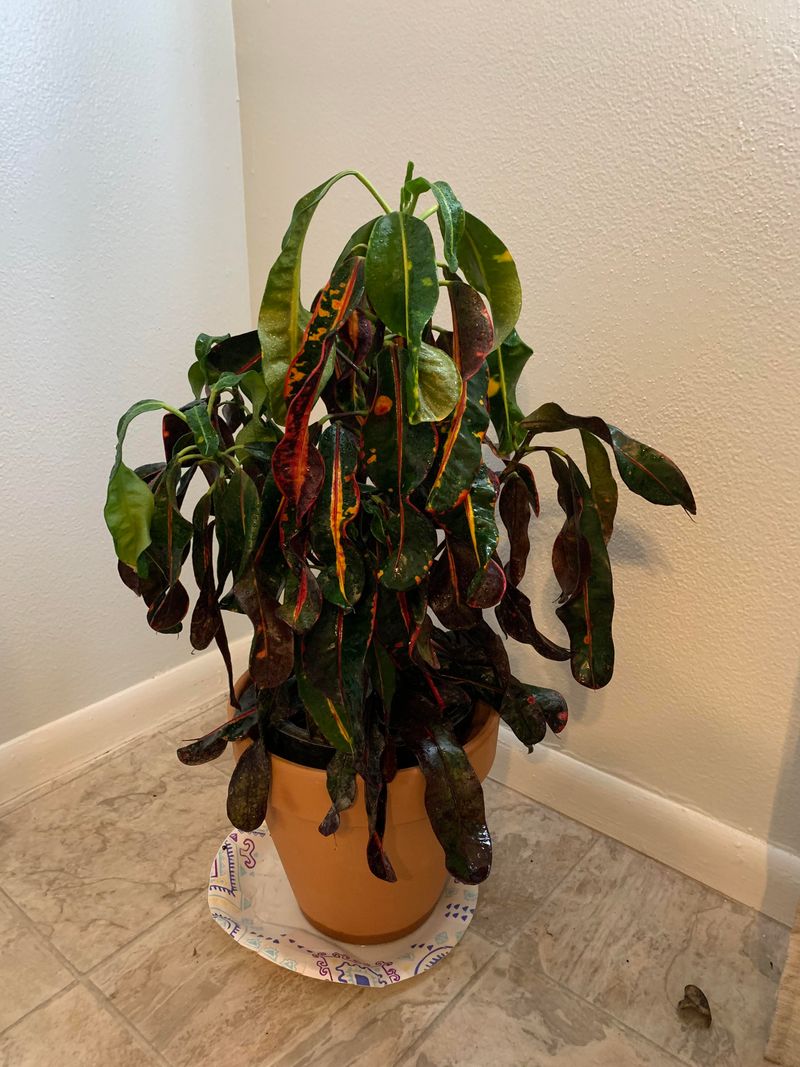
Moving a croton from one environment to another without a gradual transition is one of the fastest ways to trigger leaf drop, color loss, or stress symptoms in May.
Florida gardeners often want to bring indoor crotons outside to enjoy the warm weather, or bring outdoor plants inside before a storm, but sudden environmental shifts can shock a plant that has adapted to specific light and humidity conditions over weeks or months.
A croton that has been growing near an indoor window all winter has developed leaves suited to that light level. Placing it directly into full Florida sun, even for a few hours, can cause bleaching or leaf stress that takes weeks to recover from.
Gradually introducing the plant to outdoor conditions over one to two weeks, starting with a shaded outdoor spot and slowly increasing light exposure, gives it time to adjust without significant stress.
The same care applies when bringing outdoor crotons inside. A plant accustomed to bright outdoor light may drop leaves when moved to a dimmer indoor environment.
Choosing the brightest available indoor spot and maintaining consistent watering helps ease the transition.
In Florida, where the gap between indoor and outdoor light can be dramatic in May, a slow and patient approach to moving crotons tends to preserve leaf color and plant health far better than an abrupt change.