When A Praying Mantis Appears In Your Ohio Garden, It’s No Coincidence (Here’s What It Means)
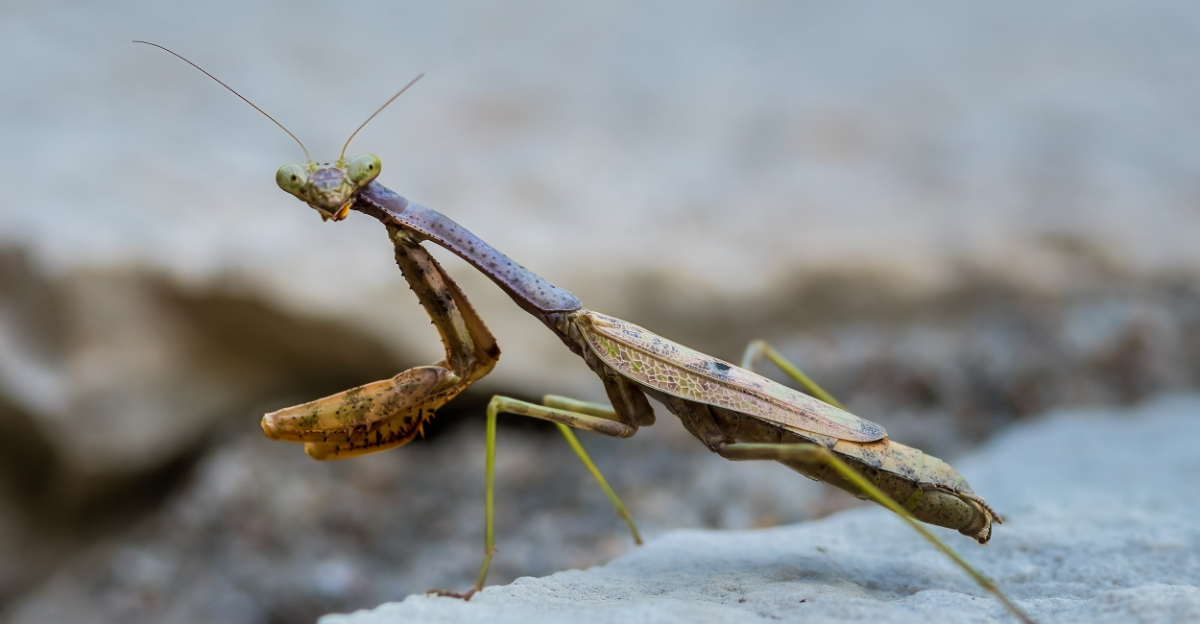
Spot a praying mantis in your garden and you might think it wandered in by chance. It didn’t.
That slow, deliberate creature perched on your tomato cage or rose stem made a very calculated decision to set up camp right there, and the reason says a lot more about your garden’s health than you might expect.
People have been fascinated by the praying mantis for centuries.
Ancient cultures treated them like little prophets. Modern gardeners treat them like gold.
And honestly? Both camps are onto something.
What looks like a random garden visitor is actually one of nature’s most sophisticated hunters, and its presence tells a story about your outdoor space that no soil test or garden journal ever could. Your garden passed a test you didn’t even know it was taking.
So what does it actually mean? Buckle up, because the answer covers pest control, garden balance, and a few mantis behaviors that will genuinely blow your mind.
1. A Mantis Means Your Garden Has Something To Hunt
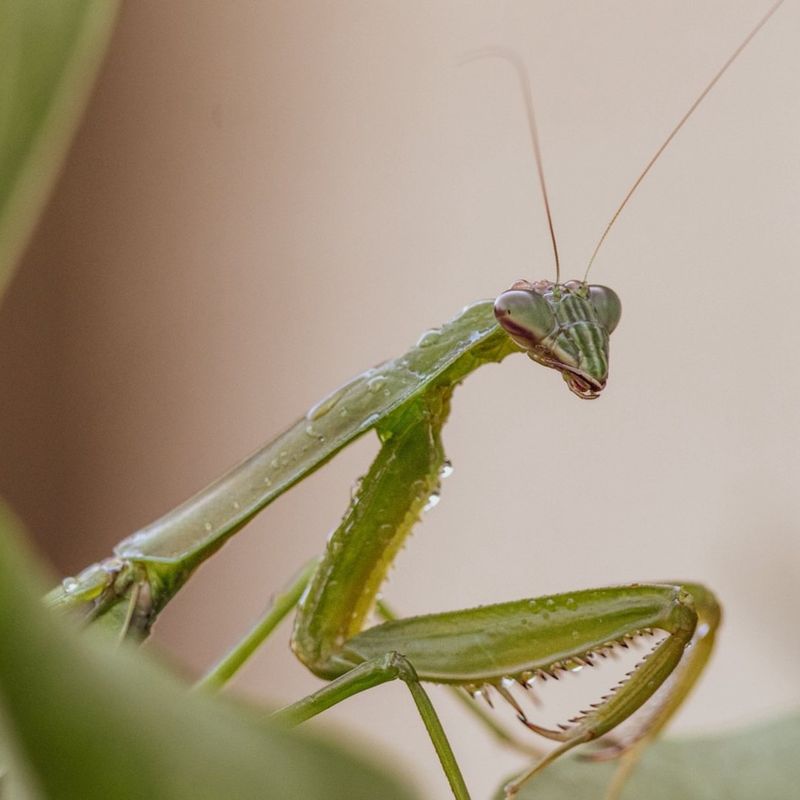
Spot a praying mantis on your pepper plant or fence post and the first thing worth knowing is this: it may be there because the area offers hunting opportunities. Mantises are ambush predators, and they position themselves where insects are likely to pass.
Stems, flower heads, vegetable supports, shrubs, and tall grasses are all classic hunting spots because insects move through these same spaces constantly.
The prey list is long and varied. A mantis in your garden may be waiting for flies, moths, beetles, grasshoppers, crickets, leafhoppers, small caterpillars, or other soft-bodied insects that travel through the foliage.
According to Ohio State University Extension, mantises use a sit-and-wait strategy, relying on camouflage and patience rather than chasing prey across open ground.
Their front legs are built for speed and grip. When an insect gets close enough, the strike happens in a fraction of a second.
The mantis does not care whether the insect is a pest or a pollinator. It hunts what passes within range.
A garden with insect activity is the kind of place a mantis is more likely to remain. If one has settled into your tomato bed or flower border, the most likely explanation is that the area is producing enough insect traffic to make hunting there worthwhile.
Your garden, in short, has enough insect activity to attract or support a predator.
2. Its Visit Points To A Working Backyard Food Web
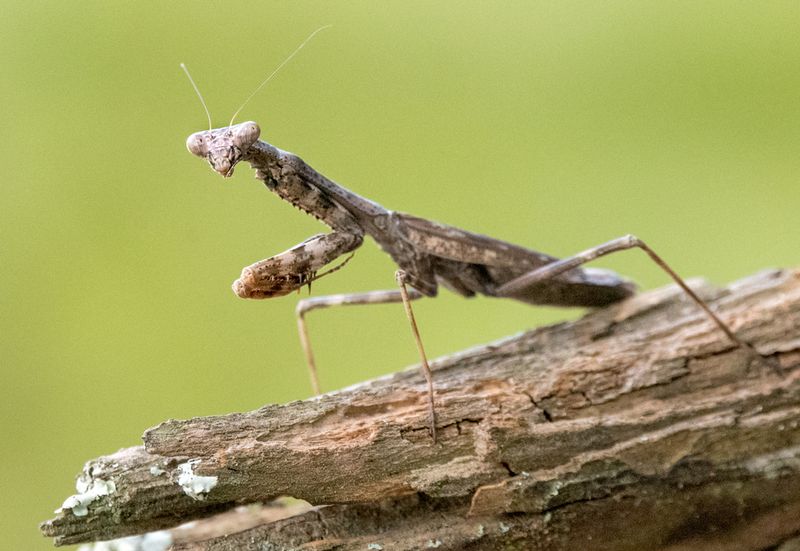
Finding a mantis in your garden can be a small sign that the space has enough insect life to support predator-prey activity. Plants feed insects.
Insects attract predators. Predators like mantises move in where prey is plentiful.
That sequence is a basic food web, and a garden that supports it is doing something right.
Gardens with diverse plantings tend to support more insect activity than those with only a few species. A mix of flowering plants, herbs, shrubs, ornamental grasses, and vegetable beds creates different microhabitats where insects can feed, shelter, and reproduce.
Your Ohio Garden Changes Every Week. Your Plan Should Too.
Gardening in Ohio changes quickly throughout the season. Every Friday you’ll receive a simple weekly plan showing exactly what to plant, prune, fertilize, harvest, and protect so you never miss the right timing.
More insect activity means more opportunity for a predator like a mantis to find a reliable food source.
Leafy edges, dense perennials, and undisturbed corners all add to the complexity that makes a garden feel worth using to a wide range of insects and the creatures that eat them.
A mantis does not prove your garden is perfectly balanced or thriving without any problems.
What it does suggest is that the space is biologically active enough to support predator-prey relationships.
Think of it as a rough indicator rather than a report card. Seeing one mantis suggests at least one predator-prey relationship is present, though it does not prove the whole garden ecosystem is balanced.
That is worth noticing, even if the garden still has plenty of room to grow and improve.
3. One Mantis Does Not Mean Natural Pest Control Is Solved

It would be convenient if a single mantis could clear out every aphid, squash bug, and Japanese beetle in the garden. The reality is much more complicated, and setting realistic expectations now will save a lot of frustration later.
Mantises hunt what they can catch based on size, position, and opportunity, not based on what the gardener most wants removed.
Aphids, for example, are tiny, slow-moving, and tend to cluster on soft stems. A mantis may eat aphids, especially when young, but it is not built to clean up dense aphid colonies plant by plant.
Squash bugs and Japanese beetles may be eaten occasionally, but their size, armor, habits, or position on the plant can make them unreliable mantis prey. Expecting a mantis to handle a real pest outbreak is likely to disappoint.
Integrated pest management is a more reliable approach for gardeners dealing with specific problems.
Ohio State University Extension recommends a combination of strategies including maintaining plant health, monitoring regularly, hand-removing pests when the population is small, using row covers where appropriate, and applying targeted low-impact treatments only when needed and only for the specific pest identified.
A mantis can be one small part of the picture, but it is not a replacement for active, thoughtful garden management. Watching it hunt is enjoyable.
Counting on it to fix a pest problem is a different matter entirely.
4. A Mantis May Hunt Pests, Pollinators, And Other Helpful Insects
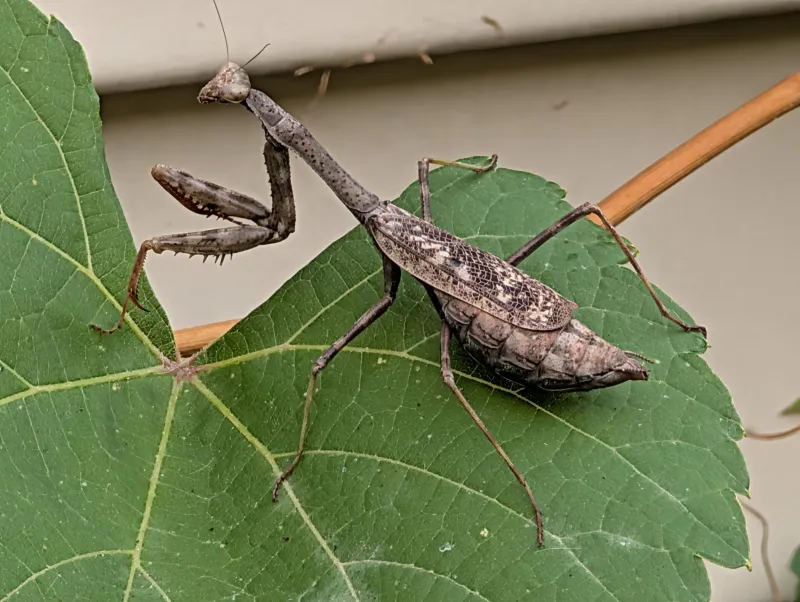
Here is something that surprises many gardeners: mantises do not sort their prey into pest and non-pest categories. They are generalist predators, which means they eat whatever insect is close enough to catch and the right size to handle.
That list includes some insects most gardeners would prefer to keep around.
Bees, butterflies, lacewings, lady beetles, hoverflies, and small spiders are all potential mantis prey.
Large mantises, including Chinese mantises, have been documented capturing small vertebrates such as hummingbirds and small frogs, but this is unusual compared with their normal insect prey.
Even other mantises are not off the menu. Cannibalism between mantises, especially during mating, is well documented.
This is not a reason to view mantises as garden villains. Predation is normal, and a food web includes losses at every level.
A mantis eating a bee is not a catastrophe. It is predator behavior working exactly as it has always worked in natural systems.
What this does mean, practically speaking, is that purchasing mantis egg cases as a pest control strategy is generally not recommended by many Extension-style and conservation sources.
Many university and conservation programs point out that releasing mantises for targeted pest control does not work the way sellers suggest, because the mantis will hunt whatever is available, not whatever is causing the gardener trouble.
Observe naturally occurring mantises with appreciation, but skip buying or releasing mantis egg cases for pest control.
5. Its Egg Case Is A Winter Clue Worth Protecting
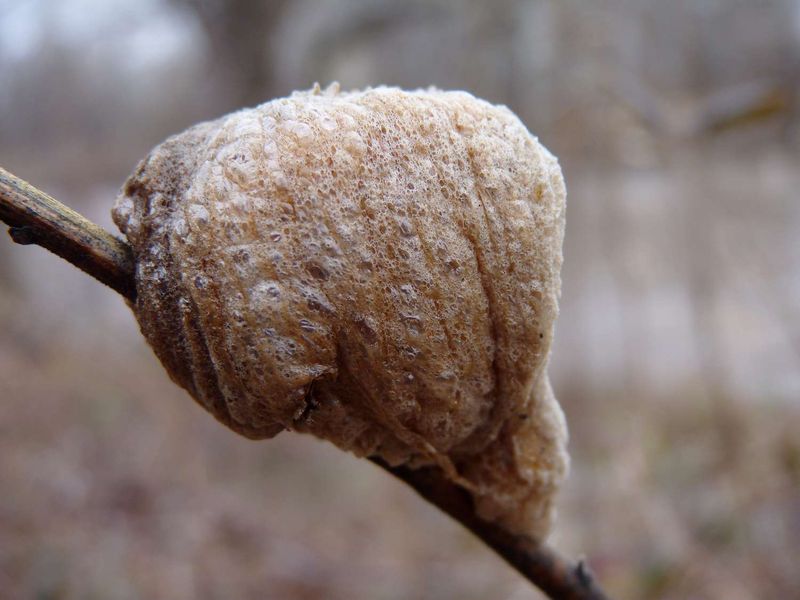
Long after the last mantis of the season has disappeared from view, it may leave something behind.
The ootheca, or egg case, is a hardened, foamy tan or light brown structure that a female mantis attaches to twigs, stems, plant stakes, fence posts, shrubs, or garden debris in late summer or fall.
It can look a little like a small piece of dried foam insulation wrapped around a branch.
Gardeners often notice oothecae in fall or early winter after leaves drop and the garden structure becomes more visible. A single case can contain anywhere from a few dozen to several hundred eggs depending on the species.
The case protects the eggs through cold weather and the nymphs emerge in spring when temperatures warm up consistently.
Before doing heavy fall cleanup or late-season pruning, check stems and shrubs carefully. Cutting or discarding a stem with an egg case attached can remove next season’s mantis population before it starts.
If you find one, try to identify it before deciding what to do. Native Carolina mantis egg cases are worth protecting, while some gardeners choose to remove non-native Chinese or European mantis egg cases.
Moving an egg case, even with good intentions, can place it in conditions where the nymphs emerge in a poor location or at the wrong time, so avoid relocating it unless necessary.
Egg case size and shape can vary by species. Cases from introduced Chinese mantises tend to be larger and more rounded or foamy-looking than those from the native Carolina mantis, Stagmomantis carolina, which produces a smaller, more elongated case.
6. The Species Matters More Than The Symbolism
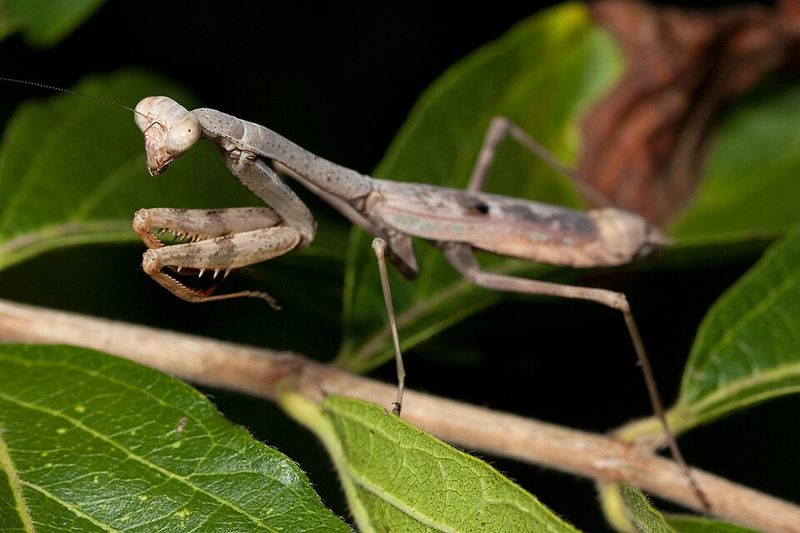
The phrase praying mantis gets used as if it describes one single insect, but in North American gardens, especially across Ohio and the eastern United States, there are actually several different species a gardener might encounter.
Knowing which one you are looking at is more useful than wondering what the sighting symbolizes.
The Carolina mantis, Stagmomantis carolina, is the native species found across the eastern and southern United States. It tends to be smaller, often reaching around two to two and a half inches, and its coloring can range from grayish brown to greenish depending on its surroundings.
The Chinese mantis, Tenodera sinensis, is an introduced species brought to North America in the late 1800s and is now widespread in many eastern and midwestern areas, including Ohio.
It is noticeably larger, sometimes reaching four to five inches, and tends to be green and brown with a green stripe along the wing edge.
The European mantis, Mantis religiosa, is another introduced species present in parts of the United States and is typically smaller than the Chinese mantis. It was introduced in the early 1900s.
Introduced species are not automatically a reason to panic, but they do matter ecologically.
A very large mantis on your sunflower may well be a Chinese mantis, though European mantises and other identification details should also be considered.
A smaller, more slender one blending into dry grass may be the native Carolina mantis. Accurate identification beats symbolic guessing every time.
Because Chinese and European mantises are introduced species, avoid buying or releasing mantis egg cases.
Commercial egg cases are often sold as natural pest control, but mantises are generalist predators and may eat pollinators, native insects, and even other mantises rather than the specific pest you hoped to control.
7. A Mantis Appears When Habitat Feels Worth Using
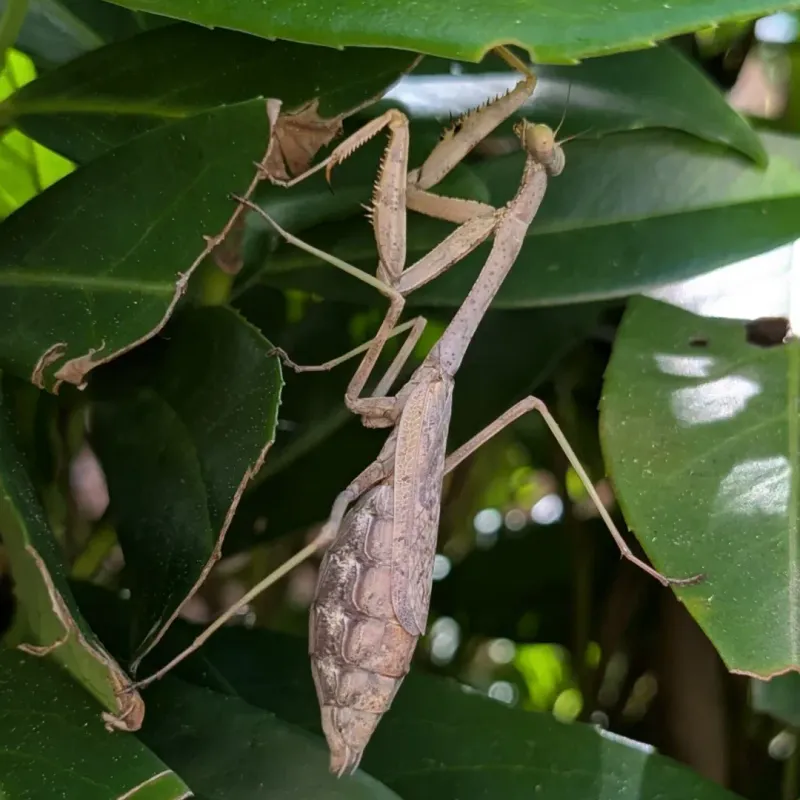
Gardens where mantises are commonly found tend to have certain things in common.
Sturdy stems, tall flowering perennials, ornamental grasses, vegetable cages, shrubs, and undisturbed corners all provide what a mantis needs: reliable hunting perches, cover from predators, and suitable surfaces for laying an egg case in late summer or fall.
An over-manicured garden with bare soil, closely clipped edges, and minimal plant variety offers fewer opportunities.
A garden with layers, from low ground covers up through mid-height perennials and taller shrubs, creates the kind of structural complexity that supports more insect life and, in turn, more predator activity.
There are practical ways to make your garden more welcoming to mantises and other wildlife without letting it become unmanageable. Growing a mix of flowering plants that bloom across different seasons helps maintain insect activity from spring through fall.
Leaving some hollow or sturdy stems standing through winter provides shelter and egg-laying sites. Avoiding the urge to cut everything back in early fall gives late-season insects and their predators more time to complete their life cycles.
Reducing unnecessary pesticide applications is one of the most impactful steps. Even products labeled as low-toxicity can affect the insect populations that mantises depend on for food.
A garden with fewer chemical disruptions tends to support more consistent insect activity, which can make it more usable for hunting mantises and other predators.
8. The Smart Move Is To Watch First And Spray Less

Seeing a mantis on your garden plants is a good reminder to slow down before reaching for a spray bottle. Many gardeners react quickly when they spot insects, assuming that any bug on a plant is a problem that needs immediate action.
A mantis showing up in that same space is a sign that at least some predator activity is present.
Start by inspecting your plants carefully and identifying what you actually see. Not every insect on a leaf is causing damage.
Some are passing through. Some are predators themselves.
Some are pollinators resting between flowers. Correct identification of a pest, its life stage, and the actual damage level it is causing should come before any treatment decision, according to integrated pest management principles from Ohio State University Extension.
Broad-spectrum insecticide sprays, including some organic options, can affect a wide range of insects beyond the target pest.
Applying them broadly can reduce the insect activity that supports predators like mantises, creating a cycle where the garden becomes less biologically diverse over time.
Tolerating some insect activity, monitoring regularly, and acting only when a pest population genuinely threatens plant health is a more sustainable approach. A mantis hunting in your garden is usually not a warning sign.
It is evidence that the space has at least some insect activity and habitat structure that can support a predator, and that is worth protecting rather than spraying away.