9 Plants You Should Never Grow Near Cucumbers In A Michigan Garden
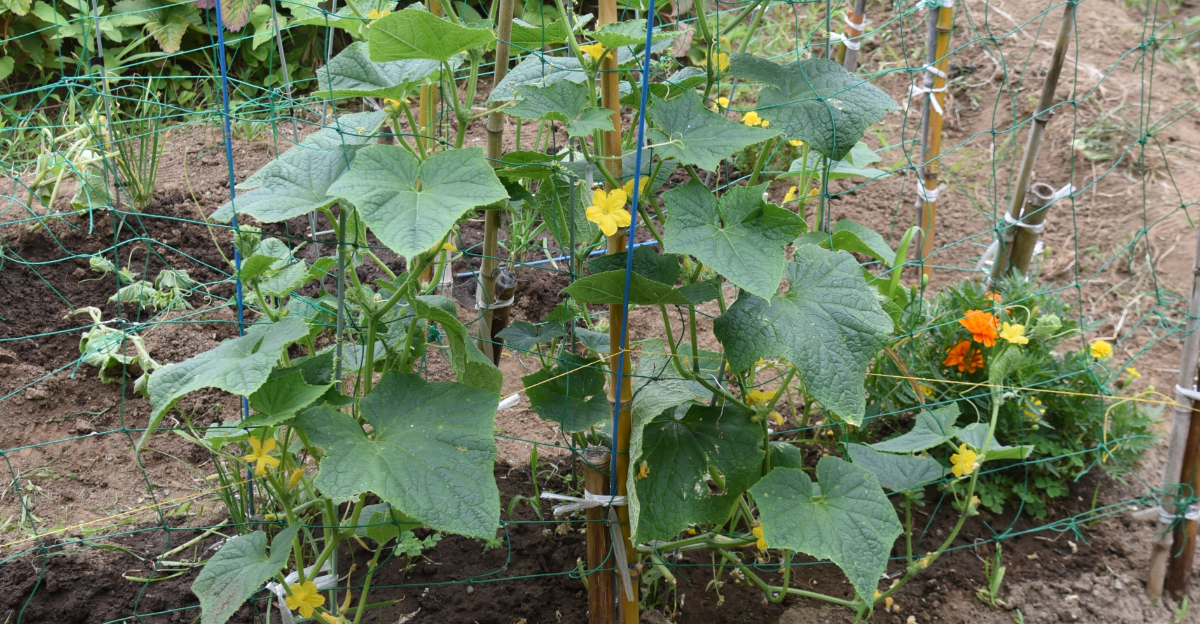
Cucumbers are productive, fast growing, and satisfying to harvest, but they are also particular about company.
Most Michigan gardeners focus on what to plant near cucumbers to help them thrive without stopping to think about which neighbors quietly work against them.
Companion planting gets a lot of attention for its benefits, but the other side of that equation matters just as much.
Certain plants compete for the same nutrients, attract pests that then move straight to cucumber vines, release compounds that interfere with growth, or create shade and crowding conditions that invite the fungal issues Michigan’s humid summers already encourage on their own.
Some of these problematic pairings involve plants that seem completely harmless or even beneficial in other parts of the garden. The issue is proximity, and in a raised bed or tightly planted vegetable garden the wrong neighbors end up closer than most gardeners realize.
These nine plants are worth keeping at a real distance from your cucumber beds this season, and the reasons behind each one are worth knowing before planting day.
1. Potatoes (Solanum tuberosum)
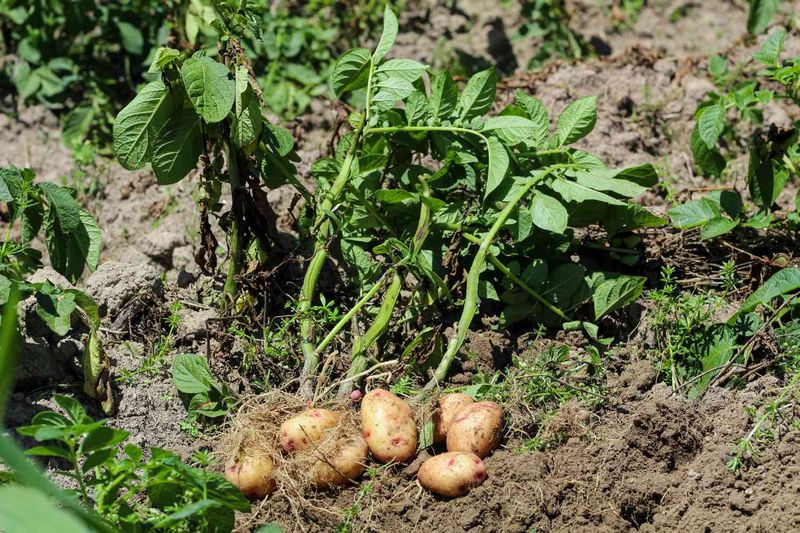
Potatoes might seem harmless, but planting them near your cucumbers in a Michigan garden is a combination that can quickly backfire on you.
Both of these plants are highly vulnerable to fungal and bacterial diseases, and when you grow them close together, you are essentially doubling the risk of spreading those problems throughout your garden.
Michigan summers bring enough humidity on their own without adding more disease pressure to the mix.
One of the biggest concerns is late blight and other soil-borne pathogens that potatoes are known to carry. These pathogens can easily spread to nearby cucumber plants through the soil, water splashing, or even insects moving from one plant to another.
Once disease takes hold in a crowded bed, it spreads fast and is tough to stop.
Airflow is another major issue when these two plants share space. Cucumbers need good air circulation around their leaves to stay healthy and resist mildew, but dense potato foliage blocks that airflow significantly.
Keeping potatoes on the opposite side of your Michigan garden gives both crops a much better chance of producing well. A little extra planning at the start of the season goes a long way toward keeping your whole garden strong and productive.
2. Sage (Salvia officinalis)

Sage has a well-deserved reputation as a useful herb in the kitchen, but in the garden, it is not the friendliest neighbor for cucumbers.
The two plants have very different preferences when it comes to water, and trying to satisfy both of them in the same planting area usually means at least one of them ends up struggling.
Cucumbers are thirsty plants that need consistently moist soil, especially during Michigan’s warm summer months.
Sage, on the other hand, strongly prefers drier conditions and actually does worse when it sits in wet soil for too long. If you water enough to keep your cucumbers happy, the sage may develop root rot or other moisture-related problems.
Your Michigan Garden Changes Every Week. Your Plan Should Too.
Gardening in Michigan changes quickly throughout the season. Every Friday you’ll receive a simple weekly plan showing exactly what to plant, prune, fertilize, harvest, and protect so you never miss the right timing.
If you hold back on watering to keep the sage comfortable, your cucumber vines will suffer and produce far fewer fruits.
Some gardeners assume that companion planting claims about sage repelling pests near cucumbers are strong enough to justify the pairing, but the research behind those claims is not very solid.
The practical watering conflict alone is reason enough to keep them separated in your Michigan garden.
Planting sage in a dedicated herb section with other drought-tolerant plants is a much smarter setup. Your cucumbers will thank you with bigger harvests when they get the consistent moisture they truly need throughout the growing season.
3. Rosemary (Salvia rosmarinus)
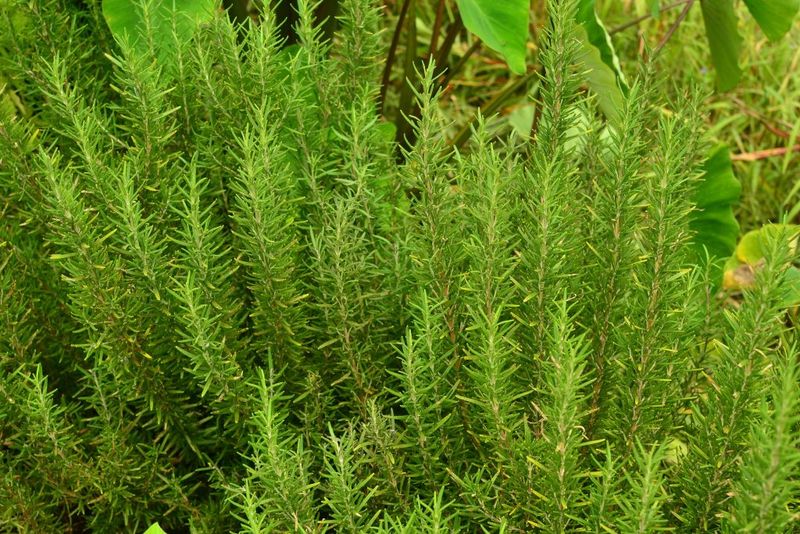
Rosemary is one of those herbs that looks beautiful in a garden and smells absolutely amazing, but it has very specific growing needs that make it a poor match for cucumbers.
This tough Mediterranean herb thrives in dry, well-drained soil and actually prefers to be a little neglected when it comes to watering.
Cucumbers need the complete opposite, making this one of the most straightforward incompatibilities you will find in a Michigan garden.
When you plant rosemary next to cucumbers, you are forced into a constant balancing act with your watering schedule. Michigan summers can be unpredictable, with stretches of heat and humidity that make cucumber plants demand frequent watering.
Giving them what they need means the rosemary roots are sitting in far more moisture than they can handle, which often leads to root problems and a weakened plant overall.
Beyond the watering issue, rosemary grows into a fairly large, woody shrub over time, and its spreading branches can physically crowd out cucumber vines if planted too closely.
Rosemary also does not offer any meaningful pest-repelling benefits for cucumbers that would make the pairing worth the trouble.
The smartest move for Michigan gardeners is to give rosemary its own dedicated spot with full sun and sandy or well-drained soil. Separate them completely and both plants will grow far more successfully throughout the season.
4. Pumpkins (Cucurbita maxima)
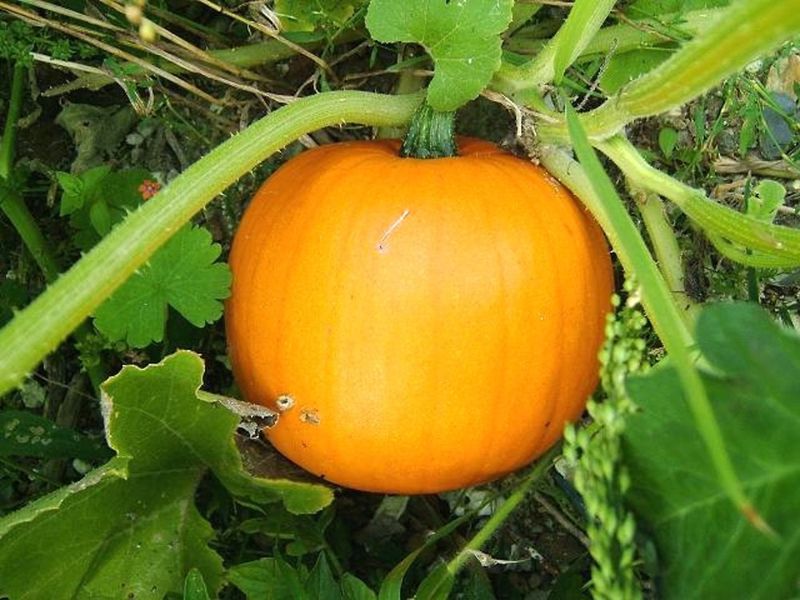
Pumpkins are one of those garden plants that look manageable when you first put them in the ground, but they grow into something enormous in a surprisingly short amount of time.
In a Michigan garden, pumpkin vines can easily stretch six to ten feet in every direction, swallowing up nearby plants without much mercy.
Cucumbers, which are also vining plants that need room to spread, simply cannot compete with pumpkin’s aggressive growth habit.
The competition between these two plants goes beyond just physical space. Pumpkins are heavy feeders that pull large amounts of nutrients from the soil, and they will out-compete cucumber plants for nitrogen, potassium, and phosphorus.
When cucumbers cannot access the nutrients they need, their growth slows, fruit production drops, and the whole plant becomes more vulnerable to stress and disease.
Sunlight is yet another resource these two plants fight over. Pumpkin leaves are enormous, and once the vines start spreading, they create a thick canopy that blocks sunlight from reaching cucumber plants underneath or nearby.
Cucumbers need plenty of direct sun to produce well, especially in Michigan where the growing season is already on the shorter side.
Giving each of these plants its own dedicated space in the garden, with plenty of room to grow in its own direction, is the best strategy for getting a great harvest from both crops this season.
5. Watermelons (Citrullus lanatus)
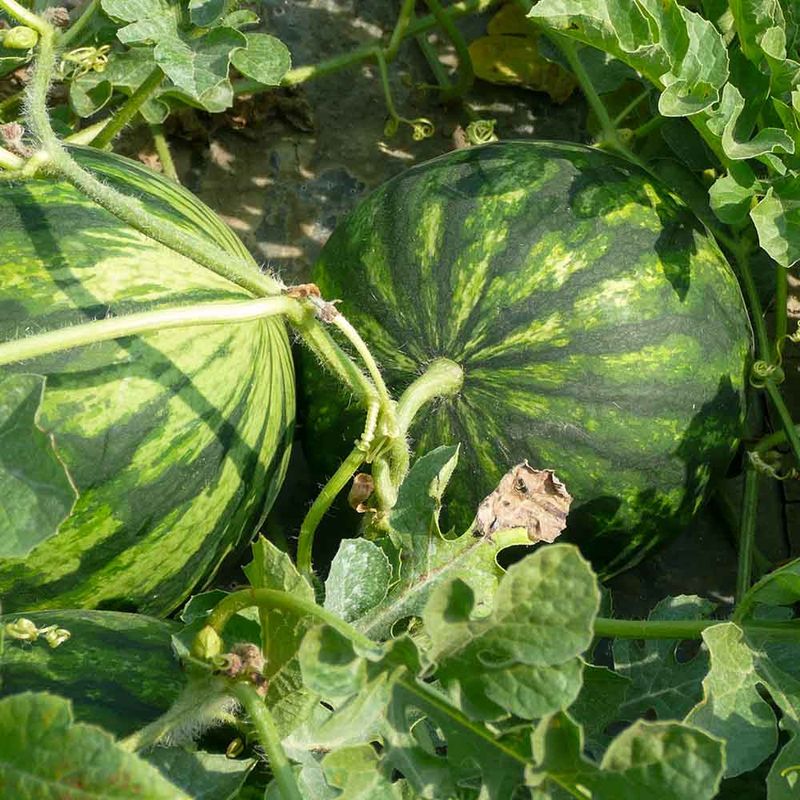
Few things feel more like summer than a fresh watermelon, and Michigan gardeners love growing them. But placing watermelons next to cucumbers is a combination that tends to create more headaches than it is worth.
Both plants are vining crops that need significant space to spread out, and when they are planted too close together, they quickly become tangled and competitive in ways that hurt both harvests.
Watermelons are particularly aggressive when it comes to taking over garden space. Their vines spread wide and their large, broad leaves create dense coverage that blocks airflow between plants.
Poor air circulation is one of the leading causes of powdery mildew on cucumber plants, and Michigan’s humid summer conditions already make mildew a constant concern for gardeners. Cramming these two plants together only makes that problem worse.
Watermelons also have deep, extensive root systems that compete directly with cucumber roots for water and nutrients in the soil.
During dry spells, which Michigan does experience even in summer, this competition can seriously stress your cucumber plants and reduce their fruit production.
Both crops need full sun, consistent moisture, and room to breathe, and neither gets enough of those things when they are crowded together.
Spacing them far apart in your garden layout, or even growing them in completely separate raised beds, gives both plants the best possible conditions for a strong and rewarding harvest.
6. Zucchini (Cucurbita pepo)
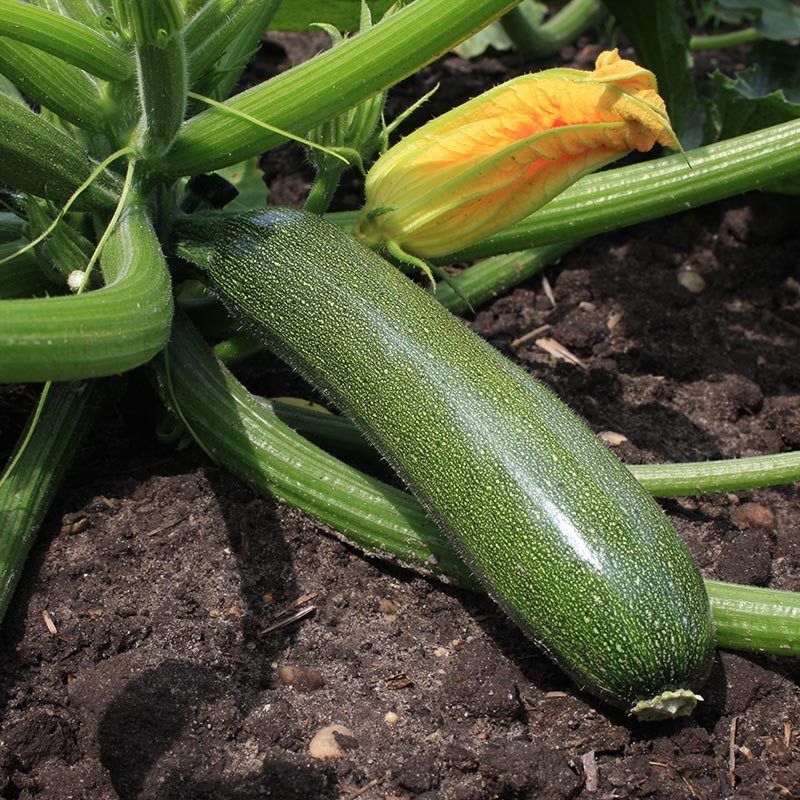
Zucchini is one of the most popular vegetables in Michigan home gardens, and it is easy to understand why. It grows fast, produces abundantly, and tastes great in all kinds of dishes.
However, putting zucchini right next to your cucumbers is a gardening move you will likely regret by midsummer. These two plants share a troubling number of the same pests and diseases, and growing them together basically creates a buffet for problems.
Cucumber beetles, for example, are attracted to both cucumbers and zucchini. When both plants are growing side by side, a beetle infestation can spread rapidly from one to the other, causing damage that is much harder to manage than if the plants were kept apart.
Powdery mildew is another shared threat that thrives when these two plants are crowded together with reduced airflow between them.
Zucchini plants also grow very large very quickly, and their wide leaves can shade out cucumber plants if they are not carefully managed.
Michigan gardeners who have tried this pairing often find themselves constantly pruning and adjusting just to keep both plants from overwhelming each other.
The smarter approach is to plant zucchini on the other side of your garden, away from your cucumber rows.
Giving each plant its own space reduces pest pressure, improves airflow, and makes managing both crops throughout the Michigan growing season significantly easier and more enjoyable.
7. Fennel (Foeniculum vulgare)
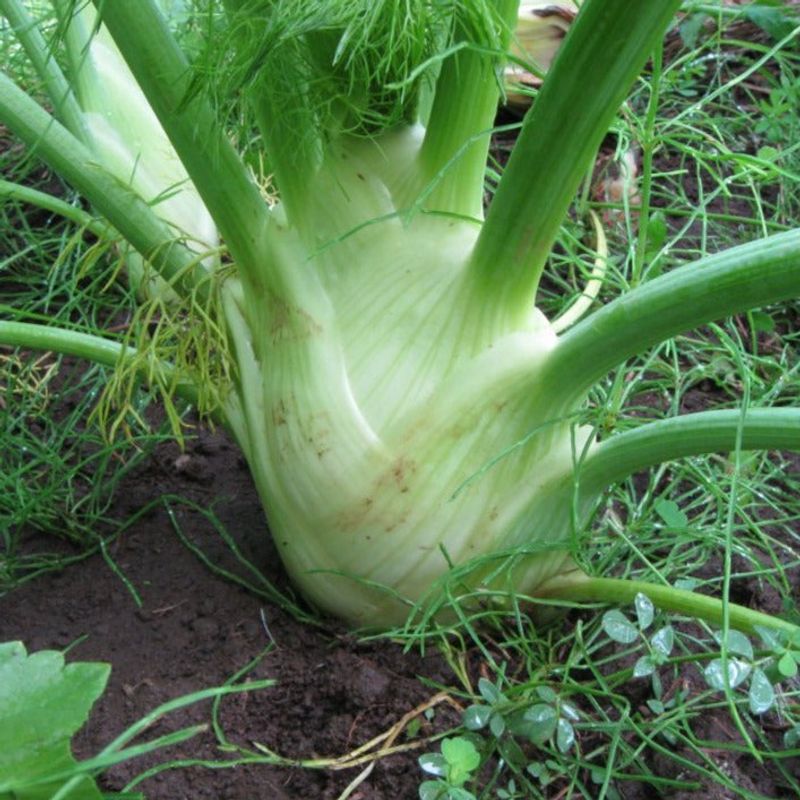
Fennel has a reputation in the gardening world that most vegetables would not want, and for good reason. It is widely known as one of the worst companion plants you can put in a vegetable garden, and cucumbers are no exception to that rule.
Fennel releases natural chemicals from its roots and foliage that can suppress the growth of nearby plants, a process called allelopathy, and cucumbers are sensitive enough to feel those effects.
Michigan gardeners who have made the mistake of planting fennel near their vegetables often notice that surrounding plants seem to stall out or grow more slowly than expected.
Cucumbers that are affected by fennel’s chemical influence may produce fewer fruits, develop weaker root systems, or simply struggle to reach their full potential during the growing season.
It is a subtle but real problem that is easy to overlook until the damage is already done. Beyond the chemical suppression issue, fennel tends to attract its own specific set of insects that do not always benefit cucumber plants.
It is also a tall, feathery plant that can create unwanted shade if positioned too close to lower-growing cucumber vines.
Most experienced Michigan gardeners recommend growing fennel in a completely separate container or in its own isolated garden bed away from all vegetables.
Keeping it isolated protects the rest of your garden and lets your cucumbers focus their energy on producing a healthy and generous harvest all summer long.
8. Mint (Mentha spp.)
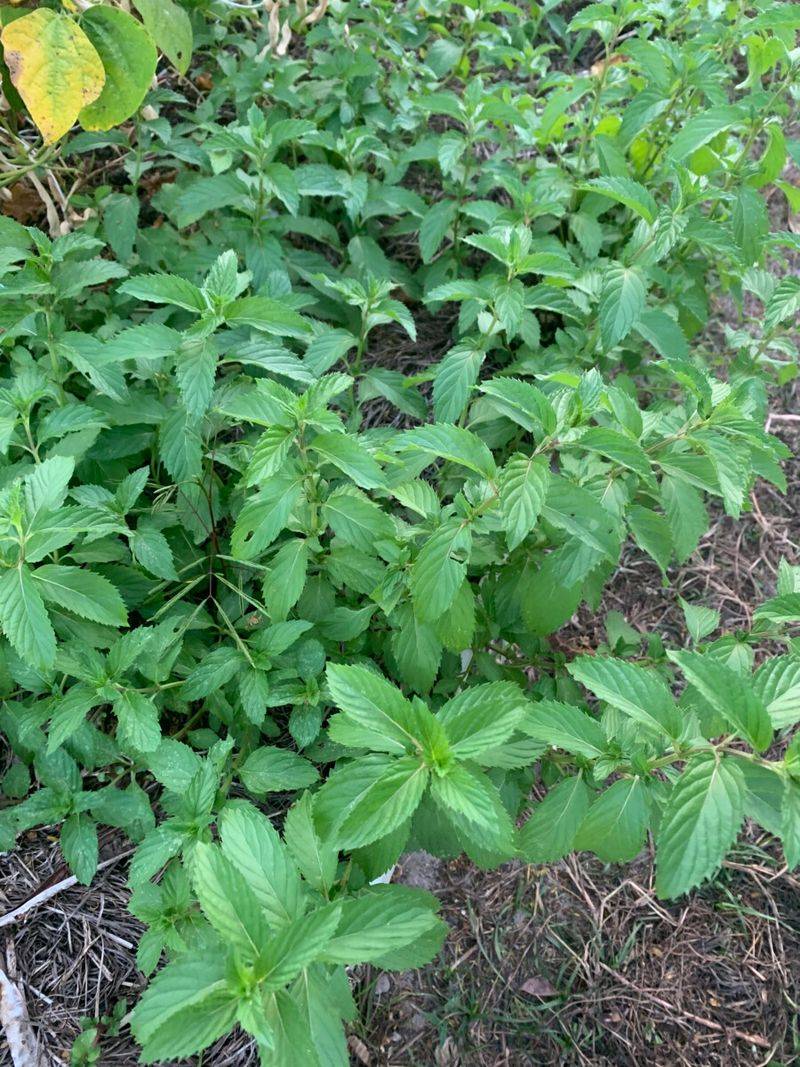
Mint is one of those plants that starts out looking innocent and manageable, but give it a few weeks and it will try to take over your entire garden. Anyone who has grown mint before knows exactly what happens when you let it loose in an open garden bed.
It spreads through underground runners at an impressive speed, and once it gets established near your cucumbers, it becomes very difficult to remove without disturbing the cucumber roots as well.
The aggressive spreading habit of mint means it competes directly with cucumber plants for soil moisture and nutrients. During Michigan’s warmer summer months when cucumbers are actively producing fruit, they need consistent access to water and nutrition.
Mint’s dense root network can intercept both, leaving cucumber plants with less than they need to perform at their best.
There is also the physical crowding factor to consider. As mint spreads above ground, it creates a dense mat of foliage that can reduce airflow around the base of your cucumber plants.
Lower airflow around the soil surface can increase moisture retention in ways that actually encourage fungal problems rather than helping the cucumbers.
If you love growing mint in your Michigan garden, the smartest solution is to plant it in a buried container or pot that prevents the roots from spreading.
That way, you get to enjoy fresh mint all summer without sacrificing the health and productivity of your cucumber crop nearby.
9. Sunflowers (Helianthus annuus)
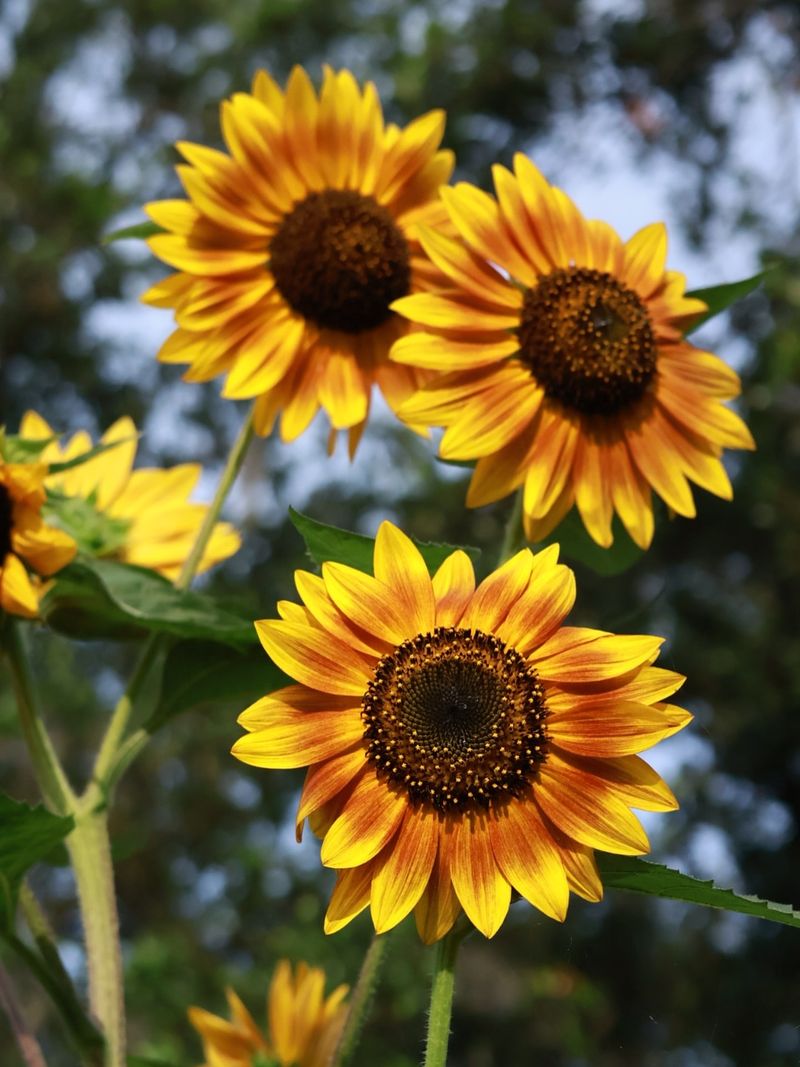
Sunflowers are one of the most cheerful and iconic plants you can grow in a Michigan garden, and they bring a lot of joy to any outdoor space. The problem is that they also bring a lot of shade, and cucumbers are not fans of that at all.
When sunflowers are planted too close to cucumber vines, their tall stalks and wide flower heads create a shadow that can significantly reduce the amount of direct sunlight reaching your cucumbers throughout the day.
Cucumbers need at least six to eight hours of full sun every day to grow well and produce a generous harvest.
In smaller Michigan gardens where space is limited and sun exposure is already precious, even a few hours of shade from nearby sunflowers can noticeably slow cucumber growth and reduce fruit production.
The taller the sunflower variety, the bigger the shading problem becomes as the season progresses.
Sunflowers also have large, deep root systems that compete with cucumber roots for water and nutrients in the soil.
During Michigan’s sometimes dry summer stretches, this underground competition can put real stress on your cucumber plants right when they need resources the most.
Planting sunflowers along the north side of your garden, away from cucumbers and other sun-loving vegetables, is a simple and effective solution.
That way, your sunflowers still get to shine without casting unwanted shadows over the crops that need every bit of Michigan sunshine they can get.