Oregon Gardeners Should Try These Native Wildflowers Instead Of Annuals
Annuals are a commitment. You buy them every single year, plant them every single year, and the moment the season ends they’re gone and the whole cycle starts over.
For a lot of Oregon gardeners, that’s just become the routine without anyone stopping to question it. There’s a better way, and it’s been growing wild along Oregon roadsides and meadows this whole time.
Native wildflowers flip the entire model. Plant them once and many of them come back on their own, self-seeding and spreading in ways that make your garden feel more alive and less like something that needs to be constantly restocked.
They’ve spent thousands of years adapting to Oregon’s specific rainfall patterns, soil types, and seasonal rhythms, which means they establish faster, need far less intervention, and support local pollinators in ways that most nursery annuals simply can’t compete with.
Gorgeous, low-maintenance, and genuinely good for the ecosystem your garden sits inside. The case for making the switch is pretty hard to argue with.
1. Globe Gilia
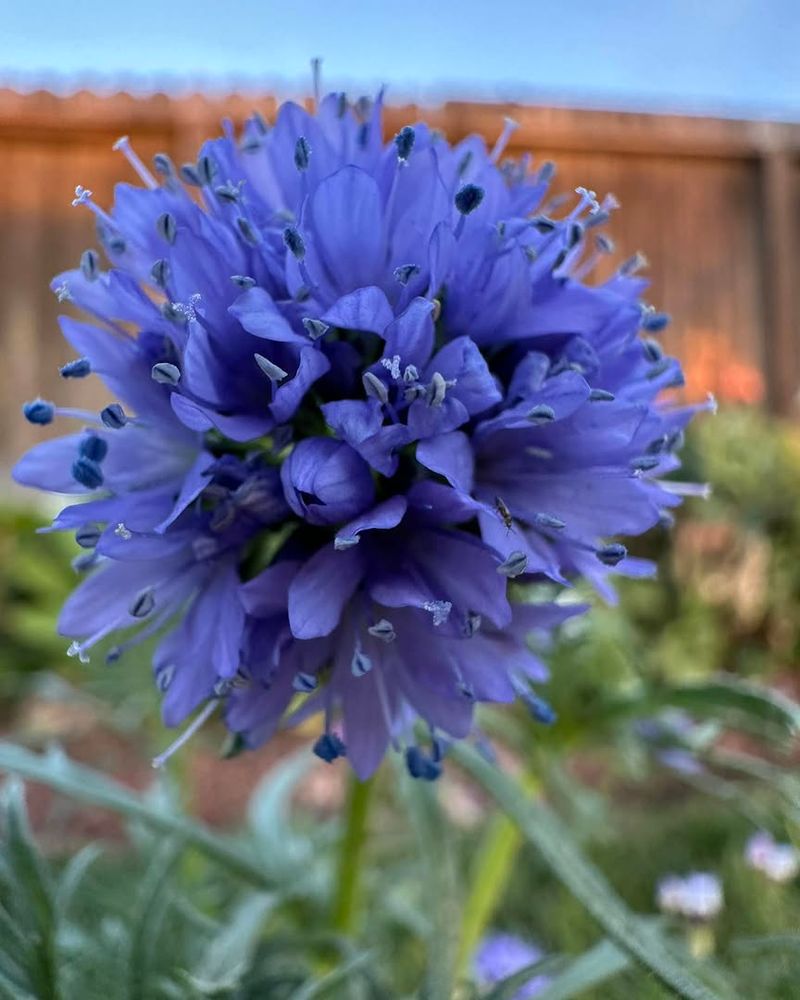
Picture tiny lavender-blue pom-poms floating above feathery green stems, and you’ve got Globe Gilia. This cheerful Oregon native is a showstopper in any wildflower garden, and it grows surprisingly fast from seed.
Bees and butterflies absolutely love it, making your yard a buzzing, fluttering paradise from late spring through summer.
Globe Gilia thrives in dry, sunny spots with well-drained soil, which makes it perfect for Oregon’s warm, dry summers east of the Cascades. It also does well in western Oregon gardens that get good sun exposure.
You don’t need to water it much once it’s established.
Scatter seeds in early spring or even late fall for a head start. This plant self-sows freely, so you may get a beautiful patch returning year after year without replanting.
It’s a great choice if you want a low-effort garden that still looks wildly colorful and alive all season long.
2. Western Columbine
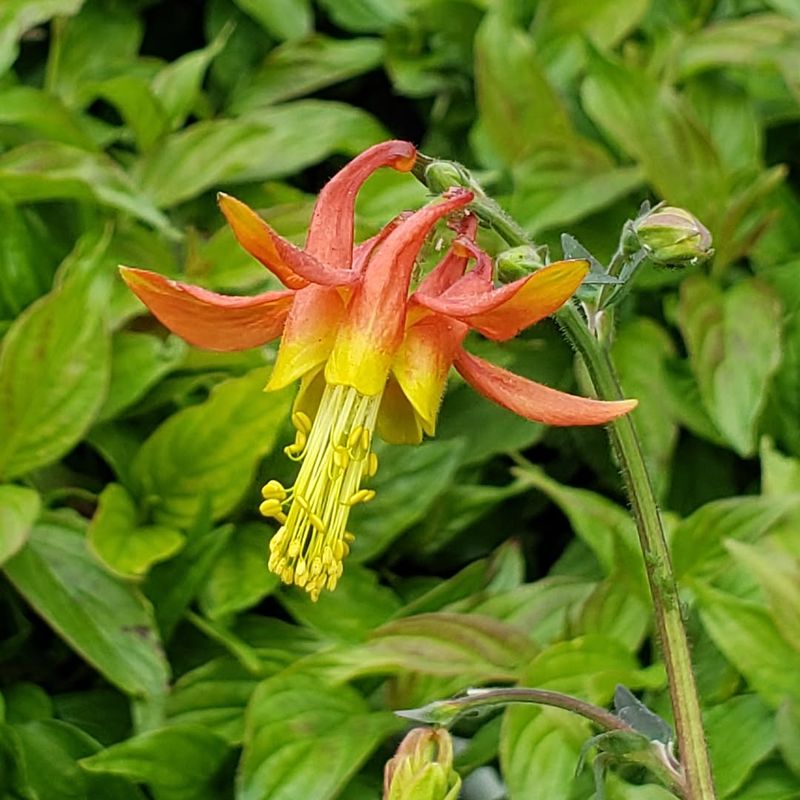
Few wildflowers are as instantly recognizable as Western Columbine, with its drooping red and yellow blooms that look like tiny lanterns hanging from slender stems. Hummingbirds are obsessed with this plant, and if you grow it in Oregon, you’ll have those little wings zipping through your yard all spring long.
It’s one of the most rewarding native plants you can add to your garden.
Western Columbine prefers partial shade and moist, well-drained soil, making it ideal for woodland-style gardens or spots near trees. It naturally grows along stream banks and forest edges throughout Oregon, so mimicking that environment at home helps it flourish.
It blooms from April through June, adding serious color right when you need it most.
Plant it alongside ferns or native grasses for a layered, natural look that feels effortless. Once established, it spreads gently by self-seeding, filling in bare spots over time.
It’s a long-lived perennial, meaning you plant it once and enjoy it for many seasons without starting over every year like you would with annuals.
Your Oregon Garden Changes Every Week. Your Plan Should Too.
Gardening in Oregon changes quickly throughout the season. Every Friday you’ll receive a simple weekly plan showing exactly what to plant, prune, fertilize, harvest, and protect so you never miss the right timing.
3. Checkerbloom
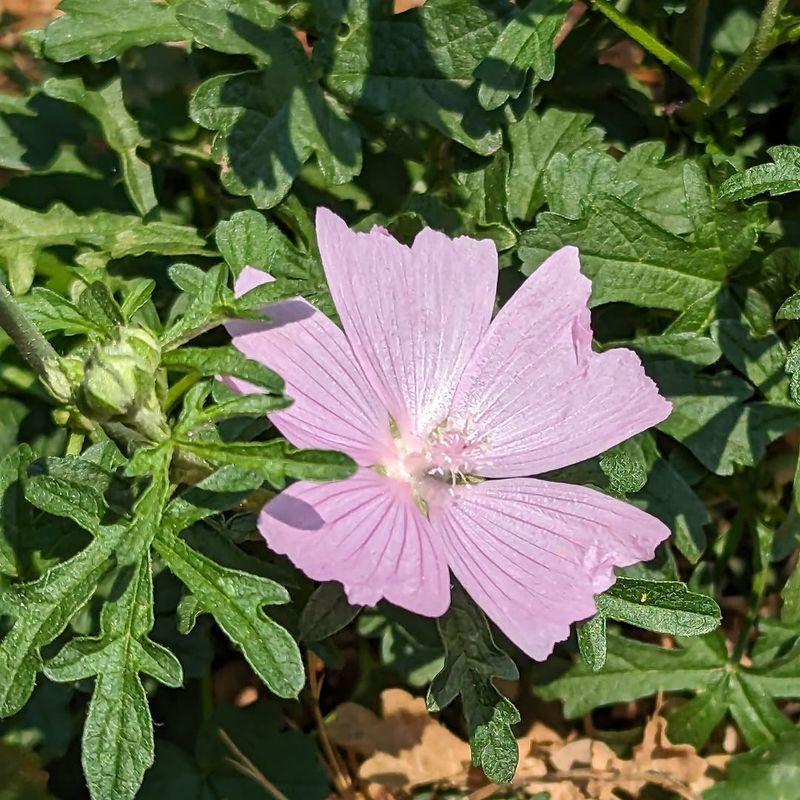
Checkerbloom is the kind of flower that makes people stop and ask, “What is that?” Its soft pink petals have a delicate, almost hollyhock-like appearance, and the plant stands tall and elegant in any garden bed. Native to meadows and hillsides throughout Oregon and California, it brings a refined wildness to your landscape that no annual can quite match.
This perennial loves full sun and tolerates dry conditions once established, making it a solid choice for Oregon’s long, dry summers. It blooms from spring into summer, and if you cut it back lightly after the first flush of flowers, it may reward you with a second round of blooms.
It grows about two to three feet tall, so it works beautifully as a mid-border plant.
Checkerbloom is a magnet for native bees, especially bumblebees, which are essential pollinators in the Pacific Northwest. Planting it in groups creates a real visual impact and gives pollinators a reliable food source.
It spreads slowly by rhizomes, gradually forming clumps that get more impressive with each passing year.
4. Douglas Aster
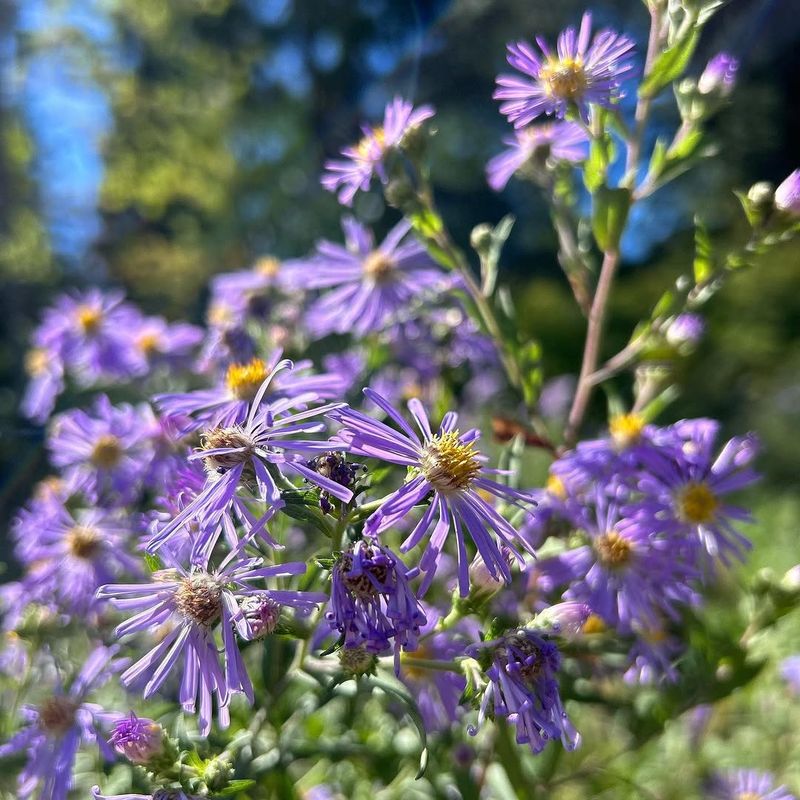
When most summer flowers are starting to fade, Douglas Aster is just hitting its stride. This Oregon native bursts into bloom in late summer and fall, filling your garden with cheerful purple daisy-like flowers just when you need them most.
It’s one of the best late-season options for keeping pollinators well-fed before cooler weather arrives.
Douglas Aster grows naturally along Oregon’s coast, in meadows, and near wetlands, so it’s happy in a range of conditions. It tolerates moist soil better than most native wildflowers, making it useful in low spots or areas near downspouts where other plants struggle.
It can handle partial shade but blooms most heavily in full sun.
Growing one to four feet tall, it works as a background plant or fills in nicely along fences and borders. It spreads by rhizomes and self-seeds, so one plant can become a lovely patch over a few seasons.
Goldfinches and other birds are drawn to the seed heads in fall, giving your garden life and movement even after the blooms are gone. It’s a true workhorse for the Oregon landscape.
5. Large-Flowered Collomia
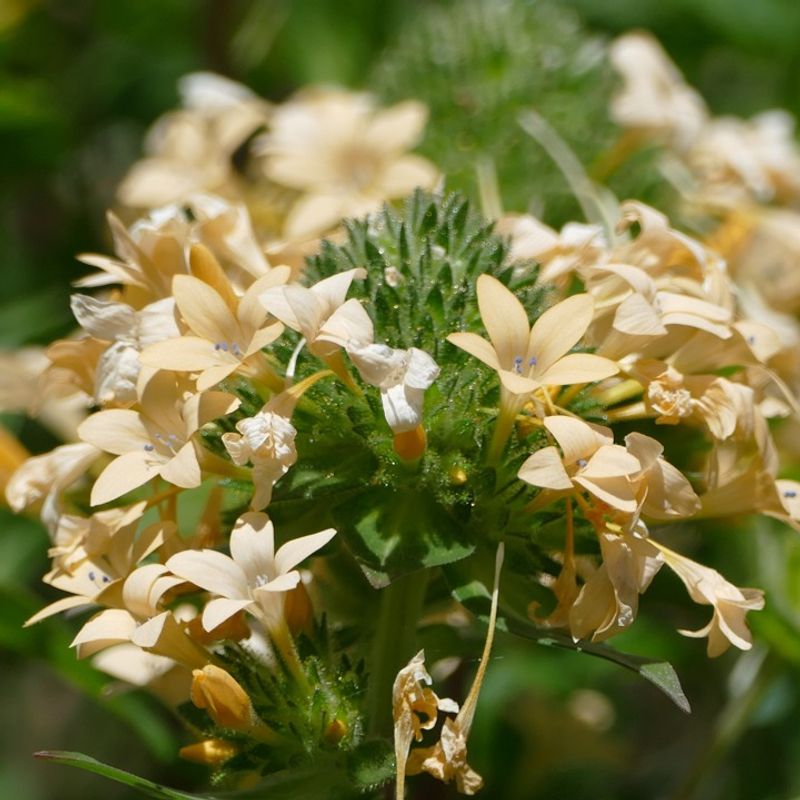
Not enough gardeners know about Large-Flowered Collomia, and that’s a real shame. Its salmon-pink, trumpet-shaped flowers are absolutely striking, and the whole plant has a slightly exotic look that surprises people who expect Oregon wildflowers to be small and subtle.
It’s a native annual that reseeds itself reliably, so it behaves more like a perennial in practice.
It grows best in sunny, well-drained spots and is especially at home in rocky or sandy soils where other plants might struggle. In Oregon, you’ll find it naturally growing on dry slopes and open hillsides, particularly east of the Cascades.
That toughness translates well to garden conditions, especially in low-water or xeriscape-style landscapes.
Sow seeds directly in fall or early spring, and thin seedlings to give plants room to spread. It typically reaches one to three feet tall and blooms from late spring through summer.
The flowers attract hummingbirds and native bees with impressive consistency. Because it self-sows so freely, you often get a reliable colony that returns without any extra effort on your part, making it one of the easiest and most rewarding plants to grow in an Oregon garden.
6. Sea Blush
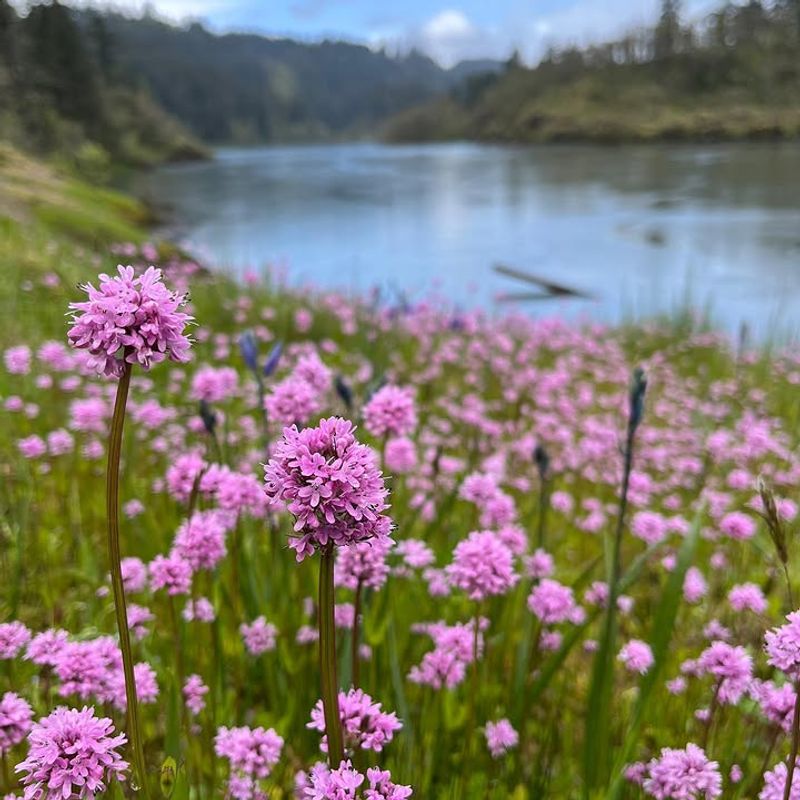
Sea Blush is a little gem that deserves way more attention in Oregon gardens. Its clusters of tiny rose-pink flowers create a soft, cloud-like effect that looks stunning both up close and from a distance.
It’s one of the earliest native wildflowers to bloom in the Pacific Northwest, often popping up in March or April when the garden still feels bare and grey.
This delicate annual thrives in rocky, thin soils with excellent drainage and loves full sun. You’ll find it growing naturally on rocky outcrops and grassy bluffs along the Oregon and Washington coast, as well as in valley grasslands.
That means it’s perfectly suited to spots in your garden where other plants tend to struggle and pout.
Scatter seeds in fall and let winter rains do the work of settling them into the soil. By spring, you’ll have a charming low carpet of pink blooms that pollinators visit eagerly.
Sea Blush grows only about four to twelve inches tall, making it ideal for the front of borders, rock gardens, or between stepping stones. It self-sows well enough that you may barely need to replant it from year to year.
7. Blue-Eyed Mary
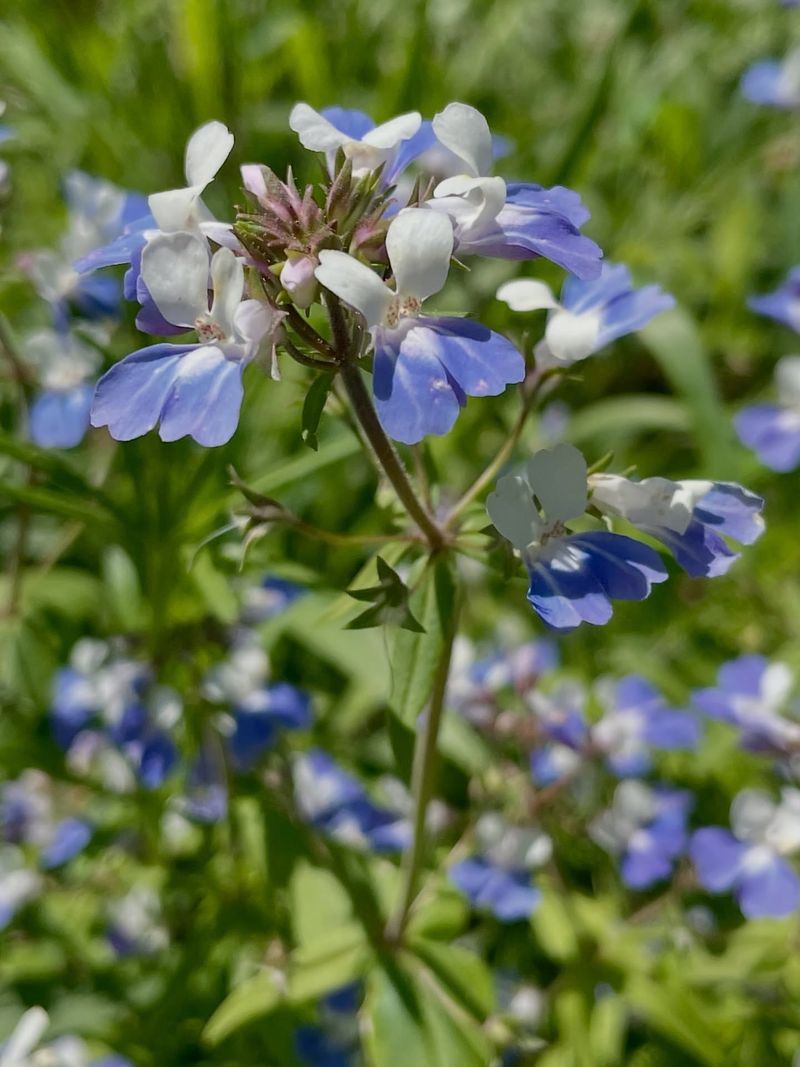
Tiny but absolutely charming, Blue-Eyed Mary is the kind of wildflower that makes you crouch down for a closer look. Each small flower has two blue upper petals and three white lower petals, creating a two-toned effect that’s unexpectedly intricate for such a little plant.
It’s a native annual that carpets the forest floor across much of Oregon in early spring, and it brings that same magic to home gardens.
Blue-Eyed Mary prefers cool, moist conditions and partial to full shade, making it perfect for spots under trees where annuals from the garden center often struggle. It blooms from March through May, right alongside other early spring natives.
At only four to twelve inches tall, it works beautifully as a ground cover or as a front-of-border accent in a shaded bed.
Sow seeds in fall directly where you want them to grow, since this plant doesn’t transplant well. Once established, it self-seeds generously and can spread into a lovely, low-maintenance colony over time.
It’s a wonderful conversation starter, because most visitors to an Oregon garden have never seen it before and are immediately enchanted by its unusual two-toned blooms.
8. Narrowleaf Mule’s Ears
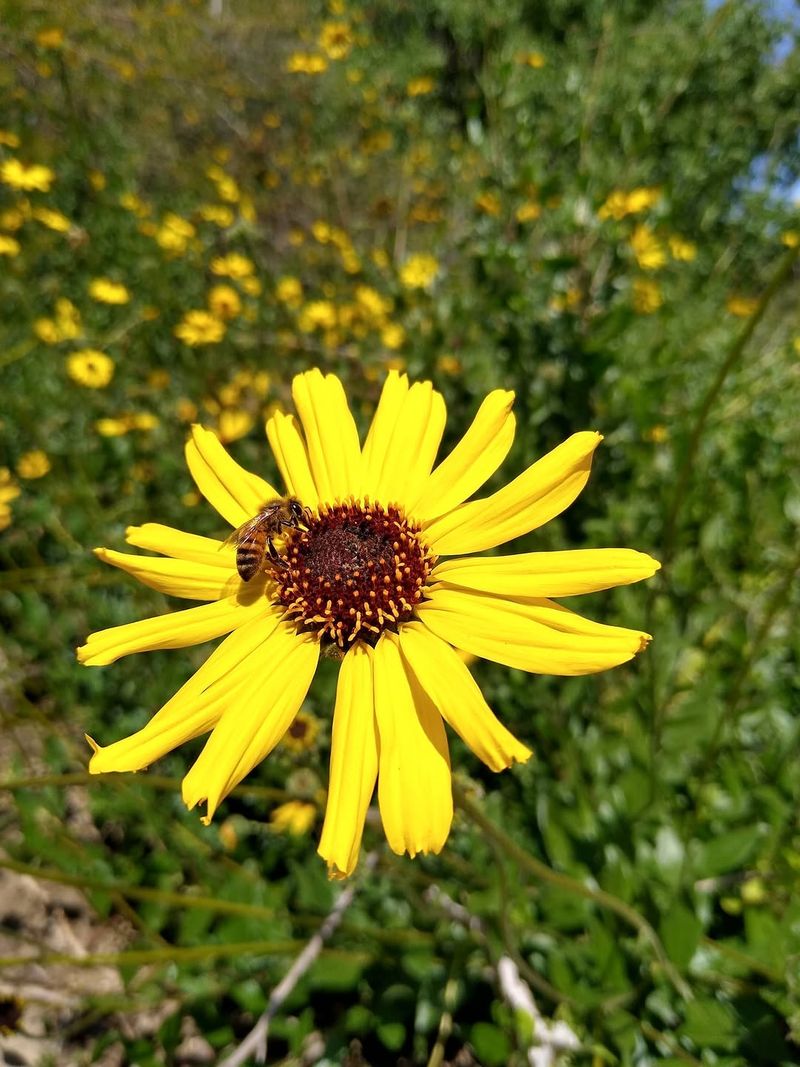
Bold, bright, and built for tough conditions, Narrowleaf Mule’s Ears is a native perennial that brings serious sunshine to dry Oregon gardens. Its large, golden-yellow flowers look like cheerful sunflowers, and the long, narrow silvery-green leaves are striking even when the plant isn’t in bloom.
It’s a plant with real personality and presence.
Native to dry meadows and open slopes in eastern Oregon and the Siskiyou region, it thrives in full sun with well-drained or even rocky soil. Once established, it’s remarkably drought-tolerant, which makes it an excellent choice for water-wise gardens across the state.
It blooms from late spring into summer, and the flowers are popular with native bees and other pollinators.
Narrowleaf Mule’s Ears grows one to three feet tall and spreads slowly by rhizomes, gradually forming attractive clumps. It’s a slow starter, so patience is key during the first season.
After that, it becomes increasingly robust and reliable year after year. Plant it in groups of three or more for maximum visual impact, and pair it with blue-flowered natives like lupine or penstemon for a color combination that feels authentically Oregon through and through.
9. Western Buttercup
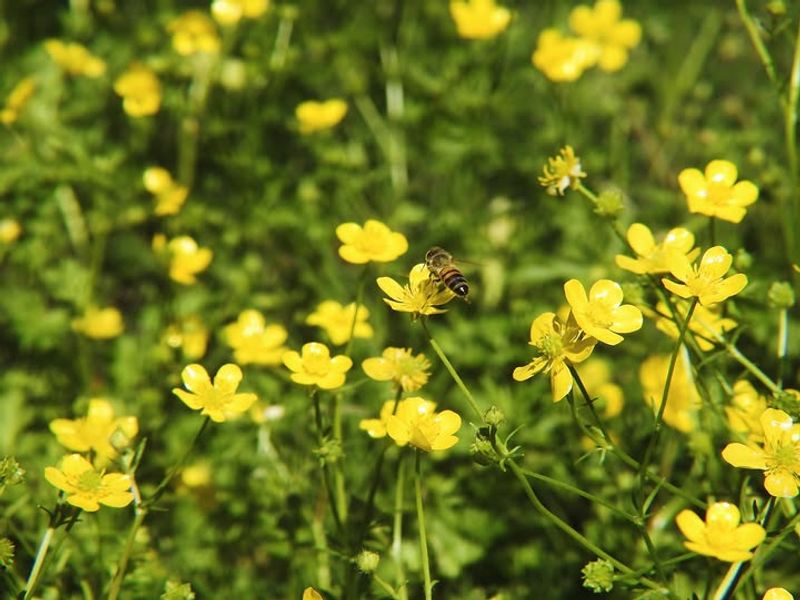
There’s something genuinely joyful about a patch of Western Buttercup in full bloom. Those glossy, bright yellow flowers practically glow in the spring sunshine, and they’re one of the earliest signs that the growing season has truly begun in Oregon.
This cheerful native perennial is common in moist meadows and grassy hillsides throughout the Willamette Valley and beyond.
Western Buttercup loves moist, fertile soil and does well in full sun to partial shade. It’s a natural fit for low spots in the garden, rain gardens, or areas near ponds and streams where the soil stays consistently damp through spring.
It blooms from March through May, bringing color right when the garden needs a boost the most.
Growing about one to two feet tall, it works well in naturalized meadow plantings or as part of a mixed native border. After blooming, the foliage dies back in summer, so pair it with later-emerging plants that can fill the space.
Native bees are frequent visitors to the flowers, and the plant spreads gently by seed over time. It’s a reliable, low-maintenance choice that rewards Oregon gardeners with a classic wildflower look without any complicated care routine.
10. Meadowfoam
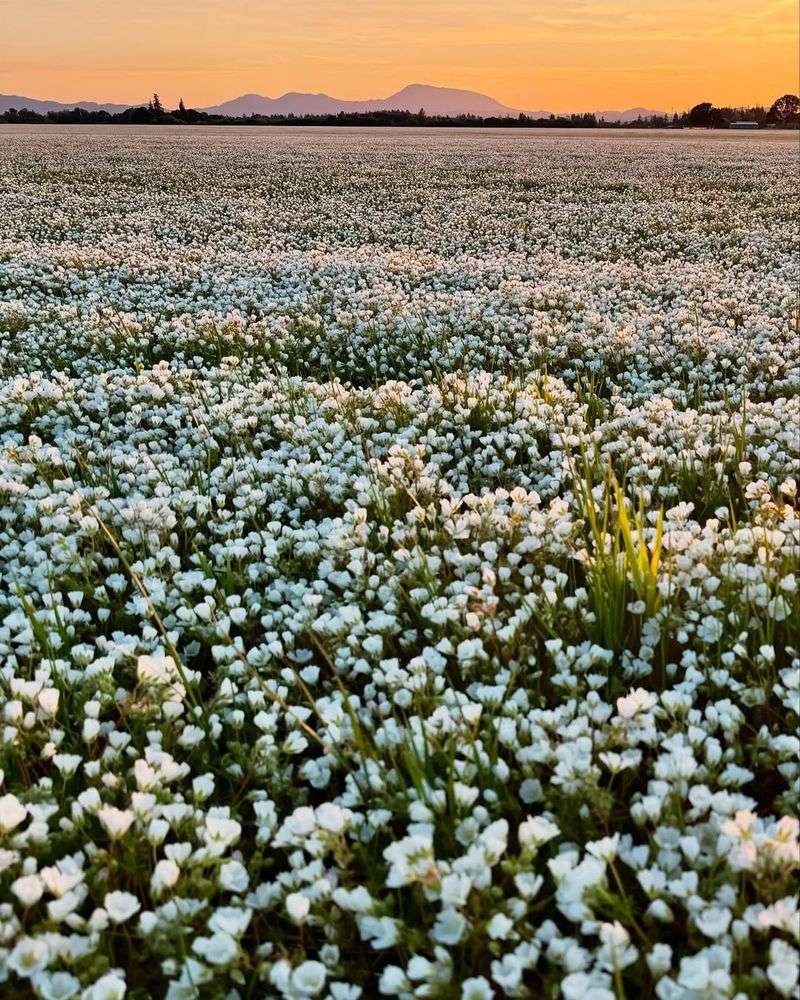
Meadowfoam gets its name from the way it looks when it’s in full bloom: a low, frothy blanket of white and pale yellow flowers that seems to pour across the ground like foam on water. It’s one of Oregon’s most distinctive native wildflowers and an absolute sensation when planted en masse in a garden.
Few sights in the Pacific Northwest are as purely delightful as a meadowfoam patch in spring.
This annual wildflower is native to wet meadows and vernal pools in the Willamette Valley, so it thrives in moist, low-lying areas where water pools in winter and early spring. It blooms from March through May and is an important early-season nectar source for native bees, including the rare Willamette Valley specialist bee that depends on it almost exclusively.
Scatter seeds in fall over moist, open ground and let nature handle the rest. Meadowfoam grows only about six to twelve inches tall, making it a wonderful ground cover for wet spots that are hard to plant.
It self-sows reliably in suitable conditions. Growing it in your Oregon garden also supports local conservation efforts, since natural meadowfoam habitat in the Willamette Valley has been significantly reduced over the past century.