This Is A Common Marigold Care Mistake In Ohio Gardens You Should Avoid At All Costs
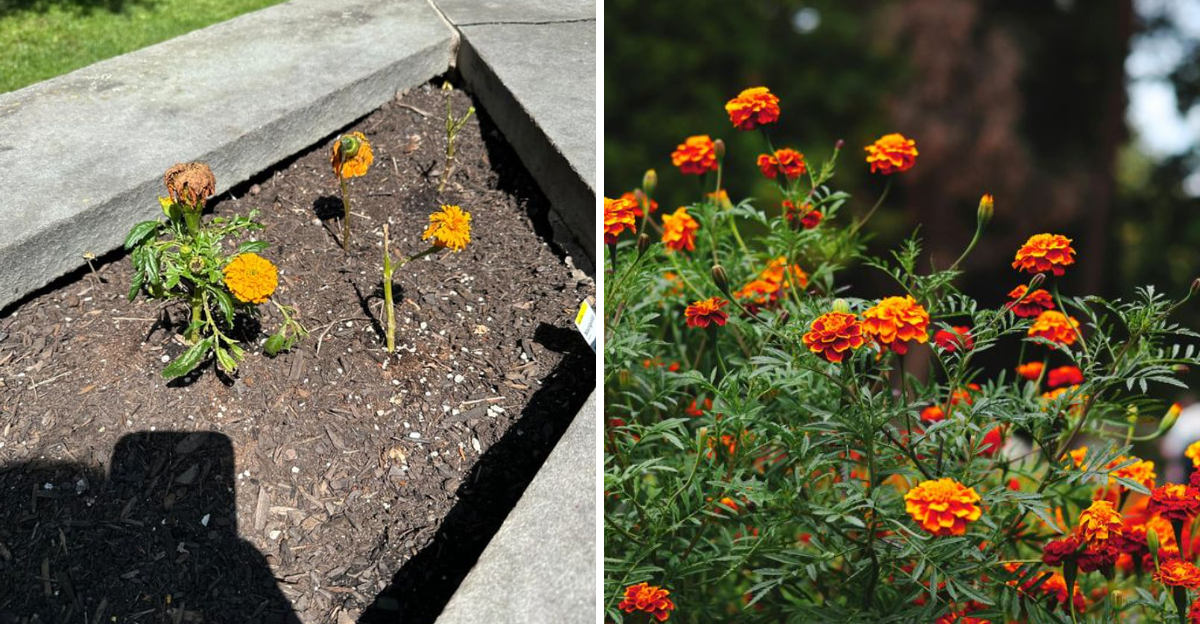
Marigolds have a reputation as the foolproof flower. Tough, cheerful, pest-deterring, and forgiving enough for first-time gardeners to pull off without breaking a sweat.
That reputation is mostly earned. But mostly is doing a lot of work in that sentence.
Ohio gardens have a way of exposing the one marigold mistake that experienced and beginner gardeners alike make without realizing it. Not a dramatic mistake.
Not the kind of thing that looks obviously wrong when you’re doing it.
The kind that unfolds quietly over a few weeks until the plants that should be the backbone of a summer bed start looking tired, leggy, and far less impressive than the plant tag ever suggested they would.
The frustrating part is that marigolds are genuinely easy to grow in Ohio. The climate suits them, the summers give them plenty to work with, and they ask for very little in return.
One misstep in the care routine, though, and that natural resilience only goes so far.
Knowing what to avoid makes the difference between marigolds that coast through an Ohio summer and ones that genuinely thrive from June straight through to frost.
1. Stop Drowning Marigolds In Ohio’s Heavy Soil
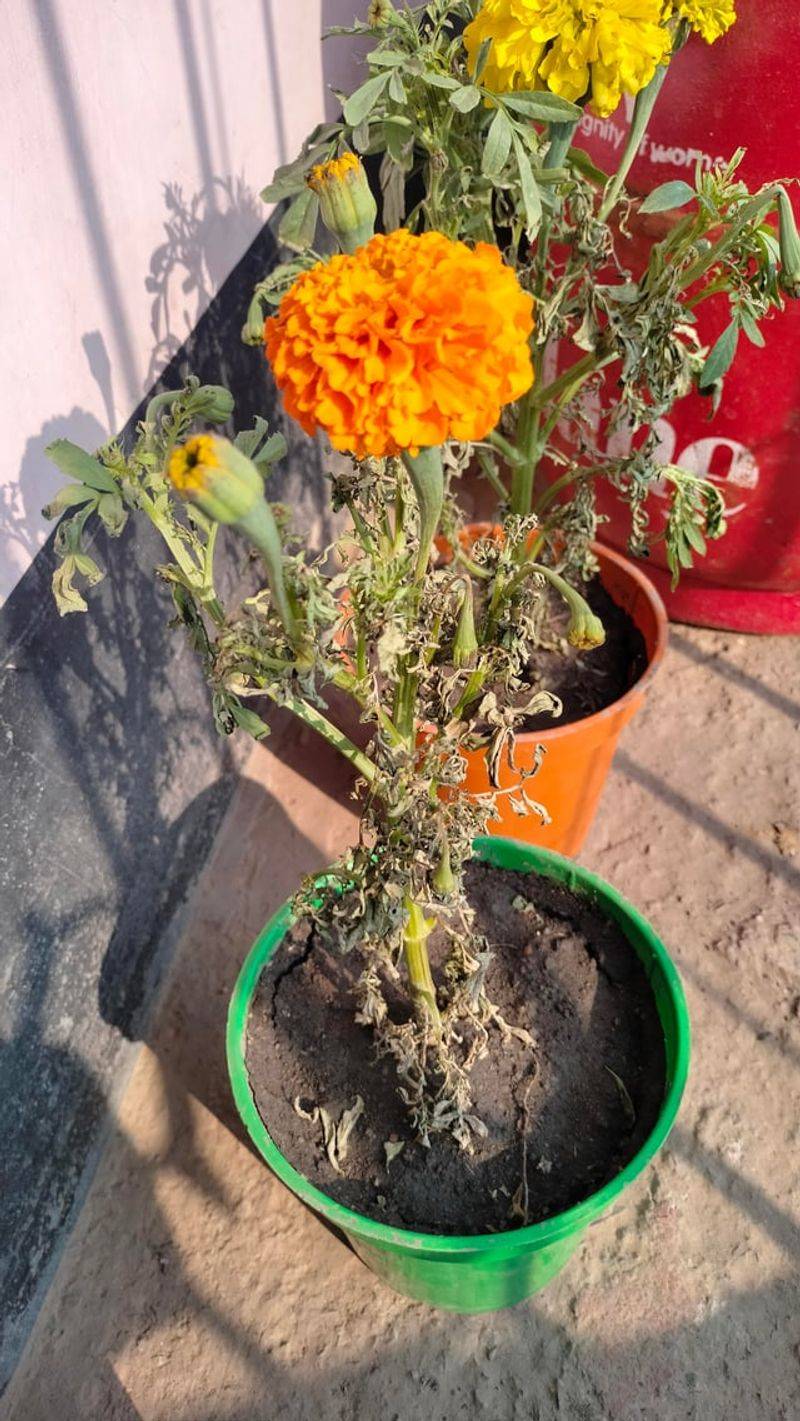
Pull back the mulch in a typical Ohio backyard bed and you might find something surprising: soil that is still wet from rain three days ago.
Clay-heavy and compacted soils are common across much of Ohio, and they hold moisture far longer than sandy or loamy mixes.
Marigolds planted in these conditions can struggle even when the surface looks dry.
Marigolds perform best in well-drained soil with good structure. Their roots need oxygen as much as water, and when soil stays saturated for extended periods, that oxygen gets pushed out.
Root stress can follow quickly, showing up as yellowing foliage, stunted growth, or a plant that blooms less than expected despite getting plenty of sun.
Practical signs that your soil is staying too wet include puddles that linger more than an hour after rain, soil that feels sticky and heavy when squeezed, and a general smell of dampness around the root zone.
Slow drainage is a red flag worth addressing before planting season rather than after.
Mixing compost into clay soil before planting can improve drainage noticeably. Raised beds are another solid option for Ohio gardens where drainage is consistently poor.
The goal is giving marigold roots a place to breathe, not just a place to sit in standing water all week.
2. Let The Soil Dry Before You Water Again
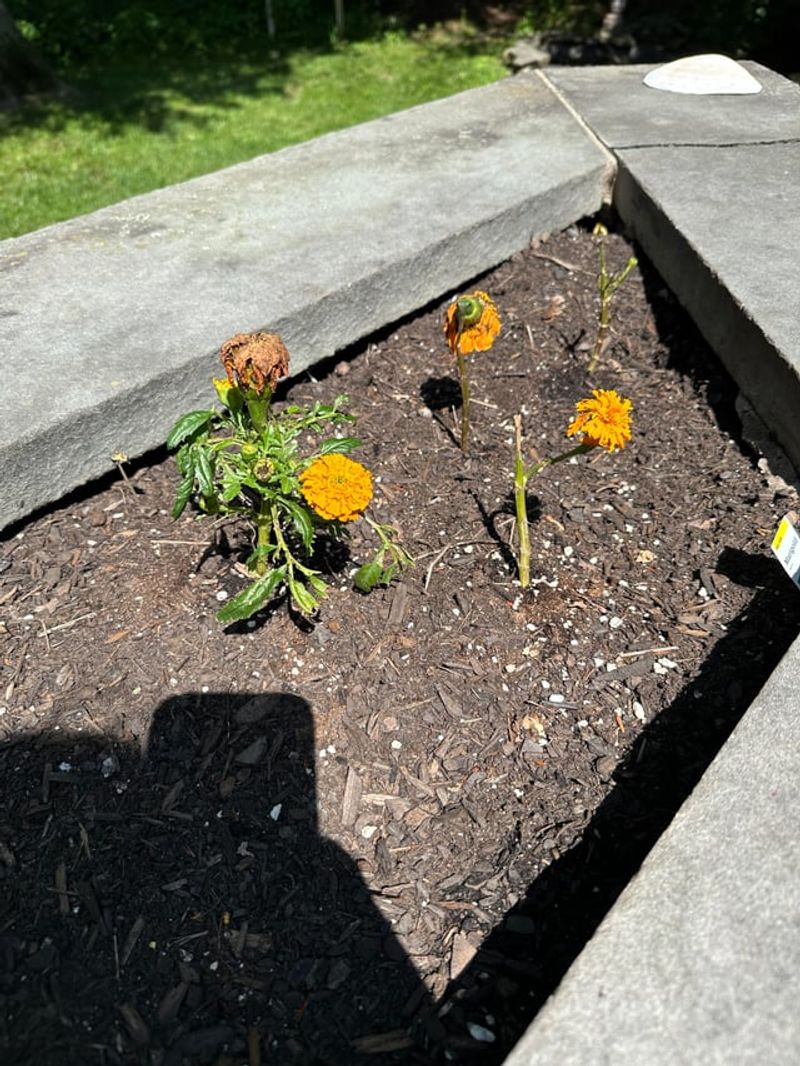
Plenty of gardeners set a watering schedule in early spring and stick to it all season long, no matter what the weather does. That kind of routine can work well for some plants, but marigolds are not big fans of constant moisture.
Watering on a fixed daily or every-other-day schedule, especially after a rainy stretch, is one of the fastest ways to create soggy soil problems.
A simple finger test takes about five seconds and tells you far more than a calendar ever could. Press your finger an inch or two into the soil near the base of your marigold.
Your Ohio Garden Changes Every Week. Your Plan Should Too.
Gardening in Ohio changes quickly throughout the season. Every Friday you’ll receive a simple weekly plan showing exactly what to plant, prune, fertilize, harvest, and protect so you never miss the right timing.
If the soil feels moist at that depth, skip watering and check again the next day. If it feels dry and crumbly, water deeply and then let the soil begin to dry again before the next round.
Deep, infrequent watering encourages roots to grow downward in search of moisture, which produces a stronger, more drought-tolerant plant over time. Shallow daily watering keeps roots near the surface, where they are more vulnerable to heat and moisture swings.
Ohio summers bring unpredictable rain, sometimes several inches in a single week.
Checking soil before every watering session, rather than watering on autopilot, can make a real difference in how well marigolds hold up through the season.
3. Give Marigolds Full Sun And Room To Breathe
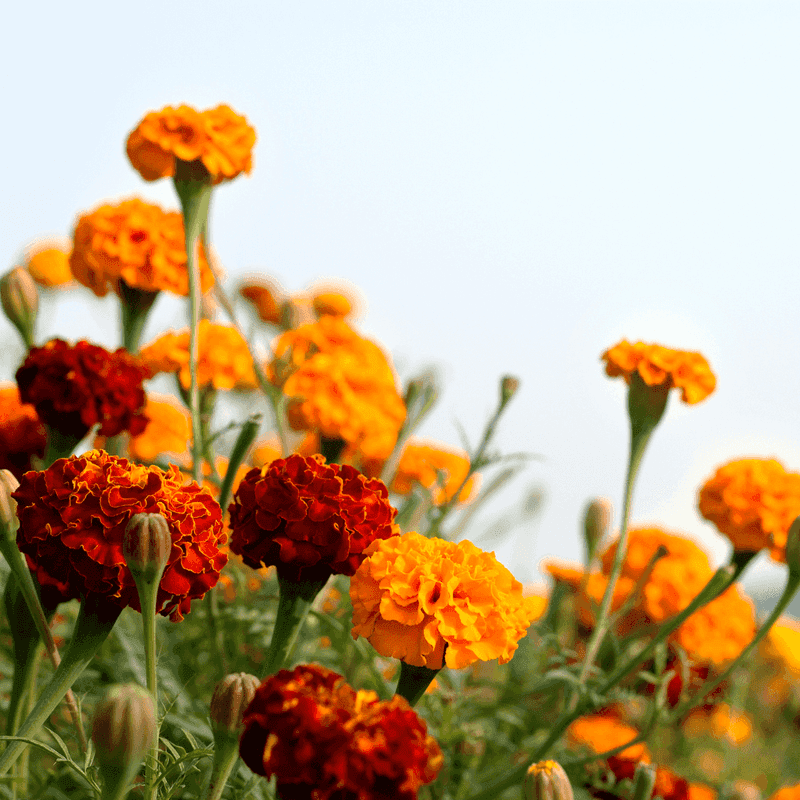
Ask any experienced Ohio flower grower where marigolds thrive and the answer is almost always the same: full sun, open space, and decent airflow.
Marigolds planted in shaded corners or crowded tightly against other plants tend to stay wetter for longer, especially during the kind of muggy, overcast stretches that Ohio summers are known for.
Full sun means at least six hours of direct sunlight each day, and eight or more hours is even better. Sunlight dries foliage faster after rain or dew, which reduces the window of time that moisture sits on leaves and stems.
A plant in a bright, open spot simply has fewer opportunities to develop the kind of damp conditions that lead to trouble.
Shade from fences, large shrubs, or nearby trees can also slow soil drying between watering sessions.
If a bed gets afternoon shade instead of morning shade, the soil tends to hold onto moisture longer because afternoon sun is typically stronger and more effective at drying things out.
Spacing plants according to the recommendations on the seed packet or plant tag is worth taking seriously. Compact marigold varieties may need about ten to twelve inches between plants, while larger African types can need closer to eighteen inches.
Giving each plant its own space from the start makes the whole bed easier to manage as summer heats up.
4. Skip The Fertilizer Push For More Blooms
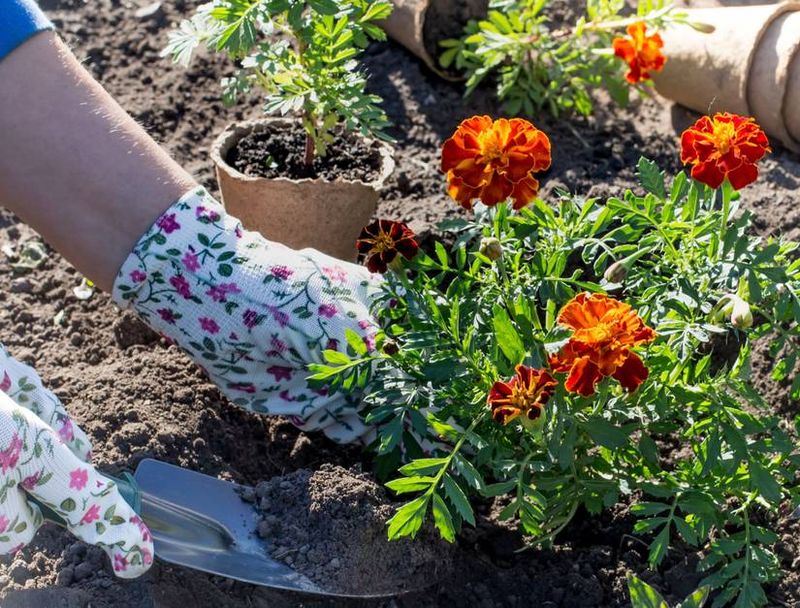
When marigolds start looking a little lackluster, the instinct for many gardeners is to reach for fertilizer. More food should mean more flowers, right?
Not necessarily. Overfeeding marigolds, especially with fertilizers that are heavy in nitrogen, tends to push the plant toward producing lots of lush green leaves rather than the bright blooms most people are after.
Marigolds are not heavy feeders. In a typical Ohio garden with reasonably decent soil, they can often go the entire season with little or no supplemental fertilizer at all.
If the soil has been amended with compost before planting, that usually provides enough nutrition to carry plants through most of the summer without additional feeding.
The problem compounds when overwatering is already present. Soggy soil limits how well roots absorb nutrients, so adding more fertilizer on top of wet conditions rarely fixes the underlying issue and can sometimes make foliage problems worse.
Yellowing leaves caused by root stress from waterlogged soil are often mistaken for a nutrient deficiency, leading to a cycle of feeding that does not actually help.
If marigolds look pale or growth seems genuinely slow after the first several weeks, a light application of a balanced, slow-release fertilizer is a reasonable option.
Checking drainage and watering habits first, though, is usually the smarter starting point before adding anything to the soil.
5. Water At The Base To Keep Leaves Cleaner
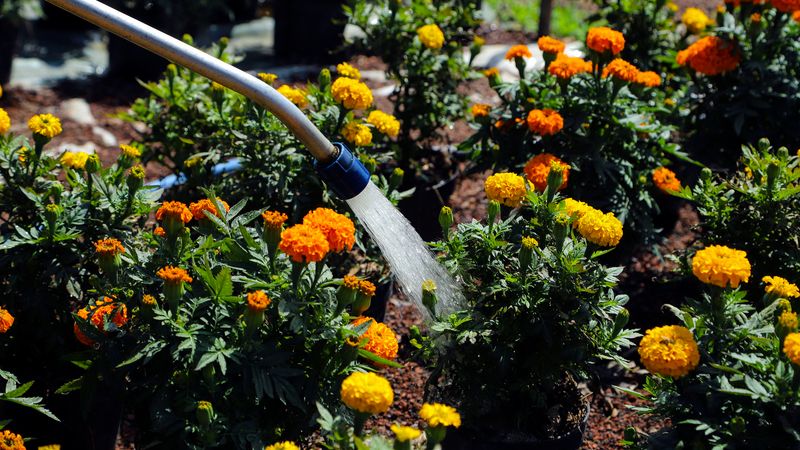
Overhead watering with a sprinkler or hose sprayer feels efficient, but it sends water across the entire plant, not just the root zone where it is actually needed.
In Ohio’s humid summer climate, wet foliage that stays damp for hours can create conditions where fungal problems are more likely to take hold.
Marigolds are relatively tough, but consistently wet leaves are not doing them any favors.
Watering at the base of the plant, directly over the root zone, keeps foliage drier and puts moisture exactly where roots can reach it. A watering can with a long spout, a soaker hose, or a gentle hose attachment all work well for this purpose.
The goal is a slow, steady delivery of water to the soil rather than a quick splash across the whole bed.
Morning is generally the best time to water. Any moisture that does land on leaves has hours of daylight ahead to evaporate before temperatures cool at night.
Evening watering can leave foliage damp overnight, which is a longer window for problems to develop.
This technique also makes it easier to water only the plants that need it rather than soaking an entire bed at once.
In mixed planting beds where marigolds grow alongside plants with different moisture needs, targeted base watering gives each plant a better chance of getting what it actually requires.
6. Space Plants Before Summer Humidity Sets In
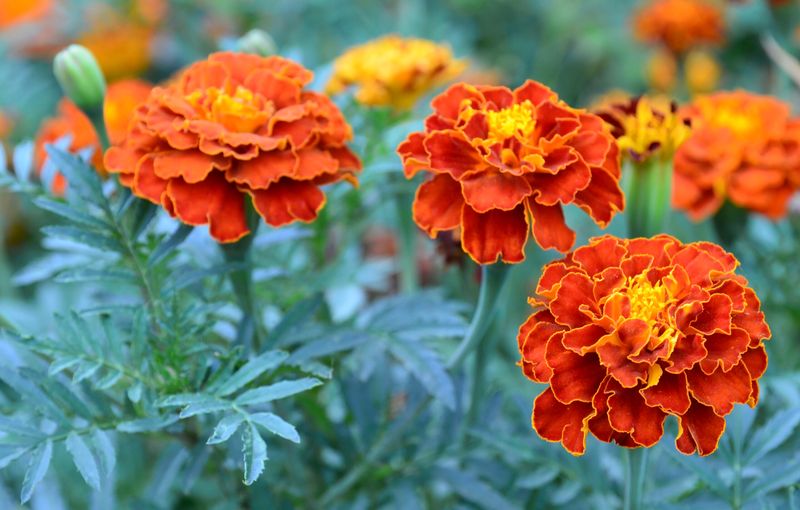
One of the easiest mistakes to make in spring is planting marigolds too close together. The transplants look so small when they come out of the six-pack or four-inch pot that generous spacing can feel wasteful.
By midsummer, though, those compact little plants have often filled out into full, bushy clumps that press up against each other and create a dense canopy of foliage.
Dense plantings trap moisture. After a rainstorm or a round of overhead watering, air cannot circulate well through a crowded bed, which means foliage stays wet longer.
That extended wetness, combined with Ohio’s characteristically humid summer air, can set up conditions where the plants underperform even if everything else is going right.
The fix is straightforward: give plants enough space when planting in spring, even if the bed looks sparse at first. Compact French marigold varieties generally do well with ten to twelve inches of space between plants.
Larger African marigold types typically need closer to eighteen inches. Following the spacing guidance on the plant tag takes just a moment and saves a lot of trouble later.
If a bed is already crowded from a previous season’s planting habit, thinning out some plants in early summer is a reasonable option.
Removing a few plants to open up airflow is far less frustrating than watching an entire bed struggle through August because the foliage never had room to dry out between rainfalls.
7. Watch Containers Closely During Hot Ohio Spells
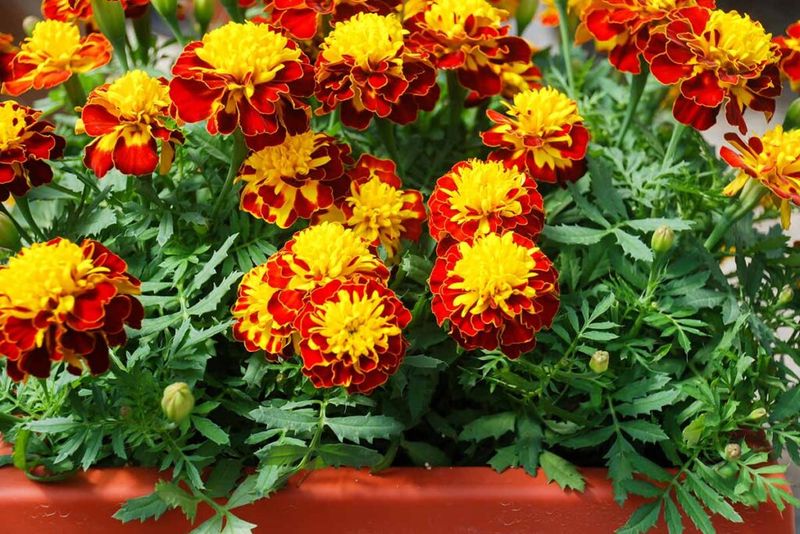
Container gardening has exploded in popularity across Ohio, from city patios and apartment balconies to front porch planters and raised deck gardens. Marigolds are a natural choice for pots because of their compact size and long bloom season.
But growing marigolds in containers comes with a different set of watering challenges compared to in-ground beds.
Pots can swing between extremes. A small terracotta container sitting in full sun on a hot July afternoon in Columbus or Cincinnati can dry out completely within a day or two.
The same container on a cloudy, cool week might stay moist for four or five days without any watering at all. Watering on a fixed schedule without checking the soil first is an easy way to either underwater or overwater container plants depending on the week.
Drainage holes are non-negotiable for container marigolds. A pot without drainage will hold water at the bottom of the root zone regardless of how carefully the top of the soil is managed.
Saucers placed under pots are useful for protecting surfaces, but letting water pool in the saucer for more than a day keeps the bottom of the container consistently wet.
Checking containers daily during hot, windy stretches and every couple of days during cooler or cloudy weather gives a much more accurate picture of what each plant actually needs.
Lifting the pot to feel its weight is a quick way to gauge how much moisture remains without disturbing the soil.
8. Grow Tougher Marigolds With Less Fuss
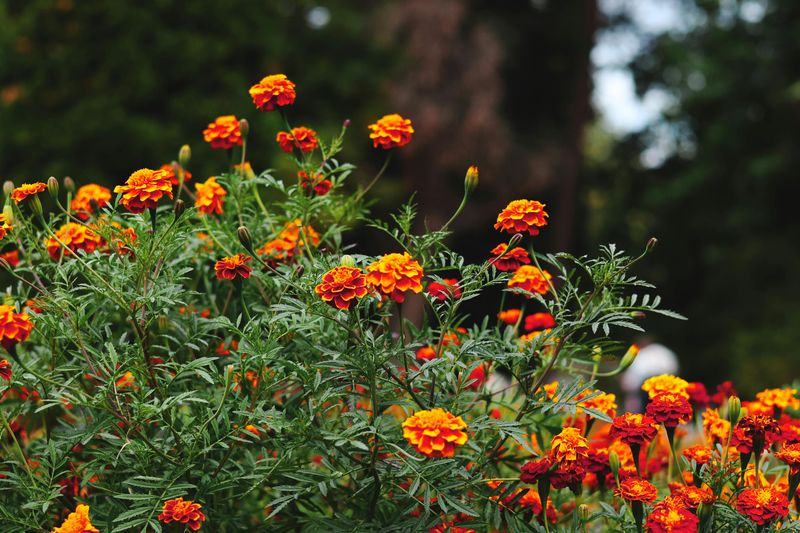
Somewhere along the way, many gardeners get the idea that more attention equals better plants. With marigolds, the opposite is often closer to the truth.
These are annuals that evolved to handle lean soil, warm sun, and periods of dry weather. Treating them like high-maintenance perennials that need constant watering, feeding, and fussing tends to work against their natural strengths.
The foundation of a healthy marigold planting in Ohio is surprisingly straightforward. Start with well-drained soil amended with compost if the native soil is heavy clay.
Choose a spot with at least six hours of direct sun. Space plants generously so airflow stays decent through the season.
Water deeply when the top inch or two of soil is dry, and hold off after significant rainfall.
Deadheading spent blooms regularly encourages the plant to keep producing flowers rather than putting energy into seed production. A light trim of leggy stems in midsummer can also refresh plants that have started to look tired.
Neither of these practices requires special tools or timing; they just take a few minutes every week or two.
The real takeaway from all of this is not that marigolds need neglect. They benefit from thoughtful care.
The goal is simply to resist the urge to overwater, overfeed, or crowd them, and to let these reliable Ohio garden plants do what they do best: bloom brightly from planting day through the first frost.