9 Arizona Plants That Handle Poolside Heat Better Than Most Shrubs
Arizona pool areas can feel like tiny resort spaces, but the plants nearby have to be tough enough for the job.
Between blazing sun, hot pool decks, block walls, and dry air, that cute little shrub from the nursery can go from “adorable” to “why does it look so offended?” pretty fast.
The best poolside plants in Arizona need more than good looks. They should handle reflected heat, keep litter low, and add privacy or color without turning the pool area into a cleanup project.
Bonus points if they look stylish next to gravel, patios, and desert stone. That is where heat-smart shrubs really shine.
With the right choices, an Arizona poolscape can feel colorful, polished, and relaxed without asking you to babysit every leaf.
1. Texas Sage Handles Reflected Heat Near Pools
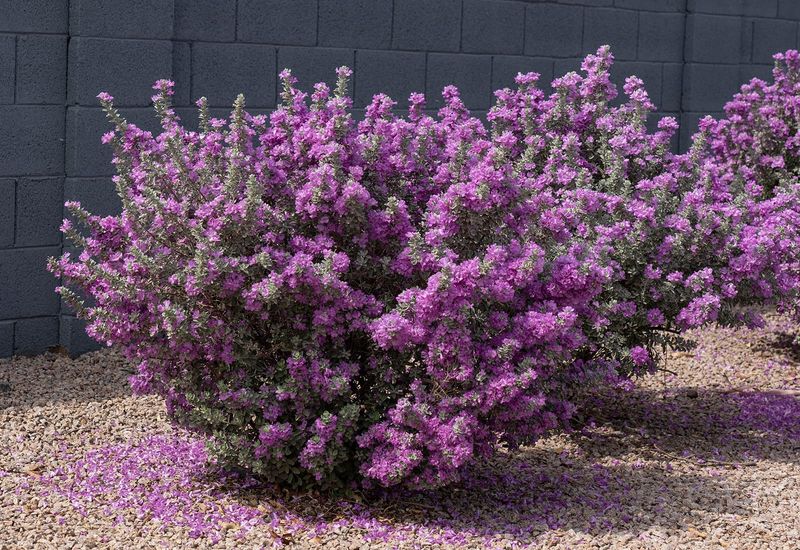
Hot pool decks lined with block walls and gravel are exactly where Texas sage tends to look its best.
Known botanically as Leucophyllum frutescens, this tough shrub carries silvery-gray foliage that actually reflects sunlight rather than absorbing it, which helps it stay comfortable during Arizona summers when temperatures push past 110 degrees.
Gardeners across Arizona appreciate that Texas sage blooms after monsoon moisture arrives, producing clusters of lavender-purple flowers that attract bees and add a pop of seasonal color.
The blooming response to humidity makes it feel almost like a weather forecaster in the yard.
It rarely needs supplemental water once established in a well-draining gravel bed or sunny border.
For poolside use, Texas sage fits well along fence lines, block walls, or open sunny edges where privacy and low maintenance matter.
It grows roughly five to eight feet tall and wide depending on the variety, so leaving adequate room for mature spread keeps walkways clear.
Minimal leaf drop means less debris landing in the pool, which Arizona homeowners managing pool maintenance tend to appreciate. Light pruning once or twice a year helps maintain a tidy shape without stressing the plant.
2. Chihuahuan Sage Brings Soft Color To Hot Poolscapes
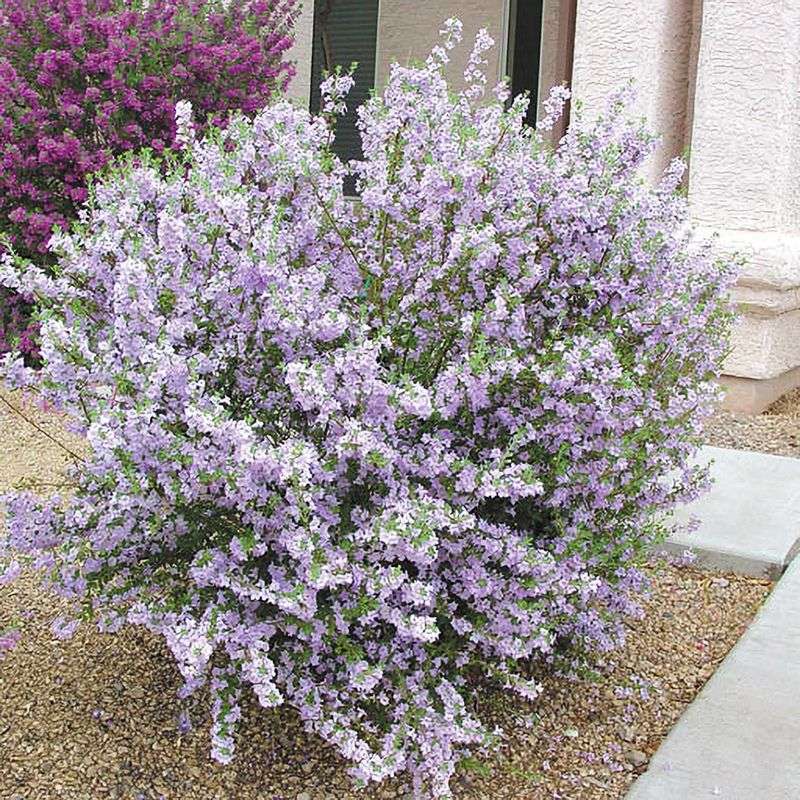
Soft, feathery silver foliage sets Chihuahuan sage apart from other poolside shrubs in Arizona.
Leucophyllum laevigatum is slightly more open and airy in form than its cousin Texas sage, which gives it a relaxed, natural appearance that works well in contemporary desert-style poolscapes where clean lines meet organic texture.
Along sunny patios and gravel beds, this plant holds its color through the hottest months without looking burned or stressed.
The small violet-purple flowers appear after rain events and tend to cover the plant generously, creating a soft wash of color that contrasts nicely against light-colored pool decks and pale gravel.
Arizona gardeners who want seasonal interest without heavy irrigation find it a reliable choice.
Chihuahuan sage reaches about five to six feet in height and spread when given room to grow naturally.
Placing it along a block wall or open fence line gives it the reflected warmth it prefers while keeping it away from high-traffic pool areas where a more compact form might be needed.
Because it produces very little litter, it suits Arizona pools well. Occasional light trimming after bloom cycles keeps it looking neat through the year.
Your Arizona Garden Changes Every Week. Your Plan Should Too.
Gardening in Arizona changes quickly throughout the season. Every Friday you’ll receive a simple weekly plan showing exactly what to plant, prune, fertilize, harvest, and protect so you never miss the right timing.
3. Jojoba Adds Evergreen Structure With Low Litter
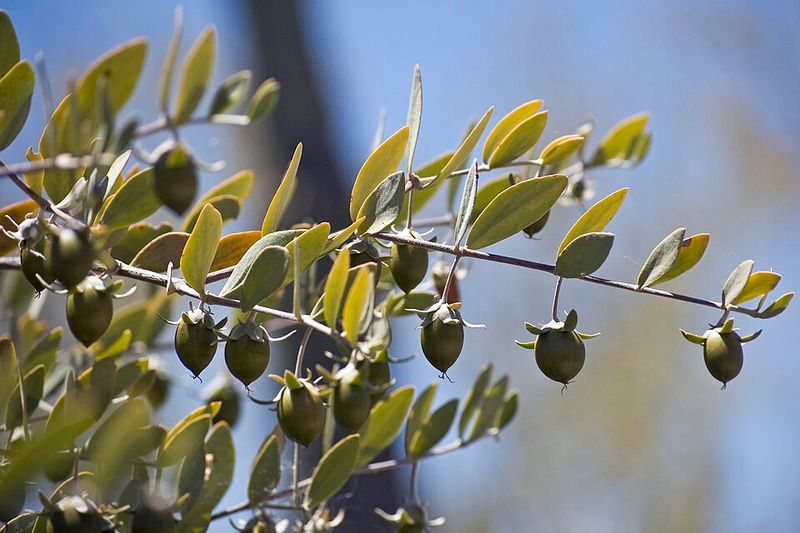
Few native Arizona shrubs bring the combination of dense evergreen foliage and extremely low litter that jojoba offers near a pool.
Simmondsia chinensis grows naturally across the Sonoran Desert, which means it already knows how to handle the kind of reflected heat, dry air, and intense sun that Arizona pool areas generate through the summer months.
The thick, leathery leaves stay on the plant year-round, giving homeowners consistent privacy and visual structure without seasonal gaps.
Jojoba grows slowly but steadily, eventually reaching six to ten feet tall, making it a solid choice for screening along block walls or open property lines near pool areas.
Because the foliage is dense and the plant drops very little debris, pool maintenance stays manageable.
Jojoba is dioecious, meaning male and female plants are separate, and female plants produce small seed pods that some wildlife enjoy. For a cleaner poolside planting, choosing male plants reduces seed drop significantly.
Arizona homeowners using jojoba in gravel beds should plant it with enough clearance from the pool edge to allow mature growth without crowding.
It handles full sun and reflected heat from light-colored decks without showing signs of stress, which makes it a dependable structural plant for hot Arizona yards.
4. Creosote Bush Fits Tough Sunny Poolside Areas
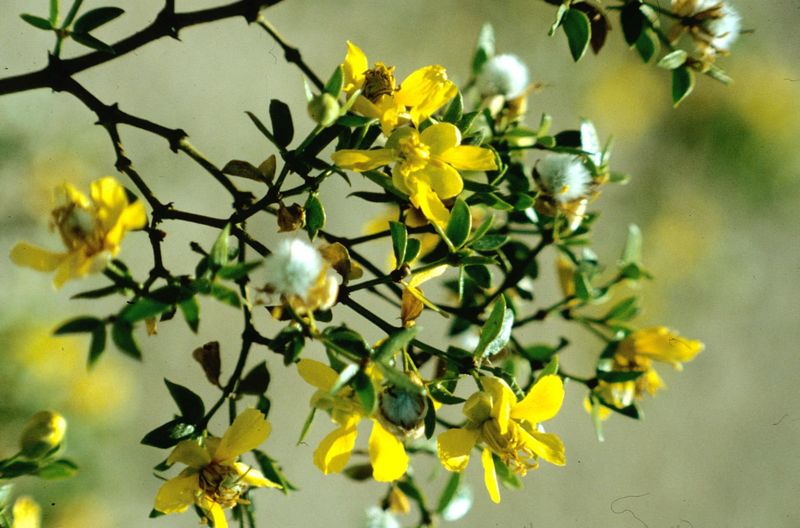
Walk through any undisturbed stretch of Arizona desert after a rain and the earthy, resinous scent of creosote bush is unmistakable.
Larrea tridentata is one of the most heat- and drought-tolerant plants in North America, and its ability to thrive in full sun with minimal water makes it a surprisingly practical choice for exposed poolside areas in Arizona.
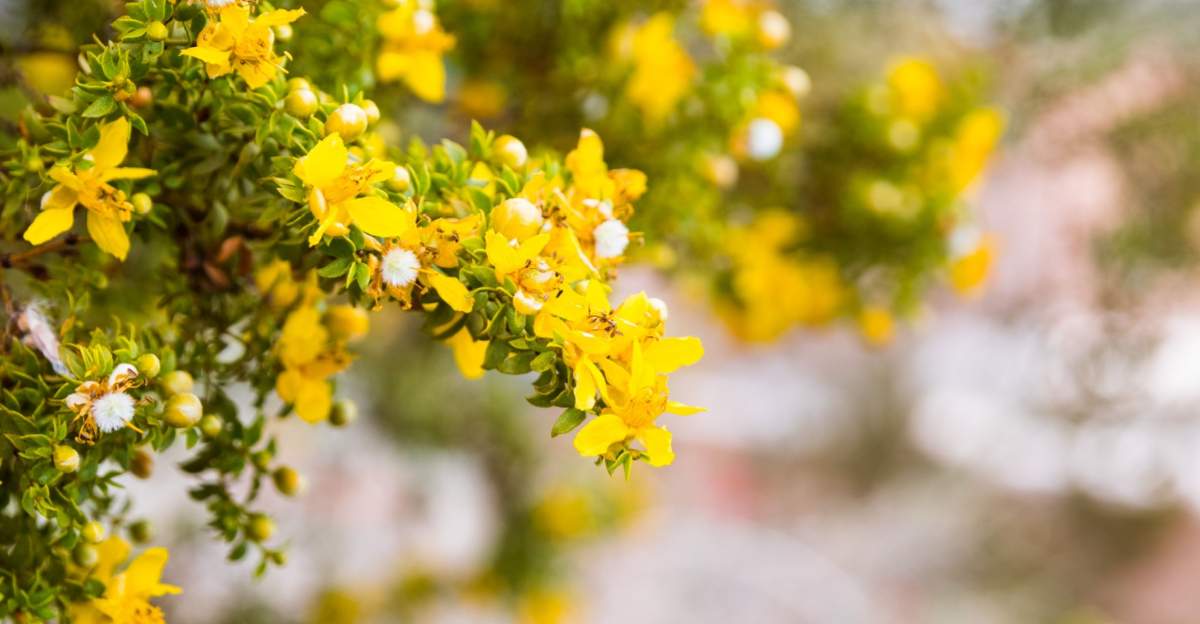
The small, waxy green leaves reduce moisture loss even in dry desert air, and the plant produces cheerful yellow flowers in spring and sometimes again after summer monsoons.
Creosote bush has a naturally open, airy structure that lets wind pass through, which can be an advantage along pool areas where dense plantings sometimes trap heat at ground level.
For Arizona homeowners, creosote bush works well in gravel beds along sunny fence lines, open courtyards, or the outer edges of pool areas where it can spread naturally without crowding walkways.
It typically reaches four to eight feet in height depending on water availability.
Because it drops very little debris, it keeps pool surfaces cleaner than many traditional landscape shrubs. Giving it good drainage and avoiding overwatering keeps it looking healthy through the intense Arizona summer heat.
5. Little Leaf Cordia Softens Pool Edges With White Blooms
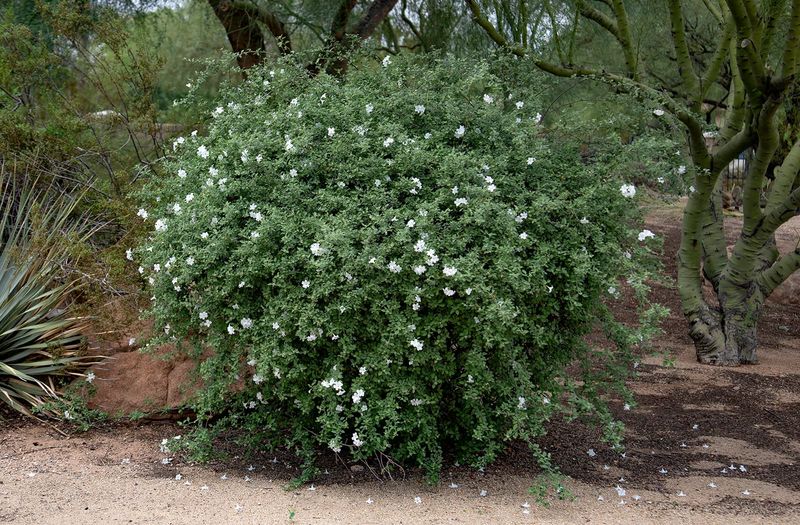
Bright clusters of small white flowers against tiny dark green leaves give little leaf cordia a delicate, refined look that feels almost tropical near an Arizona pool.
Cordia parvifolia is a Sonoran Desert native that handles full sun, reflected heat, and dry conditions without much complaint, making it a standout choice for softening hard pool edges and patio borders.
Blooming occurs heavily in spring and continues with lighter flushes through the warmer months, providing consistent visual interest near pool decks where seasonal color matters.
The fine-textured foliage stays relatively tidy, and the plant drops minimal debris into pool water, which reduces the cleanup burden for Arizona homeowners maintaining poolside landscapes.
Little leaf cordia typically grows four to eight feet tall and wide, so it suits medium-sized spaces along gravel beds, block walls, or open sunny borders.
It tolerates the kind of intense reflected heat that bounces off light-colored pool decks in Arizona summers, and it requires very little supplemental irrigation once established.
Hummingbirds and pollinators visit the blooms regularly, adding movement and life to the pool area. Spacing plants generously allows air circulation and gives each shrub room to develop its natural, slightly arching form without overcrowding.
6. Arizona Rosewood Creates Clean Evergreen Privacy
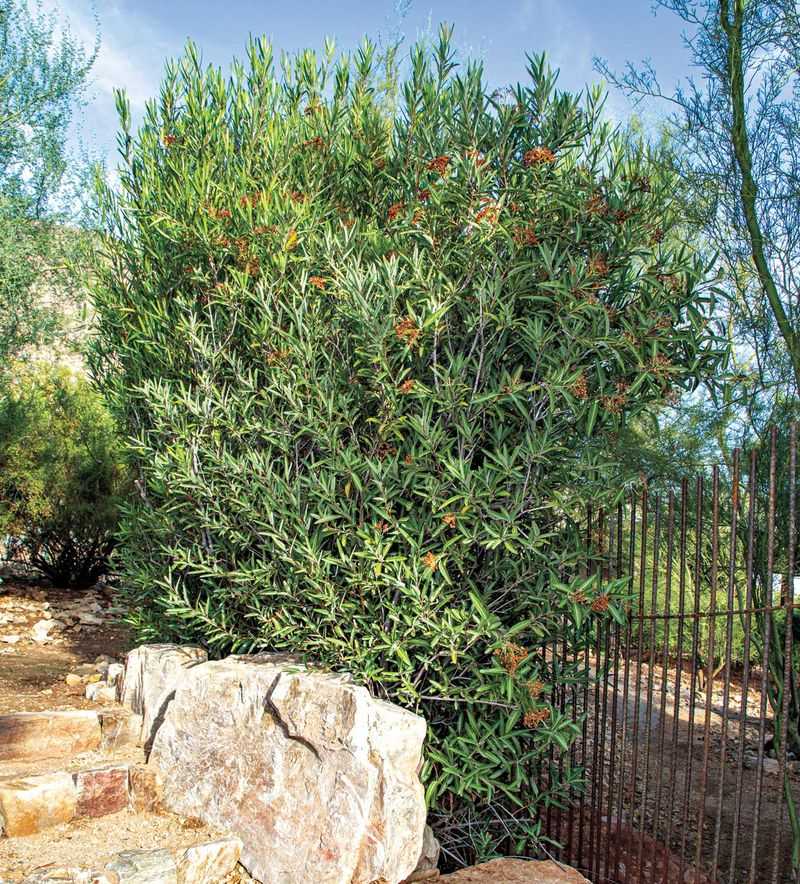
Privacy near an Arizona pool often means finding a plant that stays green year-round, tolerates reflected heat, and keeps things tidy without constant trimming.
Vauquelinia californica, commonly called Arizona rosewood, does all three with a quiet reliability that makes it one of the more underused poolside plants in the state.
The long, narrow, toothed leaves have a rich dark green color that stands out against light-colored gravel and pale pool decks, giving the landscape a clean, polished appearance through every season.
In late spring, small clusters of creamy white flowers appear at the branch tips, adding seasonal interest without creating significant litter.
The foliage remains dense and full even during Arizona summers when temperatures climb well above 100 degrees.
Arizona rosewood grows slowly to about ten to fifteen feet in height, making it well-suited for taller privacy screens along block walls or fence lines near pool areas.
Its upright form takes up relatively little horizontal space, which is useful along narrow pool borders where walkway clearance matters.
Low water needs once established keep irrigation costs manageable, and the minimal leaf drop helps maintain cleaner pool surfaces. Planting it in full sun with good drainage brings out the best in this tough Arizona native.
7. Hop Bush Forms Dense Screening Around Pool Areas
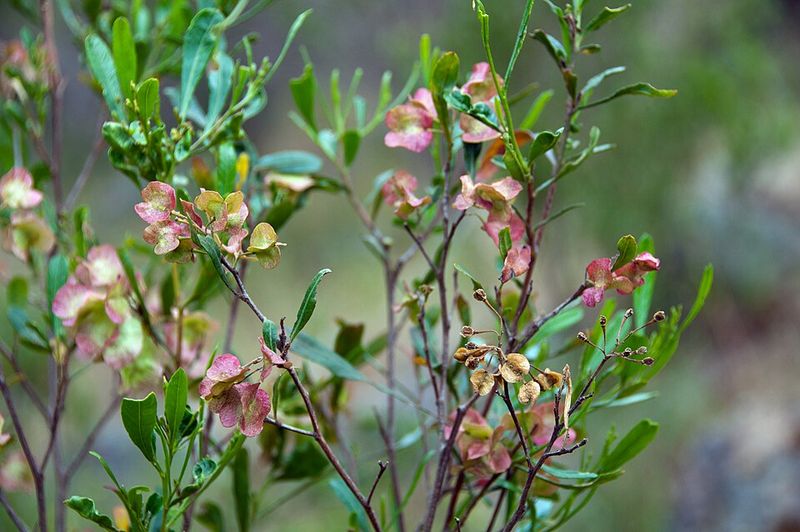
Along the sunny edges of Arizona pools, few plants build a privacy screen as efficiently as hop bush.
Dodonaea viscosa grows quickly into a dense, upright shrub with narrow, glossy green leaves that stay on the plant year-round, providing consistent screening without the bare gaps that deciduous shrubs leave in winter months.
The papery, winged seed pods that appear after flowering give the plant a subtle ornamental quality that many Arizona gardeners find appealing.
A purple-leafed variety called Dodonaea viscosa Purpurea adds deeper color to the mix and holds its reddish-purple tones through the cooler months, creating visual contrast against gravel beds and light-colored pool decks.
Hop bush handles reflected heat from block walls and pavement well, and it tolerates the dry, low-humidity air that characterizes Arizona summers.
It typically reaches eight to twelve feet in height, making it effective for screening along fence lines, block walls, or open property edges near pool areas.
Because it drops minimal litter, it suits pools where keeping the water clean is a priority. Established plants need very little supplemental water in most Arizona landscapes.
Occasional trimming helps manage width and keeps the plant from encroaching on walkways or pool coping over time.
8. Red Eremophila Adds Hummingbird Color Near Patios
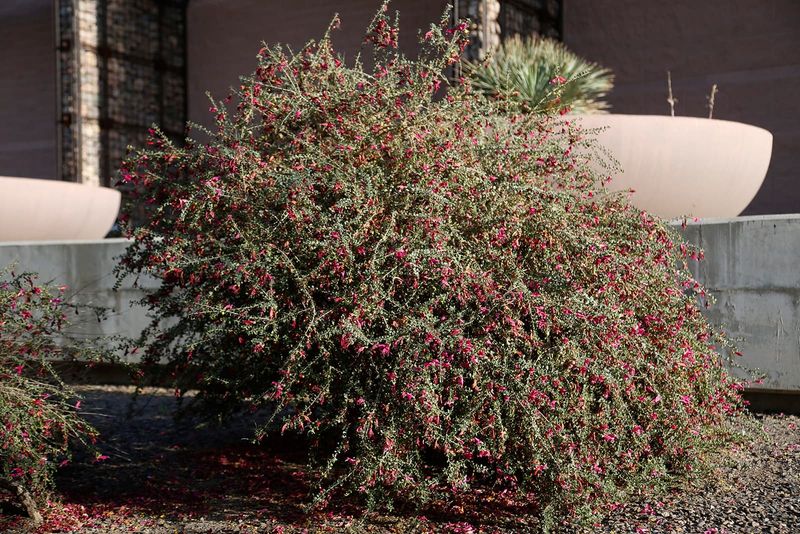
Hummingbirds have a way of making a pool patio feel more alive, and red eremophila is one of the most reliable plants in Arizona for drawing them in.
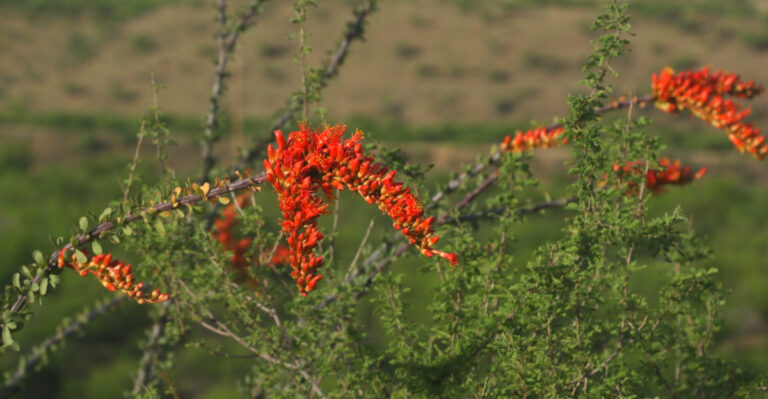
Eremophila maculata, an Australian native that has adapted well to desert Southwest conditions, produces tubular red or red-orange flowers through much of the year, providing long-season color near pool edges and sunny patio borders.
The gray-green foliage stays relatively compact and tidy, and the plant handles reflected heat from patios and pool decks without showing the leaf scorch or wilting that affects less heat-tolerant shrubs.
Red eremophila generally grows three to six feet tall and wide, making it a comfortable fit for medium-sized spaces along gravel beds or open sunny corners near pools.
One of the reasons this plant works so well in Arizona poolscapes is its very low litter output. The small leaves and tubular flowers do not create significant debris, which keeps pool maintenance simpler.
It needs excellent drainage and full sun to perform at its best, and established plants require minimal supplemental irrigation in Arizona’s low-desert climate.
Placing it near a patio seating area or along a pool fence line gives hummingbirds easy access while keeping the colorful blooms visible from the pool deck.
9. Turpentine Bush Stays Compact In Hot Dry Spaces
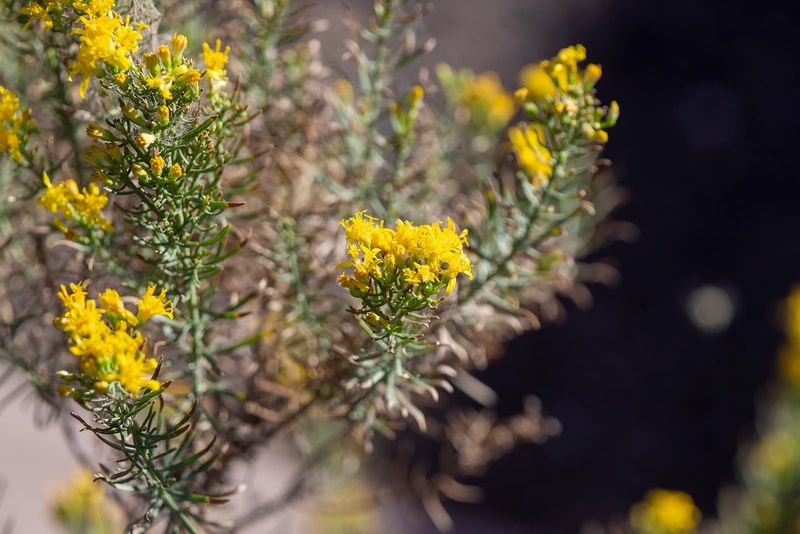
Compact, tidy, and covered in small golden-yellow flowers each fall, turpentine bush earns its place near Arizona pools by staying manageable even in the hottest, driest spots in the yard.
Ericameria laricifolia is a native Sonoran Desert shrub that rarely exceeds three feet in height, making it one of the smaller options for pool borders, gravel beds, and low-profile planting strips near pool decks.
The fine, resinous dark green leaves give the plant a dense, textured appearance through the year, and the fall bloom period adds bright color at a time when many other poolside plants have finished flowering.
The cheerful yellow blooms attract native bees and butterflies, bringing pollinators to the pool area during the milder fall months when outdoor entertaining often picks back up in Arizona.
Because turpentine bush stays low and compact, it fits well in front of taller shrubs or along pool coping edges where larger plants would block views or crowd walkways.
It handles reflected heat from light-colored pool decks and gravel surfaces without needing extra water or care.
Once established, it requires very little irrigation in Arizona’s low-desert climate. Light trimming after the fall bloom cycle keeps it neat and encourages fresh growth heading into the following season.