I Found 7 Weeds Growing In My Illinois Yard That I Can Actually Eat
What if I told you that the scraggly, unwanted invaders taking over your backyard are actually a free grocery store?
Last summer, I got tired of yanking the same stubborn plants out of my Illinois yard, so instead, I did something a little rebellious. I looked them up.
Turns out, I’d been composting dinner this whole time.
Seven of those “nuisance” weeds are not only edible but genuinely delicious, packed with vitamins and minerals, and practically begging to be tossed into a salad or sautéed with garlic.
Nature, it seems, has a wicked sense of humor. Before you reach for the pesticides, ask yourself.
What if your lawn has been quietly feeding you for free all along and you just never noticed?
Foodies, budget-conscious cooks, and people who simply never look forward to weeding, this list is about to completely change how you see your yard.
Now you finally have a reason to actually enjoy it.
Your lawn has been holding out on you, and it’s time to collect what you’re owed.
Grab a basket, because we’re going outside.
1. Dandelion
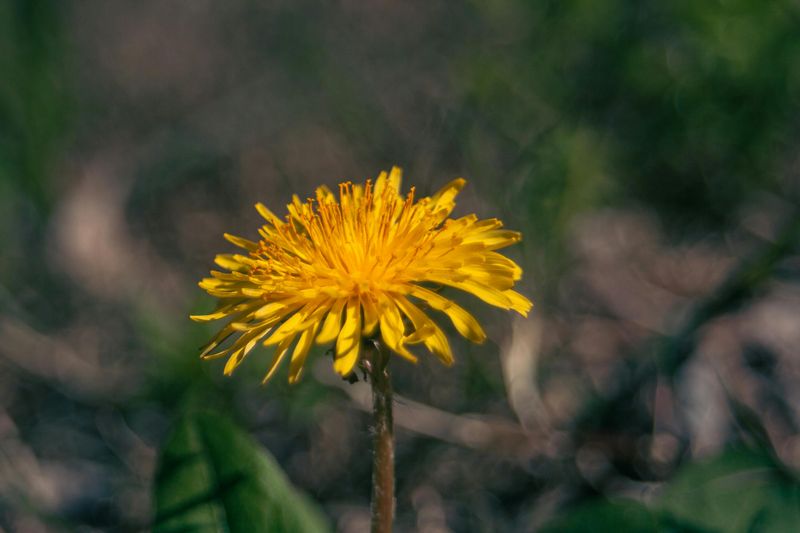
Dandelion. The most evicted plant in every Illinois yard might also be the most useful one.
Most people in Illinois spend a lot of time trying to get rid of dandelions, but here is a fun twist: every single part of this plant is edible.
From the bright yellow flowers down to the long, jagged roots, dandelions are one of the most useful wild plants you can find growing right in your own yard.
They have been eaten by people around the world for thousands of years, long before grocery stores existed.
The leaves taste a little bitter, similar to arugula, and they work great in salads or sauteed with garlic and olive oil.
Younger leaves are less bitter and much easier to enjoy raw.
The flowers can be tossed into salads, used to make dandelion tea, or even turned into dandelion jelly, which has a sweet, honey-like flavor that surprises most people.
Dandelion roots can be roasted and ground up to make a coffee-like drink that has no caffeine.
Many people in Illinois and across the Midwest have been making dandelion root tea for generations as a natural way to support digestion.
The plant is also loaded with vitamins A, C, and K, plus calcium and iron.
When foraging dandelions in Illinois, always pick them from areas that have not been sprayed with pesticides or herbicides.
Lawns near busy roads or treated with lawn chemicals should be avoided.
Look for dandelions in open, sunny spots where the soil is clean and the plants look healthy and vibrant.
Once you start seeing them as food instead of weeds, you will never look at your yard the same way again.
2. Chickweed
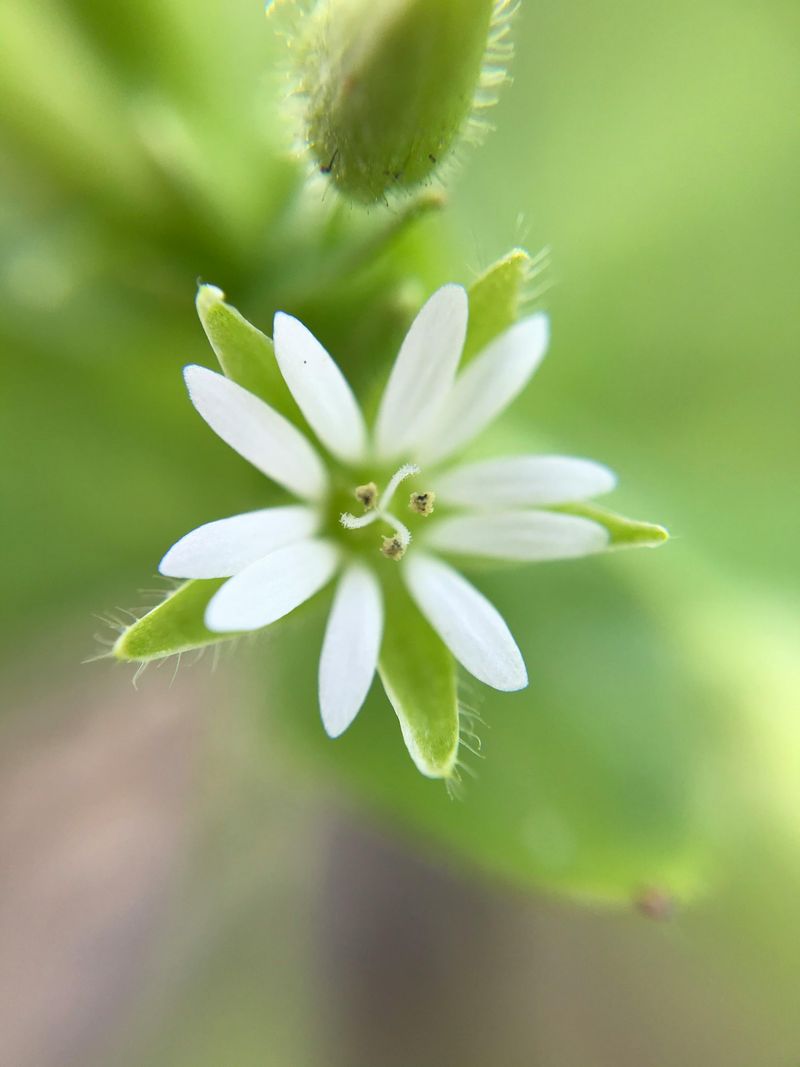
Chickweed is one of those plants that sneaks into Illinois yards early in spring, often before most other plants even wake up.
But what if the first green thing pushing through your cold soil wasn’t a weed, it was breakfast?
Your Illinois Garden Changes Every Week. Your Plan Should Too.
Gardening in Illinois changes quickly throughout the season. Every Friday you’ll receive a simple weekly plan showing exactly what to plant, prune, fertilize, harvest, and protect so you never miss the right timing.
It forms low, sprawling mats of bright green leaves with tiny white star-shaped flowers, and it tends to love cool, shady spots near garden beds or along fences.
Many gardeners yank it out without a second thought, but chickweed is actually a mild, pleasant-tasting green that is easy to enjoy.
Raw chickweed has a light, fresh flavor that some people compare to corn silk or mild spinach.
It works really well in salads, sandwiches, or blended into smoothies for an extra nutritional boost.
Chickweed is rich in vitamins C and B, as well as minerals like calcium and magnesium, making it a surprisingly healthy addition to your plate.
One interesting thing about chickweed is that it has been used in traditional herbal practices for a very long time.
People have applied it topically to soothe minor skin irritation, and some herbal enthusiasts brew it into a simple tea.
In Illinois, chickweed is most abundant in early spring and again in fall when temperatures cool back down.
To identify chickweed correctly, look for a single line of fine hairs running along the stem, which is one of its most reliable identification features.
Always double-check your identification before eating any wild plant.
Just keep in mind that it spreads eagerly, so if you have delicate low-growing plants nearby, it is worth keeping an eye on.
Pick chickweed from clean areas of your Illinois yard that are free from chemical treatments, and rinse it well before eating.
Fresh chickweed wilts quickly, so use it soon after harvesting for the best flavor and texture.
3. Wild Violet
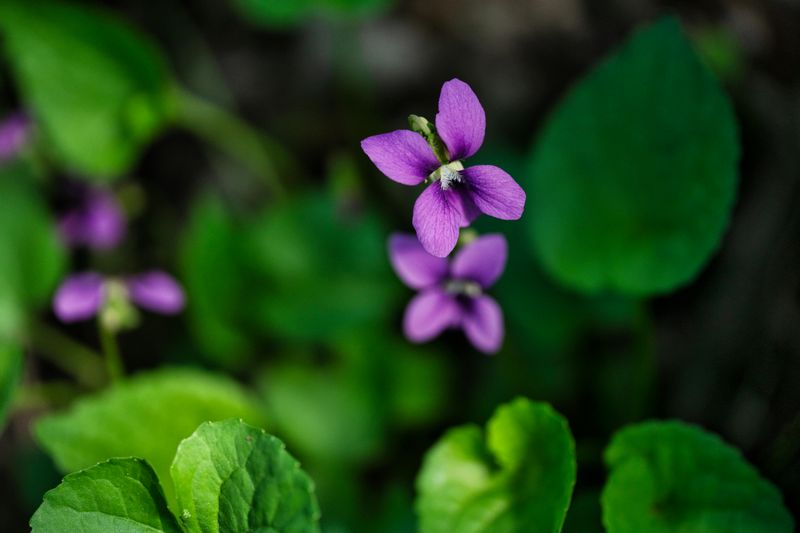
Stumbling across a cluster of deep purple wild violets in an Illinois yard on an early spring morning feels like the garden left you a little gift.
These charming plants grow in shady, moist areas.
Wild violets have been cherished for both their beauty and their usefulness for a very long time.
The flowers are sweet and slightly floral in flavor, making them a popular choice for decorating desserts and topping salads.
Freeze them into ice cubes for a fancy drink garnish and suddenly you’re the most sophisticated person at the party.
Viola leaves are milder in taste and can be added to salads or cooked like spinach as a simple side dish.
Both the flowers and leaves are rich in vitamins A and C, which makes them more than just a pretty addition to your plate.
Wild violets spread naturally through Illinois lawns and wooded edges, often forming dense patches under trees or along garden borders.
They bloom in spring, but the leaves remain harvestable throughout the growing season.
Some Illinois foragers make wild violet syrup by steeping the flowers in sugar and water, creating a beautiful purple syrup perfect for lemonade or pancakes.
Just know that once it moves in, it tends to make itself very comfortable, so give it space it can have, not space it can take.
True wild violets have distinctly heart-shaped leaves and five-petaled flowers in shades of purple, blue, or white.
Stick to clean areas of your yard away from roads or treated soil.
Rinse everything well before eating, and take a moment to appreciate just how lovely these delicate little blooms actually are.
The best part? Something this beautiful, this nutritious, and this versatile has been growing in your yard for free the whole time.
4. Purslane
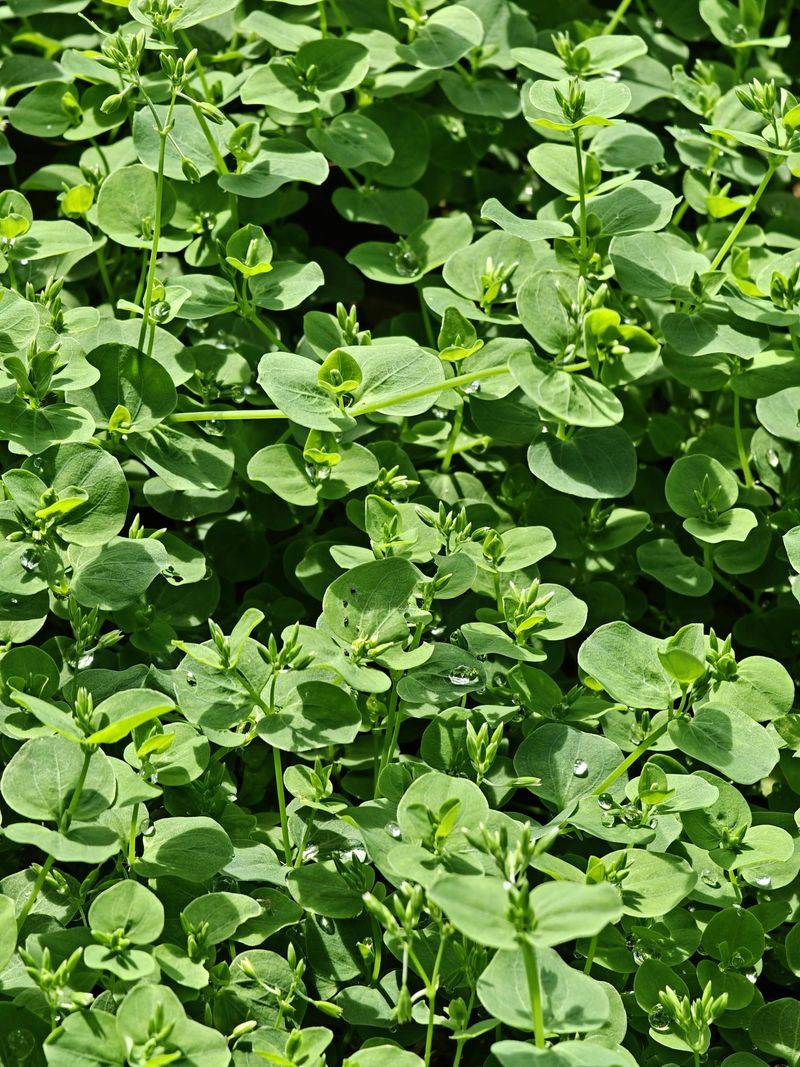
Purslane might be the most nutritionally impressive weed hiding in your Illinois yard right now.
Scientists have found that purslane contains more omega-3 fatty acids than almost any other common leafy green you could grow or forage.
For a humble little weed spreading across your garden bed, that is a pretty extraordinary nutritional résumé.
So that weed you’ve been ripping out and tossing in the trash?
It was basically free fish oil.
That’s a pretty remarkable claim for something most people casually step over without a second glance.
It thrives in hot, sunny spots and tends to spread across garden beds, sidewalk cracks, and bare patches of soil throughout the summer months.
The leaves and stems are thick and succulent, with a slightly sour and salty flavor that makes them stand out from other edible weeds.
Purslane works beautifully in salads, stir-fries, and soups, and it can even be pickled for a tangy, crunchy snack.
Many cultures around the world, including in Mexico and the Middle East, have been cooking with purslane for centuries.
In Illinois, purslane grows most aggressively from late spring through summer, popping up in vegetable gardens and along sunny walkways.
It is low to the ground, with reddish stems and paddle-shaped leaves that feel a little waxy to the touch.
The small yellow flowers that appear in the morning are another helpful clue when identifying this plant.
One important note: purslane has a look-alike called spurge, which is not edible and has a milky white sap when the stem is broken.
Purslane stems have clear sap and no milky residue, so that is your key test.
Always harvest purslane from untreated areas of your yard, wash it thoroughly, and enjoy it fresh for the most vibrant flavor and highest nutritional value.
Trust me, once you taste it, you’ll stop seeing it as a weed and start seeing it as the garden’s best-kept secret.
5. Broadleaf Plantain
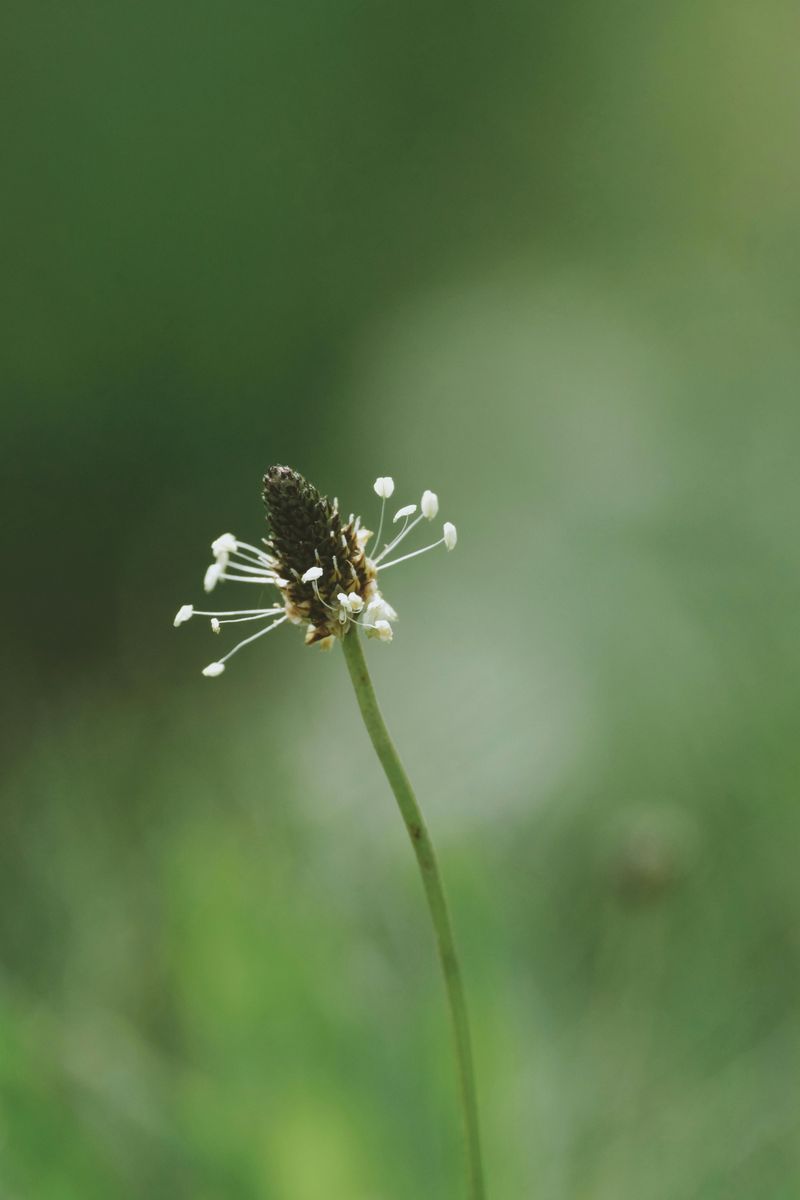
Broadleaf plantain has absolutely nothing to do with the banana-like fruit you find at the grocery store.
This common Illinois yard weed is a low-growing plant with wide, oval leaves that have strong parallel veins running from the base to the tip.
It grows in compacted soil, along sidewalks, in driveways, and in just about every lawn across the state.
The young leaves of broadleaf plantain are tender enough to eat raw in salads, though they have a slightly earthy, mild flavor.
Older leaves get tougher and more fibrous, so those are better cooked by steaming or sauteing them with a little butter and garlic.
The seeds that grow on the tall, narrow spikes can also be harvested and ground into a flour-like powder or sprinkled over oatmeal and yogurt.
Beyond its use as food, broadleaf plantain has a long history in folk herbal traditions.
Many people across the Midwest have used crushed plantain leaves as a quick field remedy to soothe insect stings and minor skin irritation. It’s basically nature’s own first-aid kit growing right under your feet.
So next time a bee ruins your afternoon, don’t panic, just look down.
The remedy might already be blooming at the edge of your path, a gentle complement to the care your doctor provides.
It contains compounds like aucubin and allantoin that have long been noted in herbal traditions for their soothing properties.
Researchers have begun exploring what makes this plant so consistently useful, and the findings are quietly impressive.
It seems like science is just now catching up to what people already knew centuries ago.
Identifying broadleaf plantain is pretty straightforward once you know what to look for.
The wide leaves with those distinctive parallel veins are hard to miss, and the plant stays close to the ground in a rosette shape.
Harvest from clean, untreated areas of your Illinois yard, and always wash leaves thoroughly before cooking or eating.
Broadleaf plantain is one of the most forgiving and recognizable edible weeds a beginner forager in Illinois can start with.
6. Lambsquarters
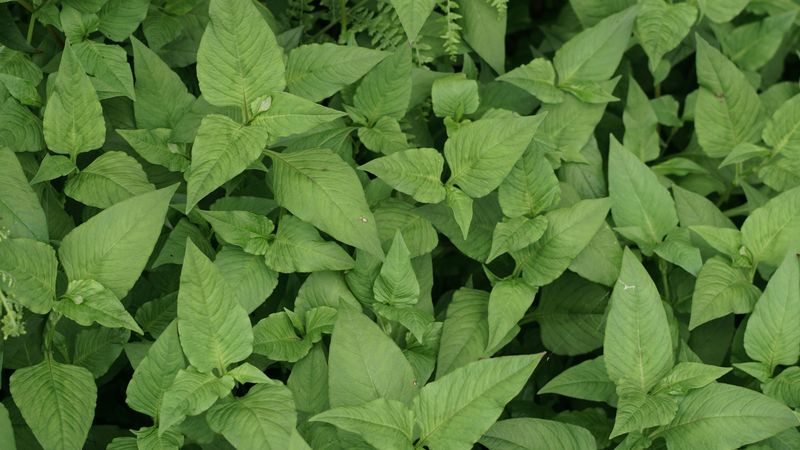
Lambsquarters is sometimes called wild spinach, and once you taste it, you will understand exactly why.
This tall, upright weed grows quickly in Illinois gardens, compost piles, and disturbed soil, reaching several feet in height by midsummer.
The leaves have a distinctive diamond or goose-foot shape with a powdery, grayish-white coating on the undersides that makes them easy to recognize.
Raw lambsquarters leaves have a mild, slightly earthy flavor that blends easily into salads, smoothies, and wraps.
When cooked, they wilt down just like spinach and work wonderfully in pasta, soups, omelets, and grain bowls.
Nutritionally, lambsquarters punch way above their weight, offering high levels of vitamin A, vitamin C, calcium, and protein for a leafy green.
Foragers have appreciated lambsquarters for generations, and long before European settlers ever arrived, Native American communities were already well ahead of the curve.
They relied on it as a vital and nourishing food source, proof that the most overlooked plant in your yard has been somebody’s favorite ingredient for centuries.
This isn’t some trendy superfood that just got discovered; it’s a plant with deep roots, real history, and a résumé that puts most grocery store greens to shame.
The seeds are also edible and were historically ground into flour or cooked like a grain similar to quinoa, which is actually a close botanical relative.
One thing to keep in mind is that lambsquarters, like spinach, contains oxalic acid, which can be a concern if eaten in very large amounts over a long period.
Cooking the leaves reduces the oxalic acid content significantly, so blanching or sauteing is a smart approach.
Harvest young, tender leaves from the tops of the plant for the best flavor and texture.
Lambsquarters are most plentiful from late spring through early fall, giving you a generous window to harvest and experiment.
So before you pull it out by the roots this season, maybe give it a taste first, you might just find your new favorite green hiding in plain sight.
How many other meals have you already pulled out of the ground and thrown away without a second thought?
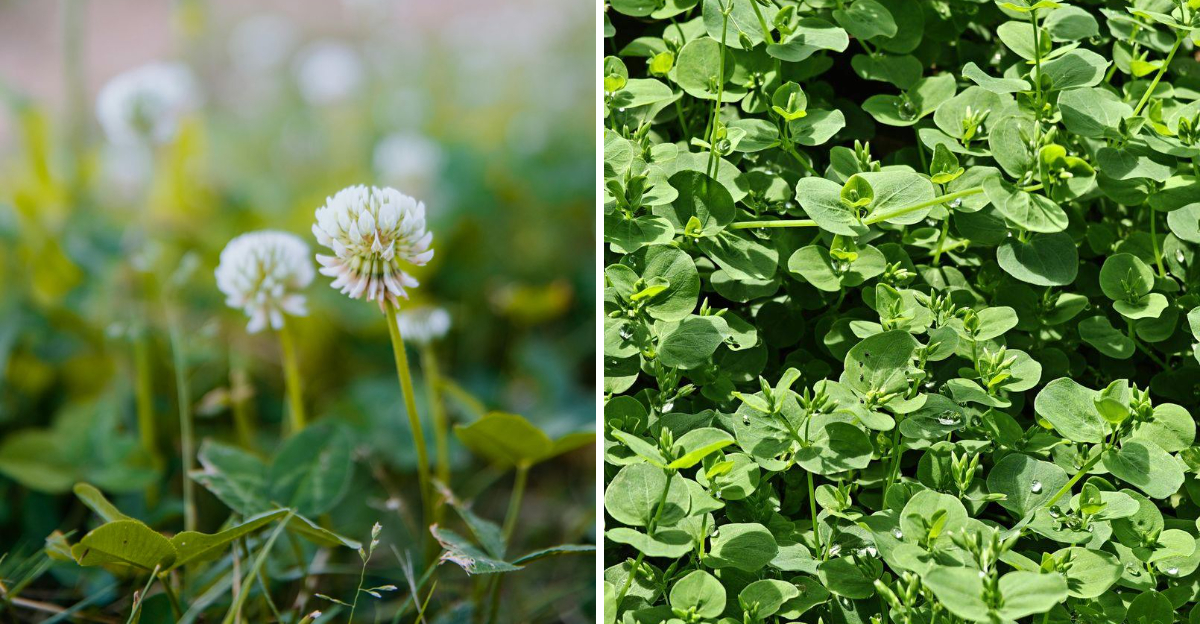
7. White Clover
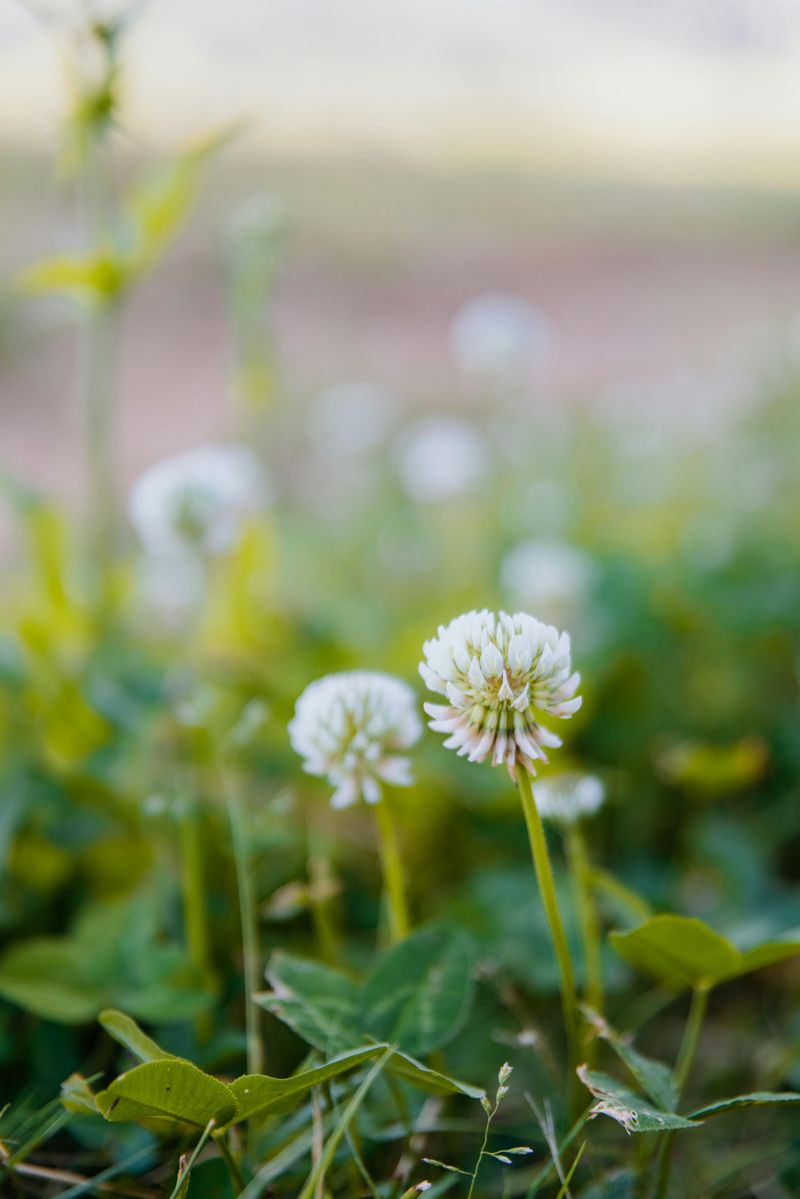
White clover is probably the most recognizable plant on this entire list, and there is a good chance it is already blooming somewhere in your Illinois yard right now.
Those round, fluffy white flower heads sitting on top of slender stems are a classic sight in lawns across the Midwest from spring all the way through fall.
Most people associate clover with luck or honeybees, but far fewer realize it is edible.
The flowers are the tastiest part, carrying a light sweetness that makes them enjoyable eaten straight off the plant or steeped into a pleasant herbal tea.
Dried white clover flowers can be ground and added in small amounts to regular flour for baking pancakes, muffins, or bread.
Even just a little goes a long way, giving everything a subtle floral note that feels surprisingly elegant.
Just keep portions moderate, since like many legumes, clover can cause mild bloating when eaten in large quantities.
The young leaves are also edible and can be tossed into salads, though they are a bit chewy and work better when lightly blanched first.
White clover is a legume, which means it actually helps improve the soil in your Illinois yard by fixing nitrogen naturally.
That is why many gardeners and farmers deliberately plant it as a cover crop rather than fighting to remove it.
It is also an incredibly important food source for pollinators like bees and butterflies throughout the Illinois growing season.
When harvesting white clover, go for flowers that are freshly opened and fully white, avoiding any that have turned brown.
Always pick from areas that have not been treated with lawn chemicals or fertilizers.
Rinse the flowers well before using them, since tiny insects often hide inside the blossoms.
White clover is a wonderful starting point for anyone new to foraging because it is so easy to find and identify with confidence.
What better place to start than a plant already carpeting your lawn?