Trees California Homeowners Should Never Plant Near A Pool
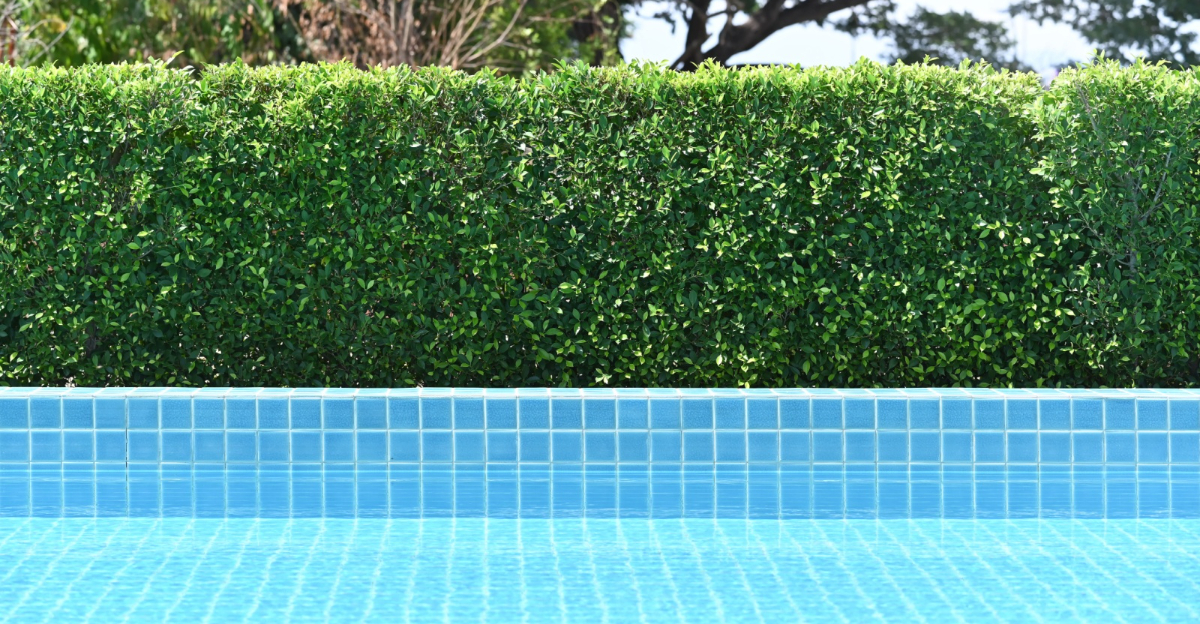
A poolside tree can feel like a brilliant idea right up until the cleanup begins. One minute it is giving you shade and that polished backyard look, and the next your skimmer is packed with leaves, needles, seed pods, or sticky fruit.
California homeowners can absolutely appreciate the appeal of trees near a pool, especially when privacy and relief from afternoon sun are high on the wish list. The problem is that some trees create far more work than comfort.
A beautiful canopy can come with messy drop, wandering roots, and a pool area that suddenly needs constant attention.
In a California backyard, the wrong tree in the wrong spot can turn a relaxing setup into a regular chore.
That is why tree choice matters so much around pools. A little planning now can save a lot of sweeping and scooping later.
1. Eucalyptus Creates Constant Poolside Litter
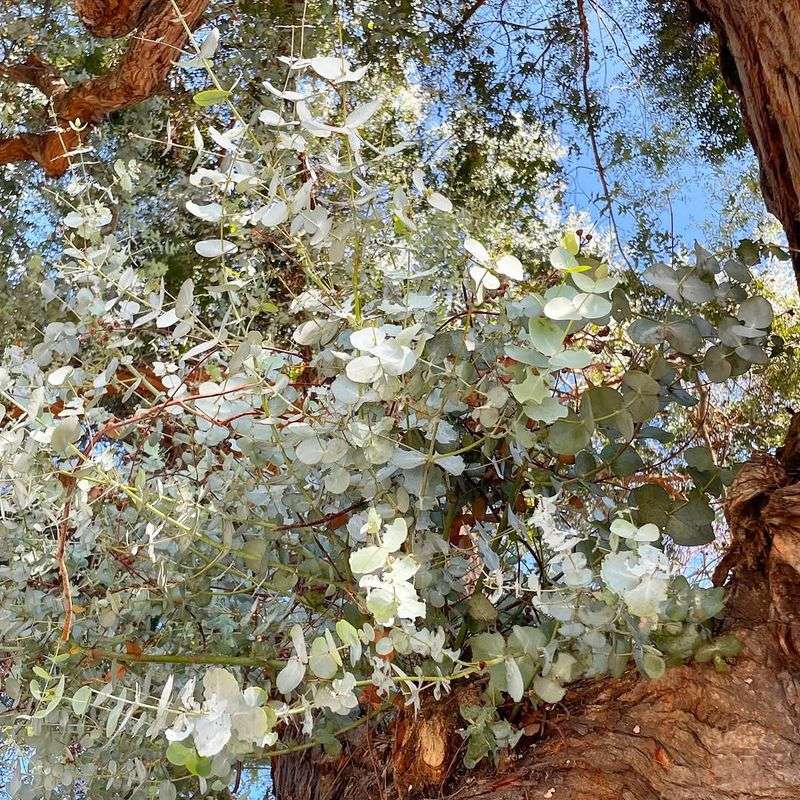
Pool skimmers work overtime when a eucalyptus tree is nearby. These fast-growing trees are extremely common across California, and many homeowners plant them for quick shade and privacy.
The problem is that eucalyptus sheds constantly, not just in fall but throughout the entire year. Leaves, bark strips, seed capsules, and small twigs fall into the pool on a regular basis, making it one of the messiest poolside tree choices a California homeowner can make.
The oils in eucalyptus leaves can also affect pool water chemistry over time, potentially making it harder to maintain proper chemical balance. On windy afternoons, which are common in many parts of California, the debris situation gets significantly worse.
Lightweight bark and leaves travel far from the tree, landing on pool decks, patio furniture, and inside the water itself.
Beyond the litter problem, eucalyptus trees develop large, spreading root systems that can crack paving, damage pool surrounds, and interfere with underground plumbing.
These trees can grow very tall and wide, so even planting one at a moderate distance from the pool may not prevent problems as the tree matures.
A eucalyptus can still be a practical privacy screen elsewhere in a California yard, but near the pool, the constant cleanup and root risks make it a poor fit for most residential landscapes.
2. Ficus Microcarpa Can Cause Root Trouble
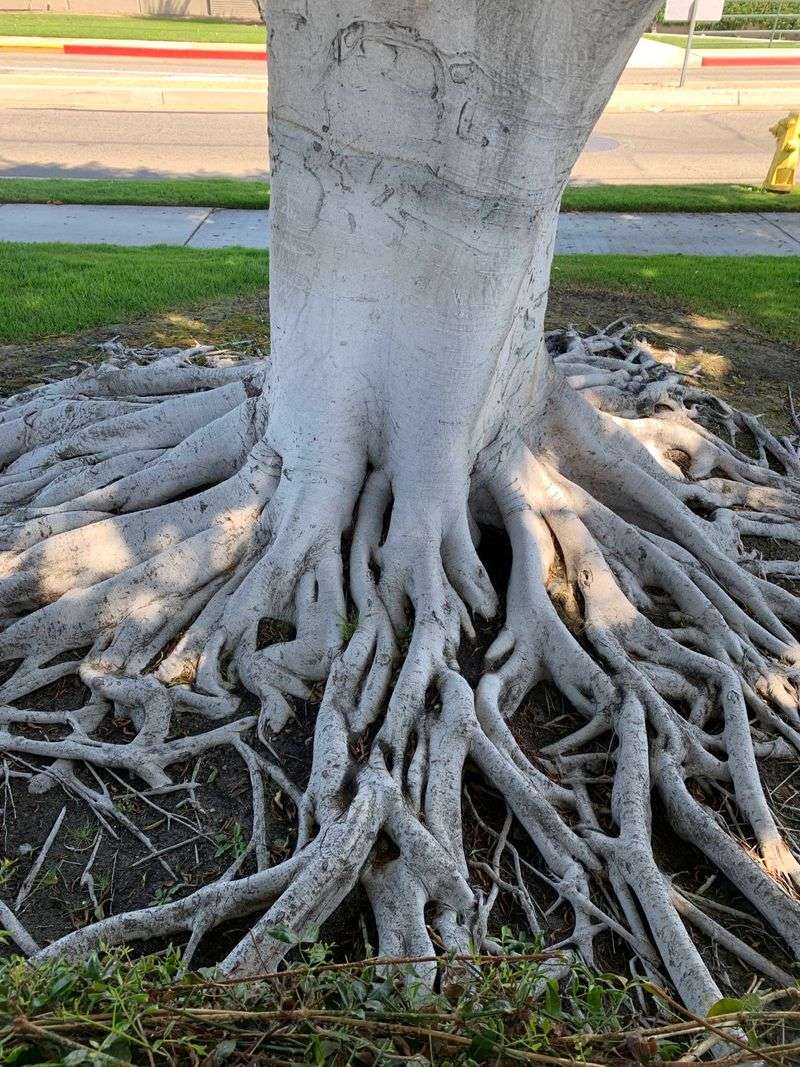
Cracked paving and lifted pool surrounds are often the first sign that a Ficus microcarpa has been planted too close to a pool.
Commonly sold as a shade tree or ornamental hedge in California nurseries, this ficus species is widely used in residential and commercial landscapes.
It looks tidy and attractive when young, but as it matures, the root system becomes one of the most aggressive of any ornamental tree planted in California backyards.
The roots of Ficus microcarpa spread aggressively near the surface of the soil, seeking out moisture wherever it is available. Pool plumbing, irrigation lines, and drainage systems are all vulnerable to root intrusion over time.
Homeowners in warmer California regions sometimes notice roots pushing under pool decks and cracking concrete within just a few years of planting, which leads to expensive repairs.
Your California Garden Changes Every Week. Your Plan Should Too.
Gardening in California changes quickly throughout the season. Every Friday you’ll receive a simple weekly plan showing exactly what to plant, prune, fertilize, harvest, and protect so you never miss the right timing.
Beyond root problems, this tree also drops small, dark fruit that stains pool decks and gets tracked indoors. The dense canopy sheds leaves year-round, adding to pool filter workload.
Birds are attracted to the fruit, which brings additional droppings onto pool surfaces and surrounding areas.
While Ficus microcarpa can be a handsome tree in the right California landscape setting, planting it anywhere near pool plumbing, paving, or the pool shell itself is a decision that tends to create significant long-term maintenance and structural challenges.
3. Liquidambar Drops Spiky Seed Balls
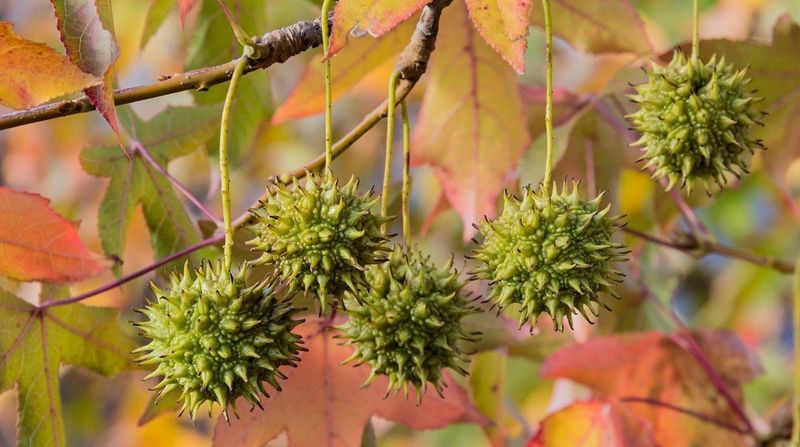
Walking barefoot on a pool deck covered in spiky liquidambar seed balls is an experience most California homeowners only need once before reconsidering where this tree was planted.
The liquidambar, also called sweetgum, is a popular ornamental tree known for its stunning fall color, which makes it attractive to homeowners who want a seasonal display in their California yard.
The problem near pools becomes obvious quickly once the tree reaches maturity.
Liquidambar trees produce large quantities of hard, spiky seed balls that fall from late summer through winter. These seed balls are uncomfortable to step on, difficult to remove from pool skimmers, and can clog filters when they break apart in the water.
On sloped or wet pool decks, they also create a slip hazard that is genuinely worth taking seriously.
The leaves are another issue. Liquidambar foliage turns bright orange, red, and yellow in fall, which looks beautiful on the tree but means a heavy leaf drop that can overwhelm pool filtration systems during that season.
In parts of California with mild winters, the leaf drop period can stretch longer than expected. The tree also develops a moderately spreading root system that can affect nearby paving over time.
Liquidambar can still be a stunning addition to a California front yard or open garden space, but near a pool, the seed ball problem alone makes it a high-maintenance choice most homeowners come to regret.
4. Jacaranda Brings Beauty And Big Cleanup
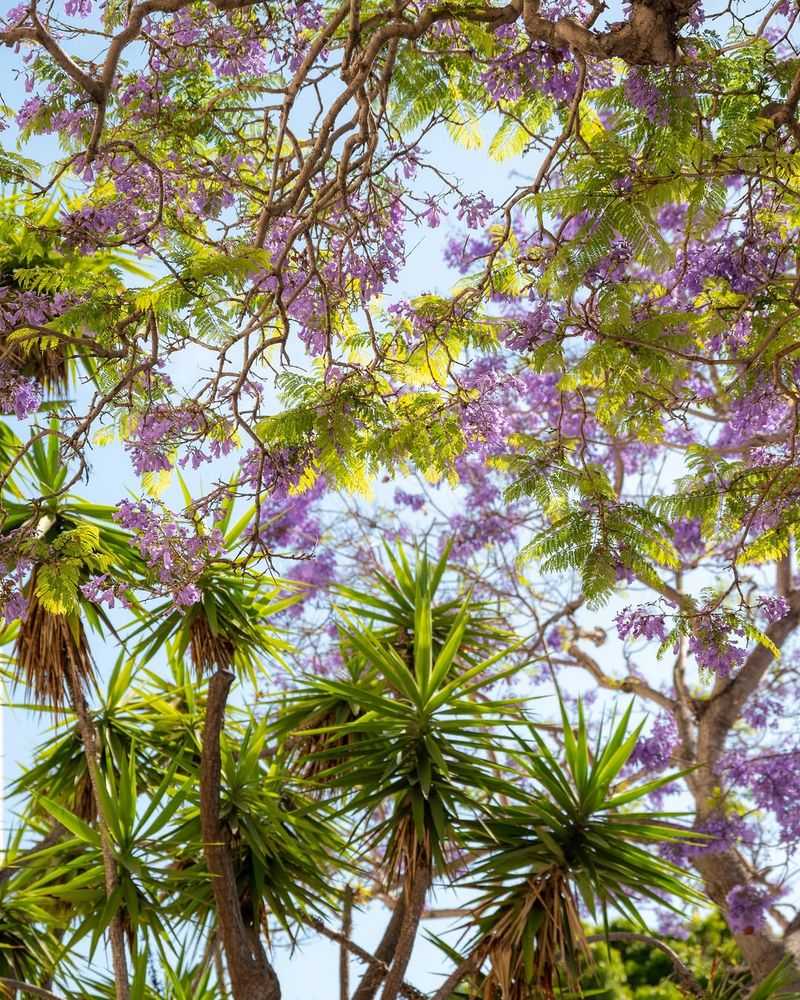
Few trees in California stop people in their tracks the way a jacaranda does when it blooms. The purple flower clusters are genuinely spectacular, and it is easy to understand why so many California homeowners fall in love with this tree at the nursery.
Near a pool, though, that same floral display becomes a seasonal cleanup event that can feel relentless during peak bloom.
Jacaranda trees drop flowers continuously during their bloom period, which typically runs from late spring into early summer in most parts of California.
The fallen flowers are sticky, they mat together when wet, and they can create a slippery surface on pool decks if not cleared regularly.
Inside the pool, they break down quickly and can strain filtration systems, adding to maintenance time and costs.
After the flowers finish, the tree drops seed pods and leaflets that continue the debris cycle well into fall.
Jacaranda roots are generally considered less aggressive than some other trees on this list, but they can still affect nearby paving and irrigation as the tree grows larger.
The combination of sticky flowers, seed pods, and small leaflets falling over an extended period makes jacaranda a particularly demanding tree to manage near a pool.
Planted further from the water, perhaps near a fence line or at the back of a California garden, a jacaranda can still deliver that breathtaking seasonal color without the poolside cleanup burden.
5. Pine Trees Fill Pools With Needles
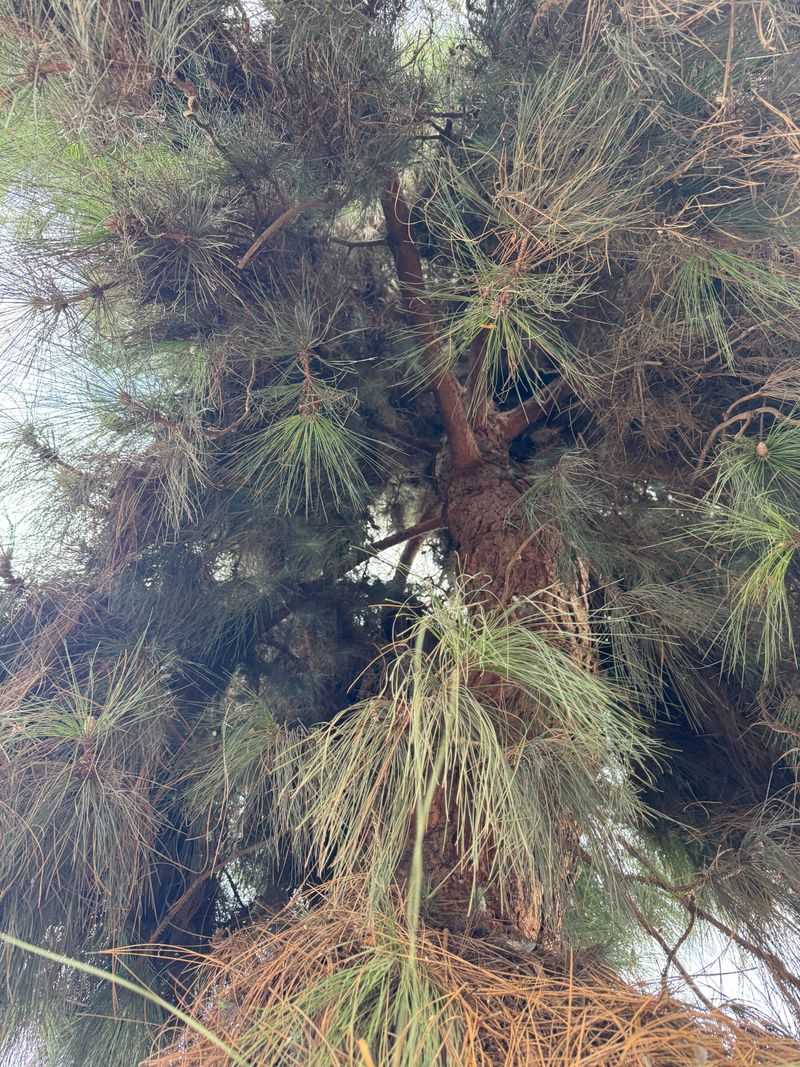
A pool filter clogged with pine needles is one of the most frustrating maintenance problems a California homeowner can face during the warmer months. Pine trees are widely planted in California landscapes for their height, shade, and year-round greenery.
Many varieties shed needles continuously rather than all at once, which means there is no single cleanup season to prepare for. The needles fall steadily, and near a pool, they accumulate fast.
Pine needles are long, thin, and light enough to drift considerable distances on a breeze, which is a common occurrence across much of California.
They pass easily through pool skimmer baskets, reach the pump basket, and can work their way into filter media.
Over time, this kind of debris load puts extra strain on pool equipment and increases cleaning frequency noticeably.
Pine cones add another layer of mess, dropping onto pool decks and into the water, where they can sink and become difficult to retrieve.
Some pine species also release sticky sap that lands on deck surfaces, furniture, and pool edges, creating a residue that is tedious to remove.
Certain pines develop deep taproots, while others spread lateral roots that can affect nearby paving or irrigation over time.
Pine trees can be genuinely beautiful in a California landscape and provide excellent wind screening, but they are far better placed away from pool areas where needle and cone accumulation becomes a near-daily nuisance.
6. Mulberry Trees Leave Sticky Messes
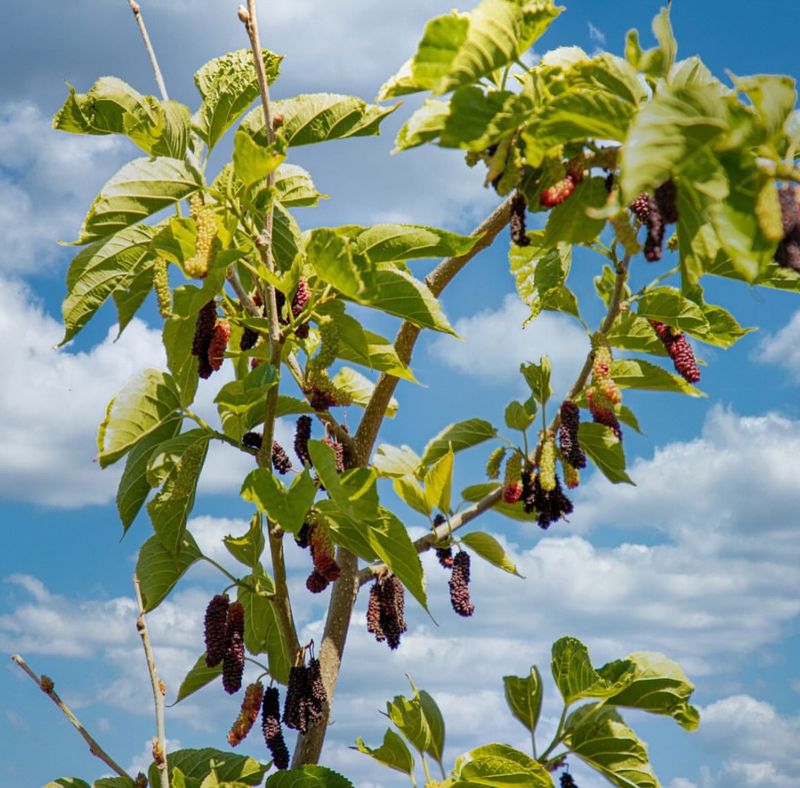
Bright purple-red stains on a pool deck are a telltale sign that a mulberry tree is somewhere nearby.
Mulberry trees were once widely planted across California as fast-growing shade trees, and many older California properties still have mature specimens in the backyard.
When those trees are close to a pool, the fruiting season creates one of the messiest situations any homeowner can encounter in a residential landscape.
Ripe mulberries fall and burst on contact with hard surfaces, leaving behind stains that are genuinely difficult to remove from concrete, pavers, and pool coping.
The fruit also attracts birds in large numbers, which brings additional droppings onto pool decks and surrounding surfaces.
Fallen berries that land in the pool water break down and can affect water clarity while adding to filter workload during the fruiting period.
Beyond the fruit mess, mulberry trees are fast growers with vigorous root systems that spread broadly in search of water. Near a pool, those roots can find their way toward plumbing, drainage lines, and the pool structure itself over time.
Even fruitless mulberry varieties, which were popular in California landscaping for decades, shed large quantities of leaves and develop the same aggressive root behavior.
The shade a mulberry provides is real, but the combination of fruit staining, bird activity, root spread, and heavy leaf drop makes it one of the more problematic tree choices for any California pool area.
7. Sycamore Brings Mess And Root Problems
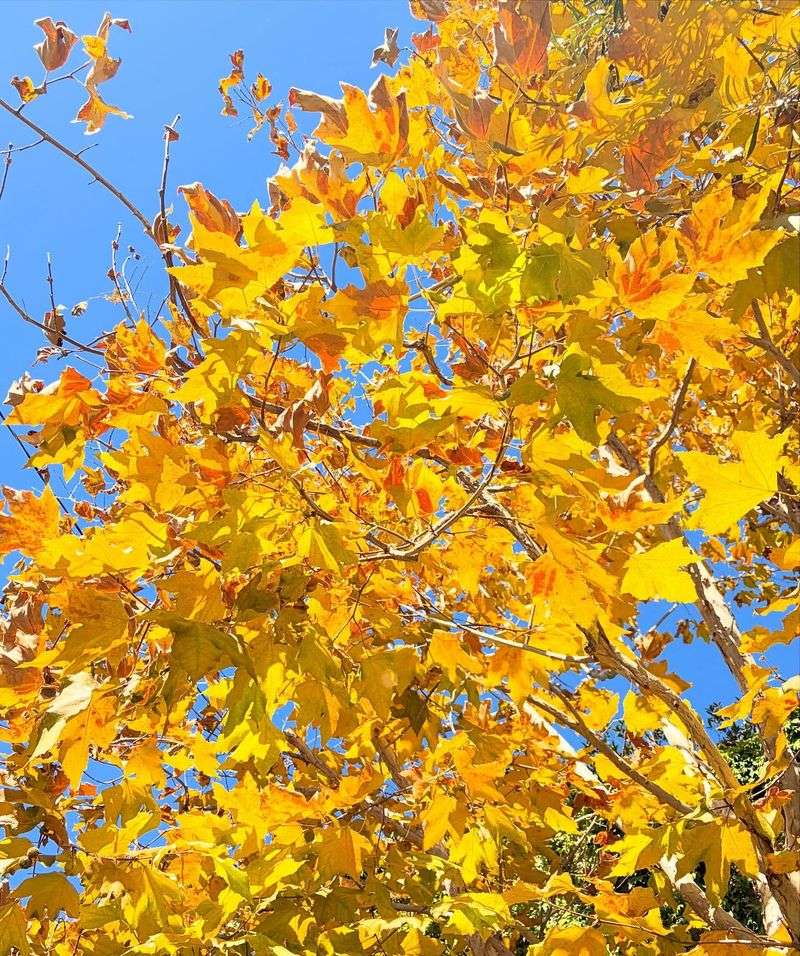
Massive leaves drifting into the pool on a warm October afternoon might sound picturesque, but anyone who has owned a pool near a California sycamore knows the reality is much less relaxing.
The California sycamore is a native tree with a lot going for it in the right setting.
It provides deep shade, supports local wildlife, and has striking bark that peels in patches to reveal creamy white and tan beneath. Near a pool, though, its size and debris load become serious issues.
Sycamore trees produce large, lobed leaves that fall in significant quantities during autumn. They also shed fuzzy seed balls, small twigs, and bark throughout the year.
These materials overwhelm pool skimmers quickly and can clog filters if not removed frequently. The fuzzy coating on sycamore seeds and leaf surfaces can also be an irritant for some people, which is worth considering in an outdoor recreation space.
Root behavior is the other major concern. Sycamores are large, water-seeking trees, and their roots can spread broadly and aggressively near irrigation and pool plumbing.
Cracked pool decks and lifted paving are common complaints from California homeowners who have a mature sycamore growing too close to the pool area.
The tree genuinely belongs in a spacious California landscape, perhaps near a dry creek bed or along a property boundary, where its size and root spread can be accommodated without threatening pool infrastructure or creating an unmanageable debris situation.
8. Privet Drops Messy Fruit Near Pools
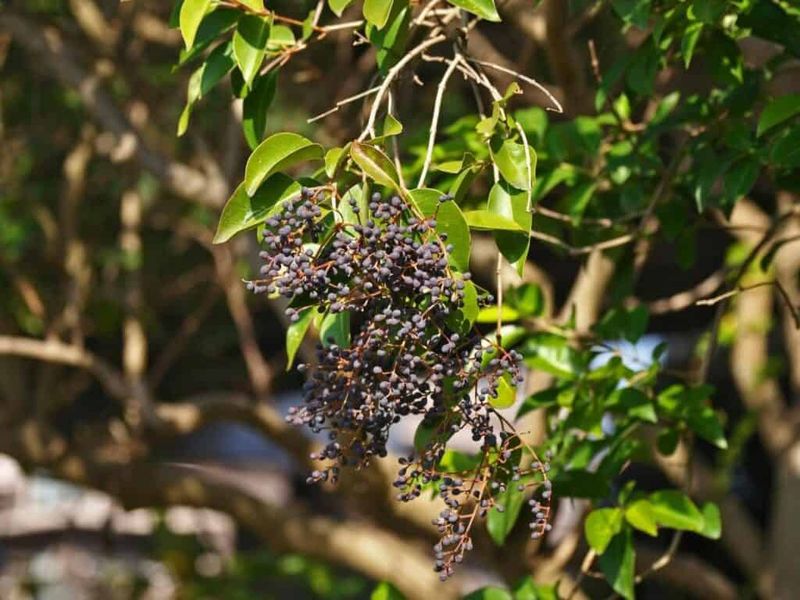
Most people think of privet as a hedge plant, but when left to grow unchecked in a California yard, it can reach small tree size and become a significant source of poolside mess.
Privet is commonly used for privacy screening in California residential landscapes, and it grows quickly, which makes it appealing to homeowners who want to block sightlines near the pool area.
The problem is that privet produces clusters of small, dark berries that drop heavily during fall and early winter.
Those berries fall onto pool decks and into the water, where they stain surfaces and break down in ways that challenge filtration.
Birds are strongly attracted to privet berries, which means bird droppings become an added issue on pool decks and surrounding furniture.
In California, several privet species are also considered invasive, meaning seeds spread readily into neighboring areas and can sprout in planting beds, cracks in paving, and garden borders.
Privet also sheds small leaves and flower clusters during blooming season, adding to the general debris load around a pool. The flowers have a strong scent that some people find pleasant but others find overwhelming, especially in an enclosed backyard space.
While privet can function well as a privacy hedge in other parts of a California yard, planting it close enough to a pool to provide screening often leads to a seasonal berry and debris problem.
That extra mess can require consistent attention throughout the fall and winter months.