Don’t Wait For The Smell To Know A Skunk Is Claiming Your Illinois Yard
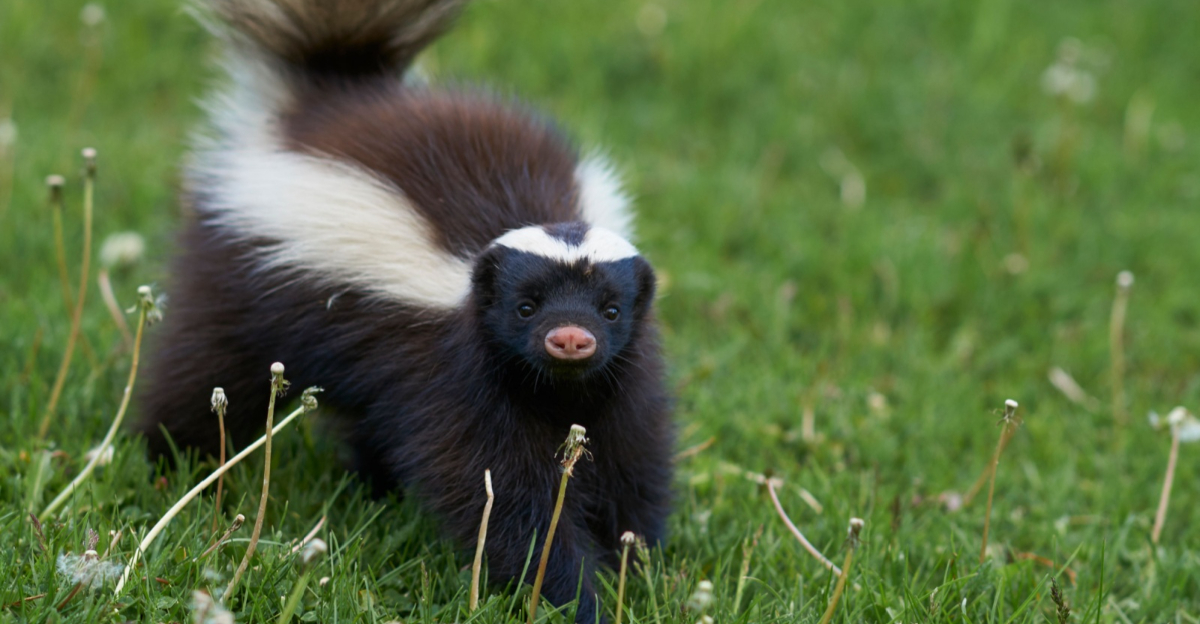
One morning you walk outside with your coffee, take one deep breath, and immediately regret it. By then, the skunk has already moved in, scoped out your yard, and probably left a few calling cards you haven’t noticed yet.
Here’s the thing about skunks, they don’t announce themselves until it’s too late. In Illinois, they get especially bold in spring and early fall, when they’re hunting for grubs, raiding birdfeeders, and quietly auditioning your deck or shed as their next home base.
The good news? They leave clues well before the smell arrives.
And once you know what to look for, you can send them packing before things get dramatically worse. Read on to find out what these nighttime visitors leave behind, why Illinois yards are such a draw, and which removal strategies actually hold up.
Illinois Skunk Season Is Real And It’s Already Here

Skunk season sneaks up on Illinois homeowners the same way the animals themselves do, quietly and without much warning.
Most people assume these animals are only a problem in summer, but that’s not how it works. Activity spikes in late February when males start roaming for mates, then again in fall when juveniles scatter to find new territory.
Temperatures as low as 40 degrees Fahrenheit are enough to get them moving after dark. They don’t truly hibernate, so mild winter nights can bring them right into your yard.
A single female can have up to six young in one litter, meaning a quiet spring visit can turn into a full litter under your porch.
Suburban neighborhoods across the state are actually prime habitat for these animals.
Easy food sources like grubs, fallen fruit, and unsecured trash make residential yards almost irresistible.
Understanding the seasonal pattern of skunk movement gives you a serious head start.
Waiting until you smell something means the situation has already moved past the easy fix stage.
Mark your calendar now, because prevention always beats a frantic midnight search for tomato juice.
Your Grass Got Visited And You Slept Through The Whole Thing
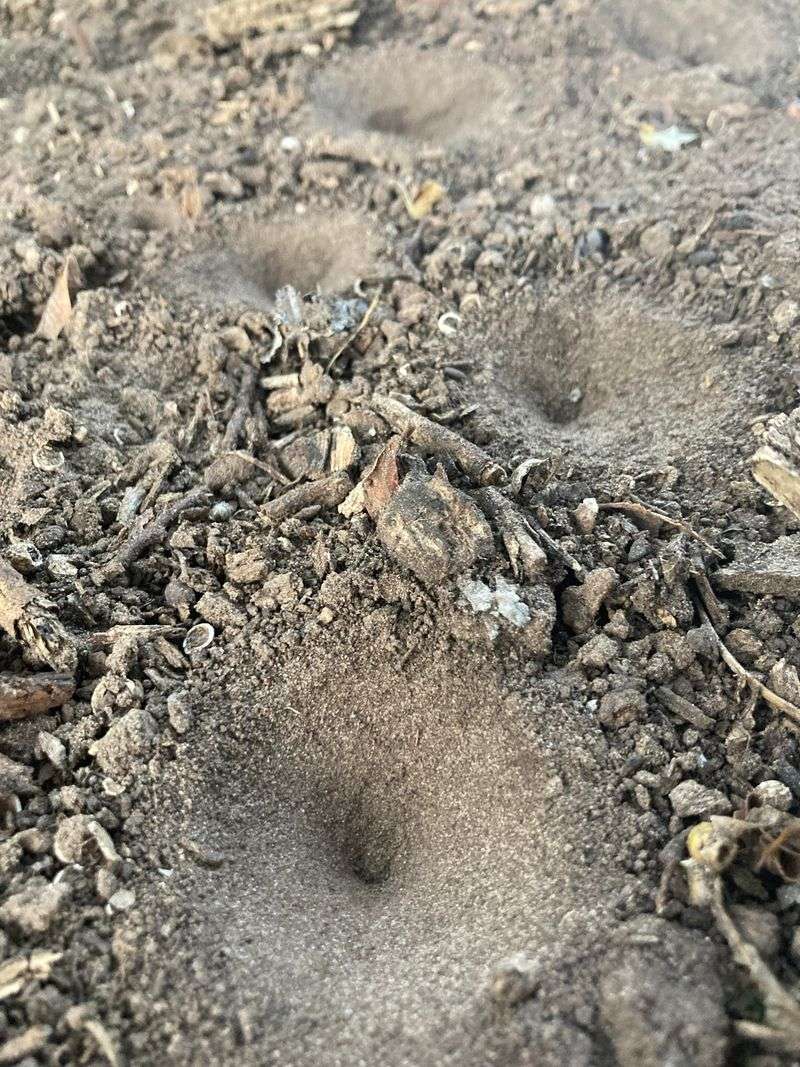
Small cone-shaped holes scattered across your lawn in the morning are one of the clearest signs a skunk paid a nighttime visit.
These animals dig for grubs with impressive speed, leaving behind a pattern that looks almost like someone took a small trowel to your turf.
Each hole is typically two to three inches wide and about the same depth.
You might also notice patches where the sod looks rolled back slightly, like someone peeled up the edge of a carpet.
These animals follow grub populations, and Illinois lawns are particularly prone to grub activity, so if your lawn has a grub problem, consider it an open invitation. Raccoons and moles cause similar damage, but the holes tend to be more evenly spaced and less erratic in pattern.
Checking your yard first thing in the morning, before the dew dries, often reveals fresh tracks alongside the digging damage. The prints are about an inch and a half wide with five toes and visible claw marks.
Your Illinois Garden Changes Every Week. Your Plan Should Too.
Gardening in Illinois changes quickly throughout the season. Every Friday you’ll receive a simple weekly plan showing exactly what to plant, prune, fertilize, harvest, and protect so you never miss the right timing.
Taking photos of the damage and tracks helps you confirm what you’re dealing with before spending money on the wrong solution.
Acting within the first few days of spotting this damage gives you the best chance of redirecting the animal before it settles in.
Your Dog Knew Before You Did
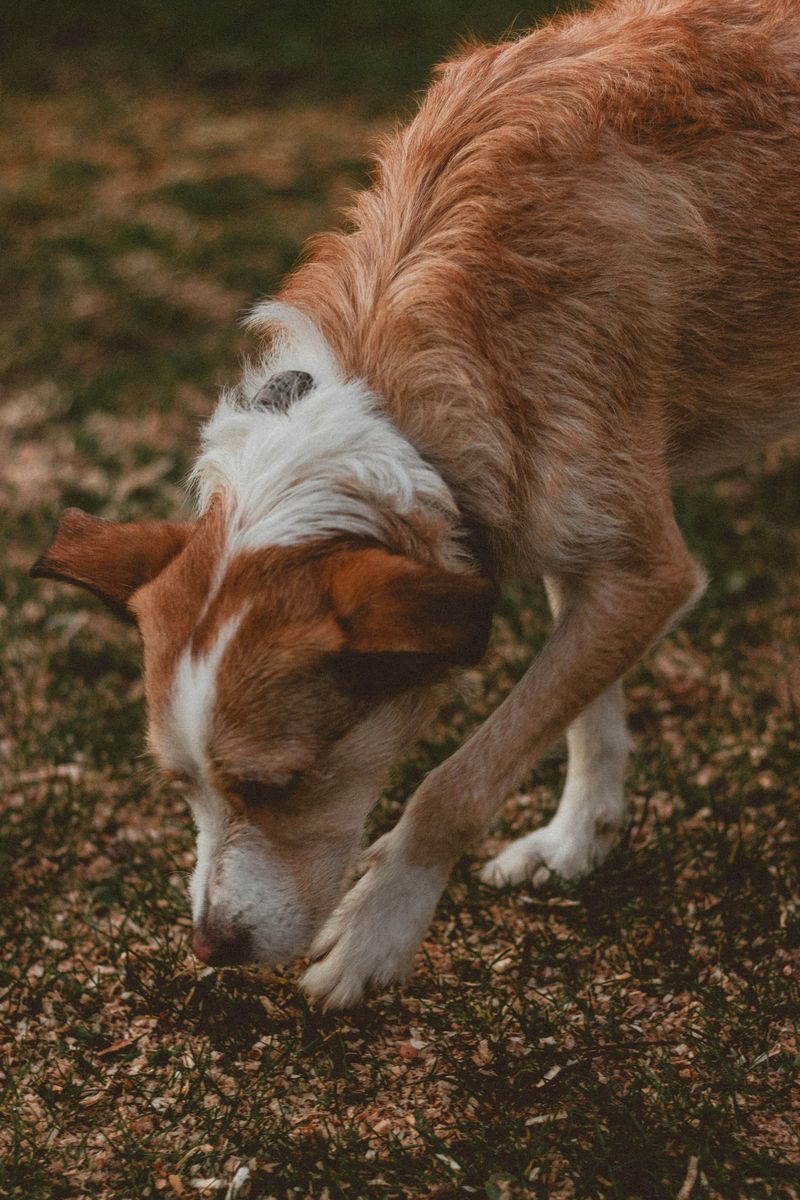
Dogs pick up on skunk presence long before any human nose catches on, sometimes hours before the animal even enters the yard.
If your dog has been acting restless at night, barking at the fence line, or sniffing obsessively along the perimeter of the yard, take that seriously.
Animals communicate stress in ways we often dismiss as quirky behavior. A dog that suddenly refuses to go outside after dark is not being dramatic.
These animals spray as a last resort, but confrontations happen fast, especially when a curious dog corners one near a deck or garden bed. Cats are often more cautious than dogs are around these visitors, but even they can end up on the wrong side of a defensive spray.
Keeping pets on a leash during late evening bathroom breaks is one of the simplest protective measures you can take right now.
Motion-activated lights near entry points can also give you a warning flash when something moves through your yard after dark.
Pay attention to where your pet lingers and sniffs during daytime walks around the property.
Those spots often correspond directly to where nocturnal visitors traveled the night before, and that information is worth acting on.
The 20-Minute Yard Audit That Could Save You A Very Bad Morning
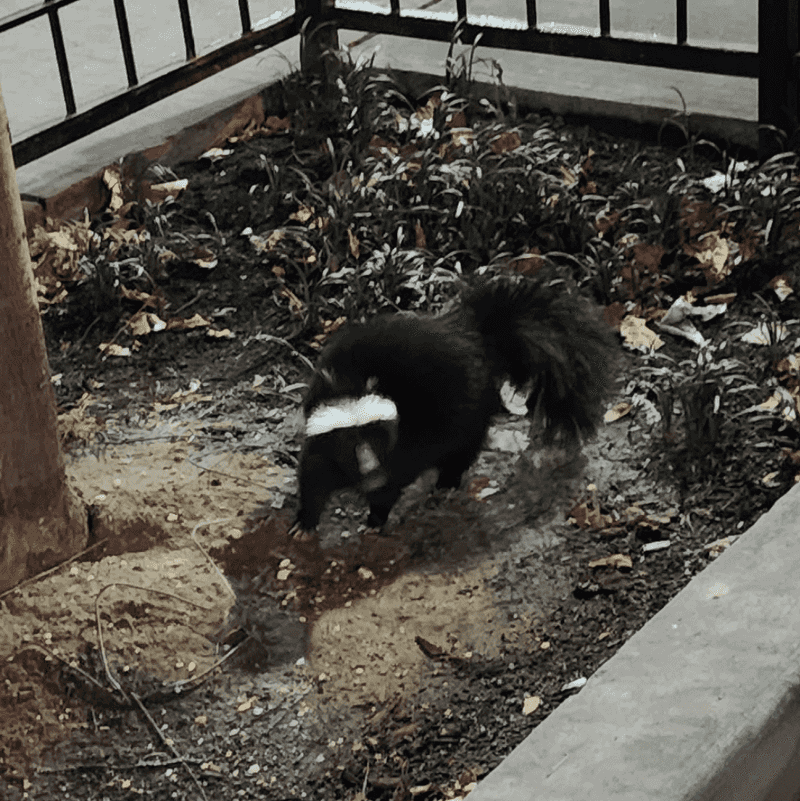
You do not need a pest control degree or an expensive inspection. You need twenty minutes, a flashlight, and this checklist.
One weekend morning walkthrough is enough to spot every skunk vulnerability in your Illinois yard before things get complicated.
Start at the base of your deck or porch, because hollow spaces underneath are among the most popular denning spots in residential neighborhoods. Look for soft soil that appears disturbed or pushed aside near the edges.
Move along your fence line and check for gaps at ground level. Any opening three to four inches wide is enough for one of these animals to squeeze through.
Inspect compost bins, wood piles, and any low-clearance structures like garden sheds or detached garages.
Check for loose skirting around air conditioning units or crawl spaces, since these are often overlooked entry points. Note the location of any fruit trees, berry bushes, or vegetable gardens, fallen or ripe produce is a major food draw.
Write down or photograph every potential problem area you find during your walkthrough. Prioritize gaps and openings first, then food sources second.
A systematic approach like this costs nothing and takes less time than dealing with an established skunk under your porch.
Most homeowners who do this audit find at least two or three issues they never knew existed.
The Everyday Items That Make Skunks Turn Around

Skunks have a surprisingly sensitive nose, and several common household items bother them enough to send them looking elsewhere.
Citrus peels scattered around garden beds, along fence lines, or near deck openings are a popular natural deterrent that many homeowners swear by. Best of all, they cost almost nothing to try.
Orange and lemon peels are especially effective and can be refreshed every few days.
Ammonia-soaked rags placed near suspected entry points may help by mimicking the scent of predator urine. Many homeowners find it discourages skunks from returning to the same spots.
Bright, sudden light is another powerful deterrent since these animals prefer moving through dark, undisturbed spaces.
Motion-activated lights along the perimeter of your yard can interrupt their preferred travel routes and push them toward easier territory.
A sprinkler system rigged to the same trigger works on identical logic. A sudden burst of water startles nighttime visitors and sends them looking for a quieter yard.
Predator urine products, available at most garden centers, can be sprinkled around the yard perimeter for added effect.
Cayenne pepper sprinkled along garden bed edges is another option that many homeowners already have in their kitchen cabinet.
None of these methods require a big investment. And combining two or three of them creates a layered deterrent that is much harder for an animal to ignore.
How To Make Your Yard The One Skunks Skip

Skunks are opportunists, not explorers, and they will always choose the yard that offers the easiest meal with the least resistance.
Making your property less appealing starts with food source management. It is the single most effective long-term strategy available to homeowners.
Secure trash cans with locking lids or bungee cords every single night, not just on garbage collection days.
Pick up fallen fruit from trees as soon as it drops, because even slightly fermented produce draws wildlife from a surprising distance.
Bird feeders are a less obvious culprit, but seeds that fall to the ground become an easy nighttime snack for foraging visitors. Switching to feeders with catch trays or temporarily removing them during peak season makes a real difference.
Seal off the space under your deck, porch, or shed using hardware cloth buried at least six inches below ground to prevent digging under it. Treating your lawn for grubs with a targeted product removes one of the biggest food incentives that brings these animals onto residential properties.
Keeping grass trimmed short reduces cover and makes your yard feel exposed and risky to a cautious nocturnal animal. A yard that offers no food, no shelter, and no cover is a yard they will pass right by.
When DIY Stops Being An Option
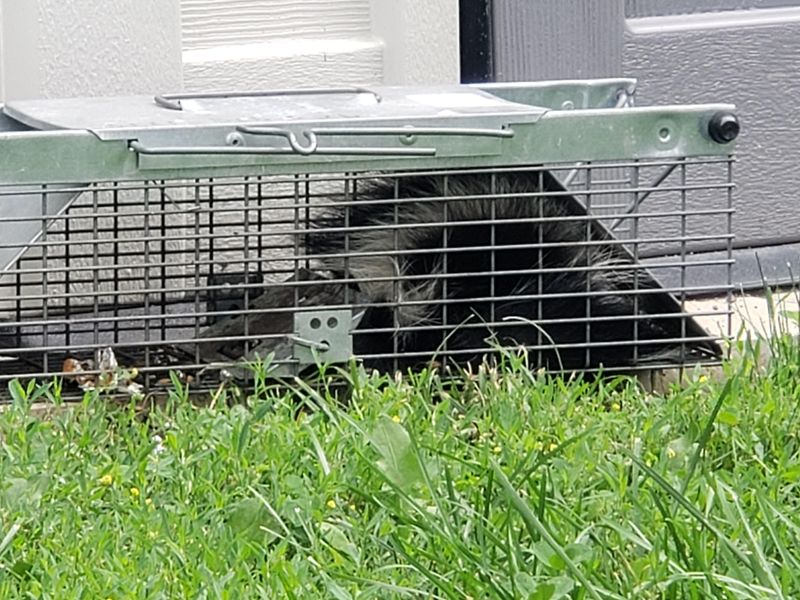
Some situations move past the point where citrus peels and motion lights can solve the problem. A female that has already given birth under your deck or porch is not going to relocate on her own.
Attempting to force her out without a plan can trigger a spray inside an enclosed space. That is a situation that calls for a professional.
Licensed wildlife removal specialists in Illinois are trained to handle these animals humanely and legally, following state regulations that govern trapping and relocation. Attempting to trap and move one yourself without the proper permits can actually result in fines.
Professional services also identify and seal all entry points after removal, which is the step most homeowners skip and then regret. If you notice one acting disoriented during daylight hours, moving in circles, or appearing aggressive without provocation, contact animal control immediately.
Daytime activity alone is not always a concern, as these animals occasionally venture out in daylight during breeding season.
Combined with unusual behavior, however, it becomes a potential indicator of rabies. That requires a completely different response than a routine skunk visit.
Protecting your yard from skunk activity is a manageable goal when you catch it early.
But knowing when to hand the situation off to someone with the right training and equipment is just as important as any DIY step you can take.