Why Georgia Crepe Myrtles Produce Fewer Blooms And How To Fix It
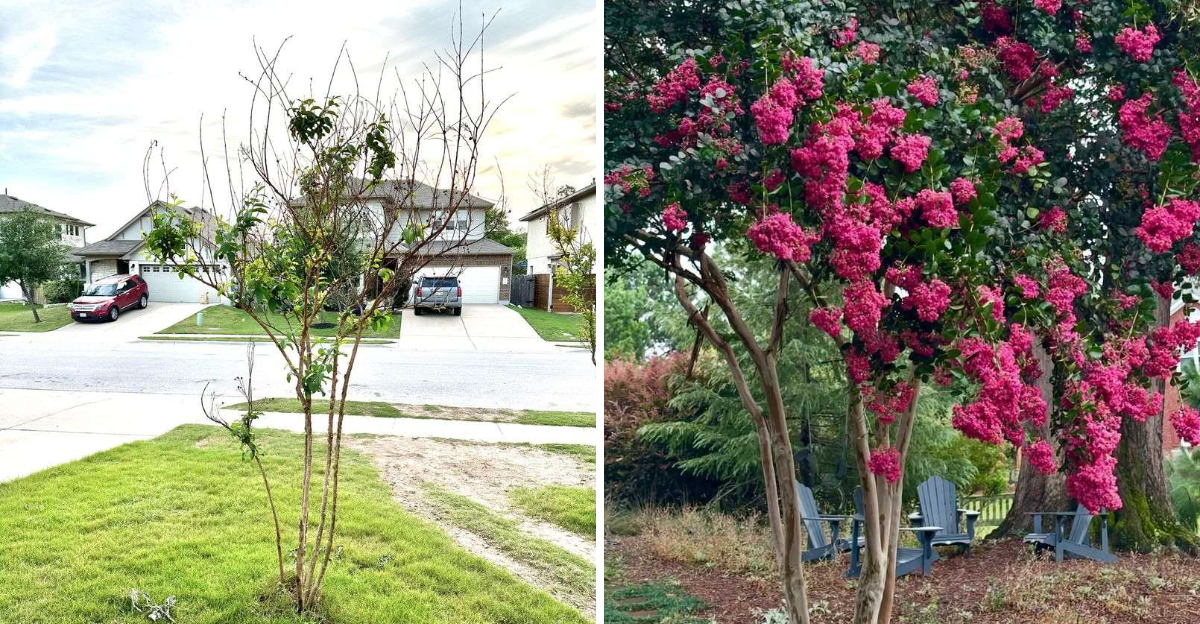
Crepe myrtles have a reputation for stealing attention all summer, so it becomes obvious fast when a tree suddenly looks underwhelming instead of covered in color.
Thick leafy growth shows up, branches get taller, but the blooms just do not hit the same way they used to in Georgia yards.
That usually sends homeowners straight into detective mode around the yard. Watering gets checked, pruning gets questioned, fertilizer becomes suspicious, and neighbors start comparing whose crepe myrtle looks better this year.
A few extremely common habits can quietly affect blooming without looking like a problem at first. Weather patterns and fast spring growth can also change how crepe myrtles behave once summer gets closer.
1. Too Much Shade Can Reduce Summer Flowering
Shade is one of the sneakiest reasons crepe myrtles underperform in Georgia gardens.
Unlike some flowering shrubs that tolerate partial shade, crepe myrtles are full-sun plants that need at least six hours of direct sunlight daily to produce strong, consistent blooms.
When a crepe myrtle gets planted near a large oak, pine, or any fast-growing shade tree, the light competition gets worse every year.
As surrounding trees fill out, the crepe myrtle ends up spending energy just reaching for light instead of pushing out flower buds.
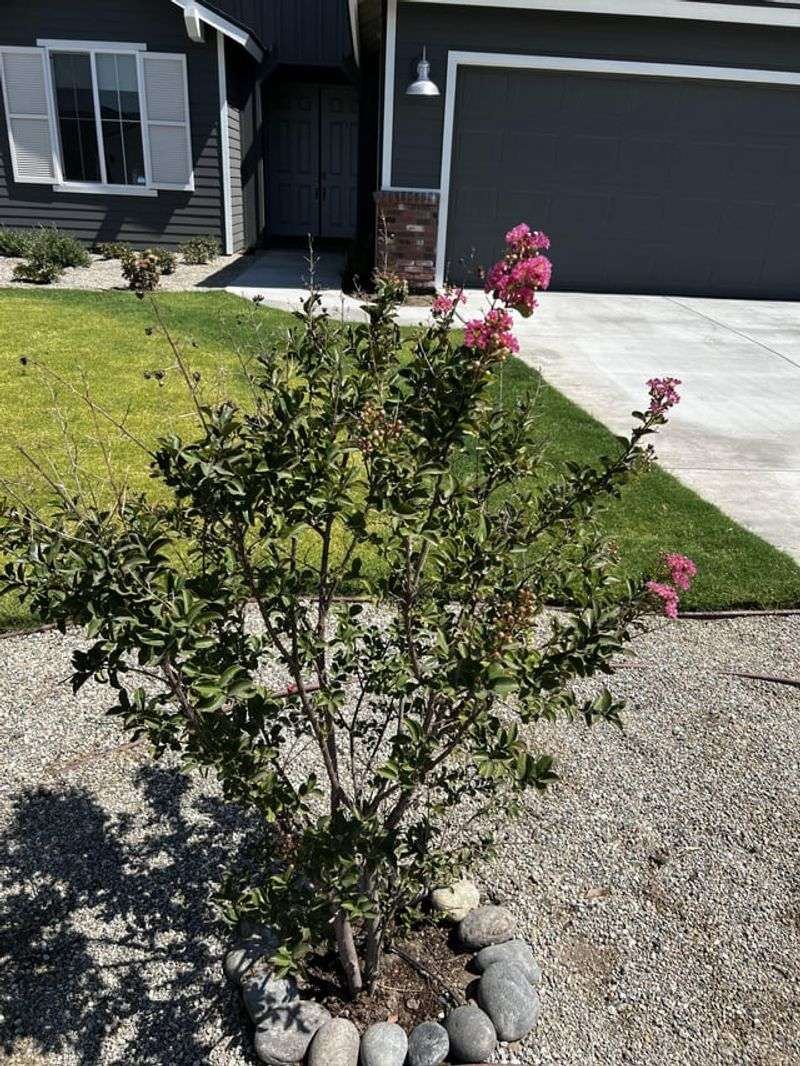
You’ll often notice the blooms appear only at the very tips of the tallest branches where sunlight still reaches.
Georgia summers are long and bright, which works in your favor if the tree has open exposure. A crepe myrtle sitting in full sun along a fence line or in an open lawn will almost always outbloom one tucked under a canopy.
Solving this problem depends on how much flexibility you have. Trimming competing branches from nearby trees can help significantly, especially if the shade is coming from one direction.
In some cases, relocating a younger crepe myrtle to a sunnier spot in late winter before new growth starts is the most practical fix.
2. Overcrowded Branches May Limit Airflow And Bud Growth
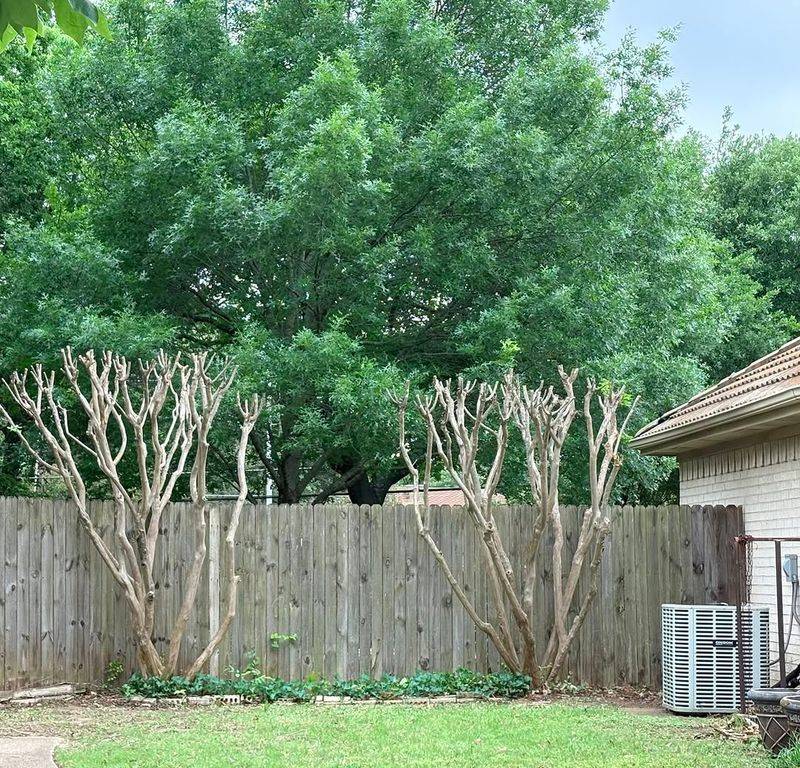
Thick, tangled branches are not a sign of a healthy crepe myrtle. When interior growth becomes too dense, airflow drops, humidity rises inside the canopy, and flower bud development slows down noticeably.
Georgia’s humid summers already create conditions where moisture lingers on leaves and bark. Add overcrowded branching to that equation and you end up with a tree that’s struggling to breathe.
Weak interior shoots compete for the same nutrients as the main flowering branches, and the whole tree ends up with less energy to put toward blooms.
Selective pruning in late winter, right before new growth emerges, is the most effective way to address this. Focus on removing crossing branches, inward-growing shoots, and any stems that are rubbing against each other.
You’re not trying to reshape the whole tree, just open up the center enough that light and air can move through freely.
A common mistake Georgia gardeners make is waiting until summer to prune when they notice the problem. Pruning during active growth removes developing buds and sets the tree back rather than helping it.
Your Georgia Garden Changes Every Week. Your Plan Should Too.
Gardening in Georgia changes quickly throughout the season. Every Friday you’ll receive a simple weekly plan showing exactly what to plant, prune, fertilize, harvest, and protect so you never miss the right timing.
Late February through early March is the ideal window across most parts of Georgia before the tree breaks dormancy.
After proper thinning, many crepe myrtles bounce back quickly.
3. Late Cold Snaps Sometimes Affect Developing Flower Buds
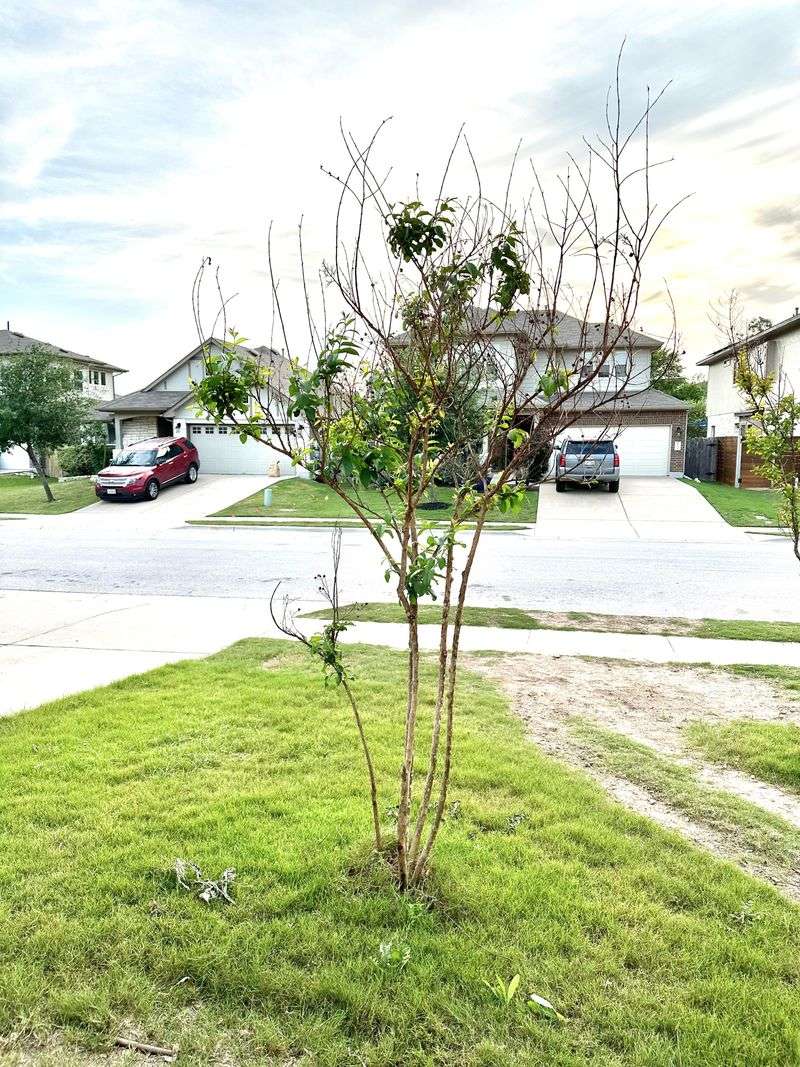
Georgia springs can feel like summer one week and then drop back to near-freezing the next.
Crepe myrtles break dormancy relatively early compared to many other trees, and that timing makes them vulnerable when late cold snaps roll through in March or April.
Once new growth has pushed out, a hard frost can damage the tender tips where flower buds are beginning to form. You might notice the fresh growth turning brown and shriveling after a cold night.
Most of the time the tree recovers, but it takes several weeks to push out new growth, which delays blooming and sometimes reduces the total number of flower clusters that develop.
North Georgia gardeners deal with this more frequently than those in the southern parts of the state, where frost risk drops off earlier in spring.
If you’re in the Atlanta metro or any of the northern Georgia counties, keeping an eye on late-season forecast lows is genuinely worth doing.
Covering smaller crepe myrtles with frost cloth on nights when temperatures are expected to drop below 30 degrees can protect developing buds. For larger established trees, covering isn’t practical, but avoiding nitrogen fertilizer early in the season helps.
Heavy nitrogen pushes soft, fast growth that’s more sensitive to cold damage.
Hold off on fertilizing until nighttime temperatures are consistently above 50 degrees.
Letting the tree emerge from dormancy at its own pace gives it the best chance of producing undamaged buds that develop into a full flush of flowers come summer across Georgia.
4. Root Stress Can Become More Noticeable During Heat
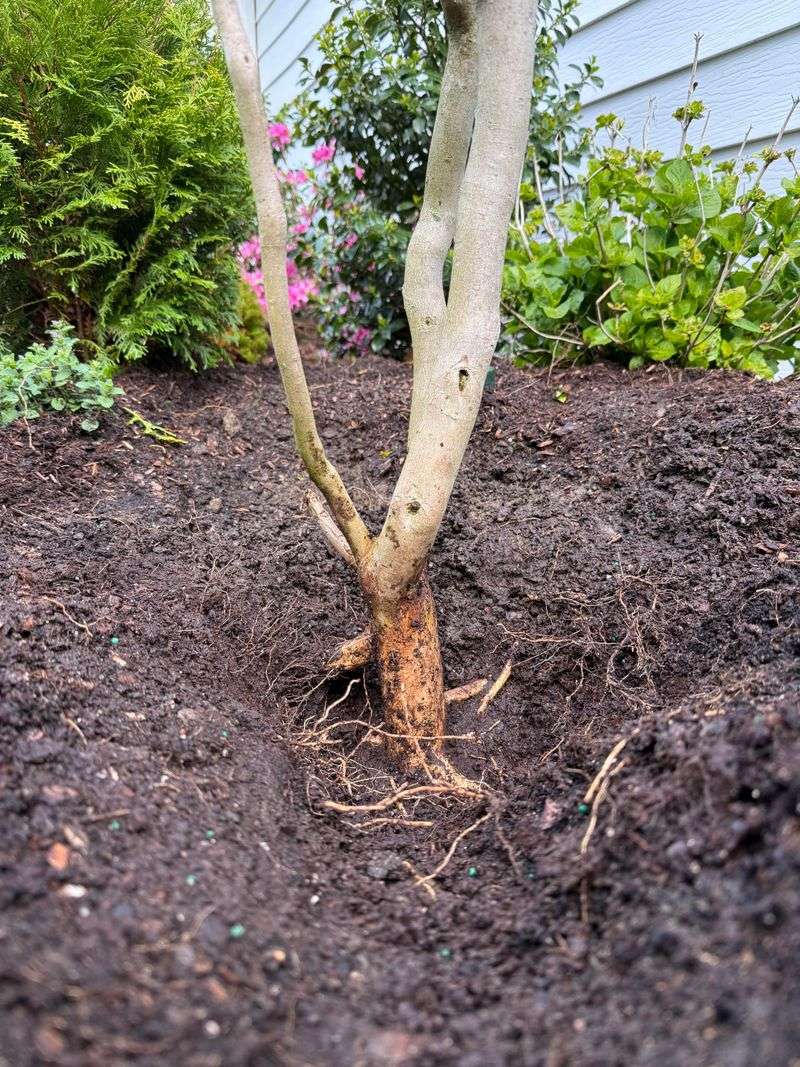
Root stress doesn’t always show up as dramatic wilting. Sometimes it just quietly reduces a crepe myrtle’s ability to produce blooms, and Georgia summers have a way of making that stress much harder for the tree to hide.
When roots are compacted, waterlogged, or restricted by pavement and construction fill, the tree can’t take up water and nutrients efficiently.
During Georgia’s peak heat in July and August, a stressed root system forces the tree into a kind of survival mode where flowering becomes a lower priority than basic function.
Compacted soil is extremely common in Georgia neighborhoods, especially in newer subdivisions where heavy equipment has compressed the ground during construction.
Crepe myrtles planted in those conditions often look fine for a few years before root problems start showing up as reduced blooms and slower overall growth.
Aerating the soil around the root zone once a year can help in compacted situations. Using a garden fork or hiring a professional to core-aerate the area under the canopy improves oxygen and water movement to the roots.
Avoid tilling deeply near the trunk since shallow feeder roots are easy to damage.
5. Proper Spacing Often Improves Bloom Production
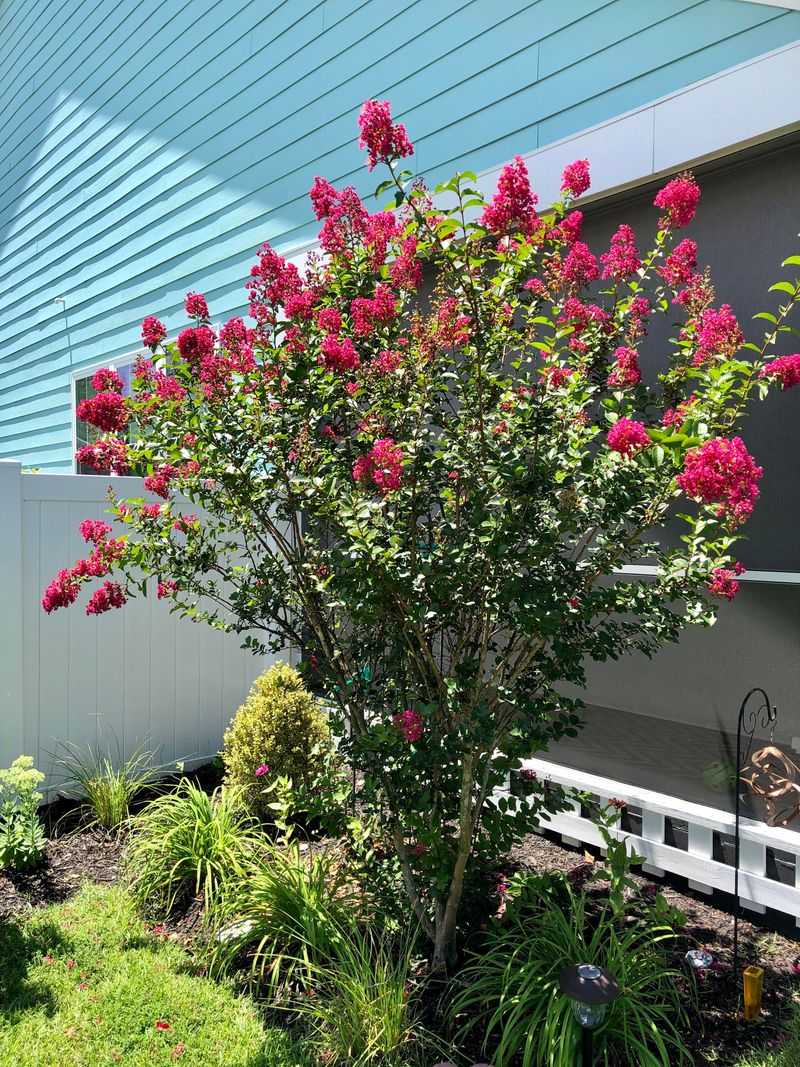
Planting crepe myrtles too close together is a problem that doesn’t become obvious until a few years in. Once the canopies start overlapping, competition for light, water, and nutrients picks up fast and bloom production is usually the first thing to drop.
Georgia gardeners often underestimate how large crepe myrtles get at maturity. A variety labeled as large can easily reach 20 to 30 feet tall and 15 to 20 feet wide.
Planting two of those six feet apart might look fine in year one, but by year five you’ve got a crowded mess where neither tree performs its best.
Spacing recommendations vary by variety, but a general rule is to give each tree room equal to at least its expected mature width.
For mid-size varieties common in Georgia landscapes, that usually means keeping trees 10 to 15 feet apart from center to center.
Along driveways and property lines where space is tight, choosing a naturally smaller or columnar variety makes more sense than cramming a large one in.
If trees are already planted too close and showing reduced blooms, thinning the canopies of each tree helps in the short term.
Removing some of the outward-reaching branches that are crossing into neighboring canopies reduces competition and lets more light reach each tree’s interior bud sites.
Long term, replacing overcrowded trees with better-suited varieties for the available space is often the cleanest solution.
Georgia nurseries carry a wide range of crepe myrtle sizes now, making it much easier to match the right tree to the right spot from the beginning.
6. Mulch Helps Soil Hold Moisture More Evenly
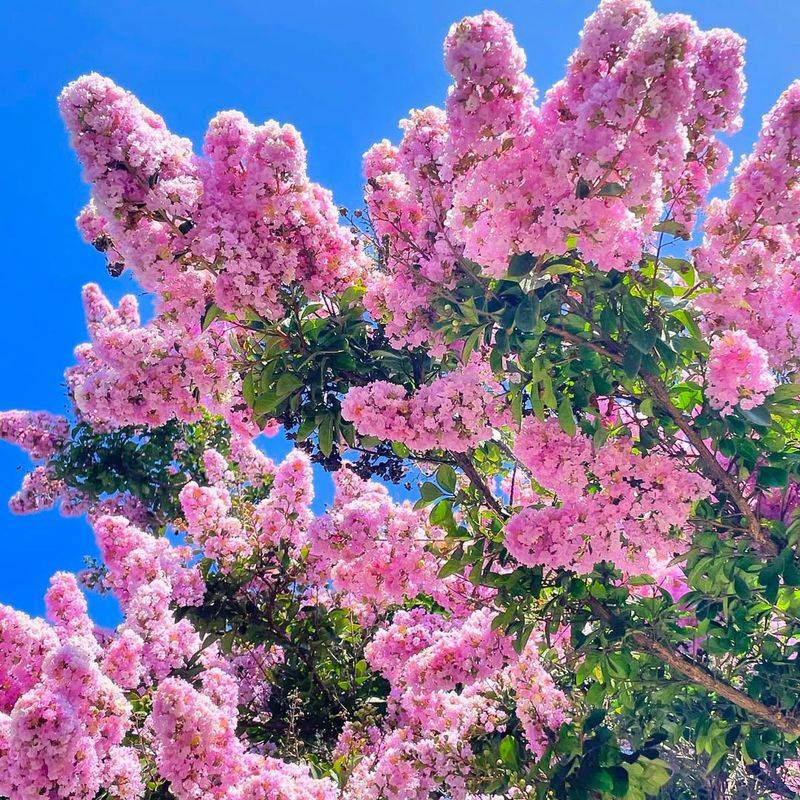
Bare soil around a crepe myrtle might not seem like a big deal, but it dries out fast under Georgia’s summer sun and that moisture loss directly affects how well the tree blooms.
Mulch is one of the simplest and most effective tools a Georgia gardener has for improving tree performance.
A two to three inch layer of organic mulch, like shredded hardwood bark or pine straw, holds moisture in the soil by slowing evaporation.
It also moderates soil temperature, keeping roots cooler during heat waves and warmer during late cold snaps in spring.
Both of those benefits directly support healthier root function and stronger bloom development.
Pine straw is especially popular in Georgia because it’s widely available, breaks down slowly, and stays in place reasonably well even during heavy summer rain.
Shredded hardwood mulch works well too and adds organic matter to the soil as it decomposes over time, which gradually improves soil structure.
Keep mulch pulled back a few inches from the trunk itself. Piling it directly against the bark traps moisture against the wood and creates conditions that invite fungal problems and bark damage over time.
A donut shape rather than a volcano shape is what you’re aiming for.
7. Removing Old Seed Heads Can Encourage Another Flush Of Flowers
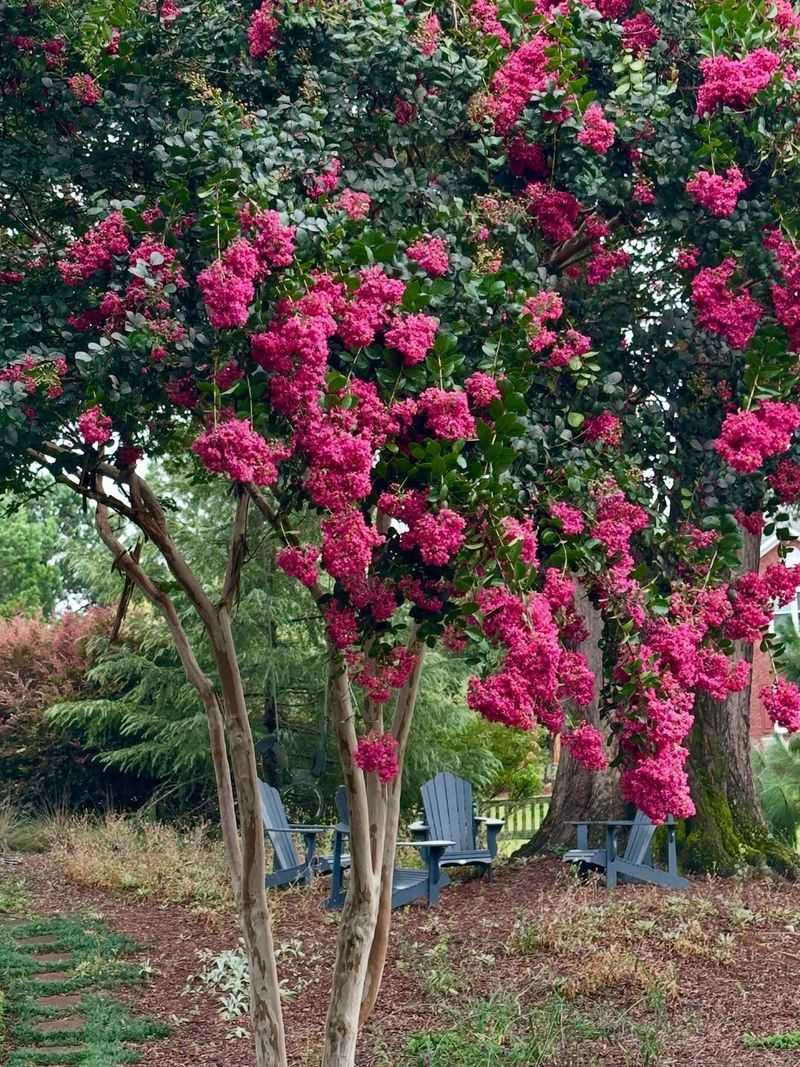
Most crepe myrtle owners in Georgia don’t realize that leaving spent flower clusters on the tree signals the plant to shift its energy toward seed production instead of pushing out new blooms.
Removing those old seed heads promptly changes that equation entirely.
After the first major bloom cycle fades, usually in mid to late July in Georgia, you’ll see the flower clusters turn brown and small round seed pods begin forming.
Snipping those off just below the seed head, right where the cluster connects to the branch tip, encourages the tree to redirect energy into producing a second or even third flush of flowers before fall.
You don’t need any special tools for this. A pair of clean hand pruners or even sharp scissors work fine for smaller branches.
On larger trees where the upper branches are out of reach, a pruning pole with a bypass head gets the job done without requiring a ladder.
Timing matters here. The sooner you remove the spent clusters after blooming ends, the more time the tree has to push out a new flush before Georgia’s cooler fall temperatures slow things down.
Waiting too long into August reduces the chance of getting a strong second bloom.