8 Native Florida Plants That Give Summer Shade With Less Mess Than A Live Oak
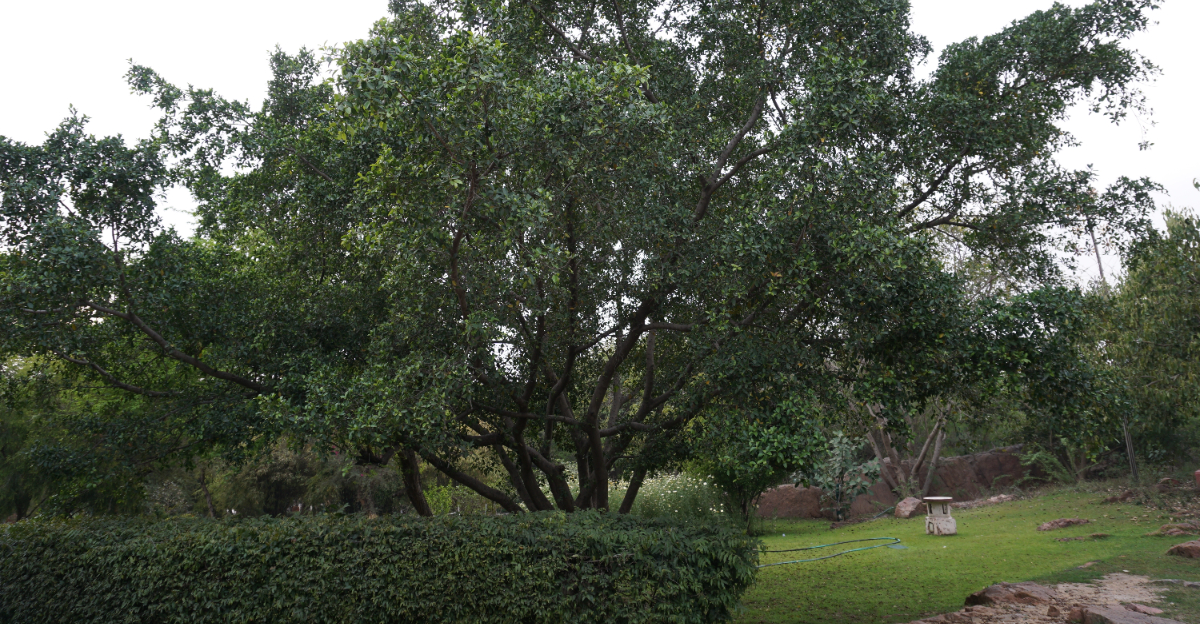
Live oaks are legends. Massive canopies, incredible wildlife value, centuries of character baked right into the bark.
Florida would not look the same without them. But legends come with baggage, and live oaks bring plenty of it.
Bags of acorns every fall, enormous leaf dumps in spring, surface roots that go to war with your sidewalk, and limbs that eventually call for a professional with a chainsaw. Not every yard is built for that kind of commitment.
Smaller lots, wet corners, patio edges, driveways, these spaces need shade that actually fits the property, not a tree that slowly takes it over.
Florida has a surprisingly strong bench of native plants that deliver real summer shade, manageable size, and cleanup you can handle on a Saturday morning.
No sacrificing your whole yard. No sacrificing your weekends either.
Every plant on this list drops something, because that is just how living things work. The difference is scale.
These give you shade that belongs in the climate and soil, with mess you can actually live with.
1. Cool Small Yards With Dahoon Holly
Yards with low spots, soggy corners, or rain garden edges often feel like a puzzle when you are looking for shade.
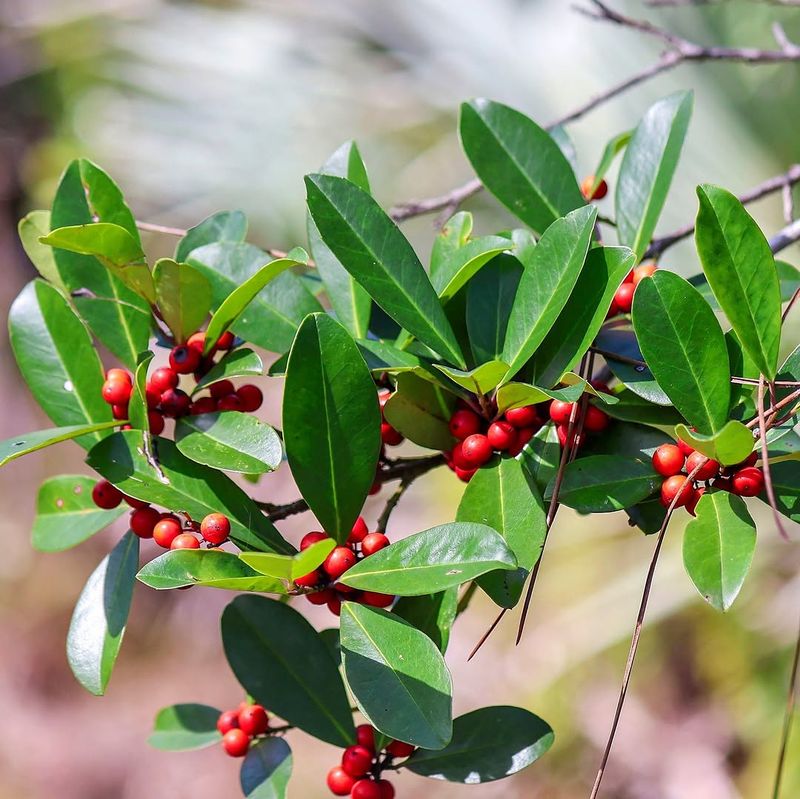
Dahoon holly fits that puzzle surprisingly well. Native throughout the state, from the Panhandle all the way down to Miami-Dade, it is one of the few native small trees that handles moist to wet soil better than many small trees.
Mature dahoon hollies typically reach 20 to 30 feet tall with a spread of 10 to 15 feet, making them a realistic fit for smaller residential lots.
The evergreen canopy provides moderate shade, not the deep block-out darkness of a large live oak. But it offers enough filtered coverage to cool a nearby seating area or driveway edge during brutal summer afternoons.
Female plants produce clusters of small red berries in fall and winter, which birds absolutely love. That wildlife bonus does come with some seasonal berry drop and the occasional seedling popping up nearby, so expect light cleanup under female trees.
Male plants provide no berries and less mess, but you need both nearby for berry production.
Dahoon holly prefers moist to wet, slightly acidic soil and does best in full sun to part shade. Once established in a suitable site, it is fairly low maintenance.
Avoid planting it in a dry, sandy, exposed corner without consistent irrigation during its first two growing seasons. Drought stress during establishment can set it back significantly.
2. Plant Red Maple Away From Patios
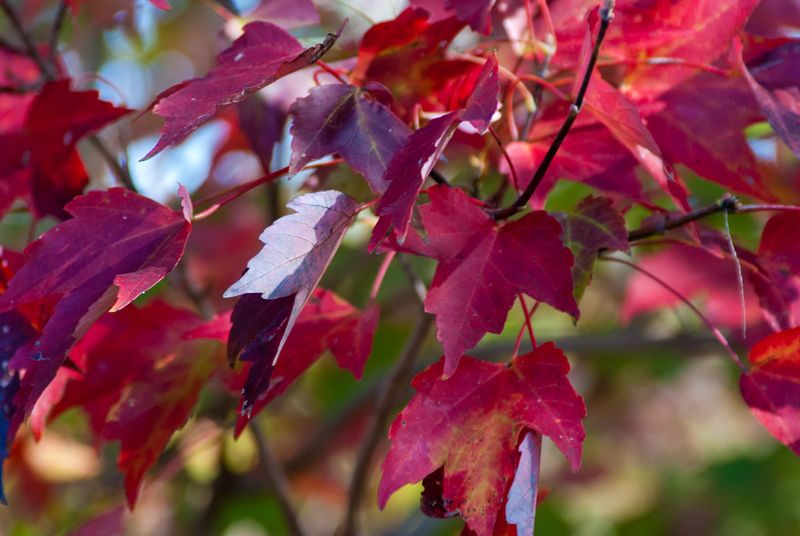
Few native trees match the visual payoff of a red maple leafing out in late winter or dropping seeds in spring, but placement matters more with this tree than almost any other on this list.
Red maple is native through much of the state and is a solid shade option for moist, acidic sites across northern and central parts of the state. In South Florida, it can work in limited situations where the soil and moisture conditions are right, but it is far less reliable there.
Your Florida Garden Changes Every Week. Your Plan Should Too.
Gardening in Florida changes quickly throughout the season. Every Friday you’ll receive a simple weekly plan showing exactly what to plant, prune, fertilize, harvest, and protect so you never miss the right timing.
Given enough space and the right site, red maple grows into a broad, rounded canopy that delivers real summer shade. The leaf cover is dense enough to cool a lawn area or side yard significantly.
However, red maple is a seasonal shedder. It drops seeds in spring, and the leaves fall in late fall or winter depending on the region, so it is not a zero-cleanup tree.
The reason to plant it away from patios and pool decks is practical: seeds and leaf litter on hard surfaces create extra sweeping, and surface roots can eventually push against nearby hardscape. A lawn or mulched bed setting gives the roots room to spread without conflict.
Red maple needs reliably moist, acidic, non-compacted soil. Hot, dry, alkaline, or salt-stressed sites will stress the tree quickly.
Check your soil pH before planting, and give it a generous mulched root zone from the start to hold moisture and protect the roots.
Do not plant it close to septic systems, patios, sidewalks, or foundations where shallow roots may become a problem.
3. Use Florida Elm For Rake-Friendly Shade
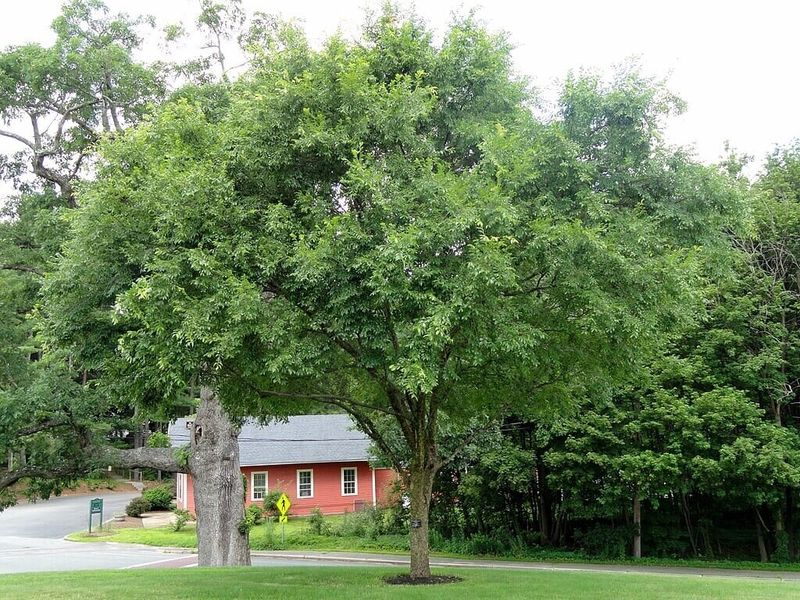
Anyone who has raked up a season’s worth of southern magnolia leaves knows that not all tree litter is created equal. Florida elm brings a completely different cleanup experience to the table.
Its leaves are small, thin, and break down quickly in a mulch bed or lawn, making seasonal leaf drop far less of a production than the heavy, slow-decomposing leaves of larger canopy trees.
Florida elm is native to northern and central parts of the state, with its natural range extending roughly south to the Lake Okeechobee area.
It should not be promoted as a true South Florida native shade tree, and gardeners in that region should look at the other options on this list instead.
In its appropriate range, Florida elm can grow into a medium to large tree reaching 40 to 60 feet tall with a broad, arching canopy that gives generous summer shade to a lawn or wide side yard.
The tradeoff is size. Florida elm is not a patio tree or a plant for a tight urban lot.
It needs room to spread, and planting it under power lines or within 15 feet of a foundation, pool, or sidewalk is a mistake you will regret later. It also still drops leaves and small seed clusters, so rake-friendly does not mean rake-free.
This tree prefers moist, well-drained soil and full sun. It is fairly drought-tolerant once established but performs best with consistent moisture during dry spells in its first two years after planting.
4. Try Hophornbeam For Tidy Filtered Shade
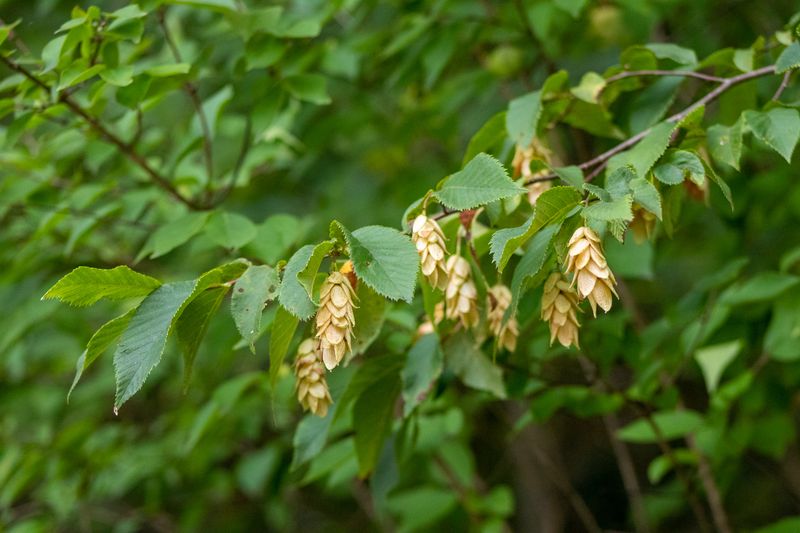
Not every shady spot calls for a big canopy tree. Sometimes a smaller, quieter tree that settles into a woodland edge and provides soft, filtered light is exactly what a yard needs.
Hophornbeam fills that role beautifully for the right region and the right site.
Hophornbeam is native to the state’s northern region and extends into parts of the central peninsula. It is not a native shade pick for the southern region, and pushing it into hot, dry, coastal, or tropical conditions where it does not naturally occur is a setup for struggle.
In northern region, it thrives as an understory tree in woodland gardens, naturalistic landscapes, and yards with some afternoon protection from the harshest summer sun.
Mature hophornbeam typically reaches 20 to 40 feet tall with a modest spread, making it a better fit for smaller yards than a large canopy tree. The shade it casts is light and dappled rather than dense, which suits patios where some sunlight filtering through is welcome.
It still drops leaves in fall and produces small papery seed clusters that add minor seasonal litter, but the overall mess is modest compared to heavy-litter trees.
Hophornbeam prefers well-drained, slightly acidic soil and does best in well-drained soil and can handle filtered shade; avoid chronically wet sites. Avoid planting it in compacted, waterlogged, or full-sun exposed sites without any afternoon relief.
Give it a wide mulched root zone and patience, because it establishes slowly but rewards you with quiet, lasting character.
5. Grow Simpson’s Stopper For Patio Edges
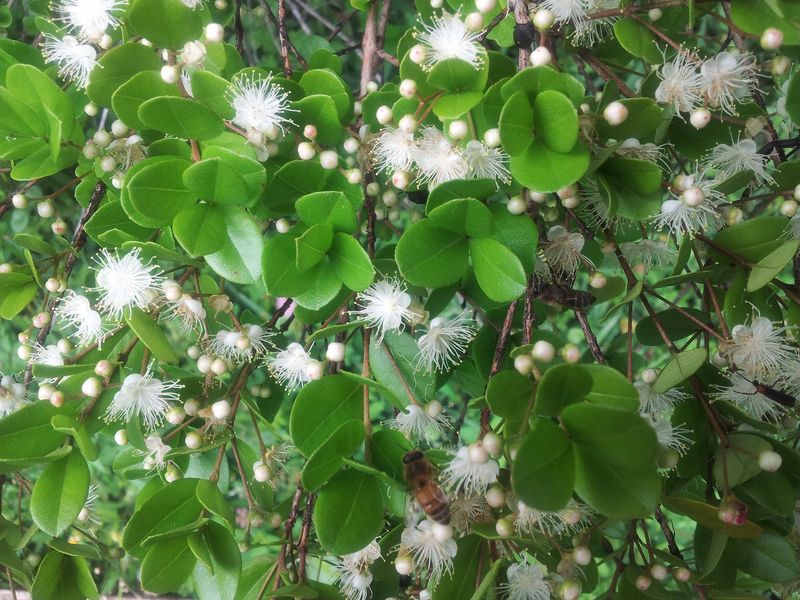
Patio edges in Central and South regions need plants that can handle heat, stay reasonably tidy, and provide structure without overwhelming a small space. Simpson’s stopper is one of the most practical native options for that specific job.
It grows as a large shrub or small tree, typically reaching 10 to 20 feet tall, and its dense, glossy evergreen foliage provides dappled shade and a soft visual screen year-round.
Simpson’s stopper is native but is not a statewide native in the broadest sense.
Its strongest native range covers coastal and inland sites in Central and South regions, and it can be used in some protected locations in the north. Still, cold snaps can damage it there.
Gardeners in the northern part of the state should treat it as a warm-site or protected-microclimate choice rather than a reliable landscape staple.
The small white flowers are fragrant and attract pollinators, and the orange-red berries that follow are a favorite with birds. Both the flowers and berries create light seasonal litter, so expect occasional sweeping near hard surfaces.
The berries are not heavy like acorns, but they do fall and can stain light-colored pavers if left sitting.
Simpson’s stopper prefers well-drained soil and handles dry conditions well once established. Soggy, poorly drained corners are a poor match.
Space it at least four to six feet from walls, fences, and air-conditioning units to allow for airflow and mature spread without crowding structures.
6. Choose Walter’s Viburnum For Light Shade
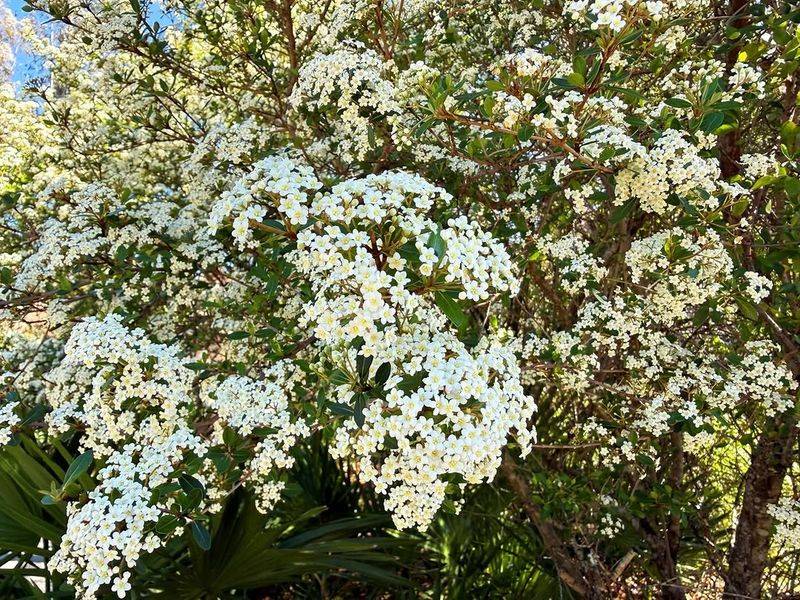
Sometimes the best shade solution for a tight yard is not a tree at all.
Walter’s viburnum grows as a large native shrub or small multi-stemmed tree. It can be shaped into a soft, arching canopy perfect for a patio edge, a property boundary, or a shaded walkway.
The light it filters through its canopy is gentle rather than heavy, which makes it a comfortable choice near seating areas where full blockout shade would feel too dark.
Walter’s viburnum is native or landscape-suitable across much of Florida. Local range and cultivar choice is worth checking before planting, making it one of the more broadly applicable plants on this list.
It performs reliably in North, Central, and suitable South sites depending on spacing, cultivar, and moisture availability.
Dwarf cultivars like ‘Densa’ work better for small spaces, while full-size forms can reach 15 feet or more and need room to spread without crowding nearby structures.
Clusters of small white flowers appear in late winter or early spring, followed by dark berries that birds feed on enthusiastically. Both the flowers and the berries create light seasonal litter, so the plant is not maintenance-free near hard surfaces.
Expect some sweeping or blowing during bloom and fruiting periods.
Walter’s viburnum tolerates a range of well-drained soils and handles heat well once established. Avoid planting a full-size form within five feet of walls, sidewalks, windows, or air-conditioning units.
Measure the mature spread of your specific cultivar before you dig the hole.
7. Use Marlberry In Warm Protected Spots
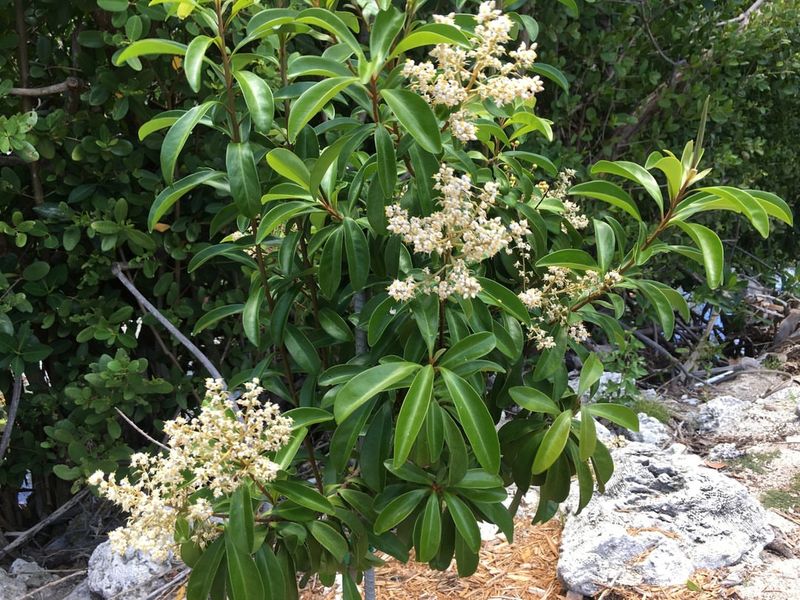
Warm, sheltered corners in central and southern yards often go underused. Homeowners are not sure what native plant can handle the combination of shade, humidity, and heat that builds up in those spots.
Marlberry is one of the better answers for exactly that situation.
It grows as an evergreen shrub or small tree, typically reaching 10 to 15 feet. Its dense glossy foliage provides solid evergreen structure and light shade in spots where full-sun plants would struggle.
Marlberry is native across much of the peninsula, beginning around Flagler, Pasco, and Polk counties and continuing south through the Keys.
It is a native choice for central and southern regions and should not be recommended for cold northern yards where winter temperatures regularly drop hard.
In its native range, it performs well in shaded to partly shaded protected sites and adapts to a range of well-drained soils.
Small fragrant white flowers appear in clusters and attract pollinators, followed by dark berries that birds and small wildlife consume readily. The flowers and berries add seasonal interest but also mean some light cleanup near patios or walkways during fruiting periods.
The berry drop is modest compared to large fruiting trees, but it is worth noting before planting marlberry directly over light-colored pavers.
Match marlberry to a protected microclimate with good drainage and some overhead or structural protection from cold fronts if you are near the northern edge of its range. Avoid exposing it to full harsh sun in open south region sites without afternoon shade relief.
8. Try Gumbo Limbo For Manageable South Florida Shade
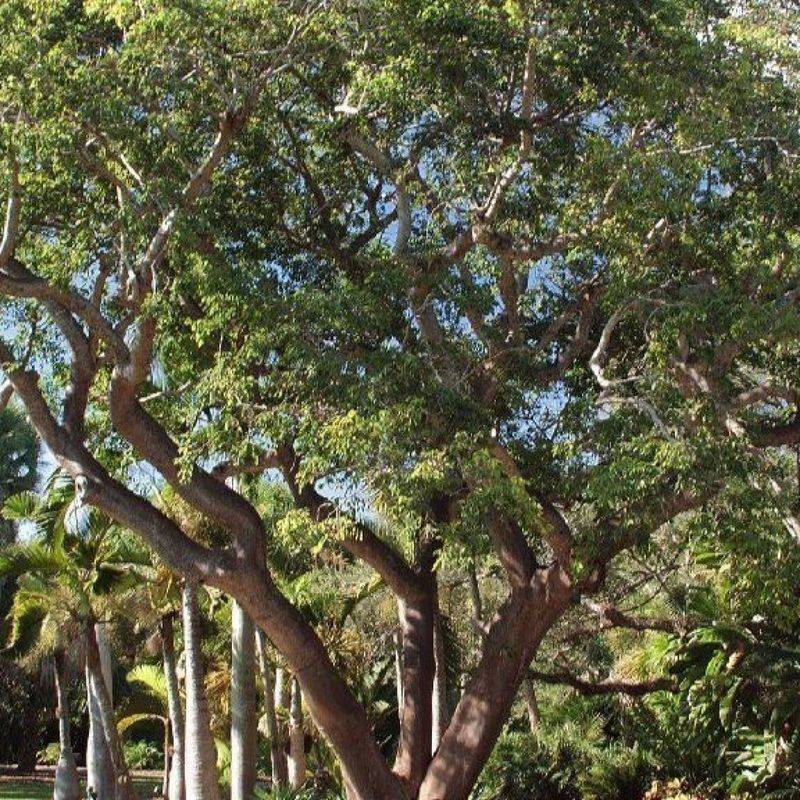
There is no tree in the southern region quite as visually distinctive as gumbo limbo. The peeling, copper-red bark earns it the nickname “tourist tree” because it always looks a little sunburned, and the broad tropical canopy it develops over time is genuinely impressive.
For homeowners who want real summer shade from a native tree with a lighter overall litter profile than a massive live oak, gumbo limbo deserves serious consideration.
Gumbo limbo is native to the southern peninsula and tropical offshore islands, including parts of Miami-Dade, Broward, Monroe, and nearby coastal areas. It is not suited to colder northern or interior regions, where winter freezes can damage or destroy it.
Push it too far beyond its natural range, and cold weather will eventually make the correction for you.
In the right region, a mature gumbo limbo can reach 40 to 60 feet tall with a wide, open canopy that shades a large area while still allowing some light to filter through.
It is not perfectly clean: it sheds leaves, drops small fruits, and occasionally loses bark pieces or small twigs, especially after wind events.
But the overall litter is generally lighter and more manageable than the acorn and leaf output of a comparable large live oak.
Gumbo limbo needs warm temperatures, well-drained soil, and room to grow. Avoid planting it where overhead power lines, rooflines, or tight fences will conflict with its eventual spread.
Check the mature canopy width before choosing a planting location near pools or driveways.