The Fire-Resistant California Groundcovers That Replace Bark Mulch Around Homes
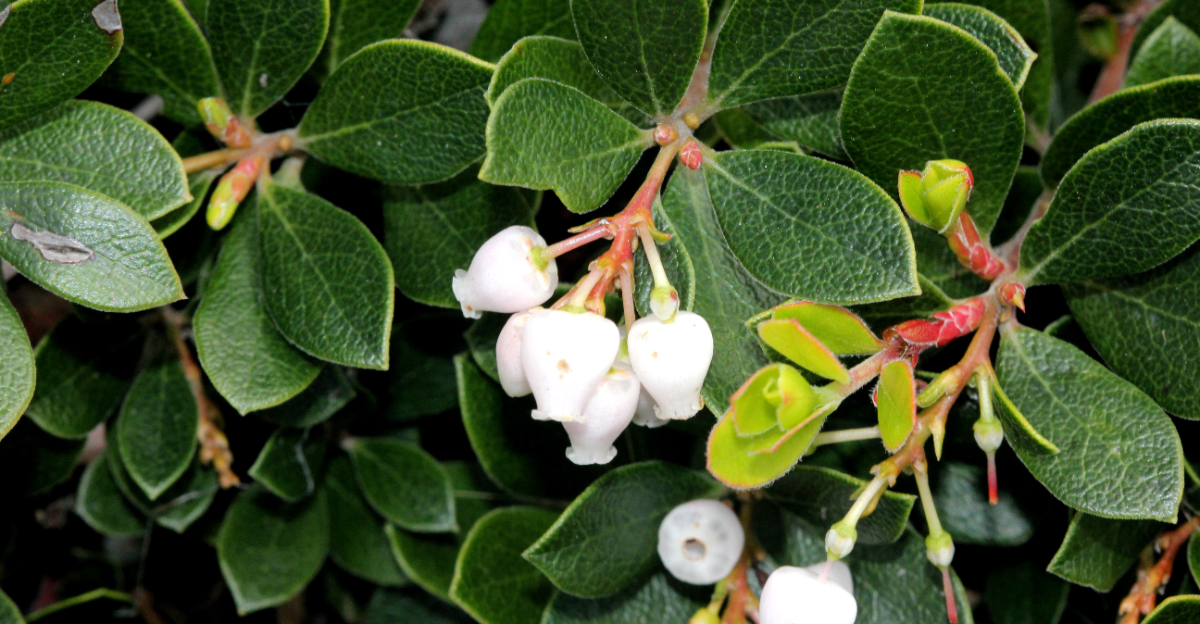
Bark mulch is one of those landscaping habits that feels harmless until fire season hits. It dries out fast, ignites easily, and sits right up against the structure it is supposed to be decorating.
For California homeowners in fire-prone areas, that is a real problem that a simple swap can fix.
Fire-resistant groundcovers offer everything bark mulch does visually while actually reducing the risk around your home instead of adding to it.
They stay low, fill in bare soil, and create a living barrier that does not feed a flame the way dried organic material does.
California has several excellent options that are drought-tolerant enough to survive the same conditions that make fire season dangerous in the first place.
The right groundcover pulls double duty by keeping your landscaping looking clean and putting something between your home and the worst that a dry California summer can throw at it.
1. Pigeon Point Coyote Brush
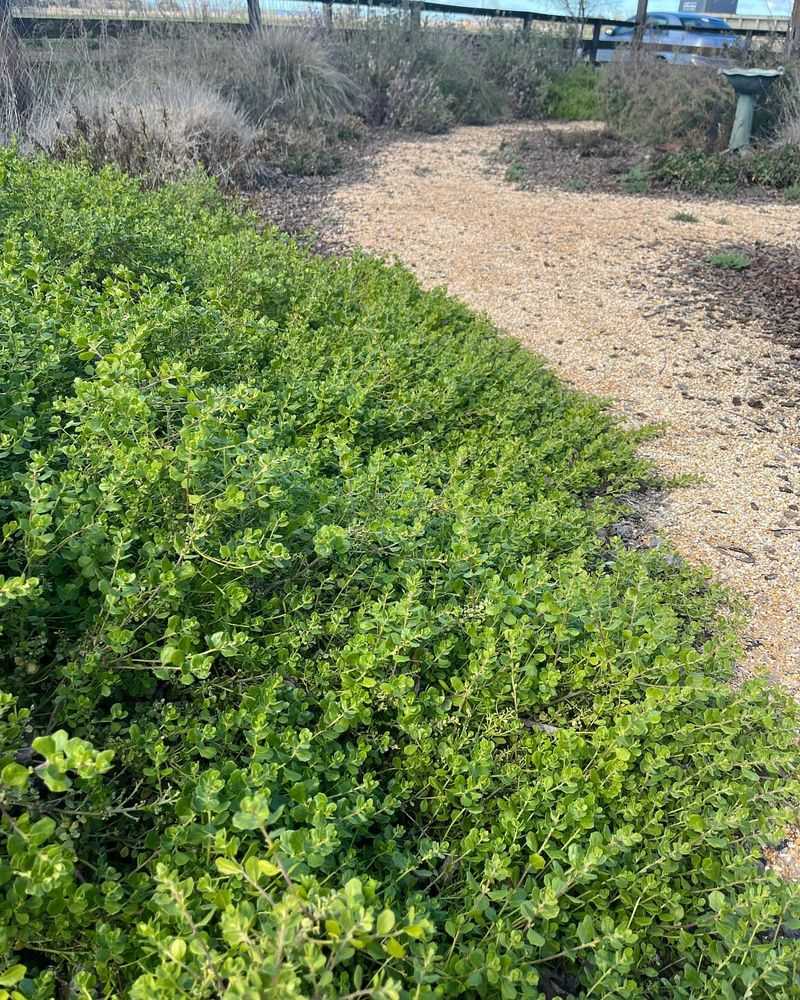
Few plants in California’s native landscape work as hard and ask for as little in return as Pigeon Point Coyote Brush. Named after the famous lighthouse on the San Mateo County coast, this tough little groundcover was practically built for the California climate.
It hugs the ground tightly, spreading out in a dense, weed-smothering mat that stays low enough to keep fire from climbing up toward your home’s walls or eaves.
What makes this plant a standout for fire safety is its high moisture content in the leaves, even during dry summer months. Fire needs dry fuel to spread fast, and Pigeon Point’s fleshy, resin-rich foliage simply does not cooperate.
It stays green and relatively moist through the hottest parts of the year when most other plants have turned brown and crispy.
Planting it is easy. It thrives in full sun and handles poor, rocky, or sandy soils without complaint.
Once established, it needs very little water, making it a perfect fit for California’s dry summers. Space plants about four to six feet apart and watch them fill in quickly to form a solid, attractive mat.
This groundcover also pulls double duty as wildlife habitat. Small birds and native insects love it.
It produces tiny white flowers in late summer that attract pollinators, adding a gentle seasonal charm to your defensible space planting. For homeowners who want serious fire protection without sacrificing a natural, California-native look, Pigeon Point Coyote Brush is an outstanding starting point.
2. Twinberry Honeysuckle
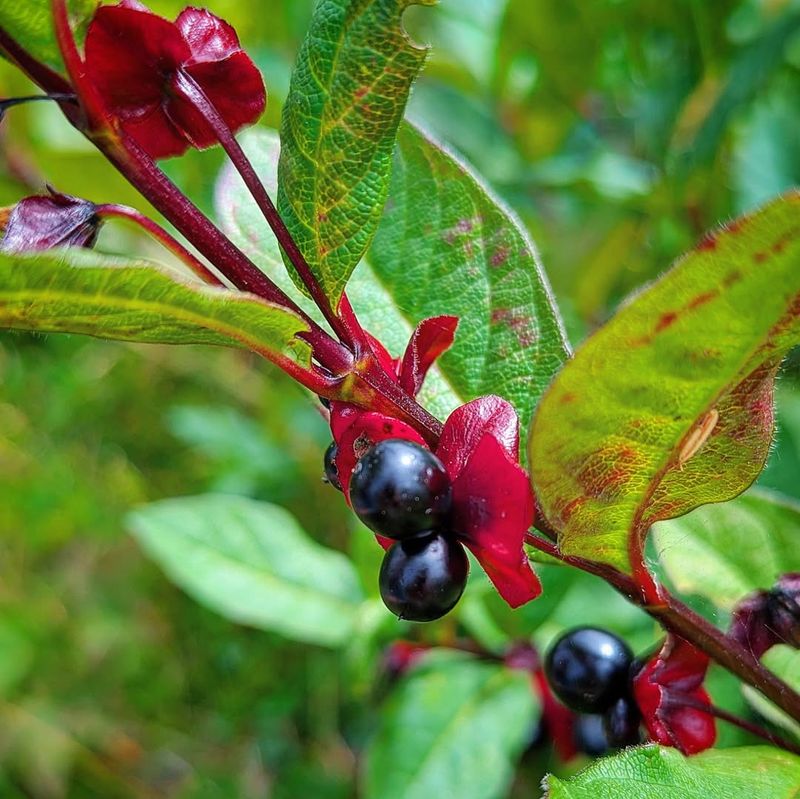
Not every fire-resistant plant looks rugged and utilitarian. Twinberry Honeysuckle brings real beauty to the defensible space around your home, with glossy green leaves, cheerful yellow tubular flowers, and shiny black berries that birds absolutely love.
It grows naturally along California’s coast and in moist woodland edges, but it adapts surprisingly well to home landscapes when given a little extra water during dry spells.
The reason it earns a spot on the fire-resistant list is its naturally high moisture content. The thick, glossy leaves hold water well, and the plant tends to stay lush and green even as summer heats up.
Your California Garden Changes Every Week. Your Plan Should Too.
Gardening in California changes quickly throughout the season. Every Friday you’ll receive a simple weekly plan showing exactly what to plant, prune, fertilize, harvest, and protect so you never miss the right timing.
That moisture creates a natural buffer against fast-moving embers and surface fires. It does not eliminate risk entirely, but it slows ignition significantly compared to dry bark mulch or dead organic material.
Twinberry grows best in partial shade to full sun and prefers soil that drains well but holds some moisture. It works especially well on the north or east side of a home where conditions are a bit cooler.
Planted along a fence line or the edge of a garden bed, it creates a lush, layered look that feels much more intentional than a pile of wood chips.
One fun detail gardeners love: the paired berries that give this plant its name sit inside two deep red bracts, almost like little red wings cradling each berry. Western Robins and other native birds flock to it in late summer.
It is both a fire safety tool and a living bird feeder rolled into one attractive package.
3. Carmel Creeper Ceanothus
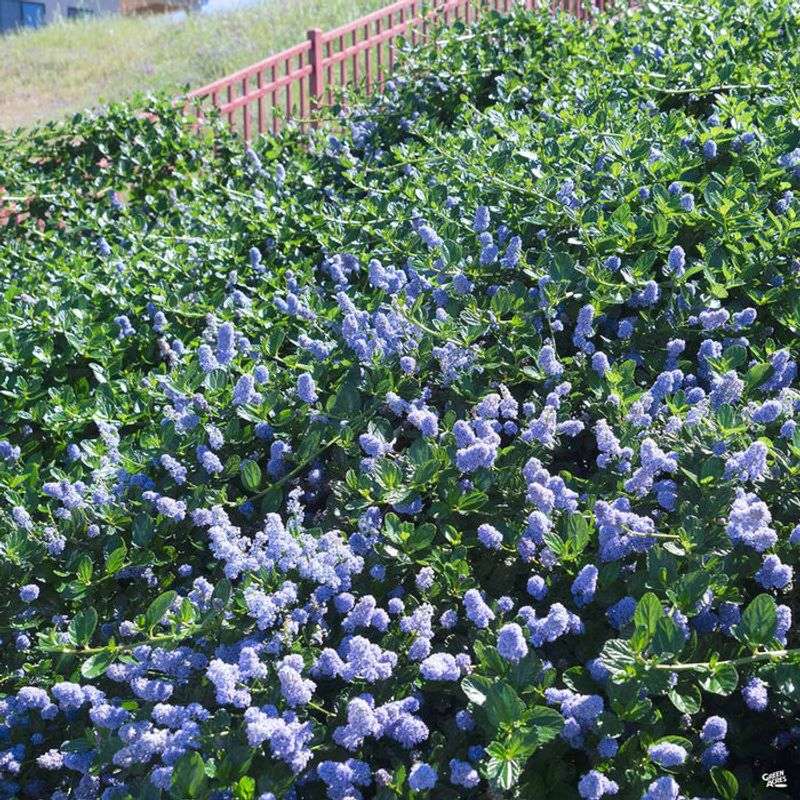
Spring in California gets a serious upgrade when Carmel Creeper Ceanothus bursts into bloom. The clusters of vivid blue-purple flowers cover the plant so thickly that you can barely see the dark green leaves underneath.
Bees go absolutely wild for it, and the display lasts for weeks. But beyond its showstopping looks, this plant has real credentials as a fire-resistant groundcover for the home landscape.
Carmel Creeper grows wide and low, typically staying under two feet tall while spreading six to ten feet across. That spreading habit is exactly what you want in a bark mulch replacement.
It covers ground quickly, suppresses weeds effectively, and creates a continuous living mat that does not dry out and blow around the way wood chips do. The leaves stay somewhat succulent and moisture-retentive, which slows ignition during fire weather.
Full sun and good drainage are the two things this plant needs most. It is extremely drought-tolerant once established, which is a huge plus for California homeowners trying to conserve water while still maintaining an attractive yard.
Avoid overwatering in summer, as that can actually cause root problems. Plant it and mostly leave it alone, and it will reward you generously.
Carmel Creeper is a cultivar of the native Carmel Ceanothus found along the Central California coast, so it fits naturally into local ecosystems. It supports native bees and butterflies while protecting your home.
Replacing bark mulch with this plant in the zone closest to your foundation is a smart, beautiful, and ecologically responsible choice that pays off season after season.
4. Creeping Sage
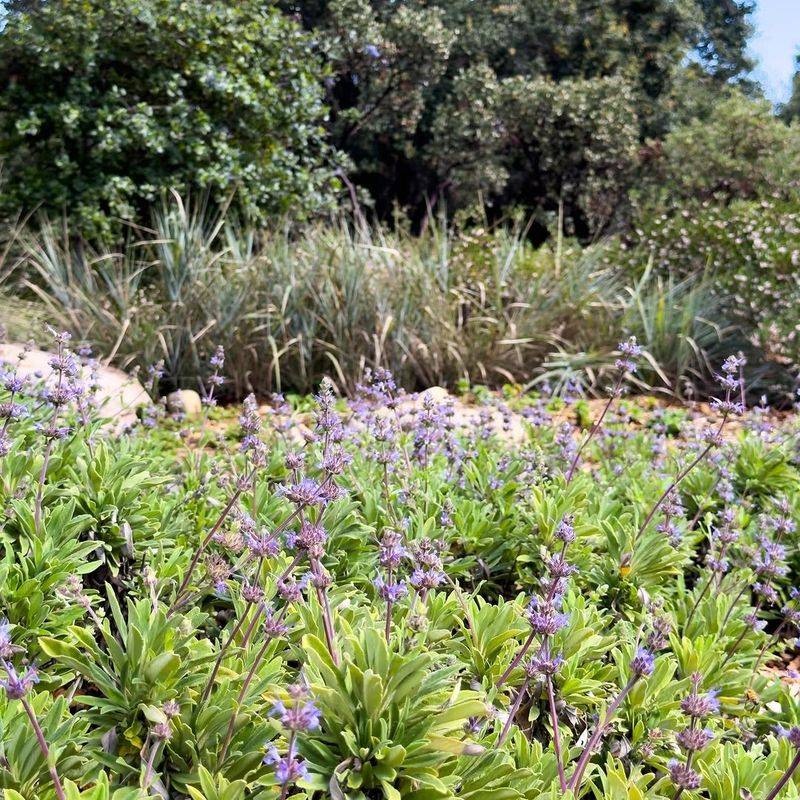
There is something almost magical about walking near a patch of Creeping Sage on a warm afternoon. Brush against it lightly and the air fills with a rich, herby fragrance that is unmistakably California.
Beyond its sensory appeal, Salvia sonomensis is one of the most practical and fire-resistant groundcovers available for home landscapes in the Golden State.
Native to the Sonoma and Napa County foothills, this low-growing sage spreads slowly but steadily into a dense, fragrant mat. It stays under one foot tall, making it ideal for planting close to foundations, along pathways, or in sunny slopes where bark mulch tends to slide downhill.
The aromatic oils in the leaves are interesting because while they give the plant its wonderful scent, they also raise a common question about fire safety. The key difference is that a healthy, well-watered Creeping Sage plant holds enough moisture to resist ignition far better than dry bark mulch or dead plant material.
For best results, plant it in full sun and well-drained soil. Once it gets established after the first growing season, it barely needs any supplemental irrigation.
In fact, too much summer water can cause it to decline. It is genuinely low-maintenance in the right conditions, which is a major bonus for busy homeowners.
The small lavender-blue flowers that appear in late spring attract native bees and hummingbirds. Creeping Sage also works beautifully as a transition plant between a lawn area and a more naturalistic native garden bed.
It softens edges while doing serious work as a fire-resistant layer around your home.
5. Point Reyes Manzanita
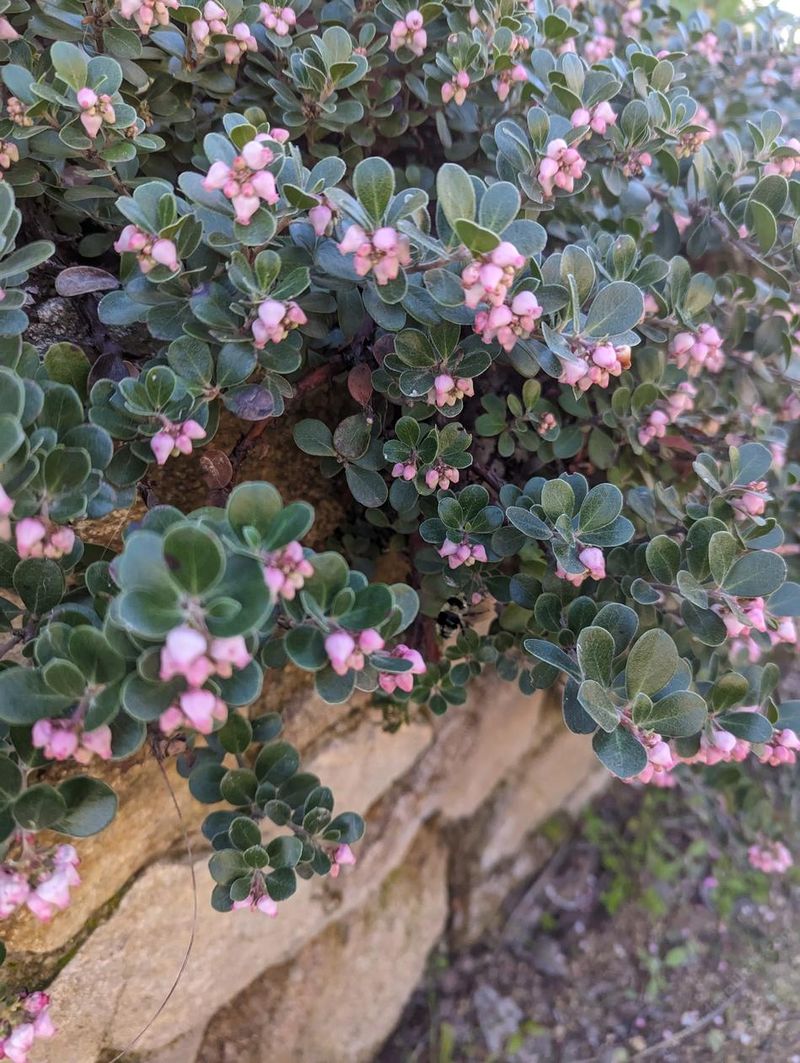
Named after one of California’s most beloved coastal parks, Point Reyes Manzanita is a groundcover with serious staying power. This low-growing form of bearberry manzanita has been used in California fire-safe landscaping for decades, and it consistently earns high marks from both landscape designers and fire safety professionals.
It is tough, beautiful, and genuinely resistant to ignition when kept healthy and properly irrigated.
The plant grows in a tight, dense mat that rarely exceeds six inches in height. The small, dark green, glossy leaves are thick and slightly waxy, which helps them retain moisture during dry periods.
That moisture retention is what makes it such a reliable fire buffer. Embers that land on healthy manzanita groundcover are far less likely to ignite than embers that fall onto dry bark or straw mulch.
Point Reyes Manzanita thrives in full sun to light shade and prefers well-drained, slightly acidic soil. It handles coastal conditions beautifully, tolerating wind, salt spray, and fog with ease.
Inland gardeners can grow it successfully too, especially with occasional deep watering during the hottest months. Once established, it is remarkably self-sufficient.
In late winter and early spring, the plant produces clusters of tiny pink and white bell-shaped flowers that look almost like miniature lanterns. These are followed by small red berries that wildlife, particularly birds and small mammals, enjoy throughout the warmer months.
Planting Point Reyes Manzanita around the perimeter of your home creates a living, breathing fire barrier that also supports local biodiversity in a genuinely meaningful way.
6. Emerald Carpet Manzanita
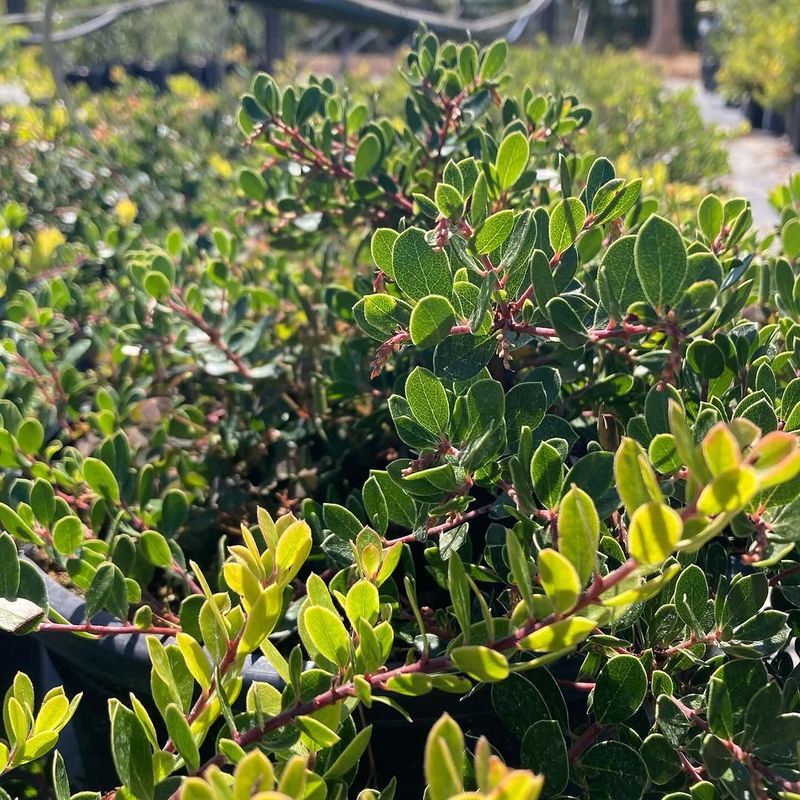
If you have ever seen a perfectly maintained patch of Emerald Carpet Manzanita, you already know why landscape designers reach for it again and again. The color is striking, a rich, almost jewel-like green that stays vivid through summer heat and winter chill alike.
It looks like someone rolled out a carpet of polished jade across the garden floor, and it performs just as reliably as it looks.
This hybrid manzanita was developed specifically for garden use and has become one of the most popular fire-resistant groundcovers in California. It grows to about one foot tall and spreads six to eight feet wide, forming a dense, weed-suppressing layer that replaces bark mulch effectively in both look and function.
The thick, leathery leaves hold moisture well, giving the plant real resistance to surface fire spread.
Full sun is where Emerald Carpet performs best, though it tolerates light shade in hotter inland areas. Drainage is critical.
Plant it in well-drained soil and avoid letting water pool around the roots. During the first year, water it regularly to get roots established.
After that, occasional deep watering during summer dry spells is usually all it needs to stay healthy and lush.
One thing that surprises many homeowners is how easy this plant is to maintain. It rarely needs pruning, does not attract many pests, and holds its shape naturally.
Small pink flowers appear in late winter, adding a soft seasonal touch before the summer heat arrives. For the zone immediately surrounding your home, Emerald Carpet Manzanita is one of the most dependable choices available anywhere in California.
7. Cape Blanco Stonecrop
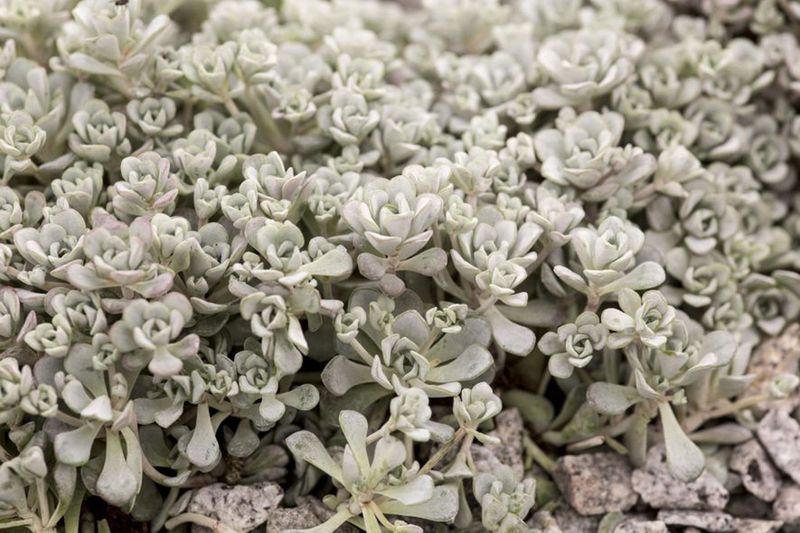
Sometimes the most effective fire-resistant plants are also the most visually striking. Cape Blanco Stonecrop is a perfect example.
The rosettes of powdery silver-white leaves look almost frosted, as if someone dusted the garden with fine chalk. It forms a tight, jewel-like mat that barely reaches three inches tall, making it one of the lowest-growing groundcovers on this entire list.
As a succulent, Cape Blanco stores water directly in its thick, fleshy leaves. That stored moisture is exactly what makes succulents so valuable in fire-prone landscapes.
When an ember lands on a healthy Stonecrop mat, it encounters a plant that is essentially full of water. Ignition becomes much harder, and the plant acts as a natural speed bump for surface fire spread.
This native Sedum grows wild along the Oregon and Northern California coast, so it is well-adapted to cool, foggy conditions. Inland gardeners can grow it successfully in full sun with excellent drainage and minimal summer water.
It actually prefers lean, gritty soil over rich garden soil, which makes it an ideal choice for rocky slopes or gravel pathways where nothing else wants to grow.
Bright yellow star-shaped flowers appear in late spring, creating a cheerful contrast against the silvery foliage. The plant spreads slowly by offsets, gradually filling in gaps to create a seamless, low-maintenance mat.
For homeowners who want something genuinely unique-looking that also offers real fire protection, Cape Blanco Stonecrop is a conversation-starting choice that earns its place in any California defensible space garden plan.