Forget Mulch, These Native Illinois Plants Look Better, Work Harder, And Come Back Every Year
Every spring, somewhere in Illinois, a homeowner loads up their car with bags of wood chips.
They spend a Saturday hunched over flower beds.
The yard ends up looking… fine.
Mulch does its job.
Nobody is arguing with mulch.
But native plants?
They show up on their own.
Pollinators flock to them.
Weeds don’t stand a chance.
And your yard suddenly looks like you actually have a plan, because now you do.
These Illinois-native perennials and sedges can cover soil, fill beds, and reduce the need for repeat mulching.
They were growing here long before anyone invented landscaping trends.
They come back every year, spread on their own terms, and look genuinely good doing it.
If you have been maintaining the same mulched beds for years and quietly wondering if there is a better way, there is.
These eight plants are proof.
1. Pennsylvania Sedge (Carex Pennsylvanica)
Mulch had a good run.
It really did, but Pennsylvania Sedge is here to make you question everything.
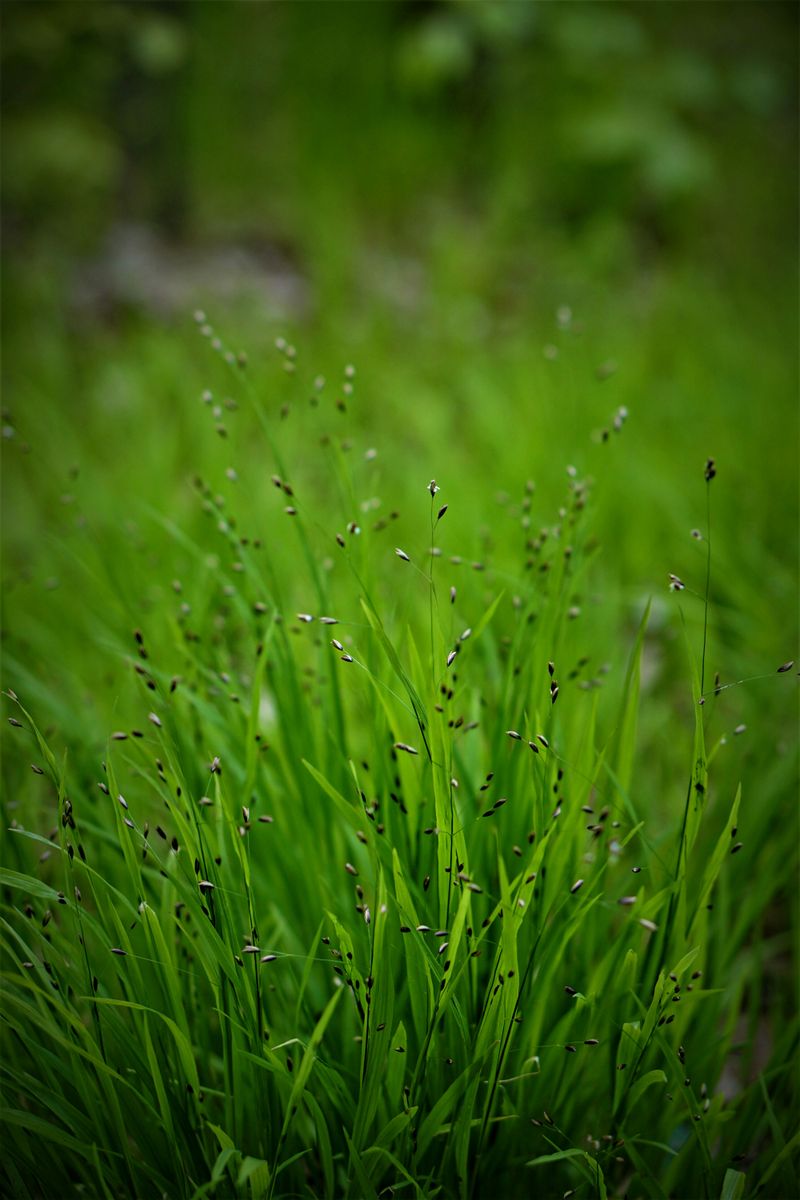
Pennsylvania Sedge is the quiet overachiever of the native plant world.
It spreads slowly into a soft, fine-textured carpet.
The result looks like someone manicured it, without ever picking up a mower.
This low-growing sedge thrives in dry to medium shade.
That makes it perfect for those frustrating spots under big trees where nothing else seems to grow.
It stays green through most of the year, even tolerating light foot traffic better than most ground covers its size.
Once established, it needs almost zero watering or fertilizing.
Pennsylvania Sedge has become a go-to choice for shaded areas where traditional turf struggles to survive.
It crowds out weeds naturally as it spreads, cutting your maintenance time dramatically.
You plant it once, and it rewards you for years without demanding much in return.
Pair it with Wild Ginger or Woodland Phlox for a layered look that feels lush and intentional.
Spring is the best time to plant, though fall works well too.
And unlike mulch, which fades, washes away, and needs replacing every single year, Pennsylvania Sedge just keeps going.
Give it one good season to settle in, and you will wonder why you ever bothered with mulch at all.
2. Palm Sedge (Carex Muskingumensis)
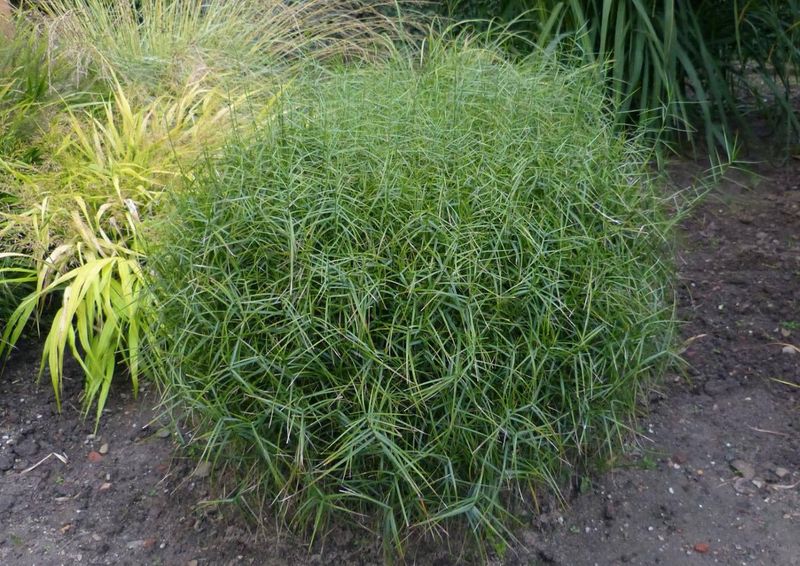
Picture a plant that looks like it belongs in a tropical garden but survives Illinois winters without breaking a sweat.
Palm Sedge gets its name from the way its leaves radiate outward from the stem tips, almost like tiny palm trees stacked along each stalk.
It is one of the most visually striking native sedges you can grow in the Midwest.
This one loves moisture, so plant it near rain gardens, low spots, or areas that stay consistently damp.
It grows two to three feet tall, making it a fantastic mid-layer plant between shorter ground covers and taller shrubs.
The bright green color holds well into fall, giving your garden a fresh look long after other plants have faded.
What makes Palm Sedge especially useful is how little attention it demands once it is in the ground.
Your Illinois Garden Changes Every Week. Your Plan Should Too.
Gardening in Illinois changes quickly throughout the season. Every Friday you’ll receive a simple weekly plan showing exactly what to plant, prune, fertilize, harvest, and protect so you never miss the right timing.
No deadheading, no staking, no fussing.
It simply does its job season after season, looking good the entire time.
For gardeners who want structure and texture without committing to high-maintenance plants, that kind of reliability is genuinely hard to find.
Palm Sedge spreads gradually through rhizomes, filling in gaps without becoming aggressive or invasive.
It handles both sun and partial shade, which gives you flexibility in placement.
Divide clumps every few years to keep them vigorous and share extras with neighbors.
Palm Sedge delivers bold texture, zero drama, and absolutely no apologies.
3. Gray Sedge (Carex Grayii)
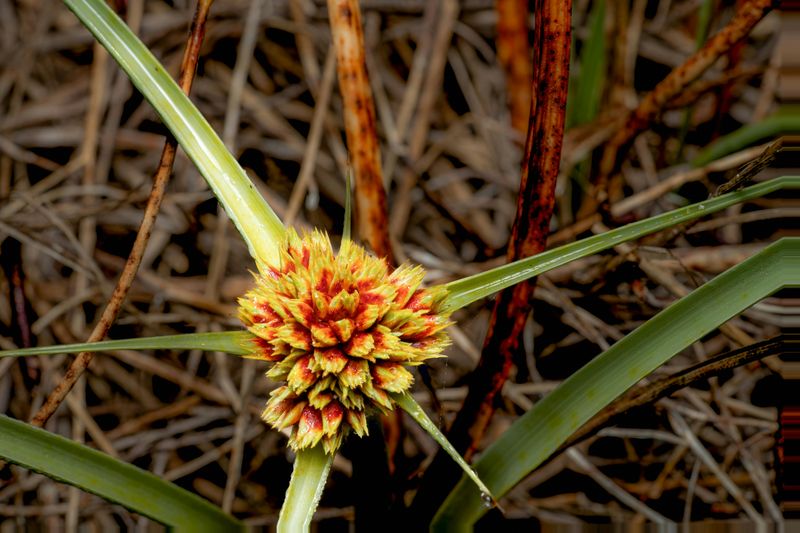
The seed heads on Gray Sedge look like something out of a science fiction movie.
They form spiky, star-shaped clusters that turn heads in any garden and make incredible additions to dried flower arrangements.
Most people do not even realize it is a sedge until they look closely.
Native to floodplains and moist woodlands across the eastern United States, Gray Sedge thrives in wet to medium soils and partial to full shade.
It grows about two feet tall and spreads into attractive clumps over time.
The unusual seed heads appear in summer and persist well into fall, giving you months of visual interest.
Wildlife benefits too.
Songbirds snack on the seeds, and the dense foliage provides cover for small ground-dwelling creatures.
It pairs beautifully with ferns, Wild Ginger, and other shade lovers for a woodland garden feel that looks designed rather than accidental.
Gray Sedge is also surprisingly tolerant of periodic flooding.
That makes it a smart pick for rain garden edges or low-lying yard areas that collect water after heavy rains.
Plant it in groups of three or five for the most natural effect.
Those clustered plantings fill in faster and create a more cohesive look than single plants scattered across a bed.
Once the clumps start merging, the effect is genuinely impressive, a living carpet that mulch could never replicate.
Low effort, high reward, and interesting enough to make you forget mulch was ever an option.
4. Common Wood Sedge (Carex Blanda)
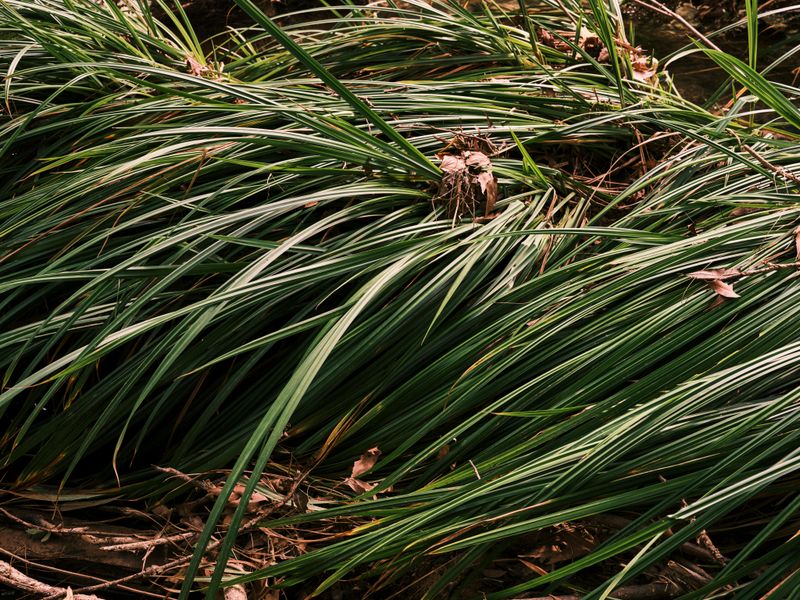
If your yard has a shady corner that feels like it gave up, Common Wood Sedge has other plans for it.
Soft, arching blades cascade gently outward from each clump.
The result is a relaxed, flowing texture that looks like nature arranged it on purpose.
It is the kind of plant that makes a garden feel settled and established, even when it is only a year or two old.
Common Wood Sedge handles deep shade better than almost any other native sedge, making it ideal for the darkest corners of your yard.
It grows in dry to moist conditions and adapts well to the kind of compacted soil found under mature trees.
Once it takes hold, it spreads steadily and suppresses weeds without any help from you.
Ecologically, it supports native bees and provides valuable habitat for several butterfly species throughout the season.
That means planting it does double duty: you get a gorgeous ground cover and a boost to local pollinator populations at the same time.
Height stays modest at around one to two feet, so it layers nicely beneath taller woodland plants.
If you have been mulching the same shady corner for years and getting nowhere, Common Wood Sedge is your answer.
Plant it once, and let it take over, in the best possible way.
5. Wild Ginger (Asarum Canadense)
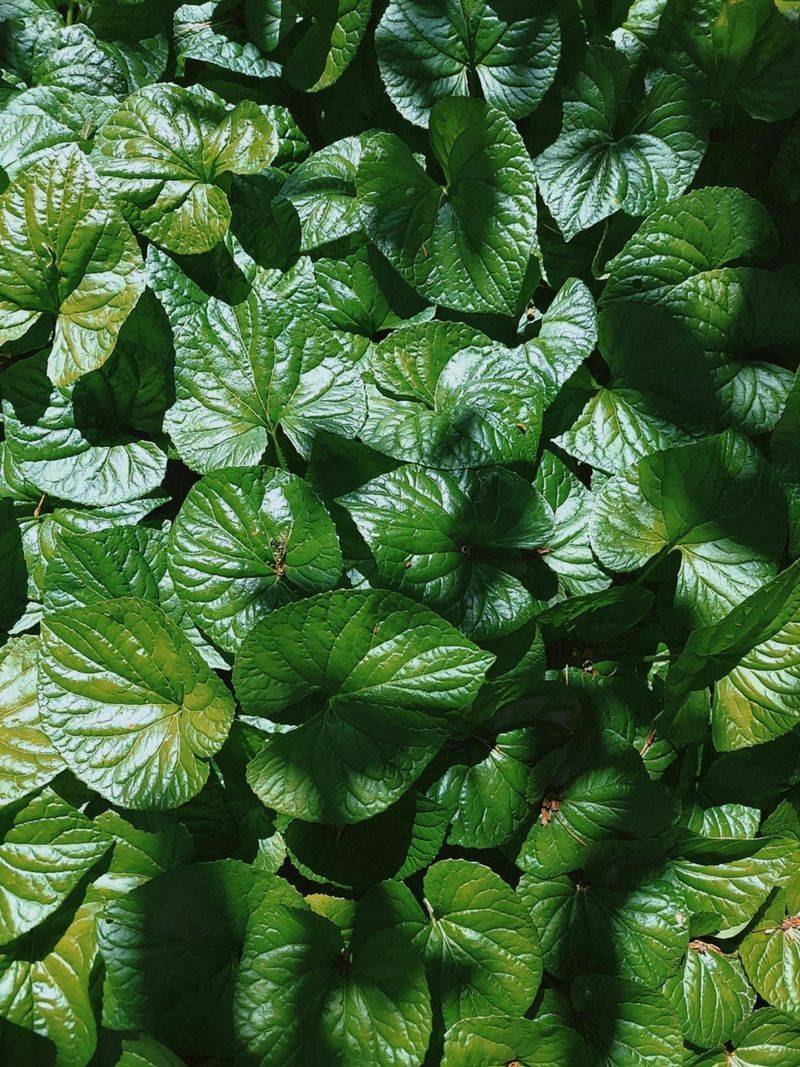
Hidden just beneath those big, heart-shaped leaves is one of the quirkiest flowers in the native plant world.
Wild Ginger produces small, reddish-brown blooms at ground level in early spring.
They sit so low to the ground that you almost have to kneel down to spot them.
Ant colonies actually spread the seeds.
It is one of the most fascinating examples of plant-insect teamwork in the forest.
As a ground cover, Wild Ginger is nearly unbeatable in deep shade.
The broad leaves form a dense, weed-smothering mat that stays lush and green all season long.
It spreads slowly but steadily, eventually covering large areas with a carpet of rich greenery that looks intentional and polished.
The leaves carry a spicy ginger scent when crushed, which is a fun detail to share with curious visitors.
It is not related to culinary ginger, but the fragrance is undeniably similar.
Wild Ginger prefers moist, rich soil and does best in partial to full shade, exactly the conditions found under most mature shade trees.
That makes it one of the few ground covers that genuinely thrives where others give up.
Once planted in a shady spot with decent woodland soil, it asks for very little.
Pair it with ferns or Pennsylvania Sedge for a layered woodland effect.
For Illinois gardeners tired of fighting bare soil under trees, Wild Ginger does not just solve the problem.
It transforms it into something worth showing off.
6. Golden Alexanders (Zizia Aurea)
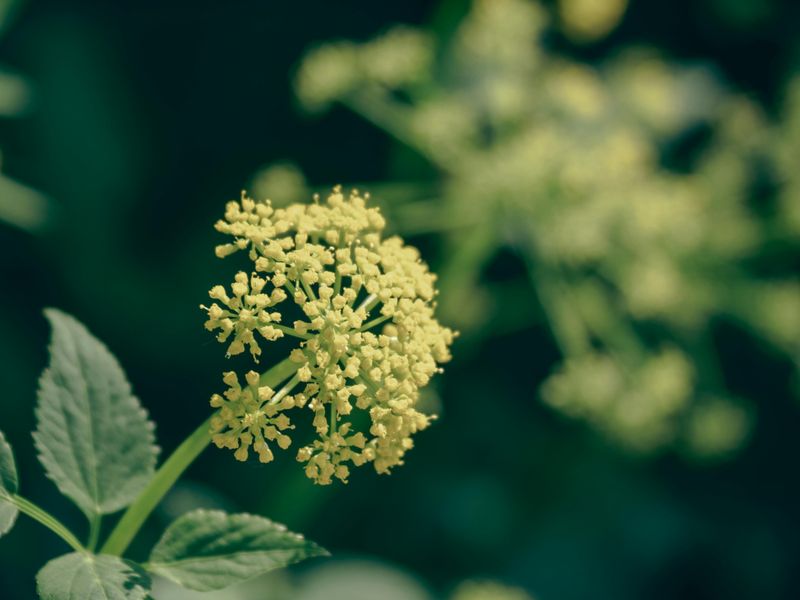
Few things signal the end of a long Illinois winter quite like Golden Alexanders bursting into bright yellow bloom.
It blooms when most other plants are barely waking up.
That fills the awkward gap between late winter and the main growing season with genuine color and energy.
Early pollinators, especially native bees and early butterflies, absolutely flock to it.
Golden Alexanders grows two to three feet tall.
It handles a surprisingly wide range of conditions, from full sun to partial shade.
Average soil or consistently wet areas, it adapts to both.
That kind of flexibility is rare in a native perennial.
It makes Golden Alexanders a go-to choice for rain gardens, prairie edges, and mixed borders alike.
The foliage stays attractive after blooming, adding structure to the garden through summer and fall.
Where most plants peak and then quietly disappear, Golden Alexanders holds its shape.
It keeps the bed looking intentional well into the cooler months.
Black Swallowtail butterfly caterpillars use Golden Alexanders as a host plant.
If you look closely in midsummer, you may spot yellow-and-black striped larvae munching the leaves.
Rather than a problem, that is a sign your garden is working the way a healthy ecosystem should.
This plant is native to Illinois and widely available at native plant nurseries across the state.
Building a pollinator garden from scratch?
Put Golden Alexanders at the top of your list.
Full stop.
7. Woodland Phlox (Phlox Divaricata)
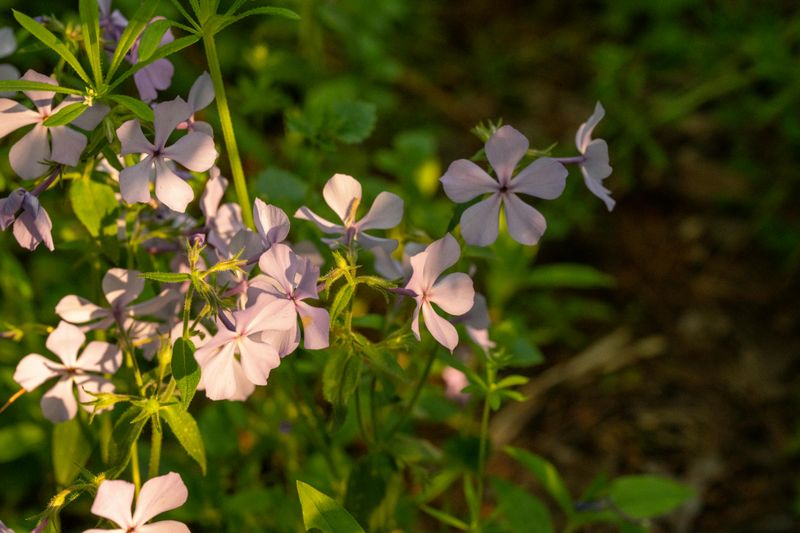
If you have never stumbled onto a patch of Woodland Phlox in full bloom, you are missing one of spring’s best-kept secrets.
The soft lavender-blue flowers cover the plant so completely in spring that you can barely see the leaves beneath them.
Few native plants deliver this kind of visual payoff with so little effort on your part.
Woodland Phlox thrives in partial to full shade and prefers moist, well-drained soil rich in organic matter.
It grows about a foot tall and spreads gently into loose colonies over time, never becoming aggressive or crowding out neighbors.
The blooms arrive in April and May, right when the garden needs color most.
They carry a light, sweet fragrance that makes being outside even more enjoyable.
Sphinx moths and other pollinators visit the flowers regularly, drawn in by both the color and the scent.
After blooming, the foliage stays semi-evergreen in milder Illinois winters.
That gives you something green to look at even in the off-season.
Pair Woodland Phlox with Wild Ginger beneath trees for a combination that looks professionally designed.
It costs almost nothing to maintain and requires even less to keep looking good year after year.
For gardeners who want spring color in shaded spots, Woodland Phlox is one of the most reliable native choices available.
And in spots where most flowering plants struggle, it does not just survive, it thrives.
8. Mayapple (Podophyllum Peltatum)
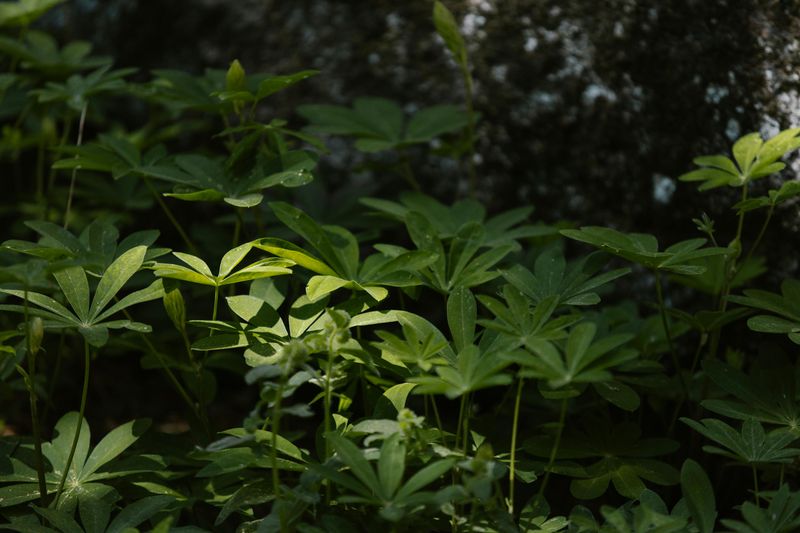
Nothing in the native plant world looks quite like Mayapple.
Each plant sends up one or two large, umbrella-shaped leaves that can span nearly a foot across.
The result is a lush, almost prehistoric-looking canopy at knee height.
In May, a single white flower blooms shyly beneath the leaves, hidden from view unless you lift the canopy to peek underneath.
Mayapple spreads through underground rhizomes.
Over time, it forms large, impressive colonies that completely shade out weeds beneath them.
It goes dormant by midsummer, which can surprise first-time growers.
But that early-season coverage is so effective at suppressing unwanted growth that the temporary gap is easy to plan around.
Plant summer-blooming natives nearby to fill in once Mayapple steps back.
It is a simple trick that keeps the bed looking full and intentional all season long.
The small yellow fruit that follows the flower is technically edible when fully ripe.
Every other part of the plant is toxic, so admire it more than you taste it.
Woodland creatures like box turtles and raccoons eat the ripe fruit and spread the seeds naturally.
Mayapple prefers moist, rich soil and partial to full shade, conditions common under mature hardwood trees across the state.
Mayapple is a bold, beautiful anchor plant that earns its space every single spring.
Mayapple is a bold early-season choice for shady native gardens.