Native Ohio Plant Combos To Start In May For Pollinators, Privacy, And Color
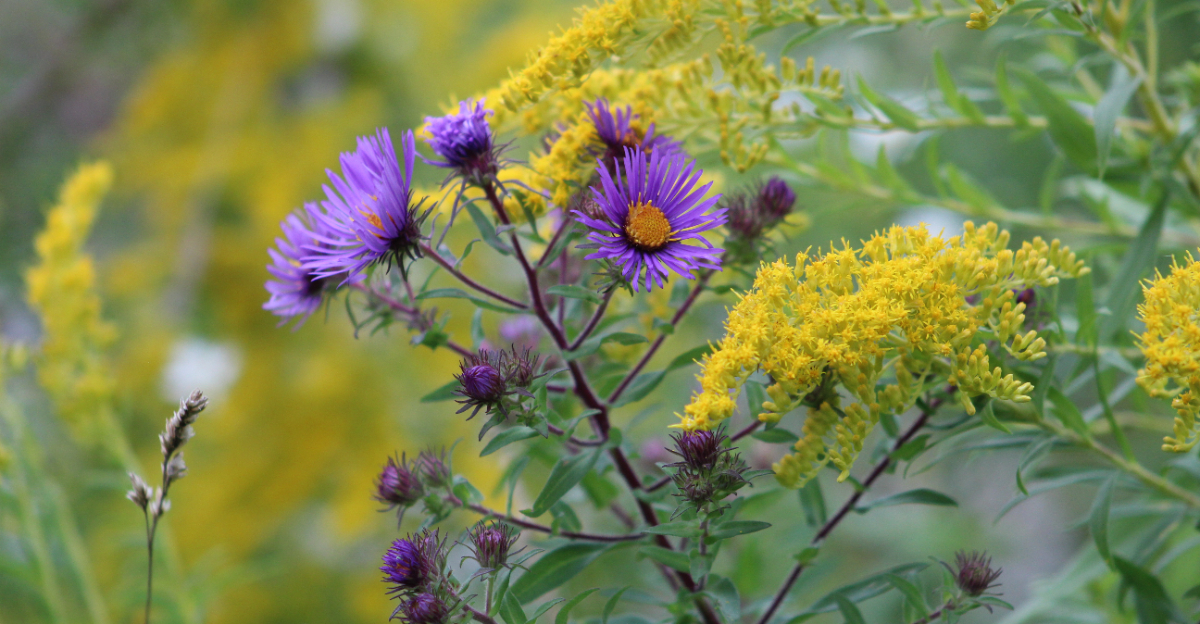
May is when an Ohio garden starts asking real questions. Do you want more butterflies, or just more mulch?
Do you want privacy that feels alive, or another fence panel staring back at you? Do you want color that actually belongs here, or plants that spend all summer acting offended by the weather?
Native Ohio plant combos make those choices easier. Pair the right flowers, grasses, shrubs, and vines now, and you can build a garden that does more than look nice for a few weeks.
It can feed pollinators, soften views, handle local conditions, and bring the kind of layered beauty that feels natural instead of forced. The trick is knowing which plants work well together before the season gets away from you.
1. Serviceberry And Wild Columbine Bring Early Color And Wildlife Value
Spring arrives fast, and few native combos capture that energy better than serviceberry paired with wild columbine. Serviceberry, known botanically as Amelanchier species, is a small native tree or large multi-stemmed shrub.
It bursts into white flowers very early in the season. Birds love the berries that follow, and the plant fits naturally along woodland edges, part-shade borders, or mixed foundation beds.
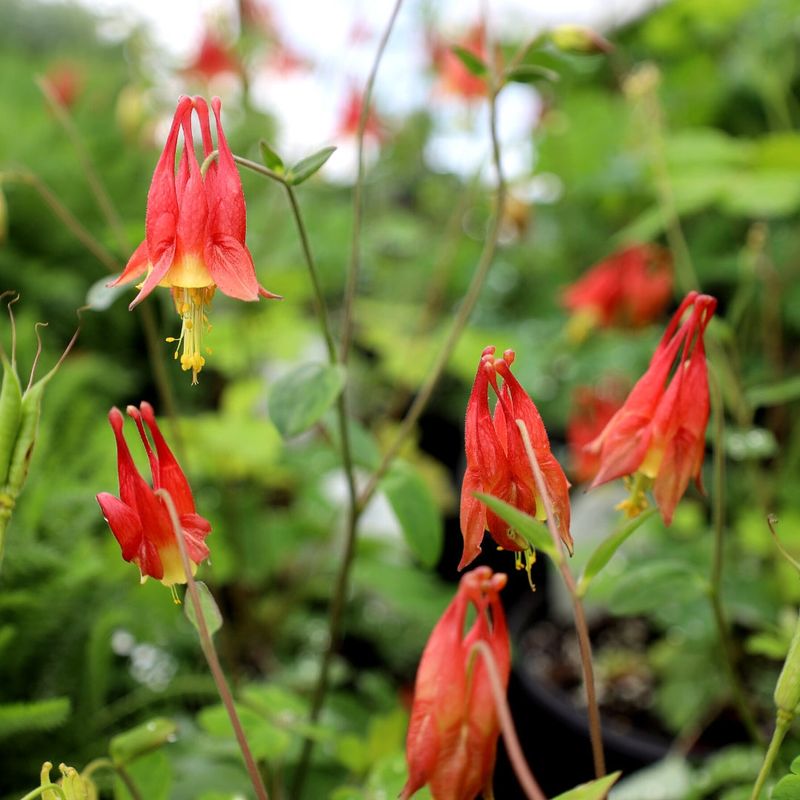
Wild columbine, Aquilegia canadensis, blooms right around the same time and adds dangling red and yellow flowers at a lower layer beneath the serviceberry canopy.
Hummingbirds are drawn to those tubular flowers, and native bees work them steadily in spring.
The two plants occupy different vertical layers, which is exactly what a layered native planting is designed to do.
This combo works best in part shade to part sun with well-drained soil. It suits woodland edges and naturalistic borders much better than hot, exposed, full-sun beds.
Northern gardens with colder winters may see serviceberry bloom a week or two later than southern counties. Both plants are confirmed natives to the region and are supported by USDA and university Extension sources.
New plantings need consistent watering through the first season. After that, they tend to settle in well when placed in the right spot.
2. Ninebark And Purple Coneflower Create A Pollinator Friendly Screen
If you want a combo that pulls double duty as a privacy screen and a pollinator magnet, ninebark and purple coneflower are worth a close look. Native ninebark, Physocarpus opulifolius, is a rugged shrub that grows several feet tall and wide.
It works well for informal screening along property lines or the back of a border. Its arching stems and peeling bark add texture even when it is not in bloom.
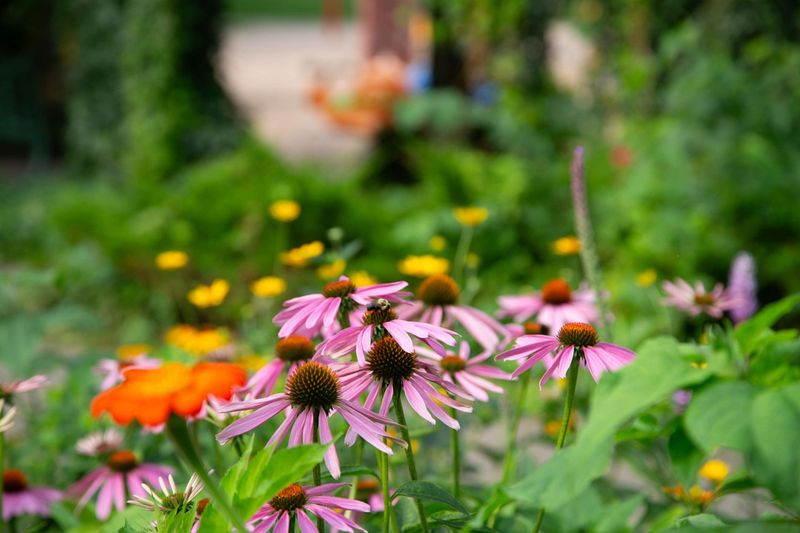
Purple coneflower, Echinacea purpurea, fills the space in front of ninebark with bright summer color and consistent pollinator activity. Bees, butterflies, and goldfinches all visit this plant at different points in the season.
The combination of tall shrub structure behind and flowering perennial in front creates a layered look that feels intentional without being fussy.
Both plants prefer sun to part sun and do well in average, well-drained soil. Ninebark is adaptable and handles clay soils reasonably well once established, which is useful in many Midwest yards.
Your Ohio Garden Changes Every Week. Your Plan Should Too.
Gardening in Ohio changes quickly throughout the season. Every Friday you’ll receive a simple weekly plan showing exactly what to plant, prune, fertilize, harvest, and protect so you never miss the right timing.
Give ninebark enough room to spread, since crowding it tends to reduce airflow and invite disease. Purple coneflower is drought-tolerant once established but benefits from steady watering in its first season.
This combo starts strong in May and builds through summer with very little fuss once the roots are settled in the right spot.
3. Buttonbush And Cardinal Flower Turn Moist Spots Into Habitat
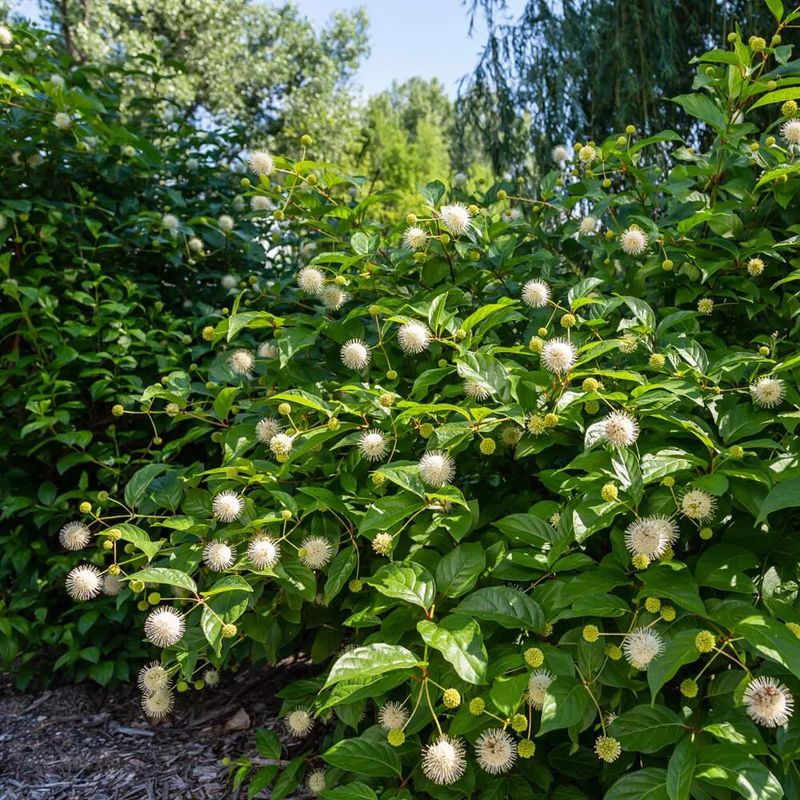
Low spots and rain garden edges can be tricky to plant, but they are actually a great opportunity if you match the plants correctly. Buttonbush, Cephalanthus occidentalis, is a native shrub built for wetter conditions.
It tolerates seasonal flooding and produces globe-shaped white flowers in midsummer that attract bees, butterflies, and other beneficial insects. It can grow quite large, so give it space to spread naturally.
Cardinal flower, Lobelia cardinalis, is a native perennial that also thrives in moist to wet soil. Its vivid red spikes bloom in mid to late summer and are one of the most reliable plants for attracting hummingbirds in the region.
Planted near buttonbush, it fills the lower layer with bold color while the shrub provides height and structure above.
Be clear about where this combo belongs. It fits moist areas, rain garden edges, pond margins, and low spots that stay consistently damp.
It is not the right choice for dry, hot, or well-drained beds. Putting these plants in the wrong spot will stress them and limit their performance.
Southern counties with hotter summers may need to keep moisture levels more consistent during dry stretches. Both plants are confirmed natives supported by USDA and university Extension records.
New plantings need regular watering while establishing, even in naturally moist areas, until roots are fully settled.
4. Spicebush And Woodland Phlox Soften Shady Edges
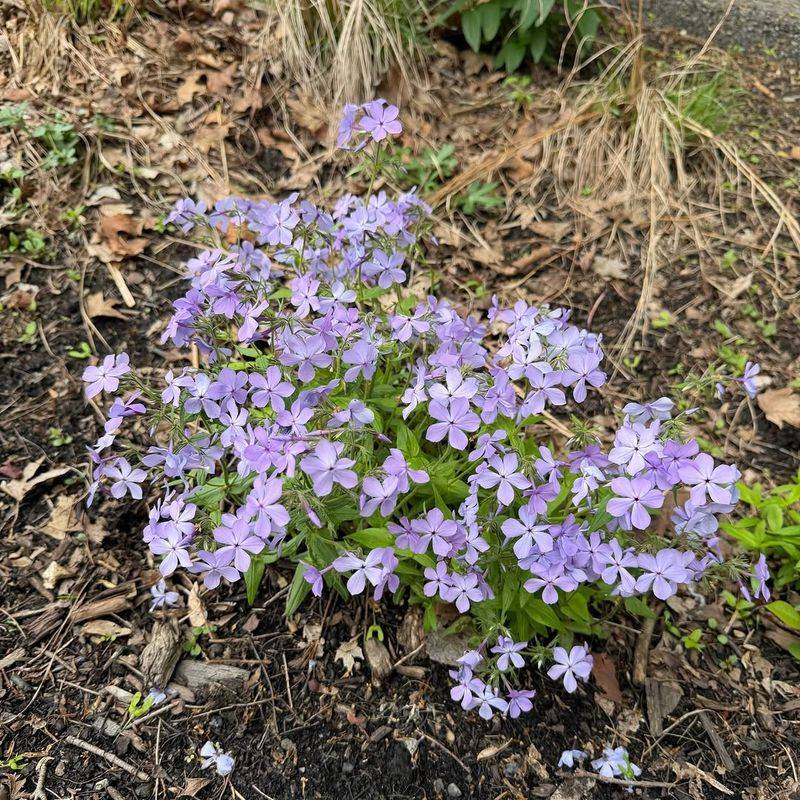
Shady spots are often the hardest areas to plant well, but spicebush and woodland phlox make a genuinely satisfying pair for those spaces. Spicebush, Lindera benzoin, is a native Ohio shrub that thrives in part shade to full shade.
It produces small yellow flowers very early in spring before most other plants wake up. It also provides berries that songbirds rely on in fall and serves as a host plant for the spicebush swallowtail butterfly.
Woodland phlox, Phlox divaricata, grows lower to the ground and spreads gently to create a soft carpet of lavender to pale blue flowers in spring.
It fills the space beneath spicebush beautifully and adds a layer of color that most shade gardens desperately need in April and May.
The two plants bloom close enough in timing to create a real spring display together.
This combo fits shaded borders, lightly wooded backyards, and naturalistic edges far better than sunny open beds. Full sun tends to stress both plants, especially during hot summer stretches.
Clay-heavy soil should be loosened before planting to improve drainage, since neither plant likes waterlogged roots. Urban lots with compacted soil and reflected heat from pavement may not be the best match for this combo.
Both plants are confirmed natives supported by university Extension and USDA sources. Consistent watering in the first season helps them establish before summer heat arrives.
5. Little Bluestem And Butterfly Weed Handle Hot Sunny Borders
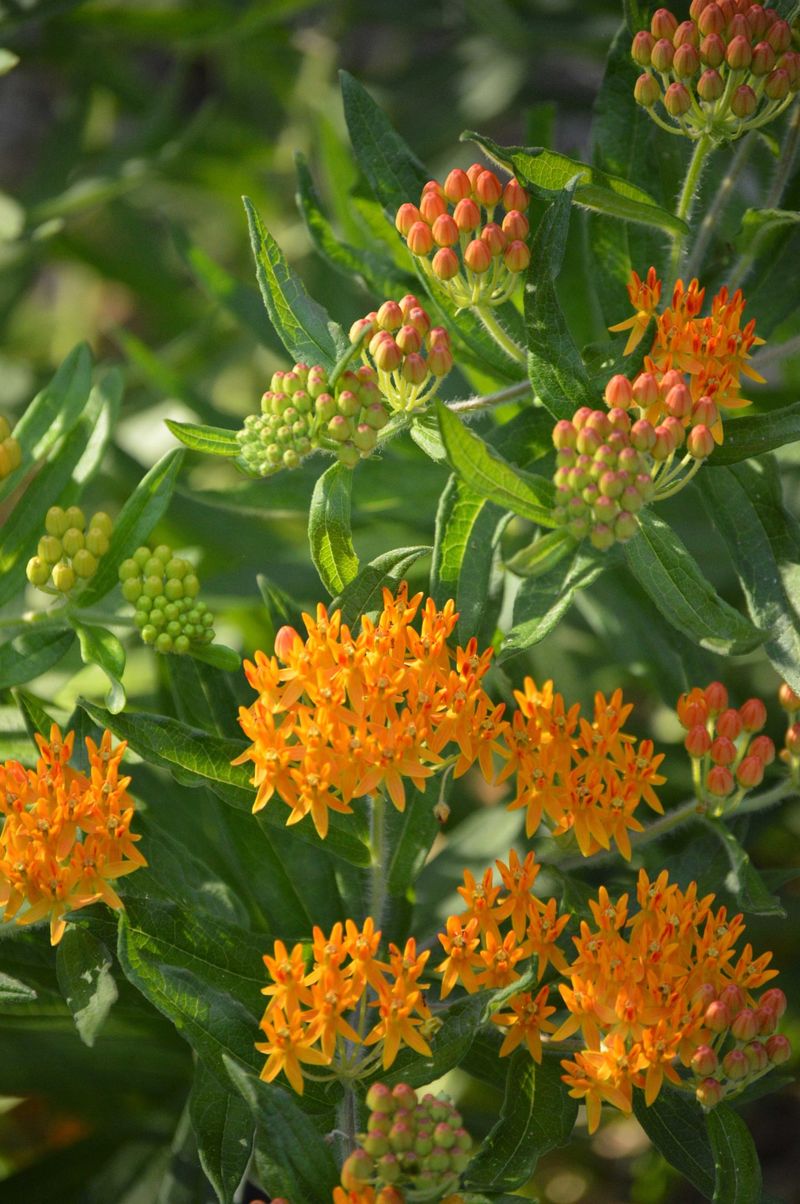
Hot, dry, sunny spots can feel like a planting challenge, but little bluestem and butterfly weed are genuinely built for those conditions. Little bluestem, Schizachyrium scoparium, is a native warm-season grass with blue-green blades in summer.
By fall, it matures into copper and russet tones. It adds movement, texture, and year-round structure to a sunny border without needing much attention once established.
Butterfly weed, Asclepias tuberosa, is a native perennial and a true standout in summer with its clusters of bright orange flowers. It is one of the most visited plants by native bees, monarch butterflies, and other pollinators during its bloom period.
Unlike some other milkweeds, it stays compact and works well in smaller garden spaces or along driveway borders.
One thing to know upfront is that butterfly weed strongly dislikes wet or poorly drained soil. Planting it in a soggy spot will stress it quickly.
It belongs in dry to average, well-drained ground with full sun. Little bluestem shares those same preferences, making this a naturally compatible pairing.
Both plants emerge later in spring than many perennials, so do not assume they have not survived if they are slow to show in May. Clay-heavy soil should be amended or avoided for this combo.
Once established, both plants handle summer heat and dry spells with impressive resilience and reward you with color and wildlife activity through fall.
6. Elderberry And Wild Bergamot Build A Living Privacy Wall
Few native shrubs grow fast enough and tall enough to create real screening value, but elderberry earns that spot. Native elderberry, Sambucus canadensis, can reach eight to twelve feet tall and nearly as wide in good conditions.
It produces large flat-topped white flower clusters in early summer that attract a wide range of pollinators, followed by dark berries that birds return to repeatedly.
It is an excellent choice for larger yards or informal borders where you need height without a formal hedge look.
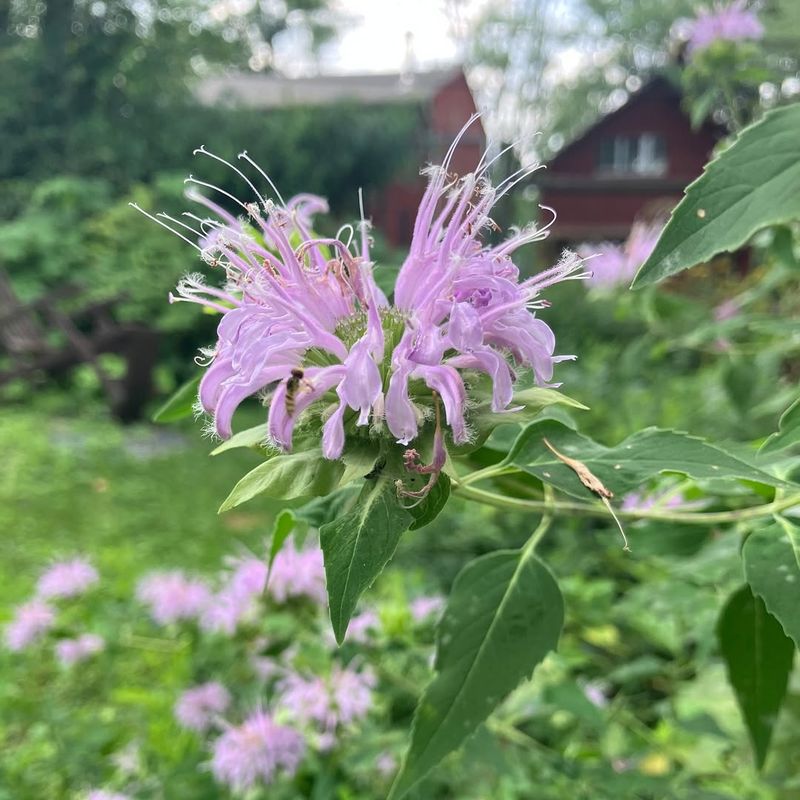
Wild bergamot, Monarda fistulosa, grows in front of elderberry and adds lavender-pink flowers through midsummer. It is a magnet for native bees, including bumble bees and specialist bee species that depend on plants in the mint family.
The combination of tall elderberry behind and blooming bergamot in front creates a layered privacy planting with genuine wildlife value at multiple levels.
Elderberry needs room. Trying to squeeze it into a small urban lot or tight foundation bed will lead to frustration as it spreads by root suckers.
It performs best in average to moist soil with full sun to light shade. Wild bergamot prefers full sun and tolerates drier conditions once established.
Both plants are confirmed natives supported by USDA and university Extension records. Plan for regular watering in the first season.
Be honest about available space before planting elderberry, since managing its spread takes effort in smaller yards.
7. Black Eyed Susan And Joe Pye Weed Make Summer Color Feel Effortless
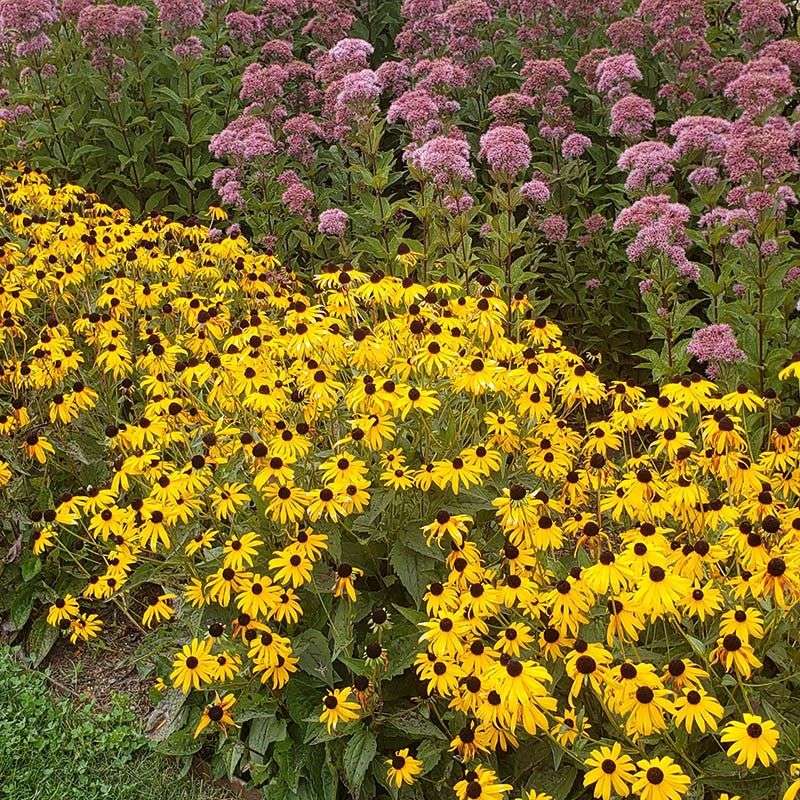
Some plant combinations just work, and this is one of them. Black-eyed Susan, Rudbeckia hirta or Rudbeckia fulgida depending on your site, brings golden yellow blooms that light up a bed from midsummer onward.
It is tough, adaptable, and well-documented as a pollinator plant by university Extension sources across the Midwest. Planted in sun to part sun, it fills space reliably without requiring much fuss from the gardener.
Joe Pye weed, in native forms such as Eutrochium purpureum or Eutrochium maculatum, rises behind black-eyed Susan. It adds serious height and dusty pink to mauve flower clusters that butterflies swarm.
The tall vertical form of Joe Pye weed contrasts well with the lower mounding habit of black-eyed Susan, creating a layered look that feels natural rather than staged.
Joe Pye weed generally performs best in moist to average soil and tends to struggle in very dry or sandy spots. Pairing it with black-eyed Susan works best when both plants share similar moisture needs.
Avoid placing this combo in a hot, dry border where Joe Pye weed will be stressed. Give Joe Pye weed enough room since it can reach six feet or more at maturity.
Both plants are confirmed natives with strong pollinator credentials. New plantings in May need consistent moisture through the first season to settle in well before the heat of summer peaks.
8. Aromatic Aster And Goldenrod Keep Pollinators Fed Into Fall
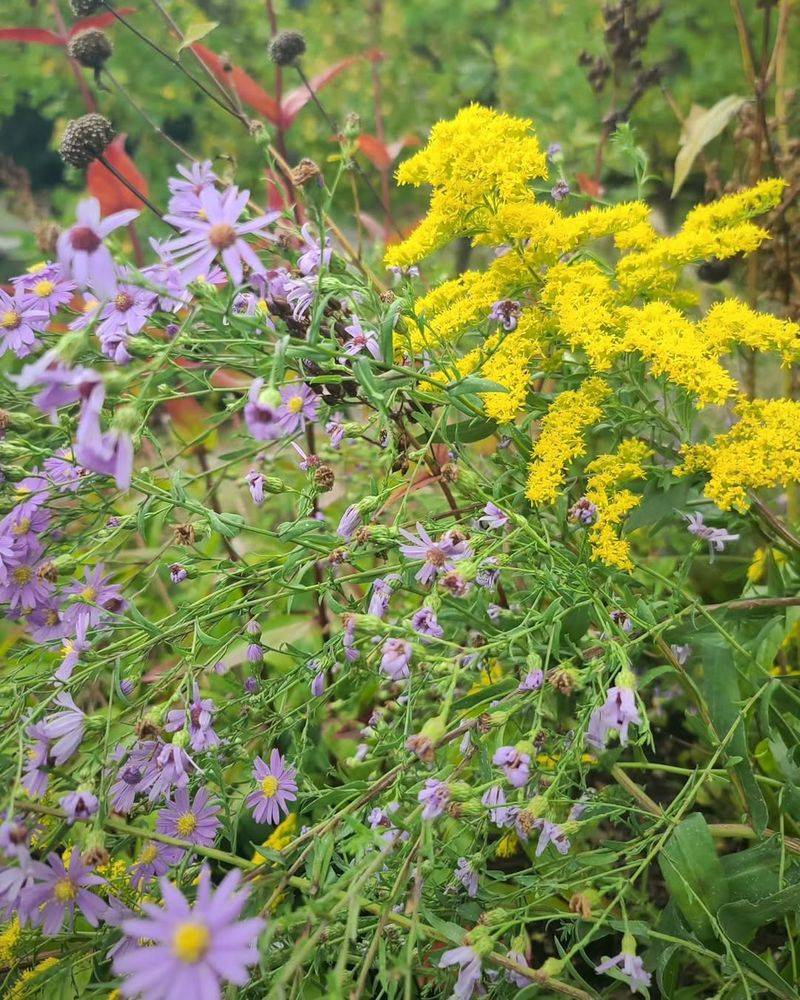
By late summer, many garden beds start to fade, but this combo keeps going strong well into fall. Aromatic aster, Symphyotrichum oblongifolium, is a compact native aster.
It covers itself in small purple to lavender daisy-like flowers from late summer through October. It is one of the more well-behaved asters for garden use, staying relatively tidy and not spreading aggressively the way some relatives can.
Goldenrod is where gardeners need to pay attention to species selection. Not all goldenrods behave the same way in a garden setting.
Stiff goldenrod, Solidago rigida, and showy goldenrod, Solidago speciosa, are often recommended for gardens. They are less aggressive than some other goldenrods.
Both are confirmed natives with strong pollinator value and are supported by university Extension sources. Avoid species that spread too freely by rhizome if you are working in a smaller bed.
Together, aromatic aster and a well-chosen goldenrod create a fall display for bees, monarch butterflies, and other beneficial insects. That matters when food sources are becoming scarce.
Both plants prefer full sun and tolerate dry to average soil once established, making them a good fit for sunny borders that do not stay wet. Southern counties may enjoy a longer fall bloom window, while northern gardens may see an earlier end to the season.
Regular watering in the first season after a May planting gives both plants the best start possible.