Why Citrus Leaves Turn Yellow In May In California And How To Fix It
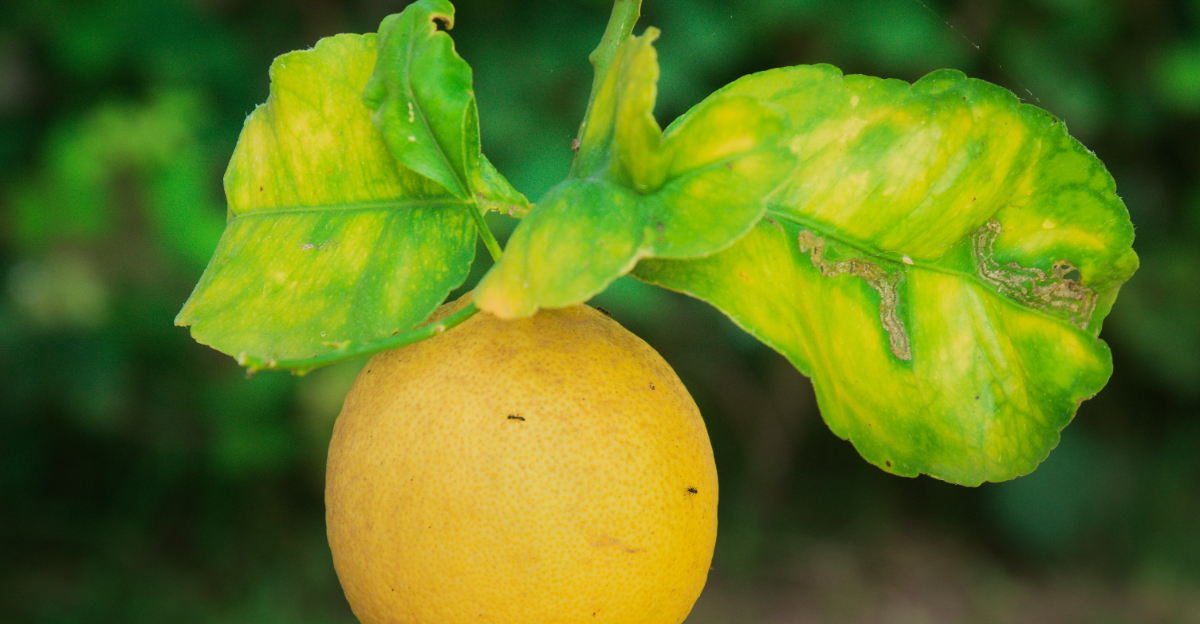
Yellow leaves on a citrus tree in May tend to send California gardeners straight to the internet looking for answers, and the results are usually more confusing than helpful. The list of possible causes is long, and several of them look identical from the outside.
That is what makes this particular problem tricky. The yellowing itself is not the issue. It is a signal, and figuring out what it is actually pointing to changes everything about how you respond.
May is a specific moment in the citrus growing calendar when several things are happening at once.
The tree is pushing new growth, temperatures are climbing, and the soil is transitioning out of its cooler, wetter winter state. Any one of those shifts can trigger yellowing under the right circumstances.
Some causes are minor and clear up quickly with a simple adjustment. Others need more attention before they start doing real damage.
Getting to the right answer fast is what keeps a small cosmetic problem from turning into something that affects the whole season’s harvest.
1. Your Citrus Tree May Be Waking Up Hungry
Spring is a hungry season for citrus trees. After a slower winter, May brings a burst of new growth, and that growth needs fuel.
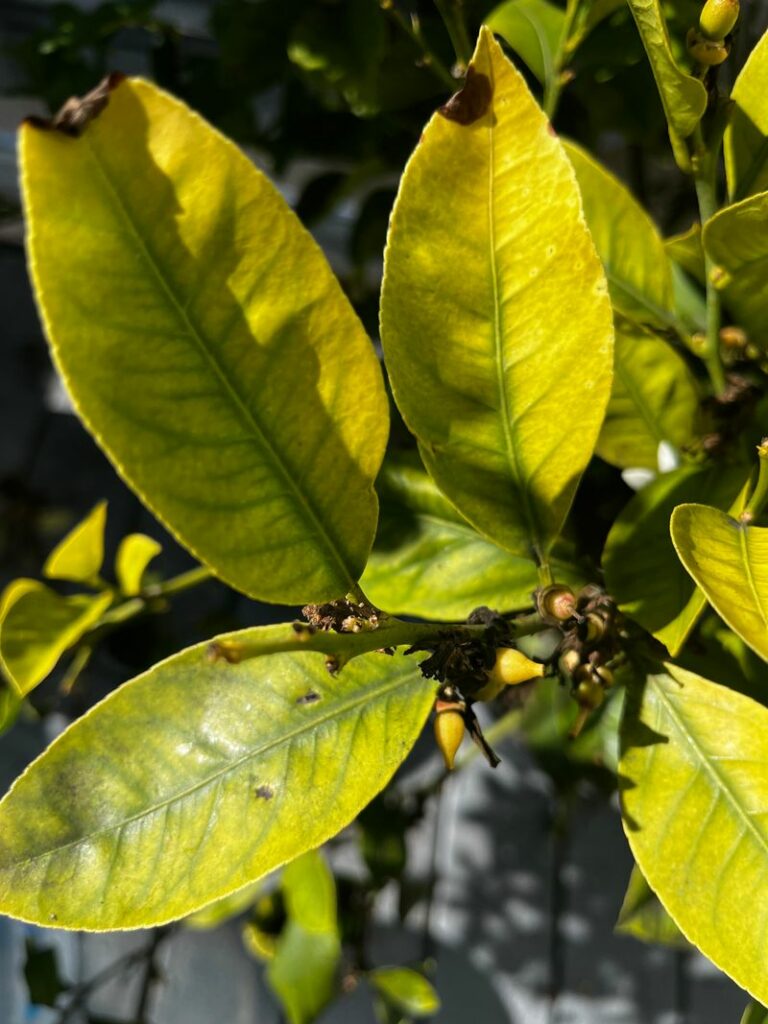
When a tree does not have enough nitrogen in the soil, the older leaves start turning a pale, uniform yellow. It is one of the first visible signs that your tree is running low on one of its most important nutrients.
Nitrogen is what keeps citrus leaves a deep, rich green. Without enough of it, the whole leaf changes color, not just parts of it.
This is different from other nutrient problems, so it is a useful clue. If most of the leaves look evenly yellow and dull, nitrogen is likely the issue.
The fix is straightforward. Use a citrus-specific fertilizer with a good nitrogen content.
Look for products labeled for citrus or fruit trees. Apply it according to the package directions, and water it in well.
Slow-release granular fertilizers work well for in-ground trees. You should start seeing new green growth within a few weeks.
Feeding your tree in early spring before May can also prevent this problem from showing up at all next year.
2. Yellow Older Leaves Are Usually A Feeding Clue
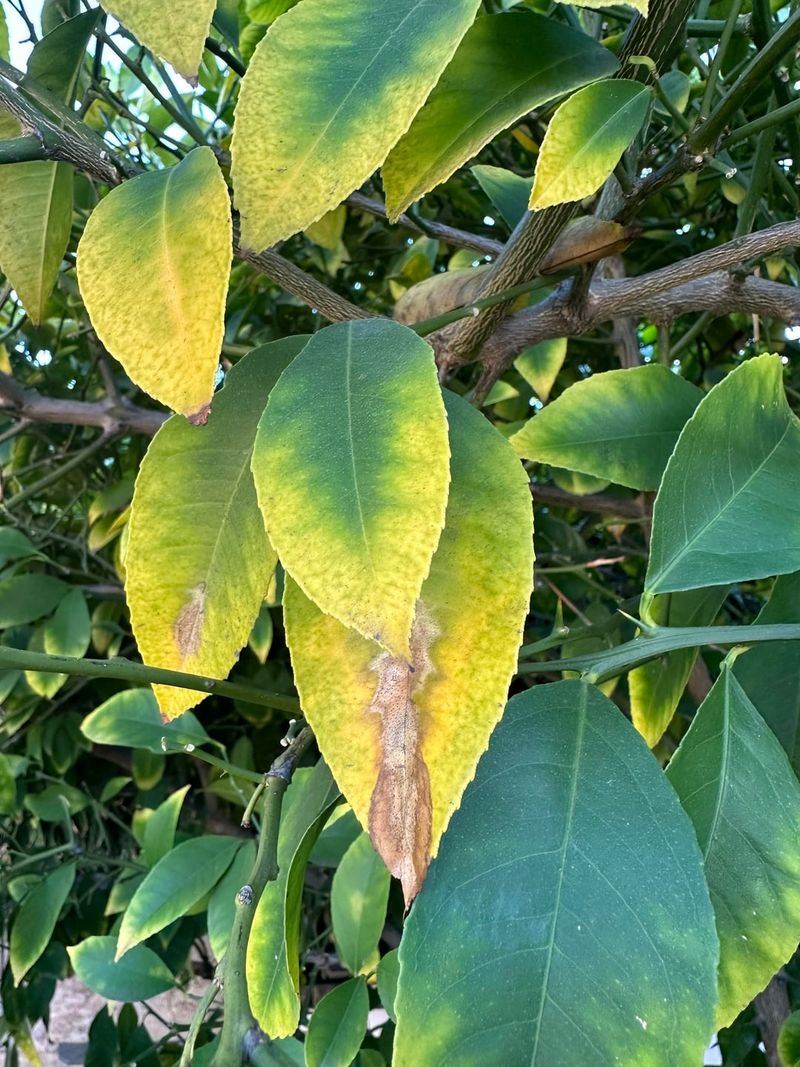
Not all yellow leaves mean the same thing. When the older, lower leaves on a citrus tree turn yellow while the newer leaves at the top stay green, that pattern is telling you something very specific.
It usually points to a nutrient shortage, most often nitrogen or magnesium. The tree pulls nutrients from its older leaves to feed the newer growth first.
Magnesium deficiency shows up a little differently than nitrogen. You will often see yellow patches between the leaf veins, while the veins themselves stay greener.
This is called interveinal chlorosis, and it is a classic sign that the soil is low on magnesium. It tends to show up more on older leaves near the bottom and middle of the tree.
Your California Garden Changes Every Week. Your Plan Should Too.
Gardening in California changes quickly throughout the season. Every Friday you’ll receive a simple weekly plan showing exactly what to plant, prune, fertilize, harvest, and protect so you never miss the right timing.
A good fix for magnesium deficiency is Epsom salt. Mix about one tablespoon of Epsom salt per gallon of water and apply it as a soil drench around the base of the tree.
You can also spray it directly on the leaves for faster results. Doing a soil test before adding anything is always a smart move.
Knowing exactly what is missing helps you fix the problem without overdoing it on any one nutrient.
3. Green Veins On Yellow Leaves Tell A Different Story
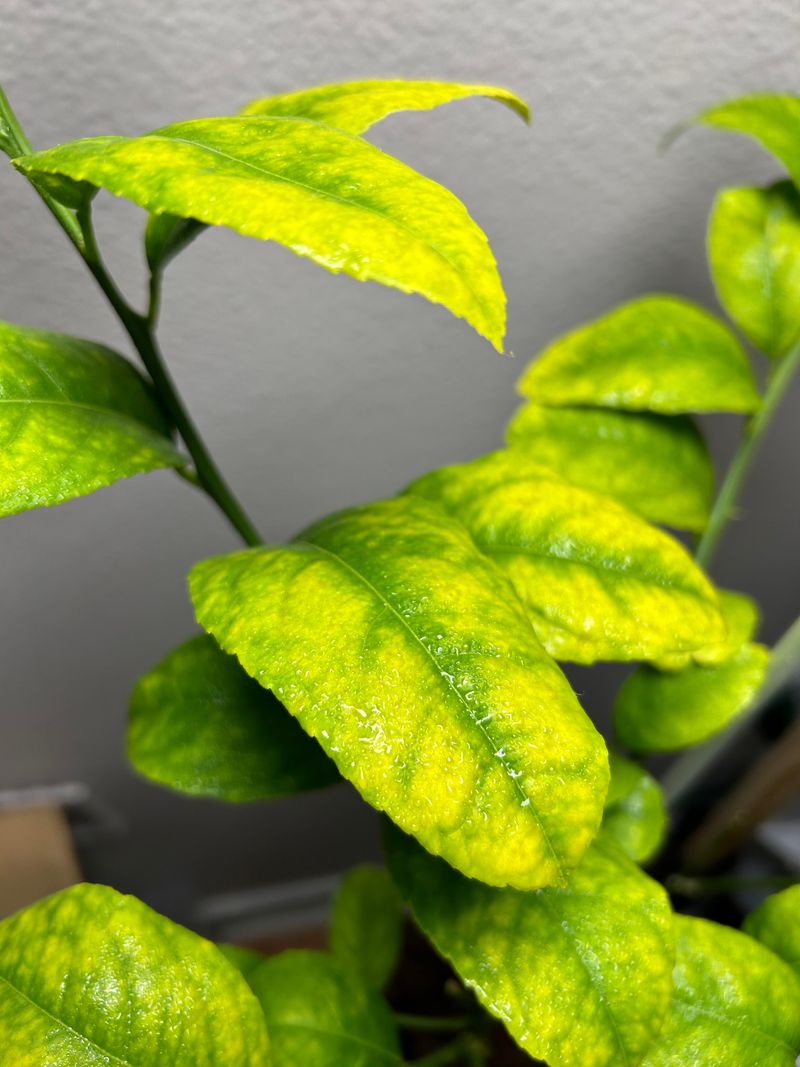
Yellow leaves with green veins are a very different problem from overall yellowing. When you see this pattern, it is a strong sign of iron deficiency, and sometimes manganese deficiency.
Both of these are common in our state, especially in areas with alkaline or heavy clay soils. The green veins stand out clearly against the bright yellow background of the leaf, making it one of the easier problems to spot.
Here is what happens. Iron and manganese help the plant make chlorophyll, which is the green pigment in leaves.
When the soil pH is too high, meaning it is too alkaline, the tree cannot absorb these minerals even if they are present in the soil. The minerals are there, but the roots cannot access them properly.
Fixing this starts with checking your soil pH. Citrus trees prefer a pH between 6.0 and 7.0.
If your soil is more alkaline than that, adding sulfur can help bring it down over time. You can also apply chelated iron or iron sulfate directly to the soil for faster results.
Foliar sprays with iron or manganese can give the leaves a quick boost while the soil issue gets sorted out. Consistency is key here.
4. Too Much Water Can Cause The Same Yellow Look
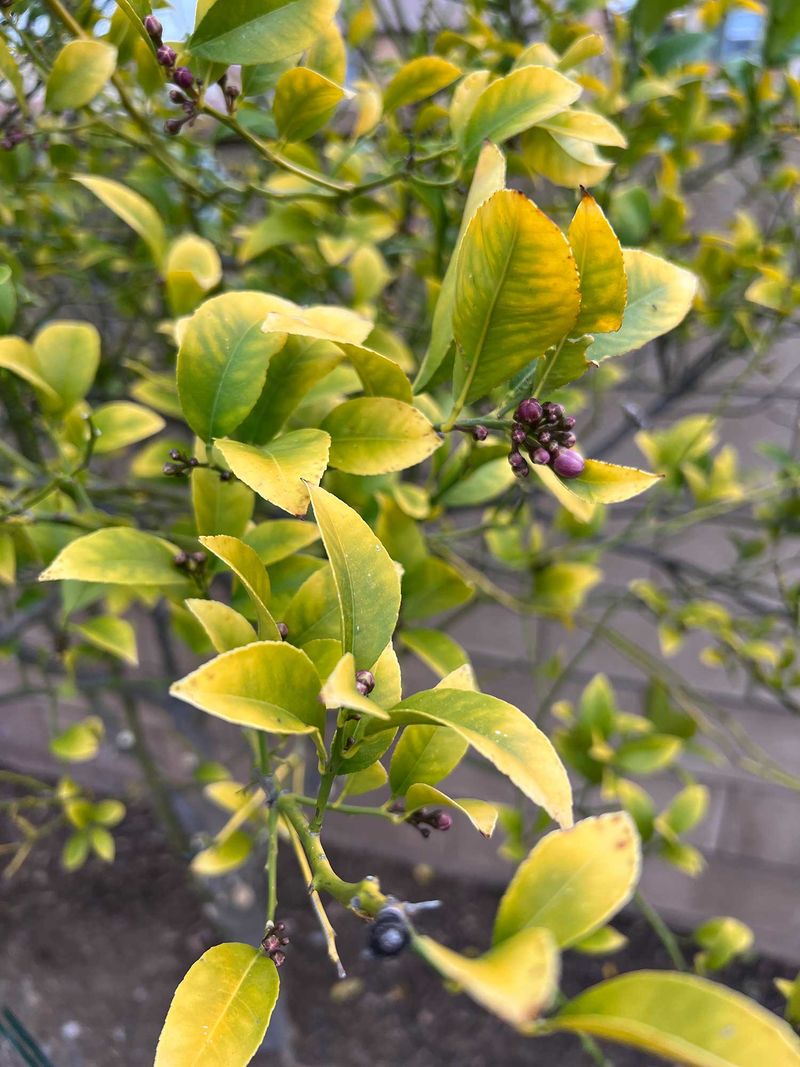
Overwatering is one of the sneakiest causes of yellow citrus leaves because it looks almost exactly like underwatering at first glance. When roots sit in soggy soil for too long, they cannot get oxygen.
Without oxygen, the roots start to break down, and the tree cannot absorb water or nutrients properly. The leaves turn yellow and may even droop or fall off.
In May, many people start watering more because the weather is warming up. But citrus trees do not need daily watering, even in warmer weather.
Most in-ground citrus trees in our state do well with a deep watering once or twice a week, depending on soil type and temperature. Sandy soils drain faster and may need more frequent watering, while clay soils hold moisture longer and need less.
Check your soil before watering. Stick your finger about two inches into the soil near the base of the tree.
If it still feels moist, wait before watering again. Make sure your soil drains well and that water is not pooling around the trunk.
Improving drainage by adding compost or planting in raised areas can make a big difference. Cutting back on water is often the fastest fix when overwatering is the culprit.
5. May Heat Can Turn A Dry Citrus Tree Yellow Fast
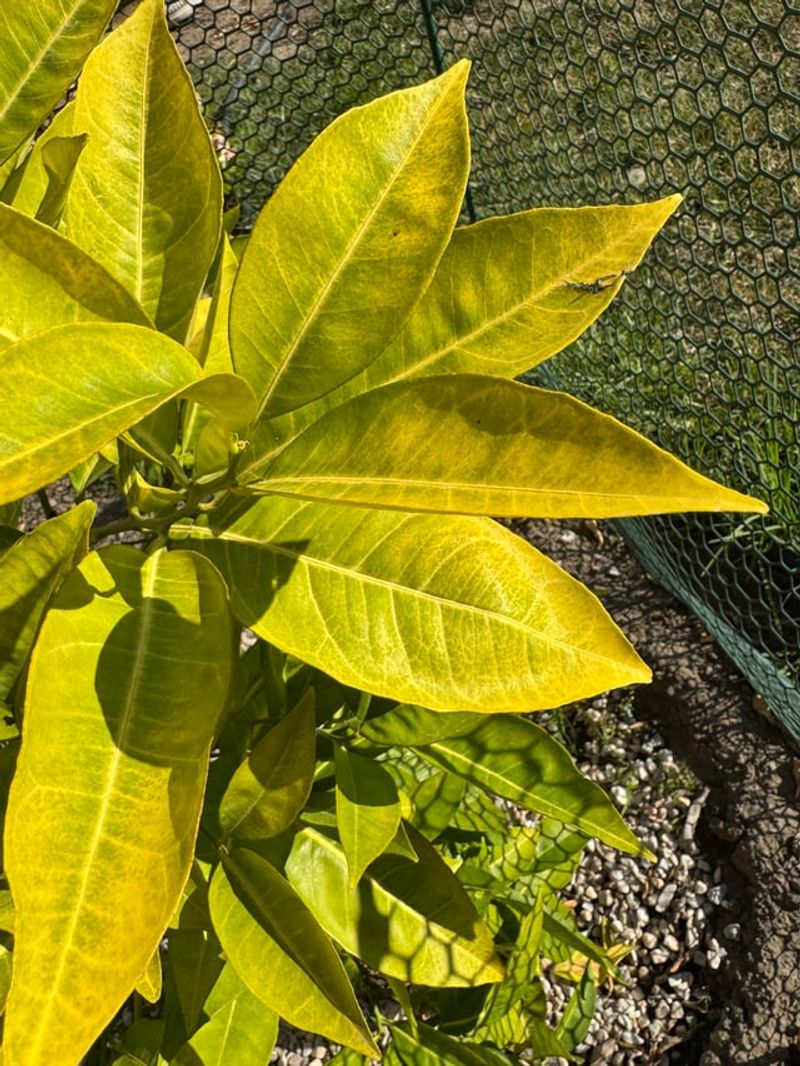
When temperatures climb quickly in May, a citrus tree that is not getting enough water will show it fast. Heat increases the rate at which leaves lose moisture through a process called transpiration.
If the roots cannot pull up water fast enough to replace what is being lost, the leaves start to stress out. Yellow leaves, curling edges, and dry-looking foliage are all signs of heat stress combined with underwatering.
Our state can see some surprisingly hot days in May, especially in inland valleys and southern regions. During these warm stretches, a citrus tree’s water needs go up noticeably.
A tree that was fine with twice-a-week watering in April might need more frequent watering by mid-May. Paying attention to the weather forecast and adjusting your watering schedule accordingly makes a real difference.
Mulching around the base of the tree is one of the best things you can do. A three to four inch layer of wood chip mulch helps the soil hold moisture and keeps roots cooler.
Keep the mulch a few inches away from the trunk to prevent moisture buildup against the bark. Deep, slow watering is more effective than frequent shallow watering because it encourages roots to grow deeper into cooler, more stable soil.
6. Cool Soil Can Keep Roots From Doing Their Job
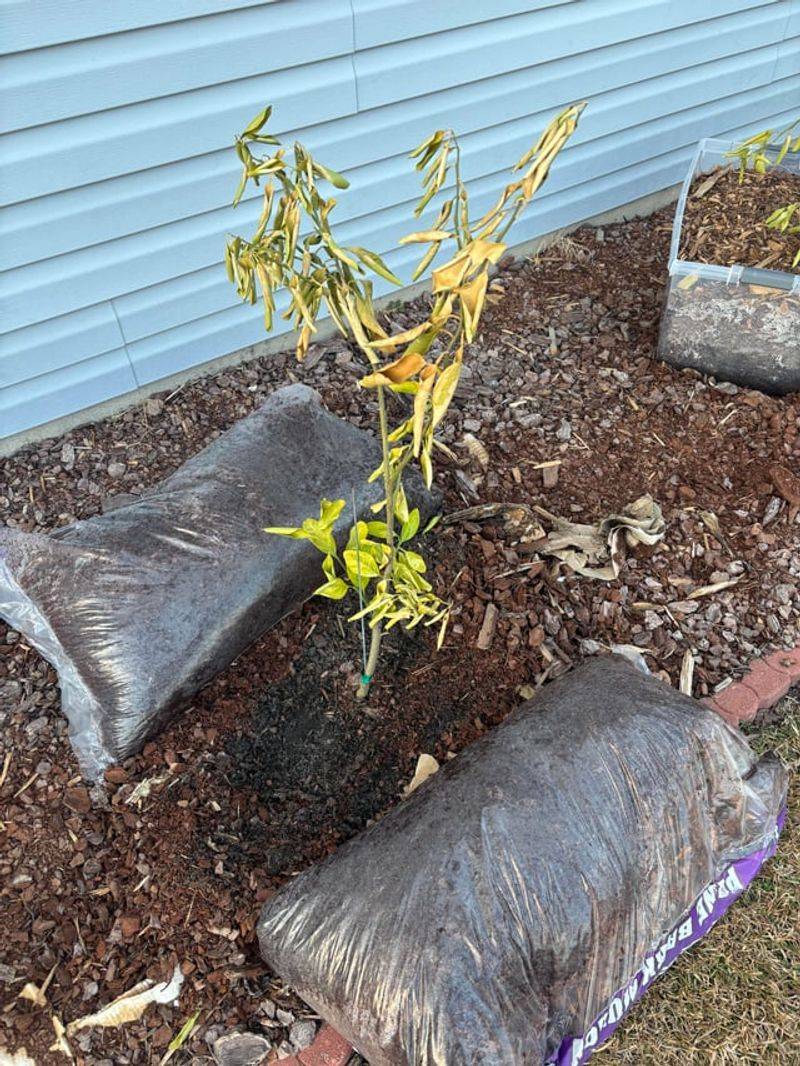
Even though May feels warm above ground, the soil can stay surprisingly cool, especially in coastal areas and shaded spots. Citrus roots are most active when soil temperatures are above 60 degrees Fahrenheit.
When the soil is cooler than that, root activity slows way down. A sluggish root system means the tree cannot absorb nutrients and water efficiently, and that shows up as yellowing leaves.
This is a common issue in coastal communities and in yards where trees are planted in shaded corners or near structures that block afternoon sun. The soil just does not warm up as quickly in those spots.
Even if you are fertilizing and watering correctly, cool roots can make it seem like nothing is working.
One simple way to help is by using dark-colored mulch. Dark mulch absorbs heat from the sun and transfers some of that warmth into the soil.
You can also try watering with slightly warm water in the morning rather than cold water, which can further chill the root zone. Giving the tree a spot with full sun exposure, at least six hours per day, will naturally warm the surrounding soil faster.
As the season progresses and soil temperatures rise, you should see the yellowing improve on its own.
7. Tiny Pests Can Steal That Healthy Green Color
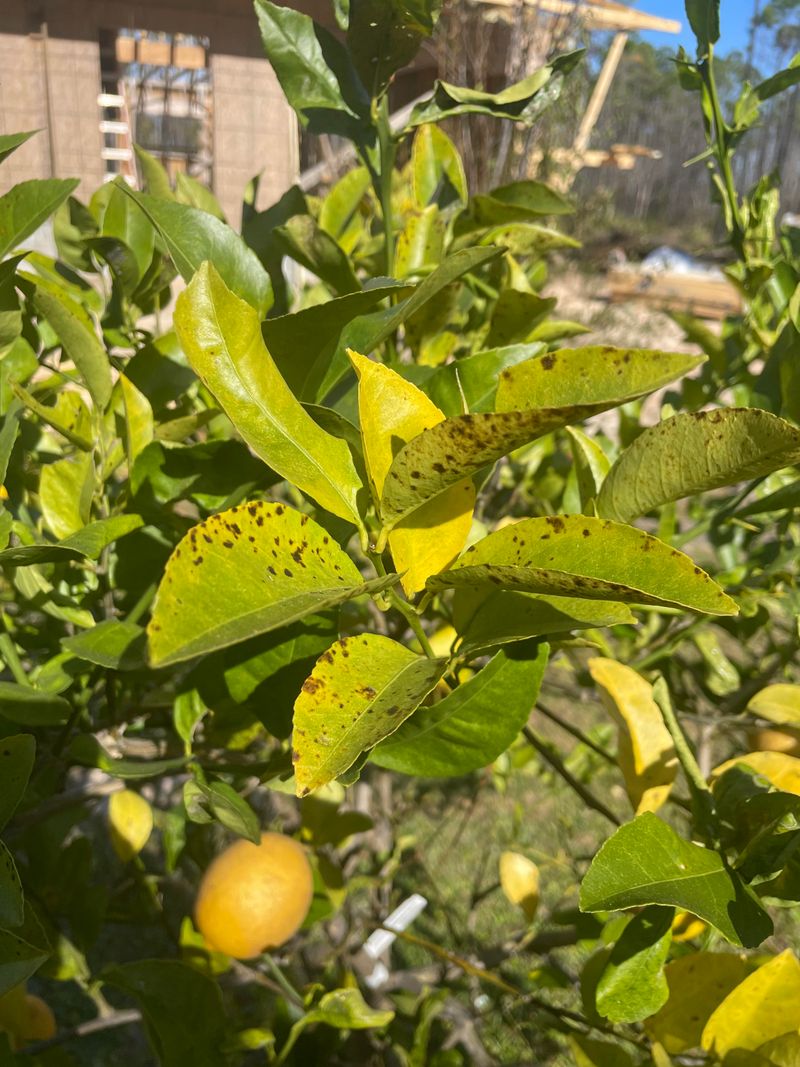
Sometimes the problem is not in the soil at all. Tiny insects feeding on citrus leaves can pull out the nutrients and moisture the leaves need to stay green.
Spider mites, aphids, and citrus leafminers are some of the most common pests that show up in May. They are small, but the damage they cause adds up quickly, especially on young trees or new growth.
Spider mites are so tiny that you almost need a magnifying glass to see them. They leave behind a fine webbing on the underside of leaves and cause a speckled, faded yellow pattern.
Aphids cluster in groups and are usually found on new shoots and tender young leaves. They suck the sap right out, causing the leaves to curl, yellow, and look weak.
Scale insects look like small bumps on stems and leaves and are easy to mistake for part of the plant.
Check the undersides of leaves regularly, especially during warm months. A strong spray of water from a garden hose can knock off aphids and mites.
For heavier infestations, neem oil or insecticidal soap sprays work well and are safe for use around most edible plants. Repeat treatments every seven to ten days until the pests are gone.
Keeping the tree healthy overall makes it more resistant to pest attacks in the first place.
8. Potted Citrus May Need More Than A Bigger Drink
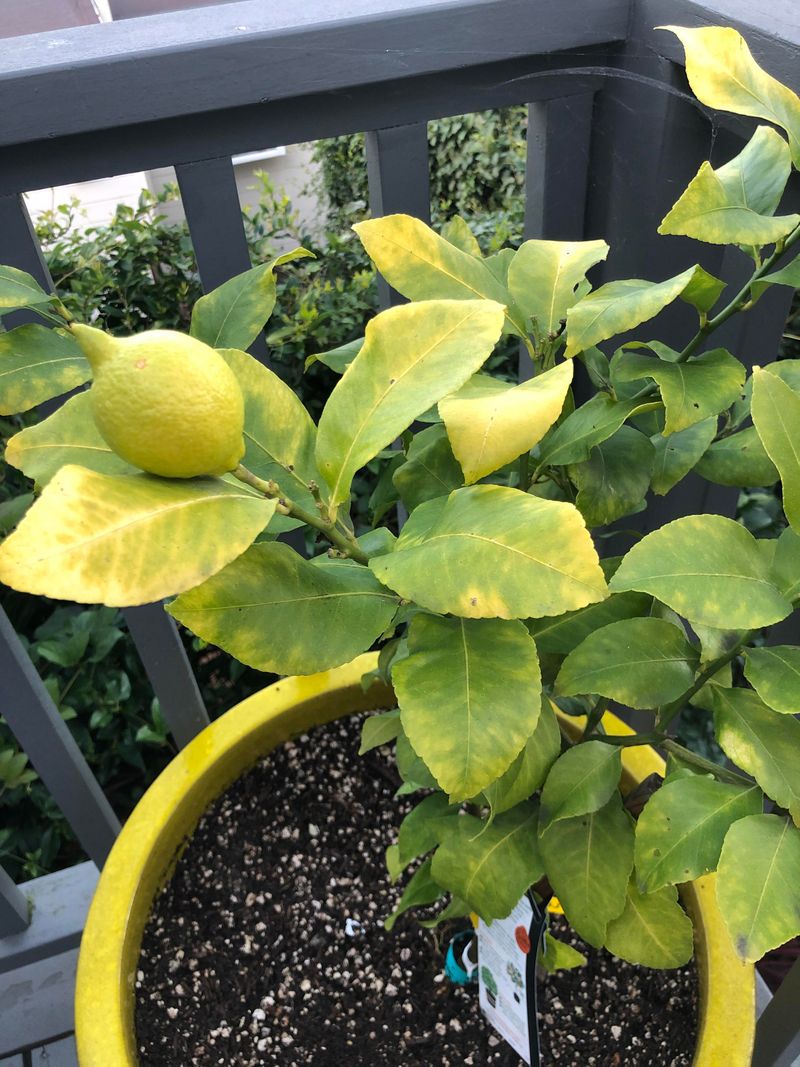
Growing citrus in containers is popular in our state, especially for people with smaller yards or patios. But potted citrus trees face unique challenges that in-ground trees do not.
The limited soil volume means nutrients get used up faster, and the soil can dry out or become compacted much more quickly. In May, when the tree is actively growing and temperatures are rising, these problems can escalate fast.
One of the biggest issues with potted citrus is that nutrients wash out every time you water. This is called leaching, and it happens naturally with container plants.
By May, a tree that was repotted or fertilized in the fall may already be running low on key nutrients like nitrogen, iron, and zinc. Yellowing leaves in a potted citrus are very often a sign that the soil is simply depleted.
Use a slow-release citrus fertilizer every six to eight weeks during the growing season. Liquid fertilizers can be used more frequently for a faster response.
Make sure the pot has good drainage holes so water does not sit at the bottom. If the tree has been in the same pot for more than two years, it may be time to move it into a larger container with fresh potting mix designed for citrus or citrus and avocado trees.