Why Oregon Gardeners Are Watching For This Insect More Than Ever This Season
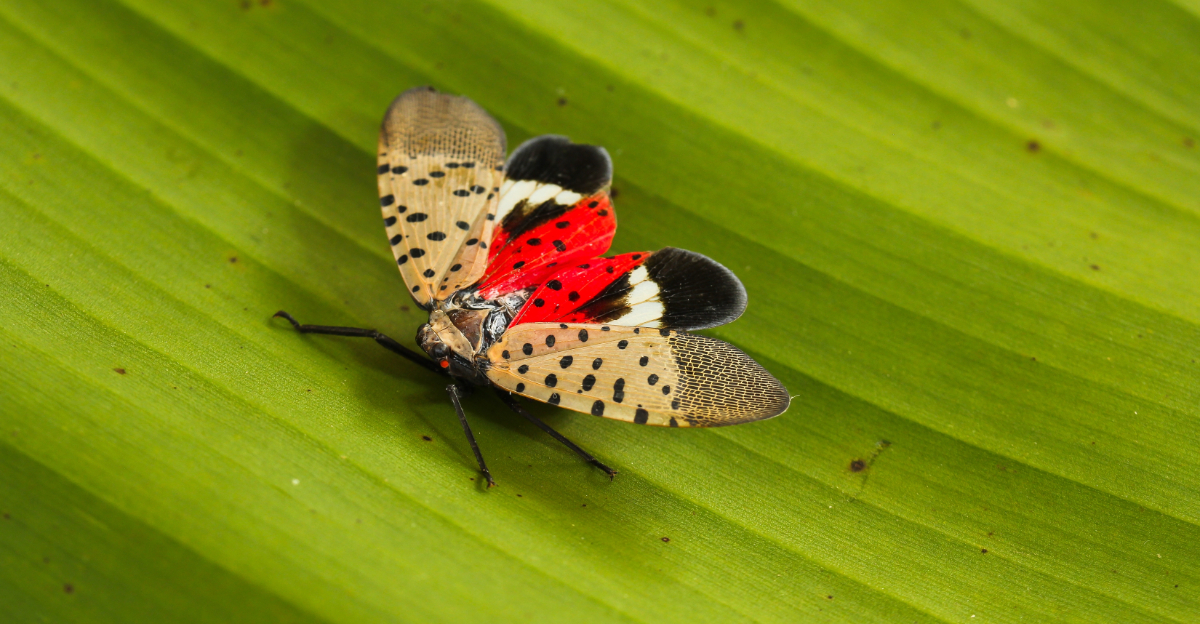
Spotted lanternfly has been moving west, and Oregon gardeners are paying closer attention this season than ever before.
What started as a regional problem on the East Coast has been spreading in ways that put the Pacific Northwest squarely in the conversation. This is not a pest that causes minor cosmetic damage and moves on.
It feeds aggressively on a wide range of plants and weakens trees over multiple seasons. This pest reproduces fast enough to go from a few sightings to a full infestation before most people realize what they are dealing with.
Oregon’s agricultural industry and home gardens both have a lot to lose if spotted lanternfly gets a real foothold here.
State agencies are actively monitoring, but the reality is that early detection at the yard level is what makes the biggest difference in stopping spread.
Knowing what this insect looks like, when it shows up, and what to do if you spot one puts every gardener in a position to actually help rather than accidentally contribute to the problem getting worse.
Oregon Doesn’t Have It Established, Yet
Good news first: as of now, the spotted lanternfly has not set up a permanent population in our state. That is something worth celebrating, but it is also something worth protecting.
Experts from the Oregon Department of Agriculture are actively monitoring for any signs of this pest, and so far, the state remains free of an established population.
That does not mean the risk is zero. The spotted lanternfly has been moving westward at a surprisingly fast pace.
It hitchhikes on cars, trains, outdoor furniture, and even firewood. Someone could unknowingly carry egg masses into the state without realizing it.
Those egg masses look like a smear of dried mud, so they are easy to miss.
State officials have already found a small number of individual insects in certain areas, which shows the pest is knocking on the door. Each sighting gets investigated quickly to make sure it has not spread further.
Early detection is the key reason why our state still has a fighting chance to stay ahead of this problem.
Gardeners, hikers, campers, and travelers all play a role in keeping the spotted lanternfly out. Checking your car, gear, and plants before traveling between states is one of the easiest and most effective things anyone can do.
Staying alert this season is not about panic. It is about being smart and proactive before a small problem becomes a very big one.
This Pest Could Hit Grapes, Hops, And Fruit Trees Hard
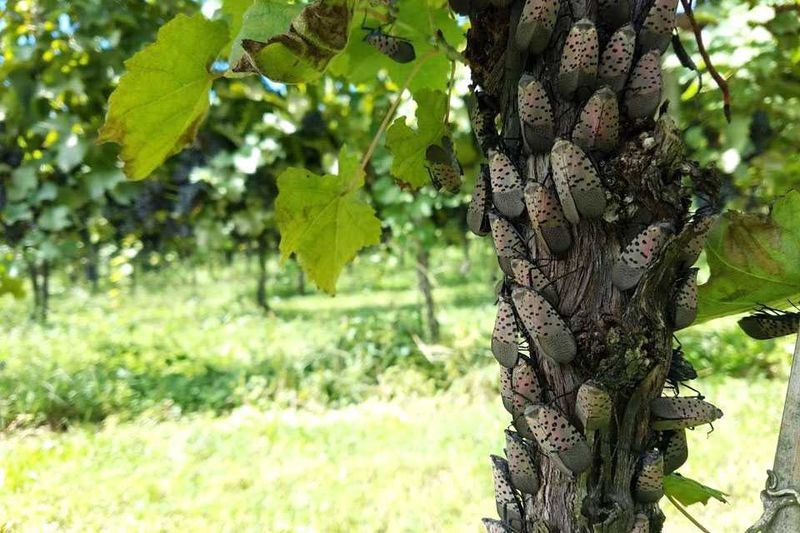
Our state is known for its world-class grapes, flavorful hops, and abundant orchards. All of those crops are exactly what the spotted lanternfly loves most.
That is what makes this pest such a serious concern for farmers and backyard growers alike.
The insect feeds by piercing plant stems and leaves and sucking out the sap. When large numbers of them feed on a single vine or tree, the plant can become severely weakened.
Your Oregon Garden Changes Every Week. Your Plan Should Too.
Gardening in Oregon changes quickly throughout the season. Every Friday you’ll receive a simple weekly plan showing exactly what to plant, prune, fertilize, harvest, and protect so you never miss the right timing.
Weakened plants struggle to produce fruit and become more vulnerable to other diseases and stress.
Hops growers in the Willamette Valley have been watching the news from eastern states with real concern. In the east, some hop yards reported significant losses after spotted lanternfly populations exploded.
The same threat applies to apple, peach, cherry, and plum trees that are grown widely across our state.
Home gardeners with backyard fruit trees should also pay attention. Even a small infestation can reduce your harvest and stress your trees over multiple seasons.
The damage is not always obvious right away, which is part of what makes this pest so tricky to manage.
Protecting these plants starts with early identification and quick reporting. Farmers and gardeners who stay informed and act fast give their crops the best possible chance of staying healthy and productive through the season and beyond.
Young Lanternflies Look Like Tiny Spotted Black Bugs
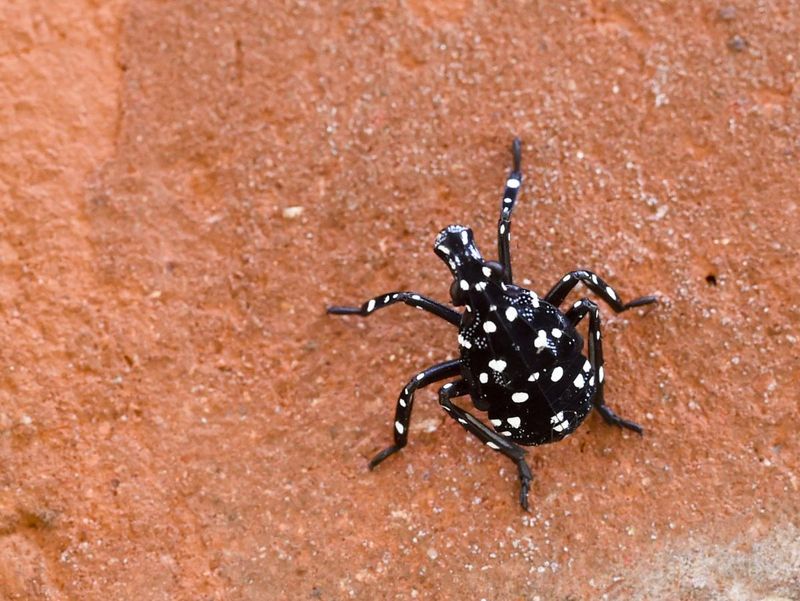
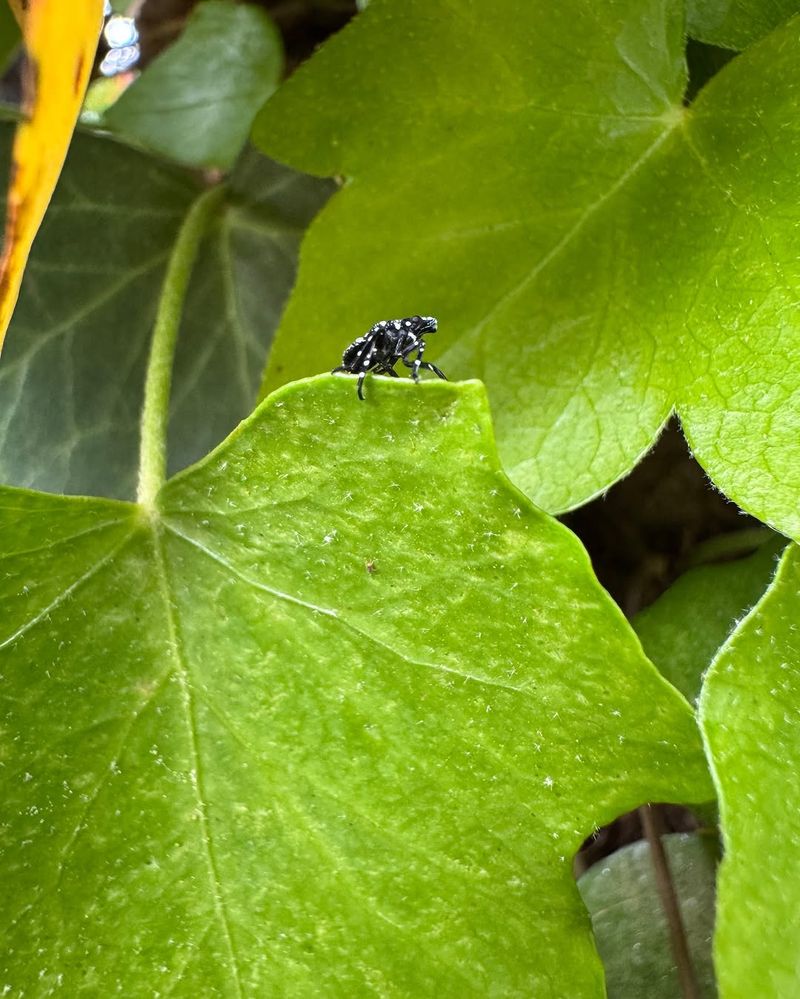
Spotting this pest early means knowing what it looks like before it grows into an adult. In its youngest stage, the spotted lanternfly nymph is tiny and mostly black with bright white spots scattered across its body.
It almost looks like a small, flashy beetle at first glance.
These early-stage nymphs are usually about a quarter of an inch long. They move quickly and tend to cluster on plant stems, especially near the base of leaves.
Because of their small size, they are easy to overlook unless you are actively searching for them.
As the nymph gets a little older, it goes through a color change. It develops red patches mixed in with the black and white pattern.
This red-and-black stage is still a nymph and cannot fly yet, but it is very active and can jump surprisingly far if disturbed.
Many gardeners mistake young spotted lanternflies for other common insects. Some people confuse them with beetles, stink bugs, or even certain types of aphids.
Knowing the specific spotted pattern helps you tell the difference and avoid letting them go unnoticed for too long.
If you see a small black bug with white dots crawling on your fruit trees or garden plants, do not brush it off as harmless. Take a photo right away and compare it to reference images from the Oregon Department of Agriculture website before deciding on your next step.
Adults Show Off Gray Wings And A Flash Of Red
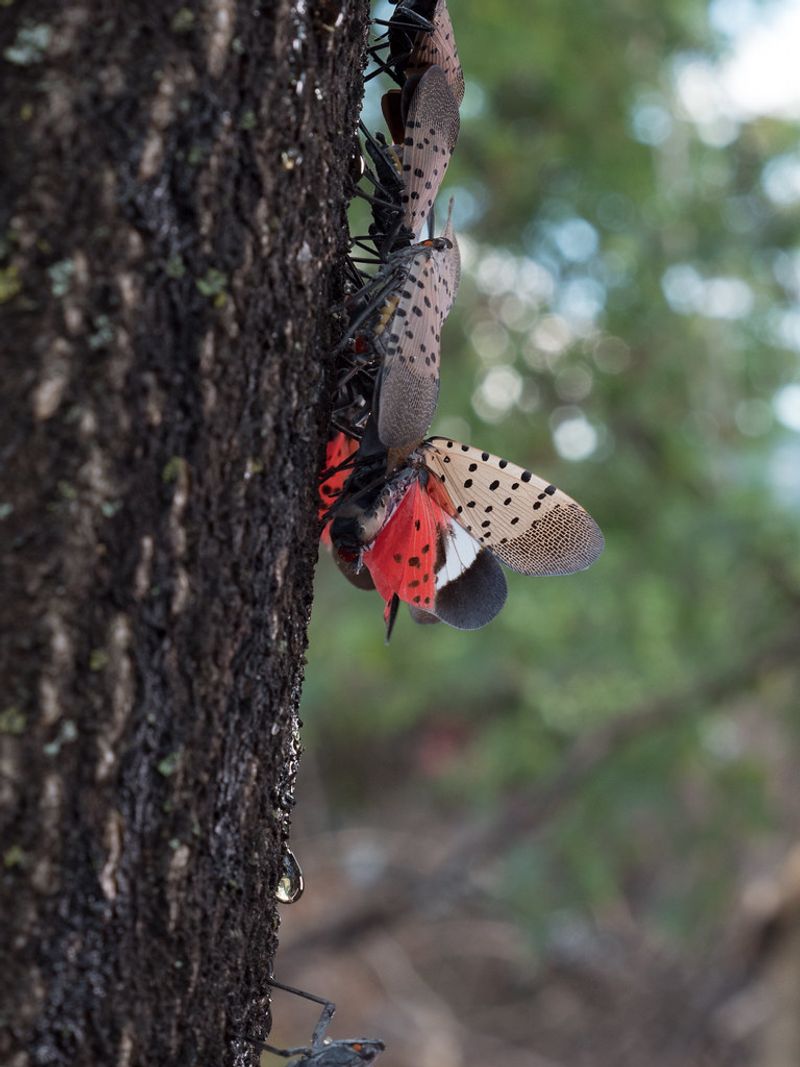
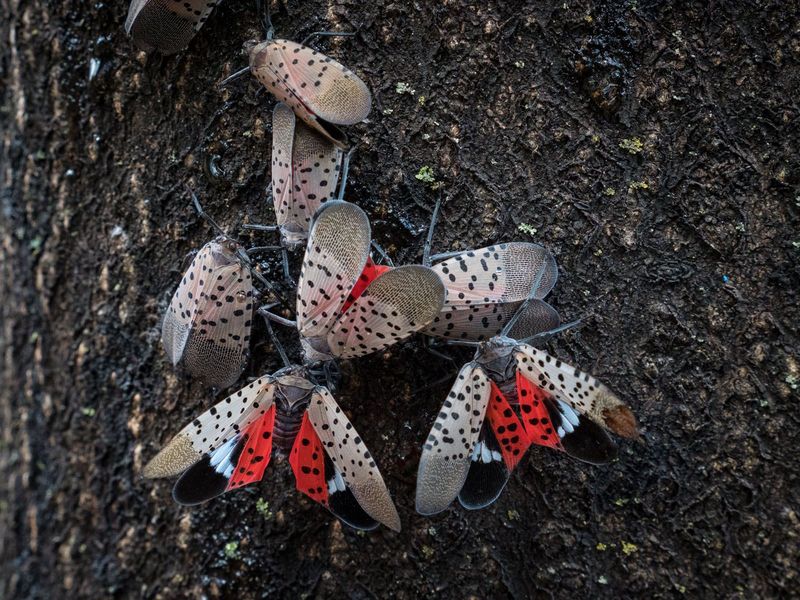
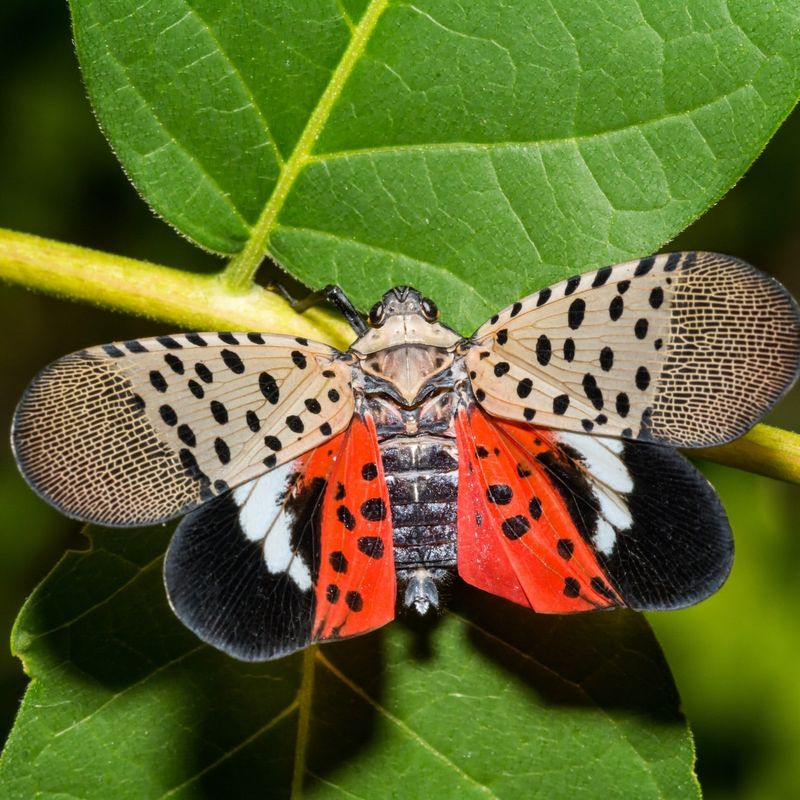
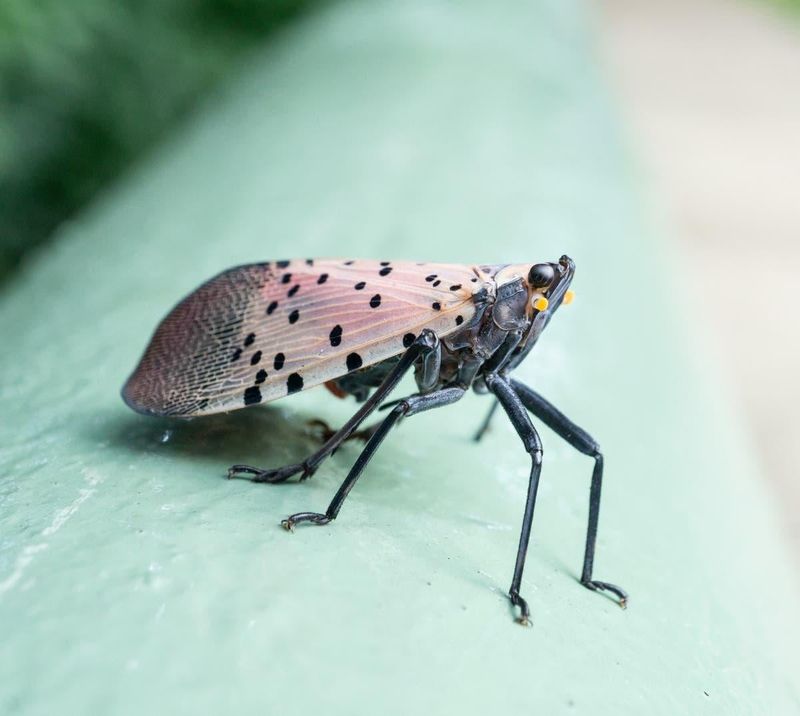
By the time a spotted lanternfly reaches adulthood, it has become one of the more visually striking insects you might come across in a garden. Adult spotted lanternflies have grayish-brown forewings covered in bold black spots.
The pattern is almost polka-dotted, which makes them stand out from most other insects in the Pacific Northwest.
The real surprise comes when the adult opens its wings. Underneath those spotted gray forewings are bright red hindwings with black spots and a white band.
That flash of red is eye-catching and serves as a warning to predators. It also makes adult spotted lanternflies much easier to identify in the field.
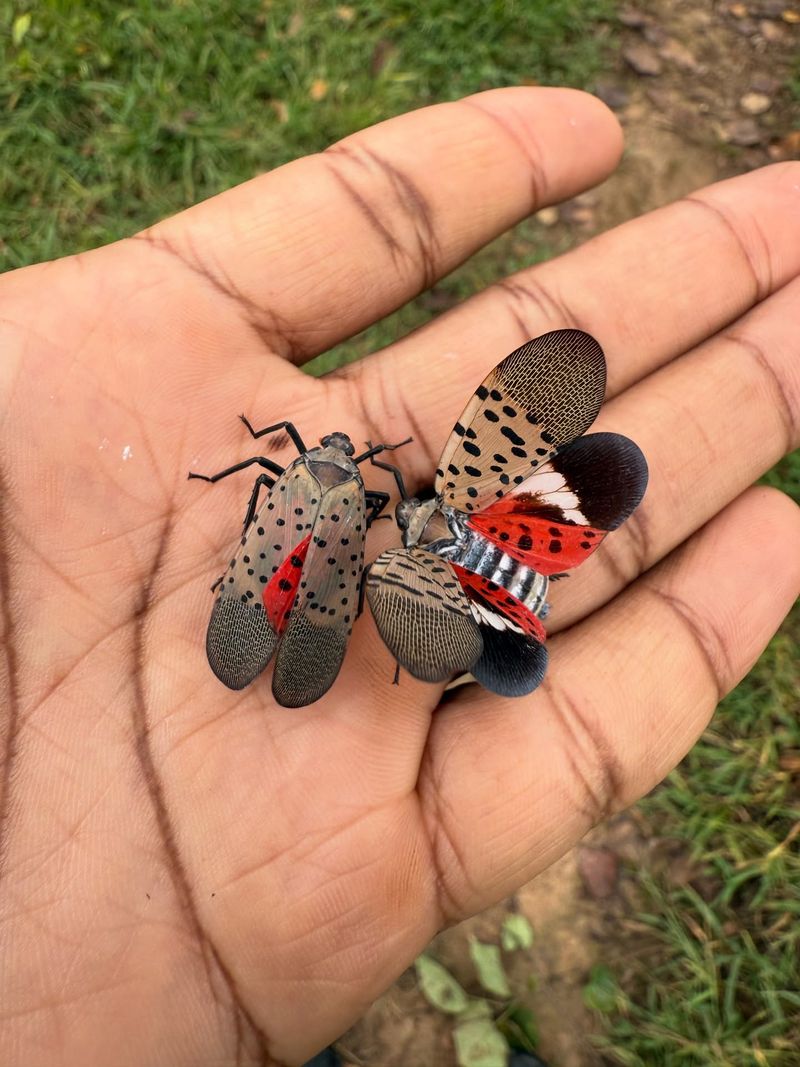
Adults are about an inch long and are capable of flying, though they tend to hop and crawl more often than they take flight. They are most active from late summer through early fall, which is when they feed heavily and lay their egg masses for the next generation.
Seeing an adult spotted lanternfly in your yard or garden is a significant event and should be reported immediately. Do not assume it flew in from a neighbor’s yard and will move on.
Adults can lay egg masses on almost any flat surface, including fence posts, patio furniture, and tree bark.
Recognizing the adult stage quickly gives you and local officials the best chance of stopping a new population before it grows into something much harder to manage across the region.
Tree-Of-Heaven Is The Big Plant To Check
One plant above all others tends to attract spotted lanternflies more than anything else: the Tree-of-Heaven, known scientifically as Ailanthus altissima.
This invasive tree from China is already widespread across many parts of the United States, including areas of our state.
Where you find Tree-of-Heaven, you are likely to find spotted lanternflies nearby if the pest is in the area.
Tree-of-Heaven grows fast and thrives in disturbed areas like roadsides, empty lots, and the edges of forests. It has large compound leaves with many leaflets and produces clusters of yellowish-green flowers in spring.
The tree has a distinctive smell that many people describe as unpleasant, especially when the leaves are crushed.
Spotted lanternflies use Tree-of-Heaven as both a feeding source and a preferred site for laying eggs. Finding egg masses on the bark of this tree is one of the clearest signs that the pest may be in your area.
The egg masses look like brownish-gray smears about an inch long, similar to dried mud or putty.
Even if you are not a fan of Tree-of-Heaven, do not remove it without checking with local authorities first. In some cases, officials prefer to leave certain host trees in place temporarily to help monitor or manage pest populations in a controlled way.
Learning to identify this tree in your neighborhood gives you a reliable starting point for your spotted lanternfly watch this season and every season going forward.
Sticky Leaves And Sooty Mold Are Clues
You might not always see the spotted lanternfly itself right away, but the plant damage it leaves behind can be a very clear warning sign.
One of the most noticeable signs is a sticky substance on leaves, stems, and even the ground beneath an infested plant.
That stickiness comes from a liquid called honeydew that the insects produce as they feed.
Honeydew is essentially sugary waste that drips from the insect as it sucks sap from the plant. It coats surfaces and creates a perfect environment for a black fungus called sooty mold to grow.
Sooty mold does not directly harm plants on its own, but it blocks sunlight from reaching the leaves, which slows photosynthesis and weakens the plant over time.
If you notice a dark, powdery coating on your plant leaves that wipes off but keeps coming back, sooty mold could be the cause.
Combined with sticky residue and a sweet or fermented smell near the plant, these are strong clues that sap-feeding insects are active nearby.
Other insects like aphids and scale insects also produce honeydew, so sooty mold alone does not confirm a spotted lanternfly infestation.
But if you see these signs along with any of the visual clues described in other sections of this article, it is worth investigating further and reporting your findings.
Catching these early symptoms quickly gives plants a better chance of recovering and helps officials respond before an infestation spreads to neighboring properties or farms.
Snap A Photo Before You Do Anything Else
Finding a strange insect in your garden can feel urgent, and the first instinct for many people is to squash it or brush it away. When it comes to the spotted lanternfly, though, slowing down for just a moment can make a real difference.
Taking a clear photo before doing anything else gives experts the evidence they need to confirm whether what you found is actually a spotted lanternfly.
A good photo does not require a professional camera. Most smartphone cameras can capture enough detail to show the insect’s markings, size, and color.
Try to get a shot from the top and from the side if possible. Include something in the frame, like a coin or a finger, to give a sense of scale.
If the insect is on a moveable object, like a piece of outdoor furniture or a potted plant, you can also try to capture it in a container with a lid. Place a small amount of rubbing alcohol in the container first.
Preserved specimens are extremely helpful for laboratory identification and confirmation.
Avoid using just your memory when reporting a sighting. Details like exact location, the type of plant the insect was on, and how many you saw are all valuable pieces of information for state officials tracking potential spread.
A single clear photo sent to the right agency could be the first step in preventing a major infestation from taking root in your community. Your garden observation genuinely matters on a statewide level.
Report It Fast To Help Keep Oregon Ahead Of It
Speed matters when it comes to invasive pests. The faster a sighting gets reported, the faster trained inspectors can investigate and respond.
Our state has a reporting system set up specifically for invasive species like the spotted lanternfly, and using it is one of the most powerful things any gardener or resident can do.
The Oregon Invasive Species Hotline is available by phone and online. You can also submit reports on the Oregon Department of Agriculture website.
These tools make it easy to share your photo, describe what you saw, and note the exact location using GPS coordinates from your phone.
Reporting is not just for professional growers or farmers. Backyard gardeners, hikers, and even people who just noticed something strange on a road trip have provided valuable early sightings that led to confirmed detections in other states.
Everyone who spends time outdoors is a potential first responder in the fight against invasive pests.
After you report, expect to hear back from state officials who may want to visit the location or ask follow-up questions. The process is straightforward and the people involved are genuinely grateful for every tip they receive, no matter how small it seems.
Staying connected with local gardening groups and following updates from the Oregon Department of Agriculture on social media can also keep you informed throughout the season.
Together, gardeners across our state can be a powerful early warning network that keeps this pest from ever getting comfortable here.