What California Gardeners Are Planting Instead Of Arborvitae
Arborvitae had a long run as the go-to privacy plant in California yards, and it is easy to understand why. It grows tall, it fills in fast, and it looks tidy without much maintenance.
The problem is that California’s dry summers and intense heat have been exposing its weaknesses in ways that are hard to ignore.
Brown patches and root stress from prolonged drought have left a lot of homeowners staring at a row of struggling plants that were supposed to be a permanent solution.
Gardeners have been quietly making the switch to alternatives that handle the climate far better and in many cases look significantly more interesting. Some grow just as fast.
Others bring flowers, fragrance, or wildlife value that arborvitae never could. Once you see what is out there, going back to the default choice stops making much sense.
1. Podocarpus / Fern Pine
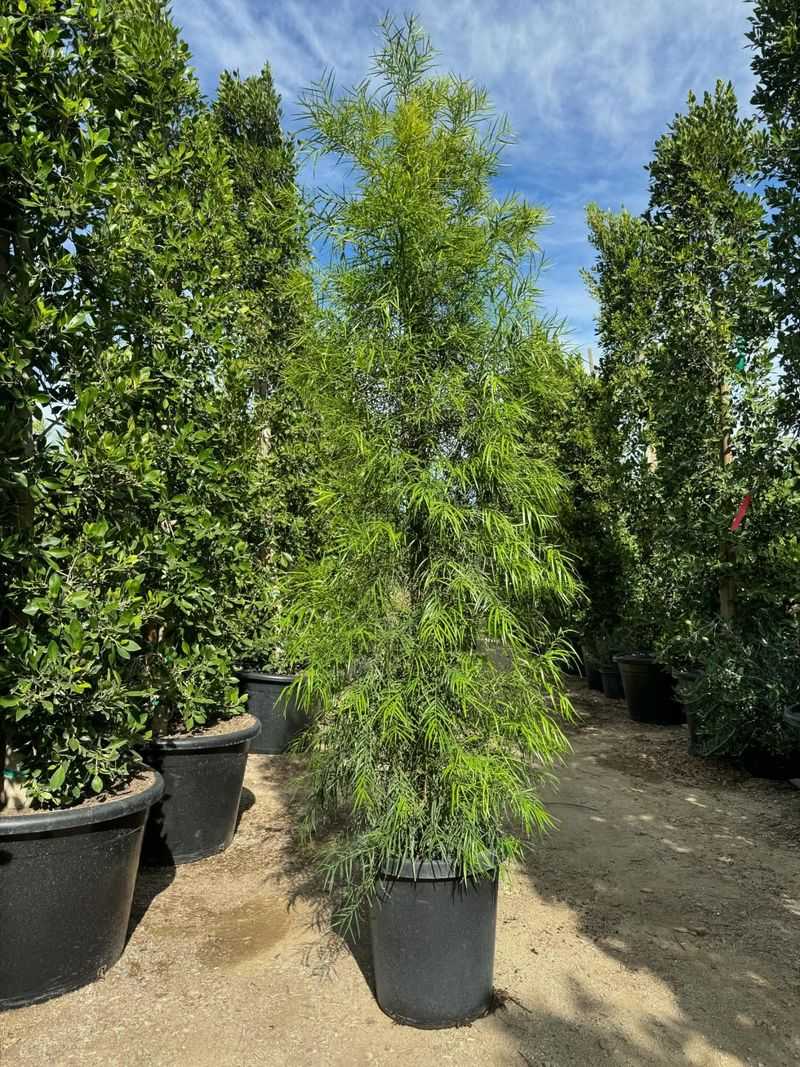
Few plants can match the clean, refined look of Podocarpus when used as a privacy screen. Also called Fern Pine, this evergreen is one of the most popular arborvitae replacements in our state, and for good reason.
It grows tall, stays dense, and handles heat surprisingly well.
Unlike arborvitae, Podocarpus is much more forgiving in warm, dry climates. Once it gets established, it needs only moderate watering.
That makes it a smart pick for gardeners who want lush greenery without running up a high water bill.
The leaves are long, soft, and dark green, giving it a graceful, almost feathery look. It can be shaped into a formal hedge or left to grow more naturally.
Either way, it creates a solid visual barrier between your yard and the outside world.
Podocarpus grows at a steady pace, reaching anywhere from 15 to 40 feet tall depending on the variety. It also tolerates coastal winds and some shade, which gives it an edge in many parts of our state.
Pest problems are rare, and it does not go brown the way arborvitae often does in summer heat. It is a reliable, low-fuss plant that earns its place in any garden.
2. Toyon
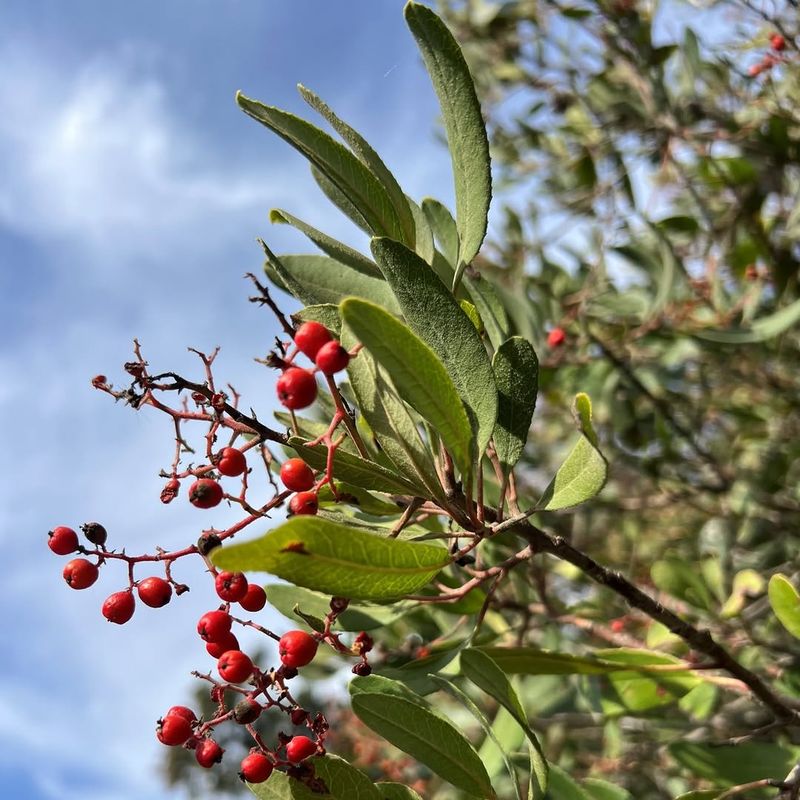
There is something genuinely exciting about a plant that feeds wildlife, looks beautiful year-round, and barely needs any water. Toyon does all three, and it does them with a kind of effortless charm that few ornamental plants can match.
It is also native to our state, which means it belongs here.
Toyon, sometimes called California Holly or Christmas Berry, produces clusters of bright red berries in winter. Birds love them.
The berries show up right when most other plants look dull and bare, giving your yard a pop of color during the coldest months of the year.
As a privacy screen, Toyon works well when planted in a row. It can grow 6 to 10 feet tall and just as wide.
The glossy, dark green leaves stay on the plant all year, so you always have coverage. It also handles poor soil and steep slopes with ease.
One of the best things about Toyon is how little it asks of you. Once it is established, it thrives on rainfall alone in most areas.
Your California Garden Changes Every Week. Your Plan Should Too.
Gardening in California changes quickly throughout the season. Every Friday you’ll receive a simple weekly plan showing exactly what to plant, prune, fertilize, harvest, and protect so you never miss the right timing.
It is highly fire-resistant too, which matters a lot in our state. For gardeners who want beauty, function, and low maintenance all in one plant, Toyon is hard to beat.
3. Pacific Wax Myrtle
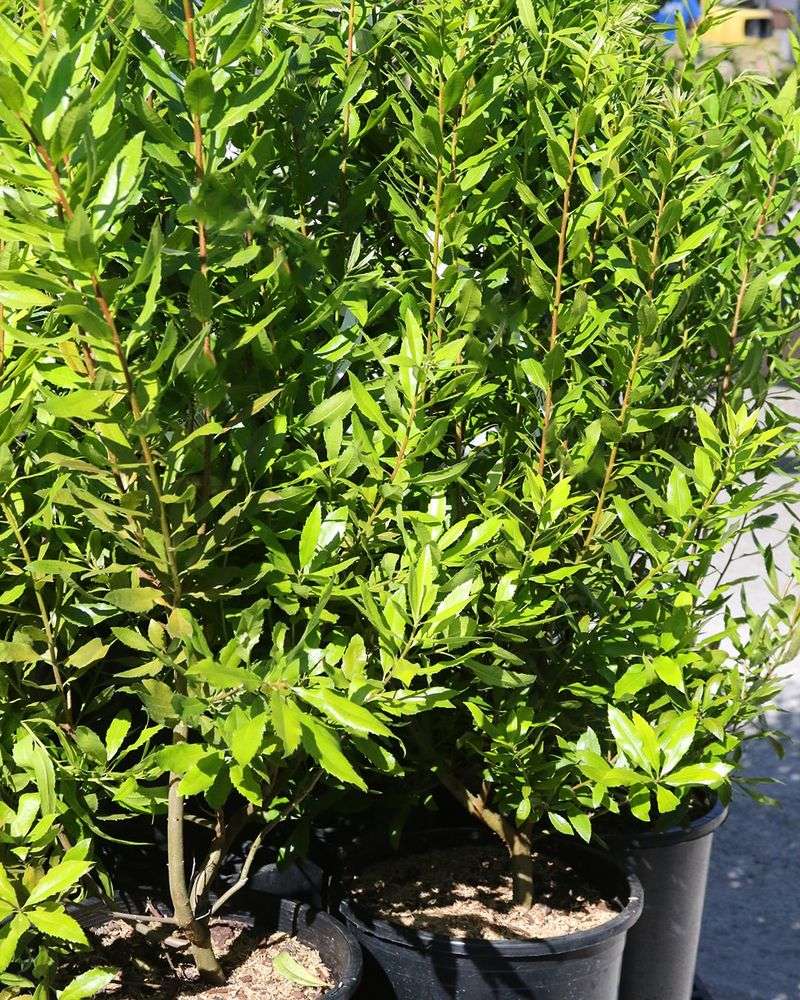
Fast growth is one of the most wanted traits in a privacy hedge, and Pacific Wax Myrtle delivers. This native evergreen shrub can shoot up several feet in a single growing season under good conditions.
For homeowners who want results quickly, that kind of speed is very welcome.
Pacific Wax Myrtle is native to the West Coast and feels completely at home in our climate. It handles coastal fog, salty air, and dry summers without much fuss.
The leaves are narrow, aromatic, and bright green, giving it a fresh, lively look throughout the year.
When planted in a line, it forms a thick, dense hedge that blocks both sight and sound. It can grow anywhere from 10 to 25 feet tall, depending on conditions.
You can trim it into a tidy formal shape or let it grow in a more relaxed, natural way. Both styles look great.
Watering needs are low once the plant is established, making it a practical choice for water-conscious gardeners. It also attracts birds, who enjoy its small waxy berries in the fall.
Pacific Wax Myrtle fits beautifully into native plant gardens and works just as well in more traditional landscapes. It truly earns its spot as a top arborvitae swap.
4. Ceanothus / California Lilac
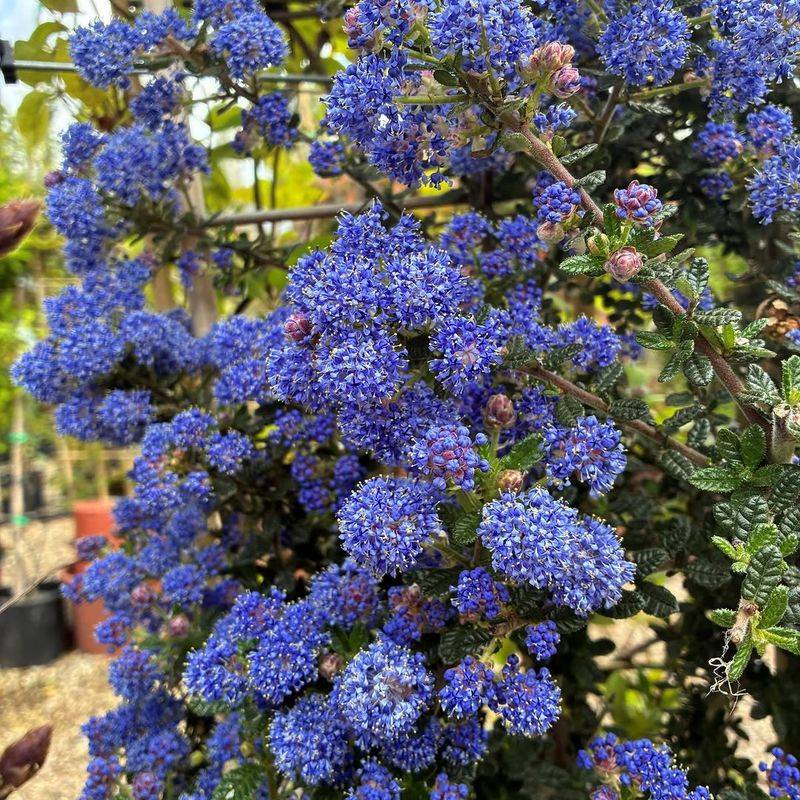
Bold blue flowers that practically stop traffic in spring, a tough drought-tolerant nature, and zero need for extra fertilizer? Yes, Ceanothus really is that good.
This native shrub has earned a devoted following among gardeners across our state, and it keeps winning new fans every year.
Most people know Ceanothus for its show-stopping blooms. The flowers range from pale lavender to deep cobalt blue, and they cover the entire plant in late winter and spring.
Pollinators go absolutely wild for them. If you want bees and butterflies in your yard, plant Ceanothus and watch what happens.
Beyond the flowers, Ceanothus is a serious workhorse in the landscape. Many varieties grow 6 to 12 feet tall and form a dense, rounded shape that works well as a screen or backdrop planting.
The dark green leaves stay on all year, keeping the hedge effect intact even after blooming season ends.
Water needs are very low once established. In fact, too much summer water can harm the plant, so it actually prefers to be left alone during dry months.
It grows best in well-drained soil and full sun. Ceanothus is a plant that rewards you generously for doing very little, which makes it a dream for busy gardeners.
5. Sugar Bush
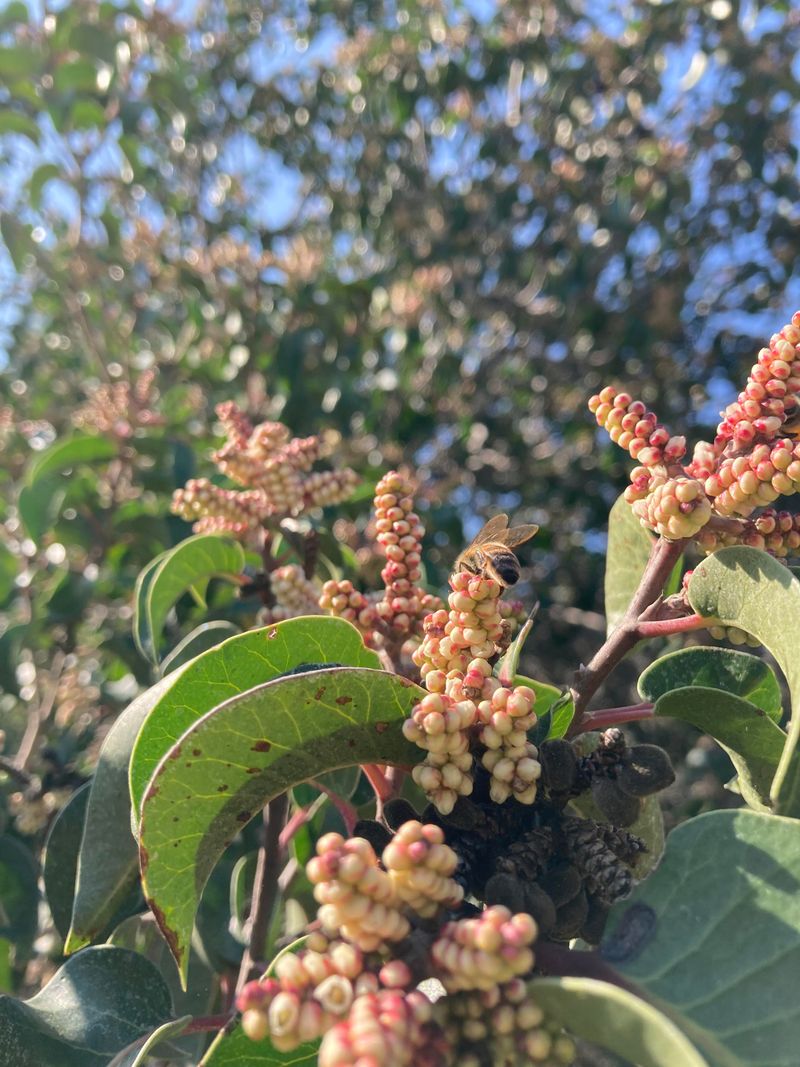
Not every great garden plant gets the attention it deserves, and Sugar Bush is a perfect example.
This native shrub has been quietly thriving on dry hillsides and coastal slopes across southern parts of our state for thousands of years.
Gardeners are finally starting to notice what it can do. Sugar Bush, known scientifically as Rhus ovata, is a large, sturdy evergreen shrub with thick, glossy leaves.
It can grow 8 to 12 feet tall and just as wide, making it an excellent choice for privacy screens and windbreaks.
The dense branching habit means very little light passes through once the plant matures.
In spring, small clusters of white or pinkish flowers appear and attract pollinators. Later in the season, the plant produces sticky red berries that birds and wildlife enjoy.
The berries were even used historically by indigenous communities to make a sweet drink, which is how the plant got its name.
Drought tolerance is one of Sugar Bush’s strongest traits. It thrives in full sun and poor, rocky soil where many other plants would struggle.
Once established, it rarely needs supplemental watering. It is also fire-resistant, which is a major bonus for homeowners in fire-prone areas of our state.
Sugar Bush is tough, attractive, and deeply rooted in local history.
6. California Bay Laurel
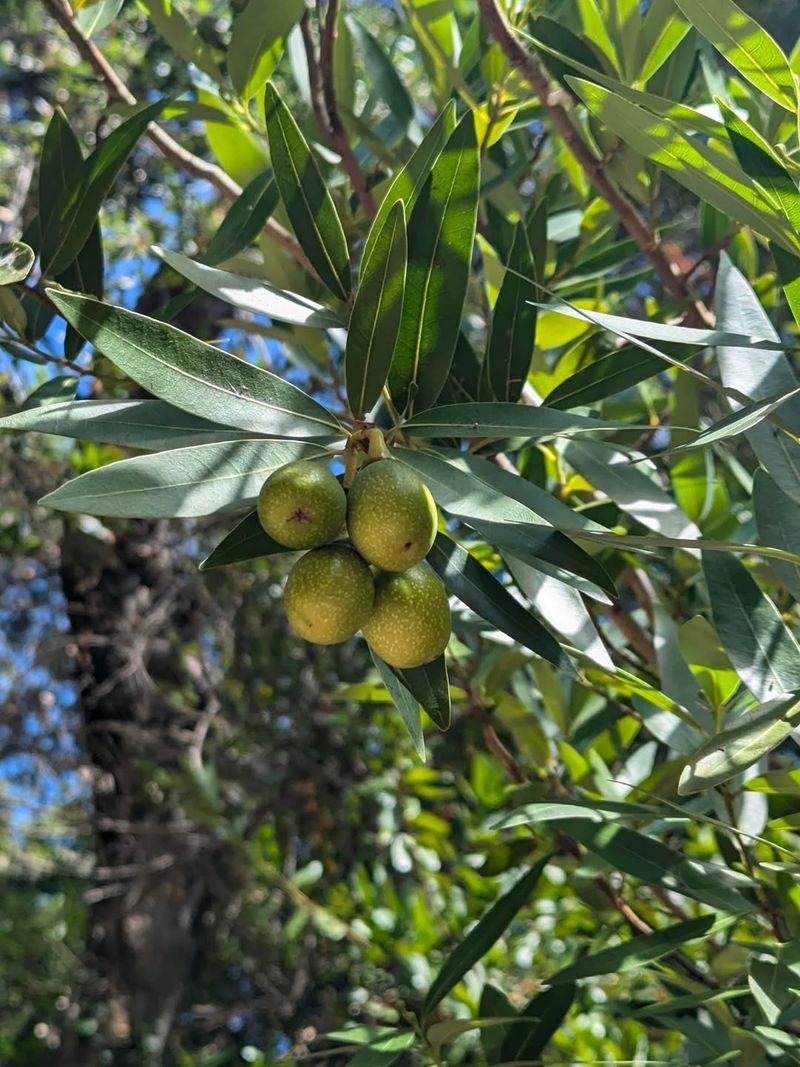
Walk past a California Bay Laurel on a warm day and you will immediately know why it is so beloved. The leaves release a strong, spicy, herbal fragrance that fills the air around it.
It smells like a kitchen spice rack and a forest walk all at once. That alone makes it worth growing.
Beyond the scent, Bay Laurel is a highly practical plant for privacy and screening. It can grow as a large shrub or small tree, reaching 10 to 40 feet depending on conditions.
The dense, dark green canopy creates a solid visual barrier that works well along property lines and fence lines.
It is native to our state and grows naturally in canyons, woodlands, and stream banks. In the garden, it adapts well to both sun and partial shade, which gives it more flexibility than many other screening plants.
It handles dry summers with ease once established.
The leaves can actually be used in cooking, just like the Mediterranean bay leaf, though the flavor is more intense. Gardeners who love herbs often plant Bay Laurel right in their kitchen garden for easy access.
Birds nest in the branches, and the small yellow flowers attract pollinators in early spring. It is a multi-layered plant that gives back in many ways.
7. Pineapple Guava / Feijoa
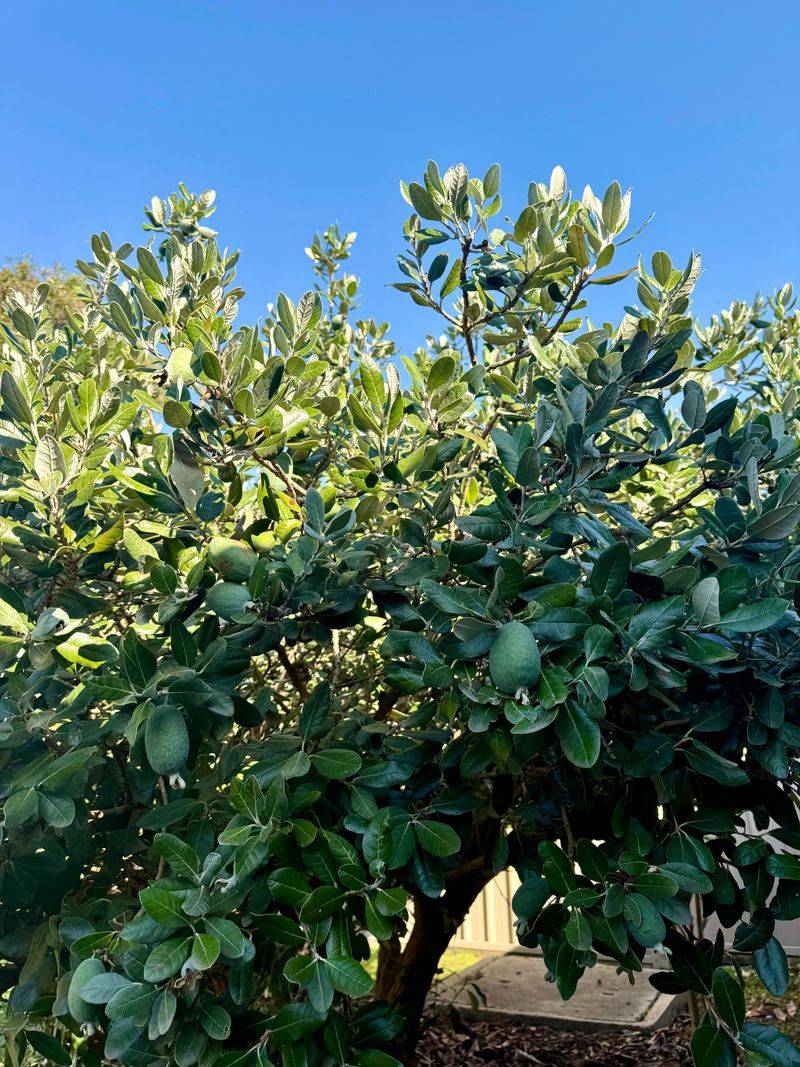
Some plants are all looks and no substance. Pineapple Guava is the opposite.
This compact evergreen shrub gives you a gorgeous privacy screen, exotic tropical flowers, and edible fruit all from the same plant. It is one of the most underrated multi-taskers in the garden world.
Also known as Feijoa, this plant produces one of the most beautiful flowers you will ever see on a shrub.
The blooms are creamy white with bright red stamens and fleshy petals that are actually edible and sweet.
They appear in late spring and draw hummingbirds like a magnet.
After the flowers fade, the plant produces small green fruits that taste like a mix of pineapple, mint, and guava. The fruit ripens in fall and can be eaten fresh or used in jams and smoothies.
Not every garden plant puts food on your table, but this one does.
Pineapple Guava grows 6 to 15 feet tall and has thick, leathery, silver-green leaves that stay on year-round.
It handles drought well once established and can tolerate light frost, which makes it useful in northern regions too.
It grows slowly but steadily and forms a dense, wind-resistant hedge over time. For gardeners who want beauty and practicality, Feijoa delivers both with style.
8. Strawberry Tree / Arbutus
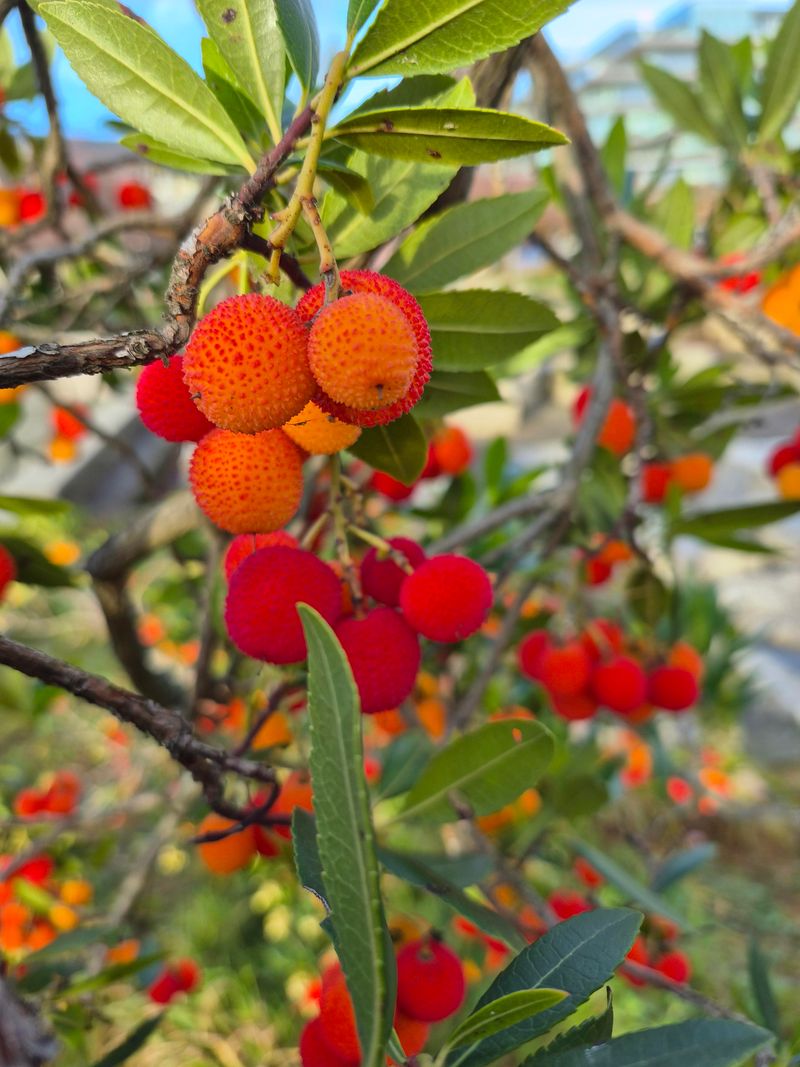
Red and orange fruits dangling from dark green branches, smooth cinnamon-colored bark peeling in curls, and small white bell-shaped flowers all on the same tree at the same time?
That is exactly what the Strawberry Tree offers, and it is a genuinely jaw-dropping sight in any garden.
Arbutus unedo, commonly called the Strawberry Tree, is an evergreen that grows 8 to 15 feet tall. It works beautifully as a privacy screen, a specimen tree, or a tall hedge.
The dense canopy of glossy leaves blocks views effectively while adding serious visual interest at eye level and above.
The fruits look like small strawberries but taste quite different. They are edible but bland on their own, though they are sometimes used to make jams and liqueurs in Mediterranean countries.
The real show is the bark, which peels away in strips to reveal a smooth, warm reddish-brown surface underneath. It is one of the most visually striking trunks in the plant world.
Strawberry Tree thrives in our state’s Mediterranean climate. It tolerates drought, poor soil, and coastal conditions without complaint.
It also attracts wildlife year-round, since the flowers, fruit, and branches each serve different creatures. Slow to moderate in growth rate, it is a long-term investment that pays off with year-round beauty and minimal upkeep.
9. Evergreen Escallonia
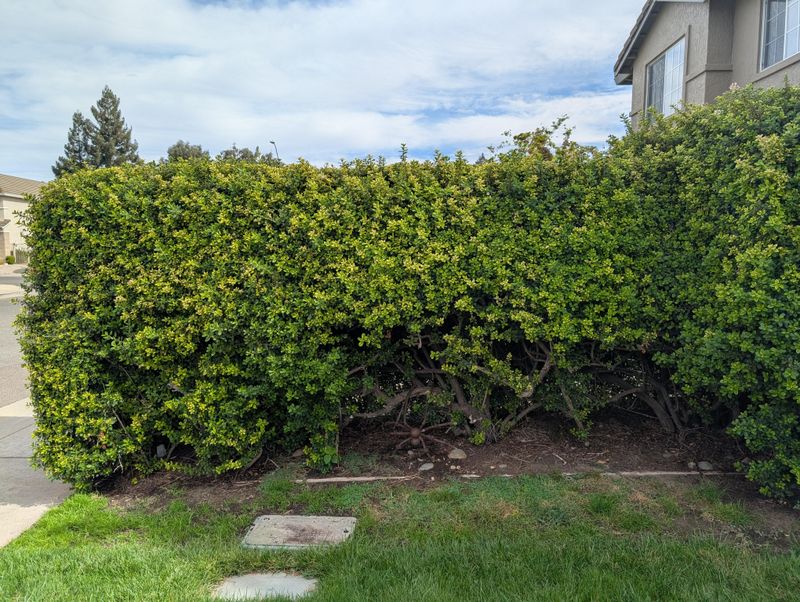
Coastal gardeners know the struggle of finding plants that can handle salt air, strong winds, and dry summers all at once. Evergreen Escallonia handles all of it without missing a beat.
It is one of the most reliable hedging plants for tough coastal conditions anywhere in our state.
Escallonia is a South American native that has adapted beautifully to our Mediterranean climate. It produces clusters of small, tubular flowers in shades of pink, red, or white, depending on the variety.
Blooming happens mainly in summer and fall, which is exactly when most other plants have finished their show for the year.
The glossy, dark green leaves stay on the plant all year and give it a lush, polished look. When planted in a row, Escallonia forms a dense, formal hedge that can be trimmed to almost any height.
Most varieties top out between 5 and 10 feet, making them a great mid-size option for privacy screening.
Hummingbirds and bees visit the flowers regularly, which adds extra life and movement to the garden. Escallonia grows at a moderate pace and responds well to pruning, so keeping it tidy is easy.
It also handles drought and heat once established, needing only occasional deep watering in summer. For a flowering hedge that actually earns its keep, Escallonia is a top-tier choice.
10. Dwarf Southern Magnolia
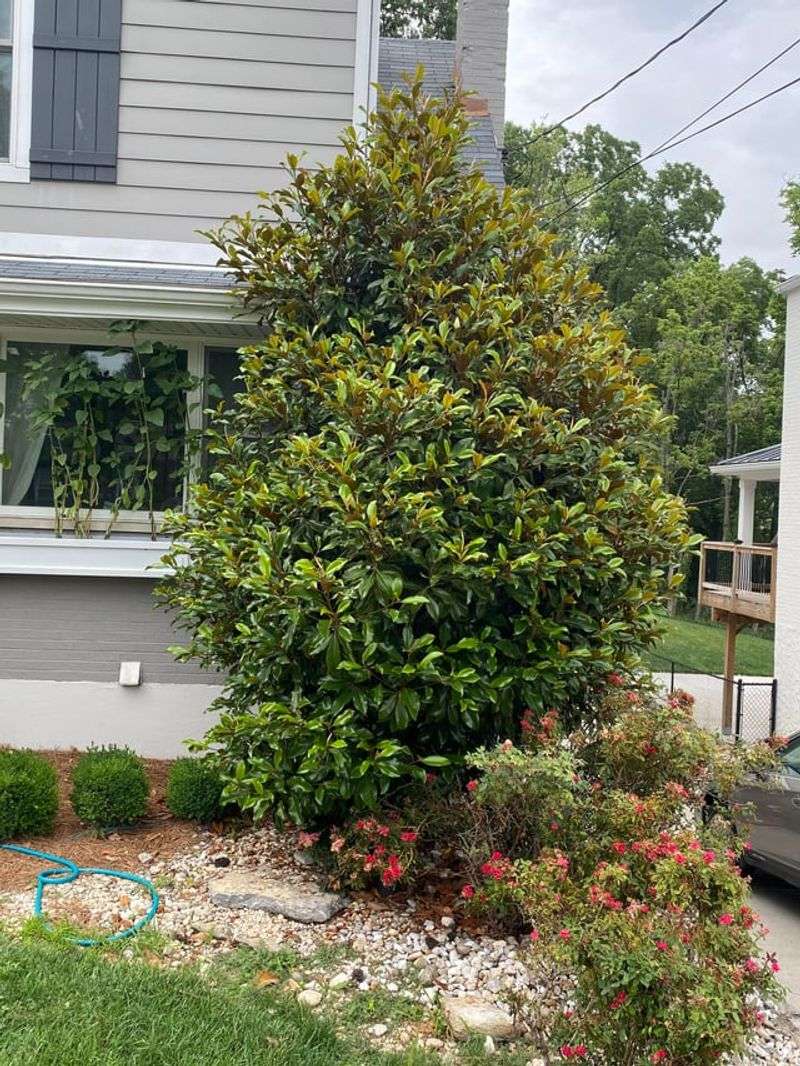
Big, creamy white flowers the size of dinner plates and leaves so glossy they look like they have been polished with wax.
That is the Dwarf Southern Magnolia, and it brings a touch of old-fashioned elegance to any garden that most modern plants simply cannot replicate.
Unlike the full-size Southern Magnolia, which can tower over 60 feet, the dwarf varieties stay compact and manageable.
Plants like ‘Little Gem’ and ‘DD Blanchard’ typically reach 10 to 20 feet tall, making them practical for use as privacy screens and tall hedges in suburban yards.
The fragrance from the flowers is rich and sweet, drifting across the yard on warm evenings. Blooms appear from late spring through summer, and some varieties put out a second flush of flowers in early fall.
The large, leathery leaves have a rusty-brown underside that catches the eye when a breeze turns them over.
Dwarf Southern Magnolia grows best in full sun with deep, well-drained soil. It needs moderate watering but is more drought-tolerant than the standard species once it settles in.
In our state’s warmer inland valleys, it performs especially well. It grows slowly but forms a stunning, permanent screen that adds real curb appeal and lasting value to your property.