Native Michigan Shrubs That Handle Deer, Clay Soil And Full Shade Better Than Most
Deer pressure, heavy clay, and deep shade are three of the most common frustrations in landscaping, and most shrubs handle one of them adequately at best.
Finding something that takes all three in stride is a different challenge entirely, and the answer almost always points back to native plants.
Michigan natives evolved alongside these exact conditions and are better equipped to handle them than introduced ornamentals selected for appearance rather than adaptability.
The shrubs on this list thrive where most gardeners have given up trying, filling difficult spots with genuine structure and seasonal interest instead of the struggling, sparse growth that usually ends up there.
For Michigan yards with problem areas that have resisted every previous planting attempt, these natives are worth trying before writing the spot off entirely.
1. Spicebush (Lindera Benzoin)
Walk past a Spicebush on a warm spring morning and you will notice something unusual before you even see the flowers. The entire shrub gives off a spicy, almost citrusy scent that deer find genuinely unappealing.
That aromatic quality comes from oils in the leaves, bark, and twigs, and it is one of the main reasons Lindera benzoin holds up so well in deer-heavy landscapes.
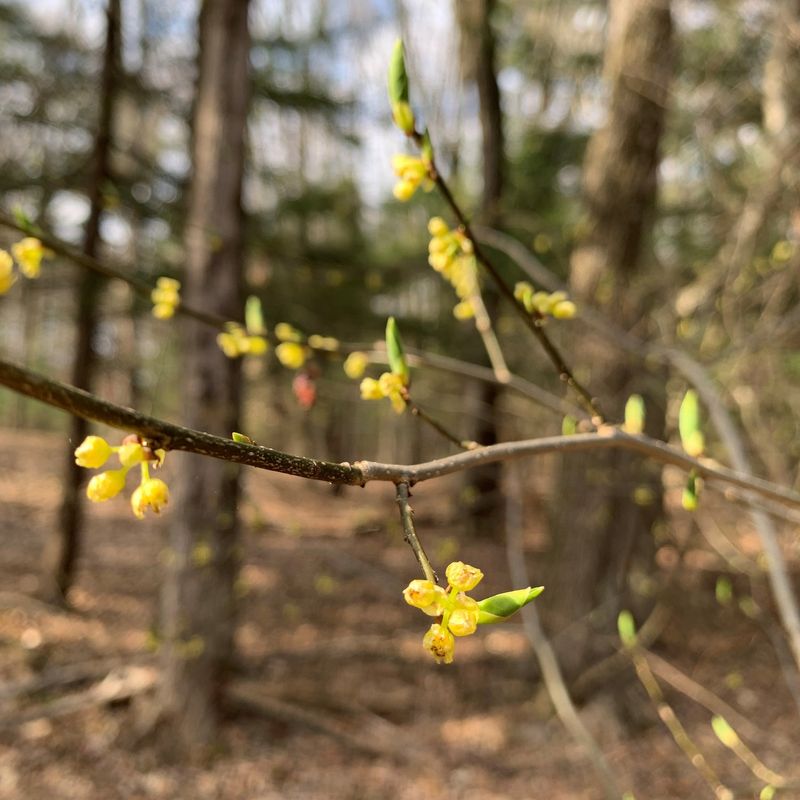
Spicebush blooms early, sometimes as soon as late March, covering its bare branches in clusters of tiny yellow flowers that feel like a celebration after a long winter.
Female plants follow up in late summer with bright red berries that songbirds, thrushes, and other wildlife absolutely love.
The fall color is a warm, buttery yellow that genuinely brightens up shaded corners of the yard.
In terms of soil, Spicebush is a natural fit for moist, heavier clay soils. It grows wild along woodland stream banks and wet forest edges throughout Michigan, so it is already adapted to conditions that stress out most ornamental shrubs.
Once established, it handles periodic waterlogged soil far better than most landscape plants.
Expect it to grow six to twelve feet tall and wide over time, though it tends to grow slowly in deep shade. Planting it in part shade gives the best balance of growth and flowering.
Pair it with ferns or wild ginger underneath for a low-maintenance woodland planting that practically takes care of itself after the first couple of seasons.
2. Northern Bush Honeysuckle (Diervilla Lonicera)
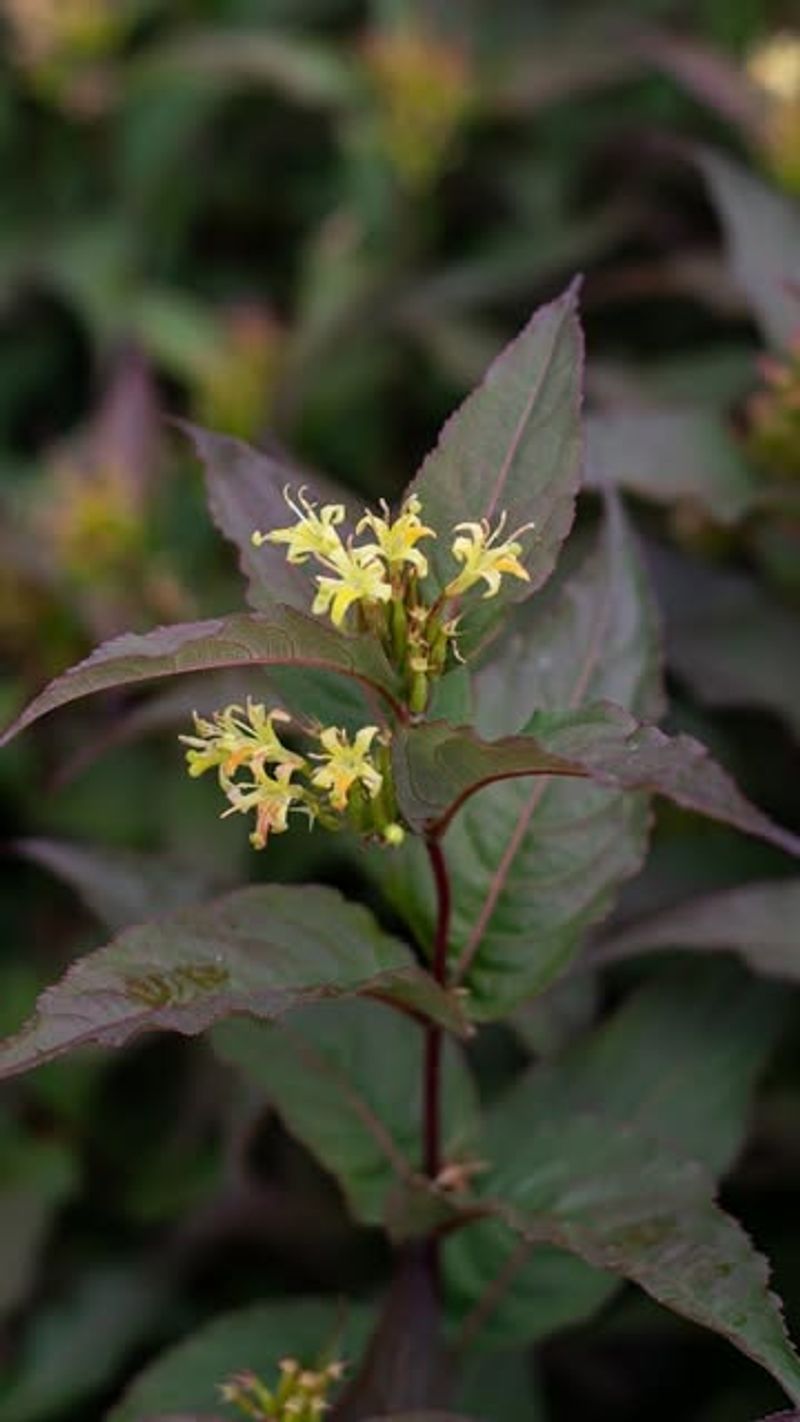
Most gardeners hear the word honeysuckle and immediately think of the invasive Japanese or Amur honeysuckle that has taken over so many Michigan roadsides. Northern Bush Honeysuckle is an entirely different story.
Diervilla lonicera is a true Michigan native, and it behaves itself completely, staying in bounds while quietly doing some of the hardest work in the landscape.
This shrub genuinely thrives where others struggle. Dry shade, clay soil, rocky slopes, and exposed woodland edges are all conditions where Diervilla lonicera not only survives but spreads into a tidy, low-growing colony over time.
It typically reaches two to four feet tall, making it a great choice for filling in under mature trees where bigger shrubs would compete with surface roots.
Your Michigan Garden Changes Every Week. Your Plan Should Too.
Gardening in Michigan changes quickly throughout the season. Every Friday you’ll receive a simple weekly plan showing exactly what to plant, prune, fertilize, harvest, and protect so you never miss the right timing.
The yellow tubular flowers that appear in early to midsummer attract bumblebees and native pollinators at a time when many other flowering shrubs have already finished blooming.
That makes it a genuinely useful plant for supporting local pollinator populations throughout the season.
The foliage sometimes picks up reddish or bronze tones in fall, adding a bit of late-season color without any extra effort.
Deer do browse Diervilla lonicera occasionally, especially on young plants or during late winter when food is scarce. However, established colonies tend to bounce back quickly from light browsing because of the shrub’s spreading root system.
Planting several together rather than a single specimen gives the planting a better chance of looking full and healthy even after a rough season with deer pressure.
3. Leatherwood (Dirca Palustris)
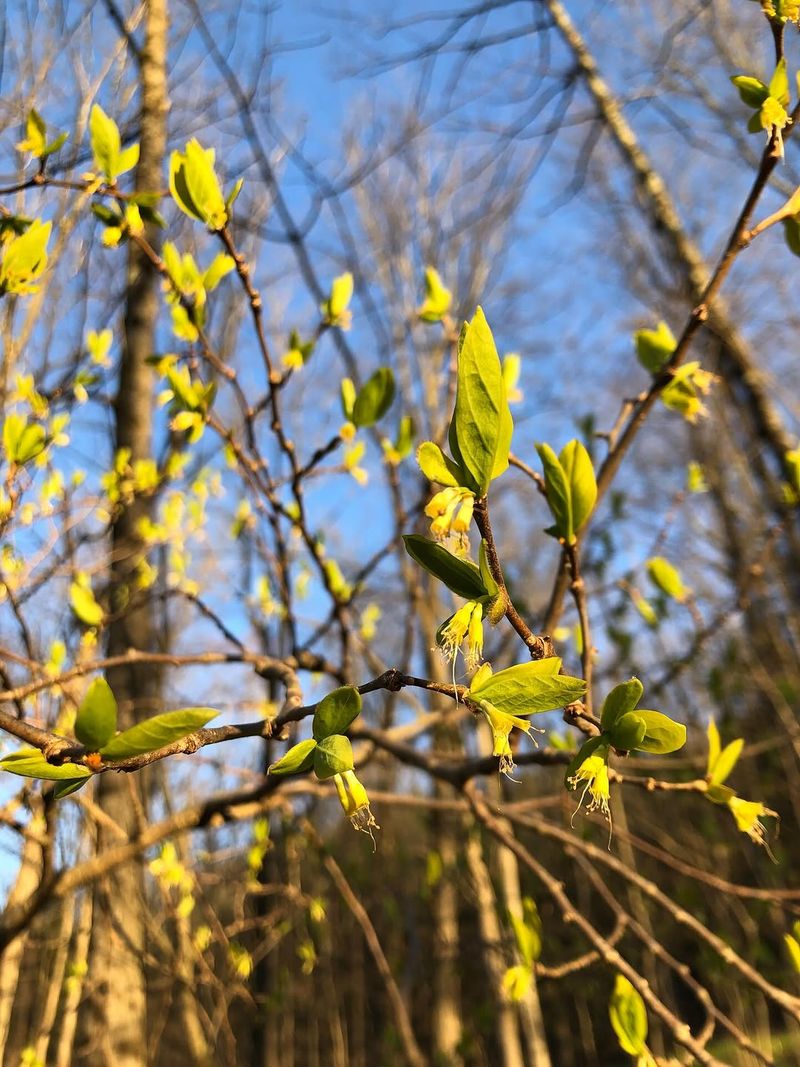
Leatherwood is one of those plants that most Michigan gardeners have never heard of, which is a shame because it is one of the most interesting native shrubs in the entire eastern woodland flora.
Dirca palustris is uncommon in cultivation, but it has been quietly growing in Michigan’s moist, shaded forests for centuries, asking very little from the landscape around it.
The name comes from the bark, which is so flexible and tough that Indigenous peoples historically used the stripped branches as cordage for binding and weaving. Bend a young branch almost in half and it will spring right back without snapping.
That physical toughness is a good metaphor for how the whole plant behaves in the garden. Leatherwood blooms very early in spring, often before any other native shrub in the woodland.
The pale yellow flowers are small and subtle, but they appear in late February or early March in southern Michigan, making them an important early nectar source for queen bumblebees just emerging from winter.
Growth is genuinely slow, with the shrub reaching perhaps three to six feet over many years, but that slow pace means it rarely needs pruning or management.
Deer tend to leave Leatherwood alone, likely because of compounds in the bark and foliage that make it unpalatable. It grows best in consistently moist, rich soil with good organic matter, similar to the conditions found along shaded stream banks.
Dry shade is a poor match for this plant, but in the right moist, protected spot it is nearly carefree.
4. Mapleleaf Viburnum (Viburnum Acerifolium)
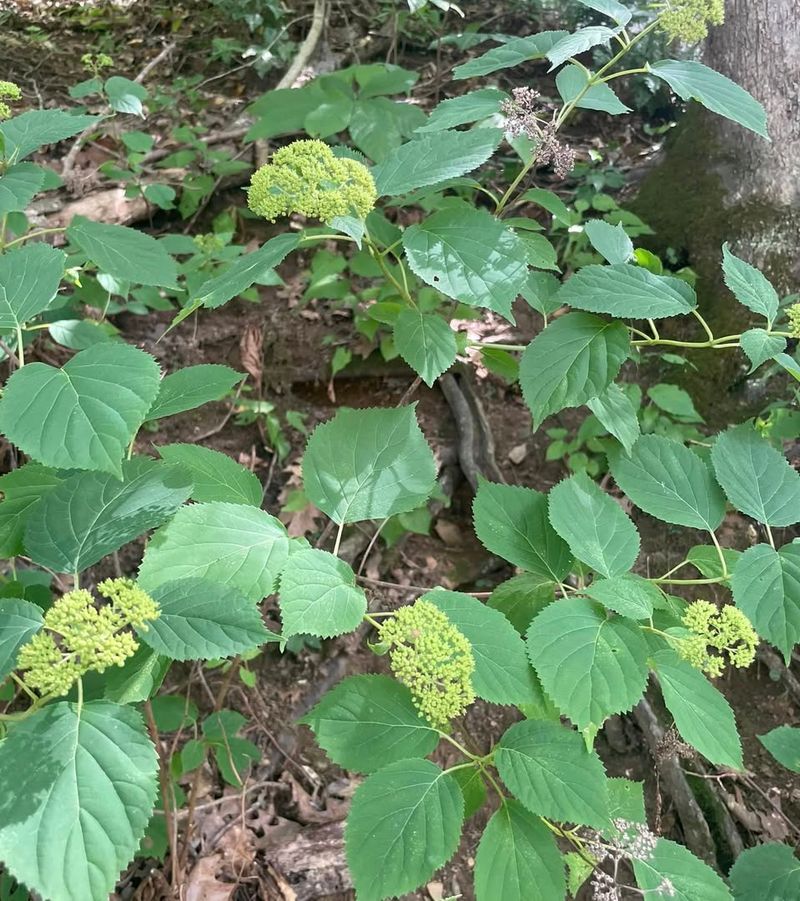
Some shrubs look like they belong in a garden catalog. Mapleleaf Viburnum looks like it belongs in the forest, because it does.
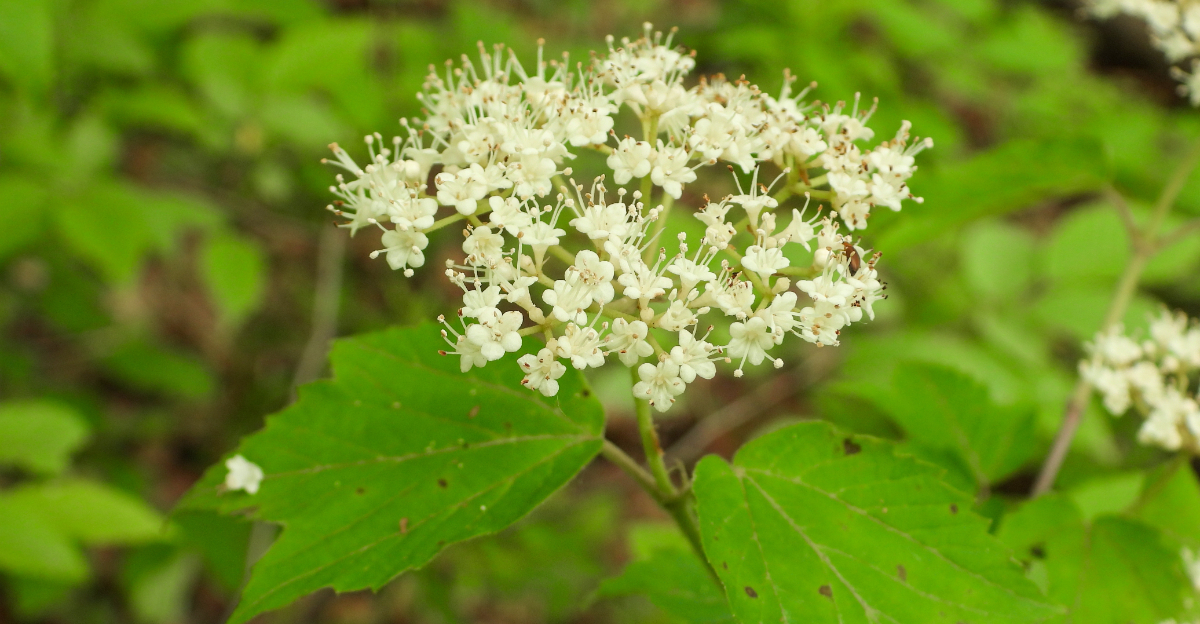
Viburnum acerifolium is one of the most shade-tolerant native shrubs in Michigan, growing naturally in the understory of dense hardwood forests where very little direct sunlight reaches the ground.
The leaves are the first thing most people notice. They look almost exactly like maple leaves, which makes this shrub surprisingly easy to identify.
In spring, flat-topped clusters of small white flowers appear above the foliage and attract a variety of native bees and insects.
By late summer those flowers turn into dark bluish-black berries that migrating birds depend on during fall travel. Fall color on Mapleleaf Viburnum is genuinely spectacular for a shade-tolerant shrub.
The leaves shift through shades of pink, red, and deep purple before dropping, which is a remarkable show for a plant growing in conditions where most shrubs barely change color at all.
It typically grows four to six feet tall and tends to spread slowly by root suckers, eventually forming a loose colony in naturalized settings.
Deer do browse this viburnum, particularly on young plants, so some temporary protection during the first year or two is worth considering in high-pressure areas.
Once established, the colony nature of the plant helps it recover from moderate browsing better than a single-stemmed shrub would.
For shaded Michigan yards that need a reliable native with genuine wildlife value, Viburnum acerifolium is hard to beat.
5. Blackhaw Viburnum (Viburnum Prunifolium)
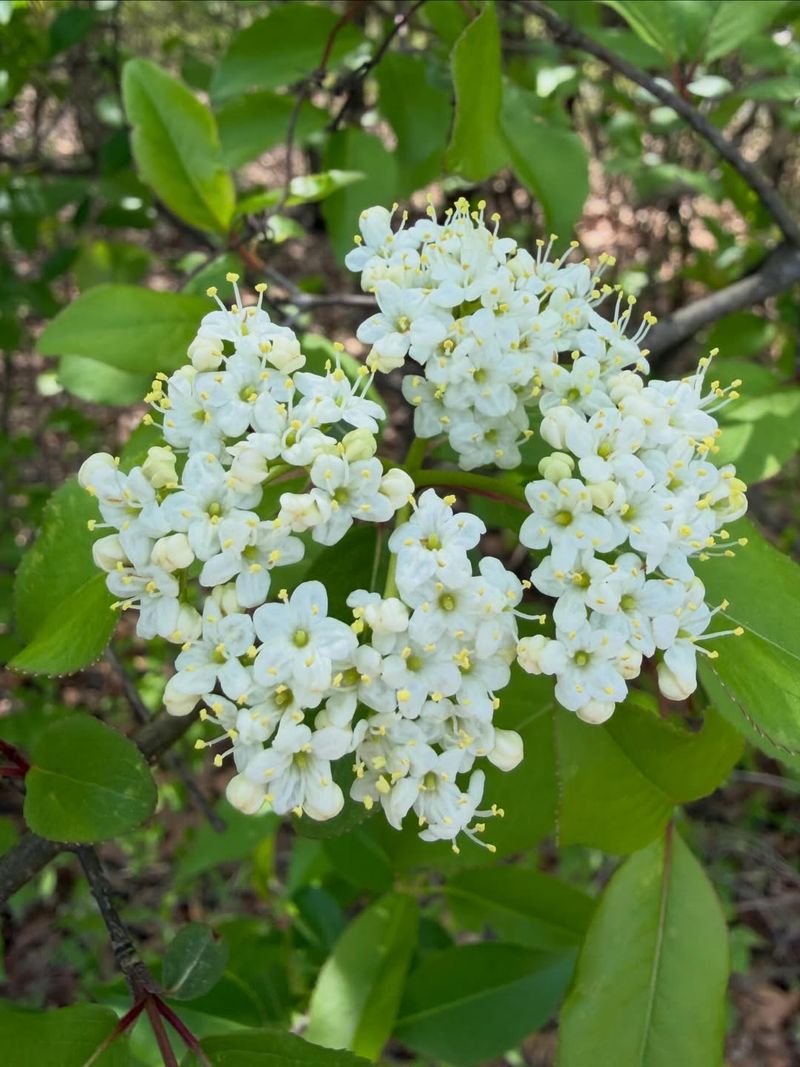
Blackhaw Viburnum earns its place in tough Michigan landscapes by doing things most shrubs simply cannot manage.
Viburnum prunifolium handles clay soil, handles part shade, and holds up reasonably well in deer-prone yards, all while putting on a genuinely attractive show through three full seasons of the year.
Spring brings flat-topped clusters of creamy white flowers that cover the plant in mid to late May, right when the landscape is waking up and pollinators are actively foraging.
Those flowers give way to clusters of blue-black fruit by late summer and fall, which cedar waxwings, robins, and other fruit-eating birds treat like a buffet.
The fall foliage shifts to deep red and burgundy, giving the plant one last burst of color before the season ends.
Mature Blackhaw Viburnum can reach eight to fifteen feet tall and nearly as wide, so it works well as a large informal hedge, a wildlife border planting, or a multi-stem specimen in a spacious yard.
It handles clay soil with impressive resilience, though like most native shrubs it benefits from good mulching and consistent moisture during the first growing season to get the root system established.
Full shade is not ideal for this plant. It performs best in part shade or dappled light, where it flowers and fruits most reliably.
In truly deep shade, expect less flowering and a looser, more open growth habit. Deer will browse it occasionally, particularly in winter, but established plants recover well.
For Michigan gardeners who want a native shrub that genuinely delivers, this one rarely disappoints.
6. Why Deer Avoid Some Native Michigan Shrubs More Than Others
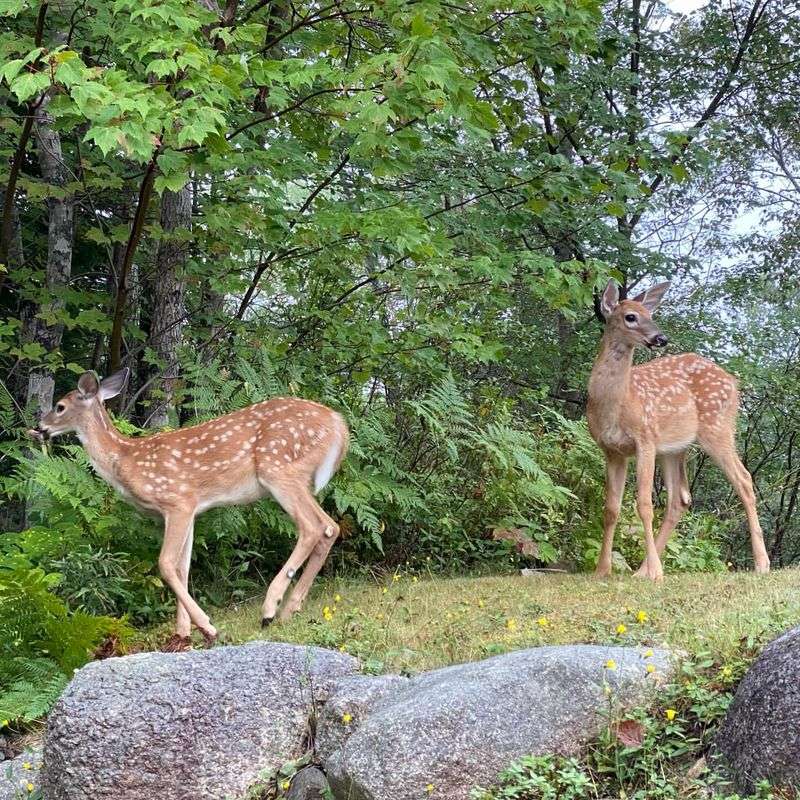
No shrub on the planet is completely deer-proof. Anyone who tells you otherwise is selling something.
What is genuinely true is that certain native Michigan shrubs are far less appealing to deer than others, and understanding why makes it easier to plan a landscape that holds up under real browsing pressure.
Aromatic foliage is one of the strongest natural deterrents. Shrubs like Spicebush and Leatherwood produce oils and compounds that deer find unpleasant, so they tend to move on to easier options when those plants are present.
Tough, leathery, or bitter foliage works similarly. Deer are selective feeders, and when palatable alternatives are available they usually choose those first.
Young plants are always the most vulnerable, regardless of species. A shrub that a mature deer herd largely ignores in summer can get browsed heavily in late winter when food is genuinely scarce.
Temporary wire cages or hardware cloth cylinders around new plantings during the first two winters give roots time to establish before the plant has to handle browsing pressure on its own.
Repellents can help, but they require consistent reapplication, especially after rain. Rotating between products with different active ingredients tends to work better than relying on a single formula all season.
The most realistic mindset is to think of deer-resistant native shrubs as plants that are less likely to be damaged rather than plants that will never be touched.
Combined with temporary protection and good species selection, that approach works well in most Michigan yards.
7. Why Clay Soil Is Easier For Woodland Shrubs Than Many Gardeners Think
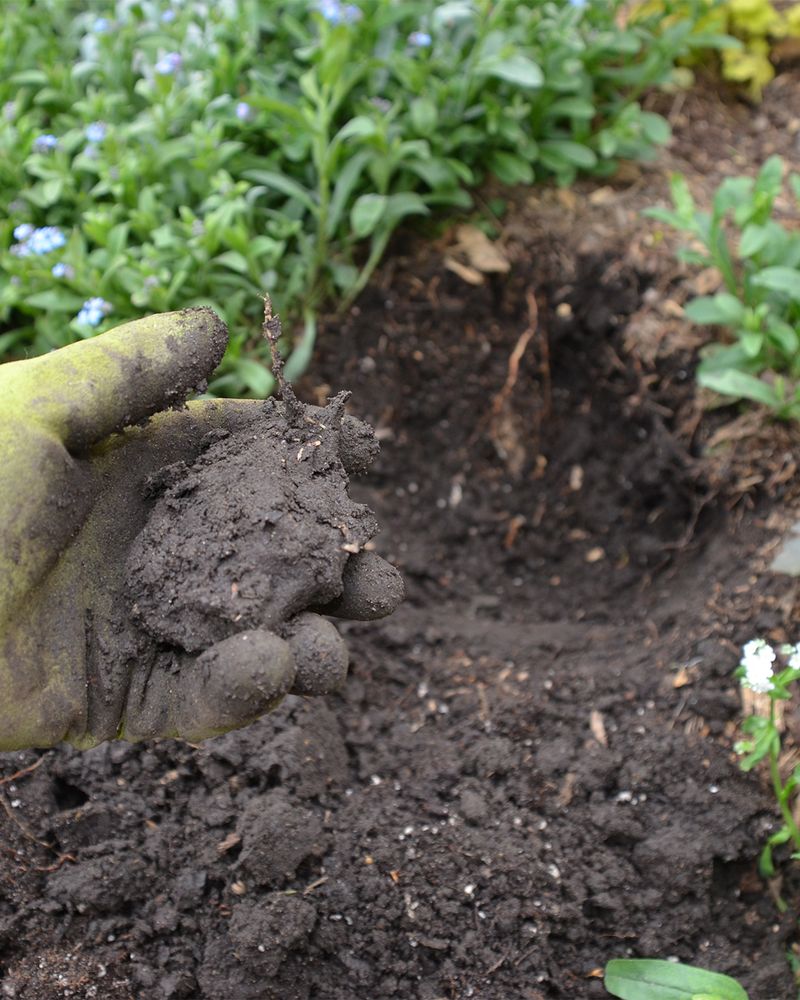
Clay soil has a terrible reputation among gardeners, and honestly most of that reputation comes from experiences with ornamental plants that were never suited to it in the first place. For native Michigan woodland shrubs, the story is completely different.
Many of these plants evolved in forest soils with significant clay content, and they are genuinely adapted to those conditions in ways that imported ornamental shrubs simply are not.
Clay holds moisture and nutrients far better than sandy or gravelly soils, which is actually a benefit for shrubs during dry stretches in summer. The key issue is drainage.
Compacted clay that stays waterlogged for extended periods creates problems for most plants, including natives.
Loosening the soil before planting and adding organic matter like compost or aged wood chips significantly improves both drainage and root penetration without turning clay into something it is not.
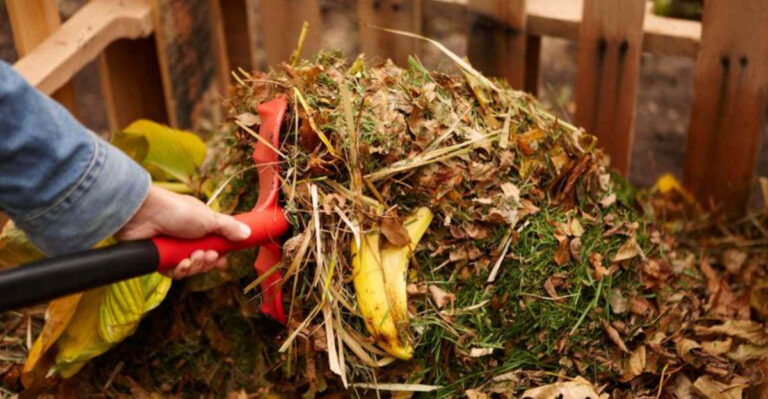
Leaf litter is one of the best things you can add to a clay-based woodland planting.
It breaks down slowly, feeds soil biology, improves structure over time, and mimics the natural forest floor conditions that shrubs like Spicebush, Mapleleaf Viburnum, and Leatherwood grew up in.
Avoid piling mulch directly against the stems, but a three to four inch layer across the root zone makes a real difference.
Watering during the establishment period, typically the first full growing season, is still important even in clay soil. Clay can dry out in the upper layers during hot spells even when deeper layers stay moist.
Consistent moisture in year one gives roots time to spread before the plant has to fend entirely for itself.
8. How To Plant Native Shrubs In Full Shade So They Actually Establish
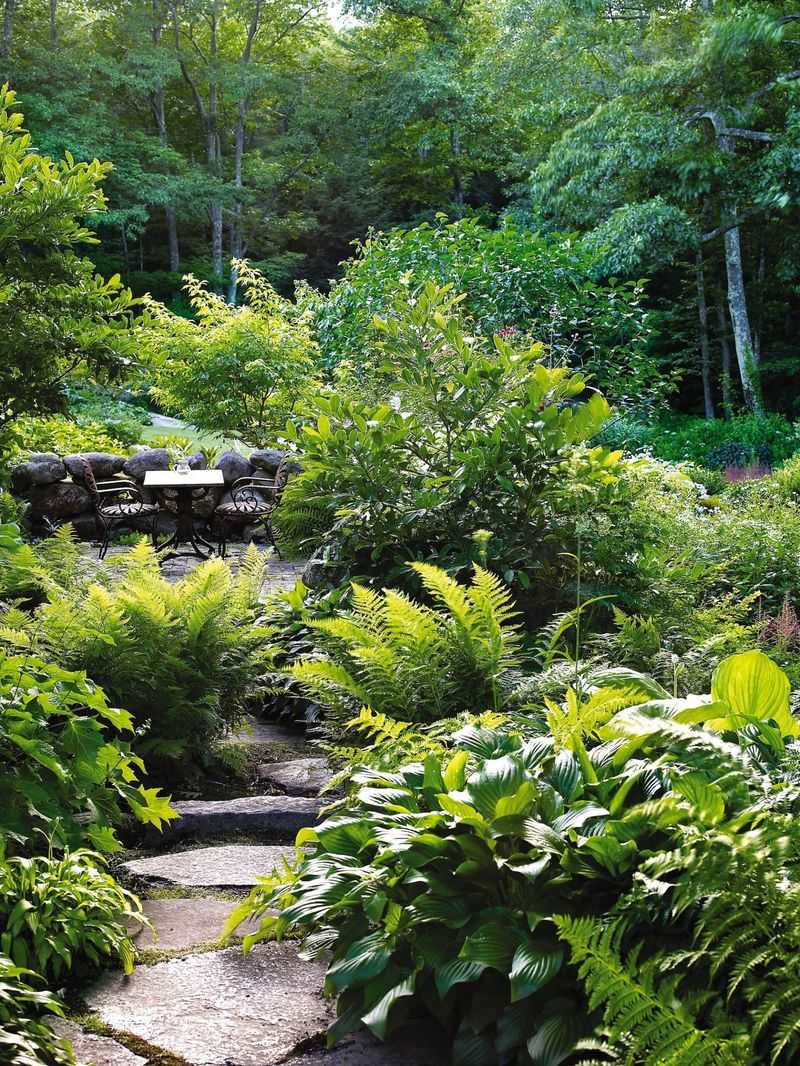
Planting native shrubs in full shade sounds straightforward, but there are a few realities that trip up even experienced gardeners. The biggest one is pace.
Shade-tolerant native shrubs grow more slowly in deep shade than they would in part shade or filtered light, and that slower growth means the establishment period feels longer than expected. Patience matters here more than almost anything else.
Root competition from mature trees is a real challenge that often goes unmentioned. Large oaks, maples, and beeches send dense surface roots through the top twelve inches of soil, which is exactly where newly planted shrubs are trying to establish.
Loosening that soil, adding a few inches of compost, and mulching generously helps new shrubs compete without damaging the existing tree roots. Avoid deep digging that cuts major roots.
First-year watering is non-negotiable, even for tough native species. Low-care does not mean no care during establishment.
A deep, slow watering once or twice a week during dry spells in the first growing season makes the difference between a shrub that roots in well and one that just barely survives.
By year two or three, most established native shrubs handle Michigan summers with far less intervention.
Spacing matters more in shade than in sun because light is already limited. Crowding shrubs together slows them down further and increases humidity around the foliage.
Match your species choice to the specific moisture level of the site as well, since dry shade under a Norway spruce calls for completely different plants than moist shade along a woodland stream.
Getting that match right from the beginning saves a lot of frustration later.