Why Ohio Peony Buds Are Covered In Ants And Why You Shouldn’t Panic
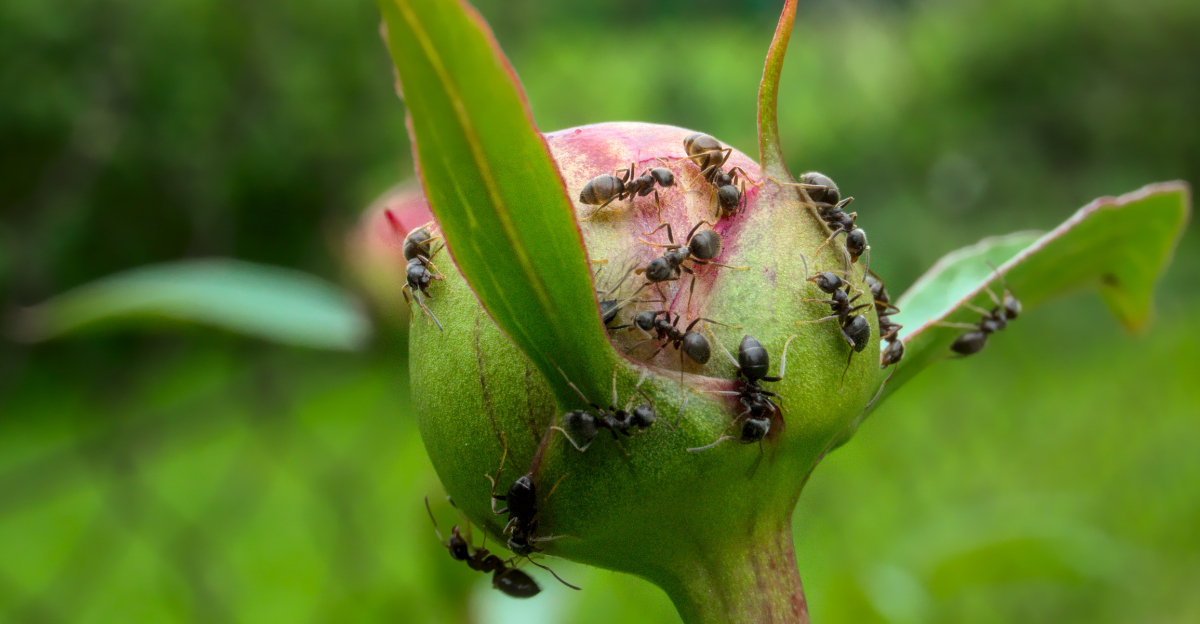
Every spring it happens like clockwork. Ohio gardeners walk out to their peony beds, spot the buds covered in ants, and immediately start looking for ways to get rid of them.
The assumption is that something has gone wrong, that the plant is under attack and the ants are the problem. That instinct is understandable but it sends gardeners in completely the wrong direction.
Ants on peony buds are not a distress signal. They are part of a relationship that has been playing out in gardens long before anyone started worrying about it.
The peonies are not suffering. The ants are not causing harm.
What looks like an infestation is actually a straightforward exchange that both parties benefit from. Reaching for a pesticide at this moment is the one response that can genuinely disrupt what the plant is doing.
Understanding what is actually happening on those buds changes everything about how you respond.
1. Ants Are Visiting For The Sweet Bud Nectar
Picture a tiny, all-you-can-eat buffet sitting right in your backyard. That is basically what a peony bud looks like to an ant.
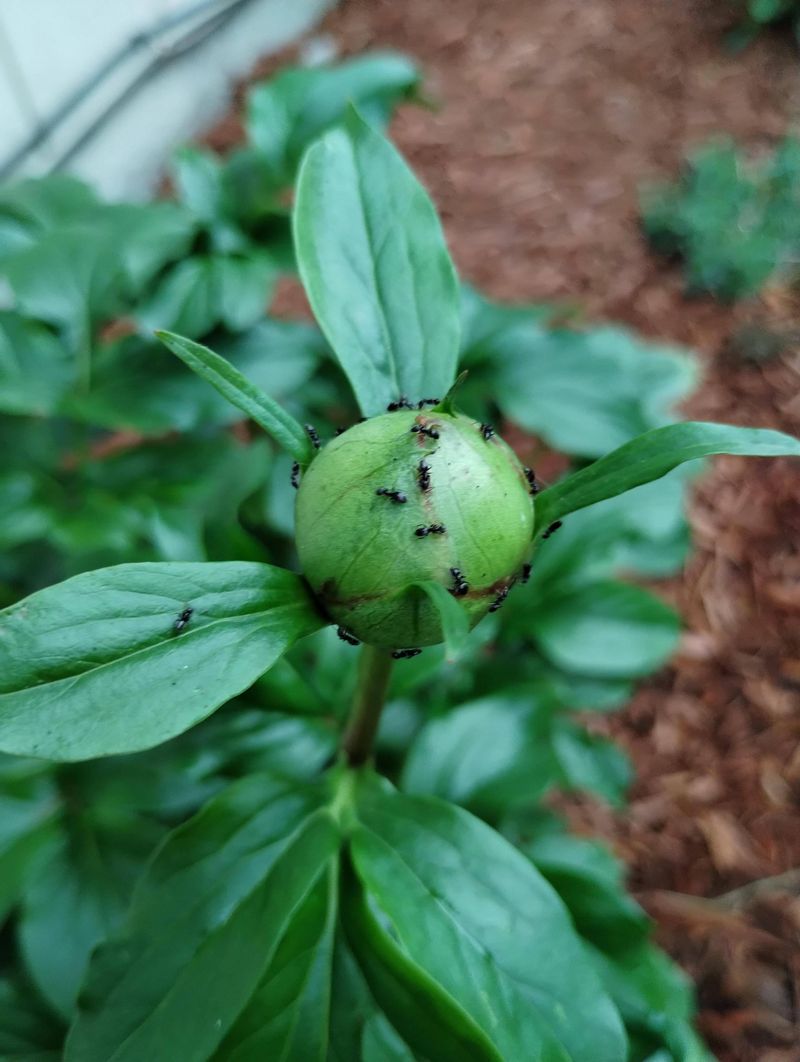
Peony buds produce a sugary liquid called extrafloral nectar on their outer surfaces, and ants are extremely good at finding it. This nectar is not hidden inside the flower.
It sits right on the outside of the bud, making it easy for ants to access without ever damaging the plant.
Extrafloral nectar is produced by many plants as a natural part of their biology. For peonies, this nectar production happens during the bud stage, which is why you see ants clustered on tight, swelling buds rather than on open blooms or leaves.
The ants are simply feeding. They are not burrowing into the bud, chewing through petals, or causing structural harm to the flower.
In local gardens across this state, peony buds typically begin showing this ant activity in late April through May, depending on the region.
Northern parts of the state may see it a bit later due to cooler spring temperatures, while southern regions often have earlier peony seasons.
Frost-prone areas should also watch for late cold snaps that can stress buds, but that is separate from ant activity entirely.
Seeing a dozen ants on a single bud is normal. Seeing ants on every bud on every plant is also normal during peak nectar production.
The ants move on naturally once the nectar is gone or the blooms fully open. You do not need to remove them, chase them off, or treat the plant in any way just because ants are present.
They found a food source, they are using it, and they will leave when it runs out. That is simply how it works.
2. Peonies Do Not Need Ants To Open Their Flowers
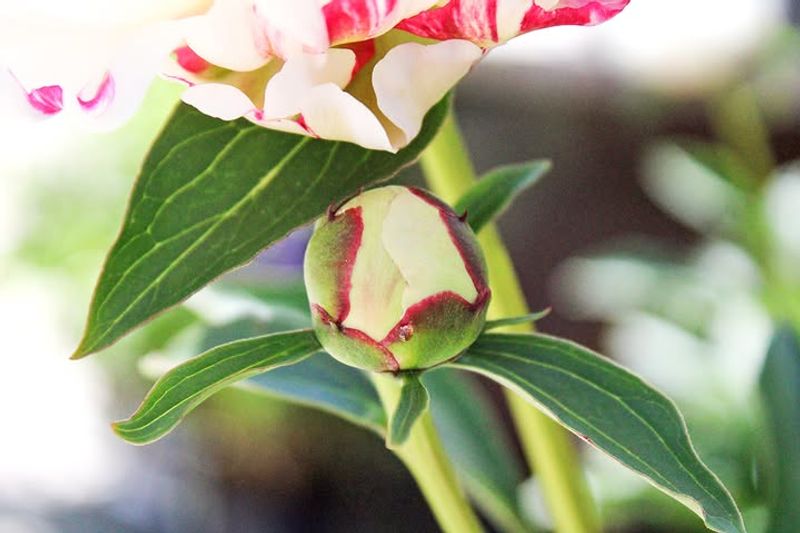
One of the most persistent myths in gardening is that peonies need ants to open their flowers. You have probably heard it, maybe even believed it for years.
The story goes that ants chew through a sticky coating on the bud, allowing the petals to unfold. It sounds believable, but it is not accurate.
Your Ohio Garden Changes Every Week. Your Plan Should Too.
Gardening in Ohio changes quickly throughout the season. Every Friday you’ll receive a simple weekly plan showing exactly what to plant, prune, fertilize, harvest, and protect so you never miss the right timing.
Healthy peony buds open on their own without any help from ants.
Peonies are perfectly capable of blooming without ants present. The opening of a peony flower is driven by the plant’s internal biology, warmth, moisture, and light.
Ants feed on the nectar that appears on the outside of the bud, but they play no mechanical role in helping the petals separate or the bloom unfold.
University extension resources consistently confirm this point, and it is worth repeating clearly: no ants are required for your peonies to bloom.
This myth likely persists because ants and blooming peonies are almost always seen together. The timing lines up closely, so it is easy to assume one causes the other.
But correlation is not causation. Ants show up because nectar is available, not because the flower needs them.
Once you understand that, the sight of ants becomes much less alarming.
If you have ever grown peonies in a pot on a balcony or in a greenhouse where ants cannot reach them, you may have already noticed this firsthand. Those plants bloom just fine.
Gardeners who rinse their cut peony stems before bringing them inside also see the blooms open beautifully in a vase. The flowers do not stall or fail simply because the ants are gone.
Your peonies have everything they need to bloom built right into the plant itself.
3. The Ants Are Not Eating Your Peony Buds
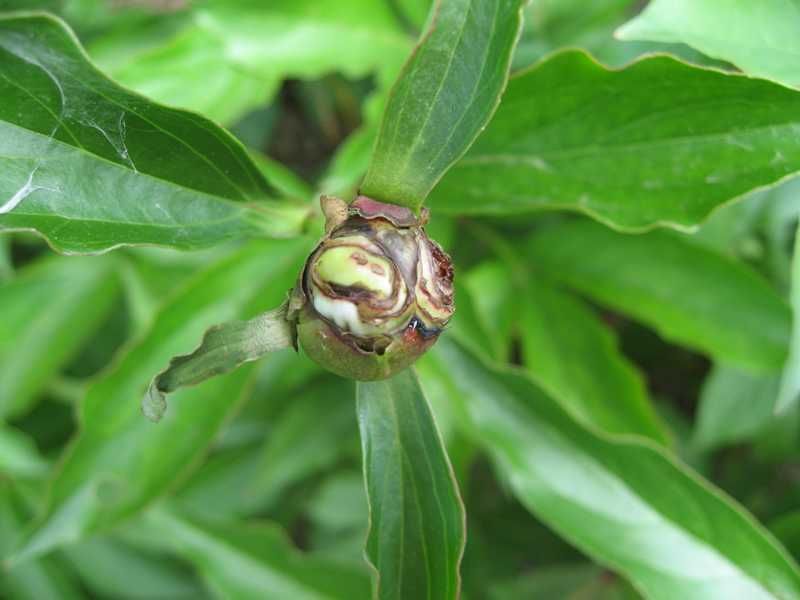
Watching ants swarm over a flower bud can feel unsettling, especially if you have been tending those plants all spring. A natural reaction is to assume the ants must be causing damage.
Fortunately, that concern is almost always unfounded. Ants feeding on peony bud nectar are drawn to the sugary secretion on the surface, not to the flower tissue itself.
Ants are not chewing through peony petals, hollowing out buds, or destroying the plant from the outside in. On peony buds, they are focused on collecting the sugary nectar, not chewing into the flower tissue.
The bud surface remains intact while they feed. In most cases, if you look closely at a bud covered in ants, the bud itself looks perfectly healthy with no visible holes, torn edges, or collapsed sections.
That said, if your peony buds are not opening, ants are rarely the reason. Several other factors can cause buds to stall or fail entirely, and it is worth knowing what those are.
Botrytis blight, a fungal disease that thrives in cool and wet spring weather, can cause buds to turn brown and fail to open. Bud blast, sometimes linked to late frost or sudden temperature swings, can also cause buds to stop developing before they bloom.
Planting depth is another common culprit. Peonies planted too deeply, with the eyes more than one to two inches below the soil surface, often produce foliage but struggle to bloom consistently.
Poor drainage, compacted soil, or a plant that was recently divided and is still establishing itself can all lead to disappointing bud development.
If your buds are browning, collapsing, or simply refusing to open, take a close look at the whole plant and its growing conditions before blaming the ants.
They are almost certainly not the problem.
4. Skip Sprays Unless There Is A Real Pest Problem
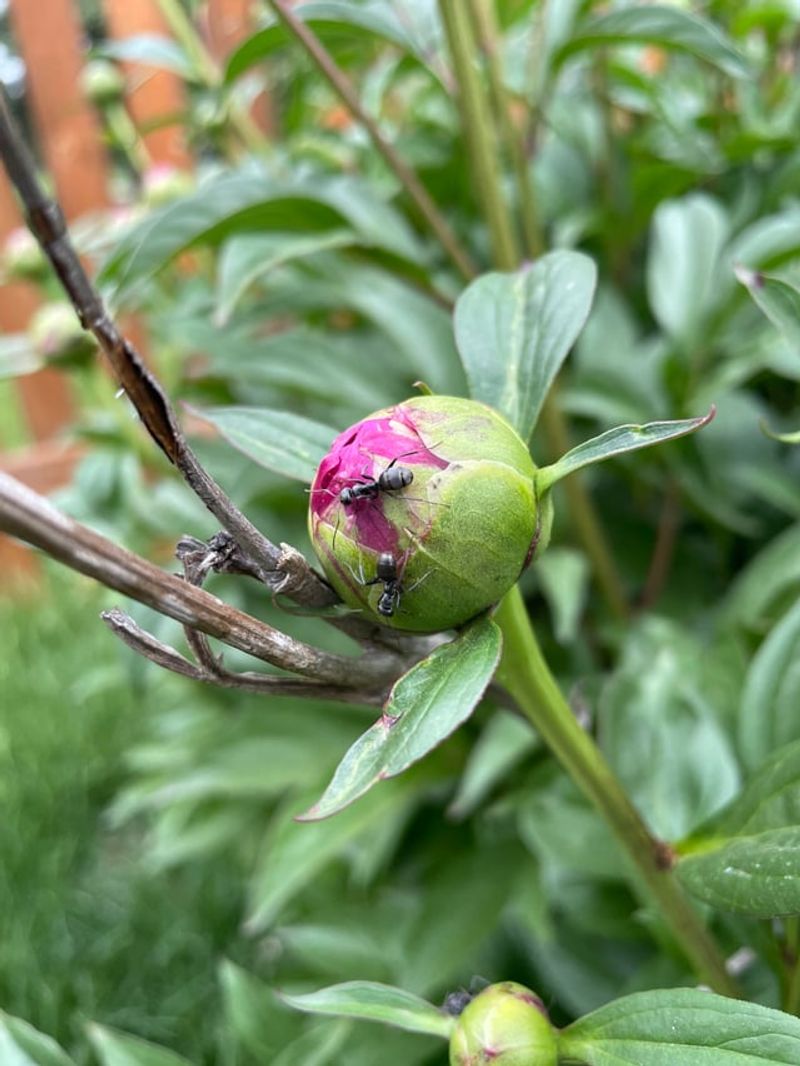
Reaching for a spray bottle is a very human response when you see insects on your plants. It feels like doing something, taking control of the situation.
But spraying ants off peony buds with insecticide is one of those garden moves that causes more harm than it prevents. In nearly every case, the ants on your peonies are not causing a problem that requires treatment.
Insecticides applied to flowering or pre-flowering plants can harm beneficial insects, including pollinators that will visit your garden throughout the season. Bees, wasps, and other helpful insects may come into contact with residue on treated plants.
Broad-spectrum sprays do not distinguish between a harmful pest and a harmless ant feeding on nectar. Spraying unnecessarily disrupts the natural balance of your garden.
Before treating any insect issue, take time to identify what you are actually dealing with. A true pest problem on peonies might involve aphids clustering on stems and new growth, thrips causing petal damage, or scale insects on woody stems.
These are real issues with visible symptoms that differ from ants feeding on nectar. Ohio State University Extension and similar land-grant university resources recommend identifying the pest first.
They also recommend confirming actual plant damage before choosing any treatment approach.
If you do identify a genuine pest issue, start with the least disruptive option. A strong stream of water from a hose can dislodge aphids effectively.
Insecticidal soap is a lower-impact choice for soft-bodied insects when used carefully and according to label directions. Reserve stronger treatments for situations where plant health is clearly being affected and simpler methods have not worked.
For most spring gardeners who just see ants on peony buds, putting the spray bottle away is the right call every time.
5. Shake Cut Peonies Gently Before Bringing Them Indoors
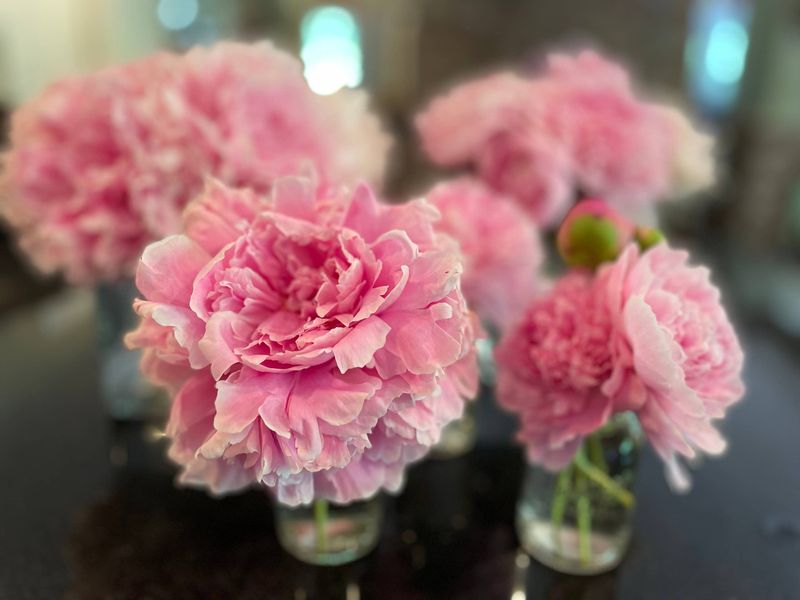
Few things in a home garden beat walking out on a May morning and cutting a handful of peony blooms for a kitchen vase. Peonies make stunning cut flowers, and they last remarkably well indoors when handled properly.
The only small challenge is making sure you do not bring a parade of ants inside along with your blooms.
The fix is simple and takes about thirty seconds. After cutting your peony stems, give each stem a gentle shake over the garden bed or lawn.
Most ants will drop off on their own with just a little movement. You do not need to scrub the stems, soak the flowers, or do anything dramatic.
A calm shake is usually enough to send the stragglers on their way.
If a few ants are still holding on, lay the cut stems on an outdoor surface for five to ten minutes in a shaded spot. Ants are not interested in staying on a cut stem that is no longer producing nectar at the bud.
They will wander off fairly quickly once the flower is separated from the plant. You can also rinse stems lightly with cool water if you prefer, just avoid soaking the blooms themselves since excess moisture can shorten vase life.
For the best vase results, cut peony stems in the early morning when the buds are still firm and cool. Choose buds that are just beginning to show color and feel slightly soft, like a marshmallow.
These will open beautifully over the next day or two indoors. Strip any leaves that would sit below the waterline in your vase and change the water every couple of days.
Keep the arrangement away from direct sunlight and heat sources. Your blooms will reward you with several days of color and fragrance.
6. Watch For Issues That Are Not Caused By Ants
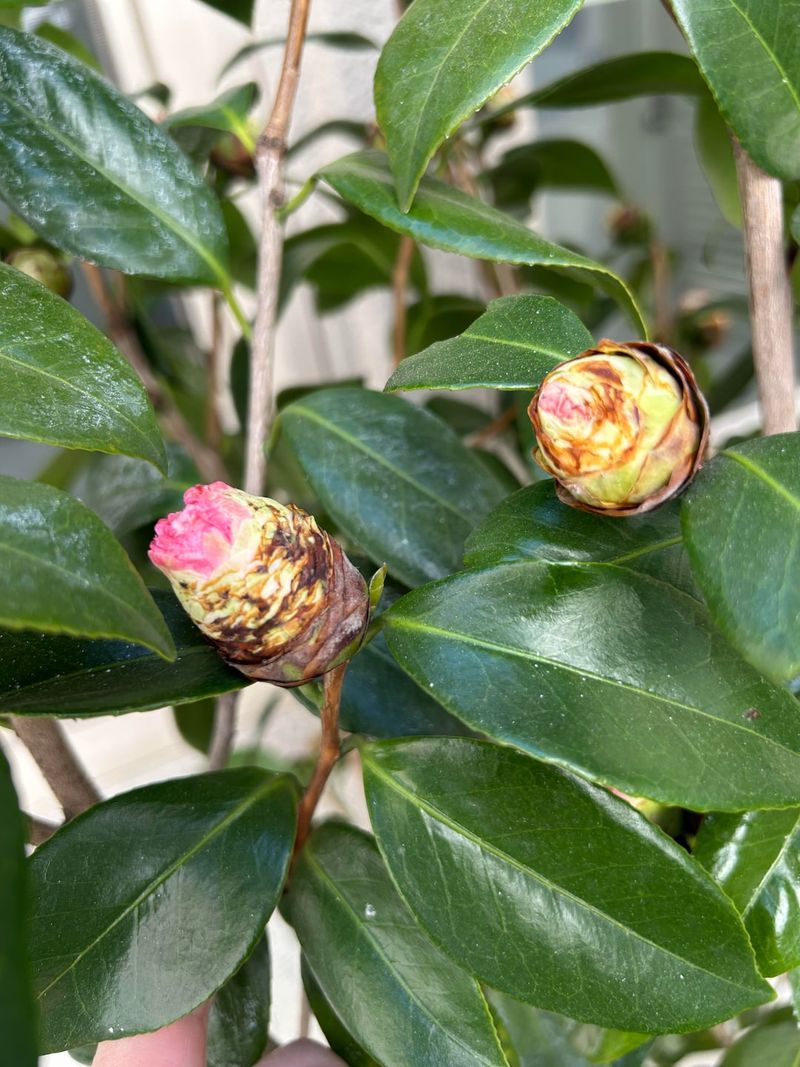
Ants are an easy target when something looks off with your peonies. They are visible, they move around, and they are present right when you are paying close attention to your plants.
But ants are rarely the source of real peony problems. Knowing what genuine issues look like helps you catch them early and respond appropriately.
Botrytis blight is one of the most common peony diseases in this region. It is caused by a fungal pathogen that thrives in cool, wet, humid conditions, which describes many Ohio springs perfectly.
Symptoms include dark brown or grayish spots on buds and stems, wilting new shoots, and a fuzzy gray mold that may appear in damp conditions.
Improving air circulation around your plants by not overcrowding them and cleaning up fallen debris in fall can help reduce botrytis pressure significantly.
Late frost is another real threat in frost-prone areas and northern parts of the state. A hard frost after buds have begun to swell can damage or stop bud development entirely.
This looks like blackened or collapsed buds and has nothing to do with insects. Covering plants with a light frost cloth on nights when temperatures are expected to drop sharply can protect vulnerable buds during a cold snap.
Planting depth matters more with peonies than with almost any other perennial. Eyes planted deeper than one to two inches below the soil surface often produce healthy foliage year after year without ever blooming well.
If your plant looks strong but barely flowers, dig it up carefully in fall, check the planting depth, and replant at the correct level. Weak blooming in a well-established plant can also point to overcrowding or root competition from nearby trees or shrubs.
It can also mean the plant needs dividing after many years in the same spot.