What To Do With Fading Spring Containers In Georgia Before Summer Arrives
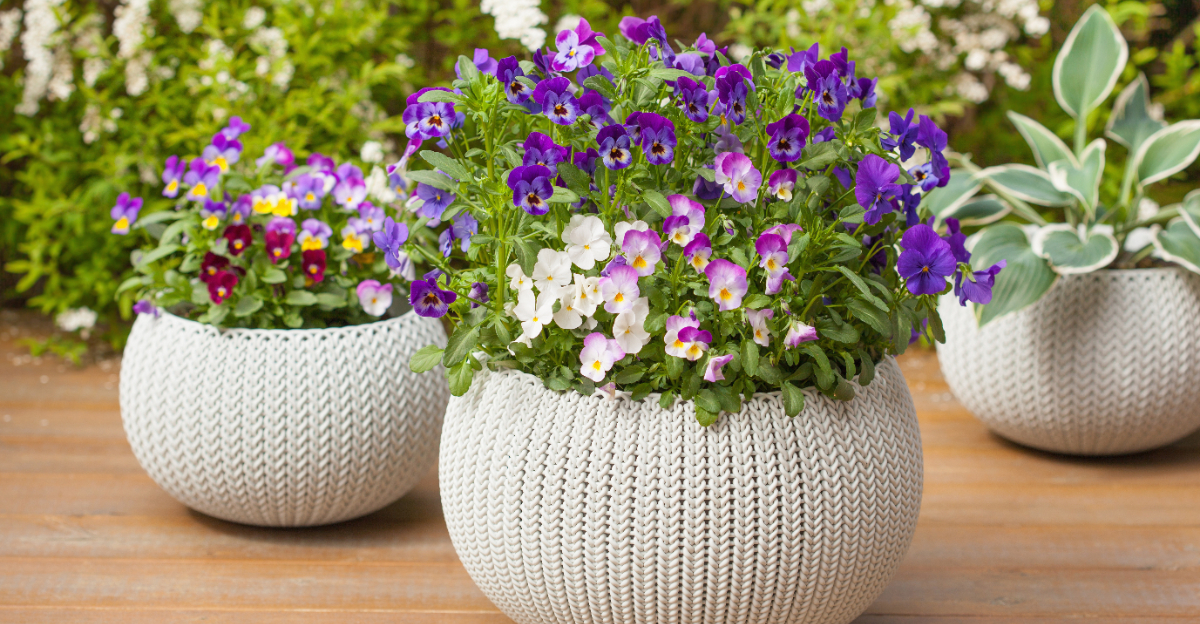
Spring containers can start looking tired surprisingly fast once temperatures begin rising in Georgia. Flowers that looked full and colorful only weeks earlier often become thin, faded, or uneven by the time late spring settles in.
A lot of gardeners keep watering the same way and hope plants bounce back, but containers usually need a different approach before summer heat fully arrives.
Old blooms, crowded roots, and worn out soil can all slow growth quickly in smaller pots. Some plants simply stop performing once warmer weather becomes more consistent, especially after heavy spring flowering.
Refreshing containers early often keeps them looking attractive much longer instead of waiting until everything declines at once.
Small changes usually make the biggest difference. Replacing weak plants, trimming overgrown stems, and adding fresh soil can quickly improve how containers look heading into summer.
Freshened up pots often end up looking fuller and healthier than they did earlier in spring once new growth starts taking over.
1. Remove Faded Spring Flowers Before They Set Seed
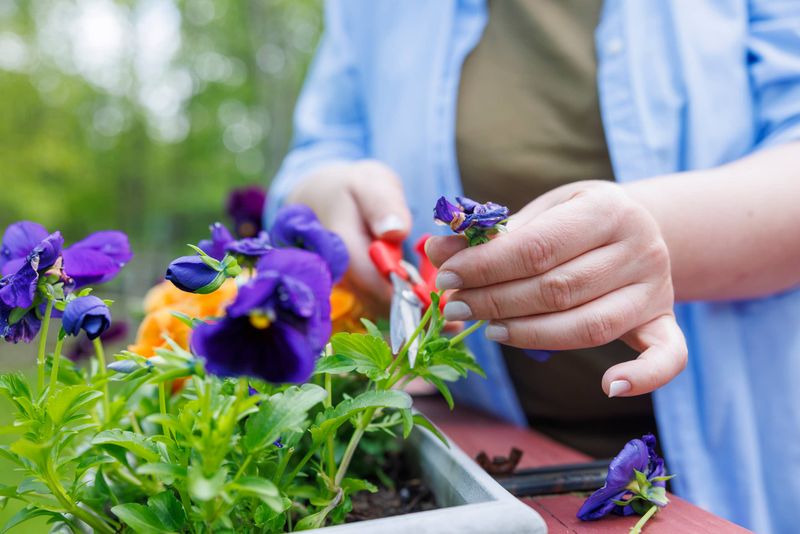
Spent blooms left on the plant are quietly working against you. Once a flower sets seed, the plant shifts its energy away from producing new blooms.
That means fewer flowers, faster decline, and a container that looks worse with every passing week.
Grab a pair of clean scissors or pruning snips and cut each faded bloom back to just above a leaf node. Do not just pull the petals off.
Removing the entire flower head and the forming seed pod is what actually signals the plant to keep blooming.
Pansies, calibrachoa, and petunias are the biggest offenders when it comes to seed-setting. Check them every few days.
It only takes a short time for a bloom to fade and start forming a pod in warm weather.
Work through the container methodically. Start at the outside edge and move inward.
That way you can see exactly what has been done and what still needs attention.
Deadheading also keeps the container looking cleaner overall. Rotting petals attract fungal issues, especially once humidity climbs.
Removing them early reduces that risk without needing any sprays or treatments.
2. Trim Back Leggy Growth To Refresh The Container
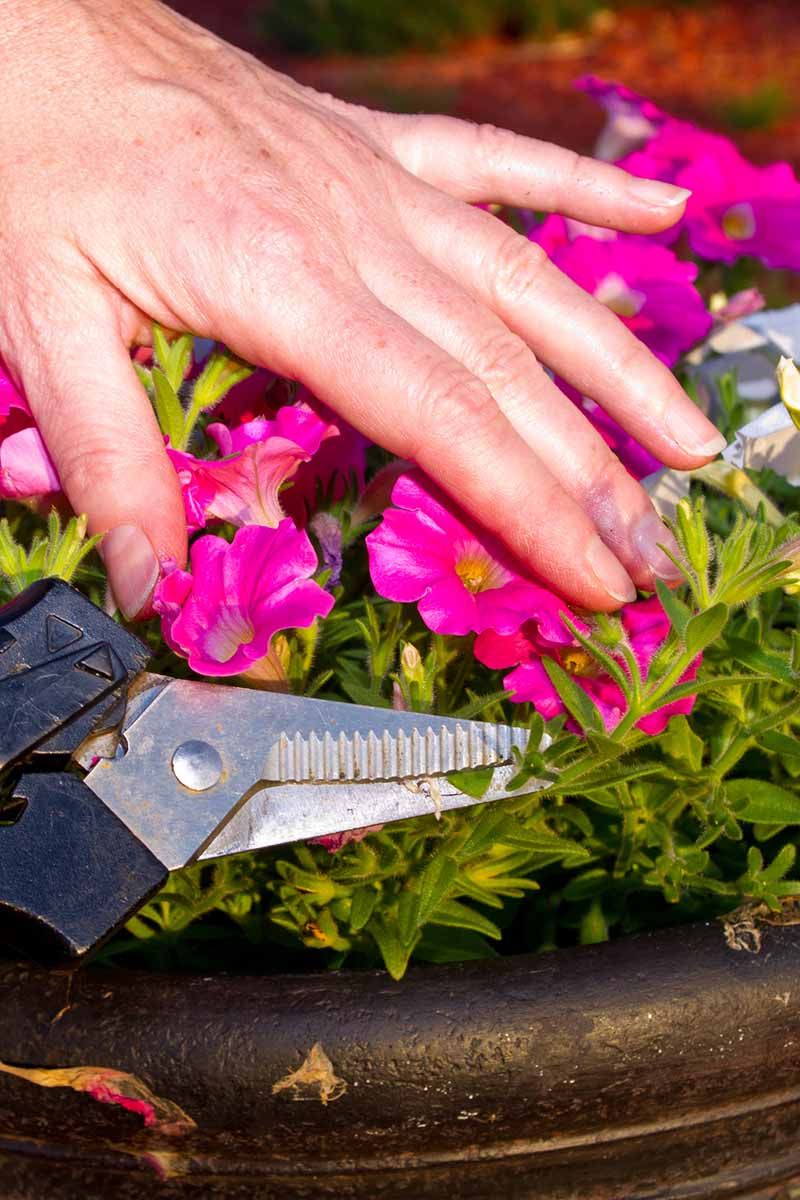
Leggy plants are not a lost cause. Stems that have stretched out and gone sparse can bounce back quickly with a firm cutback, especially before the worst heat sets in.
Cut leggy stems back by about one-third to one-half their length. Always cut just above a set of healthy leaves.
New growth will push from that point, and within a week or two, the plant looks fuller and more compact.
Petunias are notorious for getting long and stringy by late spring. A hard trim at this stage, combined with a light feeding, often produces a second flush of growth that carries right into early summer.
Bacopa, verbena, and sweet potato vine all respond well to trimming too. Sweet potato vine especially can take over a container fast.
Cutting it back keeps the arrangement balanced and prevents it from crowding out neighboring plants.
Your Georgia Garden Changes Every Week. Your Plan Should Too.
Gardening in Georgia changes quickly throughout the season. Every Friday you’ll receive a simple weekly plan showing exactly what to plant, prune, fertilize, harvest, and protect so you never miss the right timing.
Use clean, sharp tools every time. Dull blades crush stems rather than cutting them cleanly, which slows recovery and can introduce disease.
A quick wipe between containers with a disinfecting solution also helps prevent problems from spreading from one pot to another.
After trimming, water the container thoroughly. Trimmed plants need consistent moisture to push new growth.
3. Replace Tired Cool-Season Plants With Heat-Tolerant Varieties
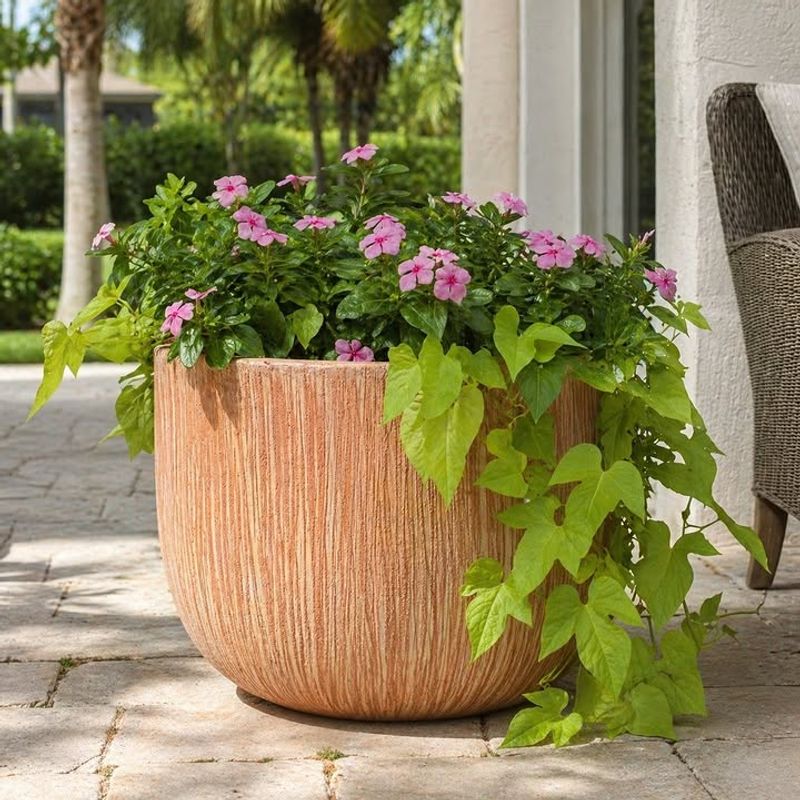
Cool-season plants were built for mild temperatures. Once daytime highs push into the upper 80s consistently, most of them begin to decline no matter how well you care for them.
Swap them out now before they completely fall apart. Pulling a struggling plant early gives you time to refresh the soil, adjust the container, and get a new plant established before peak summer heat arrives.
Vinca, lantana, pentas, and portulaca are proven performers in hot and humid conditions. They handle full sun, tolerate dry spells between waterings, and bloom steadily through August and September without much fuss.
Caladiums work well for shadier spots. Their bold foliage adds color without needing constant deadheading.
Pair them with trailing sweet potato vine for a low-maintenance combo that looks intentional and stays full all season.
When selecting replacements, check the plant tag for heat and humidity tolerance. Not every variety labeled as summer-friendly is actually suited for the intense conditions of a Southern summer.
Look specifically for plants rated for USDA zones 8 or 9.
Buy transplants rather than seeds at this stage. There is not enough time before summer to start from seed and get a full, blooming plant.
4. Loosen Compacted Soil Before Adding New Plants
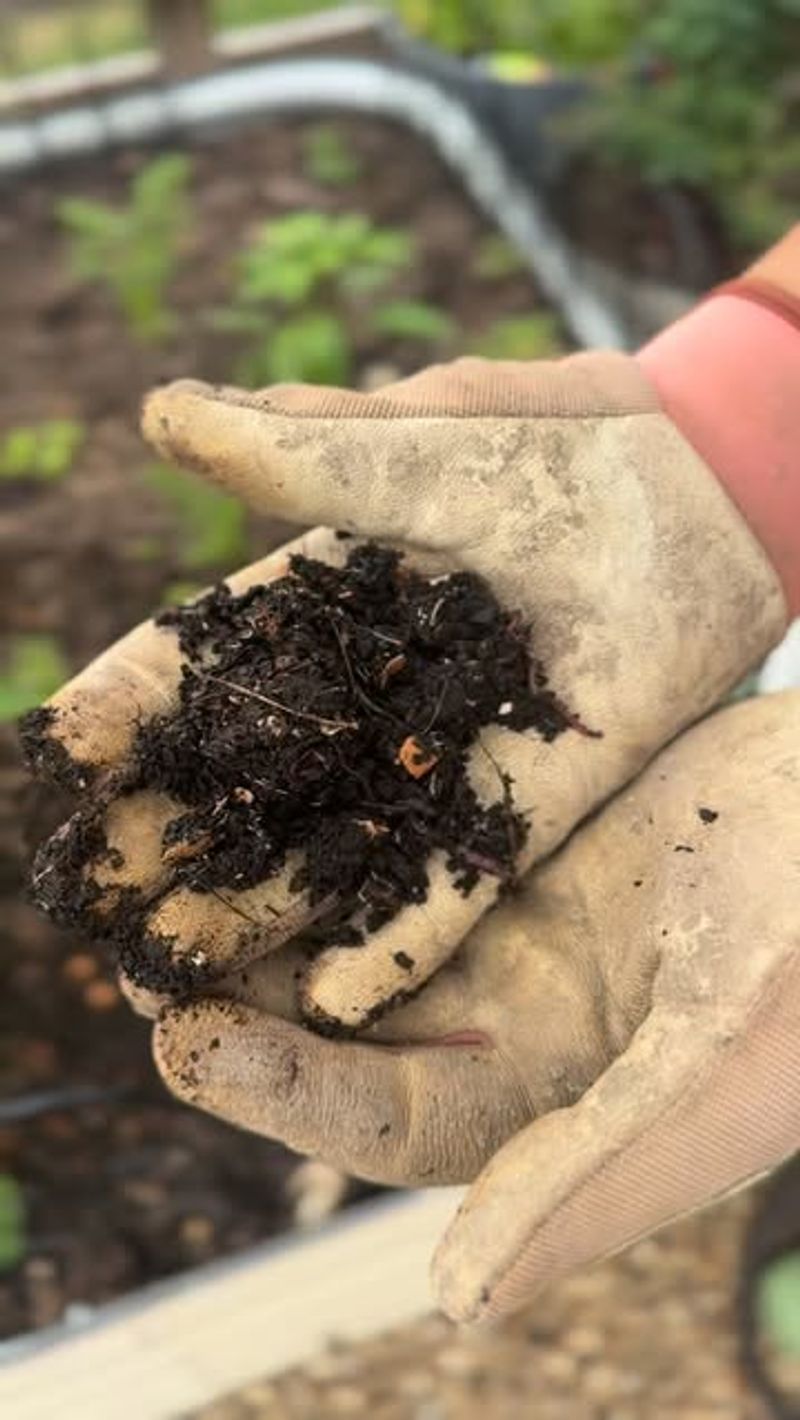
Potting mix does not stay fluffy forever. After a full season of watering, fertilizing, and root growth, it compacts down into a dense layer that water struggles to move through evenly.
Before adding any new plants, take a hand cultivator or even a sturdy stick and work through the top few inches of the mix. Break up any clumps and loosen the surface.
If the mix feels rock-hard or has pulled away from the container walls, it needs more than just loosening.
Compacted soil causes water to run straight down the sides of the container and out the drainage holes without actually soaking into the root zone. Plants sitting in that condition often look dry even right after watering.
If the mix has broken down significantly, remove the top third and replace it with fresh potting mix. Blend the old and new together before planting.
Avoid using straight garden soil in containers. It compacts far worse than commercial potting mix and can introduce disease.
Adding a small amount of perlite when refreshing the mix improves drainage and helps prevent future compaction. A ratio of roughly one part perlite to four parts potting mix works well for most flowering container plants.
Loosening the soil also gives you a chance to check root health. Healthy roots are white or light tan.
Dark, mushy roots signal a drainage problem that needs to be addressed before new plants go in. Catching that early prevents a lot of frustration later in the season.
5. Add Slow-Release Fertilizer Before Summer Growth Begins
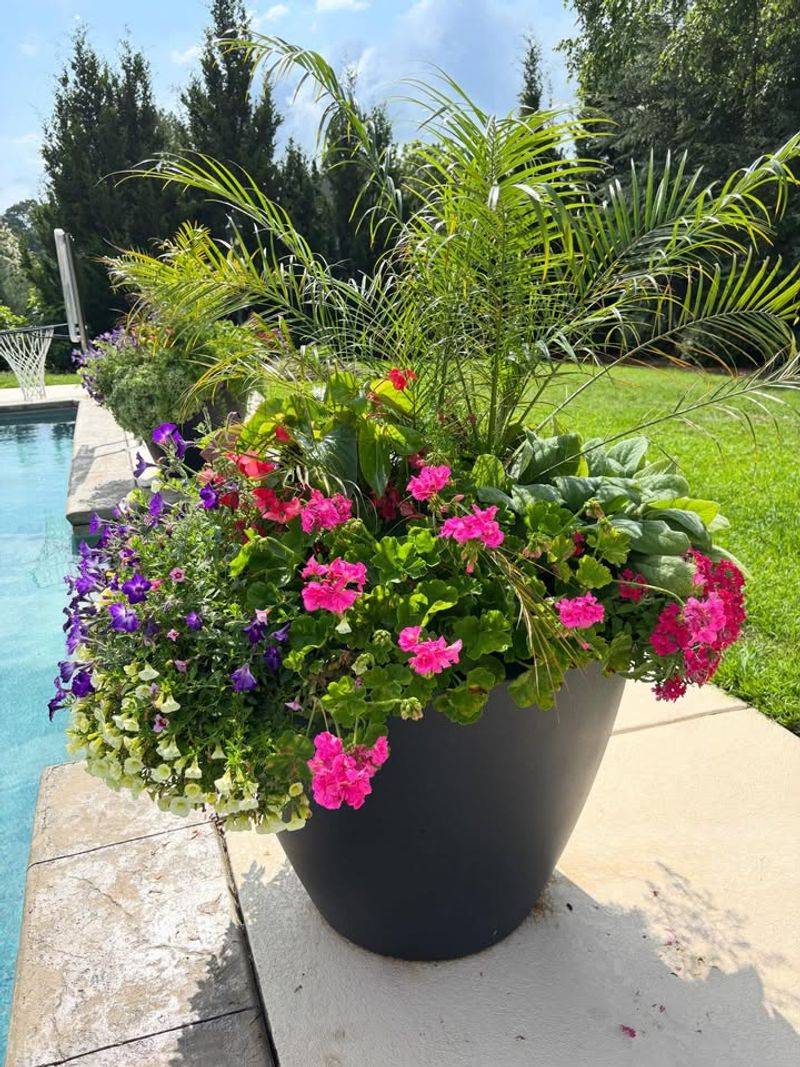
Containers are hungry. Unlike plants in the ground, potted plants rely entirely on what is in that small volume of soil, and nutrients wash out with every watering.
A slow-release granular fertilizer applied now gives new transplants a steady supply of nutrients without the risk of burning tender roots. Look for a balanced formula like 10-10-10 or one specifically labeled for flowering containers.
Work the granules lightly into the top inch of soil. Do not bury them deep.
They need exposure to moisture to break down and release nutrients gradually over time. Most formulas last between two and four months depending on heat and watering frequency.
Liquid fertilizers work faster but require more frequent application. If you prefer liquid feeding, plan on applying it every one to two weeks throughout the season.
Missing applications during peak summer growth leads to pale foliage and reduced blooming.
Containers in full sun need more frequent feeding than those in partial shade. Heat accelerates nutrient breakdown and increases the rate at which nutrients leach out during watering.
That is easy to forget when summer gets busy.
Avoid over-fertilizing. Too much nitrogen pushes lush green growth at the expense of flowers.
Read the label and follow the recommended rate.
6. Check Drainage Holes Before Heavy Summer Rain Arrives
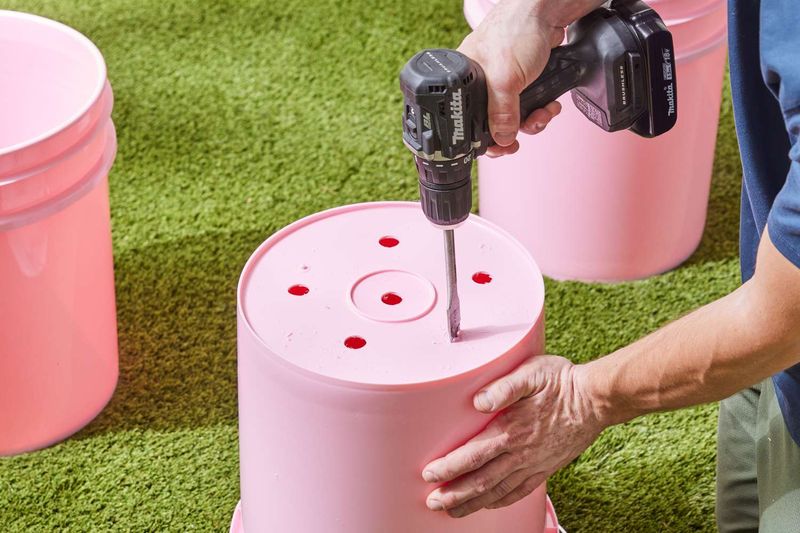
Blocked drainage holes are one of the most overlooked problems in container gardening. Water pooling at the bottom of a pot causes root rot faster than almost anything else, and summer storms here can dump an inch of rain in under an hour.
Flip smaller containers carefully and look directly at the drainage holes. Roots often grow into and around the openings over time.
Compacted soil can also seal them from the inside. Either situation leads to standing water that the plant cannot tolerate.
Use a pencil, chopstick, or screwdriver to clear any blockages. Push through gently from the outside.
If roots have completely filled the hole, the plant likely needs repotting into a larger container anyway.
Containers sitting directly on flat surfaces can also restrict drainage even when the holes are clear. Water cannot escape freely if the pot is sitting flush against a patio or deck.
Pot feet or small risers solve this quickly and inexpensively.
Check every container, not just the ones that look problematic. A pot that drained fine all spring may have slowly clogged as root growth increased.
It takes only a minute per container and can prevent a lot of damage once the rainy season picks up.
After clearing the holes, water each container and watch what happens.
7. Move Smaller Containers Away From Harsh Afternoon Sun
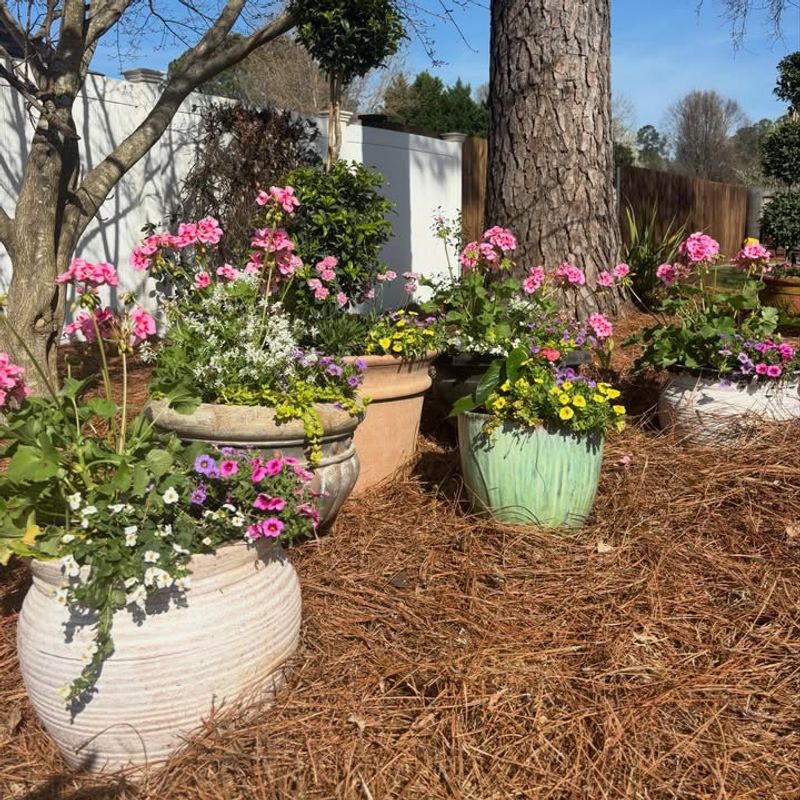
Afternoon sun in late spring hits differently than it did in March. The angle is steeper, the intensity is higher, and containers sitting in full western exposure can hit soil temperatures that stress even heat-loving plants.
Small containers are especially vulnerable. Less soil volume means less moisture retention and faster temperature spikes.
A four-inch pot sitting in direct afternoon sun can dry out completely within hours on a hot day.
Moving smaller pots to a spot that gets morning sun and afternoon shade is often all it takes to keep them performing well.
Most flowering annuals bloom just as well with four to six hours of direct light as they do in full sun, and the reduced heat stress makes a real difference in plant health.
East-facing spots are ideal. Plants get bright morning sun, which supports strong growth and flowering, without the scorching intensity of a western exposure in the afternoon.
Larger containers are harder to move, but they also hold more soil and moisture, which gives them more buffer against heat stress.
Focus on relocating the smaller pots first and reassess the larger ones based on how they perform over the first few weeks of summer.
Check soil moisture in relocated containers after the move. A shadier spot means slower evaporation, so watering frequency may need to drop slightly.