This Fast-Growing Ohio Native Tree Creates A Full Fence Line By Next Summer
A bare fence line in winter has a way of making a yard feel a little too exposed. Once the leaves drop and the garden goes quiet, plenty of Ohio homeowners start wishing they had something green, dense, and dependable holding that space together.
That is where Eastern Redcedar starts to look especially appealing.
This Ohio native does not rush in and solve everything by next weekend, but it brings something better: long-term structure, year-round color, and a more natural kind of privacy that fits the landscape.
Pretty good trade. It also happens to offer shelter and cover for wildlife, which gives it even more value beyond screening.
For Ohio yards that need a stronger backdrop and a little more evergreen presence, Eastern Redcedar can be one of those smart, steady choices that keeps looking better as the years go by.
1. Eastern Redcedar Brings Year-Round Privacy
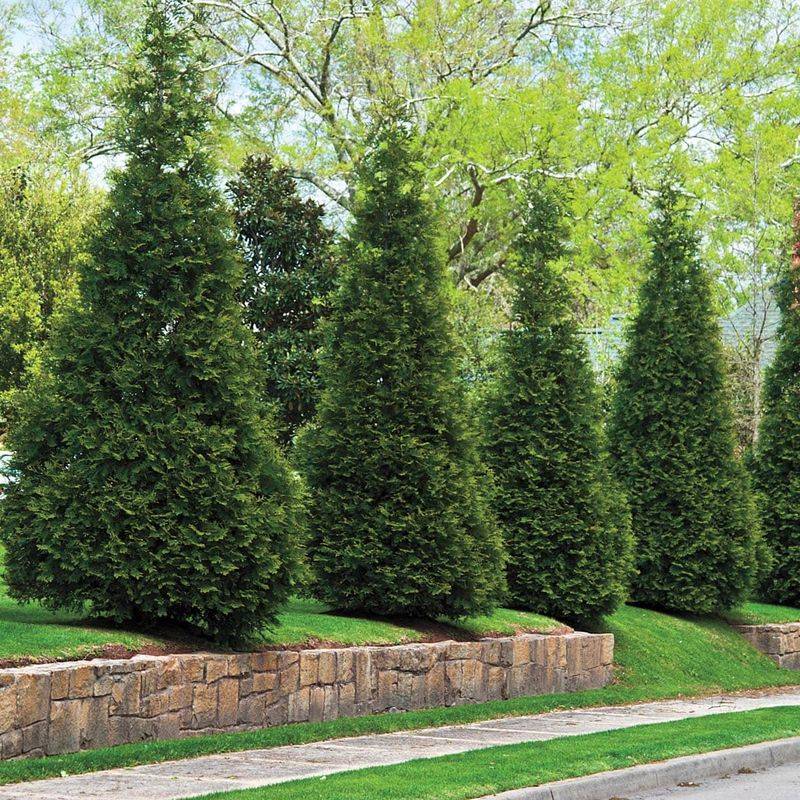
Winter in Ohio has a way of exposing every gap in a landscape. Deciduous trees drop their leaves, shrubs go bare, and suddenly your yard feels wide open to neighbors, roads, and passing traffic.
Eastern Redcedar sidesteps that problem entirely because it holds onto its dense, scale-like foliage through every season.
Unlike many trees that offer summer privacy and then disappear come November, Eastern Redcedar keeps its deep green to blue-green color well into winter.
That consistency is a big part of why homeowners with fence-line planting goals keep returning to this native species.
It fills a visual role that very few other Ohio natives can match across all four seasons.
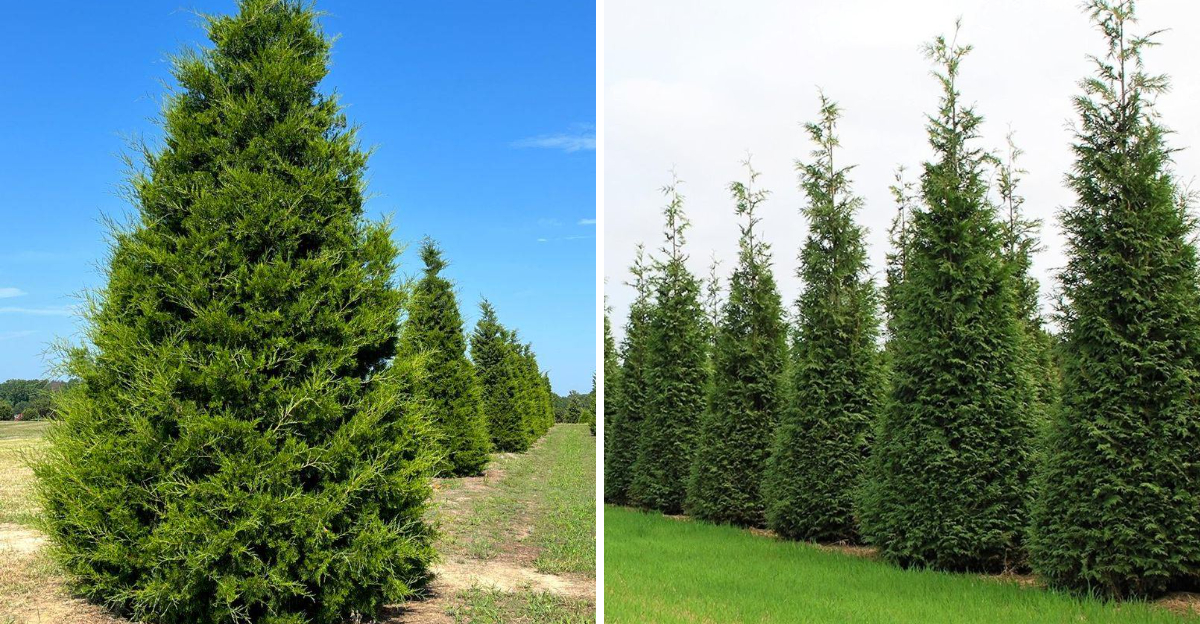
The tree’s dense branching starts near the base and works its way upward in a tight pyramidal form, which means coverage begins low to the ground rather than starting ten feet up.
That low branching habit is especially useful for properties where ground-level screening matters just as much as upper canopy coverage.
Over several years, a well-spaced row of Eastern Redcedar along a fence line can create the kind of living wall that feels both natural and intentional, softening hard boundaries while keeping things private throughout the year.
2. This Native Evergreen Fills In Over Time
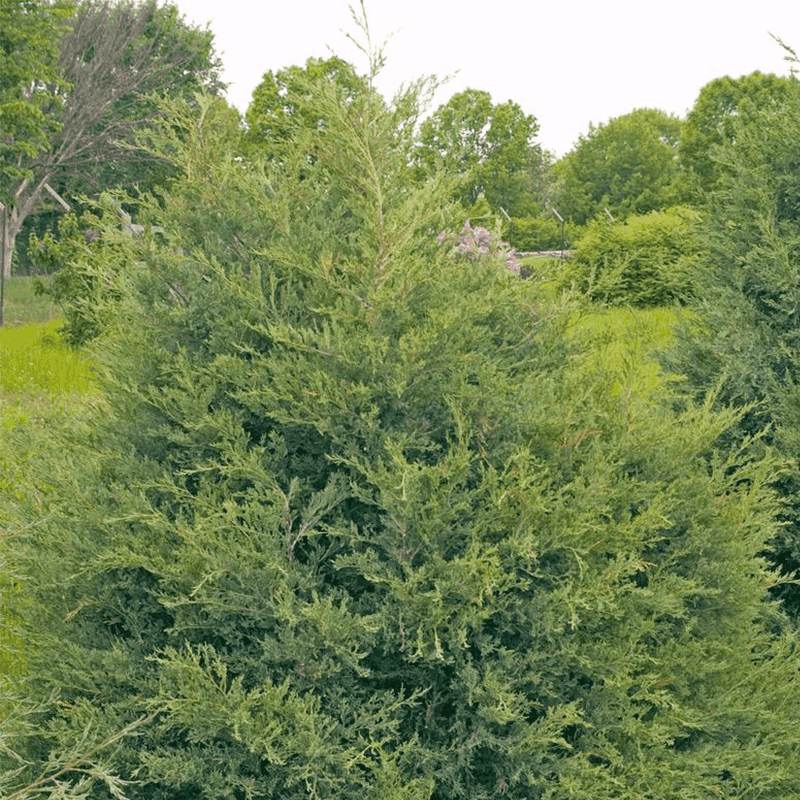
Patience is part of the deal with Eastern Redcedar. The title of this article uses the phrase “by next summer,” but that framing deserves some honest context.
Eastern Redcedar is not a tree that will create a solid visual wall in a single growing season. What it will do is establish strong roots in its first year and begin building the kind of dense form that becomes a reliable screen over several seasons in Ohio landscapes.
Growth rates for Eastern Redcedar tend to fall somewhere between one and two feet per year under reasonably good conditions. That is not the fastest rate among evergreens, but it is steady and consistent.
Trees planted in Ohio in spring often push noticeable new growth by late summer of their first year, and by the second or third season, the difference in density becomes genuinely impressive.
The real value here is in how Eastern Redcedar fills in from the bottom up. Many faster-growing alternatives tend to go leggy at the base while racing upward, leaving gaps near the ground where privacy matters most.
Your Ohio Garden Changes Every Week. Your Plan Should Too.
Gardening in Ohio changes quickly throughout the season. Every Friday you’ll receive a simple weekly plan showing exactly what to plant, prune, fertilize, harvest, and protect so you never miss the right timing.
Eastern Redcedar does not typically behave that way. Its branching stays full and close to the trunk, which means the screen it builds over time tends to feel genuinely solid rather than sparse and uneven.
3. Its Pyramidal Shape Helps Screens Look Full
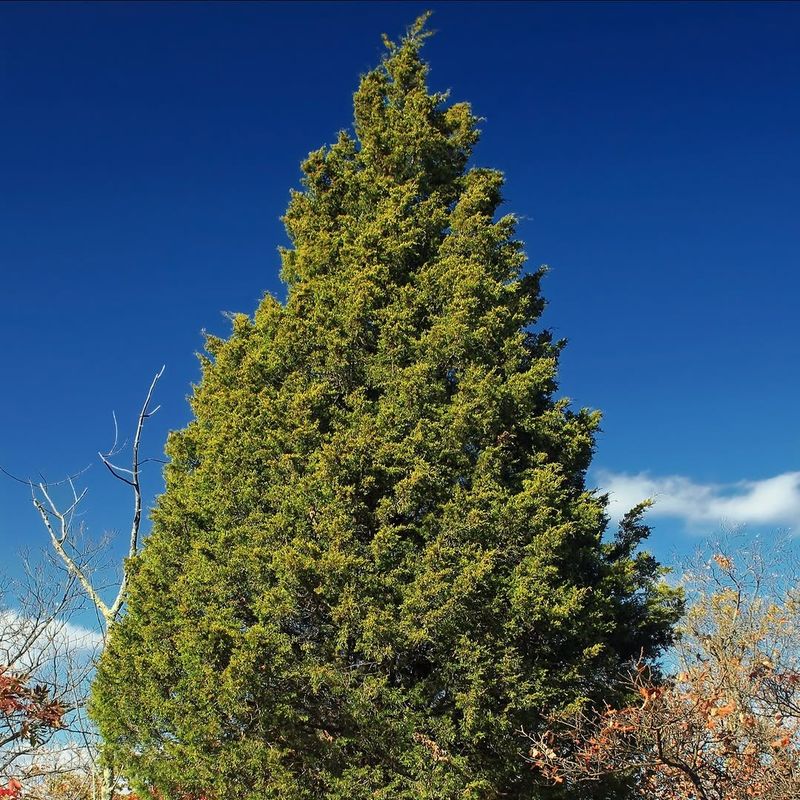
Tree form matters a lot when you are planting for privacy. A tree that spreads wide at the top but thins out at the base leaves a frustrating gap right at eye level, which is exactly where most homeowners need coverage the most.
Eastern Redcedar naturally avoids that problem with its upright, pyramidal growth habit that stays relatively narrow from top to bottom.
That shape is part of what makes Eastern Redcedar such a practical fence-line choice in Ohio. The tree tends to maintain a tight, conical silhouette without requiring heavy pruning or shaping.
Left on its own, it builds a form that looks structured and intentional, even in informal landscape settings. For homeowners who want a tidy screen without a lot of ongoing maintenance, that natural geometry is a genuine advantage.
The pyramidal shape also means Eastern Redcedar can fit into tighter spaces than a wide-spreading tree could.
Along a fence line where every foot of lateral space counts, a tree that stays relatively narrow while still offering dense coverage is a practical asset.
Planted in a staggered double row, Eastern Redcedar trees in Ohio can create a layered visual screen that looks full from multiple angles, especially as the trees mature and their canopies begin to overlap and interlock over time.
4. Eastern Redcedar Handles Tough Ohio Conditions
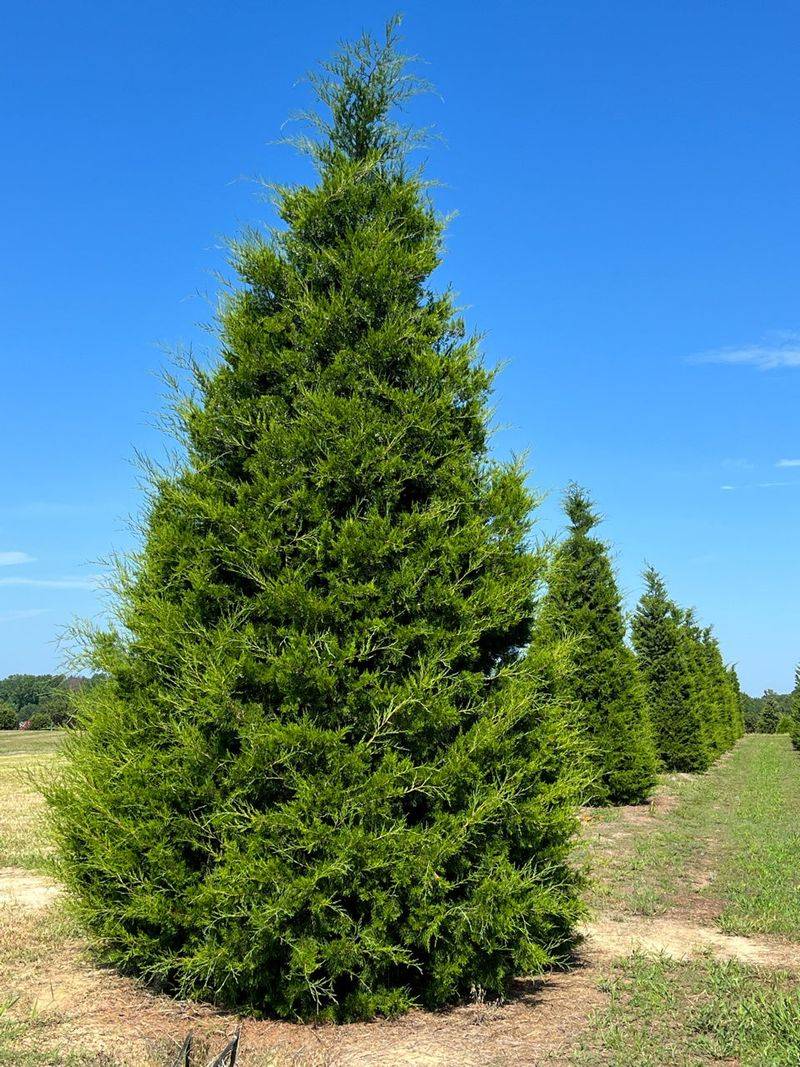
One of the most underrated qualities of Eastern Redcedar is how little it asks of the landscape it grows in.
Ohio soils range from heavy clay in the western part of the state to shallow, rocky ground in the east, and Eastern Redcedar manages reasonably well across a wide range of those conditions.
It is not a fussy tree that demands rich, well-amended soil before it will perform.
Drought tolerance is another strong point. Once established, Eastern Redcedar can handle extended dry periods far better than many other evergreen options.
That resilience matters in summers, which can swing between heavy rain and long stretches of heat and dryness depending on the year. A fence-line planting that struggles every August is not much of a long-term screen.
Eastern Redcedar also handles full sun well, which makes it a solid choice for exposed fence lines that bake in direct light all day.
It does not perform as strongly in heavy shade, so properties with densely shaded boundaries may want to consider that before planting a full row.
But for open, sunny fence lines in Ohio, whether in suburban backyards or rural parcels, Eastern Redcedar tends to settle in, establish steadily, and hold its form through seasons that would stress less adaptable trees.
5. Wildlife Value Adds More Than Privacy
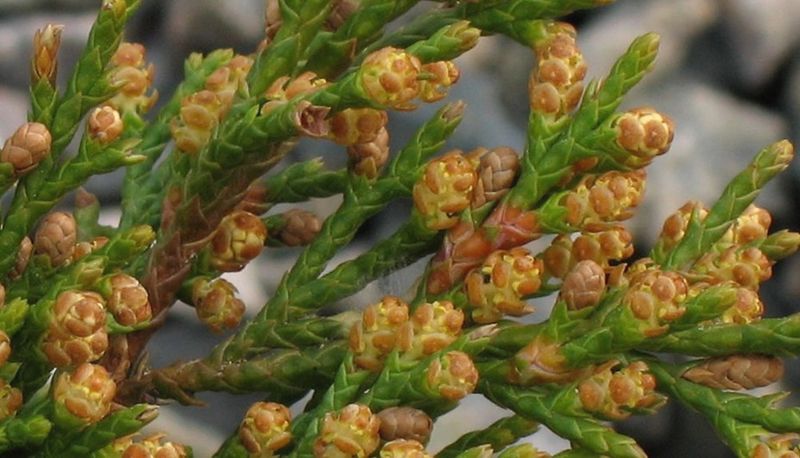
Beyond the privacy benefits, Eastern Redcedar quietly becomes one of the most productive wildlife trees on a property. The small blue berry-like cones that female trees produce are a well-documented food source for dozens of bird species.
Cedar waxwings, in particular, have a strong association with this tree, and their presence in an Ohio yard often signals a healthy Eastern Redcedar nearby.
The dense branching structure of Eastern Redcedar also offers exceptional nesting and roosting cover. Birds that need sheltered spots to nest in spring or stay warm in winters find the tight interior of a mature Eastern Redcedar genuinely useful.
A row of these trees along a fence line does not just screen out neighbors – it creates a corridor of habitat that draws in songbirds, small mammals, and other native wildlife throughout the year.
For homeowners who care about supporting local ecosystems, that wildlife value adds a layer of meaning to a fence-line planting that a solid wood fence simply cannot offer.
The tree feeds and shelters creatures that are native to Ohio, and it does so passively without any extra effort on the homeowner’s part.
That combination of privacy, structure, and ecological function is part of what makes Eastern Redcedar a genuinely worthwhile long-term investment in an Ohio landscape.
6. Slow Growth Makes It A Long-Term Screen
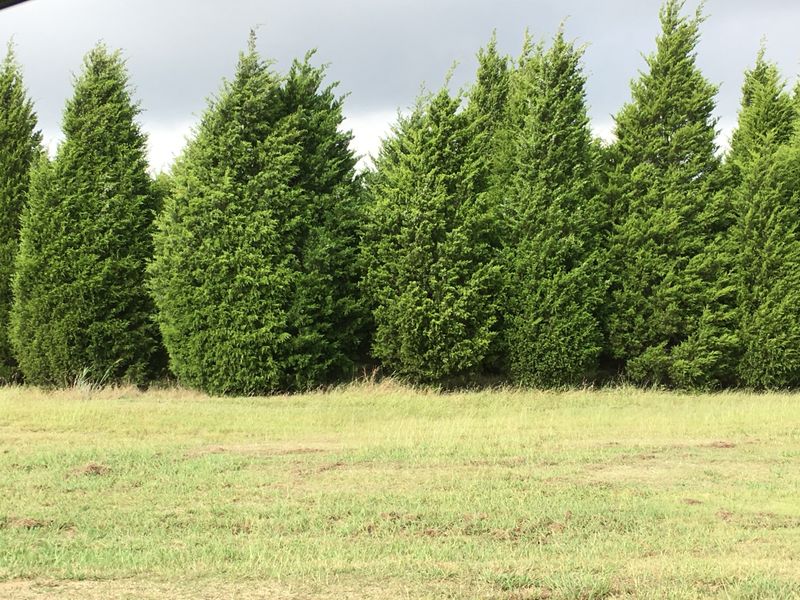
Slower growth often gets treated as a drawback, but for fence-line planting, it comes with some real advantages. Trees that race upward quickly tend to be brittle, short-lived, or prone to losing their lower branches as they age.
Eastern Redcedar builds its structure more deliberately, and that measured pace tends to produce a denser, longer-lasting screen in Ohio landscapes over time.
A fence-line planting is not a short-term project. Most homeowners who invest in a living screen are thinking about what their yard will look like in ten or fifteen years, not just next summer.
Eastern Redcedar fits that mindset well. As the years pass, it continues to thicken, fill in, and deepen its root system, making it more stable and more visually effective with each passing season.
There is also something satisfying about watching a native Ohio tree mature slowly on your property. Each year it gains a bit more height, a bit more density, and a bit more presence along the fence line.
That gradual transformation tends to feel more permanent and meaningful than a fast-growing screen that looks good for a few years and then becomes a maintenance problem.
In Ohio landscapes where longevity matters, Eastern Redcedar earns its place as a thoughtful, steady, and reliable long-term screening choice.
7. Proper Spacing Helps It Fill In Better
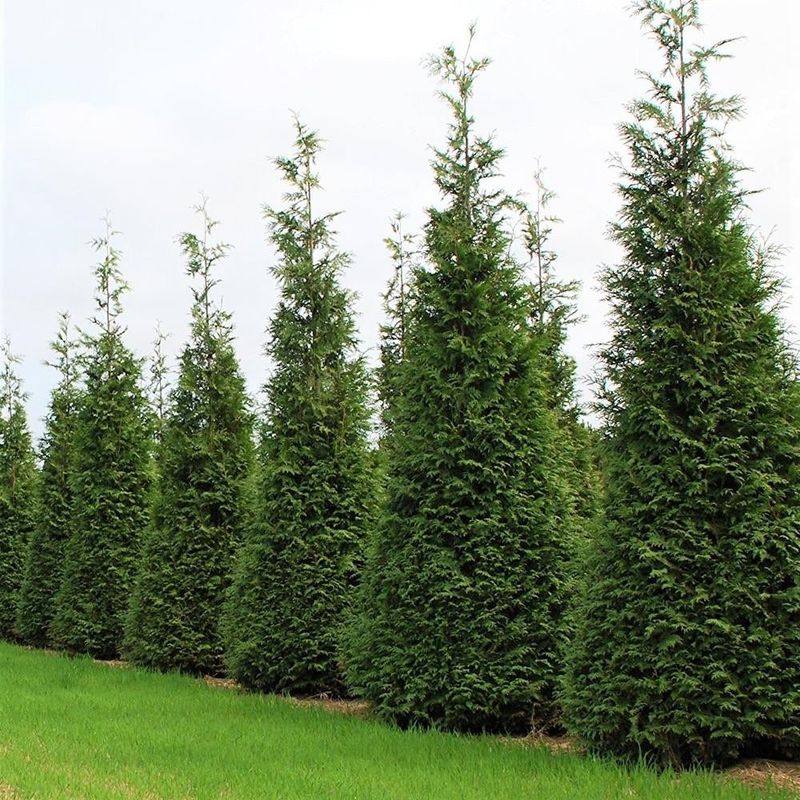
Spacing decisions at planting time have a bigger impact on fence-line results than most homeowners realize. Plant Eastern Redcedar too far apart and the gaps between trees stay visible for many years, leaving the screen looking thin and unfinished.
Plant them too close together and the trees begin competing for light and resources, which can slow growth and reduce the density of each individual tree over time.
For a fence-line privacy screen, spacing Eastern Redcedar trees roughly six to eight feet apart on center is a commonly suggested range.
That distance gives each tree enough room to develop its natural pyramidal form while still allowing the canopies to eventually overlap and create a continuous visual barrier.
In Ohio landscapes where faster results are a priority, a tighter spacing of five to six feet can work, though it may require some thinning down the road.
A staggered double row is another approach worth considering for properties with enough depth along the fence line.
Planting two offset rows rather than a single straight line can create a thicker, more layered screen that fills in from multiple depths rather than just one.
That approach takes more space but tends to produce a more convincing visual barrier in Ohio yards, especially during the early years when individual trees are still building their form and size.
8. Cedar-Apple Rust Is Worth Considering
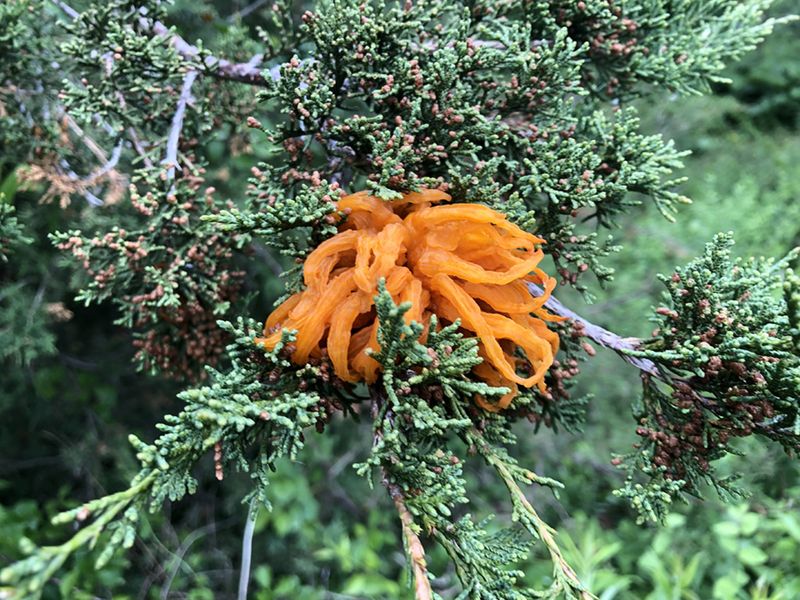
Cedar-apple rust is a fungal disease that affects Eastern Redcedar in Ohio, and it is worth understanding before you plant a row along your fence line.
The disease has a two-host life cycle, meaning it needs both a juniper species like Eastern Redcedar and an apple or crabapple host to complete its cycle.
In Ohio, where apple trees and ornamental crabapples are common in home landscapes, that combination shows up fairly regularly.
On Eastern Redcedar, cedar-apple rust typically appears as orange, gelatinous, tentacle-like growths on branches during wet spring weather.
These growths release spores that can travel to nearby apple or crabapple trees, where the disease causes leaf spots and can affect fruit quality.
The Eastern Redcedar itself usually handles the disease fairly well, though heavy infections can lead to gradual branch thinning over time.
If your property has apple trees, ornamental crabapples, or neighbors with those plants nearby, cedar-apple rust is something to factor into your planting decision.
It does not mean Eastern Redcedar is the wrong choice for your fence line, but it does mean being aware of what is already growing nearby.
Selecting rust-resistant apple or crabapple varieties for other parts of your landscape can help reduce the overall disease pressure when Eastern Redcedar is part of the planting plan.