These Are The North Carolina Shrubs That Look Incredible In Summer When Everything Else Wilts
Summer in North Carolina is beautiful and brutal at the same time. By July, a lot of shrubs that looked promising in spring are showing stress, dropping leaves, or simply sitting there without contributing much to the landscape.
The yards that hold their visual appeal straight through August and into September are built around shrubs specifically suited to heat and humidity rather than ones that merely tolerate it for a while before fading.
North Carolina’s summers are long and unforgiving enough to expose every weakness in a poorly matched plant, but they also create ideal conditions for shrubs that were genuinely selected for this climate.
Bold color, strong structure, and consistent performance through the hottest weeks of the year are what separate these shrubs from the ones that need replacing every few seasons.
1. Oakleaf Hydrangea
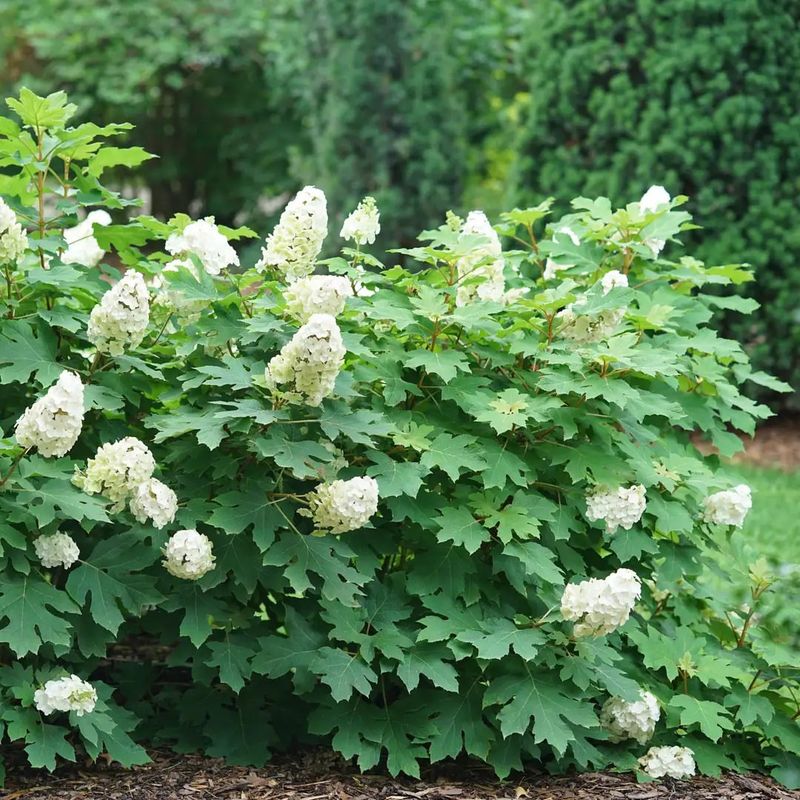
Few shrubs earn their keep the way Oakleaf Hydrangea does. Known botanically as Hydrangea quercifolia, this southeastern native was practically built for the heat and humidity that blanket North Carolina every summer.
While bigleaf hydrangeas wilt and sulk in the afternoon sun, Oakleaf Hydrangea stands tall with enormous white flower clusters that can stretch up to 12 inches long.
The blooms open bright white in early summer and gradually age to a soft parchment or rosy pink as the weeks pass. That slow color shift keeps the shrub looking interesting for months, not just days.
The bold, deeply lobed leaves that give this plant its name add a dramatic texture that most other shrubs simply cannot match.
Once established, Oakleaf Hydrangea handles drought surprisingly well, especially when planted in part shade and given a thick layer of mulch over its roots. Aim for about three inches of mulch to hold moisture and keep soil temperatures down during July and August.
Mature plants reach six to eight feet tall and wide, so give them room to spread. Come fall, the foliage turns brilliant shades of red, orange, and burgundy, extending the visual interest well beyond summer.
For gardeners wanting reliable beauty with minimal fuss, this native shrub is genuinely hard to beat.
2. Summersweet
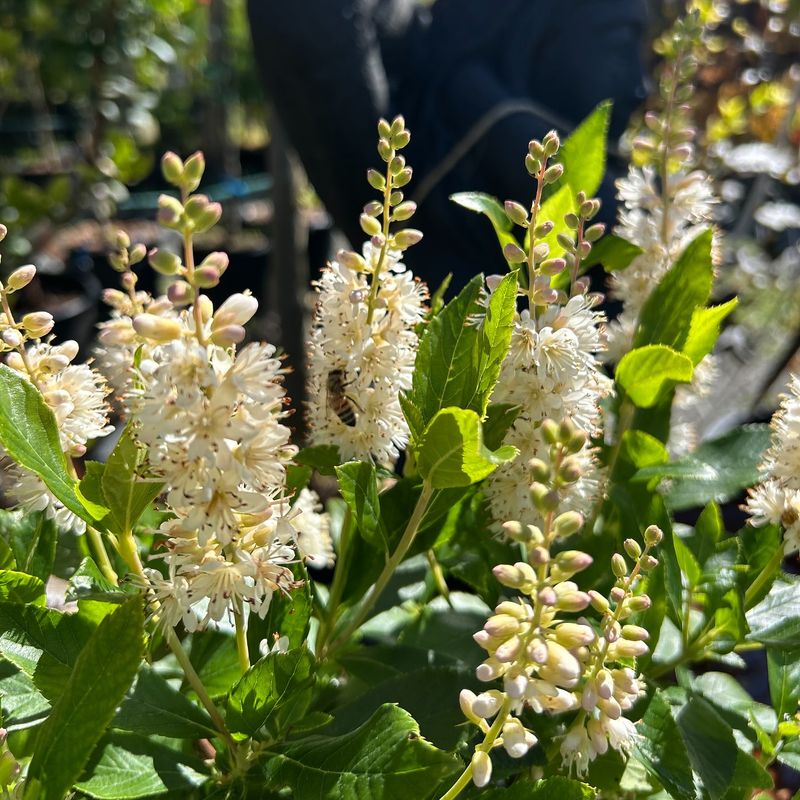
Walk past a Summersweet shrub in July and the fragrance alone will stop you in your tracks. Clethra alnifolia earns its common name honestly, filling the summer air with a sweet, spicy scent that draws in butterflies, bees, and hummingbirds by the dozen.
While many flowering shrubs peak in spring and spend summer looking tired, Summersweet is just getting started.
The slender white or pale pink flower spikes emerge in midsummer and bloom for several weeks straight, making this one of the longest-performing flowering shrubs you can grow in North Carolina.
It thrives in conditions that other plants avoid, including wet soil, deep shade, and the oppressive humidity that settles over the Piedmont and coastal regions from June through August.
Summersweet naturally grows along stream banks and in low-lying areas, so boggy spots in your yard that drain poorly are actually perfect for it. That said, it adapts well to average garden soil with consistent moisture.
Your North Carolina Garden Changes Every Week. Your Plan Should Too.
Gardening in North Carolina changes quickly throughout the season. Every Friday you’ll receive a simple weekly plan showing exactly what to plant, prune, fertilize, harvest, and protect so you never miss the right timing.
Plants typically reach three to eight feet tall depending on the cultivar, and compact selections like Hummingbird and Sixteen Candles work beautifully in smaller spaces. Minimal pruning is needed, and this shrub rarely struggles with pests or diseases.
For a low-maintenance, pollinator-friendly summer performer, Summersweet is a standout choice for nearly every landscape.
3. Virginia Sweetspire
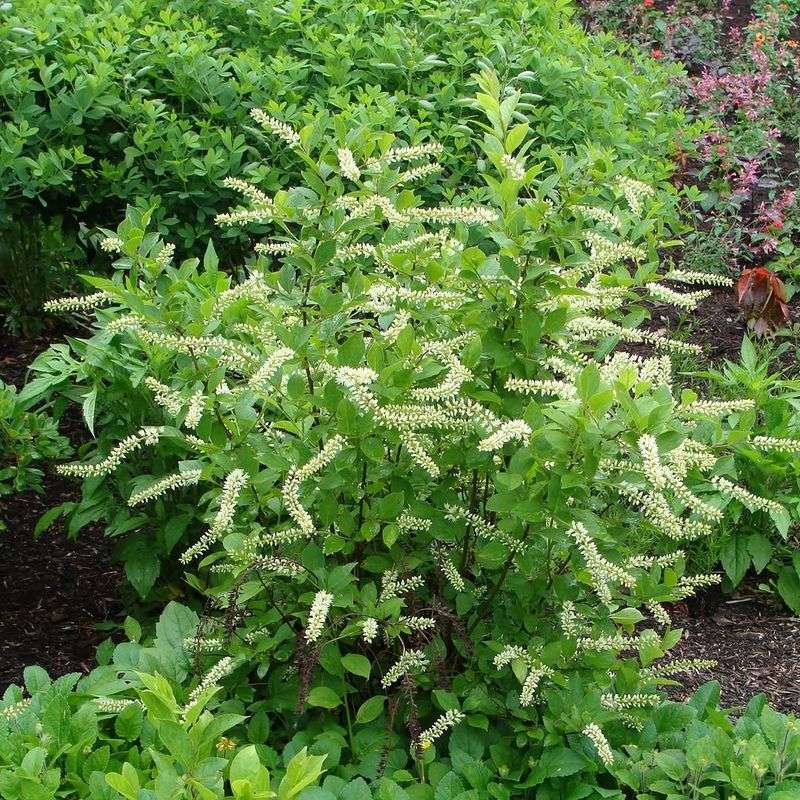
Virginia Sweetspire is one of those plants that quietly outperforms everything around it. Itea virginica is a native shrub that thrives in the kind of hot, moist conditions that make many garden plants look ragged by midsummer.
The arching white flower spikes appear in early to midsummer and carry a delicate, honey-like fragrance that is easy to miss until you lean in close.
The foliage is where this shrub really wins the summer game. Deep green, glossy leaves stay healthy and full looking even during heat waves, giving your garden a lush, well-watered appearance even when rainfall has been scarce.
Pollinators love the blooms, and you will often see bees and small butterflies working the flowers throughout the day.
Virginia Sweetspire spreads gradually by suckers, forming a graceful colony that works beautifully along water features, in rain gardens, or at the edge of a woodland border.
It tolerates consistently wet soil better than most ornamental shrubs, and it also handles part shade with ease.
Most cultivars grow three to five feet tall, with Henry’s Garnet being one of the most popular for its outstanding fall color. When autumn arrives, the leaves shift to blazing shades of red, orange, and purple, making this shrub a two-season star.
Starting it off with good mulch and regular watering in the first season sets it up for years of reliable beauty.
4. Buttonbush
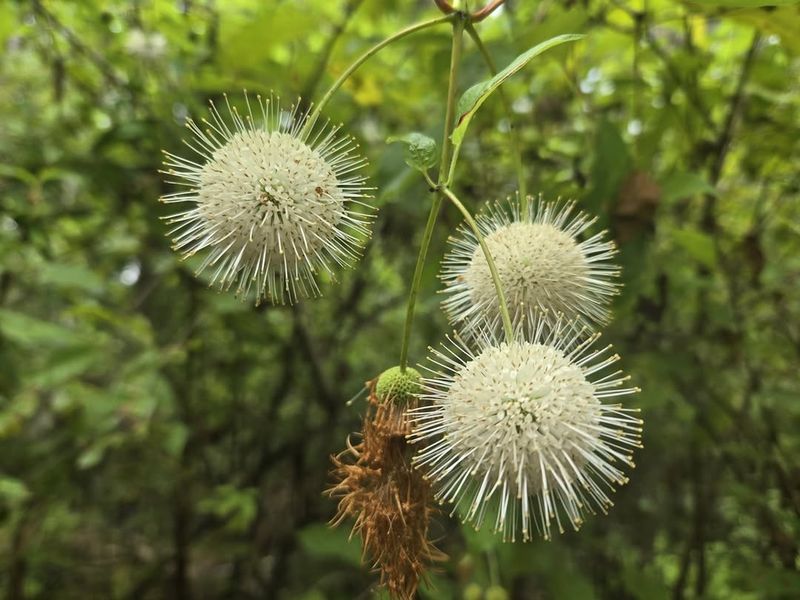
Buttonbush is one of the most unusual looking shrubs you can grow in North Carolina, and that is a very good thing. Cephalanthus occidentalis produces round, creamy white flower heads that look like small pincushions or golf balls covered in tiny florets.
They appear in midsummer when most flowering shrubs have already finished, and they attract an almost ridiculous number of pollinators, including bees, butterflies, and hummingbirds.
This native shrub is built for heat and water. It naturally grows along riverbanks, pond edges, and in seasonally flooded areas across the Southeast, which makes it an excellent choice for wet spots in North Carolina yards that seem impossible to plant.
Standing water that would rot most shrubs does not bother Buttonbush at all. It also handles full sun and summer humidity without any visible stress.
Mature plants typically reach six to twelve feet tall and wide, so it works best in larger landscapes or naturalized areas near water.
The glossy, dark green leaves stay attractive all season, and the round seed heads that follow the flowers provide food for waterfowl and songbirds well into fall and winter.
For rain gardens, retention ponds, or low-lying areas near streams, Buttonbush fills a role that almost no other ornamental shrub can. It is genuinely one of the hardest-working, wildlife-supporting native plants available to gardeners today.
5. Wax Myrtle
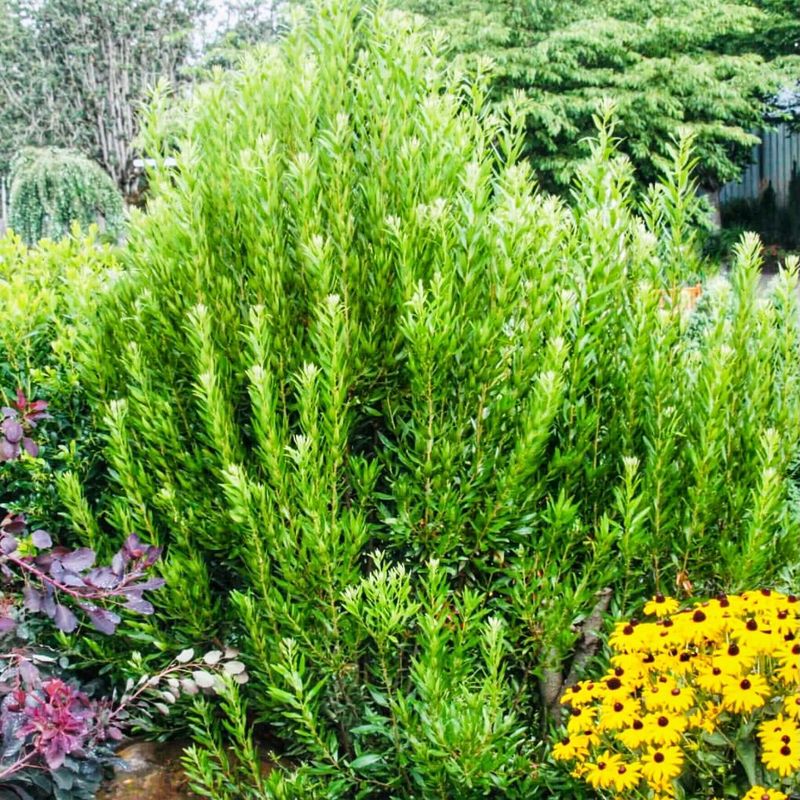
Wax Myrtle might just be the toughest evergreen shrub growing in North Carolina right now. Morella cerifera is a fast-growing native that looks its best during summer when heat, drought, and sandy soil send other plants into a downward spiral.
The aromatic, gray-green foliage stays dense and vibrant all year long, but there is something especially striking about how healthy it looks when surrounding plants are clearly struggling.
Established Wax Myrtle plants handle drought with impressive ease. Their root systems run deep and wide, pulling moisture from soil layers that shallower plants cannot reach.
Along the coast, they laugh at salt spray and sandy, nutrient-poor soil that would challenge most other shrubs. In the Piedmont and even the mountains, they adapt well to a wide range of conditions as long as drainage is decent.
Growth is genuinely fast, often two to three feet per year under good conditions, which makes Wax Myrtle an excellent choice for screening, privacy hedges, or windbreaks.
Birds love the small, waxy blue-gray berries that develop on female plants, and the fragrant foliage repels some insects naturally.
Left unpruned, plants can reach ten to fifteen feet tall and take on a graceful, multi-stemmed form. With regular trimming, they stay compact and tidy.
For year-round structure, summer resilience, and wildlife value, Wax Myrtle earns a permanent spot in almost any North Carolina landscape.
6. American Beautyberry
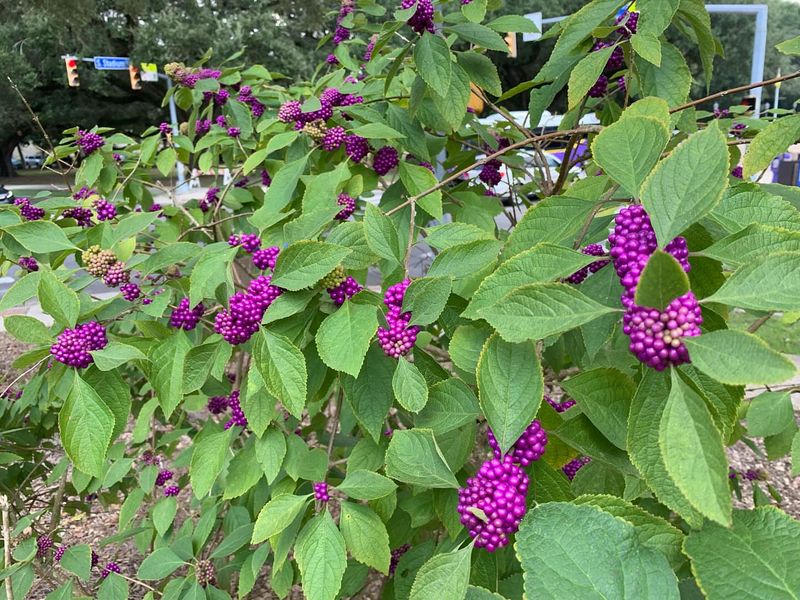
American Beautyberry has a personality that is hard to ignore.
Callicarpa americana grows with an almost carefree enthusiasm, pushing out large, tropical-looking leaves in spring and spending the entire summer building up to its showstopping fall display of vivid magenta-purple berry clusters.
By August, those berries are already starting to form, giving the shrub a two-season appeal that most plants simply cannot offer.
During the hottest months, the big, bold foliage stays healthy and lush, creating a full, layered look in garden beds even when temperatures push past 90 degrees.
Small, pale pink flowers appear along the stems in early summer and attract bees and other native pollinators before the berries take over the visual show.
The plant handles full sun to part shade, and it grows remarkably well in the average clay-heavy soils common across the North Carolina Piedmont.
One thing worth knowing about American Beautyberry is that it blooms on new wood, meaning you can cut it back hard in late winter or early spring without sacrificing the berry display later in the season.
Most gardeners prune it to about six inches from the ground every year or two to keep it compact and productive.
Plants typically reach four to six feet tall and wide when left to grow naturally. For North Carolina gardeners who want wildlife value, summer foliage, and a truly jaw-dropping fall finish, this native shrub delivers on every front.
7. Fothergilla
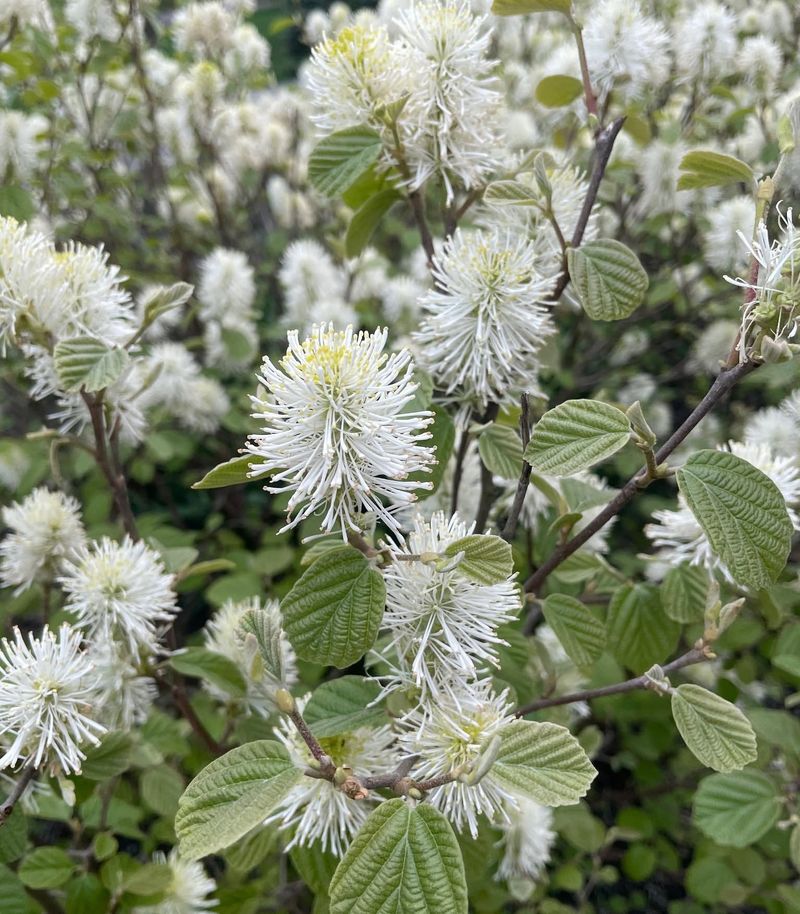
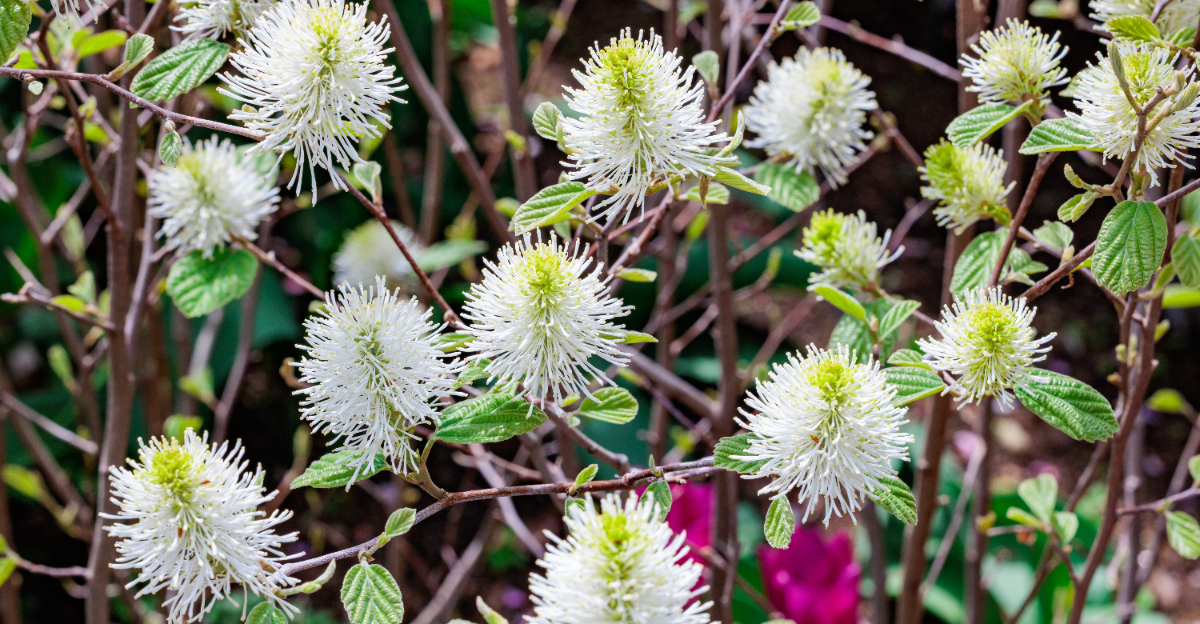
Most people discover Fothergilla in spring when its bottlebrush-shaped white flowers cover the bare branches with a honey-scented cloud of blooms.
But here is what the gardening world does not talk about enough: the summer foliage on Fothergilla is genuinely outstanding.
Both Fothergilla major and the more compact Fothergilla gardenii develop a dense canopy of blue-green leaves that hold their color and texture through the heat of a North Carolina summer without complaint.
That cool blue-green tone provides a refreshing contrast against brighter plants in a mixed border, and the foliage stays clean and pest-free even during the humid stretches that tend to bring out fungal problems in other shrubs.
Fothergilla thrives in well-drained, acidic soil, which is something North Carolina gardeners often have naturally, especially in the Piedmont and mountain regions.
It performs best in full sun to part shade, with morning sun and afternoon shade being an ideal combination in hotter areas.
Moisture consistency matters during establishment, but once rooted in, Fothergilla handles moderate summer dryness reasonably well with mulch support.
Fothergilla major grows six to ten feet tall, while Fothergilla gardenii stays more compact at two to four feet, making it a better fit for smaller spaces.
When fall arrives, the foliage transforms into a fiery mix of yellow, orange, and red that rivals any tree in the neighborhood. This is a shrub that earns attention in every season, summer included.
8. Carolina Allspice
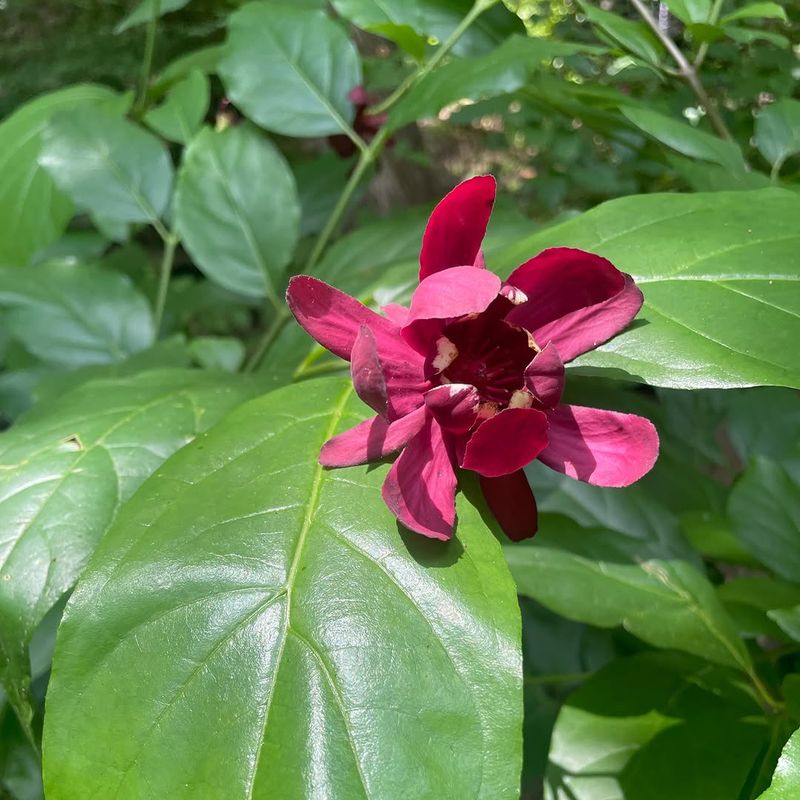
There is something wonderfully old-fashioned about Carolina Allspice.
Calycanthus floridus has been growing in North Carolina woodlands and cottage gardens for centuries, and its combination of spicy fragrance, unusual flowers, and tough-as-nails summer constitution keeps it just as relevant today.
The deep burgundy-red flowers are unlike anything else in the garden, with thick, strap-like petals that look almost tropical and smell like a mix of strawberries, cloves, and sweet wine.
Blooming begins in late spring and often continues into early summer, with occasional repeat flushes through the season. Even after the flowers finish, the large, glossy leaves remain healthy and full through the hottest months.
Carolina Allspice thrives in shade or part shade, making it a natural choice for spots under trees or along north-facing fence lines where summer heat is less intense.
It adapts well to the clay-heavy soils found across much of the Piedmont, and it handles humidity without developing the fungal leaf spots that plague other shade shrubs.
Mature plants typically grow six to nine feet tall and wide, forming a rounded, multi-stemmed shape that fits naturally into woodland garden designs. Pruning is rarely necessary beyond removing any crossing branches after flowering.
Once established, Carolina Allspice needs very little supplemental watering and almost no fertilizer to look its best. For shaded spots that need reliable summer structure and a scent that stops visitors in their tracks, this native shrub is a true gem.
9. Smooth Hydrangea
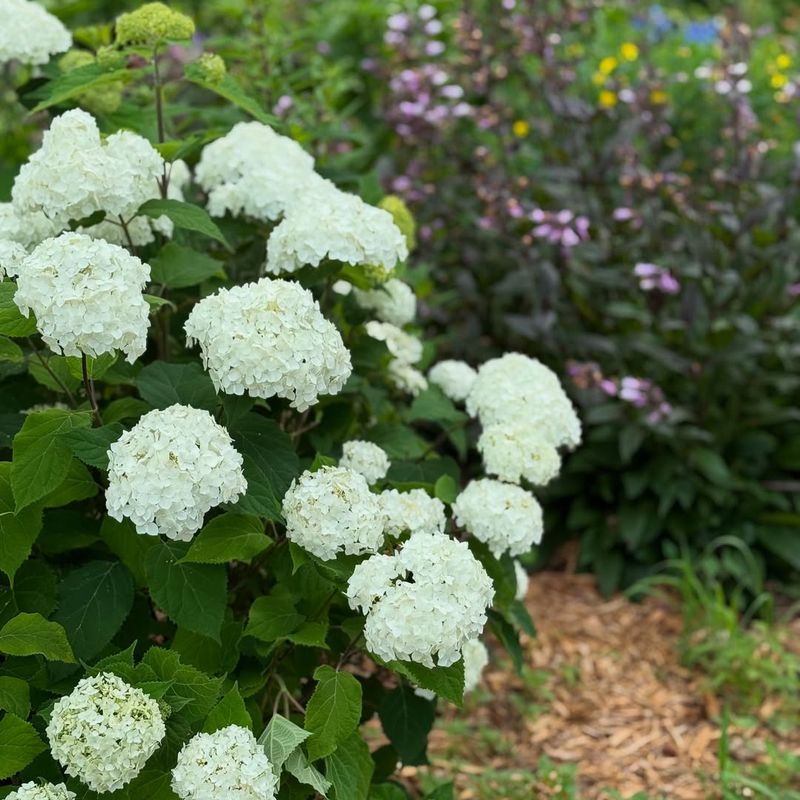
Smooth Hydrangea might be the most underrated summer bloomer in North Carolina gardening.
Hydrangea arborescens is a native species that produces enormous, rounded white flower heads, sometimes stretching eight to twelve inches across, right in the middle of summer heat.
Unlike many traditional mophead hydrangeas that struggle in North Carolina summers, Smooth Hydrangea handles the heat without dropping its blooms or wilting dramatically every afternoon.
Moisture is the key to keeping this shrub happy. It prefers consistently moist, well-drained soil and appreciates shade during the hottest part of the day, especially in the Piedmont and coastal plain where summer afternoons can be brutal.
A thick layer of mulch around the base goes a long way toward holding soil moisture and protecting roots from temperature swings. Good airflow between plants also helps prevent the powdery mildew that can appear during very humid stretches.
Annabelle is the most well-known cultivar, but newer selections like Incrediball and Invincibelle Spirit offer stronger stems that hold up better under the weight of those giant blooms.
Smooth Hydrangea blooms on new wood, so pruning in late winter or early spring encourages the strongest flower display each summer.
Plants typically reach three to five feet tall and wide, fitting comfortably into most garden borders. For North Carolina gardeners who love big, bold summer flowers with minimal drama, Smooth Hydrangea is a reliable and rewarding choice every single year.