The One Thing North Carolina Tomatoes Need Before July Ends Or The Harvest Is Over
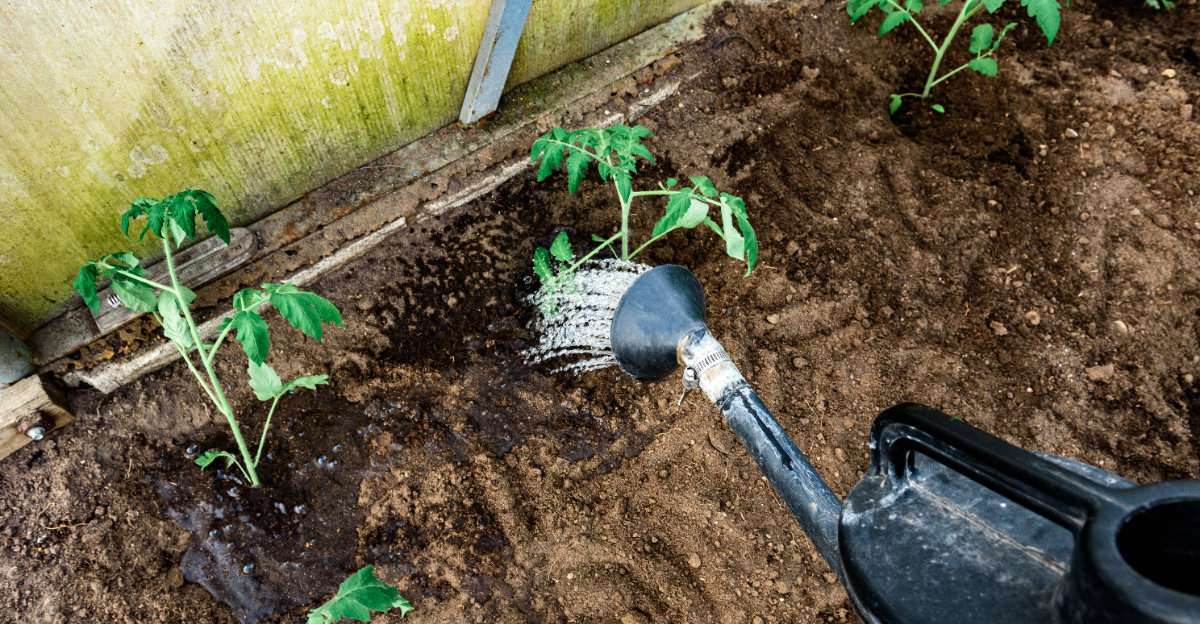
Consistent watering becomes absolutely critical for North Carolina tomatoes before July wraps up, especially as fruit production hits its peak.
Irregular watering during this stretch often leads to blossom end rot, cracked fruit, or plants that simply stop producing altogether.
Deep, steady watering encourages strong root systems that can handle the intense heat still ahead. Mulching around the base helps retain soil moisture and keeps roots cooler during scorching afternoons.
Skipping consistent watering now often means a noticeably shorter harvest window heading into August.
Checking soil moisture a few inches down gives a more accurate read than just glancing at the surface. Feeding plants with a balanced fertilizer also supports continued fruit development through the rest of summer.
Getting this one detail right now can be the difference between a strong harvest and an early finish.
1. The One Thing Is Consistent Root Zone Moisture
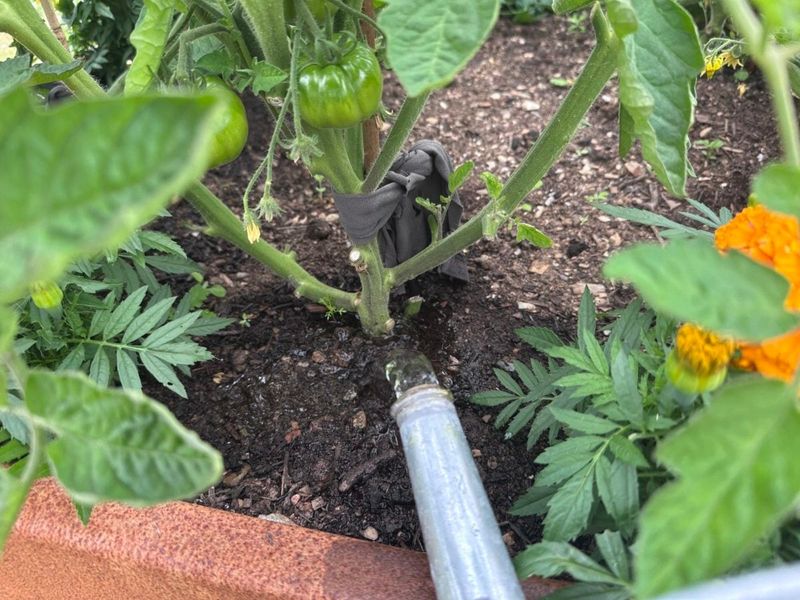
Tomato plants in full fruit production are working overtime. Every flower, every swelling tomato, and every leaf on the vine is pulling moisture from the soil at a surprisingly fast rate during North Carolina’s intense summer heat.
Keeping that root zone consistently moist is the single most important thing you can do for your harvest right now.
Most fruiting tomato plants need roughly 1.5 inches of water per week, combining both rainfall and irrigation.
That number can shift depending on your soil type, the size of your plants, whether they are growing in containers, and just how hot the temperatures climb.
Sandy soils drain faster and may need more frequent attention, while clay soils hold moisture longer but can become waterlogged if you are not careful.
It is worth knowing that July 31 is not some hard statewide deadline where everything suddenly stops.
Missing one watering session will not automatically end your harvest. What does cause real problems is a pattern of inconsistent moisture over several days or weeks.
Roots that go through repeated wet and dry cycles struggle to deliver water efficiently to the fruit and flowers above.
Checking the soil regularly, rather than watering on a rigid schedule, is the smarter approach.
Push a finger or a wooden dowel about two inches into the soil near the base of the plant. If it comes out dry, it is time to water.
Staying ahead of dryness, rather than reacting to wilting, keeps your plants producing strong through late summer.
2. Developing Tomatoes Increase The Plant’s Water Demand
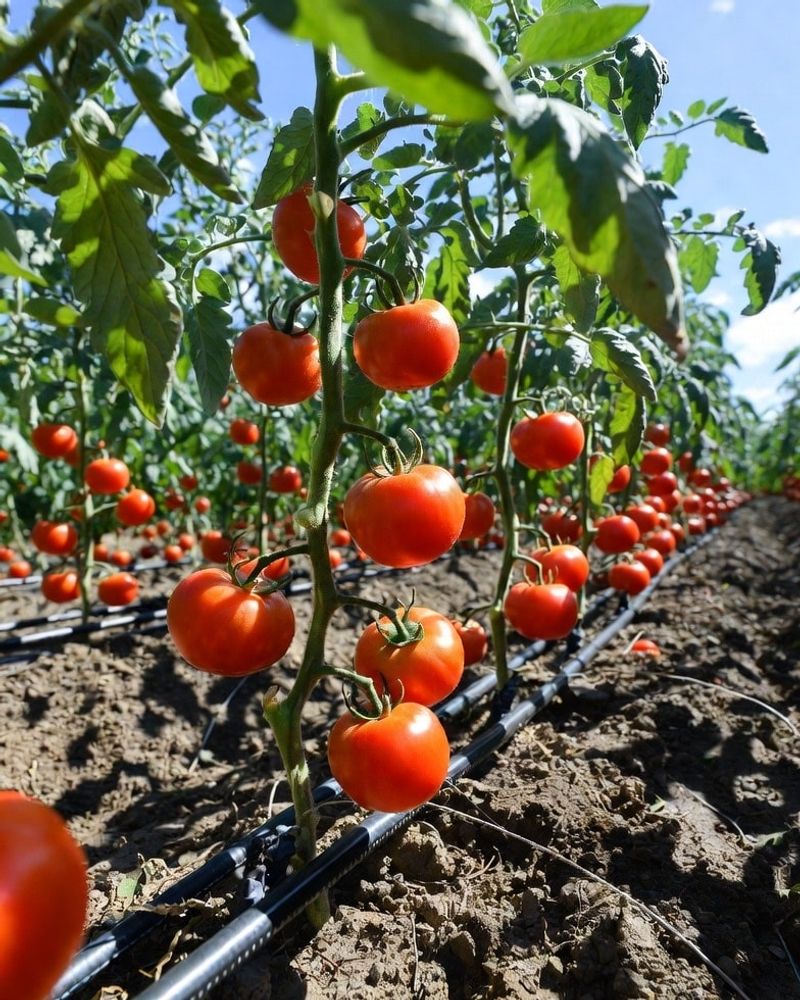
Here is something that surprises a lot of gardeners: the bigger and more productive your tomato plant becomes, the thirstier it gets. A mature plant in late July is not just feeding its roots and leaves anymore.
It is simultaneously supplying moisture to its stems, flowers, expanding fruit, and an enormous canopy of foliage, all at the same time. North Carolina’s late July conditions make this even more demanding.
Intense sunlight heats up the leaves, hot winds pull moisture out of the plant faster than you might expect, and high temperatures accelerate how quickly the soil surface dries out.
Your North Carolina Garden Changes Every Week. Your Plan Should Too.
Gardening in North Carolina changes quickly throughout the season. Every Friday you’ll receive a simple weekly plan showing exactly what to plant, prune, fertilize, harvest, and protect so you never miss the right timing.
A plant that seemed perfectly happy with its watering schedule two weeks ago may now be quietly struggling to keep up.
When the roots cannot deliver enough moisture to meet all of those competing demands, the plant starts making hard choices.
You might notice flowers dropping before they set fruit, small tomatoes that seem to stop growing, or foliage that wilts and does not bounce back after the hottest part of the afternoon passes.
Rather than waiting for those warning signs to show up, make a habit of inspecting the soil around your plants every day or two.
Symptoms of drought stress in tomatoes can appear gradually, and by the time the plant looks visibly distressed, the root zone may have been dry for longer than you realize.
Catching dryness early and correcting it quickly gives developing fruit the steady supply of moisture it needs to keep growing.
3. Irregular Moisture Increases Blossom End Rot
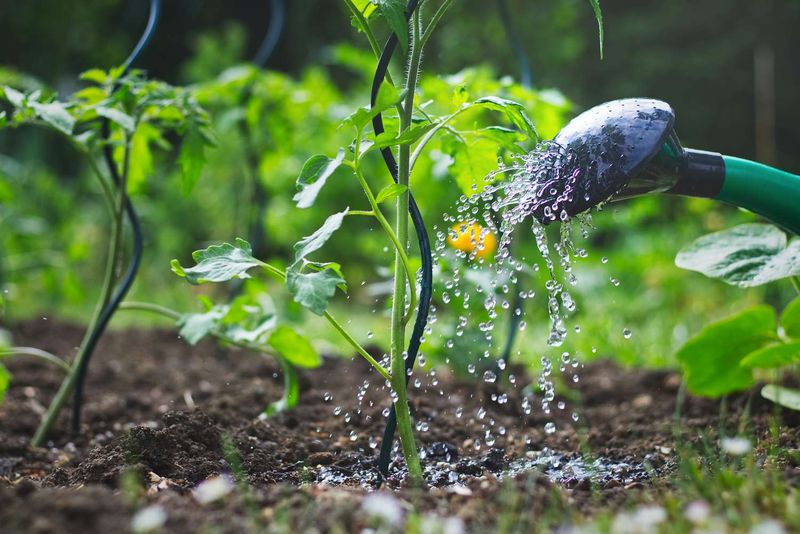
Blossom end rot is one of the most frustrating sights in a summer tomato garden.
That sunken, leathery brown or dark patch that appears at the bottom of a developing tomato is not caused by a pest or a fungus.
It is a physiological problem rooted in how calcium moves through the plant, and inconsistent watering is one of the main triggers. Calcium travels from the soil into the plant through water.
When the soil moisture swings dramatically from very dry to very wet and back again, that steady flow of water gets interrupted.
The developing fruit at the end of the vine is often the last in line to receive calcium, making it the first place where a deficiency shows up visually.
Many gardeners reach for calcium supplements when they see this problem, but adding more calcium to the soil is not always the answer.
Most North Carolina garden soils already contain plenty of calcium.
The real issue is that the plant cannot move what is already there efficiently enough when watering is uneven.
Soil pH also plays a role, since calcium becomes less available when the soil is too acidic. Steady, consistent watering is the most reliable way to reduce blossom end rot.
Keeping the root zone evenly moist, maintaining a soil pH around 6.2 to 6.8, and avoiding deep cultivation near the plant roots all support better calcium uptake.
Healthy roots in stable soil conditions are your best protection against this common summer problem.
4. Sudden Rain After Dry Soil Can Crack Fruit
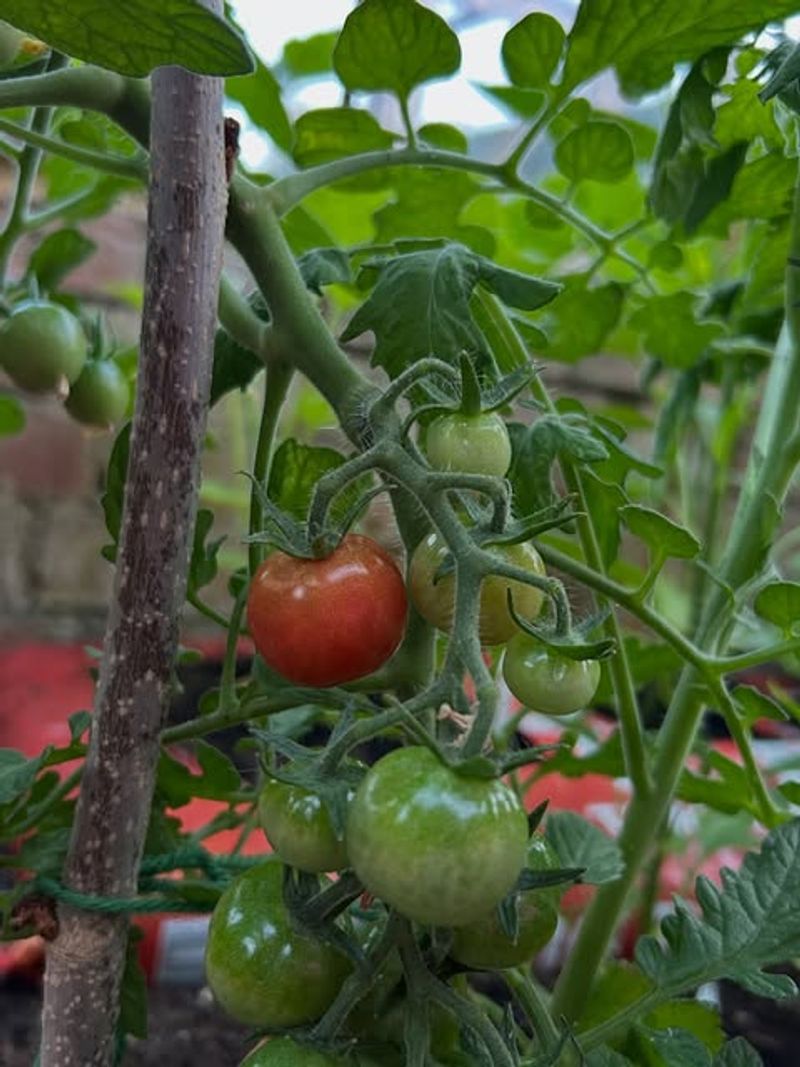
Picture this: your tomatoes have been sitting in dry soil for several days, quietly waiting for relief, and then a big summer thunderstorm rolls through and drops two inches of rain in an hour.
It sounds like exactly what the garden needs, but for the fruit already on the vine, that sudden flood of moisture can cause serious cracking and splitting. Here is what happens inside the fruit.
When roots suddenly absorb a large amount of water after a dry period, the tomato expands rapidly from the inside.
The outer skin, which has already toughened slightly during the dry stretch, cannot stretch fast enough to keep up with that internal pressure.
The result is splits that run along the shoulders of the fruit or circular cracks around the stem end.
Consistent watering throughout the season is the most effective way to prevent this problem.
When the root zone stays evenly moist, the fruit grows at a steady pace and the skin develops more uniformly.
Extreme swings in soil moisture are what cause the rapid expansion that leads to cracking. Organic mulch is one of your best tools here.
A two to three inch layer of straw or shredded leaves around your plants acts as a buffer, slowing down how fast rain soaks into the soil and reducing evaporation between waterings. Also, keep an eye on the forecast.
If a major storm is coming and you have tomatoes that are nearly ripe, go ahead and harvest them early. They will ripen perfectly fine indoors.
5. Morning Wilt Shows The Plant Needs Attention
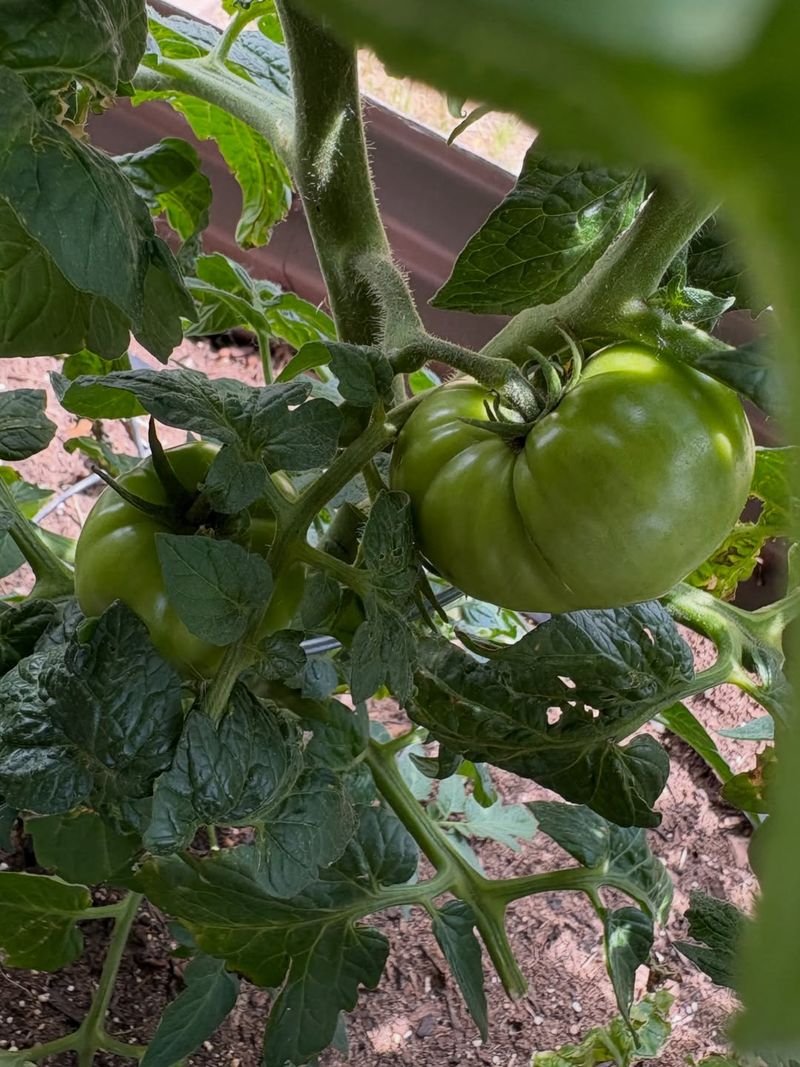
Seeing your tomato plants droop on a blazing July afternoon can feel alarming, but afternoon wilt is actually pretty normal during peak summer heat in North Carolina.
When temperatures climb into the upper 80s and 90s, plants temporarily lose more moisture through their leaves than their roots can replace quickly enough.
Most of the time, they bounce right back once the evening cools down. The wilt you really need to pay attention to is the kind that shows up in the morning.
If you walk out to the garden early, before the heat of the day sets in, and your plants are still drooping, that is a clear sign something is off.
Healthy, well-watered tomatoes should look perky and upright in the morning hours, even after a hot day.
When morning wilt appears, the first step is checking the root zone before doing anything else.
Gently push your finger or a soil probe several inches into the ground near the base of the plant.
Dry soil means the plant genuinely needs water. However, if the soil feels soggy or waterlogged, adding more water will only make things worse.
Overwatered roots struggle just as much as dry ones, and saturated soil cuts off the oxygen roots need to function.
Root damage from pests or disease can also cause persistent wilt even when soil moisture seems fine.
If the soil checks out and wilting continues, look more closely at the lower stem and root area for signs of rot, tunneling, or other damage that may be interfering with the plant’s ability to take up water normally.
6. Deep Watering Supports A Larger Root Zone
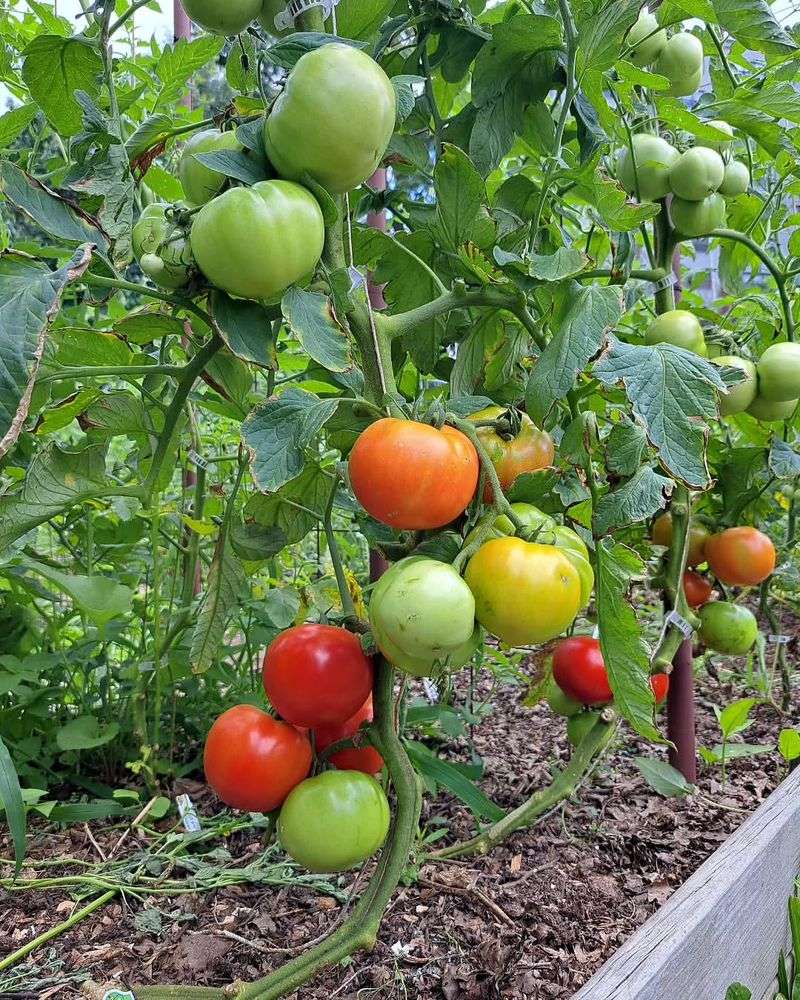
A quick sprinkle from the hose might feel satisfying in the moment, but it often does very little for the actual root zone of a mature tomato plant.
Light, frequent watering tends to moisten only the top inch or two of soil, and roots naturally follow moisture wherever it is most available.
When water stays near the surface, roots stay near the surface too, and that makes them far more vulnerable to the rapid drying that happens on hot summer days.
Slow, thorough watering encourages roots to grow deeper into the soil where temperatures are more stable and moisture lasts longer between sessions.
Apply water directly at the base of the plant and allow it to soak in gradually rather than running off. Aim for the water to penetrate at least four to six inches into the root zone.
Drip irrigation and soaker hoses are excellent tools for achieving this because they deliver water slowly and right where it is needed most. Morning is the best time to water your tomatoes.
The soil absorbs moisture before the peak heat of the day, the plant has what it needs going into the hottest hours, and any water that splashes onto leaves has time to dry before evening, which reduces the risk of fungal problems.
One important note: tomato roots need oxygen just as much as they need water. Keeping the soil constantly saturated is not the goal.
The aim is evenly moist soil that drains well and allows air to reach the roots between watering sessions. That balance is what a thriving root zone actually looks like.
7. Organic Mulch Helps Hold Moisture Steady
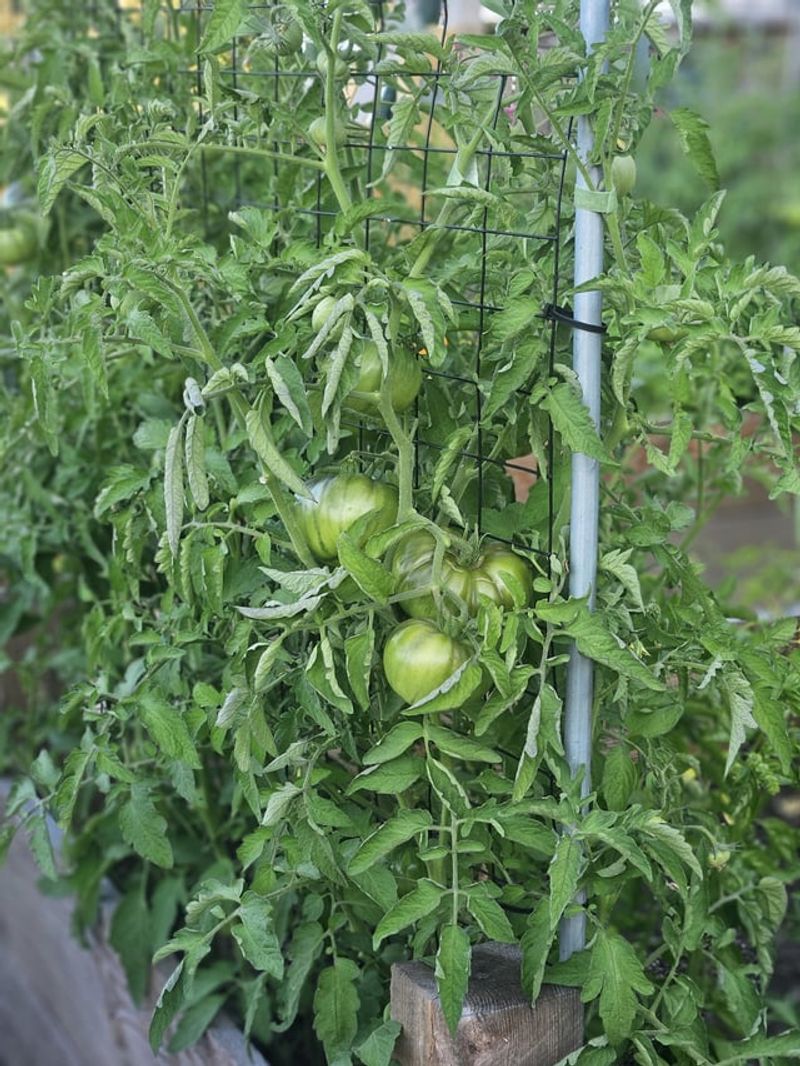
One of the most practical and affordable upgrades you can make to your tomato garden right now costs almost nothing if you already have straw, pine straw, or shredded leaves on hand.
A good layer of organic mulch around your tomato plants quietly does several important jobs at once, and moisture retention is right at the top of that list.
Bare soil in a North Carolina summer garden loses moisture fast. The sun bakes the surface, and water can evaporate within hours of a good watering session.
Mulch acts like a protective blanket over the soil, dramatically slowing that evaporation and keeping the root zone cooler and more consistently moist between waterings.
Studies from university extension programs consistently show that mulched garden beds retain significantly more moisture than unmulched ones.
Apply a two to three inch layer of your chosen mulch around each plant, spreading it outward to cover the area where the roots are most active.
Leave a small gap of a few inches around the base of each stem so that moisture does not accumulate right against the plant, which can encourage rot at the soil line.
Beyond moisture, mulch also reduces the amount of soil that splashes up onto lower leaves during watering or rain.
That matters because soil splash is one of the main ways that fungal diseases like early blight spread to tomato foliage. Fewer weeds competing for water and nutrients is another welcome bonus.
Mulching is genuinely one of the highest-return investments you can make in your summer tomato garden.
8. Rainfall Must Be Measured Rather Than Assumed
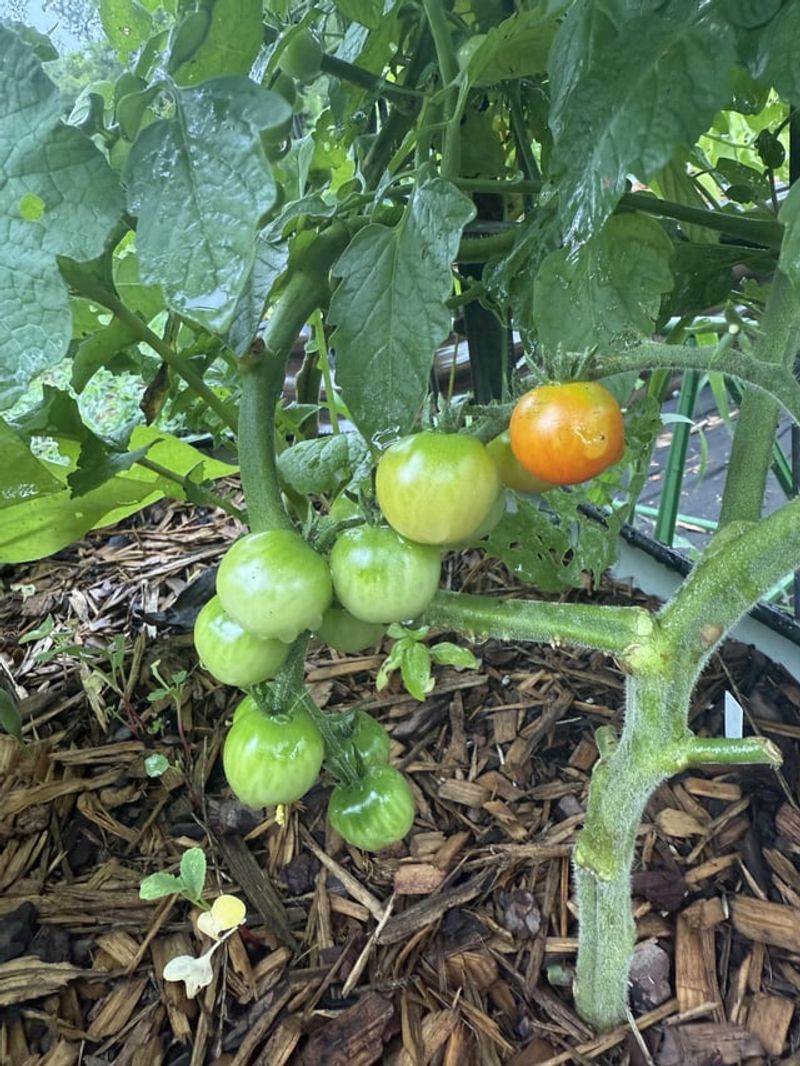
A summer thunderstorm rolling through your neighborhood can feel like a generous gift to your garden, but looks can be deceiving.
Heavy rain that falls quickly, especially on sloped ground, compacted soil, raised beds, or containers, often runs off the surface before it has a chance to soak down into the root zone where tomatoes actually need it.
Assuming the rain did the job without checking is one of the most common watering mistakes home gardeners make.
A simple rain gauge is one of the cheapest and most useful tools you can add to your garden. Place it in an open area near your tomato beds and check it after every significant rain event.
Even if the gauge shows a full inch of rainfall, that does not automatically mean your root zone is adequately hydrated.
Follow up by pushing a soil probe or your finger several inches into the ground in two or three spots around your plants to see what the soil actually feels like down below.
What you are looking for is evenly moist soil throughout the top six inches or so of the root zone.
Not soaking wet, not powdery dry, but consistently damp like a wrung-out sponge. That texture tells you the roots have what they need without being waterlogged.
Building a flexible watering routine around actual soil conditions rather than a fixed schedule puts you in control of your harvest.
Consistent root zone moisture protects the fruit already on the vine, supports the flowers still setting, and gives your North Carolina tomatoes the strongest possible chance of producing well through late summer and beyond.