Why Georgia Gardeners Are Topping Pepper Plants And How To Do It
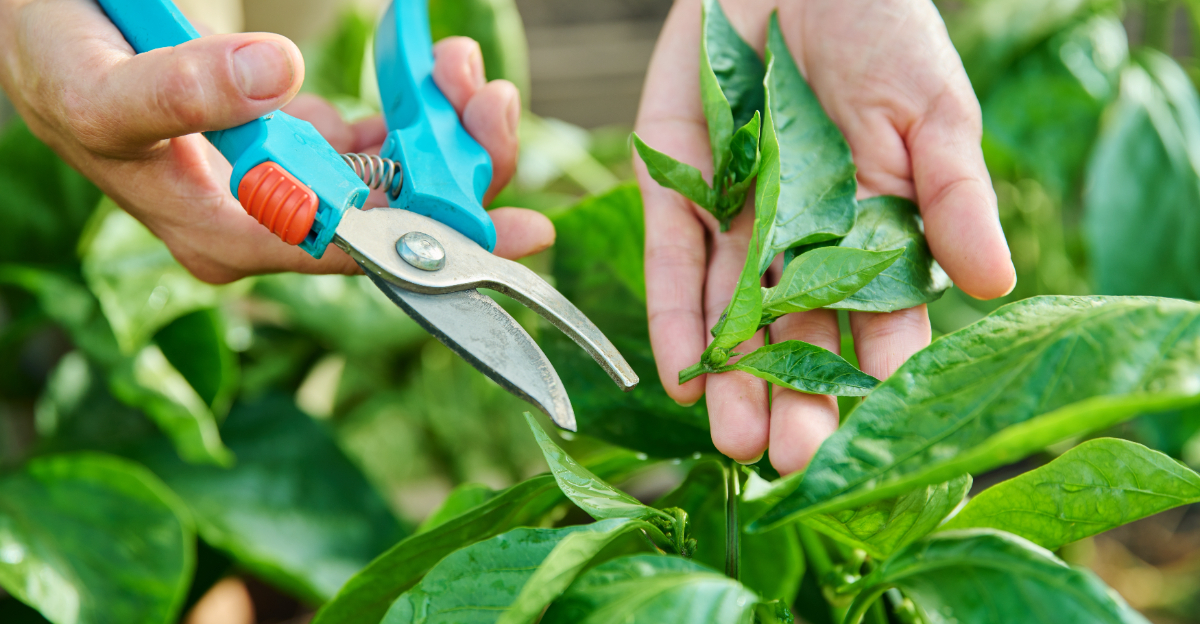
Pepper plants make a lot of gardeners nervous once they finally start growing well. Everything looks healthy, flowers begin forming, and then somebody suggests cutting the top right off the plant on purpose.
That advice sounds completely wrong the first time people hear it.
Then the side growth starts exploding.
A topped pepper plant often turns bushier, fuller, and far more productive later in the season once new branches take over.
Georgia’s long-growing season gives pepper plants plenty of time to recover and grow back fuller afterward.
The timing matters more than most people expect, though. Cutting too early or waiting too long can completely change how the plant responds afterward.
One quick snip can either help the plant thrive for months or leave gardeners wondering why the harvest slowed down instead.
1. Topping Helps Pepper Plants Grow Bushier And Stronger
Most people think taller means better when it comes to pepper plants. That assumption can actually hold your harvest back.
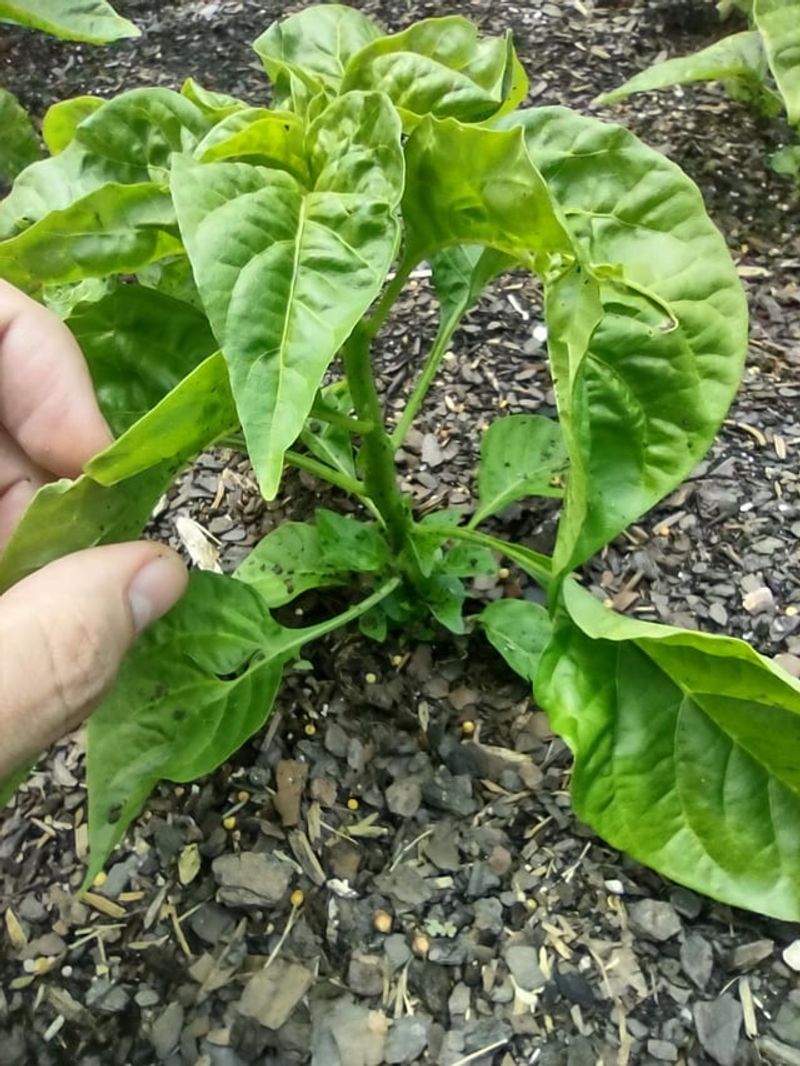
Pepper plants naturally want to grow straight up. All the plant’s energy goes into that one main stem.
The result is a tall, narrow plant with fewer branches and fewer peppers.
Topping changes that pattern completely. When you remove the top of the main stem, the plant stops pushing energy upward.
Instead, it sends that energy outward into side shoots.
More side shoots mean more branches. More branches mean more flowers.
More flowers mean more peppers. It is a simple chain reaction that pays off big by harvest time.
Bushy plants also stay more stable in the ground. A wide, low-growing plant handles wind and heavy rain better than a tall, spindly one.
That matters a lot during Georgia’s hot and stormy summer months.
Stronger branching also means the plant can support more fruit weight without bending or snapping. Each branch becomes sturdier when it has space and energy to develop fully.
Gardeners who top their plants often report noticeably fuller plants compared to those left alone. The difference shows up clearly by midsummer.
2. Wait Until Plants Reach Several Inches Tall
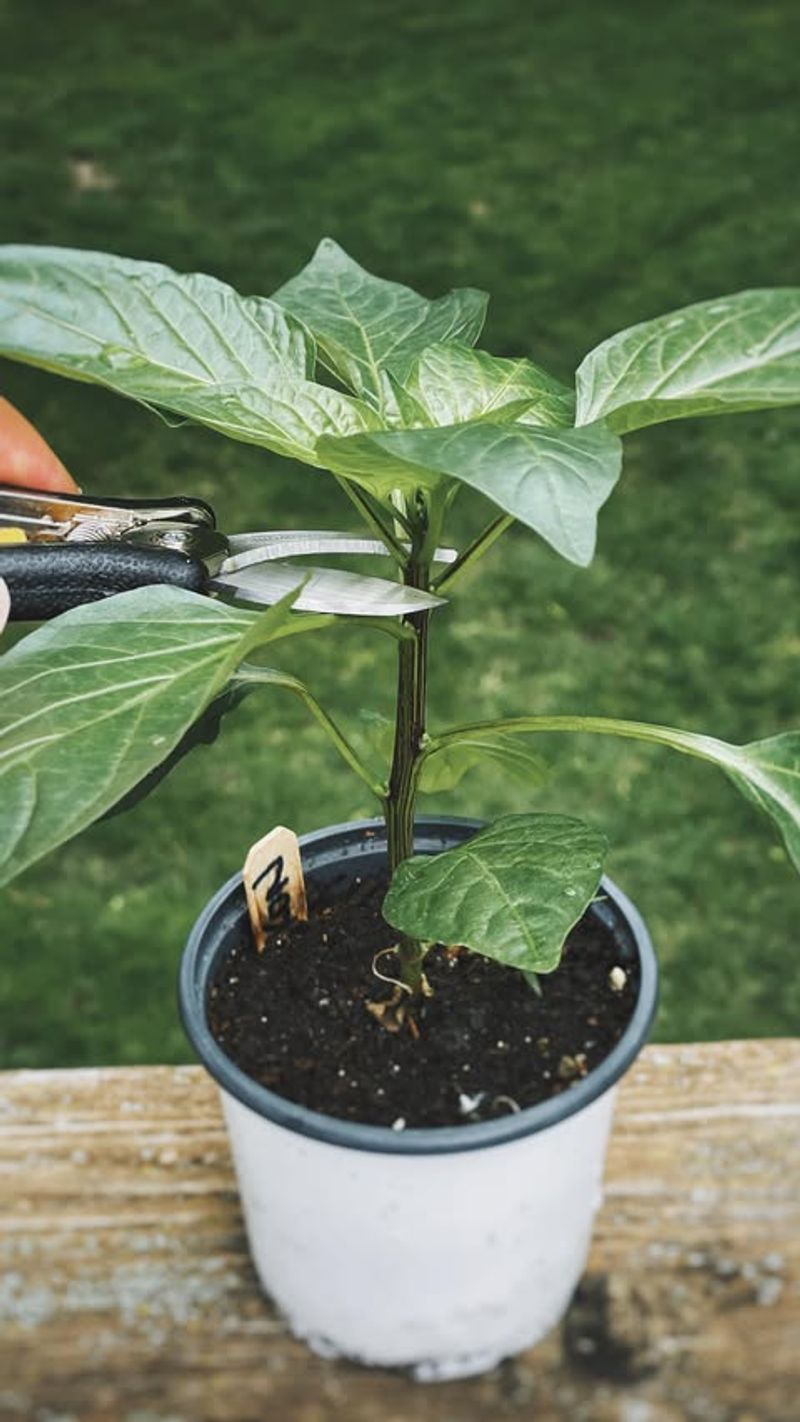
Timing is everything with topping, and jumping in too early can set your plant back more than it helps.
Young seedlings need time to establish roots and build real strength before you start cutting. A plant that is only two or three inches tall simply does not have enough energy reserves to bounce back quickly.
Most experienced growers wait until pepper plants are between six and twelve inches tall before topping. At that height, the plant has developed a solid root system and several sets of true leaves.
Look for at least four to six sets of leaves on the main stem before making any cuts. Those leaves are producing energy through photosynthesis, and the plant needs that stored energy to recover and push out new growth.
Transplanted seedlings need extra consideration. After moving from a pot to the garden bed, plants go through a short adjustment period.
Wait until the plant looks fully settled and is actively growing again before topping.
Your Georgia Garden Changes Every Week. Your Plan Should Too.
Gardening in Georgia changes quickly throughout the season. Every Friday you’ll receive a simple weekly plan showing exactly what to plant, prune, fertilize, harvest, and protect so you never miss the right timing.
In warmer climates, plants tend to establish faster. Even so, do not rush the process just because conditions seem ideal.
Checking the stem thickness also helps. A stem that feels firm and sturdy is ready.
A thin, wobbly stem needs more time.
3. Cut The Main Stem Above A Leaf Node
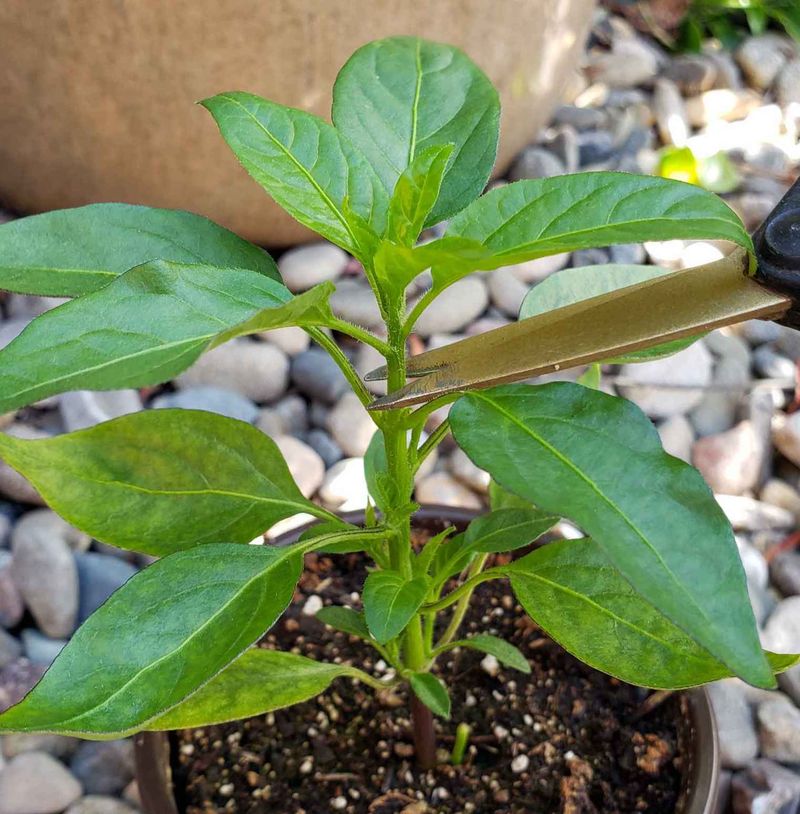
Knowing exactly where to cut makes all the difference between a clean top and a struggling plant.
A leaf node is the spot on the stem where a leaf or branch grows out. Cutting just above one of these nodes gives the plant a clear signal to branch out from that point.
Aim to cut about a quarter inch above the node. Cutting too close risks damaging the node itself.
Cutting too far above leaves a stub that can invite problems over time.
Choose a node that sits near the top of the plant, somewhere in the upper third of the stem. Cutting lower than that removes too much of the plant’s established growth.
Look for a node where you already see small side shoots beginning to form. Those tiny buds are early signs of branching, and cutting just above them encourages those shoots to take off quickly.
After the cut, the two main side shoots just below the cut will become the new leading branches. From those two branches, more side shoots will eventually grow, creating a fuller plant structure over time.
Angle the cut slightly rather than cutting straight across.
4. Use Clean Shears Before Making Any Cuts
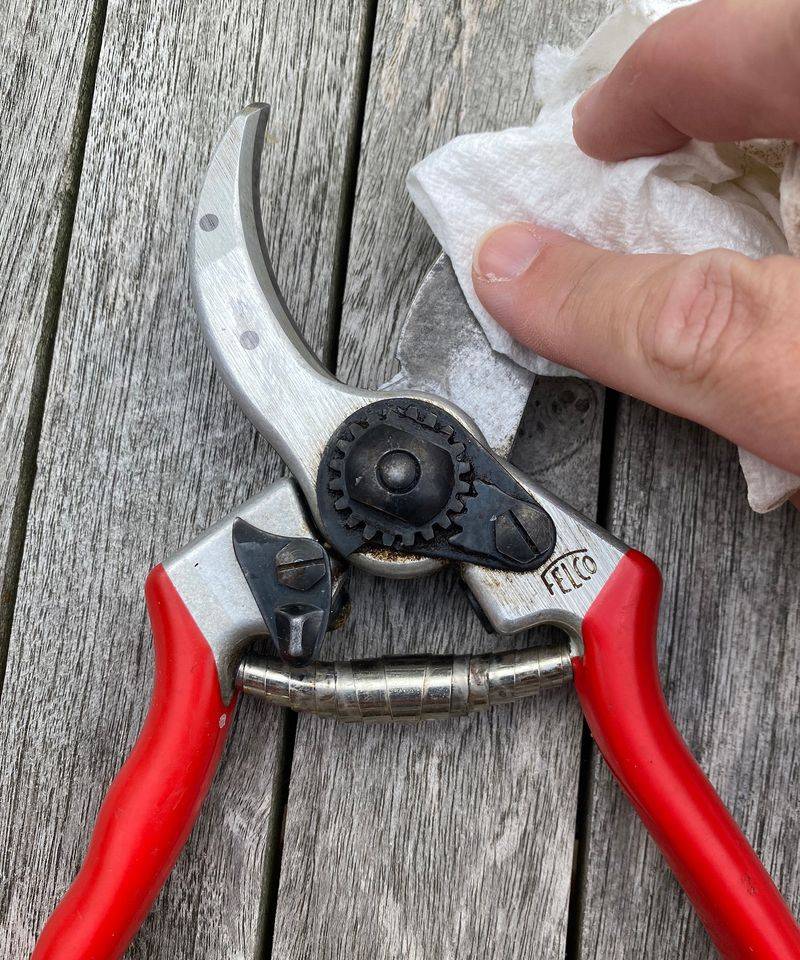
Dirty tools can cause real problems for your pepper plants, even when your cutting technique is perfect.
Garden shears pick up bacteria, fungi, and other pathogens every time they touch soil or plant material. Using those same dirty blades on a fresh cut is an easy way to introduce problems directly into the plant’s tissue.
Clean your shears before topping each plant. A quick cleaning helps reduce the chance of spreading disease between plants.
Let the blades dry briefly before cutting.
Sharp blades matter just as much as clean ones. Dull shears crush the stem tissue rather than cutting cleanly through it.
Crushed tissue takes longer to heal and leaves the plant more exposed.
Run your finger carefully along the blade edge before you start. If it drags rather than glides, sharpen it first.
A basic whetstone or blade sharpener works fine for garden shears.
If you are topping multiple plants in one session, clean the blades between each plant to reduce the chance of spreading disease from one plant to another.
Store your shears in a dry place after each use. Moisture causes blades to rust faster, and rusty blades are harder to keep sharp and clean.
5. Leave Healthy Side Shoots In Place
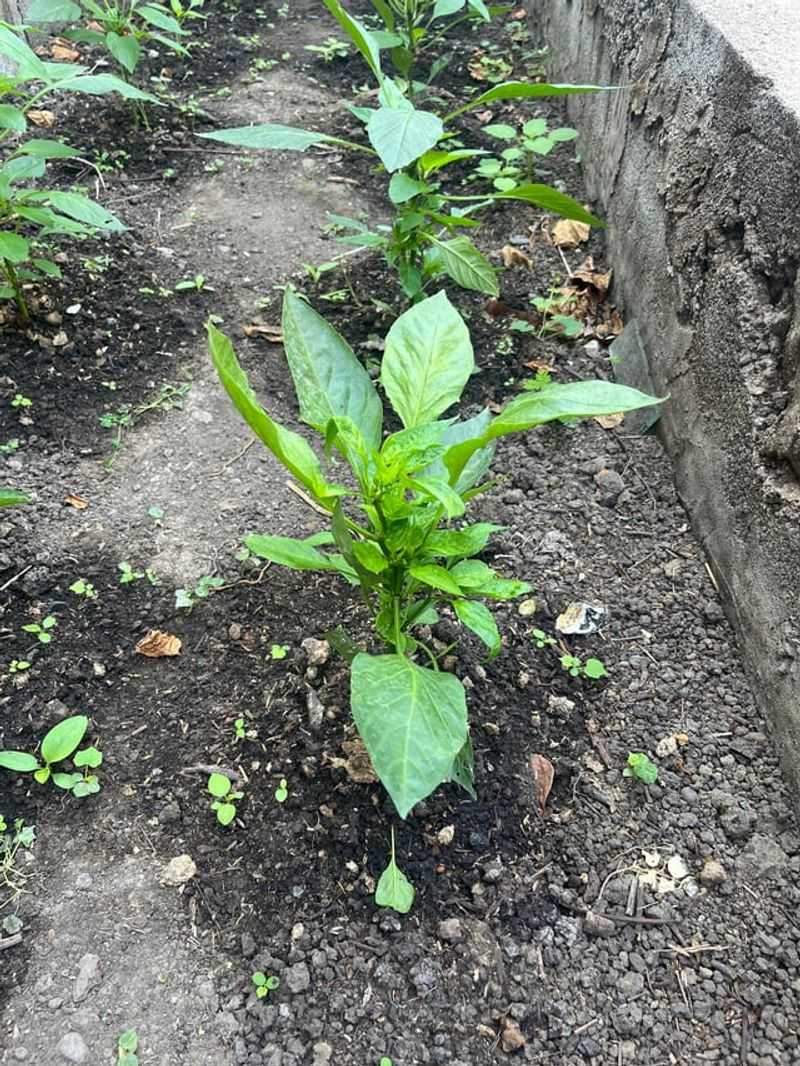
After topping, what you leave on the plant matters just as much as what you removed.
Side shoots are the small branches that grow out from the main stem at each leaf node. After topping, these shoots become the new framework of your plant.
They need to stay intact.
Resist the urge to remove too many of them at once. Each side shoot carries leaves that produce energy for the plant.
Stripping them away right after topping puts extra stress on a plant that is already recovering.
Focus on keeping the two to four strongest shoots near the top of the plant. Those will develop into the main productive branches.
Weaker shoots lower on the stem can be removed gradually over time if they are not contributing much.
Watch for any shoots that are growing inward or crossing over other branches. Those can create crowding later on, which reduces airflow and makes the plant harder to manage.
Remove those selectively, but not all at once.
Healthy side shoots look firm, green, and upright. If a shoot looks yellow, limp, or damaged, it is fine to remove it.
Keeping only strong growth helps the plant direct its energy where it counts.
6. Water Plants Well After Topping
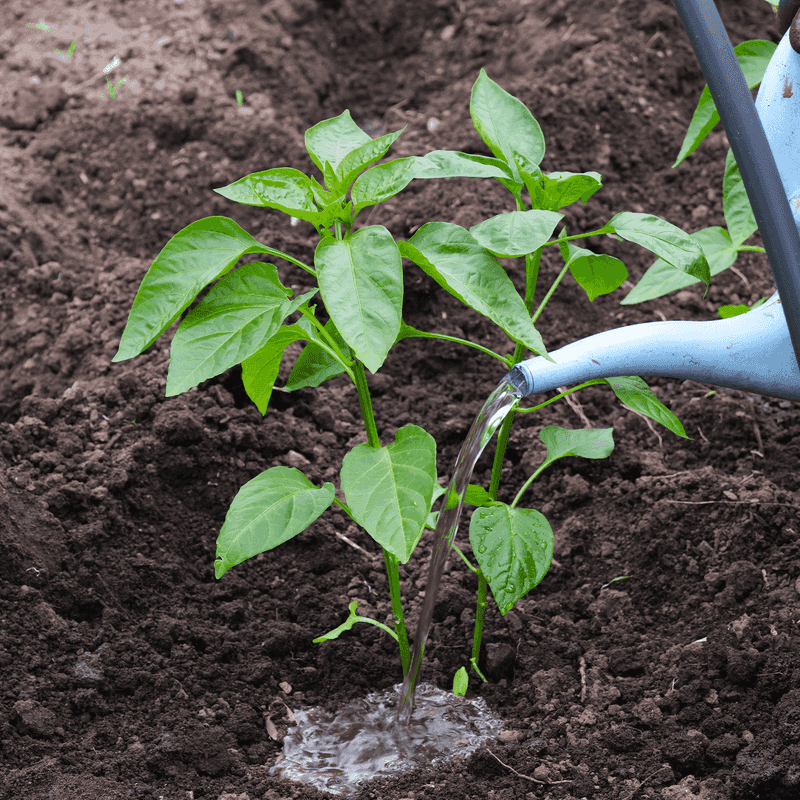
Right after topping, your pepper plant is working hard to recover. Water is one of the most important things you can give it during that period.
Cutting the stem causes mild stress. The plant responds by redirecting energy to push out new growth from the side shoots.
That process requires moisture, and a dry plant cannot recover as efficiently.
Water deeply right after topping. Shallow watering only wets the top layer of soil, which does not do much for the roots.
Aim to soak the soil several inches down so the roots can pull up what they need.
Check soil moisture regularly in the days following the cut. Stick a finger about an inch into the soil near the base of the plant.
If it feels dry at that depth, it is time to water again.
Avoid soaking the soil to the point of standing water. Waterlogged roots cannot absorb oxygen, which slows recovery rather than helping it.
Consistent moisture without excess is the goal.
Mulching around the base of the plant helps retain soil moisture between waterings. A two to three inch layer of straw or wood chips can make a noticeable difference, especially during warm stretches.
Watering in the morning gives the soil time to absorb moisture before the heat of the day sets in.
7. Give Plants Time To Recover Before Fertilizing
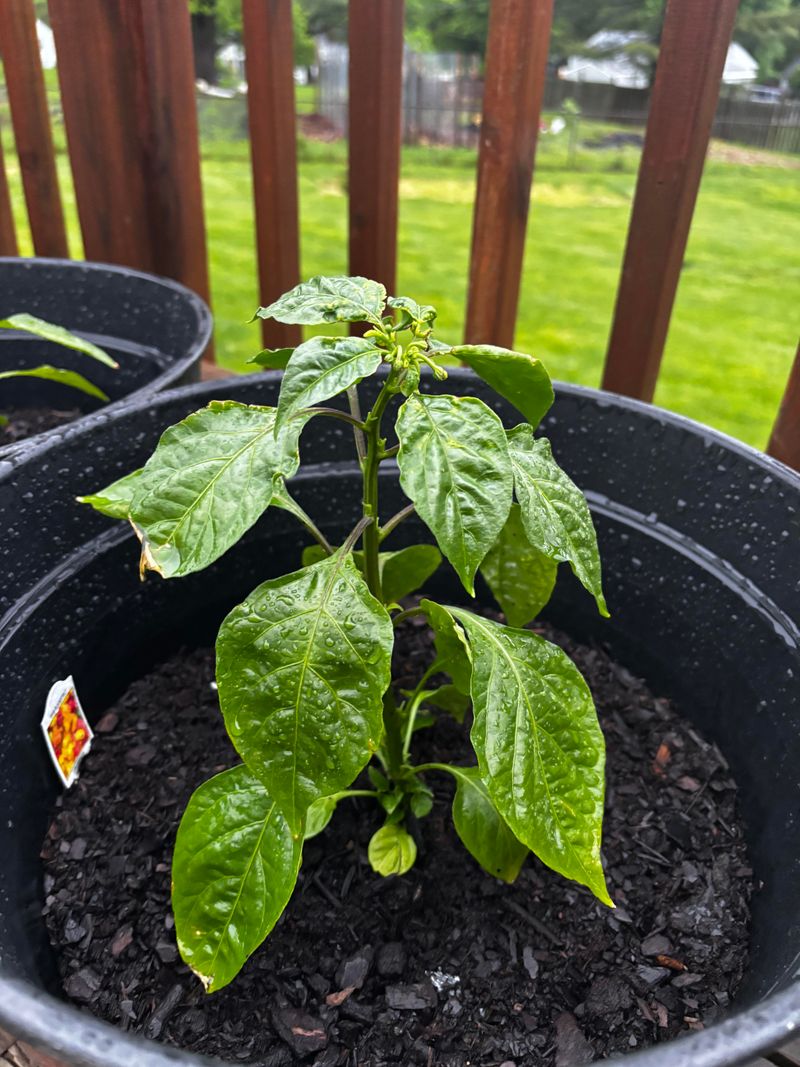
Fertilizer is helpful, but adding it too soon after topping can actually slow your plant down instead of speeding it up.
Right after a cut, the plant is focused on healing and pushing out new shoots. Flooding it with nutrients at that moment can overwhelm its systems and throw off that recovery process.
Wait at least one to two weeks after topping before applying any fertilizer. Give the plant time to show visible new growth first.
Once you see fresh shoots actively developing, that is a sign the plant is ready to handle added nutrients.
When you do fertilize, choose a balanced option rather than something heavy in nitrogen. High-nitrogen fertilizers push leafy growth fast, but they can delay flowering and fruit production.
A balanced formula supports overall plant health more evenly.
Slow-release granular fertilizers work well at this stage. They feed the plant gradually over several weeks rather than delivering a sudden spike.
Consistent, steady feeding suits a recovering plant better than a heavy single application.
Compost mixed into the soil around the base of the plant is another solid option. It improves soil structure while providing gentle, natural nutrition that releases slowly over time.
Liquid fertilizers can be useful later in the season when you want to give plants a quick boost before a fruiting push.