Why Trimming Your Virginia Crape Myrtle The Wrong Way Does More Harm Than Good
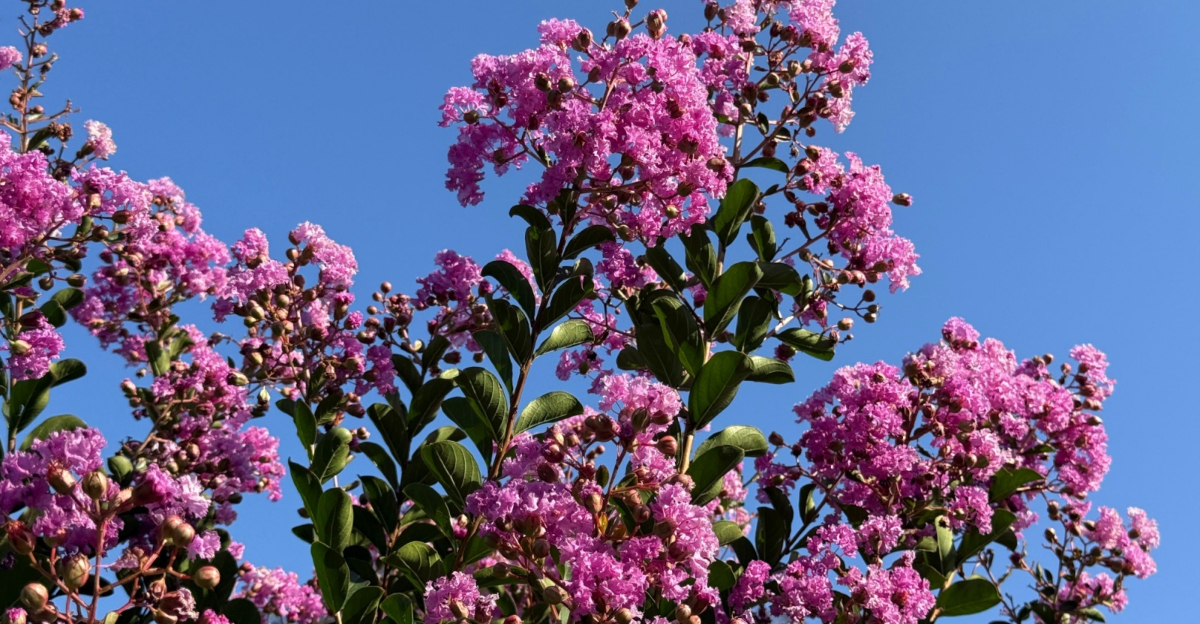
Across Virginia, a familiar winter ritual plays out in yards everywhere: crape myrtles getting cut back far harder than they need to be.
Over time, it became one of those gardening habits that everyone just assumed was correct.
It is not, and the trees show it.
There is actually a name for this in the gardening world: crape murder, a term coined by horticulturists to describe the practice.
It is so widespread that some people genuinely think it is just how you are supposed to prune them.
Aggressive topping stresses the tree.
It distorts its natural shape and triggers weak, overcrowded regrowth that blooms less and looks worse with every passing season.
It does not take much to get it right.
It mostly takes knowing what to stop doing.
What “Wrong Trimming” Actually Means
Wrong trimming of a crape myrtle does not just mean cutting a little too much.
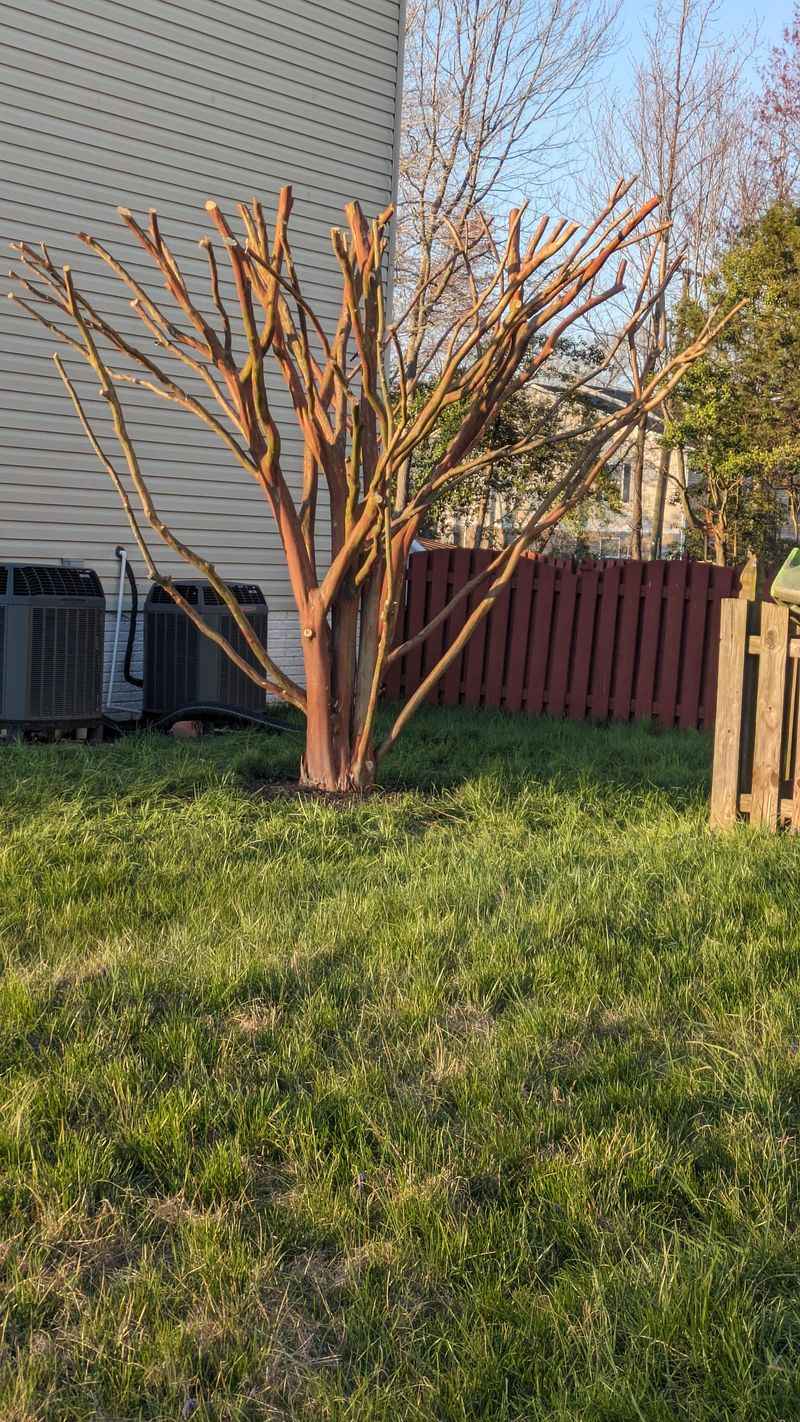
It means cutting the tree back to thick, blunt stubs every year.
Most gardeners do it without a second thought.
Most people who do this are not being careless on purpose.
They see their neighbors doing it, assume it must be right, and grab their saws without question.
In Virginia neighborhoods, it happens so consistently that the topped look has almost become the expected one.
The problem is that this kind of aggressive cutting removes the natural branching structure that the tree spent years building.
Topped crape myrtles respond by pushing out weak, whip-like shoots from the cut ends.
Those shoots grow fast but snap easily in storms.
Their blooms never match what naturally developed branches can produce.
Year after year of this leaves the tree with swollen, knobby knuckles at the top.
It looks unnatural and throws off the whole yard.
Wrong trimming also means cutting at the wrong time of year, using dull tools, or removing too many interior branches at once.
Each of these mistakes adds stress to a tree that could otherwise thrive with minimal care across all four of Virginia’s seasons.
Know what to avoid, and the rest falls into place.
The Most Common Mistake Gardeners Make
There is a rumor that has been spreading through American neighborhoods for decades.
It says crape myrtles need to be cut all the way back every winter to bloom well in summer.
That is completely false.
It is also one of the most damaging pieces of gardening advice ever passed over a backyard fence.
Topping the tree means cutting the main branches down to thick stubs.
It is the number one mistake gardeners make with these trees.
Research from Virginia Cooperative Extension has shown that crape myrtles bloom on new growth, which means hard cutbacks are simply not necessary.
A properly shaped tree left mostly alone will bloom just as well.
Often even better.
What topping does accomplish is creating a weakened structure the tree spends enormous energy trying to repair.
Calories that could go toward producing gorgeous flower clusters get redirected toward healing wounds and pushing out replacement shoots.
Your Virginia Garden Changes Every Week. Your Plan Should Too.
Gardening in Virginia changes quickly throughout the season. Every Friday you’ll receive a simple weekly plan showing exactly what to plant, prune, fertilize, harvest, and protect so you never miss the right timing.
The blooms that do appear tend to be smaller and less impressive than those on trees allowed to grow naturally.
Breaking this habit feels strange at first, especially when every house on the block looks the same in February.
But skip the aggressive cut just once and watch what happens.
Your tree will make the argument better than anyone else could.
How Bad Pruning Weakens The Tree Over Time
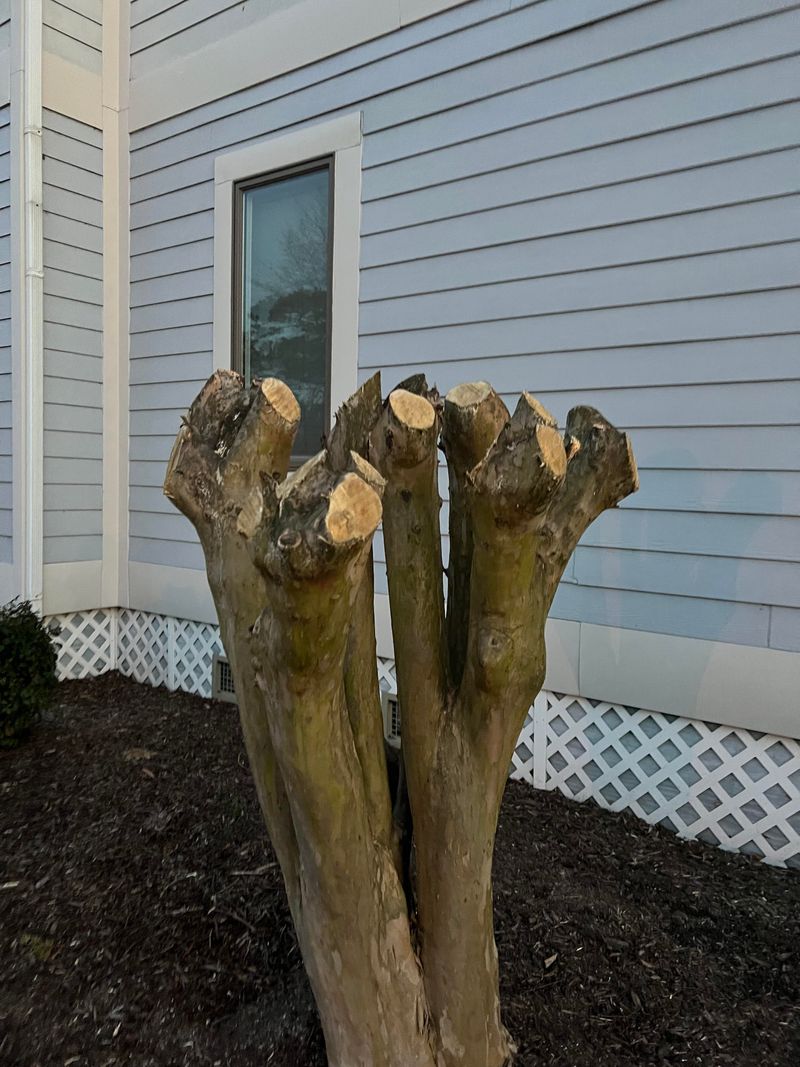
One bad haircut will not ruin your crape myrtle permanently.
But repeated wrong trimming year after year does something insidious to the tree’s long-term health.
Each time the tree is topped, it must generate callus tissue to cover the wounds.
That process pulls energy away from root development, disease resistance, and flower production.
Over time, the tree becomes structurally weaker even as it keeps growing taller.
Those large, open wounds created by topping are also entry points for fungi, bacteria, and wood-boring insects.
Healthy bark is the tree’s first line of defense against infection.
When you remove it with a careless cut, you are leaving a door wide open for problems that can spread deep into the wood before you ever notice anything is wrong.
Virginia’s humid summers make that risk even higher.
Warm, wet conditions are ideal for the fungal and bacterial infections that move in through pruning wounds.
Repeated large wounds can increase the risk of decay over time.
From the outside, the tree might look like it is surviving just fine.
But a strong windstorm or an ice event can reveal the damage in a dramatic way when branches or entire trunks snap under pressure they once would have handled easily.
Stop the cycle now and even years of damage can be walked back.
You will not fix it overnight.
But a few seasons of proper care and minimal cutting allows the tree to redirect energy toward healing and genuine growth.
Patience here is one of the most powerful tools you have.
What Healthy Crape Myrtle Pruning Looks Like
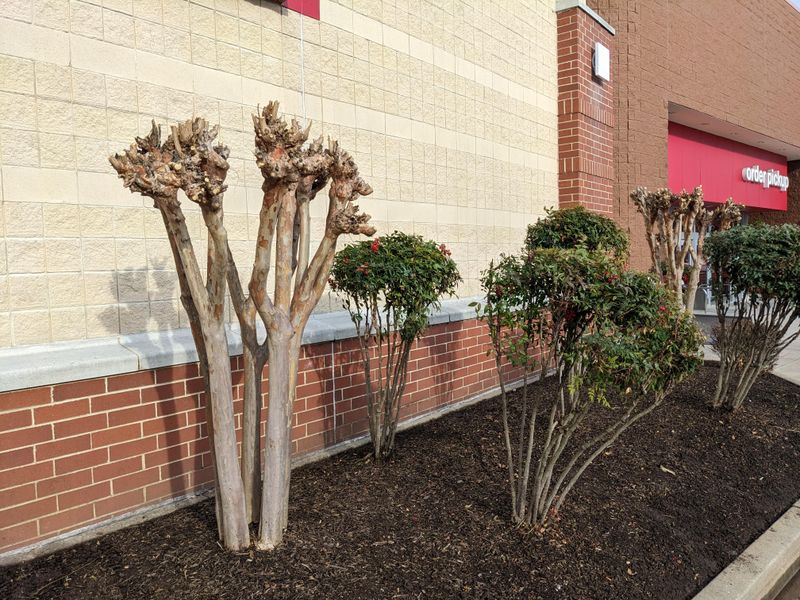
Proper pruning of a crape myrtle looks almost nothing like what most people do.
Healthy pruning is selective, light, and focused on improving the tree’s natural shape.
The goal is to remove only what is causing a problem, not to reduce the tree’s size out of habit.
Start by looking for the three Ds: old, damaged, and crossing branches.
Any branch that is clearly damaged or broken should come off cleanly at its point of origin.
Crossing branches rub against each other and create wounds that invite infection.
Removing one of the two offenders keeps the canopy clean and open.
Suckers are the thin shoots that sprout from the base of the trunk.
They pull energy away from the main structure and clutter the base in a way that invites pests.
A quick snip at ground level handles them easily before they get established.
One of the most important rules is to never cut a branch larger than your thumb in diameter unless there is a genuine structural reason.
Small cuts heal faster and keep the risk of infection low.
When you step back after a proper pruning session, the tree should look almost exactly the same as before.
Just a little tidier.
A little more open through the middle.
That is exactly the point.
When To Prune And When To Leave It Alone
Timing matters more than most people realize with crape myrtles.
Get it wrong and you can lose an entire season of flowers.
The best window for any necessary pruning falls in late winter, just before new growth begins to emerge.
In Virginia, that typically means late February through mid-March.
Cutting during this narrow period gives the tree time to heal before the energy of spring kicks in.
Pruning too early can stimulate new growth that gets caught by a late frost.
Pruning too late, once buds have already begun to swell, removes the very tissue the tree needs to produce flowers.
Either mistake results in a disappointing bloom season from an otherwise healthy tree.
Summer pruning is generally something to skip entirely.
Unless you are dealing with storm damage or a branch that poses a safety concern, leave the tree alone.
Removing healthy branches during the growing season forces the tree to spend energy on healing rather than flowering.
That trade-off is rarely worth it.
Some years the smartest move is to put the shears away completely.
Young crape myrtles especially benefit from several seasons of uninterrupted growth that allow them to build a strong framework.
Learn to read your tree and trust its rhythm.
Knowing when to step back is just as valuable as knowing when to step in.
The Results You Can Expect When You Prune Correctly
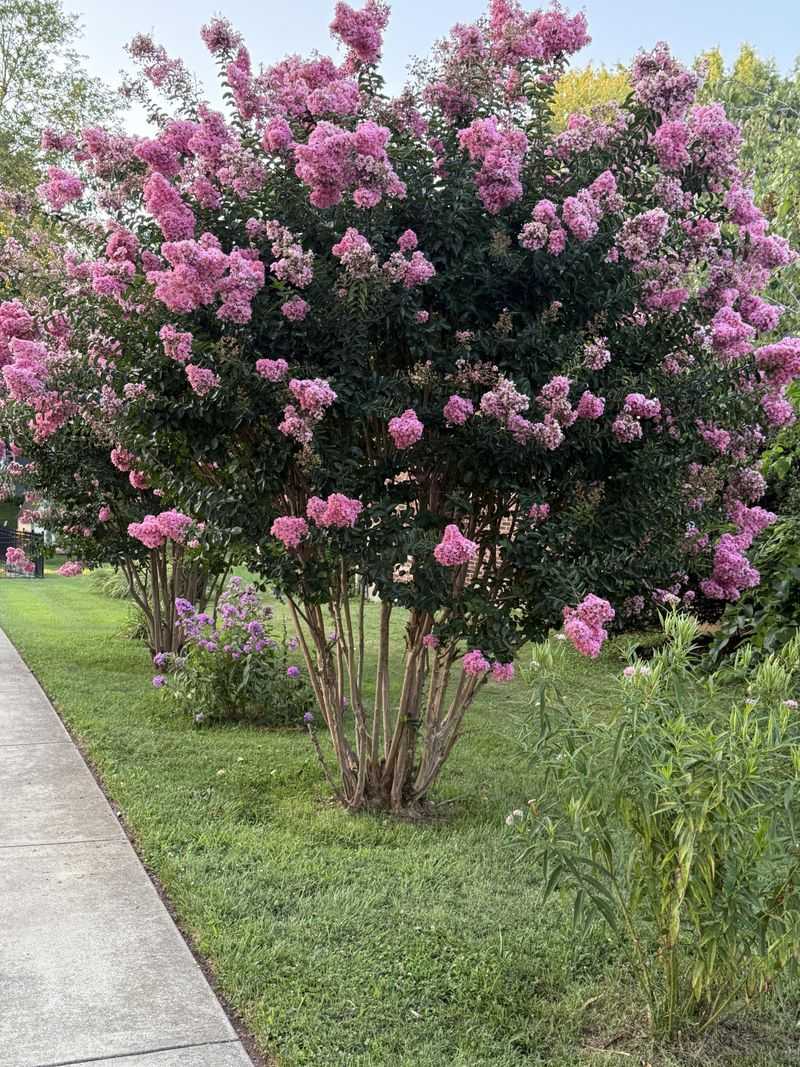
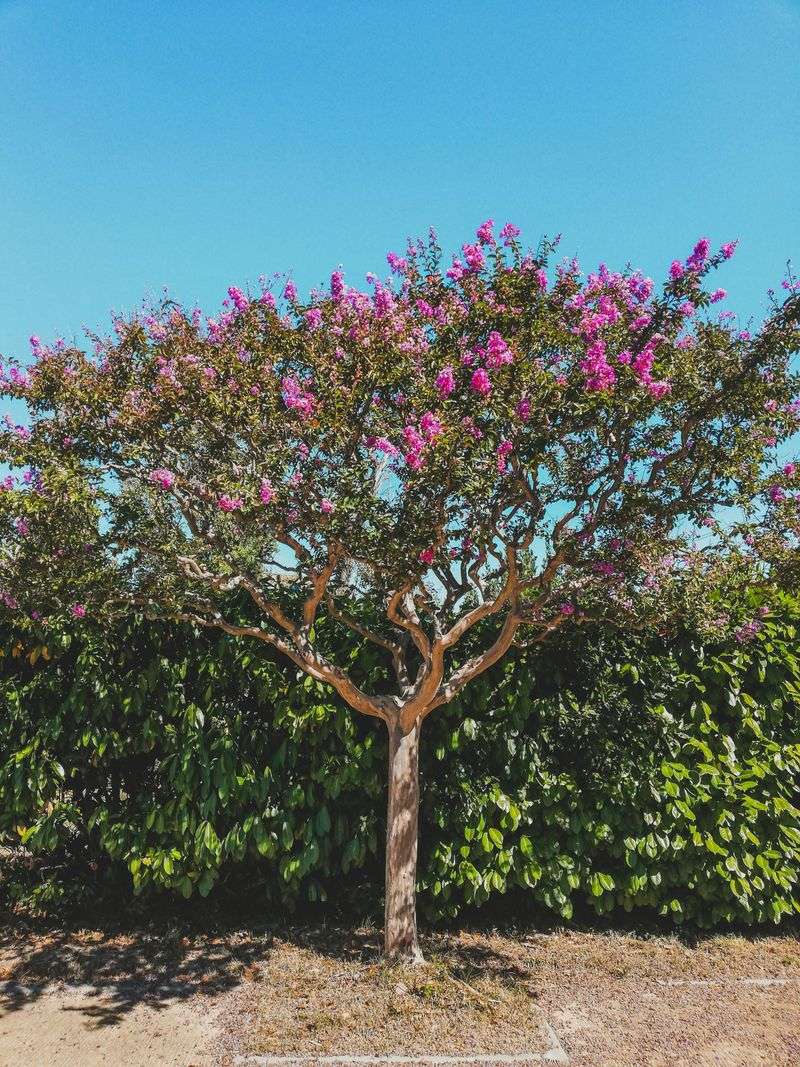
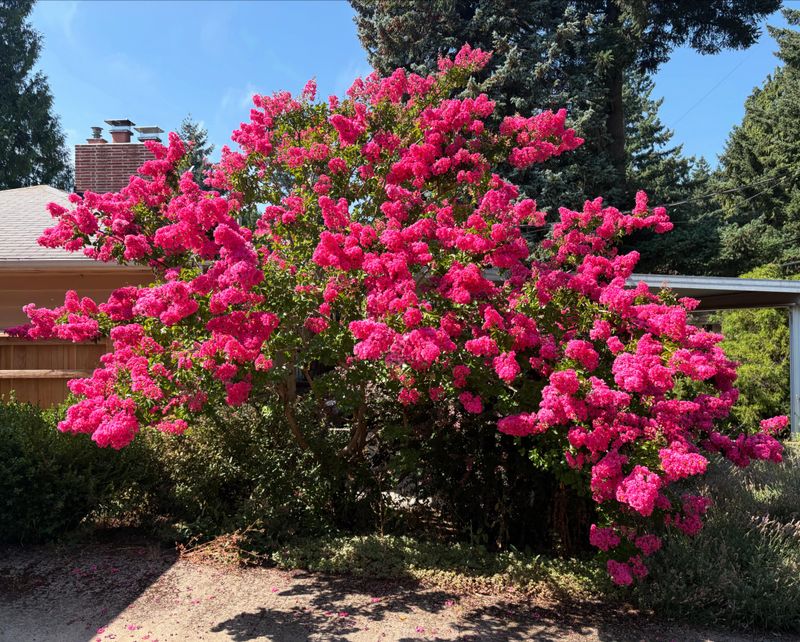
Picture a crape myrtle so full of blooms that the branches arch gently under the weight of the flower clusters.
Every stem tipped with color from early summer all the way into fall.
That is not a lucky accident or a special variety.
That is what happens when a tree is pruned correctly and allowed to grow into its natural form.
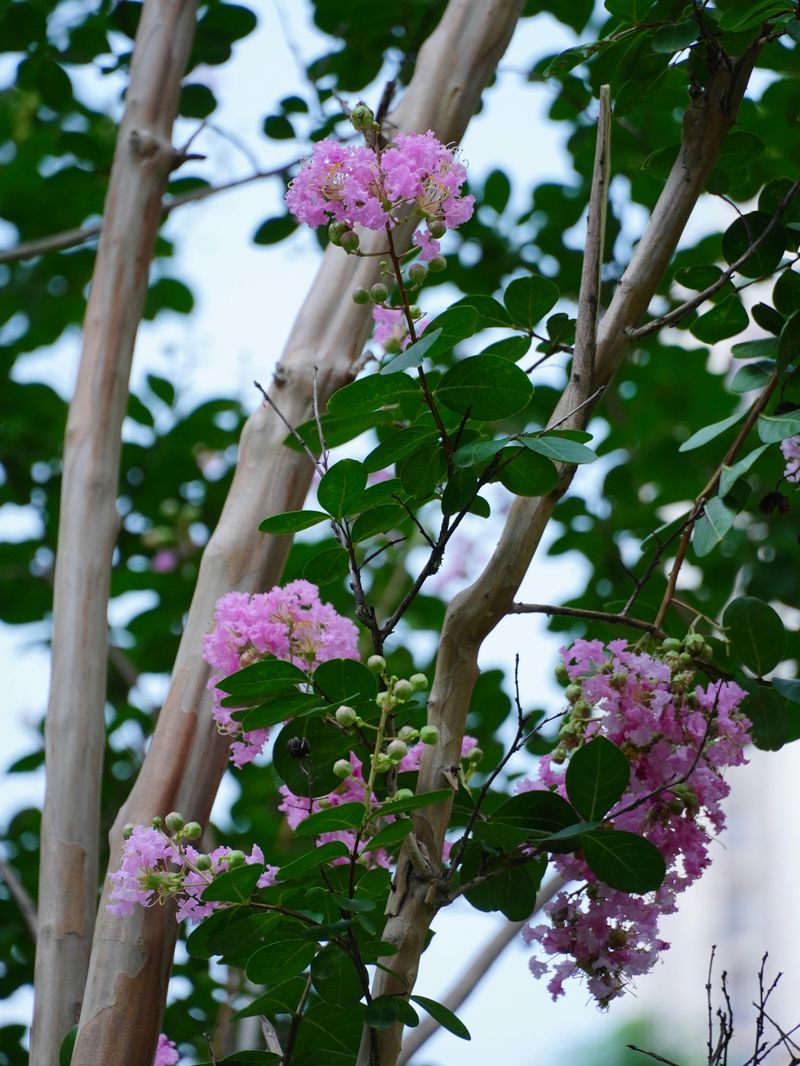
Correctly pruned crape myrtles develop a graceful, multi-stemmed structure with smooth bark that peels in layers to reveal creamy tones underneath.
That bark becomes one of the most beautiful features of a mature tree, especially in Virginia winters when the leaves are gone and the sculptural branches are fully visible.
No amount of heavy cutting can produce that kind of character.
It can only be grown slowly over time.
Beyond beauty, trees that receive proper care show better resistance to powdery mildew, aphid infestations, and fungal cankers.
These are some of the most common problems Virginia gardeners deal with during the humid summer months.
A strong, well-structured tree with intact bark simply has more resources to fight off threats than one perpetually recovering from bad cuts.
The savings in time, money, and frustration add up quickly once you stop fighting the tree and start working with it.
Correct pruning is not complicated once you understand the reasoning behind it.
The tree does most of the work.
Your job is mostly to get out of the way and let it.
Simple Tools And Habits That Make All The Difference
Sharp tools are not a luxury in the garden.
They are a necessity that directly affects the health of every plant you touch.
A clean cut made with a sharp bypass pruner closes faster and with less tissue damage than a ragged tear made with a dull blade.
For crape myrtles, where every cut is a potential entry point for infection, the quality of your tools genuinely matters.
Bypass pruners are the right choice for branches up to about three quarters of an inch in diameter.
For anything larger, a hand saw with a fine tooth pattern gives you a cleaner cut than loppers.
Loppers can crush wood fibers and leave jagged edges that are slow to heal.
Clean tools before pruning and disinfect between trees or when disease is suspected.
It takes ten seconds and prevents the spread of fungal and bacterial problems from one plant to another.
Beyond the tools themselves, developing a habit of observation is one of the most underrated skills a gardener can build.
Walking past your crape myrtle regularly through the seasons lets you catch small problems early.
A new sucker at the base, a crossing branch that appeared over summer, early signs of pest activity on the leaves.
Early intervention is almost always easier and less stressful for the tree than waiting until a problem becomes obvious.
These small, consistent habits transform the whole experience from a yearly chore into something closer to a relationship.
You start to know the tree.
You anticipate what it needs.
And when it rewards your attention with another spectacular season of blooms, the pride you feel is completely earned.
Good tools and good habits are the quiet foundation of every thriving garden.