Why Citrus Leaves Turn Yellow In June In Arizona And How To Fix It
Yellow citrus leaves can spread fast across Arizona trees once June heat starts building every afternoon. A healthy canopy may suddenly look faded, patchy, and stressed after only a short stretch of extreme temperatures.
That kind of color change becomes hard to ignore.
Many people assume dry soil is the only problem. Extra watering sometimes makes things worse instead.
Hot roots, trapped heat, and poor nutrient movement can all affect citrus trees during this part of the season.
Trees growing near gravel, walls, or driveways usually show stress sooner once temperatures keep climbing higher. New growth may also slow down while yellow leaves continue spreading through the canopy.
Fixing the real cause early usually gives citrus trees a much better chance of staying healthy through the toughest stretch of summer.
1. Intense Heat Often Causes Moisture Stress In Citrus Trees
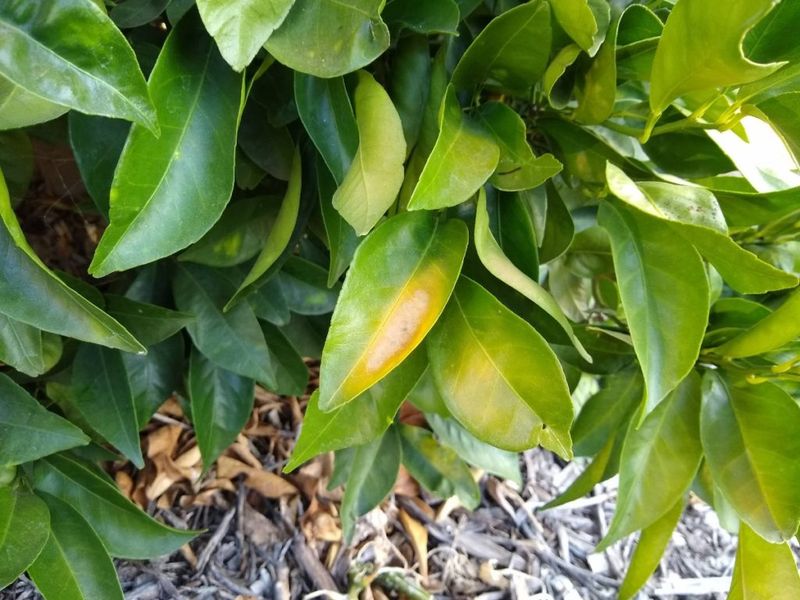
June heat in the Sonoran Desert is no joke. Temperatures pushing 110 degrees can strip moisture from citrus leaves faster than roots can replace it.
When that happens, leaves turn yellow and drop as the tree conserves water.
Moisture stress is one of the most common reasons citrus yellows in summer. Roots sitting in hot, dry soil simply cannot pull enough water up through the trunk and into the canopy.
Leaves at the tips and outer edges usually show symptoms first.
Watering frequency matters a lot during peak heat. Citrus trees in desert climates often need deep watering two to three times per week in June.
Shallow, quick watering barely reaches the root zone and does very little to help.
Watch for leaves that look dull before they yellow. A slightly wilted, lifeless look often signals moisture stress before color changes even begin.
Catching it early makes recovery much faster.
Soil temperature also plays a role. When ground temps climb above 95 degrees, root activity slows and water uptake drops.
Keeping soil cooler through shade, mulch, or adjusted watering schedules can reduce the impact.
2. Yellowing Leaves Can Signal Iron Deficiency In Alkaline Soil
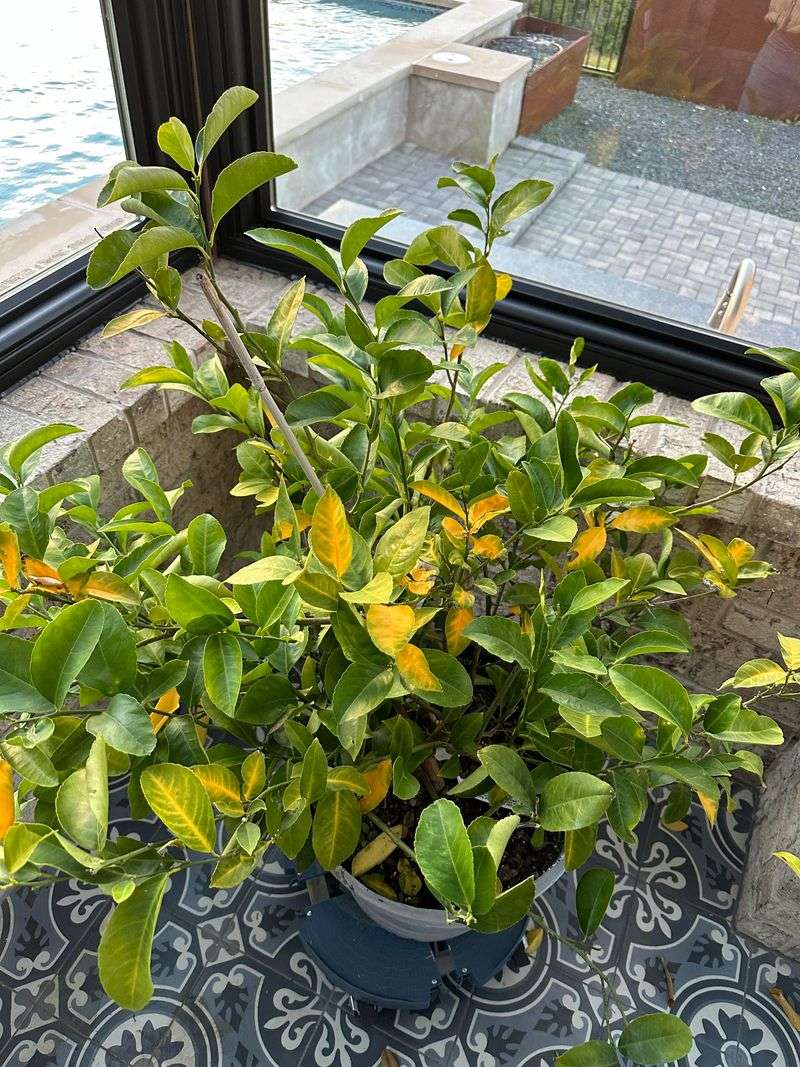
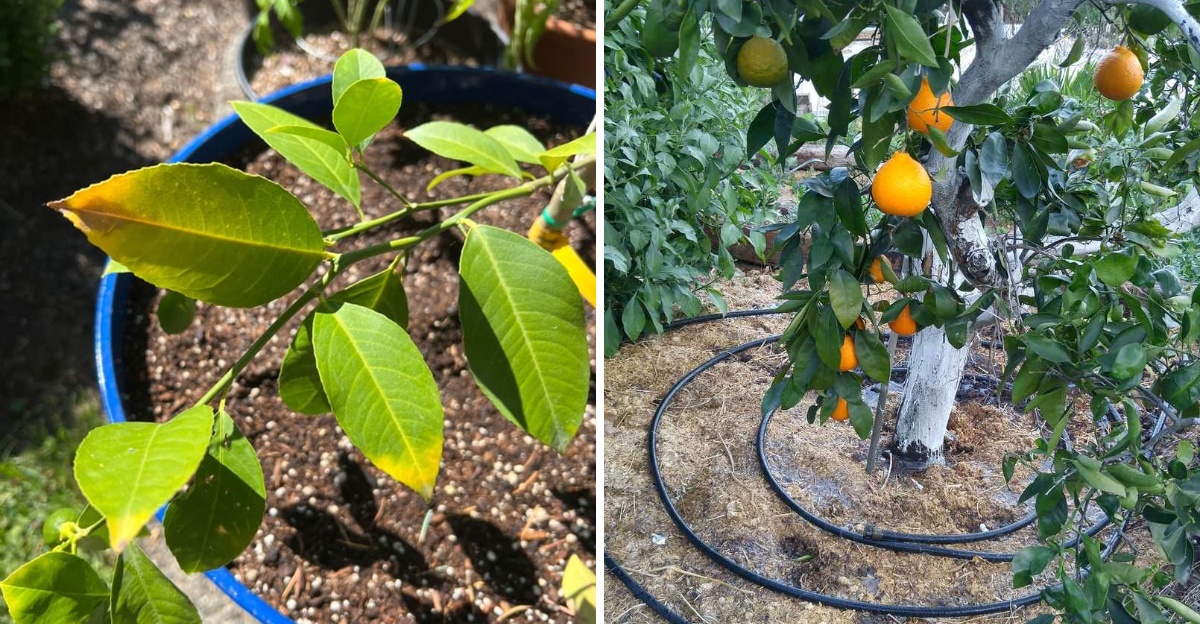
Iron deficiency shows up in a very specific way. Leaves turn yellow between the veins while the veins themselves stay green.
That pattern, called interveinal chlorosis, is a clear sign the tree is not absorbing enough iron.
Arizona soil is naturally alkaline, often sitting at a pH between 7.5 and 8.5. At those levels, iron in the soil becomes chemically locked up and unavailable to plant roots, even when iron is physically present in the ground.
Citrus trees need iron for chlorophyll production. Without it, new leaves come in pale and yellow instead of deep green.
Older leaves may hold their color longer since the tree moves iron from older growth to support new growth first.
Soil pH is the root cause here, not necessarily a lack of iron. Lowering pH slightly can unlock existing iron without adding more.
Sulfur-based soil acidifiers work well for this purpose in desert gardens.
Adding iron without addressing pH often produces limited results. The iron you apply just gets locked up again.
Pairing an iron supplement with a soil acidifier gives much better outcomes.
Your Arizona Garden Changes Every Week. Your Plan Should Too.
Gardening in Arizona changes quickly throughout the season. Every Friday you’ll receive a simple weekly plan showing exactly what to plant, prune, fertilize, harvest, and protect so you never miss the right timing.
3. Deep Watering Helps Roots Stay Cooler During June Heat
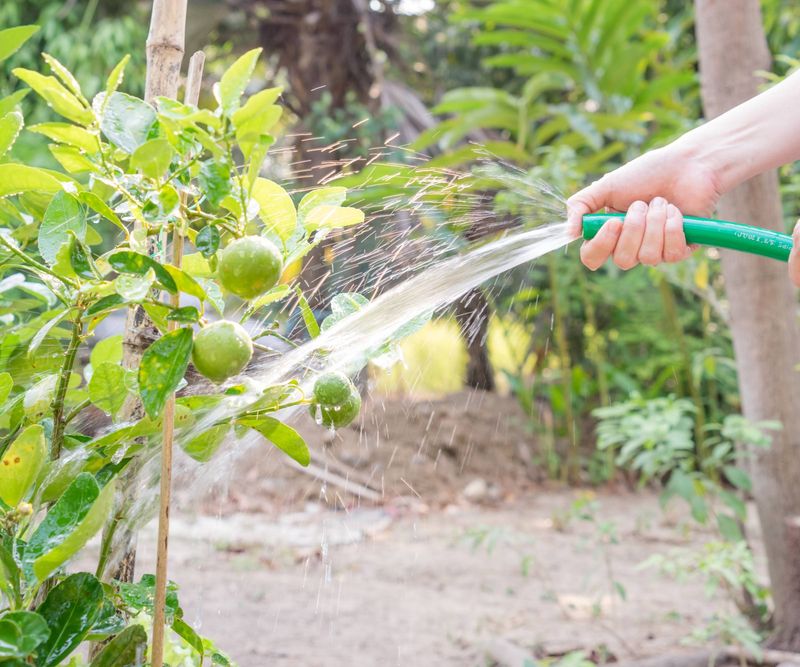
Shallow watering creates shallow roots. Shallow roots sit closer to the surface where soil temperatures are highest, which makes heat stress far worse during peak summer months.
Deep watering pushes moisture down into the soil profile where temperatures are cooler and more stable. Roots naturally follow moisture downward.
Over time, deep watering trains roots to grow lower and become more heat-resistant.
For mature citrus trees, watering should penetrate at least 18 to 24 inches below the surface. A simple soil probe or a long screwdriver pushed into the ground can tell you how deep moisture is actually reaching after each irrigation cycle.
Slow, long watering sessions work better than short bursts. Running drip emitters for two to four hours allows water to move gradually through the soil.
Fast watering often causes runoff before deep penetration happens.
Watering in the early morning offers a real advantage. Soil absorbs water more efficiently before the ground heats up.
Evening watering also works, though morning sessions are generally preferred in dry desert climates.
Basin irrigation is another effective approach. Building a small earthen ring around the tree and flooding it slowly allows large volumes of water to soak straight down into the root zone.
Many experienced desert gardeners swear by this method.
4. Citrus-Specific Fertilizer Supports Healthier Leaf Color
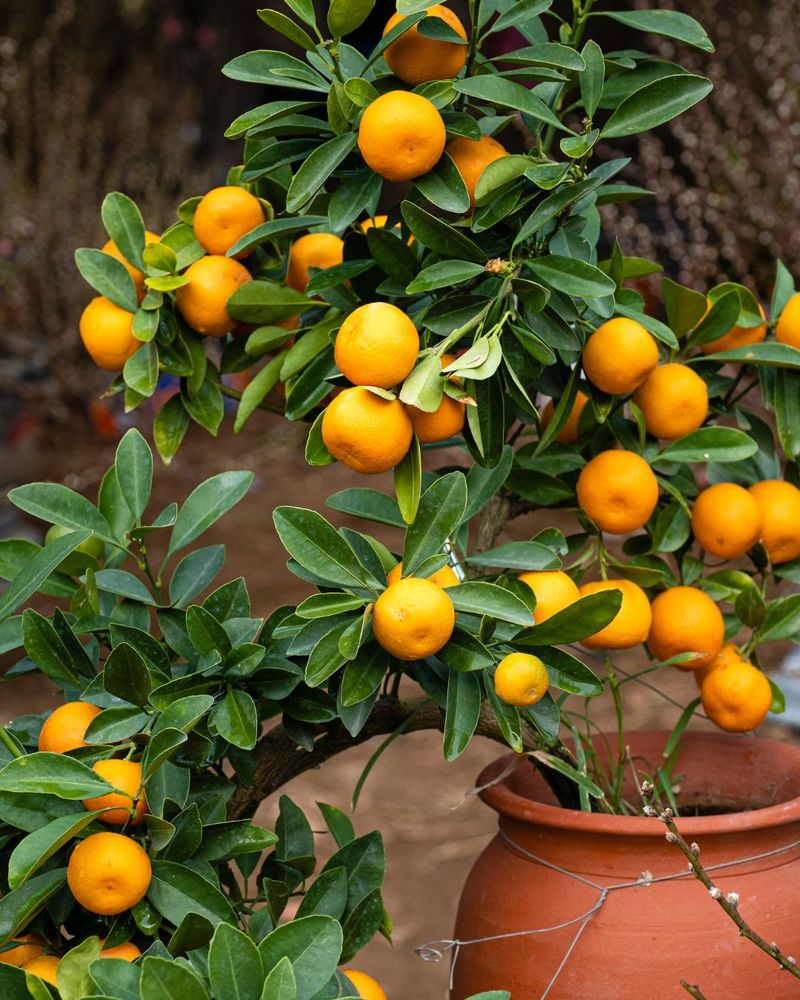
Not all fertilizers are built the same. Citrus trees have specific nutritional needs that general-purpose fertilizers often miss, especially when it comes to micronutrients like manganese, zinc, and iron.
Nitrogen deficiency is another common cause of yellowing. Unlike iron chlorosis, nitrogen deficiency usually causes older, lower leaves to yellow first.
Citrus-specific fertilizers include higher nitrogen ratios that support steady leaf color throughout the growing season.
Timing matters when applying fertilizer in June. High heat can stress roots already working hard to keep up with water demand.
Fertilizing during extreme heat can sometimes intensify stress rather than relieve it.
Early morning application on a well-watered tree reduces that risk. Moist soil helps nutrients move into the root zone more effectively.
Applying fertilizer to dry soil often causes uneven uptake or surface burn.
Granular slow-release formulas work well for summer feeding. They break down gradually over weeks, providing a steady nutrient supply without overwhelming the tree.
Liquid formulas act faster but require more careful timing.
Read the label for citrus-specific micronutrient content. Products labeled for citrus typically include iron, zinc, and manganese alongside standard NPK values.
Those trace minerals make a visible difference in leaf color over time.
5. Iron Chelate Applications Can Improve New Growth Faster
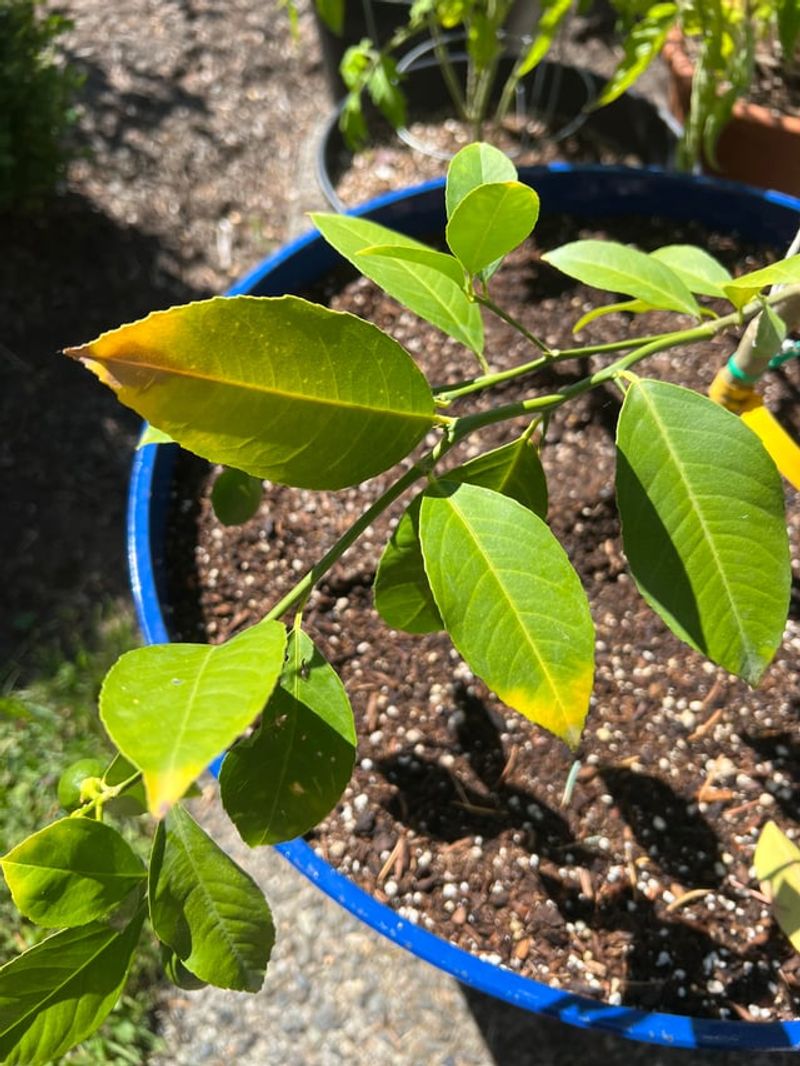
Standard iron supplements often fail in alkaline desert soil. Iron chelate is different because the iron is chemically bonded in a way that stays available to roots even at higher pH levels.
Chelated iron products come in both granular and liquid forms. Liquid iron chelate applied as a soil drench moves into the root zone quickly.
Results on new growth can appear within one to two weeks under warm conditions.
EDDHA chelate formulations perform best in high-pH soils. EDTA chelates are cheaper but lose effectiveness above a pH of around 7.5.
In desert landscapes where soil pH often exceeds 8.0, EDDHA is the better choice.
Foliar sprays of chelated iron work even faster for visible results. Spraying directly onto leaves bypasses the soil chemistry issue entirely.
Young, pale leaves absorb iron through their surfaces and green up noticeably within days.
Combining a soil drench with a foliar spray gives the best of both approaches. Short-term greening comes from the foliar application while the soil drench builds longer-term availability.
Many experienced growers in hot desert regions use both together.
Repeat applications may be necessary. Alkaline soil conditions return as irrigation water deposits more calcium carbonate over time.
Treating iron deficiency once a season is often not enough to maintain consistent leaf color through summer.
6. Thick Mulch Helps Soil Hold Moisture Longer
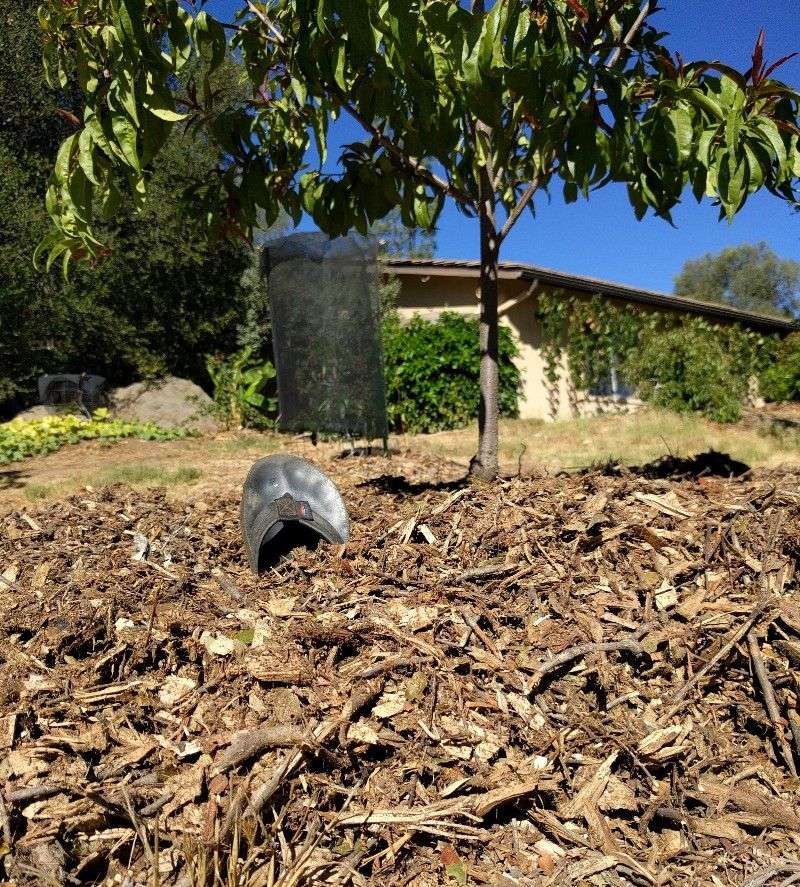
Bare soil in full desert sun heats up fast. Surface temperatures on exposed ground can reach 140 degrees or more in June, which hammers roots near the surface and accelerates moisture loss through evaporation.
A thick layer of organic mulch acts like insulation. Spread three to four inches deep around the base of a citrus tree, mulch can reduce soil temperature by 20 degrees or more.
That temperature drop alone reduces stress significantly.
Wood chips are one of the best mulch options for citrus. Shredded bark, straw, and compost also work well.
Avoid rock or gravel mulch near citrus trees since rock radiates heat upward and worsens root zone temperatures.
Keep mulch pulled back a few inches from the trunk. Mulch piled directly against bark holds moisture against the wood and can lead to bark softening over time.
A small gap between mulch and trunk is all that is needed.
Mulch also slows water evaporation between irrigation cycles. Soil under mulch stays moist longer, which means roots have access to water for more hours after each watering session.
That extended availability matters a lot during scorching summer weeks.
7. Irrigation Coverage Should Reach Beyond The Outer Canopy
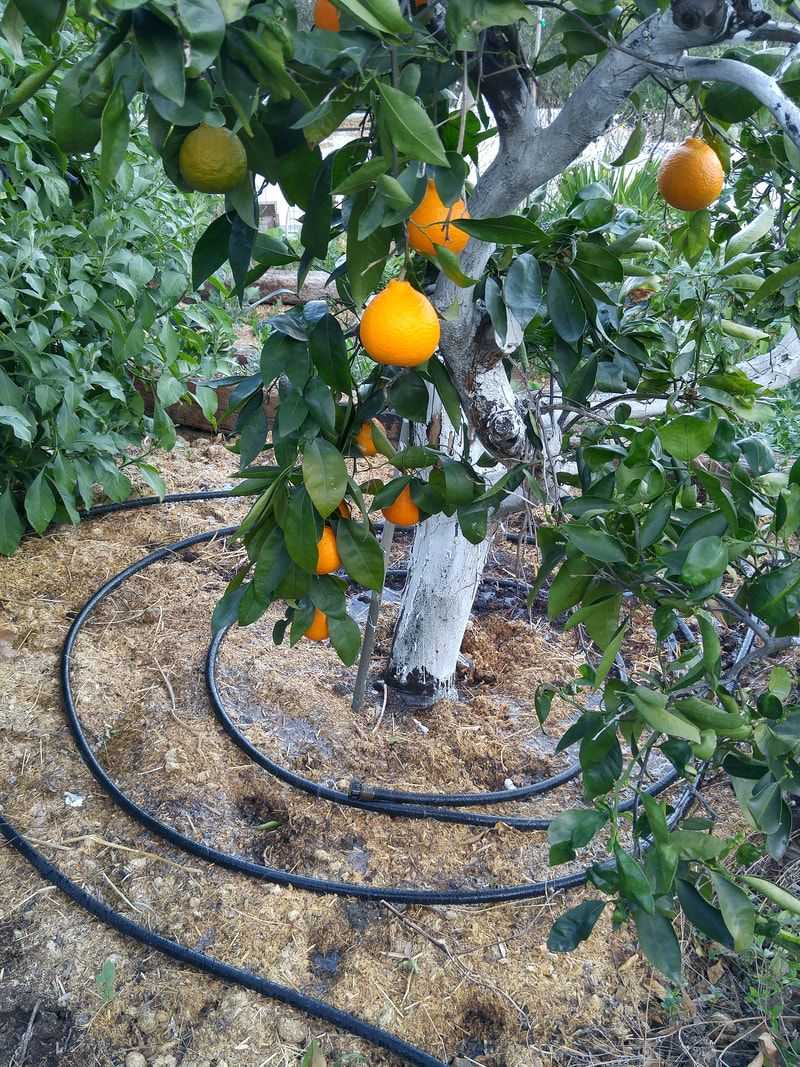
Most people water too close to the trunk. Citrus roots extend well beyond the drip line of the canopy, and placing emitters only near the base means a large portion of the root system never receives water.
Root spread on a mature citrus tree can extend one and a half to two times the width of the canopy. Emitters placed only at the base irrigate a fraction of the actual root zone.
Outer feeder roots go dry and stressed while inner roots get more water than needed.
Move emitters outward to cover the full root zone. Place them in a ring that extends at least to the outer edge of the canopy, and ideally slightly beyond it.
More coverage means more roots stay active and healthy.
Adding extra emitters along the outer ring improves distribution without increasing total water use. Spreading the same amount of water over a wider area actually improves efficiency and reduces localized saturation near the trunk.
Uneven root hydration contributes directly to yellowing. Sections of the root system that dry out cannot supply the canopy above them.
Leaves over those dry zones yellow first, which can look like a nutrient problem when the real issue is coverage.