What To Feed Strawberries In Oregon Right Before Heavy Flowering
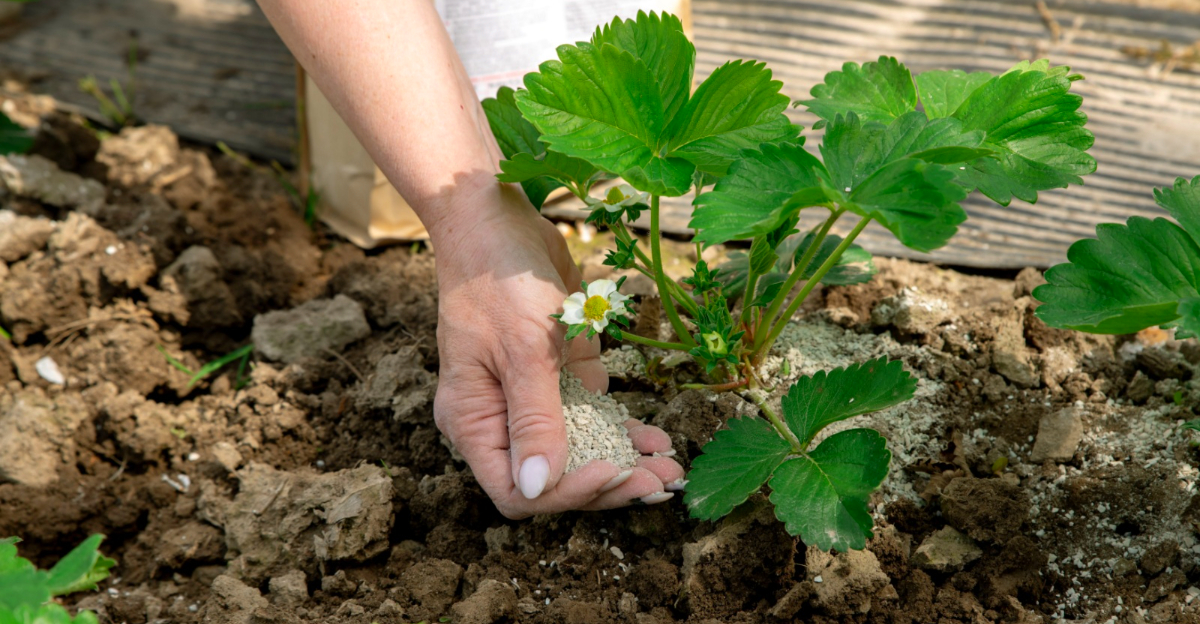
Strawberries are one of those crops that make Oregon gardeners genuinely excited about spring, and honestly, fair enough. There are few things more satisfying than walking out to your patch and picking fruit you grew yourself.
But here’s where a lot of home growers quietly go wrong: the fertilizer question. Specifically, what to feed your strawberries right before they bloom, and when to do it.
It sounds straightforward until you realize that not all strawberries work the same way.
June-bearers, day-neutrals, and everbearing varieties each have their own rhythm, and what works beautifully for one type can actually work against another.
Oregon’s cool, wet springs add another layer to the timing puzzle. Get this part right though, and your patch will thank you with a seriously impressive harvest.
1. June-Bearers Usually Skip A Pre-Bloom Feeding
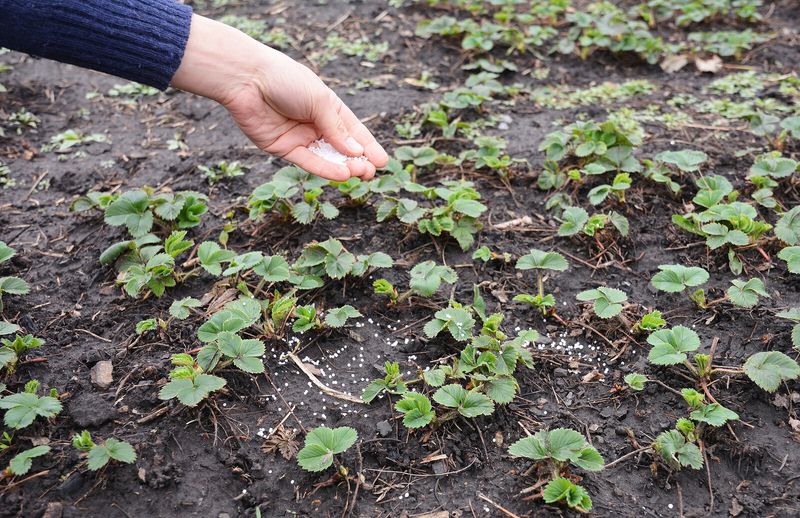
Spring in Oregon arrives with a rush of energy for June-bearing strawberries, and that energy is already built in.
June-bearers spend the previous fall storing carbohydrates and nutrients in their crowns, which means they come into the spring bloom season carrying the fuel they need.
Giving them a big pre-bloom fertilizer application at that point is often unnecessary and can sometimes cause more problems than it solves.
Most horticultural guidance for June-bearers recommends holding off on fertilizer until after harvest, not before flowering. The reasoning is straightforward.
When these plants break dormancy in late winter or early spring, they are not running low on nutrients. They are drawing on what they stored, and the soil is also beginning to release nutrients as temperatures rise.
Adding fertilizer on top of that stored energy, especially nitrogen-heavy products, can push the plant toward producing large, lush leaves rather than focusing on fruit set.
That kind of vegetative surge right before bloom is not what you want from a June-bearer in an Oregon home garden.
The leaves look impressive but the berry yield can suffer for it.
Watching your plants closely in late winter gives you better information than a set calendar date.
If the crowns look healthy and the foliage is coming in green and full, that is a strong sign the plants have enough to carry themselves through bloom without extra feeding.
Patience at this stage often rewards gardeners with a cleaner, more productive spring harvest.
2. Post-Harvest Feeding Matters More For June-Bearers
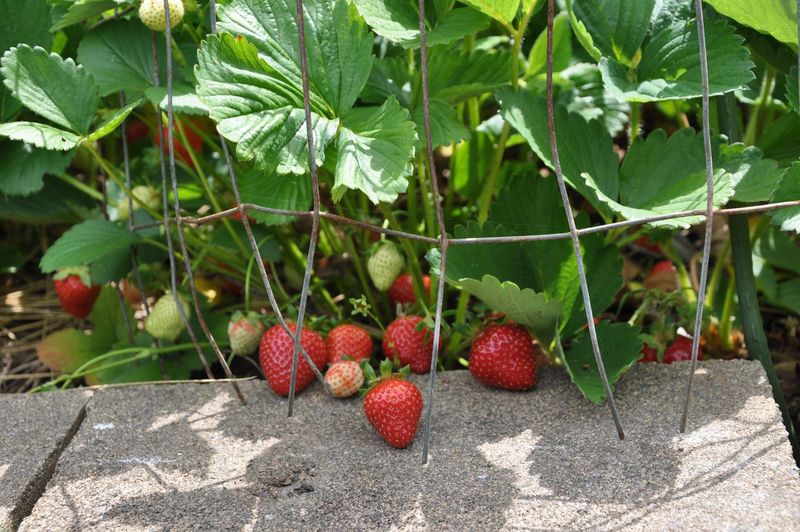
Once the last June-bearing berry has been picked, the real feeding window opens up. This is the moment gardeners with June-bearers should reach for the fertilizer, not the weeks before the first bloom appears.
Post-harvest feeding supports runner development, crown strengthening, and the nutrient storage that will fuel next spring’s flowering.
June-bearers in Oregon typically finish their harvest by mid to late July, depending on the variety and the location in the state. After harvest, the plant shifts its focus from fruiting to vegetative growth and root development.
Feeding at this point gives the plant exactly what it needs to rebuild and prepare for the following year’s bloom cycle.
Your Oregon Garden Changes Every Week. Your Plan Should Too.
Gardening in Oregon changes quickly throughout the season. Every Friday you’ll receive a simple weekly plan showing exactly what to plant, prune, fertilize, harvest, and protect so you never miss the right timing.
A balanced fertilizer or one slightly higher in nitrogen applied after harvest and before late summer gives the plant time to absorb and store those nutrients before cooler fall temperatures arrive.
Going too heavy on nitrogen even at this stage is worth avoiding, since excessive lush growth heading into fall can make plants more susceptible to moisture-related issues during Oregon’s wet season.
The post-harvest feeding approach feels counterintuitive to some gardeners who are used to feeding plants before they flower. For June-bearers, though, the cycle runs differently than other fruiting plants.
Thinking of the post-harvest period as the real investment stage, rather than the pre-bloom window, helps home gardeners get better results from their June-bearing rows year after year without overcomplicating the fertilizing schedule.
3. Day-Neutrals Benefit From Small Split Feedings
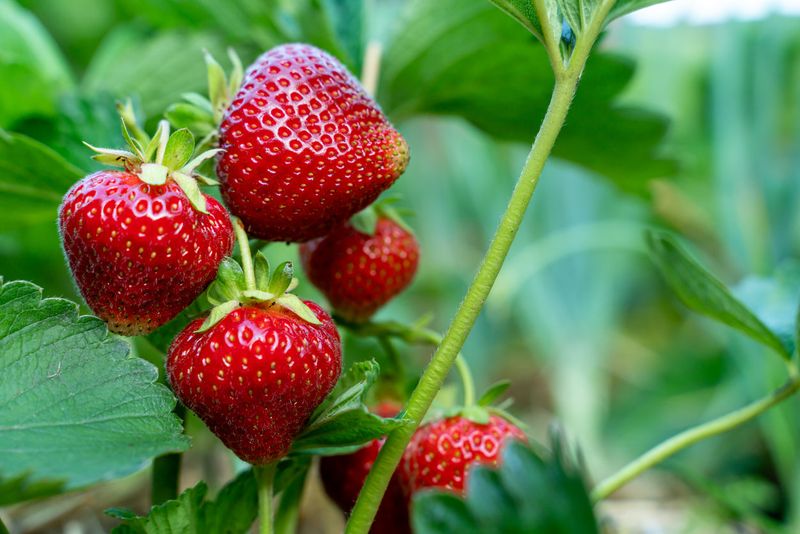
Unlike June-bearers, day-neutral strawberries don’t follow a single concentrated bloom cycle tied to day length.
They flower and fruit across a much longer stretch of the growing season, which means their nutrient needs look quite different from what June-bearers require.
In Oregon, where day-neutral varieties like Seascape and Albion are popular in home gardens, this distinction really matters when it comes to fertilizing.
Because day-neutrals are actively growing, flowering, and fruiting at the same time for much of the season, they benefit from consistent but modest nutrient input rather than one large application.
Splitting feedings into smaller doses applied every few weeks through the active growing season keeps a steady supply of nutrients available without overloading the plant at any one point.
A light application of a balanced fertilizer in early spring as growth resumes is a reasonable starting point for day-neutrals.
Following that with small additional feedings every three to four weeks through summer supports continued flowering and fruit development without triggering the kind of excessive leaf growth that heavy single applications can cause.
The key with day-neutrals is consistency over intensity.
Gardeners who try to front-load nutrition before the first flush of blooms often end up with plants that put energy into leaves and runners rather than the continuous fruiting cycle that makes day-neutrals so rewarding.
Keeping feedings modest and regular aligns much better with how these plants actually grow in Oregon’s varied spring and summer conditions.
4. Everbearers Do Better With Balanced Feeding
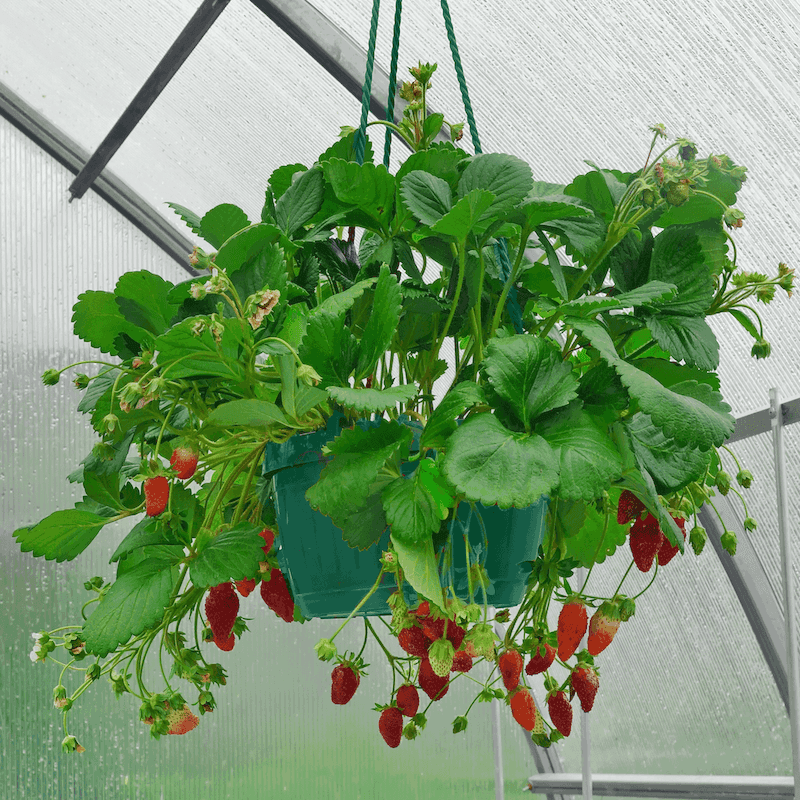
Everbearing strawberries have a reputation for being a little more forgiving than June-bearers when it comes to feeding, but that doesn’t mean they respond well to heavy pre-bloom fertilizing either.
In Oregon, everbearing varieties typically produce two main flushes of fruit, one in late spring or early summer and another in late summer or fall.
That two-flush pattern shapes how feeding should be approached throughout the season.
A balanced fertilizer, one with roughly equal parts nitrogen, phosphorus, and potassium, tends to suit everbearers well when applied in early spring as new growth begins.
The goal at that stage is to support steady, even growth rather than pushing a surge of leaf production.
Phosphorus plays a particularly helpful role during bloom and fruit set, so a fertilizer that doesn’t lean too heavily on nitrogen is worth looking for when feeding before flowering.
Some gardeners have good results applying a light balanced feed in early spring and then a second application after the first fruiting flush wraps up.
That approach keeps the plant nourished through both production periods without overfeeding during either bloom window.
Avoiding high-nitrogen products right before flowering is still a sensible habit with everbearers, just as it is with other strawberry types.
Soil health matters alongside whatever fertilizer you apply. Everbearers in Oregon’s often-acidic soils may benefit from periodic soil testing to make sure pH and nutrient levels are in a reasonable range before adding more fertilizer to the mix.
5. Nitrogen Only Helps If Plants Need It
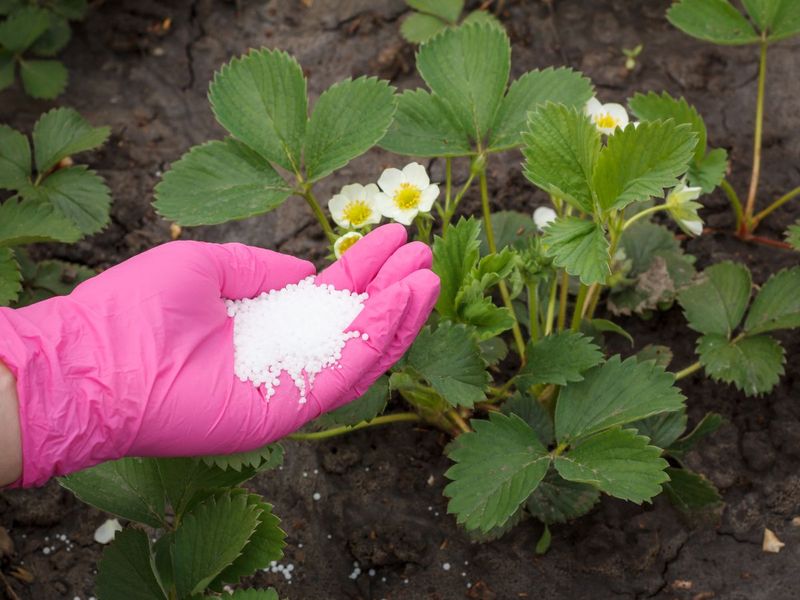
Nitrogen gets a lot of attention in strawberry fertilizing conversations, and for good reason. It drives leafy growth, supports plant vigor, and plays a role in overall plant health.
But applying nitrogen before bloom only makes sense if the plants are actually showing signs of deficiency. Feeding nitrogen to already healthy, well-established strawberry plants right before they flower can work against fruit production rather than supporting it.
Plants that are nitrogen-deficient heading into the bloom period may show pale or yellowish older leaves and sluggish new growth.
In those cases, a modest application of a low to moderate nitrogen fertilizer can help the plant recover and support better bloom performance.
The emphasis, though, is on modest. A small, targeted application is more useful than a heavy dose.
For gardeners working with established patches that have been well-maintained, the plants often don’t need nitrogen in the spring at all.
Soil organic matter, decomposing mulch, and natural soil activity through late winter and early spring release a meaningful amount of nitrogen on their own as the soil warms.
Adding fertilizer on top of that natural release can tip the balance toward too much.
Getting a soil test done in late winter or early fall gives Oregon strawberry growers a clearer picture of what their soil actually contains before deciding whether to add nitrogen.
Working from test results rather than habit or assumption takes some of the guesswork out of spring fertilizing and helps avoid the common mistake of feeding plants that don’t need feeding.
6. Too Much Spring Feeding Can Backfire
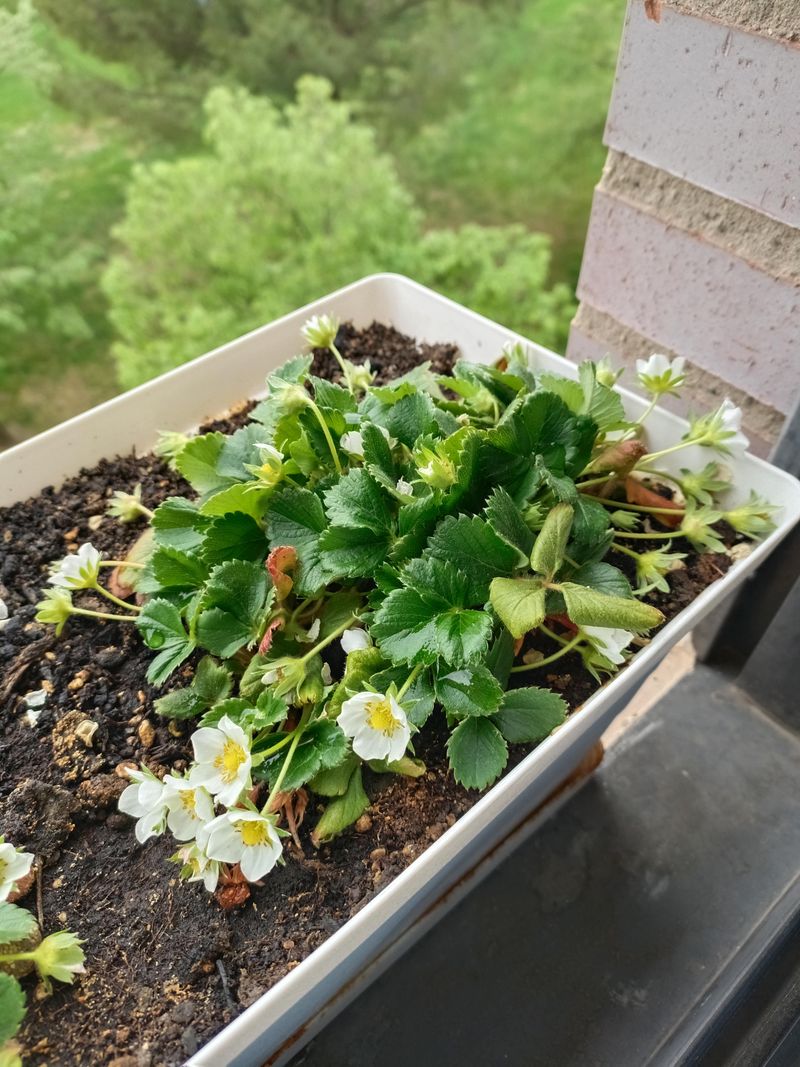
There is something tempting about giving strawberries a generous feeding right as the growing season picks up in Oregon. The plants look like they are waking up, the soil is warming, and the urge to help things along is strong.
But heavy spring fertilizing, especially with high-nitrogen products, is one of the more common missteps home gardeners make with their strawberry patches.
When plants receive too much nitrogen before or during the bloom period, they respond by putting energy into producing large, dark green leaves and vigorous runners. That kind of growth looks healthy at a glance, but it comes at the expense of flowering and fruit set.
The plant is essentially being told to grow more plant rather than produce more berries.
Excess nitrogen can also affect fruit quality in ways that aren’t always obvious at first. Berries from over-fed plants can be larger but softer, with less concentrated flavor.
In Oregon’s often-moist spring conditions, lush soft growth can also be more prone to fungal issues, which adds another layer of concern for gardeners feeding too heavily before bloom.
Pulling back on spring fertilizer is not the same as neglecting your plants. It is a deliberate choice based on how strawberries actually use nutrients across their growth cycle.
Letting the plants move through flowering with the nutrition they have stored, rather than loading them up with more, often leads to a tidier bloom period and a more satisfying harvest for Oregon backyard growers.