These Are The Georgia Lawn Replacement Ideas That Cut Water Bills And Look Better Than Grass
Grass can start feeling impossible to keep up with once summer heat settles in. Watering takes more time, dry patches spread faster, and mowing never really seems to slow down for long.
Many homeowners get frustrated watching the yard struggle again every single year. Higher water bills make it even worse.
Some areas stay thin no matter how much effort goes into fixing them.
More people in Georgia are starting to move away from traditional lawns because of that.
Some replacement ideas need far less maintenance through hot weather. Others stay cleaner looking during long dry stretches without needing constant attention every week.
A few can even make the entire yard feel more modern and easier to manage at the same time.
Switching away from grass often changes more than appearance alone. Less watering, less mowing, and fewer problem spots can make summer yard work feel much less stressful.
1. Clover Lawns Need Less Water During Dry Weather
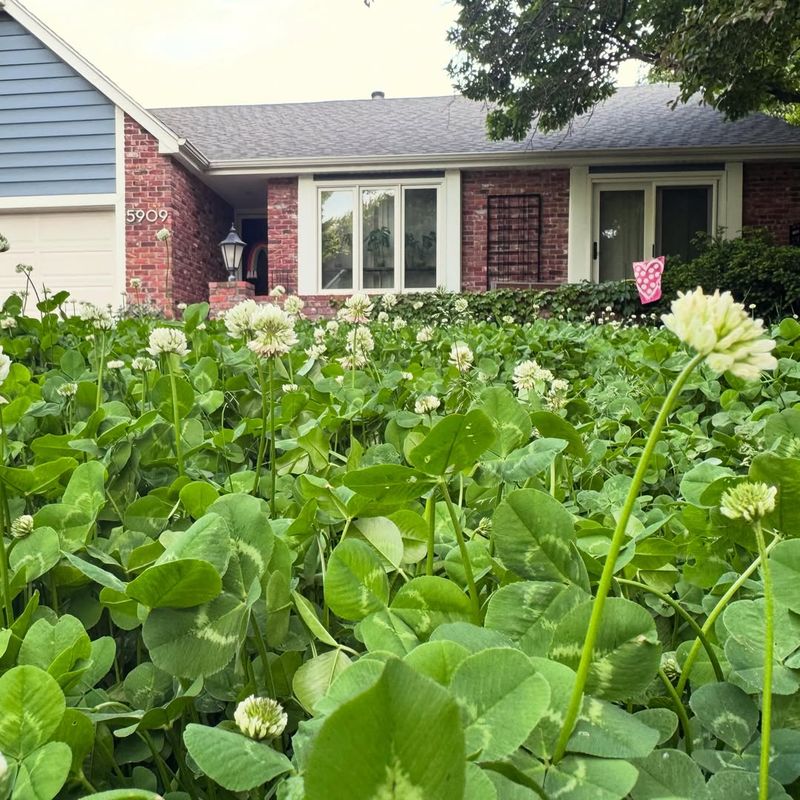
Clover stays green when regular grass turns brown. During dry stretches that hit the Southeast hard every summer, white clover holds moisture better than most turf grasses.
It has deeper roots that pull water from lower in the soil.
White Dutch clover is the most popular choice for full lawn replacement. It grows to about four to six inches tall without mowing, which saves hours of yard work each season.
Some people mow it once a month just to keep it tidy.
Clover fixes nitrogen from the air and feeds it back into the soil. That means fewer fertilizer applications and lower costs over time.
Bare patches in a clover lawn tend to fill back in on their own without reseeding.
Bees love clover flowers, so if that concerns you, mowing before blooms appear keeps pollinators away from foot traffic areas. Micro clover varieties stay shorter and bloom less, making them a solid option for families with kids or pets who use the yard often.
Seeding clover into an existing lawn is possible without removing all the grass first. Rough up the soil lightly, broadcast the seed, and water it in.
Expect it to establish within two to three weeks under normal spring or fall conditions.
2. Frogfruit Spreads Naturally Across Sunny Open Areas
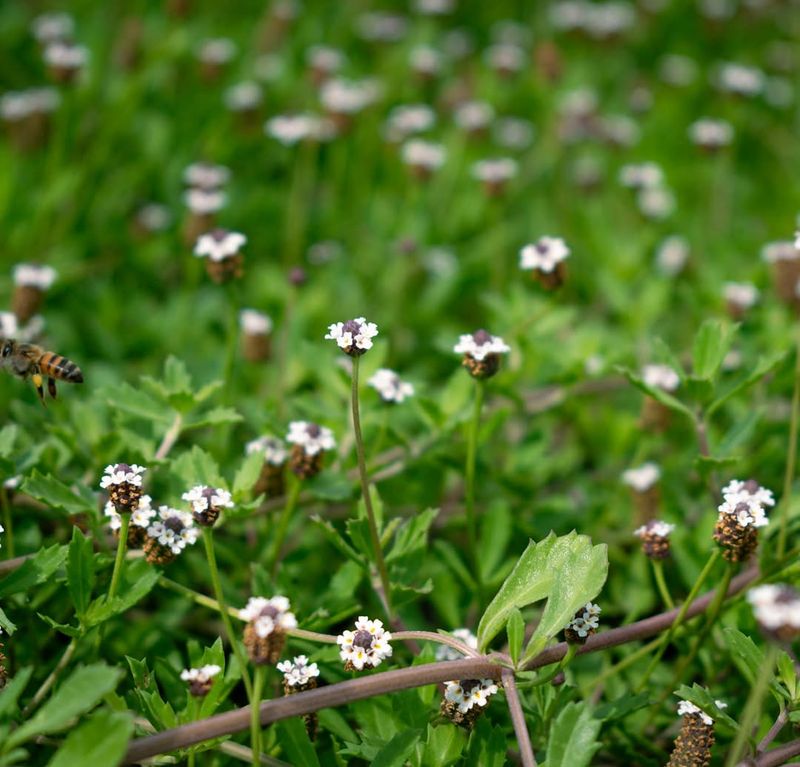
Frogfruit is one of those plants that works hard without asking for much. Native to the southeastern United States, it spreads on its own across open, sunny spots without any help from a gardener.
It stays low, usually under four inches tall, and produces tiny white flowers throughout the warmer months. Butterflies and small pollinators visit those blooms regularly, adding life to an otherwise flat yard.
Once established, frogfruit handles heat and dry spells surprisingly well. It does need some water while getting settled in the first season, but after that, rainfall in most parts of the South is usually enough to keep it going.
Walking on it occasionally is fine. It bounces back from light foot traffic better than many ground covers.
That makes it a realistic option for side yards or open spaces that get some use but not heavy daily traffic.
Your Georgia Garden Changes Every Week. Your Plan Should Too.
Gardening in Georgia changes quickly throughout the season. Every Friday you’ll receive a simple weekly plan showing exactly what to plant, prune, fertilize, harvest, and protect so you never miss the right timing.
Planting it is straightforward. Plugs or small pots work better than seed for most home gardeners.
Space them about a foot apart, water consistently for the first few weeks, and the plants will start connecting and spreading on their own.
Frogfruit pairs well with mulched pathways and native plantings. It softens hard edges between beds and open ground, giving yards a more natural, layered look without requiring constant upkeep or irrigation schedules.
3. Creeping Thyme Softens Gaps Between Stone Paths
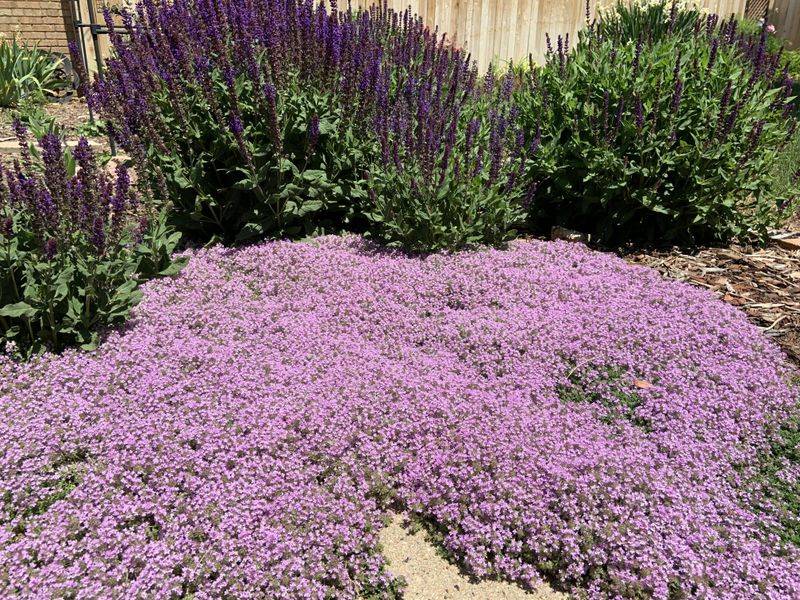
Stone paths look sharp when they are first installed. Over time though, the gaps between pavers start looking bare or weedy.
Creeping thyme solves that problem in a way that actually improves the whole yard.
It grows flat and tight, usually staying under three inches tall. The small leaves release a mild herbal scent when stepped on, which is a surprisingly pleasant detail in an outdoor space.
Foot traffic does not bother it much at all.
Blooms appear in late spring and early summer, covering the plant in tiny pink or purple flowers. That burst of color makes a stone path look intentional and designed rather than just functional.
Pollinators show up during bloom time too.
Creeping thyme handles heat well and needs very little water once it is rooted in. Sandy or well-drained soil suits it best.
Heavy clay soil can cause problems, so mixing in some coarse sand or gravel before planting helps in areas with dense ground.
Planting between pavers is easy. Remove any weeds first, loosen the soil in the gaps, and press small divisions or plugs into place.
Water them regularly for the first month, then back off.
One flat of creeping thyme can cover a surprisingly large area. It spreads slowly but steadily, filling gaps without becoming aggressive or spilling into places it is not wanted.
It is a low-effort, high-reward option.
4. Dwarf Mondo Grass Improves Shady Backyard Corners
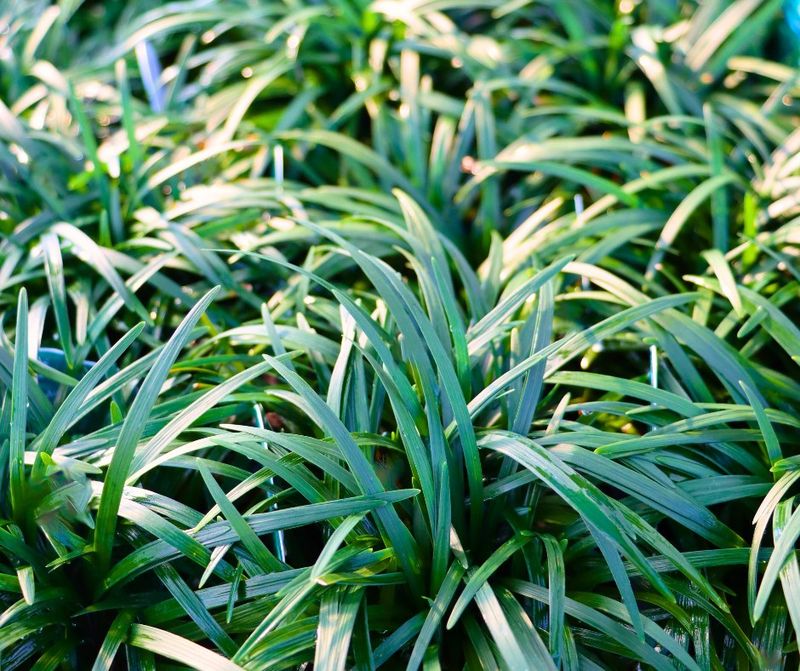
Shady corners are the hardest spots in any yard to fill. Regular turf grass struggles without sun, and bare soil under trees looks unfinished.
Dwarf mondo grass handles that problem better than almost anything else.
It grows in dense, dark green clumps about two to four inches tall. The texture is finer than regular mondo grass, giving it a cleaner, more polished look in tight spaces.
It stays green year-round in most of the South.
Shade is where dwarf mondo grass actually performs best. Deep shade under large trees, narrow side yards, and the north-facing edges of the yard are all spots where it thrives without complaint.
Full sun can scorch it, so placement matters.
Watering needs are low once it is established. It does not spread aggressively, which means it stays where you put it without taking over nearby beds or paths.
That predictable behavior makes it easy to design around.
Planting is done by division or by purchasing small pots. Space individual clumps about six inches apart for quicker coverage, or a foot apart if you are patient and working with a larger area.
Mulching between plants while they fill in keeps weeds from moving in first.
Mowing is not needed. Cutting it back hard every few years refreshes the foliage if it starts looking tired.
Otherwise, it just grows quietly and steadily without needing much attention at all.
5. Sunshine Mimosa Creates Texture Without Constant Mowing
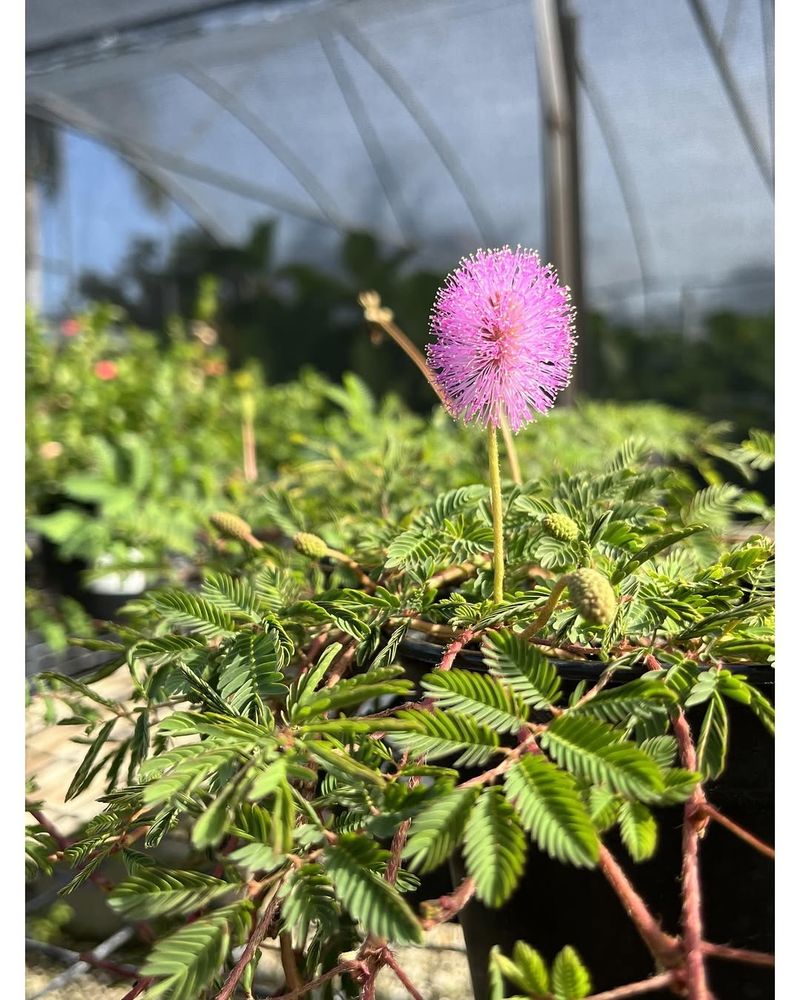
Sunshine mimosa is one of the more visually interesting ground covers available for Southern yards. Pink powder-puff flowers pop up throughout the warmer months, and the feathery leaves fold when touched, which never gets old.
It spreads steadily across open, sunny ground without needing any encouragement. Once established, it fills in bare patches on its own and handles dry spells well.
Mowing it is optional since it stays naturally low in most conditions.
Georgia homeowners dealing with slopes or erosion-prone areas will find it especially useful. The spreading stems root as they go, holding soil in place without the need for mulch or retaining structures.
That makes it practical beyond just being attractive.
It needs full sun to perform well. Partial shade slows its growth and reduces flowering.
Sandy or loamy soil drains well and suits it much better than heavy clay, though amending the soil before planting helps it get started faster.
Water requirements are minimal after the first season. During establishment, consistent moisture helps it root deeply.
After that, natural rainfall in most of the Southeast is usually enough to keep it healthy through summer.
One thing worth knowing is that sunshine mimosa has thorns on its stems. It is not a barefoot-friendly ground cover, so placing it away from high-traffic areas like play zones or main pathways makes more sense for most families.
6. Mulched Borders Shrink Large Sections Of Turf
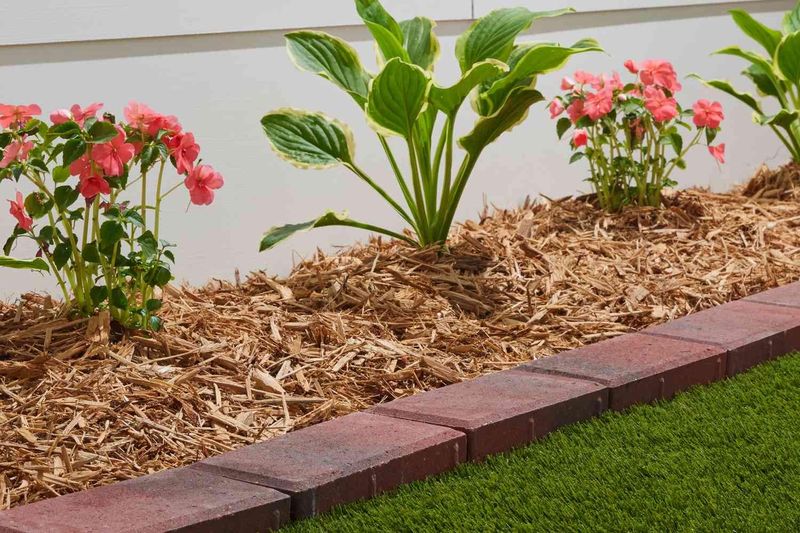
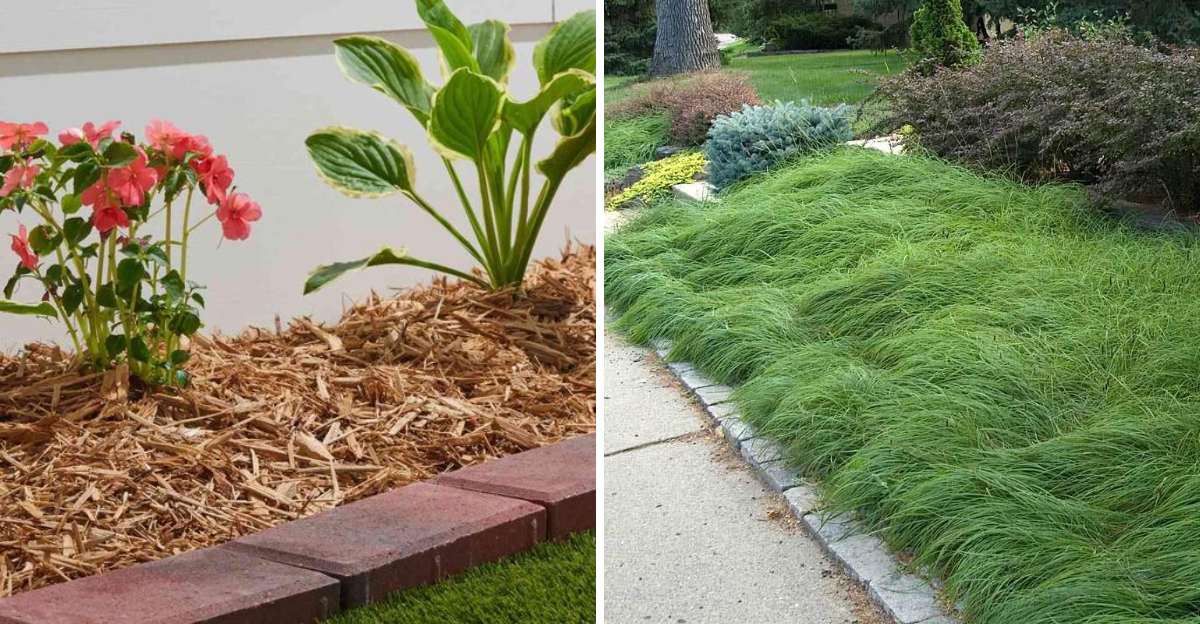
Replacing turf does not always mean planting something else. Expanding mulched borders outward from existing beds is one of the simplest ways to shrink the amount of grass you are watering and mowing every week.
Deep mulch, around three to four inches, blocks weeds from pushing through and holds soil moisture far better than bare ground or turf. Less evaporation means less watering, and that shows up on the water bill within a season or two.
Using hardwood mulch or shredded bark keeps costs reasonable. Pine straw is another popular option in the South and breaks down slowly, making it a practical choice for large areas.
Both options look clean and intentional when applied evenly.
Planting native shrubs and perennials inside the mulched areas adds structure and color without requiring irrigation once the plants are established. Beautyberry, native azaleas, and spicebush all perform well in this type of layered setup.
Edging the borders with a flat spade or a steel edging tool keeps the lines clean and prevents grass from creeping back into the mulched zones. Refreshing the edge twice a year is usually enough to maintain a sharp look.
Starting small is completely fine. Extending a bed by two or three feet in one direction takes very little time and instantly reduces the turf area.
Over several seasons, those small expansions add up to a dramatically lower-maintenance yard.
7. Native Sedge Areas Bring Softer Backyard Transitions
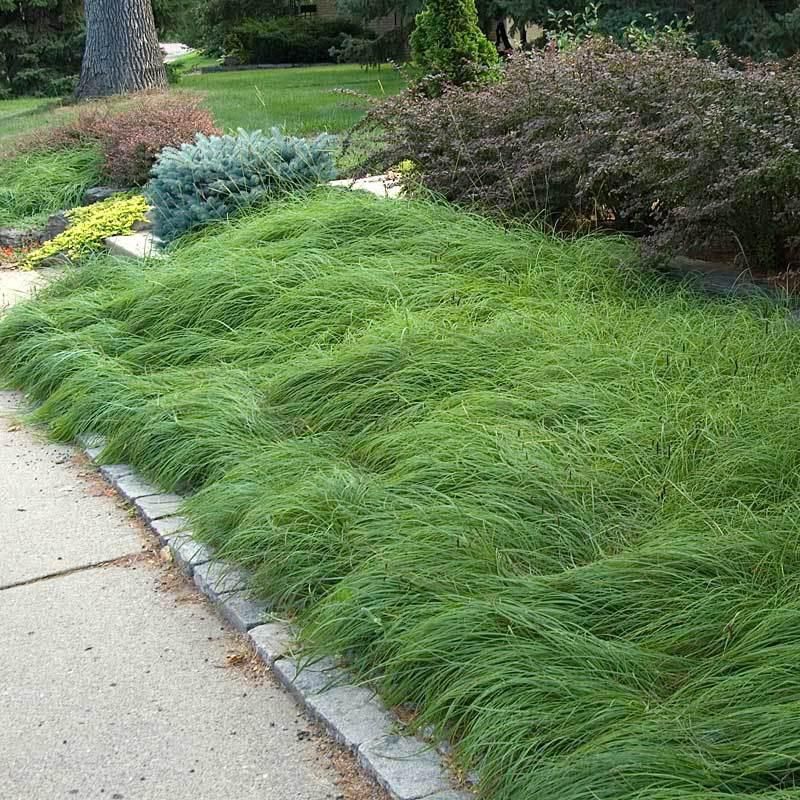
Sedge looks like grass but behaves completely differently. It grows in soft, arching clumps that move with the breeze, giving a yard a more relaxed and natural feel than stiff turf ever could.
Several native sedge species work well across the Southeast. Pennsylvania sedge and Appalachian sedge are both low-growing options that tolerate shade and moderate foot traffic.
They stay under a foot tall without any mowing, which is a major time saver.
Transitioning from a manicured lawn edge to a wooded area or garden bed is where sedge really earns its place. It softens that hard line between managed and natural spaces without looking messy or overgrown.
The effect is subtle but genuinely attractive.
Sedge handles both dry shade and moist areas reasonably well depending on the species. Checking which variety suits your specific conditions before buying saves a lot of frustration later.
Local nurseries that carry native plants can usually point you in the right direction.
Planting in drifts rather than single rows looks more natural and fills in faster. Space plugs or divisions about eight to ten inches apart.
Mulch between them during the first season to keep weeds from taking hold before the sedge spreads.
Water needs are low after establishment. Sedge rarely needs supplemental irrigation once it has settled in, making it a genuinely low-input option for homeowners who want a softer yard without a complicated maintenance schedule.
8. Breaking Up Large Turf Areas Creates A More Natural Yard
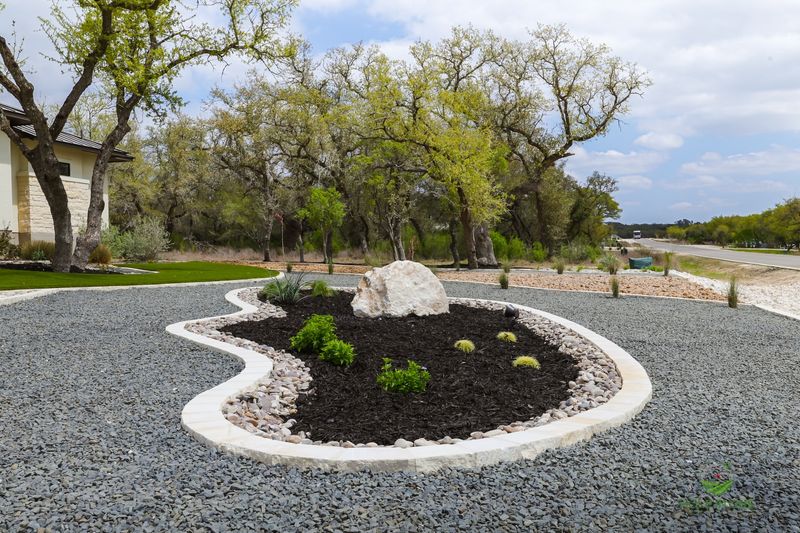
Breaking up large sections of grass can completely change how a yard feels without requiring a full landscape makeover.
Huge open lawns often look flat and repetitive after a while, especially during summer when heat stress starts showing up across the turf.
Creating smaller zones makes the space feel more intentional and visually interesting. Curved planting beds are one of the easiest ways to do that.
Even a simple island bed placed in the middle of the lawn can make the yard feel less empty and far more balanced.
Mulched areas around trees also help reduce how much grass needs mowing every week.
Some homeowners extend those beds outward over time instead of trying to remove large sections of lawn all at once.
That slower approach usually feels much more manageable.
Stone pathways can also break up wide stretches of turf while giving the yard more structure. A winding path naturally draws attention through the landscape and creates movement that plain grass cannot provide on its own.
Mixing gravel, mulch, and planting areas together often creates a cleaner and more modern appearance than one large uninterrupted lawn.
The contrast between textures keeps the yard from looking overly plain.
Smaller lawn sections are also easier to water, edge, and maintain through long stretches of summer heat. That alone can make the entire property feel much less frustrating to manage over time.