Native Georgia Flowers That Bring Cardinals To Your Yard All Season
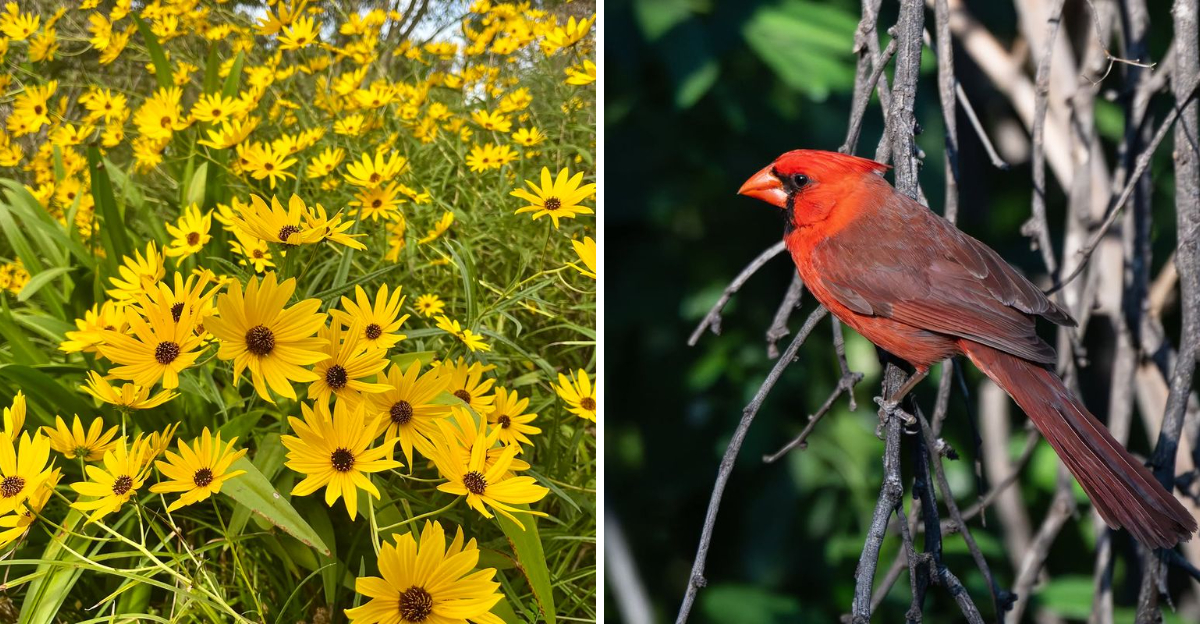
A quiet Georgia yard can change fast once cardinals start showing up regularly.
Bright flashes of red near flower beds and shrubs instantly pull attention, especially during the hottest parts of the season when fewer birds stay active during the day.
Food matters, but cardinals look for much more than that before settling into a yard. Dense cover, safe resting spots, and reliable seed sources keep them moving through the same spaces again and again.
Certain native flowers help create that environment naturally while also keeping the yard colorful for months. Some hold their shape through heat, while others keep attracting the insects and seeds birds search for daily.
That combination turns ordinary garden spaces into places cardinals return to throughout the season instead of stopping by only once in a while.
1. Bee Balm Pulls In Cardinals During Warm Months
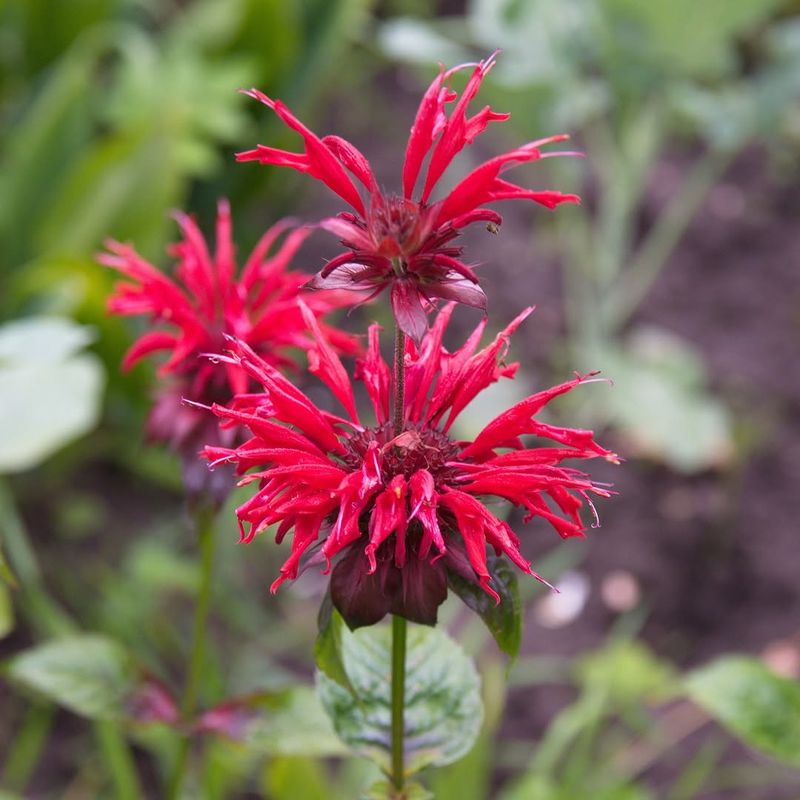
Bee balm earns its spot fast. Once it starts blooming in early summer, it becomes one of the busiest plants in any backyard.
Cardinals visit for seeds left behind after the flowers fade, and the dense foliage gives birds a place to perch nearby.
Planting bee balm in a sunny spot with decent drainage gives it the best start. It spreads gradually each season, so give it room to grow without crowding other plants.
Dividing clumps every few years keeps it healthy and blooming strong.
Red-flowered varieties tend to attract more wildlife than pink or white ones. Monarda didyma is the native species worth planting.
It handles Georgia summers reasonably well, though it may need extra water during dry stretches.
Powdery mildew can show up on leaves in humid conditions. Planting in a spot with good airflow helps reduce that problem.
Cutting back stems after the first bloom flush often encourages a second round of flowers before fall arrives.
Cardinals are not the only visitors. Hummingbirds and bees work these flowers constantly.
That steady activity makes bee balm one of the most rewarding native plants you can add to a warm-season garden border.
Bee balm also pairs well with coneflowers and black-eyed Susans in sunny native-style plantings.
2. Purple Coneflower Leaves Behind Seeds Birds Search For
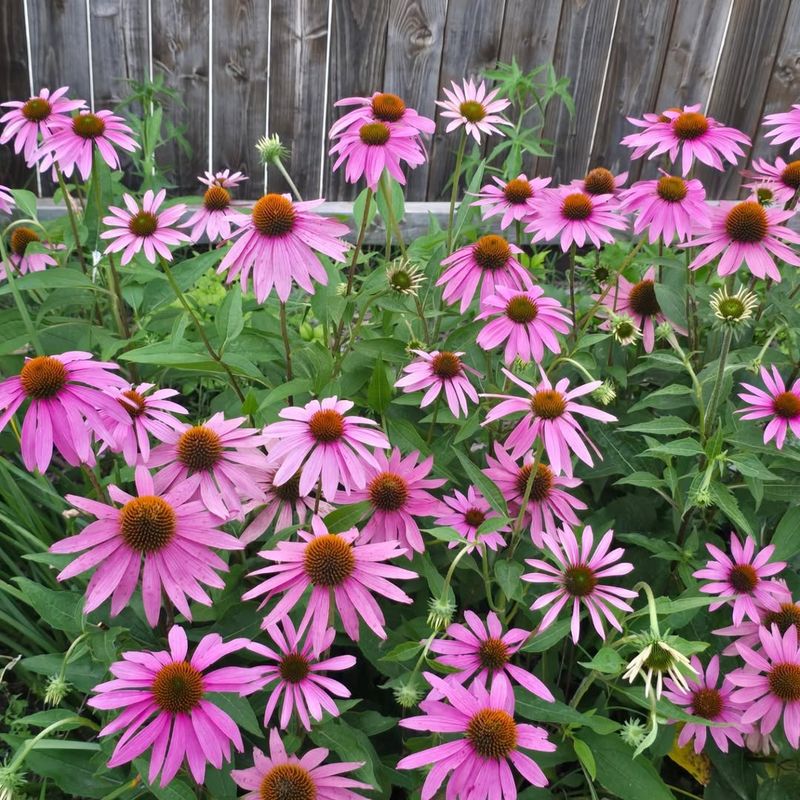
Seed heads matter more than blooms when it comes to feeding cardinals. Purple coneflower produces large, spiky seed cones that cardinals crack open with their strong beaks.
Leaving those seed heads standing through fall and winter gives birds a reliable food source long after the flowers are gone.
Echinacea purpurea is the native species most gardeners in the region plant. It grows well in average soil and handles dry spells better than many other native perennials.
Full sun is ideal, though it tolerates light afternoon shade.
Bloom time runs roughly from June through August depending on conditions. After petals drop, the cones harden and fill with seeds.
Cardinals will visit repeatedly as long as seeds remain, sometimes pulling them directly from the standing stalks.
Resist the urge to cut everything down in fall. Leaving stalks standing through winter gives birds access to food and gives beneficial insects shelter.
Your Georgia Garden Changes Every Week. Your Plan Should Too.
Gardening in Georgia changes quickly throughout the season. Every Friday you’ll receive a simple weekly plan showing exactly what to plant, prune, fertilize, harvest, and protect so you never miss the right timing.
Tidy up in early spring instead, just before new growth emerges.
Purple coneflower also reseeds on its own over time. Patches tend to fill in naturally, which means more seed heads each season without extra effort.
Spacing plants about eighteen inches apart gives each one enough room to spread and produce a full seed cone.
Goldfinches and chickadees also visit the seed heads regularly, which keeps the garden active well beyond the main blooming season.
3. Cardinal Flower Brightens Damp Corners With Red Blooms
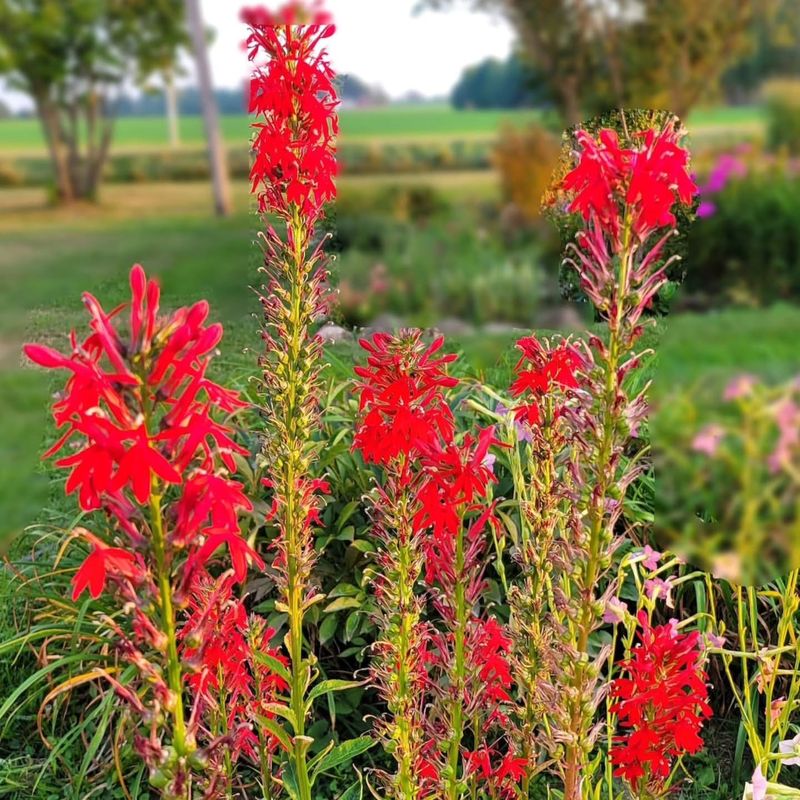
Few native plants carry a name as fitting as cardinal flower. Lobelia cardinalis produces tall spikes of brilliant red blooms that match the color of a male cardinal almost exactly.
It naturally grows near streams and wet edges, so it works well in low spots that stay moist longer than the rest of the yard.
Planting it near a water feature or in a rain garden gives it the moisture it needs without constant watering. Partial shade is fine, though it also grows in full sun if the soil stays consistently damp.
Dry soil is the main thing that limits its performance.
Hummingbirds are the primary pollinators, but cardinals visit the seed heads after blooms fade. Seeds are tiny and numerous, making each stalk a worthwhile food stop for small birds.
Leaving stalks standing after bloom helps with natural reseeding.
Cardinal flower is a short-lived perennial in most gardens. It tends to reseed itself nearby, so patches can persist for years even without replanting.
Scattering seeds in fall gives new plants a head start before winter.
Height ranges from two to four feet depending on conditions. Grouping several plants together creates more visual impact and gives birds more reason to linger.
It adds a reliable burst of color to shaded or wet corners that other plants often struggle to fill.
4. Joe Pye Weed Brings Constant Backyard Movement
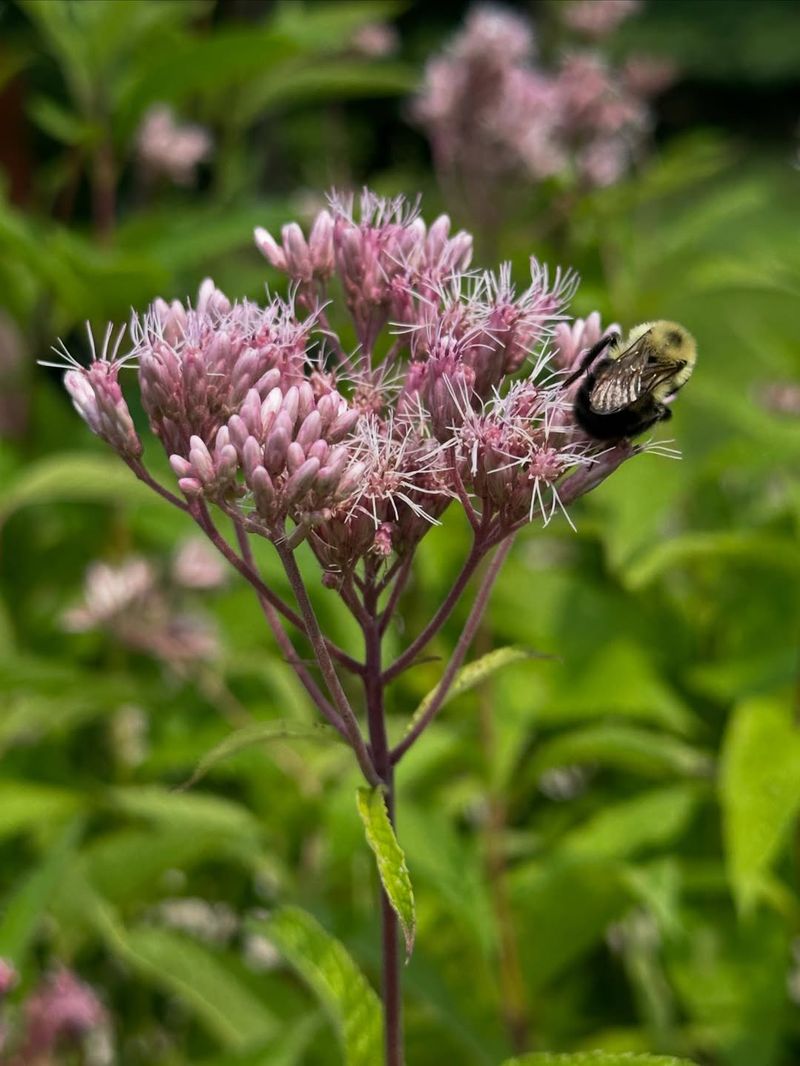
Joe Pye weed commands attention. It grows tall, sometimes reaching six feet or more, and its fluffy pink flower clusters draw insects in waves.
Cardinals follow those insects, picking them off stems and leaves while also watching for seeds forming in the seed heads below the blooms.
Native Eutrochium species are the ones worth planting. Eutrochium purpureum and Eutrochium fistulosum both thrive in the Southeast.
They prefer moist, partially shaded spots but adapt to sunnier locations if watered during dry stretches.
Bloom time runs from mid-summer through early fall. Seeds mature and persist well into winter, giving cardinals and other birds a food source during months when fresh plant material is scarce.
Leaving stalks standing after the first frost extends that benefit significantly.
Joe Pye weed spreads gradually through both seeds and root expansion. Giving it a generous space at planting prevents it from crowding neighboring plants too quickly.
Dividing clumps every three or four years keeps growth manageable.
Pairing it with goldenrod or native asters creates a late-season patch that stays active with bird and insect movement well into November. That kind of layered planting makes the whole garden feel alive even as temperatures drop.
Tall plants like this also provide visual structure in the garden. Cardinals often perch on upper stems to survey the yard before dropping down to feed, making Joe Pye weed a natural lookout spot.
5. Coral Honeysuckle Creates Safer Cover Around Fences
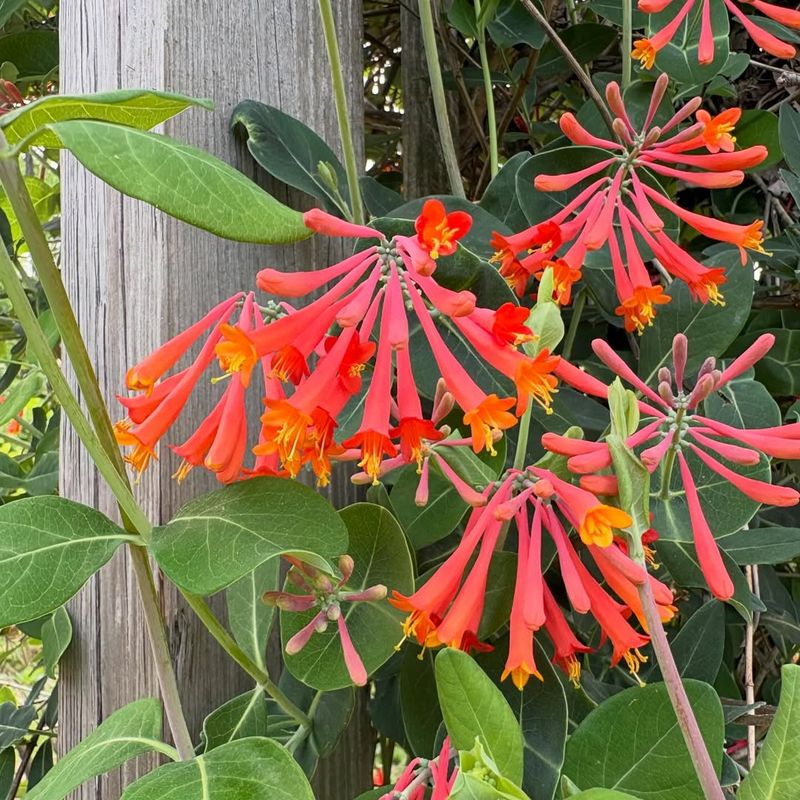
Native coral honeysuckle is not the invasive kind. Lonicera sempervirens stays manageable, grows beautifully along fences and trellises, and supports wildlife without taking over the whole yard.
Cardinals use the dense vine growth as protective cover, especially near nesting areas.
Tubular red and orange flowers bloom from spring through early summer, sometimes reblooming in fall. Red berries follow the flowers, and cardinals eat those berries readily.
Having both flowers and fruit on one plant makes coral honeysuckle especially productive for backyard birds.
It climbs by twining, so a fence, post, or simple trellis is all it needs. Full sun produces the best bloom and berry set.
Partial shade is tolerable but tends to reduce flowering somewhat.
Established vines are fairly drought-tolerant once rooted well. Watering during the first season helps roots develop faster.
After that, rainfall alone handles most of its needs in a typical year.
Pruning right after the main bloom flush keeps growth tidy without cutting off potential fall rebloom. Avoid heavy pruning in late summer since that removes flower buds forming for the second flush.
Light shaping is usually all the maintenance needed.
Cardinals often nest in dense shrubs nearby rather than directly in the vine. Still, the cover coral honeysuckle provides makes fence lines feel safer, which encourages birds to stay in the yard longer and return more often.
6. Blue Mistflower Keeps Pollinators Flying Through Fall
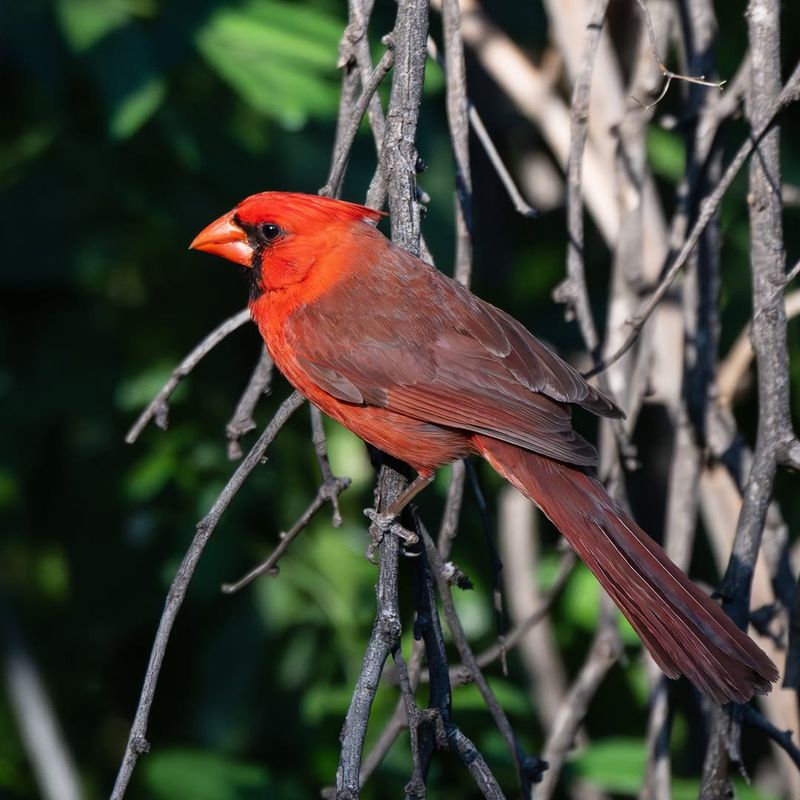
Blue mistflower is a late-season surprise. Most plants are winding down by October, but Conoclinium coelestinum is just hitting its stride.
Fuzzy blue-purple flower clusters cover the plant from late summer through frost, pulling in butterflies, bees, and the birds that follow them.
Cardinals do not eat the nectar directly, but they hunt insects that gather on the blooms. Watching a cardinal work through a patch of mistflower in October is a reminder of how connected flowering plants and birds really are.
It is not just about seeds.
Blue mistflower spreads aggressively through underground runners. Planting it where it has room to expand, or using a buried root barrier, keeps it from crowding other plants.
In the right spot, that spreading habit is actually a benefit since it fills space quickly.
It handles average soil and partial shade well. Full sun is fine too, as long as moisture is consistent.
Dry soil slows growth noticeably, so watering during dry fall stretches helps maintain the bloom display.
Height stays modest, usually two to three feet. It works well along borders, near water features, or at the edge of a woodland garden.
Cutting it back hard in late spring removes any winter-damaged stems and encourages fresh, bushy new growth before summer.
Few native plants carry bloom color this late in the season. That alone makes blue mistflower worth including in any Georgia garden focused on supporting wildlife through the full year.
7. Black-Eyed Susans Add Late-Season Seed Sources
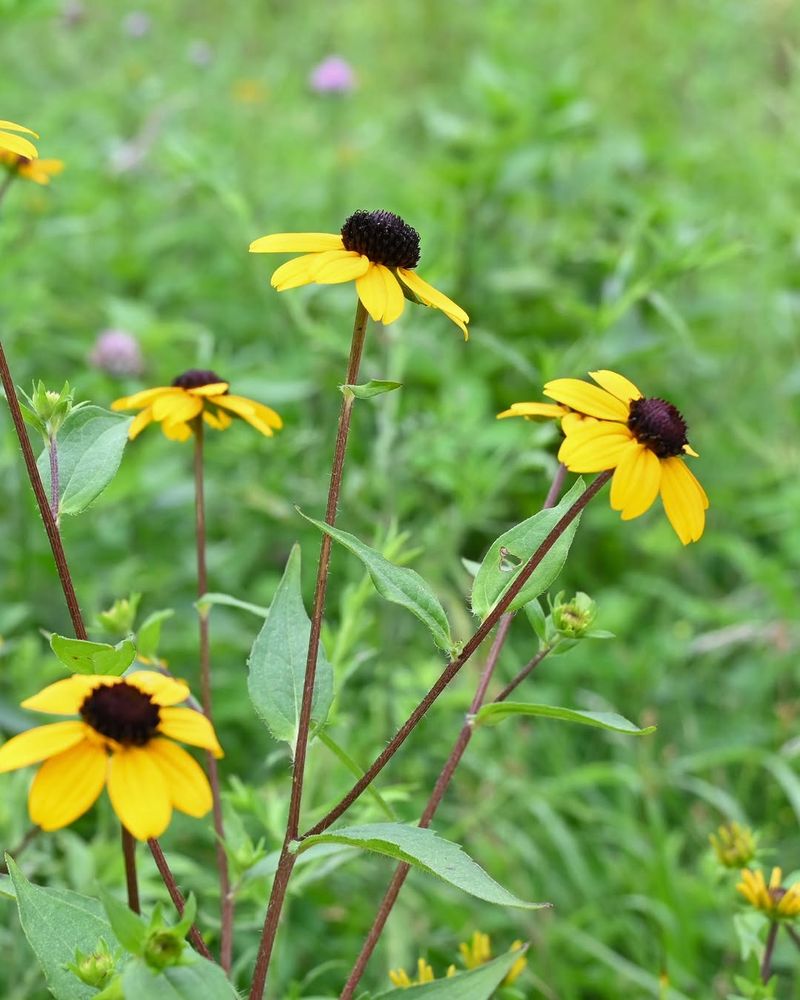
Black-eyed Susans are tough, cheerful, and genuinely useful. Rudbeckia hirta blooms from summer into fall, and once those golden petals drop, the dark seed-packed centers become a magnet for cardinals.
Birds land directly on the stems and pick seeds from the heads with precision.
Full sun and well-drained soil are the main requirements. Poor or average soil is actually preferred since overly rich soil pushes leafy growth at the expense of flowers.
Sandy or clay-heavy ground both work as long as drainage is reasonable.
Bloom time starts in June and can stretch into October depending on conditions. Deadheading early blooms extends the flowering period, but stopping deadheading by late summer lets seed heads develop for fall feeding.
That shift in care makes a real difference for birds.
Black-eyed Susans reseed readily. A small patch often doubles in size within two seasons without any effort.
Thinning seedlings in spring keeps the planting from becoming too dense, which also improves airflow and reduces disease pressure.
Pairing them with purple coneflower creates a complementary native planting that offers color from early summer through fall. Both plants produce seed heads that cardinals target regularly, making the combination more productive than either plant alone.
Height ranges from one to three feet. Shorter varieties work well in front of borders, while taller ones add structure mid-border.
Either way, leaving seed heads standing through winter gives birds a consistent late-season food stop worth returning to.
8. Native Sunflowers Turn Into Backyard Feeding Stops
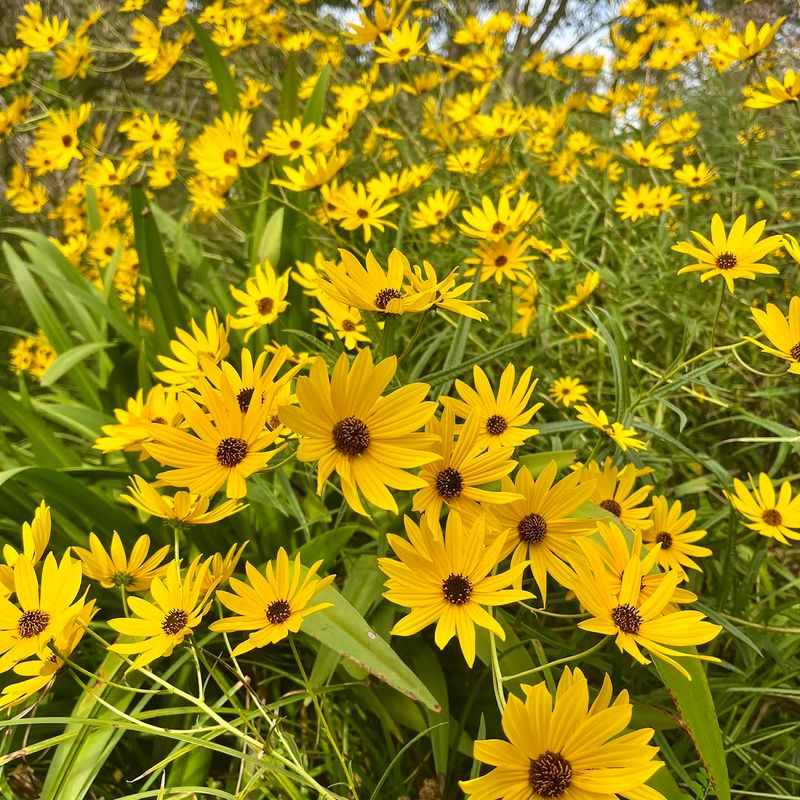
Wild sunflowers are built for seed production. Native species like Helianthus angustifolius and Helianthus debilis produce smaller flower heads than cultivated sunflowers, but they make up for it in sheer quantity.
Cardinals crack open seeds directly from the heads without any help from a feeder.
Bloom time for most native sunflowers falls between late summer and early fall. That timing is useful because it fills a gap when many other flowers have finished.
Birds are actively feeding heavily before cooler weather arrives, and sunflowers provide exactly what they need.
Growing native sunflowers is straightforward. Average to poor soil is fine since rich soil tends to push leafy growth over flower production.
Full sun is a must. Once established, these plants handle dry spells without much trouble.
Heights vary by species but most reach four to six feet. Planting them toward the back of a border keeps them from shading shorter plants in front.
Staking is rarely needed unless the site gets strong wind regularly.
Leave seed heads standing after blooms finish. Cardinals, finches, and other seed-eating birds will work through them steadily.
Cutting everything down in fall removes a food source that birds depend on during leaner months.
Native sunflowers also reseed freely, which means a small planting often expands on its own over a few seasons. Thinning seedlings in spring keeps the patch from getting too crowded.