7 Cucumber Pruning Mistakes Most Gardeners Make Without Realizing
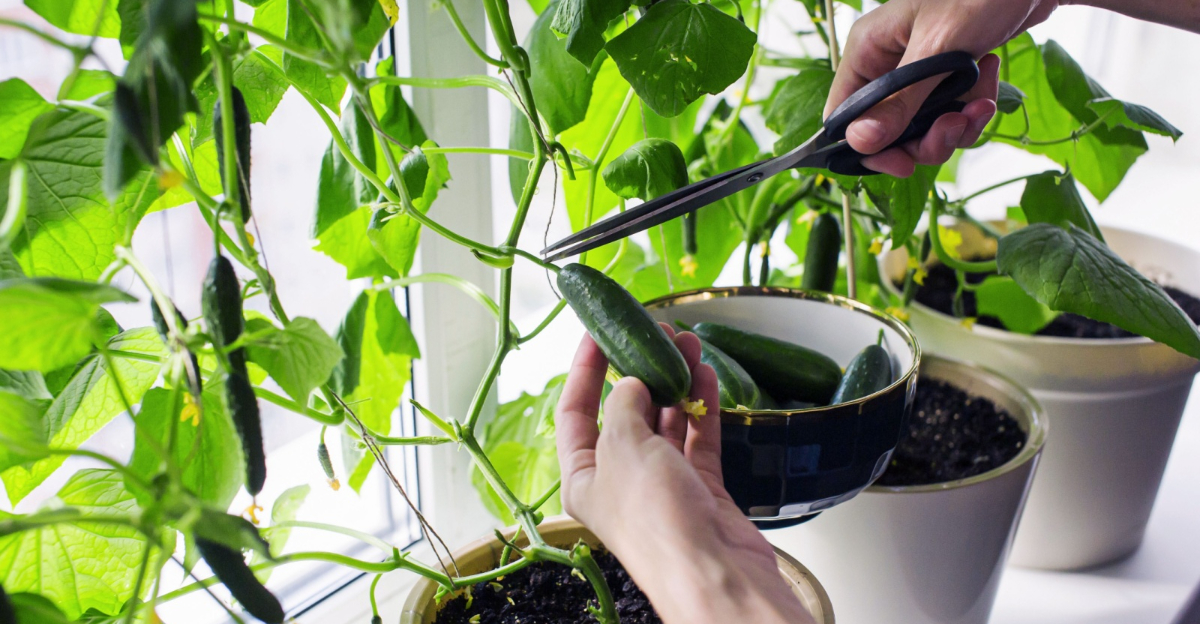
Cucumbers are drama queens in disguise. They grow fast, look sturdy, and make you feel like you have it all figured out.
Then you prune them slightly wrong a few times and suddenly the whole vine is sulking. Bad pruning is patient, quiet, and your harvest is usually the last to know.
Just a harvest that gets a little quieter every week. Most gardeners blame the weather, the variety, or just bad luck.
Rarely do they look at what they did with the shears. Cucumber pruning is one of those skills that hides its mistakes so well you might not catch them for an entire season.
But once you know what to watch for, the fix is usually simple. These are the seven pruning mistakes that most home gardeners make without ever realizing it.
1. Removing Too Many Leaves At Once
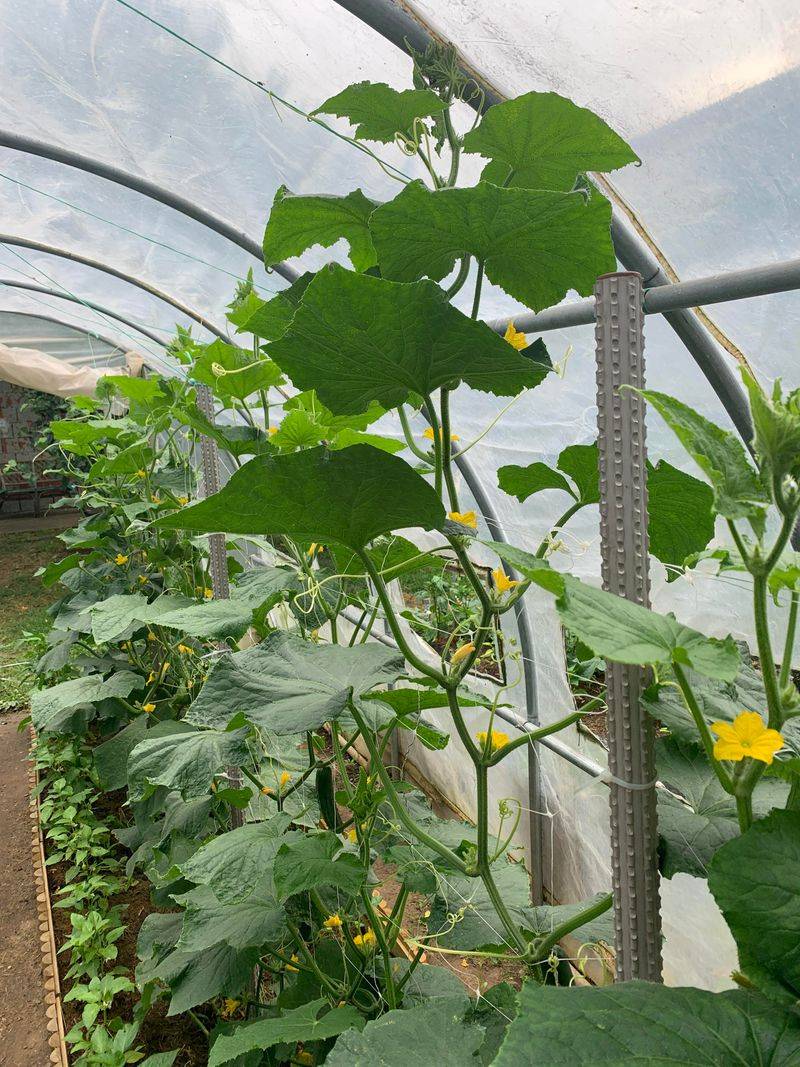
Stripping a cucumber plant bare might feel like a bold, productive move. It looks tidy, it feels satisfying, and it seems like you are helping the plant breathe.
But taking off too many leaves at once sends the plant into full panic mode. Leaves are the plant’s solar panels.
Every single one captures sunlight and turns it into the energy that fuels fruit growth. When you remove a large chunk of them suddenly, the plant scrambles to recover instead of producing cucumbers.
Gardeners often notice their plants look stressed within just two or three days after a heavy pruning session. The vines may wilt slightly, new growth slows down, and fruit that was just forming can drop off prematurely.
That is not a coincidence. A smart rule of thumb is to never remove more than one-third of the plant’s foliage in a single session.
Space your pruning over several days or even a week to give the plant time to adjust. This gradual approach keeps the energy flowing without shocking the root system.
Cucumber pruning mistakes like this one are especially common in mid-summer when the vines get thick and bushy. It looks overwhelming, and the natural instinct is to cut back hard.
Resist that urge and work in small, careful passes instead. Patience here pays off in a real, measurable way.
Plants that are pruned gradually tend to produce more fruit over a longer season. That extra harvest is absolutely worth slowing down for.
2. Pruning At The Wrong Time Of Day
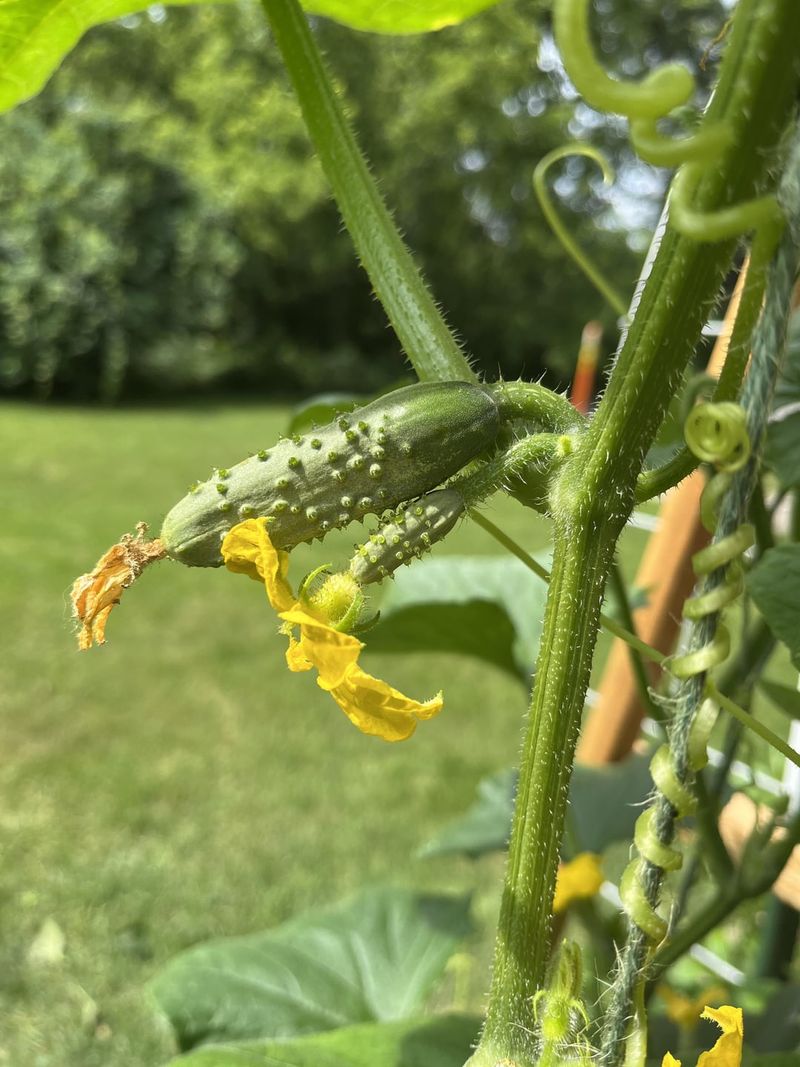
Most gardeners obsess over what to cut and completely forget about when.
Cutting cucumber plants during the hottest part of the afternoon can cause serious harm. The open wounds left by pruning become vulnerable stress points when the sun is blazing overhead.
Morning is the best window for this kind of work. Cooler temperatures and lower humidity in the early hours give fresh cuts time to dry and begin healing before the heat of the day arrives.
This dramatically lowers the risk of infection or wilting at the cut site. Evening pruning is the second-best option, but it comes with its own catch.
Leaving wet or freshly cut stems overnight in humid conditions can invite fungal problems. Moisture-loving fungi thrive in that exact environment, especially in warm summer months.
Midday pruning is the one time to avoid entirely. The plant is already working hard to manage heat and water loss.
Adding fresh wounds during peak sun hours stresses the vines in two directions at once. Think of it like this: you would not schedule surgery during a heat wave without good reason.
Your cucumber plants feel that same kind of strain when pruned under a scorching afternoon sun. The timing alone can be the difference between a thriving vine and a struggling one.
This is one of those cucumber pruning mistakes that costs nothing to fix.
Set a reminder, grab your tools before breakfast, and your plants will respond with stronger growth and healthier stems.
3. Using Dirty Or Dull Tools
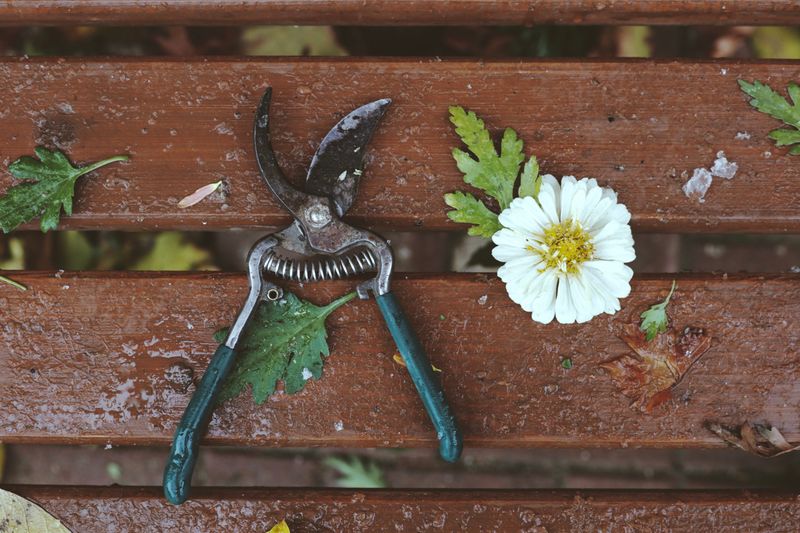
Image Credit: © Zeynep Gül Ceylan / Pexels
Your pruning shears might be the most overlooked source of trouble in your entire garden. Dull blades tear plant tissue instead of cutting cleanly through it.
That torn edge heals slower and leaves a ragged entry point for bacteria and disease. Dirty tools carry even more risk.
Your shears touch every plant, so every plant pays the price.
If you pruned a diseased plant yesterday and did not clean your shears, you just transferred that problem to every plant you touched today.
Pathogens hitchhike on blades with surprising efficiency. Cleaning tools between plants is a habit that takes about thirty seconds.
A quick wipe with a cloth soaked in diluted bleach or rubbing alcohol does the job. That small step can prevent the spread of fungal spores, bacterial infections, and even mosaic virus across your entire garden bed.
Sharpening your blades matters just as much as keeping them clean. A sharp cut heals quickly because the plant tissue is not crushed or frayed.
Think of the difference between a clean paper cut and a jagged scrape on rough pavement. Check your tools before each pruning session.
Run your finger carefully along the blade edge to feel for dullness. If it feels rough or catches slightly, a few strokes with a sharpening stone will restore that clean cutting edge.
Gardeners who invest five minutes in tool care before heading out to prune see noticeably healthier plants over the season. This is one of those cucumber pruning mistakes that feels too simple to matter.
It matters enormously.
4. Removing All Side Shoots
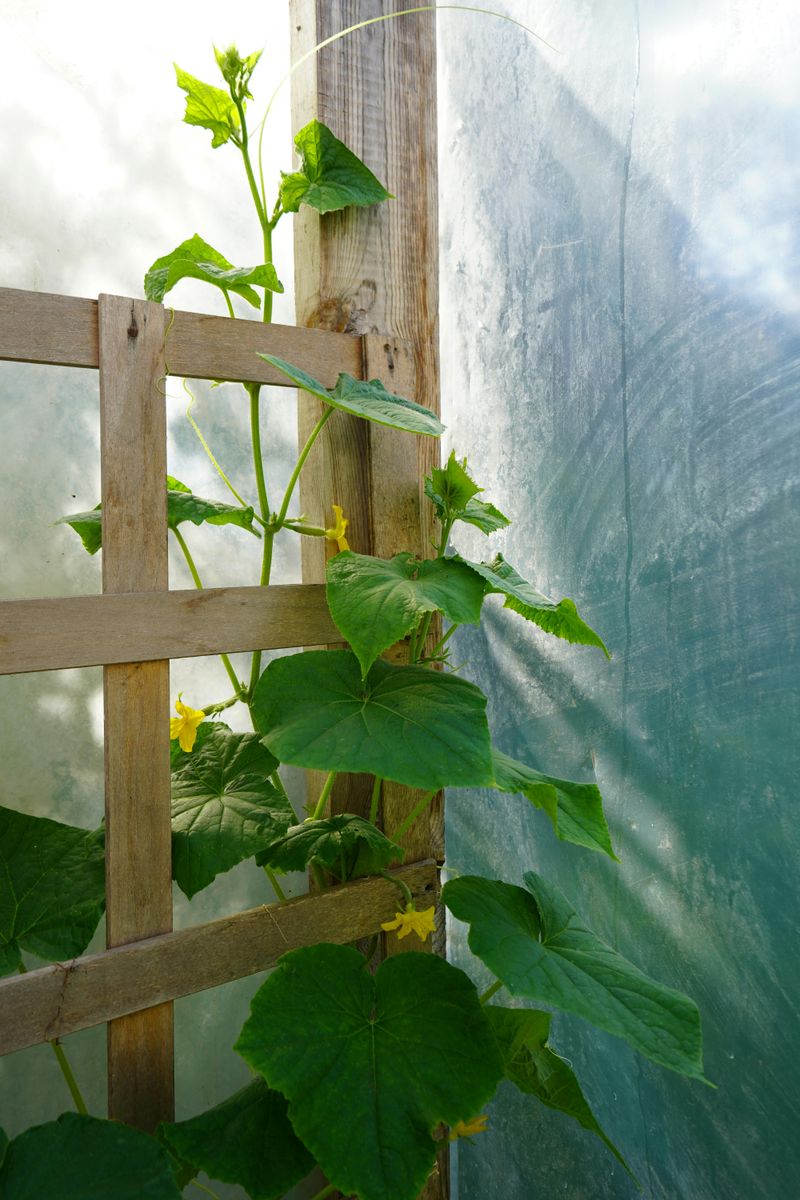
Side shoots get a bad reputation, and honestly, they do not deserve it.
Some gardeners read that lateral shoots steal energy from the main vine and immediately go on a removal spree. The problem is that not all side shoots are equal, and removing every single one is a costly mistake.
Those lateral branches are where a huge portion of your fruit actually grows. Female flowers, which are the ones that turn into cucumbers, often appear first on side shoots before they show up on the main stem.
Cutting them all off means cutting off your harvest before it even begins. The smarter approach is selective pruning.
Remove the shoots closest to the base of the plant, usually the bottom four to six nodes, to improve airflow near the soil. Leave the upper lateral branches intact so they can develop flowers and fruit.
Bushy varieties of cucumbers, like pickling types, actually need those side shoots to produce well. Vining types benefit from some thinning, but even they should keep a good number of healthy laterals.
Knowing your specific variety changes everything about how you approach this task. A good habit is to observe before you cut.
Spend a moment looking at where the flowers are forming on your plant. If they are clustering on side shoots, that is a clear signal to leave them alone.
Avoiding this kind of cucumber pruning mistake can significantly increase your yield. More side shoots with flowers means more fruit on the vine, and that is the whole point of growing them.
5. Leaving Diseased Or Yellowing Leaves On The Plant
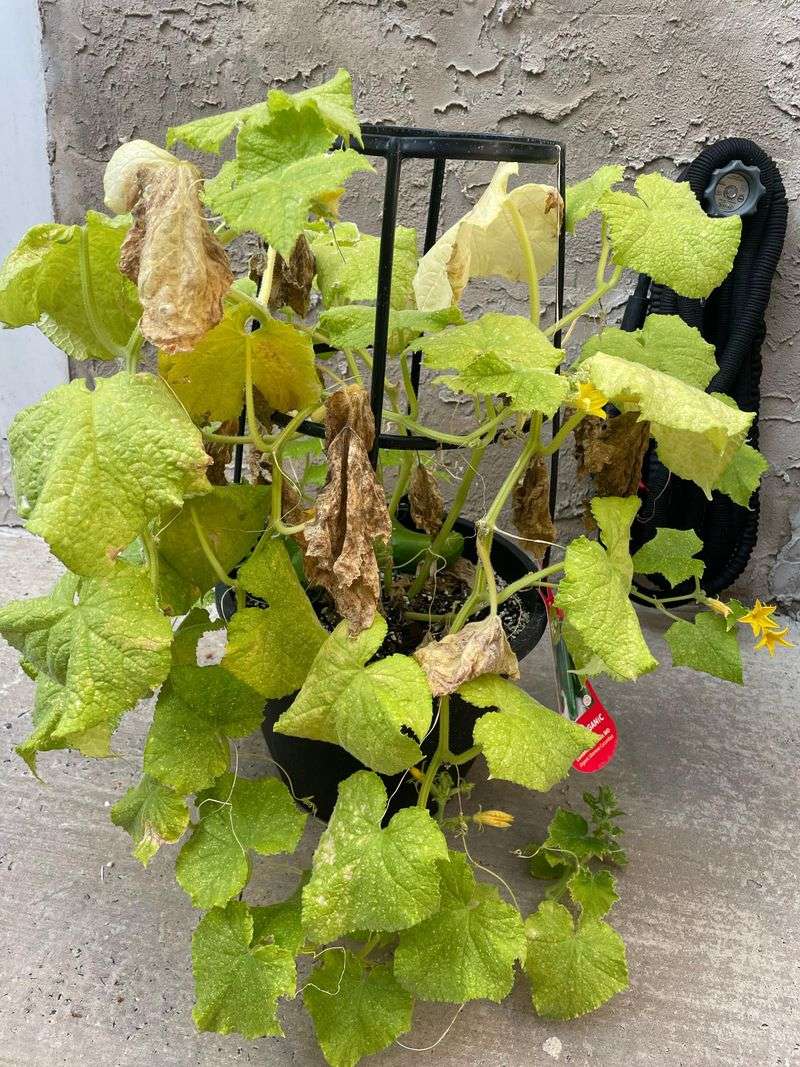
Yellow leaves clinging to a cucumber vine are not just an eyesore.
They are a slow-moving threat spreading through your garden with every passing day. Leaving them on the plant is one of those mistakes that feels harmless until suddenly it is not.
Diseased leaves act as breeding grounds for fungal spores, bacteria, and pests. Powdery mildew, downy mildew, and bacterial wilt all spread aggressively from infected foliage to healthy growth nearby.
The longer a sick leaf stays on the plant, the wider that contamination spreads. Yellowing leaves that are not diseased also drain the plant’s resources.
A leaf that can no longer photosynthesize is just dead weight pulling nutrients away from fruit production. Removing it frees up energy the plant can redirect toward the cucumbers you actually want to harvest.
When removing diseased foliage, always bag it and throw it in the trash. Never toss sick leaves into a compost pile because the pathogens can survive and spread later.
That one detail makes a significant difference in preventing future outbreaks. Check your plants at least twice a week during peak growing season.
Catch problems early when they are still isolated to one or two leaves. An early response keeps the issue small and manageable.
Staying on top of diseased foliage is one of the most powerful cucumber pruning moves you can make. It protects the whole plant, extends the harvest season, and keeps neighboring plants safe.
Catch it early and you keep the problem small, catch it late and you lose the plant.
6. Pruning Seedlings Too Early
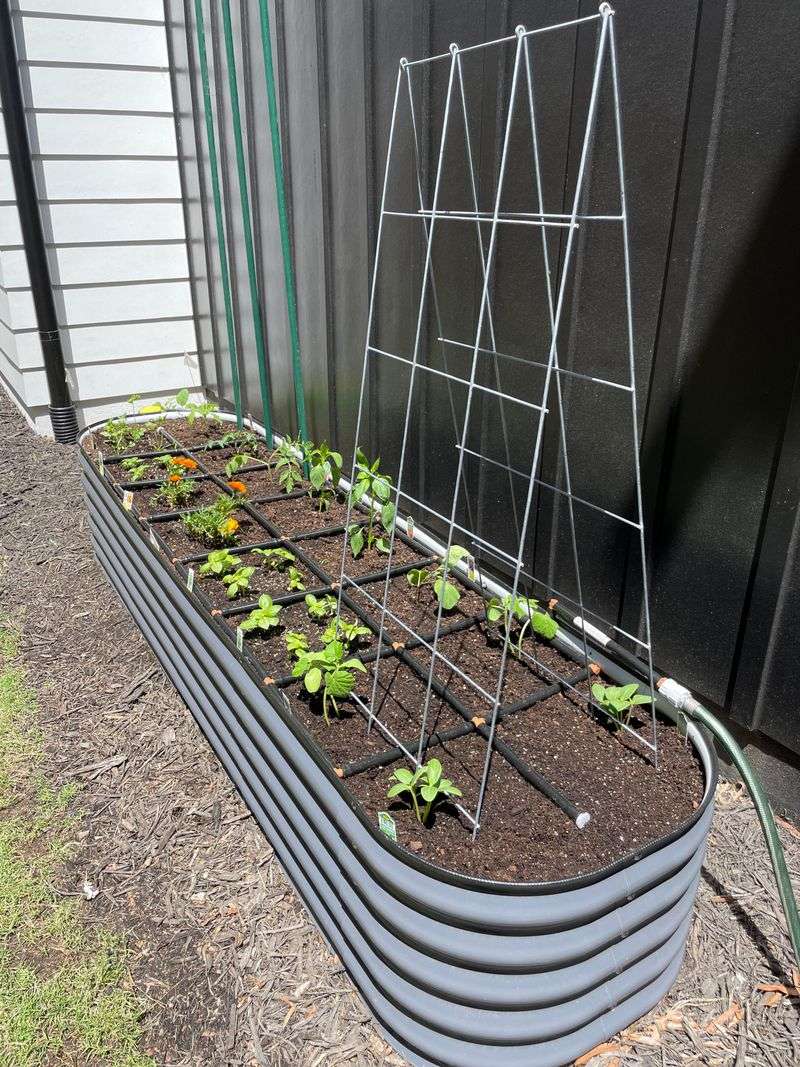
There is something almost irresistible about picking up the shears when your seedlings start looking a little unruly.
They are small, they are growing fast, and it feels like the right time to shape them up. But pruning cucumber seedlings before they are ready can stunt their growth in ways that take weeks to undo.
Young plants need every single leaf they have during the earliest stages of life. Those first true leaves are doing the heavy lifting, gathering energy to build a strong root system and a sturdy main stem.
Take them away too soon and the plant loses momentum it may never fully regain. The general guideline is to wait until a plant has at least five or six true leaves before any pruning begins.
At that point the root system is established enough to handle the stress of losing some foliage. Before that threshold, hands off is the best policy.
A plant that feels safe will always outperform one that was rushed.
Transplant shock also plays a role here. Seedlings that were recently moved into the ground or a new container are already under stress.
Adding pruning on top of that transition is piling on more than a young plant can handle comfortably.
Watch for signs that your seedling is thriving before you reach for your tools. Strong upright stems, deep green leaves, and visible new growth at the tips are all good signals.
When those signs appear, the plant is ready for light, careful pruning. Skipping this cucumber pruning mistake early in the season sets the stage for a far more productive summer.
Sometimes the best pruning move is no pruning at all.
7. Cutting The Main Stem At The Wrong Node
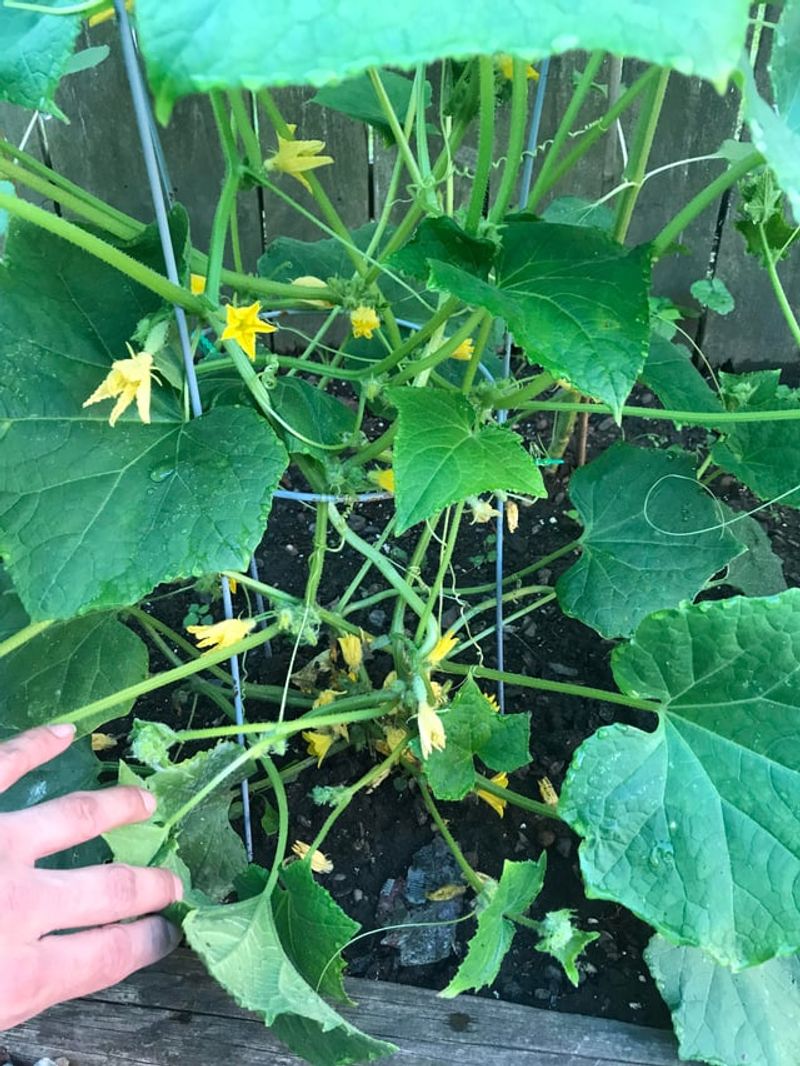
Cutting the main stem of a cucumber plant is one of the most powerful moves in your pruning toolkit.
When done correctly at the right node, it encourages the plant to branch out and produce more fruit-bearing growth. When done at the wrong spot, it can send the whole vine into a tailspin.
Nodes are the small bumps or joints along the stem where leaves, shoots, and flowers emerge. Cutting just above a node signals the plant to push energy into the growth waiting there.
Cut in the middle of a bare internode and the stem has nowhere to go, it shuts down and pulls back. Topping the main stem is a common technique used to encourage bushier growth and more lateral branching.
The ideal spot is just above a node that already has a healthy leaf and a visible side shoot beginning to form. That combination gives the plant a clear direction to grow after the cut.
Timing matters here too. Top the main stem after it has reached the top of your trellis or support structure, or once it has developed around eight to ten nodes.
Cutting too early limits the plant’s overall framework before it has enough structure to support heavy fruiting. Mistakes at the main stem level tend to have bigger consequences than trimming a side shoot incorrectly.
The main stem is the plant’s highway, and disrupting it in the wrong place slows everything down. Take an extra moment to identify the node clearly before making that final cut.
Mastering this detail is what separates confident gardeners from frustrated ones. Once you figure out the main stem, the rest of your cucumber pruning starts to click, and so does your harvest.