8 Reasons Beautyberry Is The Most Underrated Native Shrub In North Carolina
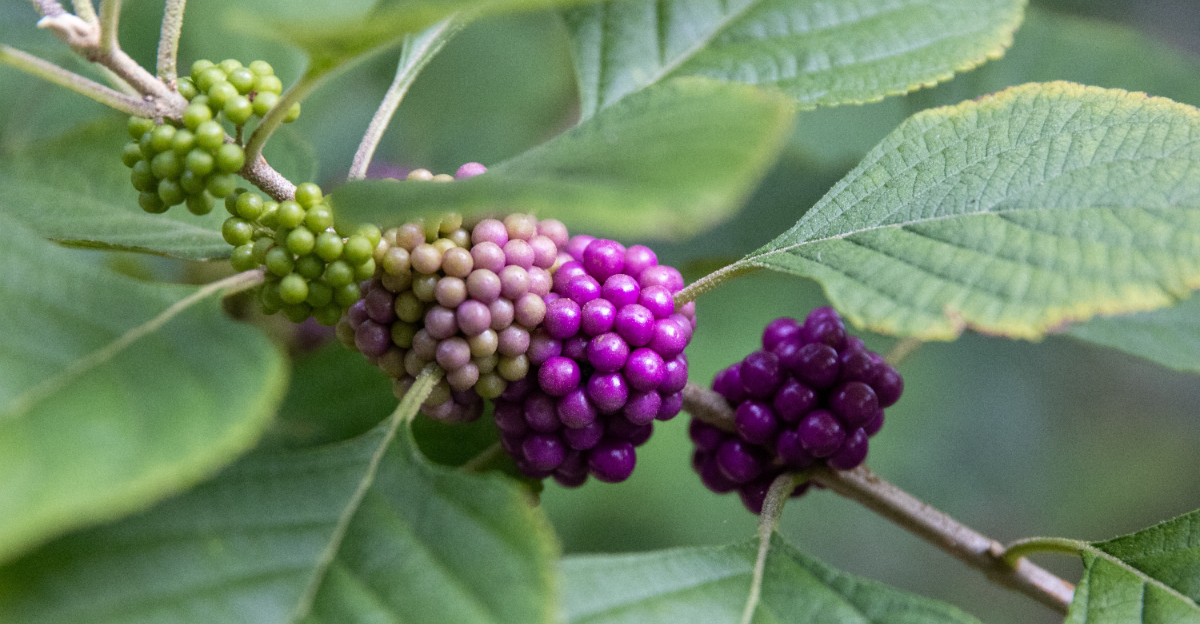
Most North Carolina gardeners have seen beautyberry at some point without paying it much attention. It tends to blend into the background through spring and summer, looking pleasant but unremarkable.
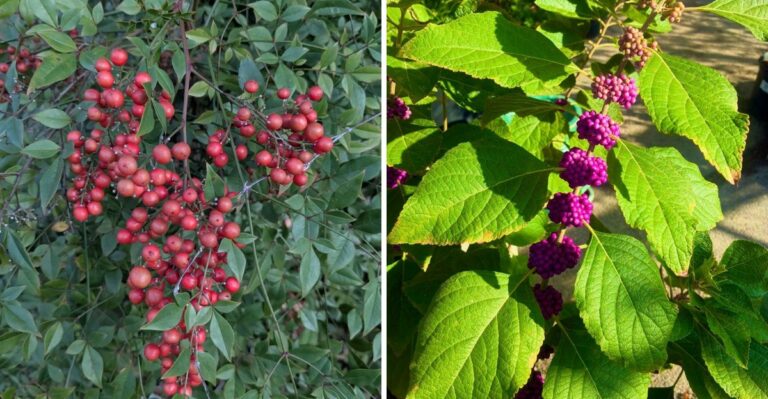
Then fall arrives and the whole plant changes. The clusters of vivid purple berries that appear along every stem are striking enough to stop people mid-walk and send them looking for a plant tag.
That fall display is only one reason beautyberry deserves more space in North Carolina gardens.
The other reasons have to do with how little it asks for, what it gives back to the ecosystem around it, and how well it handles the conditions that challenge most ornamental shrubs in this state.
It has been overlooked for a long time, and that is genuinely hard to explain once you see it performing at its best.
1. Stunning Summer Blooms
Before the famous purple berries even arrive, Beautyberry puts on a flower show that most gardeners completely overlook.
Starting in late spring and continuing through summer, the shrub produces clusters of tiny, delicate pink to lilac flowers that line its arching branches in tight rings.
They are not showy in the way a rose or hydrangea might be, but up close, they are genuinely beautiful and full of life.
Bees absolutely love these blooms. Honeybees, native bees, and butterflies regularly visit the flowers for nectar, making Beautyberry a quiet but important player in any pollinator-friendly garden.
Planting it near vegetable beds or flowering perennials can boost the overall pollinator activity across your whole yard.
For best blooming, give your Beautyberry a spot with full sun to partial shade and well-drained soil. It handles North Carolina clay reasonably well as long as drainage is decent.
Consistent moisture during the first season helps establish strong roots, which leads to better flowering in future years.
One thing worth knowing is that the flowers form on new growth each season. That means a hard late-winter pruning actually encourages more vigorous stems and, in turn, more flowers.
Many gardeners skip this step and still get a solid display, but a simple cutback in late February or early March can noticeably improve performance. Either way, this shrub earns its place in the summer garden long before the berries even think about showing up.
2. Spectacular Fall Fruit Display
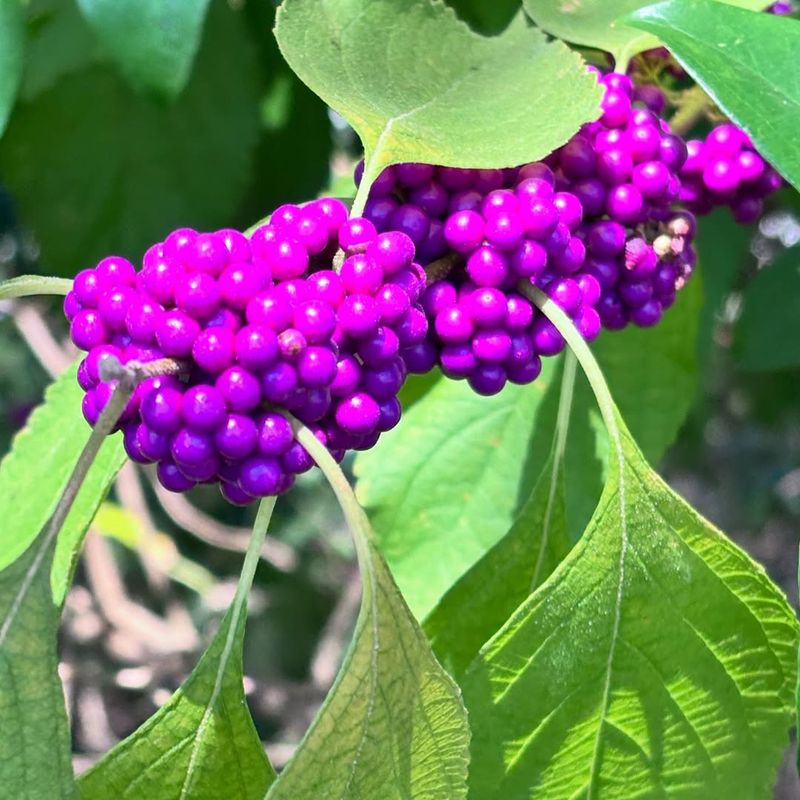
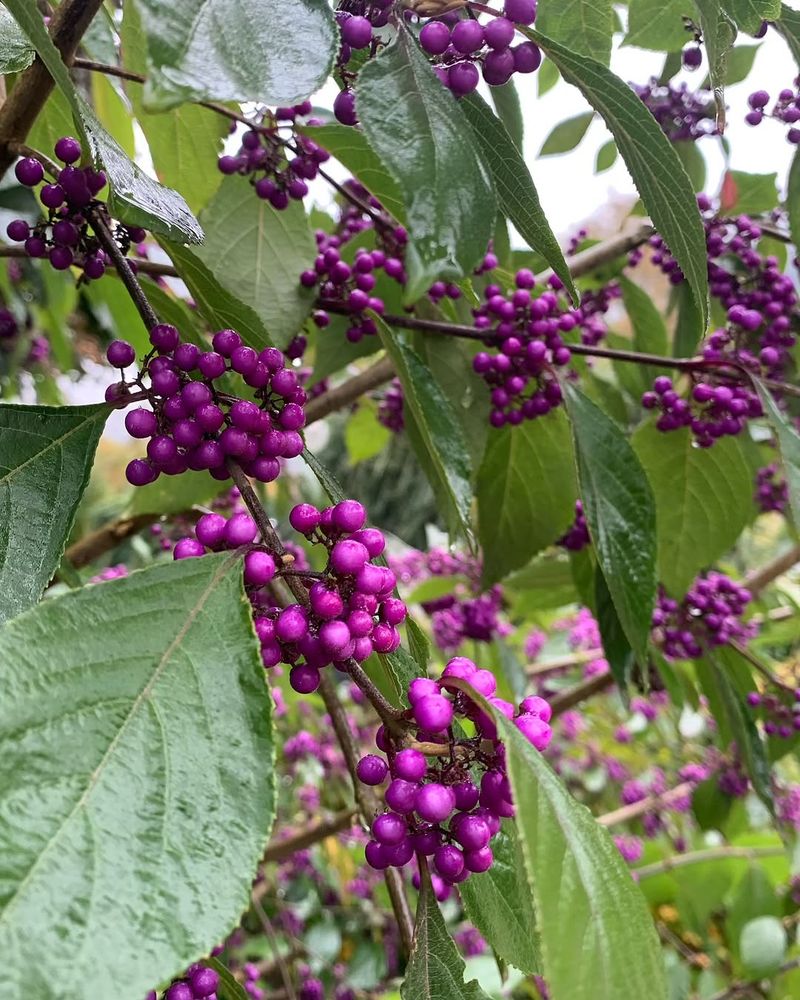
No shrub in the entire Southeast puts on a fall berry display quite like Beautyberry.
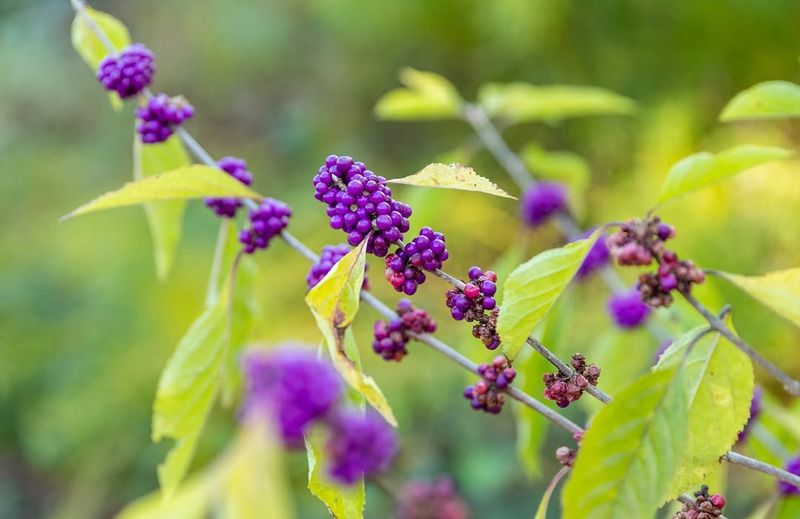
The berries emerge in late summer and reach their peak intensity in September and October, when those electric violet-purple clusters wrap tightly around every branch in a way that genuinely stops people in their tracks.
First-time visitors to a garden with mature Beautyberry often ask if the color is real, because it looks almost too vivid to believe.
From a wildlife standpoint, those berries are pure gold. More than 40 species of birds have been documented feeding on Beautyberry fruit, including mockingbirds, robins, brown thrashers, and cedar waxwings.
Leaving the berries on the shrub through fall and into early winter gives birds a reliable food source during a season when options start thinning out.
Your North Carolina Garden Changes Every Week. Your Plan Should Too.
Gardening in North Carolina changes quickly throughout the season. Every Friday you’ll receive a simple weekly plan showing exactly what to plant, prune, fertilize, harvest, and protect so you never miss the right timing.
The good news for gardeners is that heavy fruiting does not require much effort. Beautyberry sets fruit reliably with minimal fertilization.
Planting two or more shrubs near each other can improve berry production through cross-pollination, though a single plant will still produce a respectable display on its own.
Timing your pruning correctly matters here. Avoid cutting the shrub back in late summer or fall, since that would remove the very branches carrying the berries.
Save any major pruning for late winter before new growth begins. With that one simple habit, you protect the full seasonal display and give birds plenty of time to enjoy every last berry before spring arrives.
3. Low Maintenance Growth
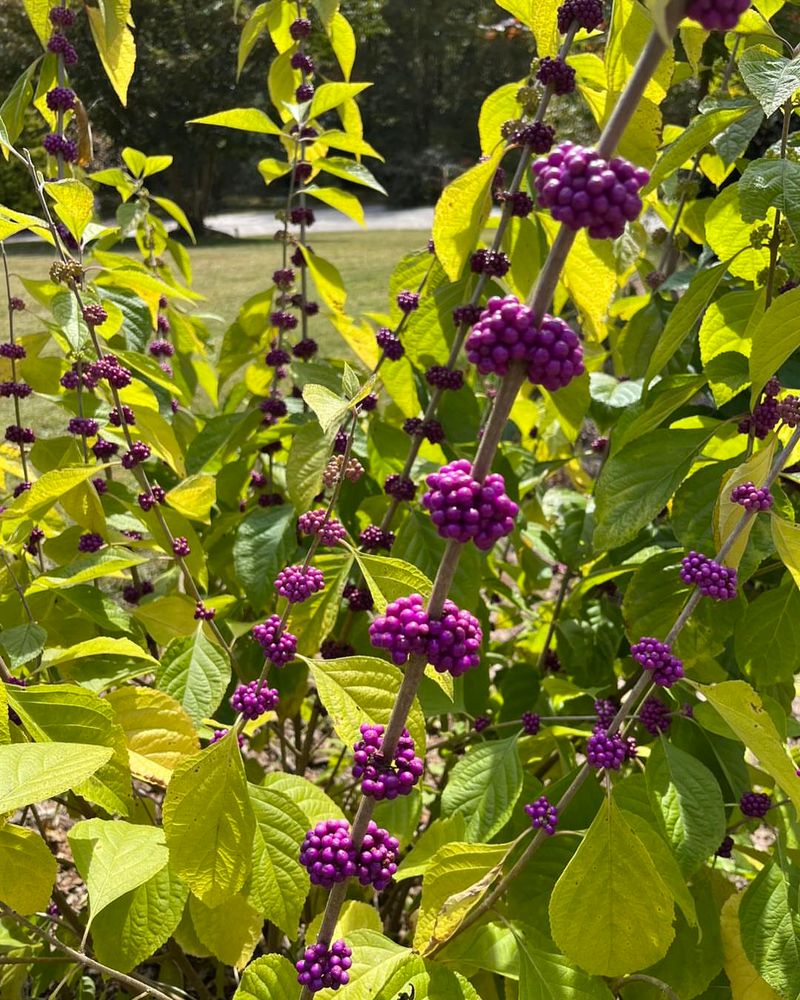
Gardening should be enjoyable, not exhausting. Beautyberry seems to understand that, because it asks very little from the people who grow it.
Once established in the landscape, this shrub handles poor soils, periods of drought, and neglect with a resilience that puts many fussier plants to shame. It is one of those rare plants that actually looks better the more you leave it alone.
North Carolina gardeners dealing with heavy clay soil will appreciate this especially. While Beautyberry prefers slightly moist, well-drained conditions, it adapts to clay as long as the planting hole drains reasonably well after rain.
A layer of organic mulch around the base helps moderate soil moisture and temperature, reducing the need for supplemental watering once the plant gets through its first full growing season.
Fertilizing is rarely necessary. If your soil is extremely poor or compacted, a light application of balanced slow-release fertilizer in early spring can give young plants a boost.
For established shrubs, the natural leaf litter breaking down around the base usually provides enough nutrients to keep growth healthy and consistent.
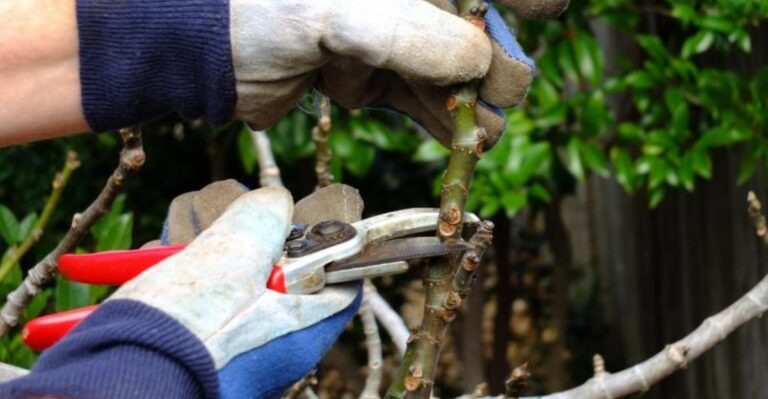
Pruning is the one maintenance task that genuinely pays off. Cutting stems back to about 12 inches from the ground in late winter encourages fresh, vigorous growth that produces the best flowers and berries.
Skip this step for a year or two and the shrub gets a bit leggy, but it bounces back quickly once you do trim it. Honestly, few shrubs are this forgiving and this rewarding at the same time.
4. Attracts Pollinators And Wildlife
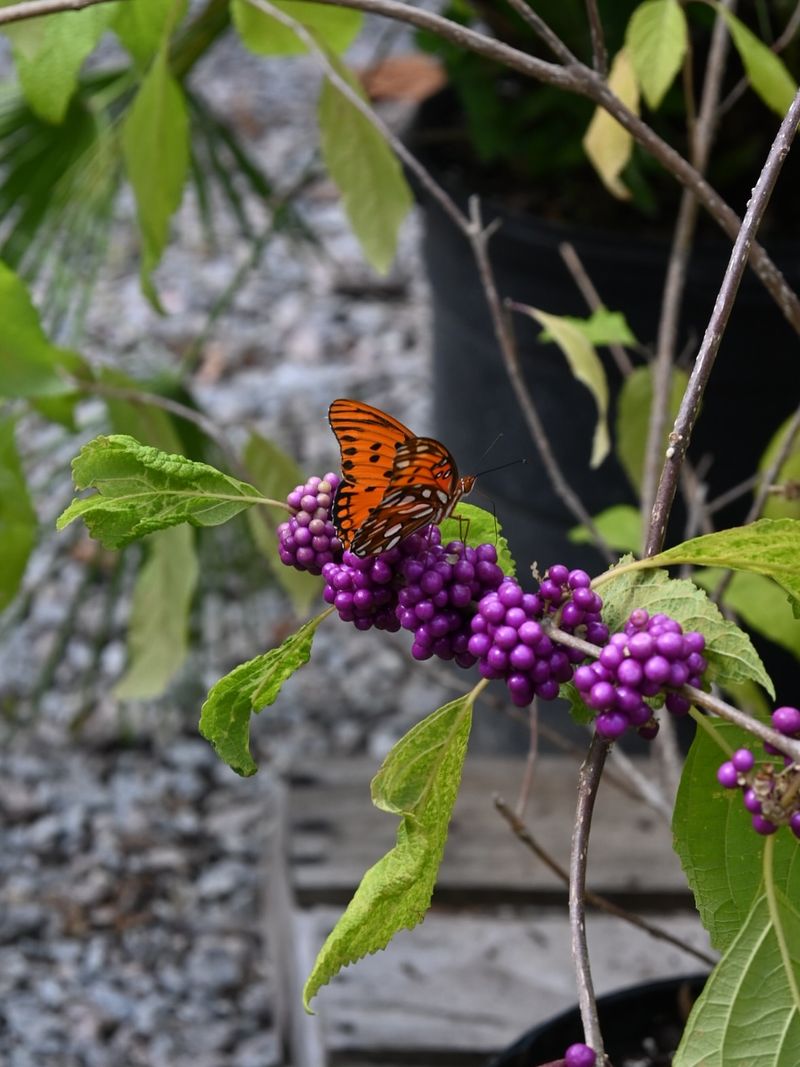
A single Beautyberry shrub can quietly transform a yard into a habitat. From the moment flowers open in early summer through the weeks when birds are stripping berries in late fall, this plant supports a surprising number of creatures throughout the growing season.
That kind of multi-season wildlife value is rare and genuinely worth celebrating.
During bloom time, native bees are the most frequent visitors. Sweat bees, bumblebees, and various small native bee species work the flowers steadily throughout the day.
Butterflies, including swallowtails and skippers, also stop by regularly. This activity benefits every other flowering plant in the garden by keeping pollinators active and abundant across the whole space.
When berries ripen, the crowd shifts. Birds become the main attraction, with species like the gray catbird, northern flicker, and white-throated sparrow joining the more common thrashers and mockingbirds.
White-tailed deer occasionally browse the foliage, and small mammals like foxes and raccoons have been observed eating fallen fruit as well.
For the best results, plant Beautyberry near the edge of a wooded area or along a fence line where birds feel safe moving between cover and the shrub.
Pairing it with other native plants like inkberry, native viburnums, or switchgrass creates a layered habitat that supports even more species.
Placing a birdbath nearby encourages birds to linger longer after feeding. Few plants give back to the local ecosystem as consistently and generously as this one does throughout the entire year.
5. Tolerates Heat And Humidity
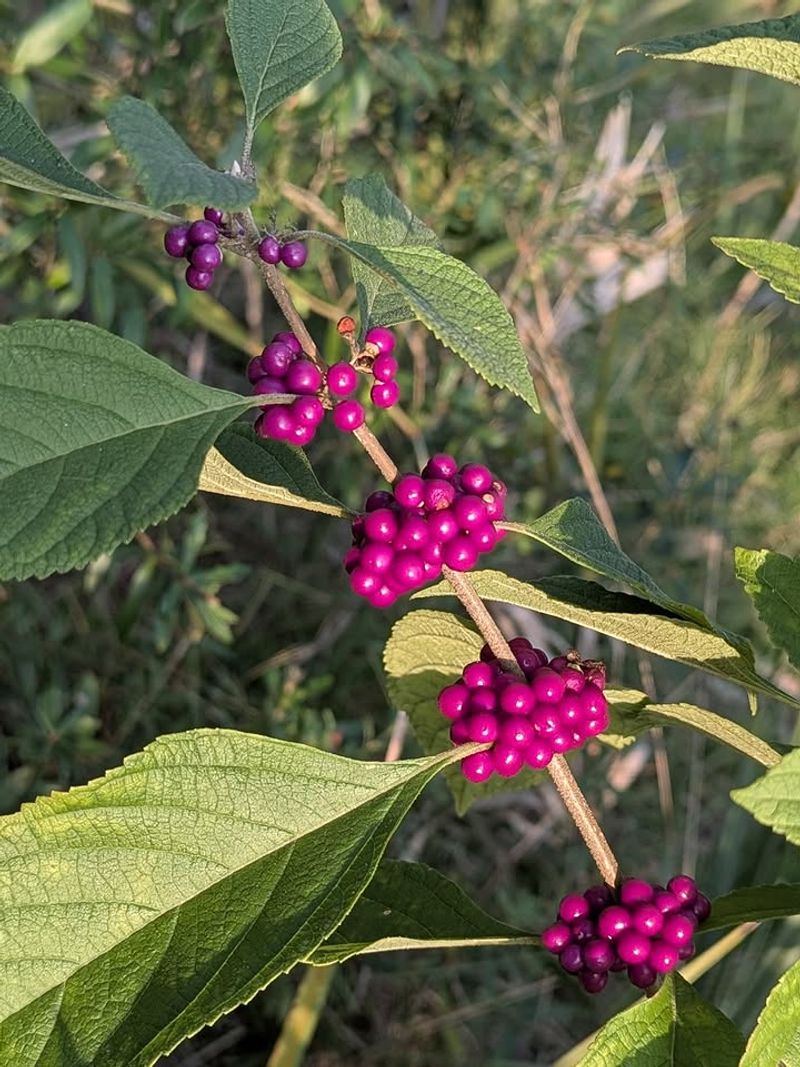
North Carolina summers are no joke. The combination of relentless heat, thick humidity, and stretches of dry weather between rain events pushes many ornamental shrubs to their limits.
Leaf scorch, wilting, and reduced flowering are common complaints from gardeners trying to maintain plants that simply were not built for this climate. Beautyberry was, and that difference shows clearly by midsummer.
As a true southeastern native, Callicarpa americana evolved in the hot, humid forests and woodland edges of the region. Its root system and physiology are naturally suited to the conditions that stress introduced ornamentals.
Even during prolonged heat waves, established Beautyberry holds its foliage well and continues developing flowers and young fruit without skipping a beat.
Mulching plays a meaningful role in keeping the plant comfortable during peak summer heat.
A 2 to 3 inch layer of shredded hardwood or pine bark mulch around the base insulates roots, retains soil moisture between rain events, and keeps soil temperatures from spiking.
Keep mulch a few inches away from the main stem to prevent moisture buildup against the bark.
Watering newly planted shrubs deeply once or twice a week during the first summer builds a strong, deep root system that handles future heat stress on its own. After the first full season, most Beautyberry plants need little to no supplemental irrigation even during dry spells.
Choosing a spot with morning sun and some afternoon shade in particularly hot, exposed areas can also help young plants establish more comfortably during their first year in the ground.
6. Works In Shade Or Sun
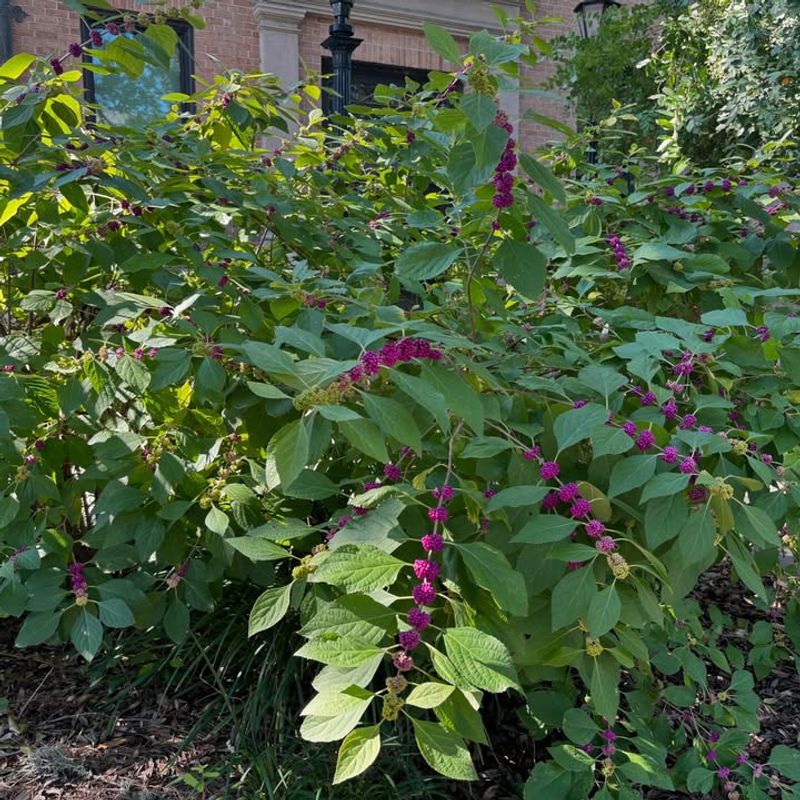
Finding a shrub that genuinely performs well in multiple light conditions is harder than it sounds. Most plants have a clear preference, and straying too far from that sweet spot usually means weaker growth, fewer flowers, or lackluster color.
Beautyberry is a refreshing exception to that rule, adapting comfortably to everything from full sun to fairly deep shade without losing its essential character.
In full sun, plants tend to grow more compactly, flower more heavily, and produce the richest berry clusters come fall. This makes sunny borders, open foundation plantings, and exposed hillsides great candidates for Beautyberry.
The trade-off is that full-sun plants may need more consistent watering during dry stretches, especially in the first couple of seasons while roots are still developing.
In partial shade, which is probably the most common situation in North Carolina yards with established trees, Beautyberry still performs admirably.
Growth becomes slightly more open and arching, which actually creates a graceful, layered look that works beautifully in naturalized woodland gardens.
Berry production may be slightly lighter than in full sun, but the display is still genuinely impressive.
Spacing matters in both situations. Give each plant about 4 to 6 feet of space on all sides to allow for its natural arching form.
Crowding Beautyberry against walls or other large shrubs restricts airflow and limits the visual impact of the berry display.
With room to spread naturally, this plant fills its space beautifully and becomes one of the most versatile and adaptable choices available to North Carolina gardeners of all skill levels.
7. Natural Screening And Borders
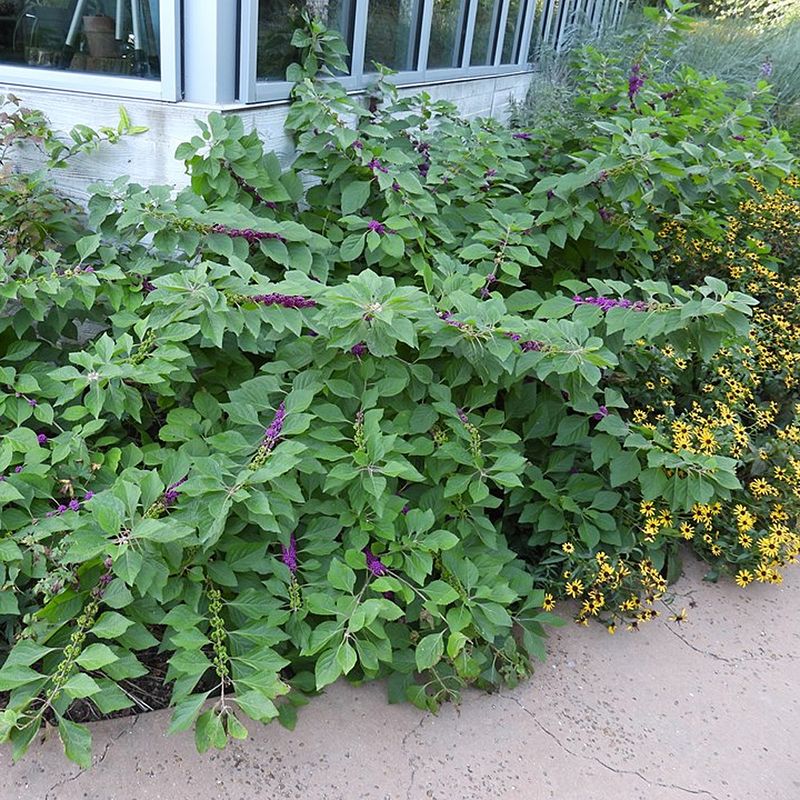
Privacy in the garden does not always have to come from a fence. Beautyberry grows quickly enough and fills in densely enough to serve as a genuinely effective natural screen, especially when planted in groups or staggered rows.
By its third or fourth year in the ground, a well-placed planting can reach 4 to 6 feet tall and nearly as wide, creating a soft, living border that looks far more appealing than any wooden structure.
Along property lines, Beautyberry works particularly well as part of a layered planting.
Combine it with taller native trees like serviceberry or native hollies behind it and lower groundcovers like native ferns in front, and you create a wildlife corridor that also defines the edge of your space beautifully.
Birds use these layered plantings as travel routes and shelter throughout the year. For naturalized areas at the back of the garden or along woodland edges, Beautyberry practically manages itself.
Its natural arching habit fills irregular spaces without looking forced or overly manicured, which gives naturalistic garden designs an authentic, relaxed character.
The seasonal changes from green foliage to pink blooms to purple berries to bare winter stems add visual interest through every month of the year.
Pruning for screening purposes is simple. A hard cutback in late winter keeps plants full and encourages dense new growth.
If you want maximum height for screening, you can skip the annual cutback every other year, allowing the plant to add a few extra feet before refreshing it.
Either approach keeps Beautyberry productive, attractive, and useful as a structural element in the North Carolina garden.
8. Long-Term Garden Value
Some plants look great the first year and slowly disappoint after that. Beautyberry works in the opposite direction, getting more impressive and more valuable with every passing season.
As the root system matures and the plant settles into its spot, flower production increases, berry clusters grow larger and more abundant, and the overall form becomes more graceful and confident. Patience with this shrub genuinely pays off.
The multi-season interest is one of its strongest long-term arguments. Spring brings fresh, bright green foliage that fills space quickly.
Summer adds soft pink blooms that support pollinators. Fall delivers that unforgettable burst of metallic purple berries that no other shrub in the Southeast can match.
Even in winter, the bare arching stems have a quiet architectural quality that adds structure to the dormant garden.
From a practical standpoint, Beautyberry also holds its value because it rarely needs replacing.
Unlike some fast-growing shrubs that become woody and sparse after a few years, Beautyberry responds well to rejuvenation pruning and comes back stronger each time.
A shrub that was planted ten years ago can look just as vigorous and attractive as one planted last spring, provided it gets that late-winter cutback when needed.
For North Carolina gardeners investing in their landscape for the long haul, this native shrub represents real, lasting value. It supports local wildlife, handles the climate without complaint, and rewards minimal effort with maximum seasonal impact.
Adding even one or two plants to the yard now means enjoying their full potential for many years ahead, making every dollar and every hour of care completely worth it.