The Best Native Pennsylvania Trees For Small Backyards That Stay Under 25 Feet
Choosing a tree for a small Pennsylvania backyard is one of those decisions that is easy to get wrong and difficult to undo.
Too many small yards end up with trees that seemed manageable at the nursery and became a completely different situation five years later, requiring aggressive pruning, causing root damage, or simply overwhelming the space they were planted in.
Native Pennsylvania trees that stay genuinely compact offer a smarter path, bringing real beauty, seasonal interest, and ecological value without the long-term headaches.
Trees that stay under 25 feet fit the scale of a residential backyard without taking it over, and Pennsylvania natives in that size range are better suited to local soil and climate conditions than almost any non-native ornamental you would find at the average garden center.
Several of them put on a spectacular spring bloom, and a few carry the yard through fall and winter in ways most people would not expect from a smaller tree.
1. Serviceberry
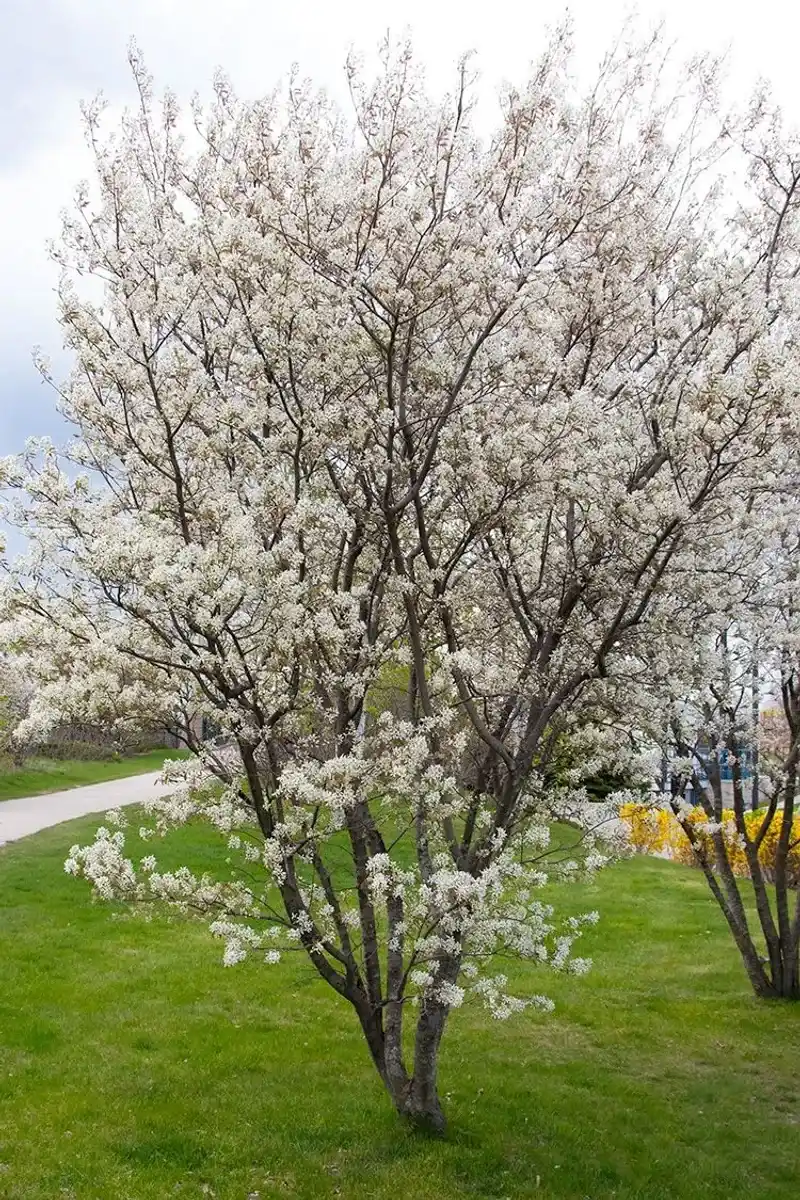
Walk past a serviceberry tree in early spring and you might think it is snowing flowers. This compact native tree bursts into bloom before most other trees even wake up, covering its branches with delicate white blossoms that seem to glow in the cool spring air.
It is one of the earliest flowering native trees in Pennsylvania, which makes it a real showstopper when the rest of the yard still looks bare.
Serviceberry typically grows between 15 and 25 feet tall, which makes it a fantastic fit for smaller backyards. It can grow as a single-trunk tree or a multi-stemmed shrub depending on how you train it.
Either way, it stays manageable and rarely needs heavy pruning to keep it looking tidy. After the flowers fade, small reddish-purple berries appear in early summer. These berries are edible and taste a bit like blueberries, sweet with a hint of almond.
Birds absolutely love them, so expect robins, cedar waxwings, and orioles to visit your yard regularly. If you want some for yourself, you may need to act fast before the birds get there first.
Fall brings another round of color when the leaves turn shades of orange, red, and yellow. Serviceberry earns its keep in every season, offering something interesting to look at year-round.
It grows well in full sun to partial shade and handles a range of soil types, including clay-heavy Pennsylvania soils. Plant it near a patio or window where you can enjoy its seasonal show up close.
2. Eastern Redbud
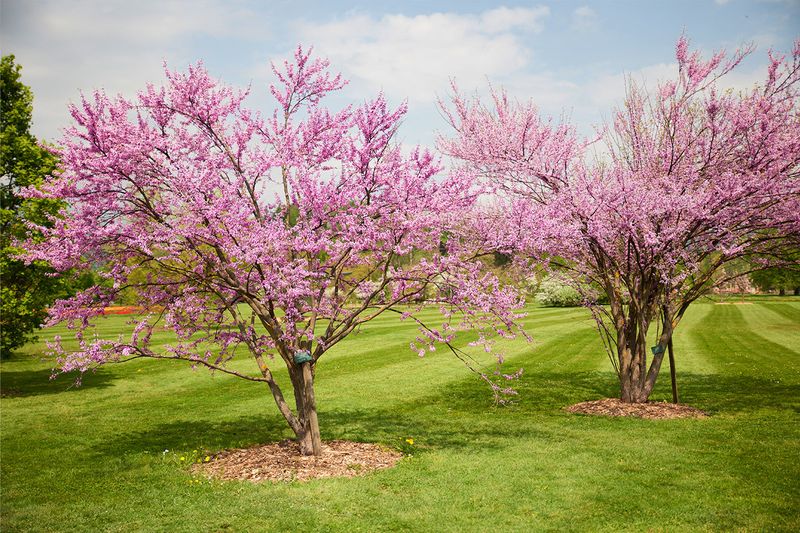
Few sights in early spring are as jaw-dropping as an Eastern Redbud in full bloom. Before a single leaf has opened, the branches explode with hundreds of tiny magenta-pink flowers that grow directly on the bark.
It looks almost unreal, like someone painted the tree with a brush dipped in bright pink. Neighbors will definitely stop and stare.
Eastern Redbud is a true Pennsylvania native that typically tops out between 20 and 25 feet tall with a graceful, spreading canopy. Its naturally rounded shape means it fits beautifully into small yards without crowding fences or structures.
Your Pennsylvania Garden Changes Every Week. Your Plan Should Too.
Gardening in Pennsylvania changes quickly throughout the season. Every Friday you’ll receive a simple weekly plan showing exactly what to plant, prune, fertilize, harvest, and protect so you never miss the right timing.
It also grows well under taller trees, making it a smart choice if your yard already has some shade.
Once the blooms fade, heart-shaped leaves emerge in a lovely reddish-green that matures to deep green through summer. In fall, those same leaves turn golden yellow before dropping.
The seasonal changes keep the tree looking fresh and interesting all year long, not just during its famous spring show.
Did you know that Eastern Redbud flowers are actually edible? They have a slightly tangy, floral flavor and can be tossed into salads for a fun pop of color.
Beyond that quirky detail, redbud is also a valuable food source for native bees, especially long-tongued bees that emerge early in the season. Plant it in full sun to light shade and well-drained soil.
It is drought-tolerant once established, so it handles Pennsylvania summers without much extra care from you.
3. Flowering Dogwood
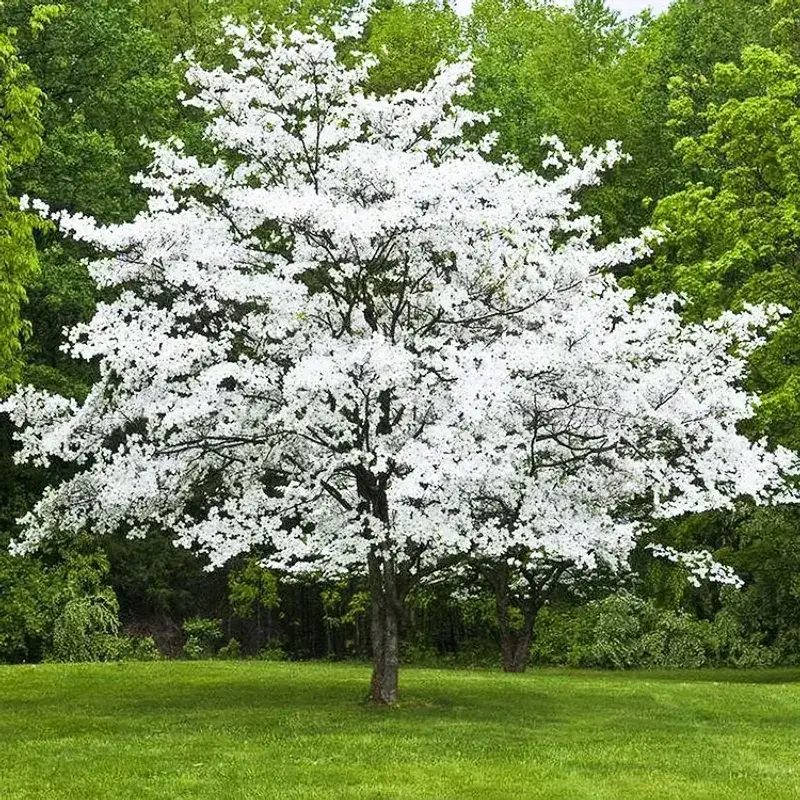
Flowering Dogwood is the kind of tree that makes a yard feel like it belongs in a nature magazine. Its wide, layered branches spread out horizontally like shelves, giving it a sculptural look even in winter when the leaves are gone.
Come spring, those branches get covered in large white or pink flower-like bracts that last for weeks. It is one of the most beloved native trees in the eastern United States for good reason.
In a small backyard, Flowering Dogwood is nearly perfect. It usually grows between 15 and 20 feet tall and spreads about as wide, creating a beautiful canopy without overwhelming the space.
It actually prefers some afternoon shade, which makes it a great option for yards that do not get full sun all day long. Tucking it near the edge of a larger tree or along a fence line works wonderfully.
Wildlife absolutely relies on this tree. The bright red berries that appear in fall are a critical food source for over 35 species of birds, including woodpeckers, bluebirds, and thrushes.
Deer browse the foliage, and native bees visit the flowers in spring. Planting a Flowering Dogwood is essentially setting up a free wildlife feeding station that looks stunning at the same time.
One thing to keep in mind is that Flowering Dogwood can be susceptible to dogwood anthracnose fungus in wet, shaded locations. To reduce that risk, plant it where air circulates well and avoid overhead watering.
With proper placement, it thrives for decades and rewards you with four-season beauty that never gets old.
4. Witch Hazel
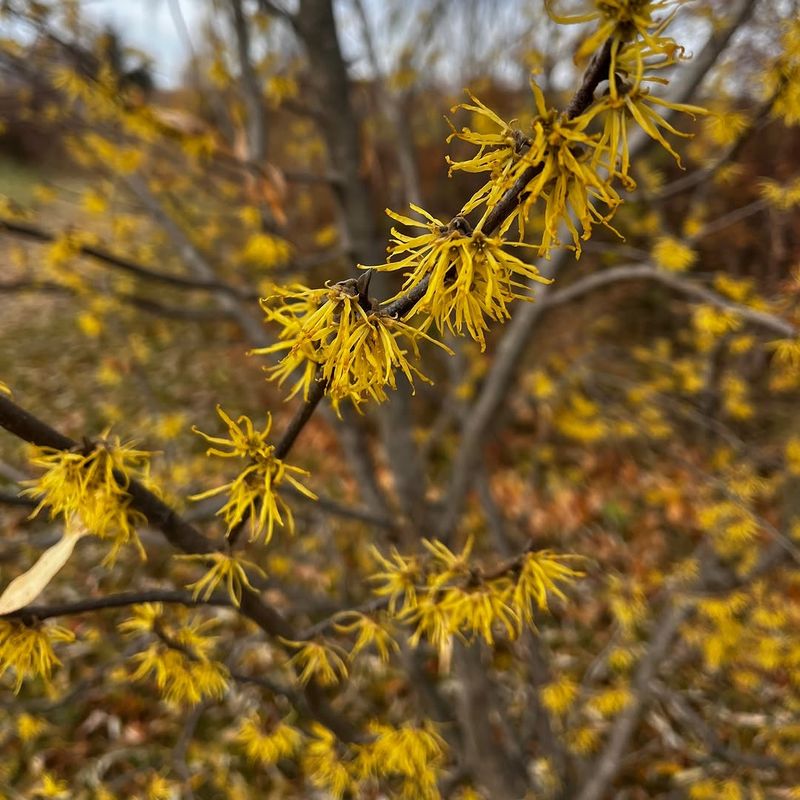
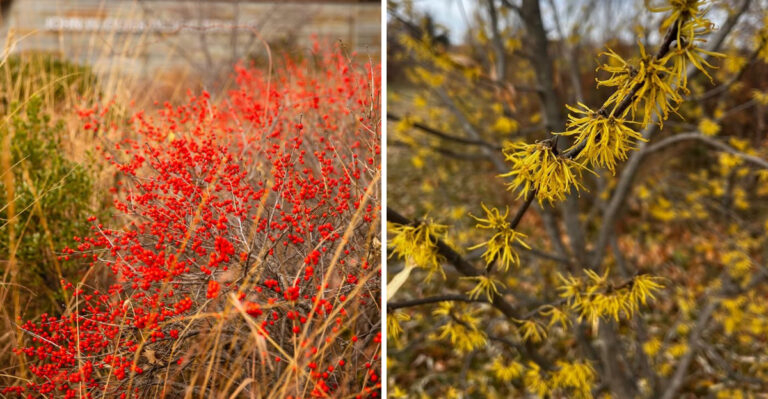
Imagine stepping outside on a cold November day and finding a tree covered in bright yellow flowers. That is exactly what Witch Hazel does, and it never gets old.
While every other tree in the yard has already dropped its leaves and gone dormant, Witch Hazel puts on a cheerful late-season show with spidery, ribbon-like blooms that almost look like they belong in a Dr. Seuss book.
It is one of the last native plants to flower in Pennsylvania each year. American Witch Hazel is a native shrub-tree that typically grows between 15 and 20 feet tall. It has a relaxed, open form with arching branches that give it a natural, woodland feel.
It fits easily into smaller yards and works especially well planted along a property edge or near a woodland garden where its loose shape looks intentional rather than unruly.
Beyond its unusual bloom time, Witch Hazel has a fascinating history. Native Americans used its bark and leaves medicinally for centuries, and distilled witch hazel extract is still sold in pharmacies today as a skin toner.
That long track record of usefulness says a lot about how remarkable this plant really is. Witch Hazel grows best in part shade to full sun and tolerates moist soil, which is great news for Pennsylvania yards with low-lying or slightly wet areas.
It also provides good fall color, with leaves turning yellow to orange before the flowers appear.
Pollinators that are still active in late fall, including certain moths and flies, rely on its blooms as a late food source. It is a truly underappreciated native gem.
5. American Hornbeam
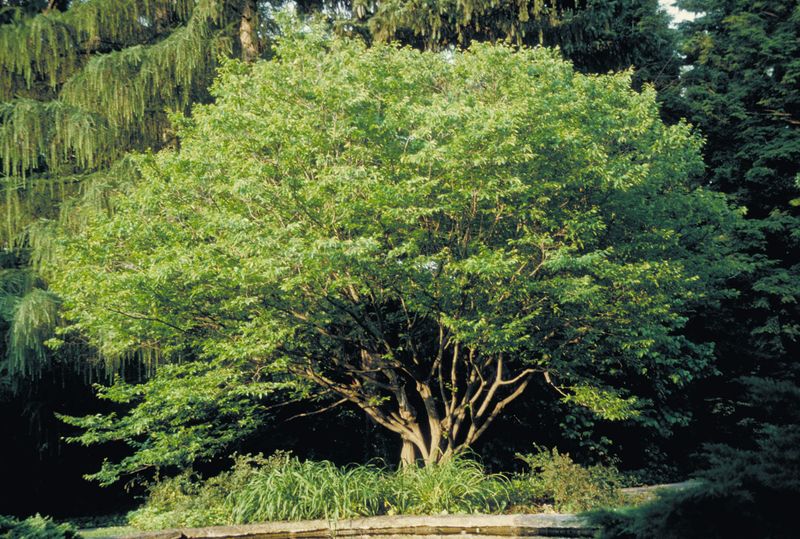
There is something almost sculptural about American Hornbeam. Run your hand along its smooth gray bark and you will notice it ripples and flexes like muscle under the surface, which is exactly why it earned the nickname “musclewood.”
It is one of those trees that looks interesting even in the middle of winter when there is nothing else going on in the yard. That kind of year-round visual appeal is hard to find.
American Hornbeam is a slow-growing understory native that typically reaches 20 to 25 feet at maturity. Its naturally compact size and dense, multi-stemmed form make it an excellent choice for small backyards where you want structure without bulk.
Because it evolved under the forest canopy, it handles shade better than almost any other native tree, making it ideal for yards that do not get much direct sunlight.
In spring, it produces small catkins that add a delicate texture to the tree before the leaves emerge. The foliage is a rich, dark green through summer, then shifts to orange, red, and yellow in fall.
Birds and small mammals feed on the nutlets that ripen in late summer, so you will have plenty of wildlife activity even in a compact yard.
One of the best things about American Hornbeam is how low-maintenance it really is. It rarely needs pruning, does not have serious pest or disease problems, and once established, it handles Pennsylvania winters without any fuss.
Plant it in moist, well-drained soil with some shade and it will quietly thrive for generations. It is the kind of tree that rewards patience and gets better every single year.
6. Fringe Tree
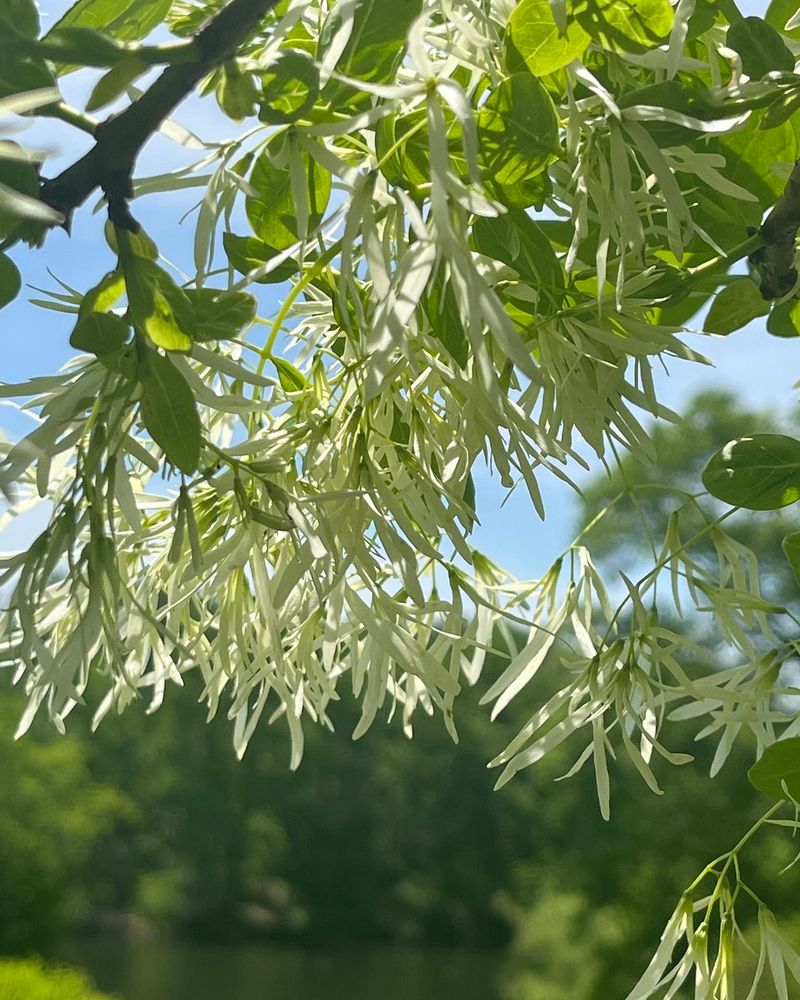
If you have never seen a Fringe Tree in bloom, you are in for a treat. In late spring, it erupts in clouds of feathery white flowers that hang from the branches like soft, fragrant fringe.
The effect is dreamy and a little wild at the same time, like the tree decided to dress up for a celebration. It is one of the most visually dramatic native trees you can plant in a small Pennsylvania yard.
American Fringe Tree, also called Chionanthus virginicus, typically grows 12 to 20 feet tall with a rounded, spreading habit. That modest mature size is one of its biggest selling points for compact backyards.
It can grow as a large shrub or a small tree depending on how it is pruned, giving you flexibility to shape it to fit your space. It tends to grow slowly, so you will not have to worry about it outgrowing its spot anytime soon.
After the flowers fade, female trees produce small blue-black fruits that resemble tiny olives and ripen in late summer. Birds, especially songbirds and thrushes, eagerly seek out these fruits during fall migration.
Planting a Fringe Tree near a window or patio means you get front-row seats to all that wildlife activity.
Fringe Tree is adaptable to a range of soil conditions, including moist soils near streams or low areas of the yard. It grows well in full sun to partial shade and has excellent resistance to pests and disease.
Fall foliage turns a clear, bright yellow that closes out the season on a cheerful note. For a small yard that needs big personality, Fringe Tree delivers every single time.