These Georgia Plants Smother Weeds Without Chemicals
Weeds have a way of showing up exactly where they are least wanted. One week a garden bed looks neat and under control, and the next it seems like unwanted growth has appeared from every direction.
Keeping up with the problem can take far more time than many people expect, especially during periods of warm weather when everything seems to grow at once.
In Georgia, long growing seasons can make this challenge even more frustrating.
A freshly cleaned area does not always stay that way for long, which is why many gardeners start looking for solutions that require less constant effort.
Pulling weeds again and again can quickly become one of the most time consuming parts of garden maintenance.
Some plants offer a different approach. As they spread and fill available space, they create dense coverage that helps limit opportunities for weeds to gain a foothold, making problem areas easier to manage over time.
1. Ajuga Turns Bare Patches Into Solid Coverage
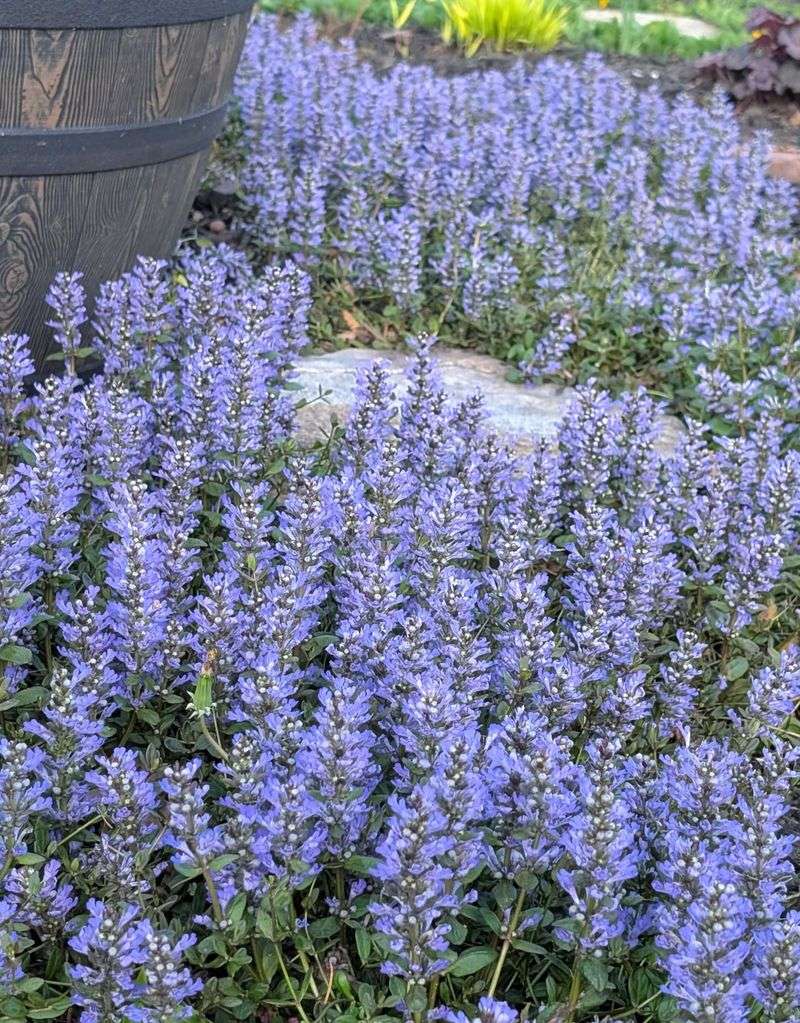
Bare soil is basically an open invitation for weeds. Ajuga, also called bugleweed, accepts that challenge and wins.
It forms a low, dense carpet that blocks light before weed seeds even get a chance to sprout.
Ajuga works especially well in shaded or partially shaded spots where grass refuses to grow. It spreads by sending out runners that root quickly into surrounding soil.
Within one growing season, a handful of plants can cover a surprisingly large area.
Leaf color varies by variety. Some are deep burgundy, others have a bronze-green mix, and a few are variegated with cream edges.
Blue flower spikes appear in spring and attract pollinators without any effort on your part.
Spacing plants about 6 to 12 inches apart gives them room to fill in without crowding each other too early. Well-draining soil helps prevent crown rot, which can occur in soggy conditions.
Ajuga handles Georgia’s summer heat reasonably well, though it prefers spots that get afternoon shade.
Once established, it needs minimal watering and rarely needs fertilizing. Trim back spent flower stalks after blooming to keep the mat looking tidy.
Dividing clumps every few years keeps growth vigorous and prevents thinning in the center.
Ajuga is a reliable, low-effort option for anyone tired of weeds taking over shaded corners of the yard.
2. Mondo Grass Covers Narrow Spaces With Ease
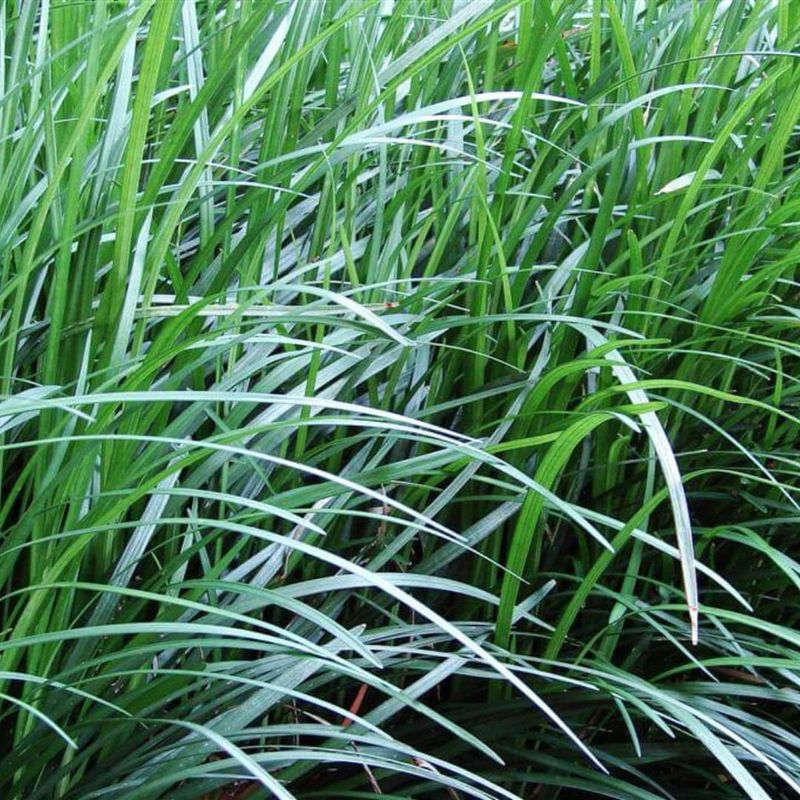
Tight spaces between pavers, fences, and walkways are notoriously hard to maintain. Mondo grass fits into those narrow gaps and fills them in cleanly.
Once it settles, weeding those spots becomes a distant memory.
Mondo grass grows slowly compared to some ground covers, but that slow pace works in its favor. It stays compact, never gets invasive, and holds its shape without constant trimming.
Dwarf varieties stay under 4 inches tall, making them ideal for spots where nothing else fits neatly.
Shade tolerance is one of its strongest qualities. Under dense tree canopies or along shaded building foundations, mondo grass performs consistently.
It handles moderate drought once established, though it appreciates occasional watering during extended dry periods.
Your Georgia Garden Changes Every Week. Your Plan Should Too.
Gardening in Georgia changes quickly throughout the season. Every Friday you’ll receive a simple weekly plan showing exactly what to plant, prune, fertilize, harvest, and protect so you never miss the right timing.
Plant clumps about 6 to 8 inches apart for quicker coverage, or space them wider if budget is a concern. It takes a full season or two to fully knit together, so patience matters here.
Pulling weeds manually during that establishment period keeps competition low while the plants spread.
Mondo grass handles foot traffic poorly, so avoid placing it in areas where people walk regularly. Use it as a visual border, a gap filler between stepping stones, or a low-maintenance alternative beneath shrubs.
Black mondo grass adds a dramatic dark tone to garden designs and works the same way.
Overall, it rewards patience with clean, lasting coverage in spots other plants struggle to handle.
3. Liriope Fits Naturally Along Garden Edges
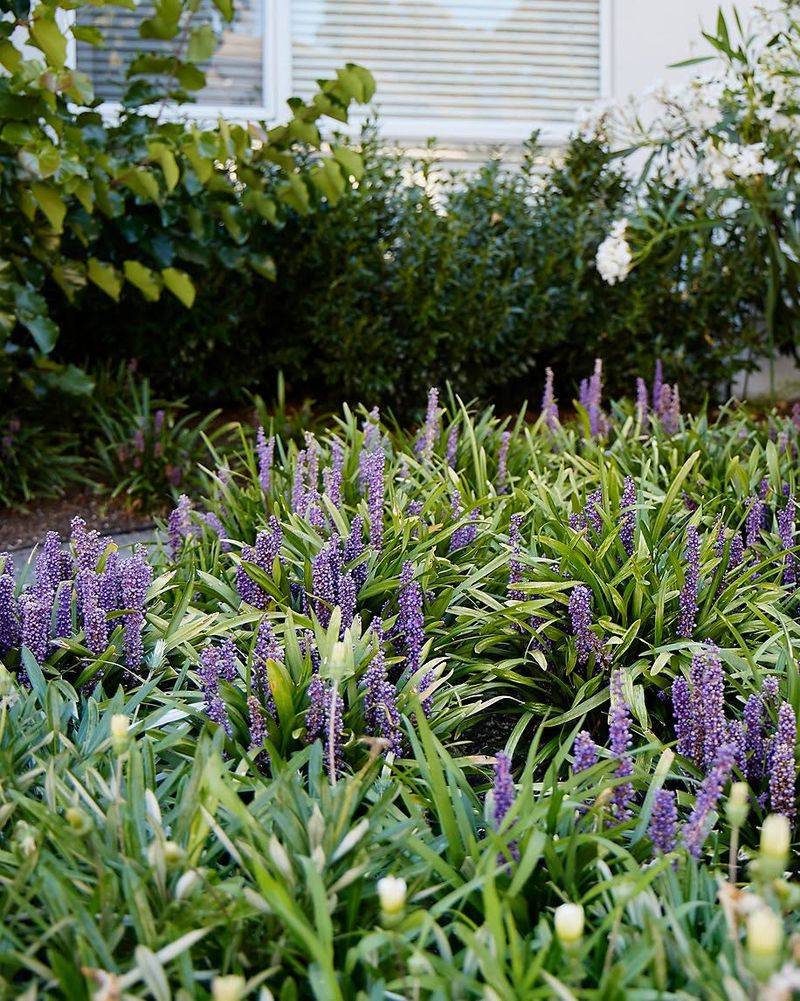
Garden edges are where weeds love to sneak in. Liriope holds that line firmly.
It forms a clean, grass-like border that keeps weeds from spreading between beds and lawn, without requiring any chemical help.
Also called lilyturf, liriope is one of the most dependable edging plants in the Southeast. It tolerates heat, humidity, and occasional drought better than most ornamental grasses.
Purple or white flower spikes appear in late summer, adding seasonal interest without any extra effort.
Liriope spreads slowly through underground rhizomes, gradually thickening into a solid mass over a few seasons. It does not run aggressively, which makes it easy to manage along borders where precise edges matter.
Planting 12 inches apart gives it enough room to fill in within two growing seasons.
Soil preference leans toward well-drained ground, but liriope tolerates clay reasonably well, which is a real advantage in many parts of the region. Shaded spots under trees or along north-facing foundations suit it just as well as full sun positions.
Cut the foliage back to about 3 inches in late winter before new growth emerges. That simple step keeps plants looking fresh and prevents old, tattered leaves from hiding new growth.
Fertilizing once in spring with a balanced slow-release product supports steady development without pushing excessive growth.
Liriope is low-maintenance, long-lived, and genuinely reliable for anyone wanting clean, defined edges that resist weed pressure year after year.
4. Pachysandra Works Well Beneath Trees And Shrubs
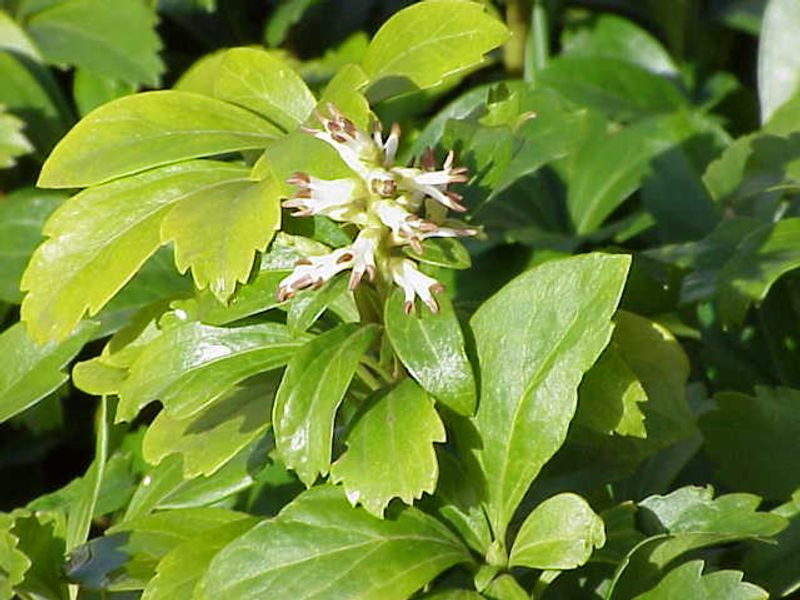
Shaded garden beds beneath large trees are notoriously bare and weedy. Pachysandra changes that equation.
It fills those spaces with dense, glossy foliage that blocks weed growth without needing sunlight to thrive.
Pachysandra terminalis is a slow-spreading evergreen that tops out around 6 to 10 inches tall. It spreads through underground stems called stolons, gradually expanding outward from each plant.
A single planting fills in over two to three seasons without becoming invasive or hard to manage.
Shade is where pachysandra performs best. Full sun causes leaf scorch, especially during hot Southern summers.
Planting it beneath oaks, maples, or large shrubs gives it the filtered light it prefers while putting it exactly where weed pressure is hardest to manage manually.
Soil moisture matters more during the first season than after establishment. Consistent watering in year one supports strong root development.
After that, plants tolerate moderate dry spells, though extended drought in sandy soil may require occasional irrigation.
Space transplants about 6 to 12 inches apart for quicker coverage. Adding a light layer of mulch between plants during establishment keeps soil moist and suppresses weeds while the pachysandra fills in.
Avoid heavy mulch piled against the stems, which can encourage rot at the base.
Pachysandra rarely needs pruning or fertilizing once established. A slow-release fertilizer applied in early spring keeps foliage looking healthy and supports steady spreading without pushing excessive or unmanageable growth.
5. Creeping Raspberry Takes The Pressure Off Sloped Areas
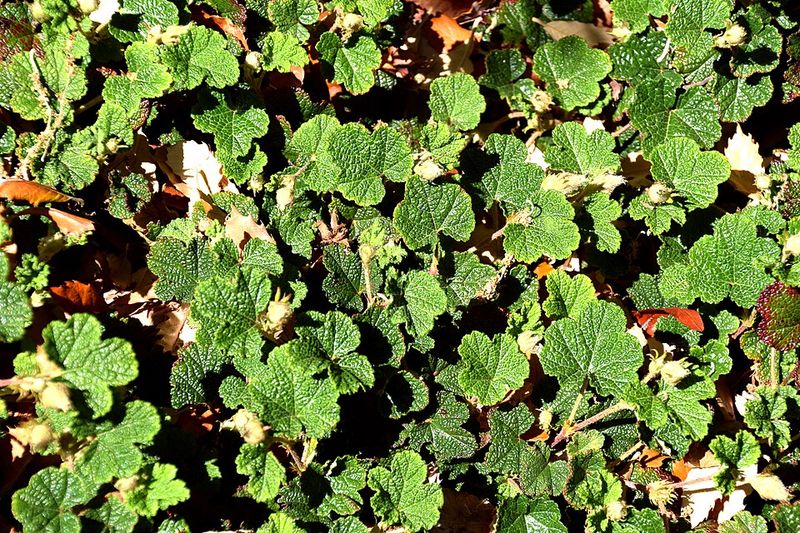
Slopes are a headache. Erosion, runoff, and relentless weed pressure make them some of the hardest spots to maintain in any yard.
Creeping raspberry handles all three problems at once, which is a rare quality in a single plant.
Rubus pentalobus is a low-growing, trailing plant with attractive, textured leaves that resemble miniature raspberry foliage. Stems root as they spread, anchoring soil and reducing erosion on grades that would otherwise wash out during heavy rain.
Coverage builds steadily across a slope without requiring replanting.
Small white flowers appear in spring, followed by tiny edible fruits that birds enjoy. Beyond those seasonal highlights, the plant stays low-key and manageable.
It does not climb structures or become a nuisance in the way some spreading plants can.
Full sun to partial shade suits creeping raspberry well. It adapts to a range of soil types, including the clay-heavy ground common throughout much of the region.
Good drainage is important on slopes, and this plant generally handles that condition naturally due to its preferred growing sites.
Spacing transplants 18 to 24 inches apart on slopes gives each plant room to expand while covering ground efficiently. Watering during the first summer keeps plants from stressing before roots establish.
After that, rainfall typically handles irrigation needs in most parts of the Southeast.
For problem slopes that seem impossible to plant, creeping raspberry is one of the more practical and underused solutions available to home gardeners.
6. Asiatic Jasmine Covers Ground Where Weeds Often Appear
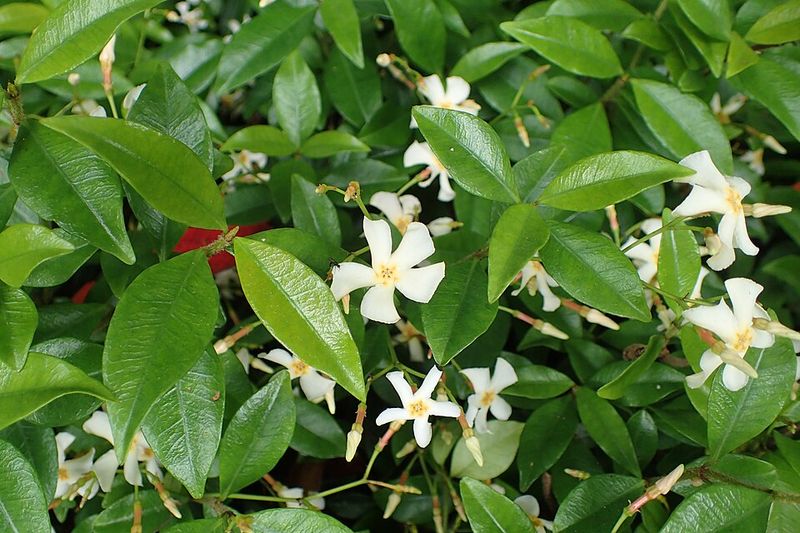
Weeds under trees are a constant frustration. Roots compete, shade limits options, and most plants simply fail in those conditions.
Asiatic jasmine handles all of that without complaint and covers the ground densely enough to shut weeds out almost completely.
Trachelospermum asiaticum is a woody, evergreen vine used as a ground cover rather than a climber. It stays low, typically under 12 inches tall, and spreads outward steadily.
Once it knits together into a solid mat, very little gets through.
Establishment takes patience. The first season, plants focus on root development more than visible spread.
Water regularly during that period and pull any weeds that appear while coverage is still thin. By the second or third year, maintenance drops significantly.
Heat and humidity suit Asiatic jasmine well. It handles Georgia’s summers without wilting and stays evergreen through mild winters.
Hard freezes can damage foliage, but plants typically bounce back as temperatures rise in spring.
Spacing plants 12 to 18 inches apart balances cost with coverage speed. Closer spacing fills in faster but requires more plants upfront.
Mulching between newly planted starts suppresses weeds during the establishment phase and retains soil moisture effectively.
Avoid planting near structures with wood siding, since the vining stems can work into gaps over time. Use it in open beds, slopes, or large areas under shade trees where other ground covers struggle to perform consistently.
7. Frogfruit Gradually Covers Open Ground
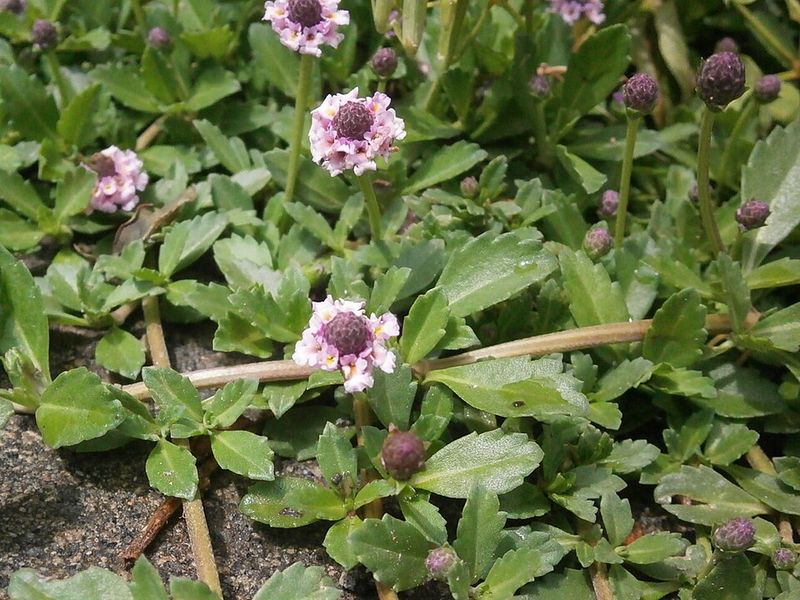
Not every ground cover gets the attention it deserves. Frogfruit is one of those underrated options that quietly does excellent work while most gardeners overlook it completely.
Once you see how it fills open ground, that changes fast.
Phyla nodiflora is a native, low-growing plant that spreads by rooting at stem nodes wherever they contact soil. It stays flat, rarely exceeding 3 inches in height, and forms a tight mat that shades out weed seeds effectively.
Tiny white and pink flowers appear throughout the warmer months, which pollinators genuinely appreciate.
Heat and sun are where frogfruit performs best. It handles dry periods better than many ground covers and adapts well to sandy or poor soil.
Clay soil with decent drainage also works. It is not particularly fussy about soil fertility once established.
Spreading speed is moderate. Expect visible progress within one growing season, but full coverage of a large open area may take two seasons depending on spacing and conditions.
Planting 12 to 18 inches apart and watering consistently during the first summer supports quicker establishment.
Frogfruit tolerates light foot traffic better than most ornamental ground covers. Placing it in areas where occasional walking occurs is reasonable, though heavy or constant traffic will thin it out over time.
Mowing it once or twice a year keeps the mat tidy without harming the plant.
For open, sunny spots in Georgia yards where nothing else seems to stick, frogfruit is absolutely worth trying.
8. Creeping Jenny Moves Into Spaces Weeds Usually Claim
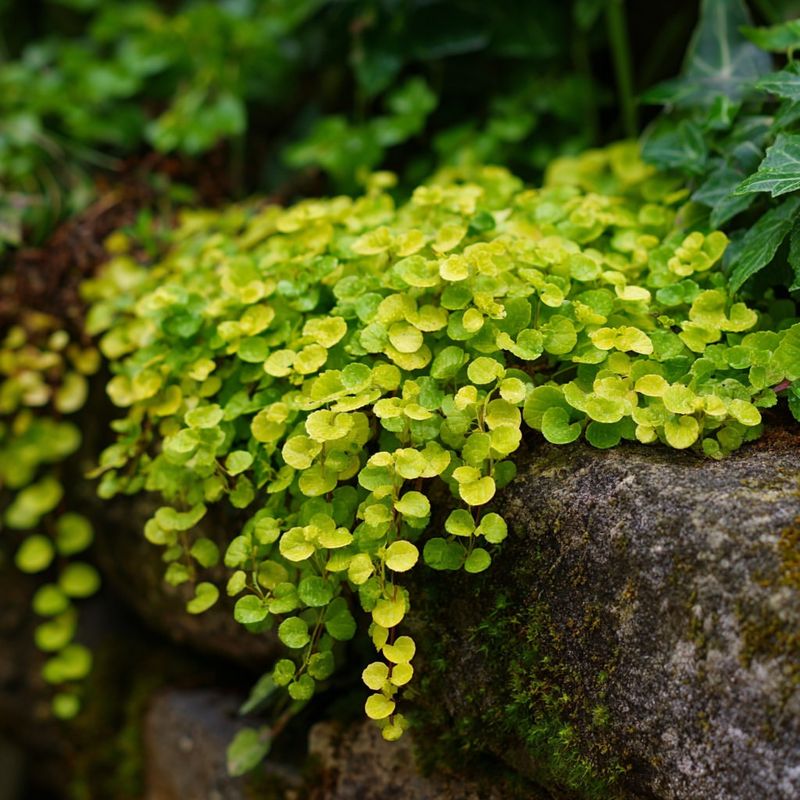
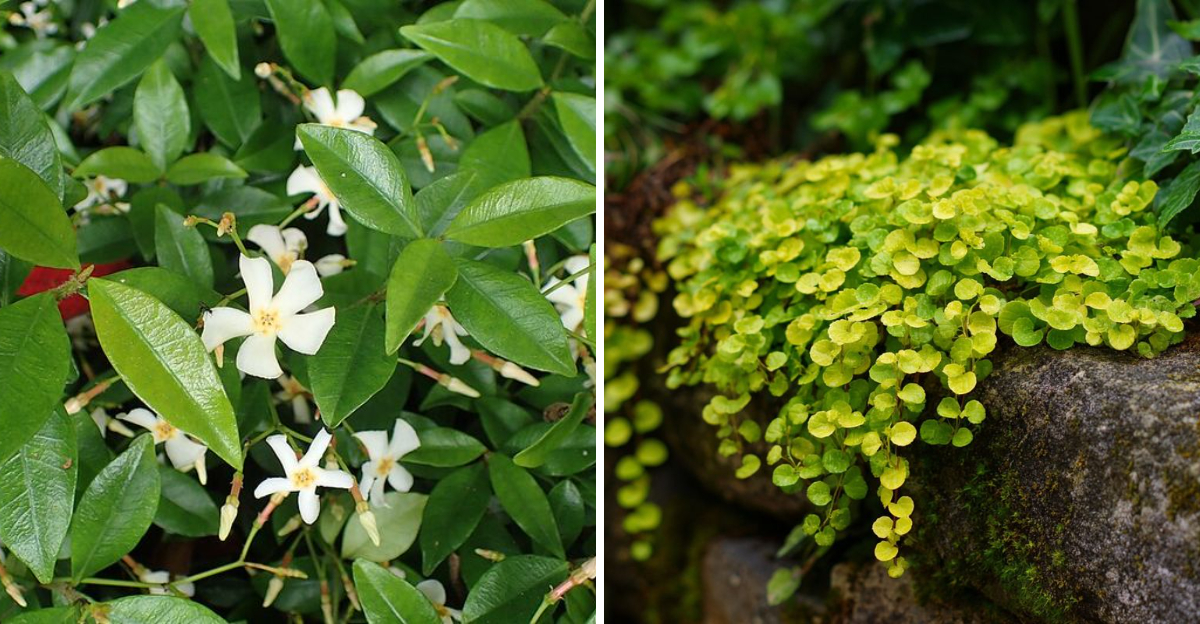
Bright chartreuse leaves and a fast-spreading habit make Creeping Jenny hard to overlook. It moves quickly into open ground, covering bare patches before weeds get established.
Few ground covers look this cheerful while doing that much work.
Creeping Jenny thrives in moist areas. It performs especially well near water features, along low spots that collect rainfall, or in spots that stay consistently damp.
In drier areas, it still grows but spreads more slowly and may need occasional watering during dry stretches.
Full sun encourages the brightest yellow-green color, but it also tolerates partial shade. In shadier spots, the foliage shifts toward a deeper green tone.
Either way, the dense mat it creates shades out weed seeds effectively.
Planting Creeping Jenny about 12 inches apart gives each plant room to spread without competing too soon. It roots wherever stems touch soil, which means it fills gaps quickly and naturally.
No special soil prep is required beyond basic loosening and light moisture at planting time.
Some gardeners worry it spreads too aggressively. Keeping it away from lawn edges or using a simple border helps manage its reach.
It responds well to trimming and can be pulled back easily if it moves somewhere unwanted.
For low, wet, or transitional areas of the yard, Creeping Jenny offers reliable coverage with almost no maintenance after the first season.