What California Bougainvillea Needs In June For Blooms Through September
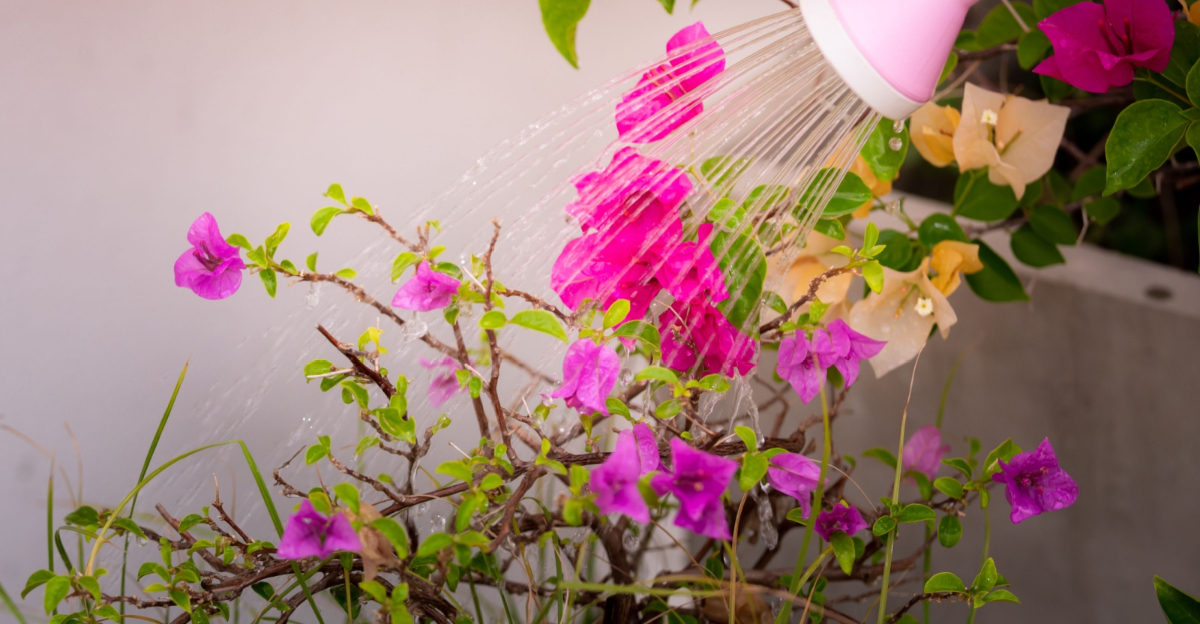
June is basically bougainvillea season in California, and if you have one of these plants in your yard, now is the time to pay attention.
The days are longer, the sun is hitting harder, and the dry season is fully locked in, which means your bougainvillea is gearing up for its biggest performance of the year.
Get the care right this month and you could be looking at an absolute explosion of color that carries all the way through September.
Sounds pretty great, right?
The catch is that bougainvillea care is not totally one size fits all. A potted plant on a San Diego patio has different needs than a sprawling vine on a sun-baked Central Valley wall.
Heat levels, wind, humidity, soil, container size, all of it plays a role. Let’s break down exactly what your plant needs right now.
1. Give It Plenty Of Sun
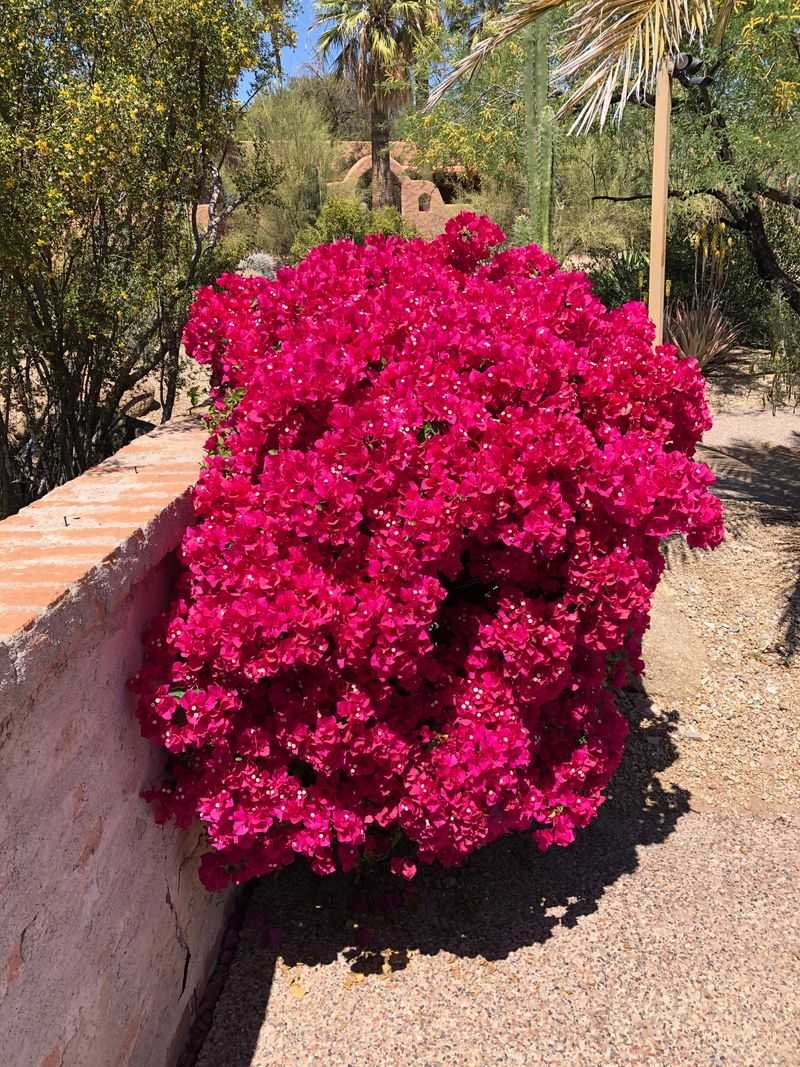
Full sun is where bougainvillea truly comes alive. In California, June brings long days with intense sunlight, and bougainvillea responds to that light by pushing out fresh growth and vivid bracts.
Most plants do best with at least six hours of direct sun each day, though eight or more hours tends to produce the most color.
Patios along south-facing or west-facing walls are popular spots in California because those areas collect the most warmth and light. Plants tucked in shadier corners or under trees may produce fewer bracts and more leafy green growth instead.
If your bougainvillea sits in a container, June is a good time to reposition it toward a brighter spot before the bloom season peaks.
Inland California gardens, like those in the Sacramento Valley or Inland Empire, naturally give bougainvillea intense summer sun. Coastal areas in Southern California tend to have slightly cooler mornings with marine layer clouds that burn off by midday.
Even with that morning overcast, coastal plants still receive enough afternoon sun to bloom well.
Watching where the shadows fall in your garden during the day can help you decide whether your plant is getting the light it needs to stay colorful from June through September.
2. Water Regularly During Bloom
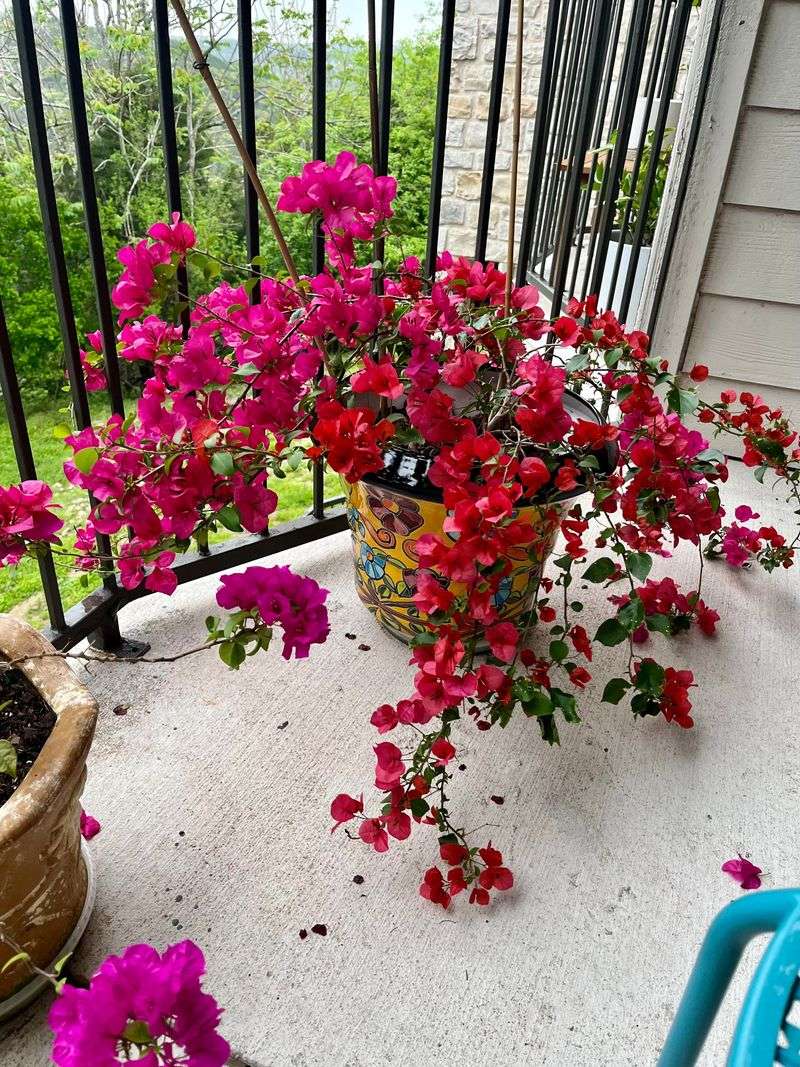
Warm June temperatures across California mean bougainvillea in containers and landscape beds can dry out faster than during cooler months.
Watering consistently during active bloom helps the plant maintain the energy it needs to keep producing new growth and colorful bracts throughout the summer season.
Container plants on patios or decks tend to need water more frequently than those planted in the ground because pots heat up quickly and hold less soil volume.
A general approach many California gardeners find useful is to water deeply when the top inch or two of soil feels dry, then let the plant work through that moisture before watering again.
Deep watering encourages roots to reach downward rather than staying shallow near the surface.
Inconsistent watering, such as letting the plant go very dry and then flooding it, can stress the root system and may cause bract drop or slow down new growth.
Your California Garden Changes Every Week. Your Plan Should Too.
Gardening in California changes quickly throughout the season. Every Friday you’ll receive a simple weekly plan showing exactly what to plant, prune, fertilize, harvest, and protect so you never miss the right timing.
During hot inland California summers, you may find yourself watering container bougainvillea every two to three days or even more often.
In-ground plants along the coast may need water less frequently because of cooler temperatures and higher humidity.
Paying attention to the soil and the plant rather than following a strict schedule tends to produce better results during the long California bloom season.
3. Let Soil Dry Between Waterings
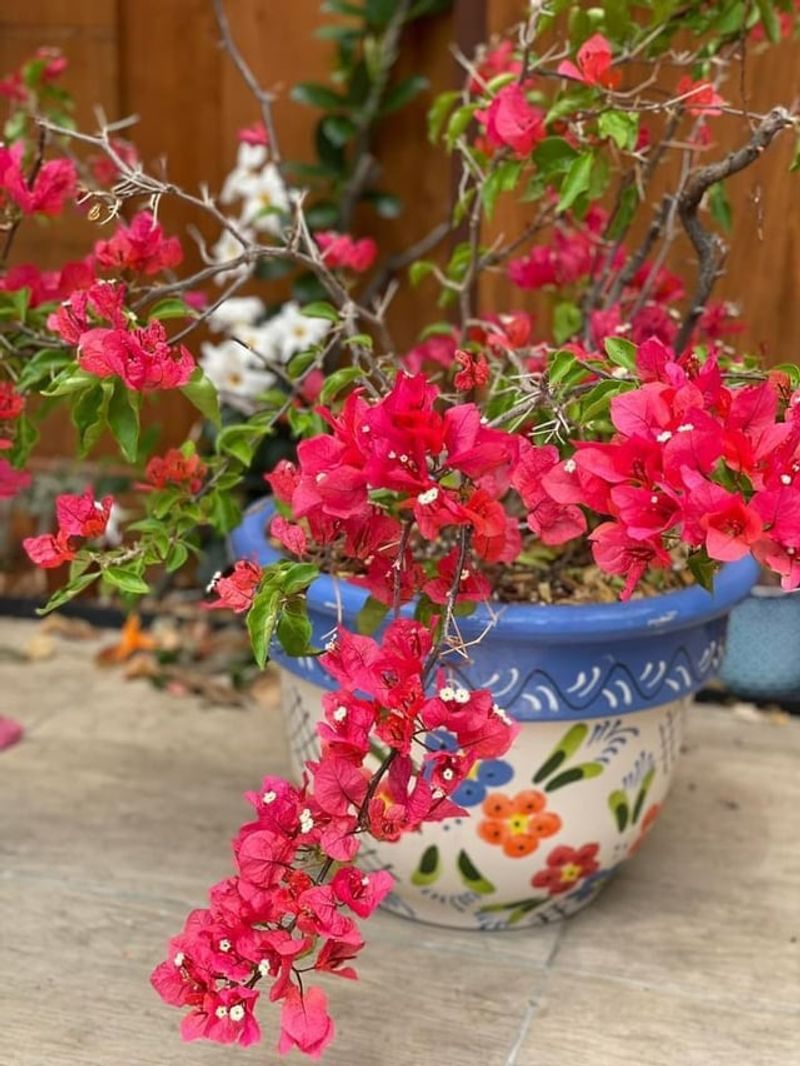
One of the most common mistakes California gardeners make with bougainvillea is keeping the soil too wet for too long. Bougainvillea roots prefer a cycle of moisture followed by a drying period rather than sitting in consistently damp soil.
Allowing the soil to dry out somewhat between waterings actually encourages the plant to focus its energy on flower and bract production.
When roots stay wet without a break, the plant becomes more vulnerable to root issues that can slow growth and reduce blooming.
A slightly stressed plant, in the sense of mild water limitation rather than extreme drought, often produces more vivid and abundant bracts than one that is overly coddled with constant moisture.
This behavior is one reason bougainvillea thrives so naturally in California’s dry-summer climate.
A simple finger test works well here. Press your finger about an inch into the soil, and if it still feels moist, wait another day before watering.
For potted bougainvillea, you can also lift the container. A noticeably lighter pot usually means the soil has dried enough to water again.
In-ground plants in fast-draining California soils may dry out more quickly than those in heavier clay.
Adjusting your watering rhythm based on actual soil conditions rather than a fixed schedule gives bougainvillea the dry-wet cycle it responds to best during the bloom season.
4. Keep Drainage Open And Fast
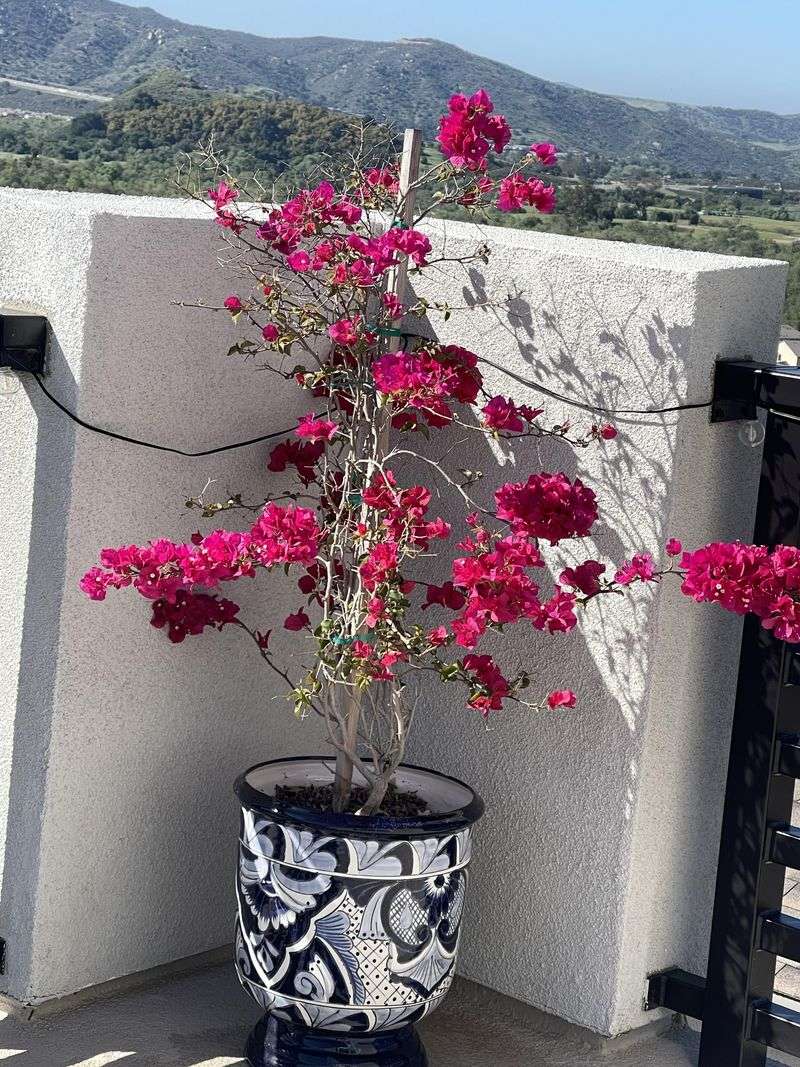
Good drainage is one of the foundational needs bougainvillea has, and June in California is the right time to double-check that water can move through the soil and out of containers quickly.
When drainage is slow or blocked, water pools around the roots and creates conditions that bougainvillea does not handle well over time.
For potted plants, check that drainage holes at the bottom of the container are not clogged with compacted soil, roots, or debris. Lifting the pot and looking underneath after watering can tell you a lot.
If water is not draining out within a reasonable amount of time, the holes may need to be cleared or the potting mix may need to be refreshed with a coarser blend that allows better airflow and drainage.
In-ground bougainvillea planted in California’s heavier clay soils may benefit from raised planting beds or soil amendments that improve drainage.
Sandy or decomposed granite soils common in parts of Southern California tend to drain naturally and suit bougainvillea well.
Raised planters along fences and walls are popular in California landscapes because they allow excellent drainage and warm up quickly in the sun.
A plant sitting in slow-draining soil may produce less color and look duller overall, while one in fast-draining soil tends to stay more vigorous and bloom more freely through the summer months.
5. Avoid Heavy Pruning While It Blooms
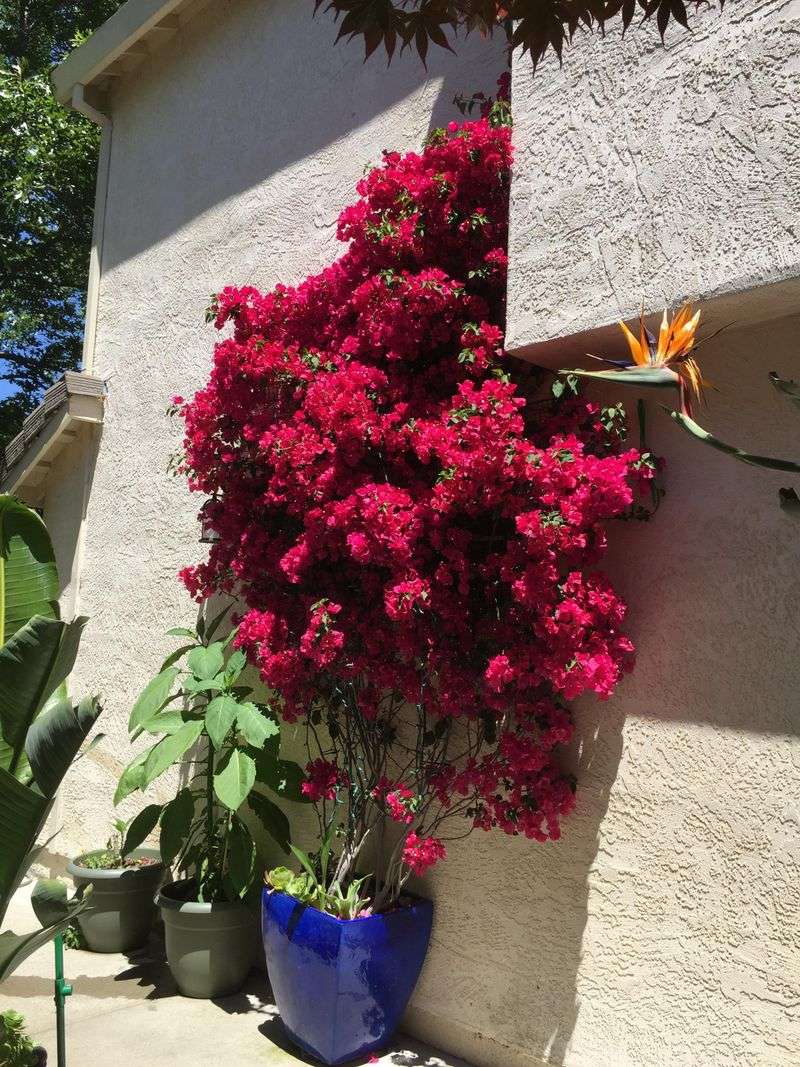
Seeing a bougainvillea covered in bright bracts in June can make some gardeners want to tidy it up, but heavy pruning during the bloom period is one of the quickest ways to reduce the color display you have been waiting for.
Bougainvillea blooms on new growth, meaning the colorful bracts form at the tips of fresh shoots.
Cutting those shoots back removes the very parts of the plant that are producing color.
Heavy pruning sends the plant into a regrowth phase where it focuses energy on producing new stems and leaves rather than continuing to bloom. This can interrupt the bloom cycle and delay the next flush of color by several weeks.
In California, where the bloom window from June through September is one of the most rewarding times to enjoy bougainvillea, losing that time to a pruning recovery period can be frustrating.
Resisting the urge to cut back significantly during peak bloom is a practical choice that most experienced California gardeners learn over time. Letting the plant run during its active flowering period usually results in a fuller, more colorful display.
If there are stems that have stopped producing, damaged canes, or crossing branches that are genuinely causing problems, those can be removed carefully without triggering a major regrowth response.
Saving heavier shaping work for after a bloom flush has faded tends to give better long-term results throughout the season.
6. Shape Lightly In The Growing Season
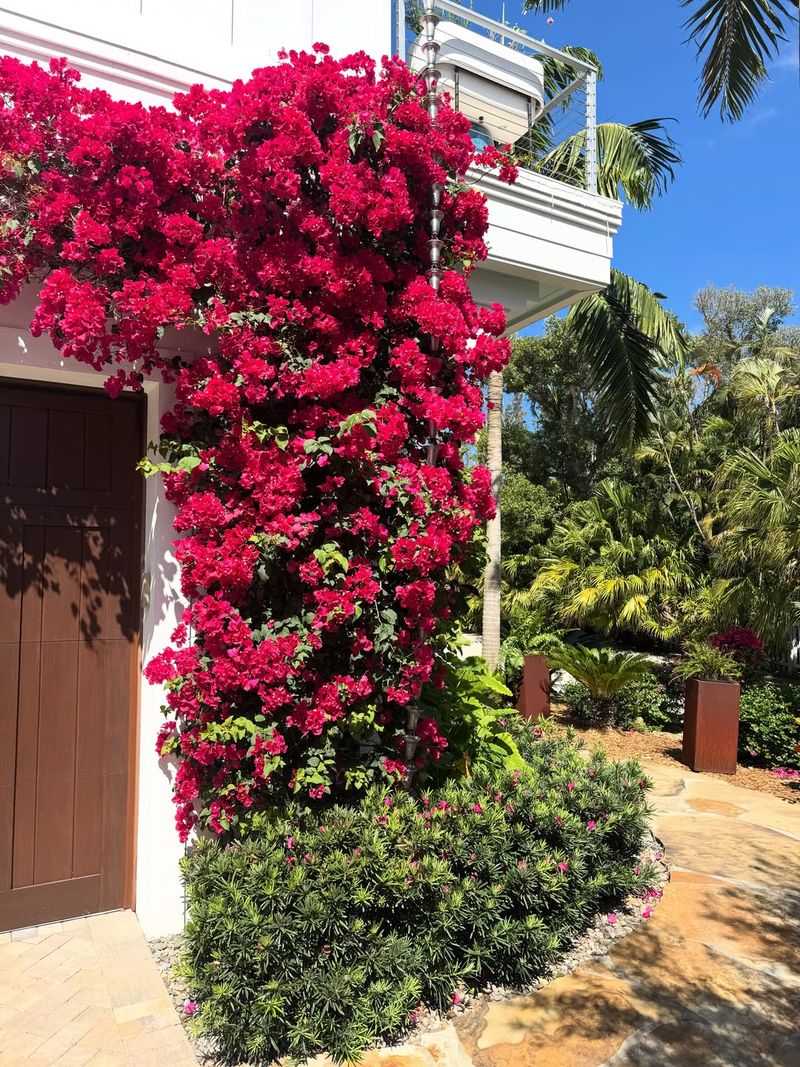
Light shaping during the growing season is different from heavy pruning, and bougainvillea can handle gentle tip trimming reasonably well even while it is actively blooming.
The goal of light shaping is to guide the plant’s overall form, remove stray canes that are growing in the wrong direction, and encourage a tidier appearance without sacrificing too much blooming wood.
In California gardens, bougainvillea trained on fences, trellises, pergolas, and walls often sends out long arching canes that can extend several feet in a single growing season.
Lightly redirecting or shortening those canes helps keep the plant within its intended space and makes it easier to manage as summer progresses.
Trimming just the tip of a long shoot can sometimes encourage it to branch, which means more growing points and potentially more bracts later in the season.
Using clean, sharp pruning shears makes a noticeable difference in how cleanly the cuts heal. Ragged cuts can leave the plant more open to stress and slow recovery.
Wearing thick gloves is also a practical habit since bougainvillea thorns are sharp and can catch skin quickly.
A light touch in June, removing only what is clearly out of place or overextending, tends to keep the plant looking neat while preserving the active growth that supports ongoing bloom color through the rest of the California summer.
7. Guide New Growth For More Color
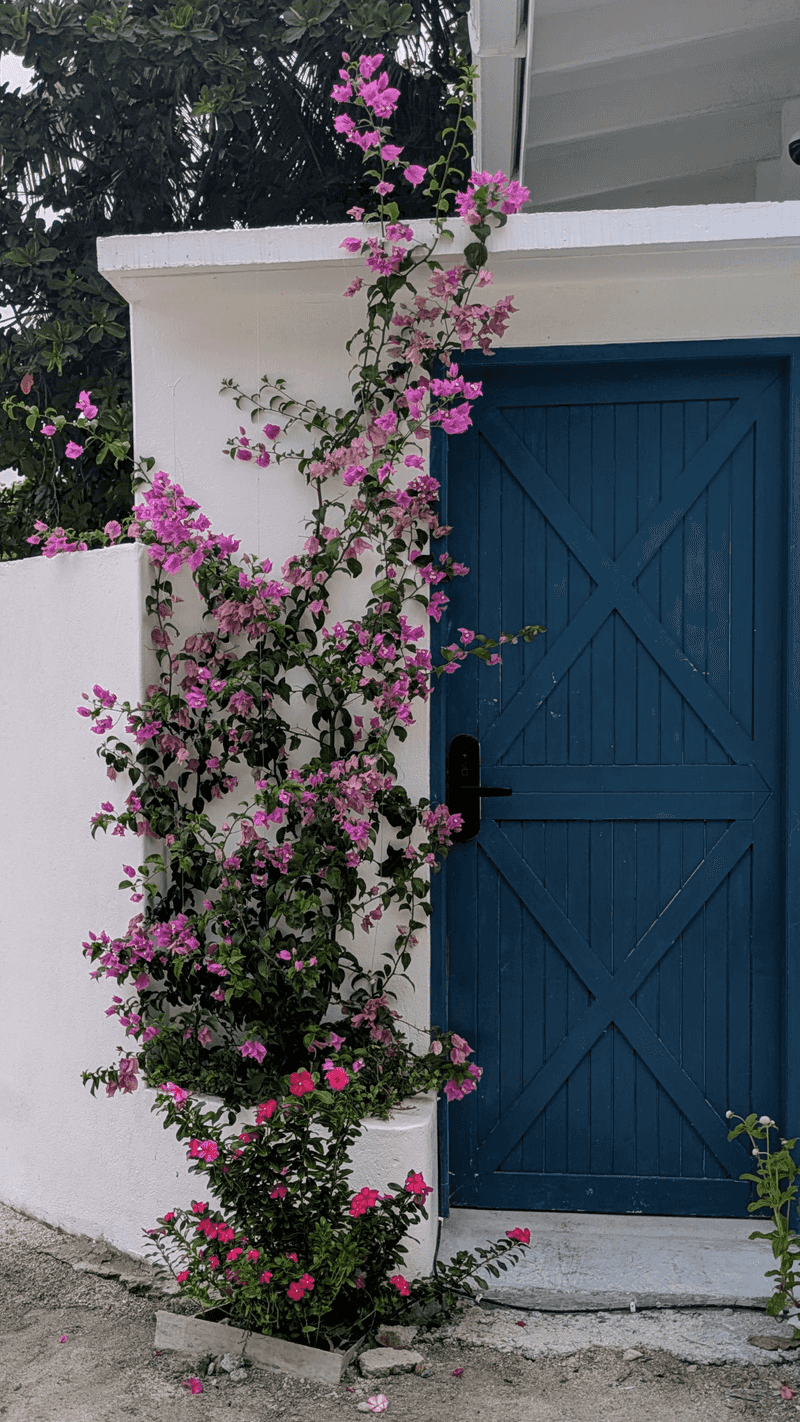
Fresh green shoots emerging in June are where the next wave of bougainvillea color comes from.
Those new canes carry the potential for the next flush of bracts, and guiding them in the right direction can make a meaningful difference in how full and colorful the plant looks by late summer.
Left on their own, new shoots sometimes grow toward shade, tangle with older canes, or extend in directions that reduce airflow through the plant.
Soft plant ties, twist ties, or strips of garden fabric work well for gently securing new canes to a trellis, fence, or support wire. The key is to attach the ties loosely enough that the cane is not constricted as it continues to grow and thicken.
Spreading canes horizontally or at a slight angle rather than letting them grow straight up can also encourage more lateral branching along the cane, which produces more bloom sites.
California gardeners with bougainvillea climbing walls often find that guiding new growth outward along the surface rather than allowing it to bunch up in the center creates a more even and colorful display.
The same idea applies to container plants on patios, where new shoots can be trained around a stake or small trellis insert to create a fuller shape.
Taking a few minutes each week in June to check and redirect new growth pays off with a richer, more vibrant display from midsummer through September.
8. Check For Common Bougainvillea Pests
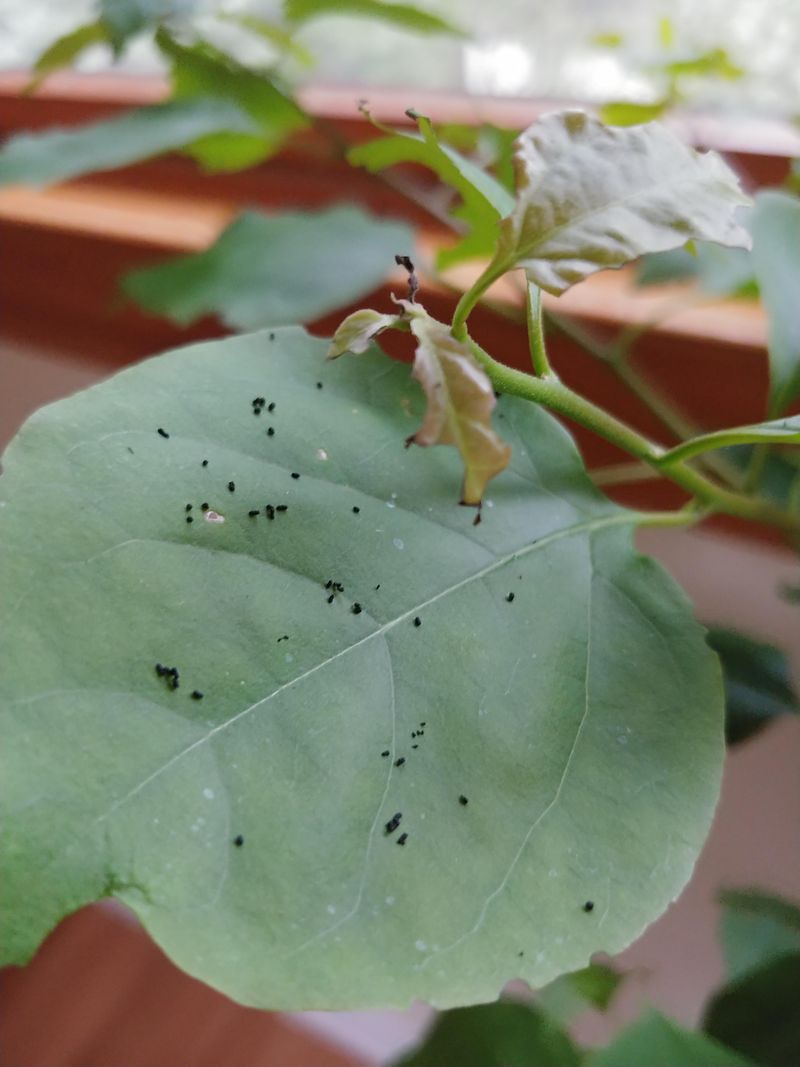
Warm June weather across California creates favorable conditions for several insects that feed on bougainvillea. Catching a pest problem early makes it much easier to manage and reduces the impact on bloom performance.
Turning over a few leaves and looking at new shoots during regular watering is a simple habit that can reveal problems before they spread.
Bougainvillea loopers are caterpillars that feed on the leaves and bracts of the plant, and they can cause noticeable damage fairly quickly if populations build up unchecked. Signs include irregular holes or scalloped edges on leaves and bracts.
Aphids are another common visitor, tending to cluster on tender new growth where they feed on plant sap. A strong stream of water from a hose can dislodge aphids from shoots and reduce their numbers without the need for chemical treatment in many cases.
Scale insects and mealybugs occasionally appear on bougainvillea in California, especially in sheltered spots with less air movement. These pests can be harder to spot at first because they blend with the stems.
Sticky residue on leaves or a sooty, dark coating on leaf surfaces can be a clue that sap-feeding insects are present.
Checking plants regularly in June gives you the best chance of catching any of these issues early and keeping the plant healthy enough to maintain strong color through the rest of the California bloom season.