5 North Carolina Ground Covers Worth Spreading And 2 That Will Take Over If You Let Them
Ground covers solve real problems in a North Carolina yard.
Bare slopes, dry shade under trees, the awkward strip between the sidewalk and the street, these are the spots where grass struggles and mulch keeps washing away, and a good spreading plant can genuinely fix them for good.
The challenge is that the same qualities that make a ground cover useful, spreading habit, competitive vigor, and the ability to root in difficult conditions, also make certain ones a serious headache if they end up somewhere they weren’t supposed to go.
North Carolina’s long growing season gives aggressive spreaders more time to get established and harder to reclaim once they cross a line.
Five on this list earn their spot in any yard that needs reliable coverage. Two of them will make you regret the decision the moment you stop paying attention to where they’re headed.
1. Green And Gold
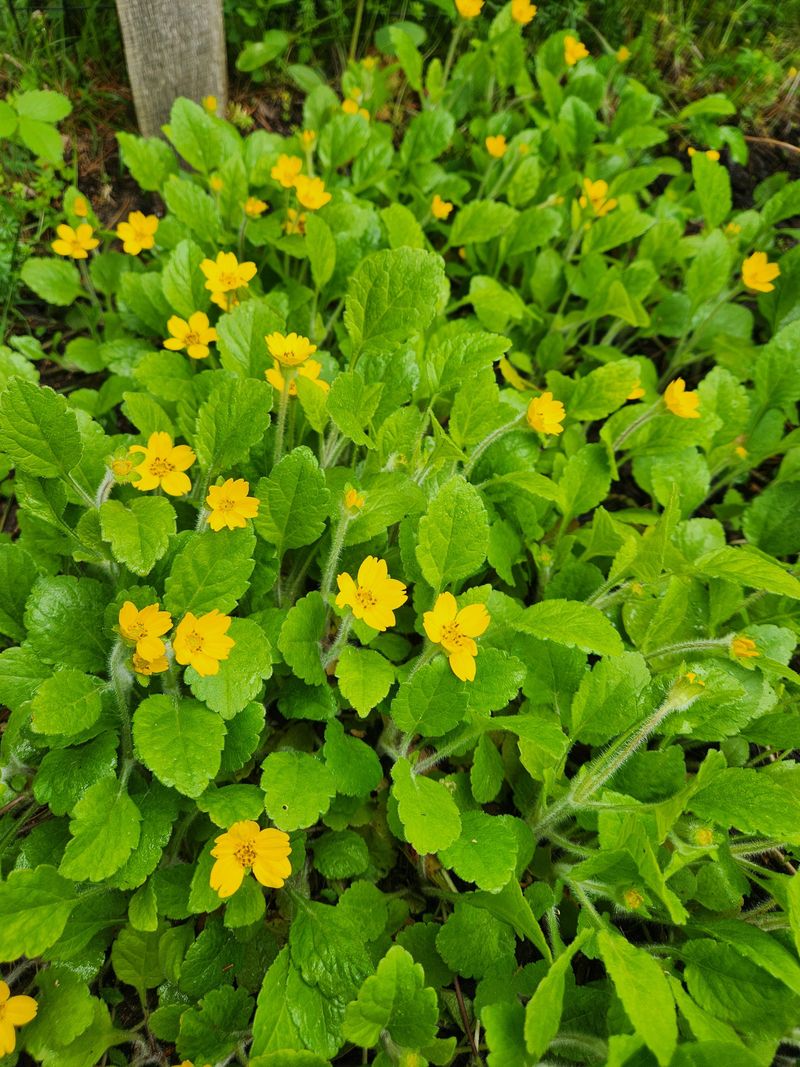
Few native plants earn their place in a North Carolina garden quite like Green and Gold.
Known botanically as Chrysogonum virginianum, this cheerful little plant produces bright yellow, star-shaped flowers that pop against deep green foliage, giving your garden a lively, natural look from early spring well into fall.
It grows low to the ground, typically reaching only six to nine inches tall, which makes it ideal for filling in spaces beneath trees or along shaded pathways.
What really sets Green and Gold apart is how well-behaved it is.
It spreads slowly by runners and self-seeding, forming dense, weed-suppressing mats without ever threatening to take over your entire landscape.
Plant it about twelve inches apart in well-drained, slightly acidic soil, which is exactly the type of soil most North Carolina yards naturally have.
It handles partial shade beautifully, though it also tolerates a bit of morning sun without complaint. Maintenance is genuinely minimal with this plant.
Once established, it needs very little watering beyond normal rainfall and rarely requires fertilizing. Trim back any straggly edges in late fall to keep things tidy heading into winter.
Because it is a native plant, local pollinators absolutely love it, and you will notice bees visiting the blooms regularly throughout the growing season.
Gardeners who want reliable, low-effort coverage with real seasonal interest will find Green and Gold one of the most rewarding choices available for North Carolina landscapes. It truly earns every inch of ground it covers.
2. Foamflower
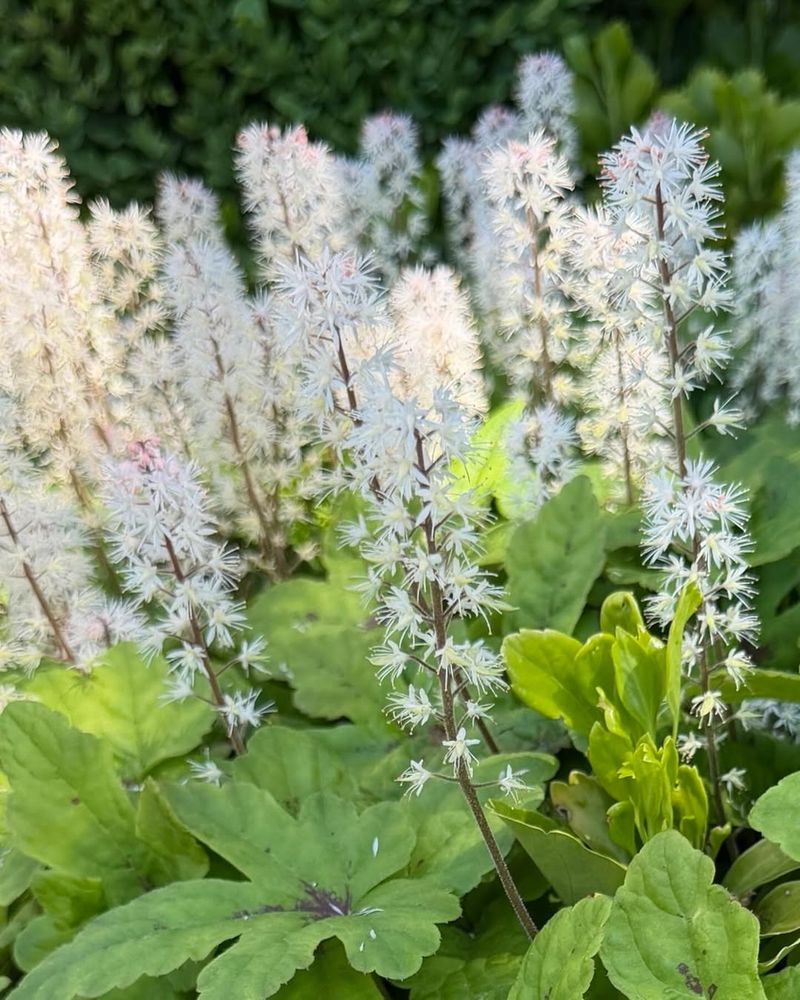
Walk through any Eastern woodland in spring and you might spot a soft, foamy cloud of white blooms hugging the forest floor.
That is Foamflower, or Tiarella cordifolia, and it brings that same woodland magic straight into your backyard.
The flowers appear in mid to late spring and rise on slender stalks above attractive, lobed leaves that stay interesting all season long.
Some varieties even develop reddish markings on the leaves, adding extra visual texture to shaded beds.
Foamflower spreads by stolons, which are horizontal stems that root as they creep along the ground.
The spread is steady but never alarming, making it easy to manage and direct where you want coverage.
Your North Carolina Garden Changes Every Week. Your Plan Should Too.
Gardening in North Carolina changes quickly throughout the season. Every Friday you’ll receive a simple weekly plan showing exactly what to plant, prune, fertilize, harvest, and protect so you never miss the right timing.
It fills in beautifully under trees, along shaded borders, and in woodland-style garden beds where other plants struggle to thrive.
For best results in North Carolina, plant it in rich, moist, well-drained soil with a good layer of organic mulch to retain moisture during hot summers.
One of Foamflower’s biggest strengths is its support for pollinators. Native bees and butterflies are drawn to the blooms, making your garden a small but meaningful habitat for local wildlife.
It performs best in part to full shade, which makes it a natural companion for ferns, hostas, and native shrubs.
Water regularly during the first growing season to help roots establish, and after that, it largely takes care of itself.
For shade gardeners across North Carolina who want beauty without constant upkeep, Foamflower is genuinely hard to beat.
3. Wild Ginger
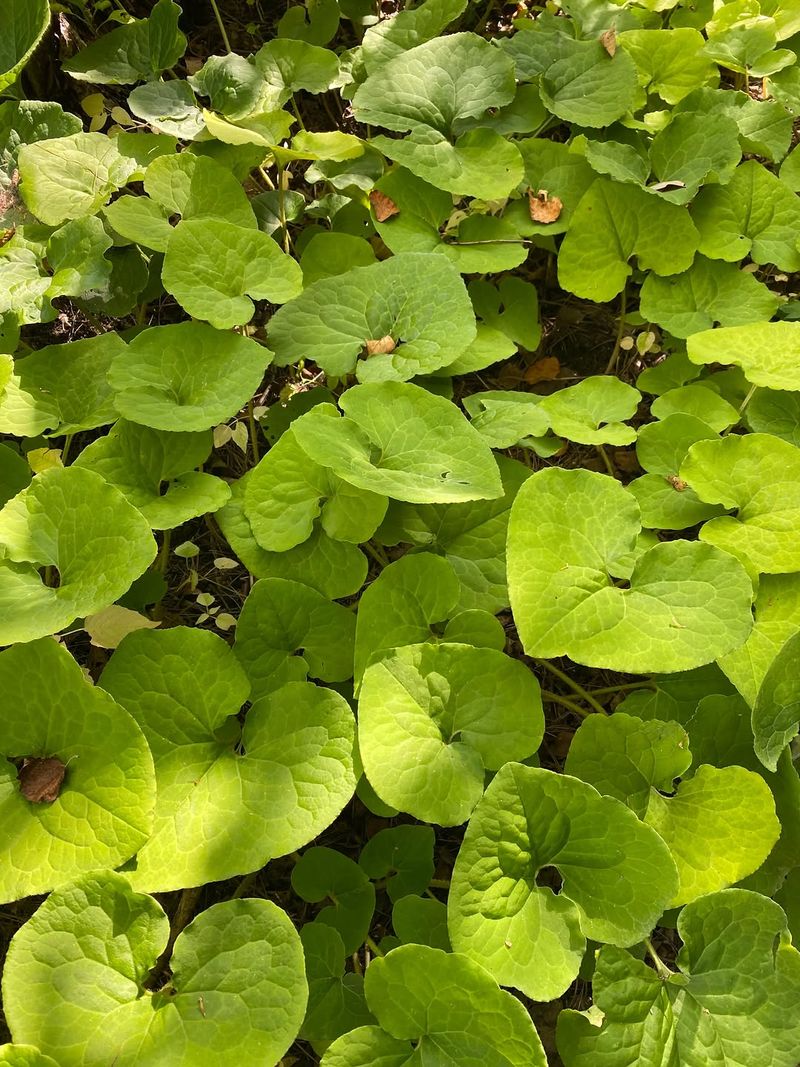
There is something quietly impressive about a plant that does its job without ever asking for attention. Wild Ginger, or Asarum canadense, is exactly that kind of plant.
Its broad, heart-shaped leaves grow in overlapping layers, forming a rich, dark green carpet that looks polished and intentional without requiring much effort from the gardener.
The leaves are thick and lush, giving shaded areas a full, finished appearance that is hard to achieve with other plants.
Wild Ginger spreads slowly by underground rhizomes, expanding its territory at a measured, manageable pace. You will not wake up one morning to find it has escaped into your lawn or neighboring beds.
Plant it in groups about eight to twelve inches apart in moist, humus-rich soil beneath deciduous trees or along shaded slopes.
North Carolina’s naturally humid summers actually suit this plant well, as long as the soil drains properly and does not stay waterlogged for long periods.
One fun detail most gardeners do not know is that Wild Ginger produces small, hidden flowers at the base of the plant in early spring.
They are low to the ground and easy to miss, but they play an important role in attracting ground-level insects and beetles that help with pollination.
The foliage suppresses weeds effectively once established, reducing the need for frequent mulching or hand-pulling.
Minimal watering, no fertilizing, and very little pruning make Wild Ginger one of the most rewarding low-maintenance ground covers available to North Carolina homeowners looking for reliable shade coverage.
4. Creeping Phlox
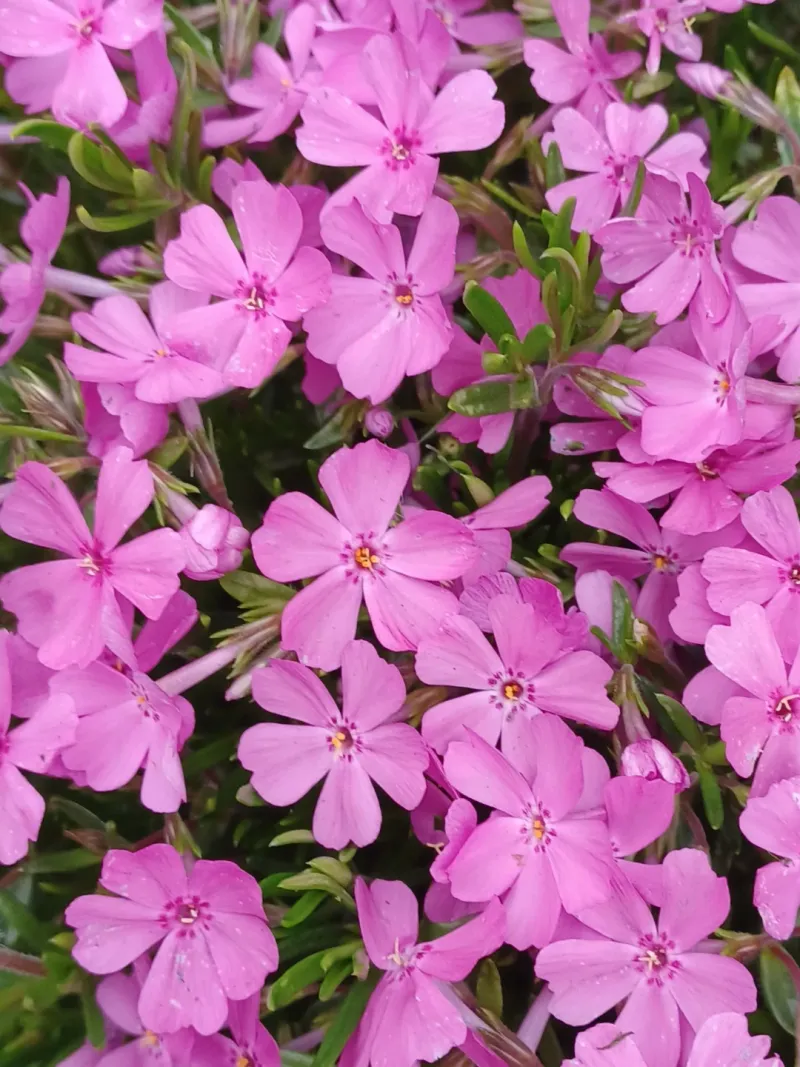
Every spring, Creeping Phlox puts on one of the most spectacular shows in the gardening world.
Phlox subulata covers itself in a thick carpet of small, five-petaled flowers in shades of pink, purple, white, and lavender, transforming slopes, rock gardens, and border edges into something that looks almost too colorful to be real.
The blooms typically appear in March and April across most of North Carolina, lasting several weeks before fading and giving way to dense, needle-like evergreen foliage that stays attractive all year.
Creeping Phlox spreads at a moderate, manageable pace, typically expanding six to twelve inches outward each year.
It works especially well on sunny slopes where erosion can be a problem, since its roots grip soil firmly and its dense mat of foliage slows water runoff effectively.
Plant it in full sun to light shade in well-drained, slightly sandy or rocky soil.
It actually prefers soil that is not overly rich, so avoid heavy fertilizing, which can encourage leggy growth at the expense of flowers.
After blooming, give Creeping Phlox a light trim, cutting back about one-third of the growth to keep it compact and encourage strong flowering the following year.
This simple step makes a noticeable difference in how full and neat the plant looks over time.
Drought tolerance is another strong point once it is established, making it a practical choice for North Carolina gardeners who want reliable color with very little irrigation.
Few ground covers offer this much seasonal impact for such minimal ongoing effort.
5. Allegheny Spurge
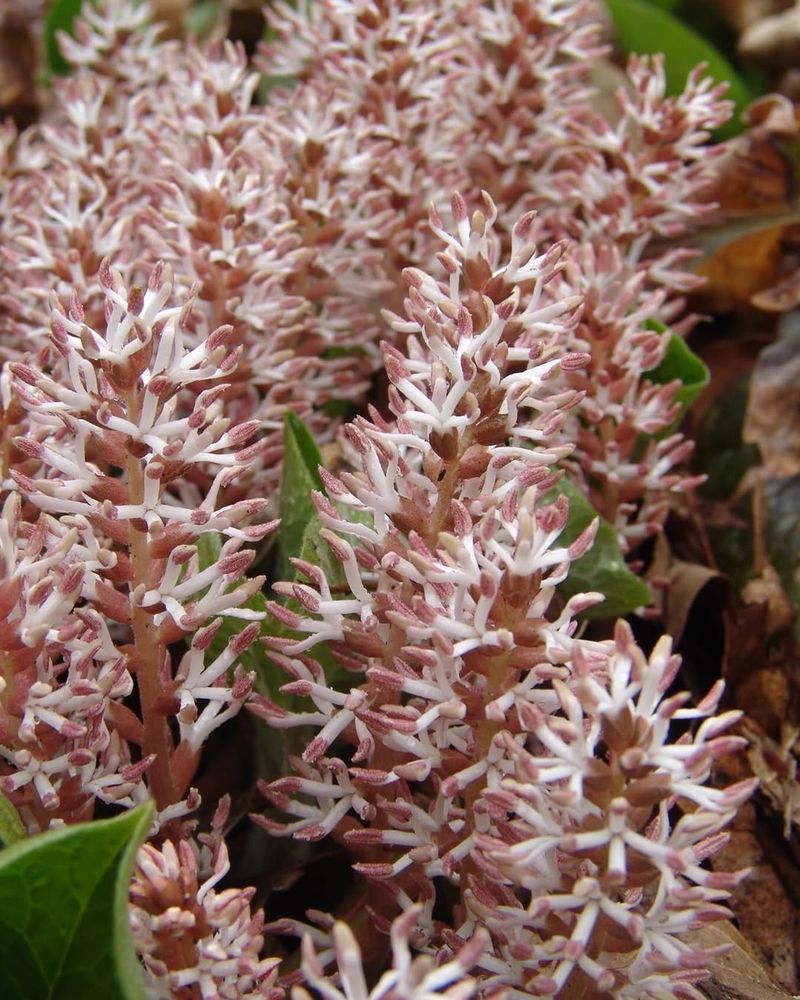
Most gardeners know about Japanese Pachysandra, but the native version, Allegheny Spurge or Pachysandra procumbens, deserves far more attention than it gets.
This low-growing beauty is actually native to the Appalachian region, making it perfectly suited to North Carolina’s varied climate and soil conditions.
Its leaves are broader and more attractively mottled than its Japanese cousin, often showing silvery-gray markings that give shaded beds a sophisticated, layered look throughout the year.
Allegheny Spurge spreads slowly and steadily by underground stems, gradually filling in shaded areas without ever becoming aggressive.
Space plants about twelve inches apart in moist, well-drained, slightly acidic soil enriched with compost or leaf litter.
It thrives in part to full shade, making it an excellent choice for spots under mature trees where grass refuses to grow and bare soil becomes a constant problem.
In early spring, it sends up small, fragrant white flower spikes that are subtle but genuinely lovely up close.
One practical advantage of Allegheny Spurge is its semi-evergreen foliage, which holds through most of the winter in North Carolina’s milder regions.
The older leaves drop in late winter as fresh new growth emerges, keeping the bed looking relatively full even during the cooler months.
Weed suppression improves significantly once the plants fill in and the canopy closes. Deer tend to leave it alone, which is a real bonus in areas with heavy deer pressure.
For a native, low-effort, year-round ground cover, Allegheny Spurge is one of the smartest choices available for North Carolina shade gardens.
6. English Ivy (Caution)
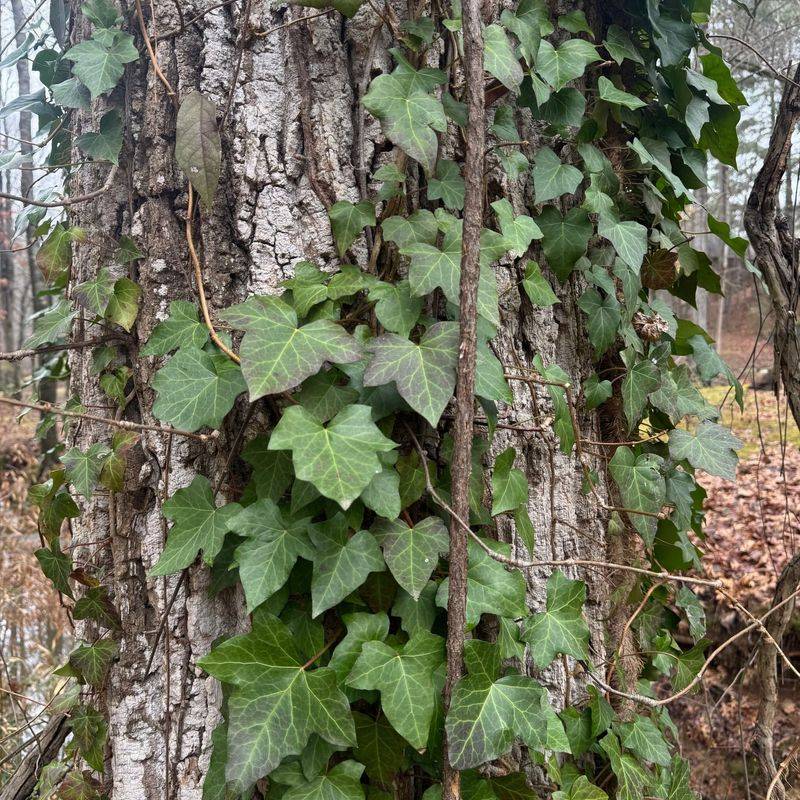
English Ivy looks innocent enough when you first plant it. Hedera helix fills in quickly, stays green year-round, and asks for almost nothing in return.
For decades, homeowners across North Carolina planted it without a second thought, and for a while, it seemed like the perfect solution for bare slopes and shaded spots.
The problem is that English Ivy has no sense of boundaries, and once it gets comfortable, it starts making decisions you never agreed to.
Left unchecked, English Ivy climbs trees aggressively, eventually weighing down branches and adding enough surface area to make trees far more vulnerable to wind damage.
On the ground, it spreads rapidly, smothering native wildflowers, shrubs, and seedlings that cannot compete with its dense, light-blocking mat.
It has been listed as an invasive plant in North Carolina, and many local conservation groups actively encourage homeowners to remove it from natural areas near woodlands and streams.
If you already have English Ivy and want to keep it contained, consistent maintenance is non-negotiable.
Trim it back aggressively at least twice a year, cutting it well away from tree bases and any natural areas.
Never let it set seed, as birds spread the berries widely, planting new patches far from your original planting.
Consider replacing it gradually with well-behaved native alternatives like Foamflower or Wild Ginger, which provide similar ground coverage without the ecological risks.
English Ivy is not impossible to manage, but it demands ongoing commitment and a firm hand from the moment you plant it.
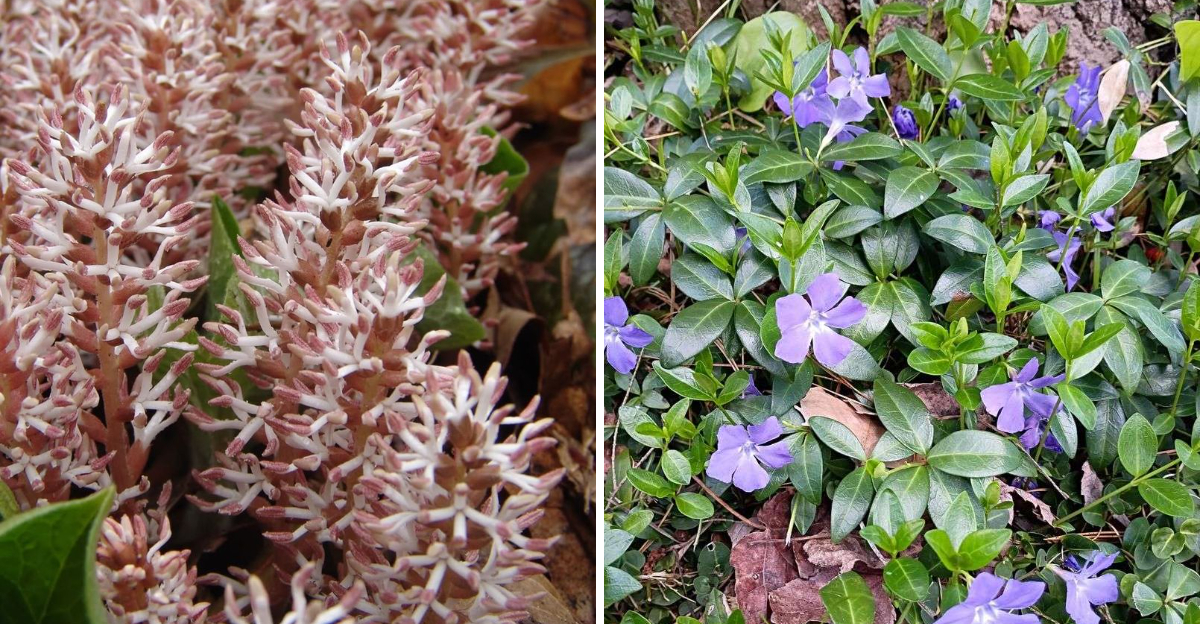
7. Periwinkle (Vinca Minor)
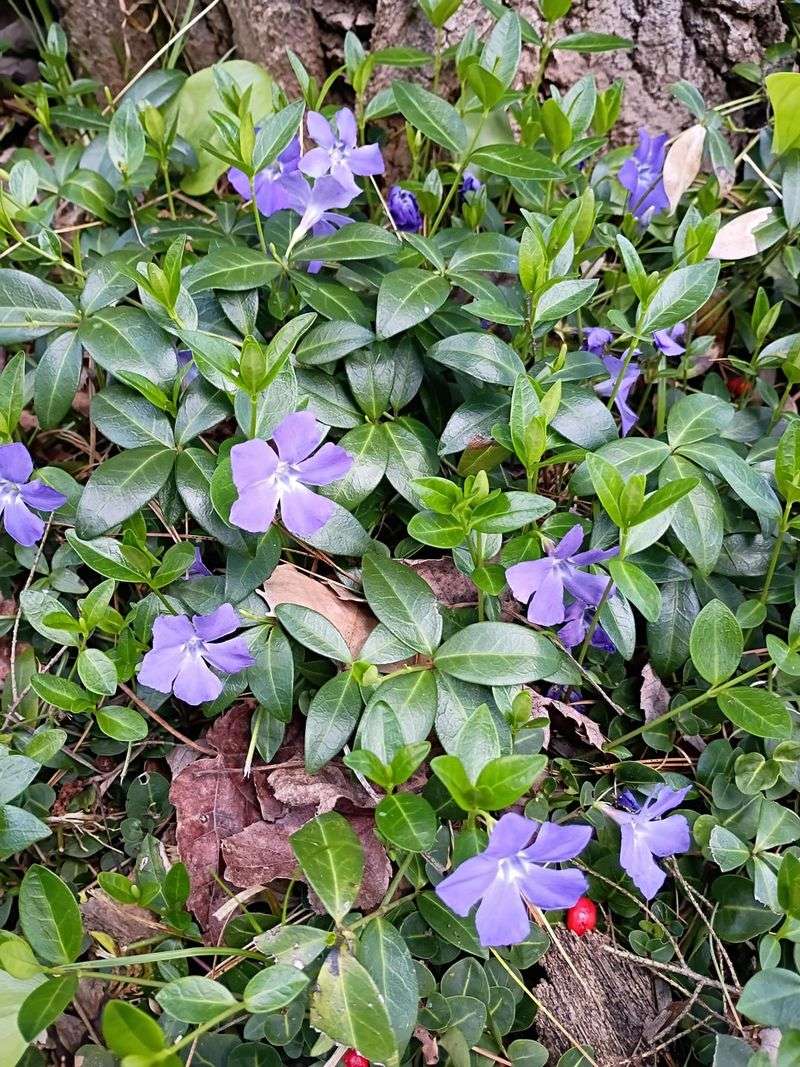
Periwinkle, or Vinca minor, has a reputation that sounds better on paper than it plays out in the garden.
Those small, glossy leaves and cheerful blue-purple spring flowers are genuinely attractive, and the plant is incredibly easy to grow, which is exactly what makes it so tempting.
But easy to grow and easy to control are two very different things, and Vinca minor falls firmly in the first category while ignoring the second almost entirely.
Vinca spreads by trailing stems that root wherever they touch soil, creating a thick, interlocking mat that expands outward in every direction. In a contained bed with hard edges, you can manage it reasonably well.
But near wooded areas, stream banks, or open ground, it escapes quickly and outcompetes native plants that cannot grow through its dense coverage.
North Carolina’s warm, humid summers actually encourage faster spread than you might expect based on how it behaves in cooler regions.
If you choose to grow Periwinkle, plant it only in areas with firm physical barriers like concrete edging, walls, or pavement that prevent it from roaming.
Prune it back hard every spring, cutting the trailing stems aggressively to slow expansion and keep the planting looking intentional rather than wild.
Check the edges of your bed every few weeks during the growing season and remove any stems that have rooted outside the intended area.
With real commitment to regular maintenance, Periwinkle can be a manageable and attractive ground cover.
Without that commitment, it will quietly take over more of your yard than you ever planned to give it.