The Meaning Behind Seeing A White Deer In Ohio
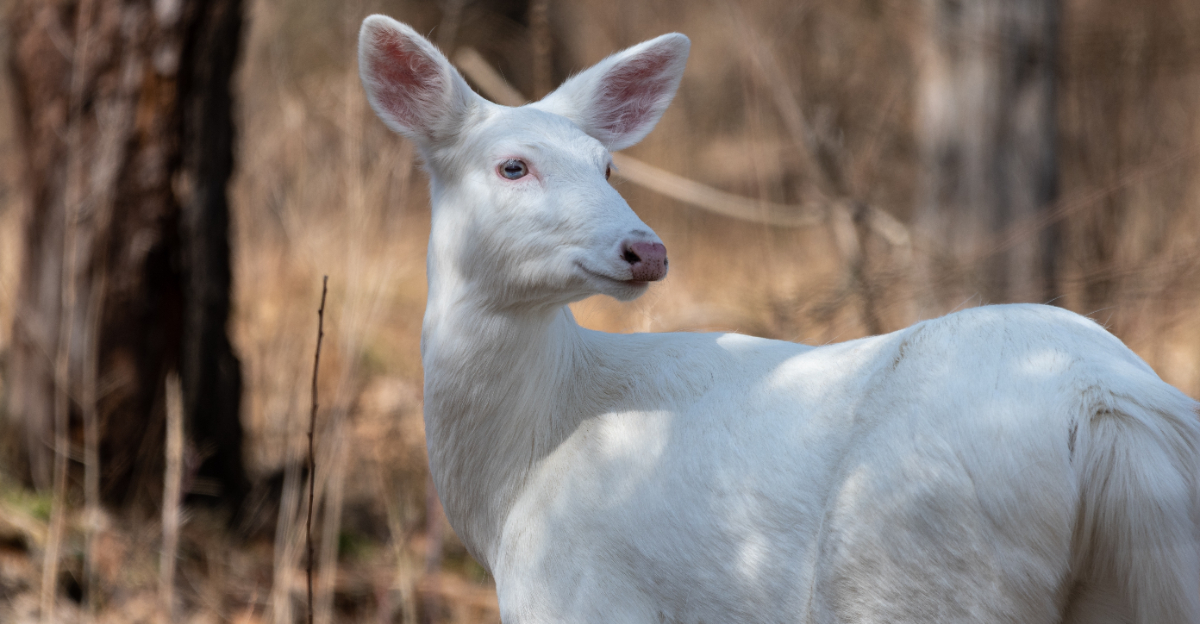
A white deer is not something Ohio residents see very often. When it happens, people talk about it for years.
Not because it is supernatural but because it is genuinely that rare and that striking. Ohio has a small population of white deer, not albinos in every case, and the difference matters more than most people realize.
The sighting itself tends to prompt the same questions every time. What caused it.
What it means. Whether it is a good sign or something else entirely.
Cultures that lived alongside deer for centuries had consistent answers to those questions. The symbolism around white deer runs deeper than most modern accounts capture.
Beyond the folklore there is also a straightforward biological story worth knowing. Both sides of it make a white deer sighting more interesting than a quick photo and a post to a local Facebook group.
1. A White Deer Sighting Often Feels Rare For A Reason
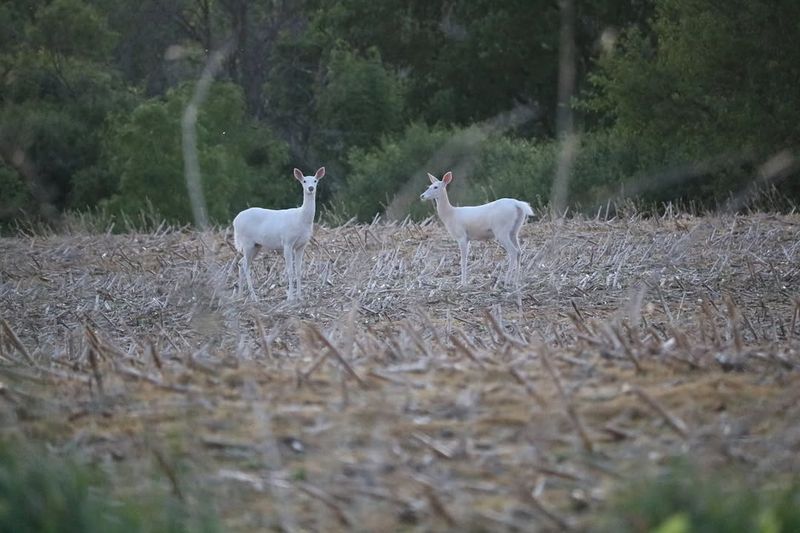
Standing out against a backdrop of brown bark, golden grass, and shadowed brush, a white deer practically glows. Most white-tailed deer carry warm brown coats that blend almost perfectly into the Ohio landscape across all four seasons.
So when an animal with a white or near-white coat steps into view, the contrast is immediate and striking.
White deer are genuinely uncommon compared to normally colored deer in the wild. Wildlife researchers and deer biologists widely recognize white coat variations as rare genetic outcomes rather than standard deer coloring.
You are not imagining the rarity of the moment.
Rare-looking does not automatically mean magical or supernatural. Still, the experience of seeing something so visually unexpected in a familiar setting carries its own quiet weight.
Many people who spot white deer in local woods, suburban yards, or along rural roads describe feeling a strong urge to stop, be still, and simply watch.
That instinct to pause is worth honoring. Slow down, take a breath, and observe from where you are standing.
A white deer moving through its natural routine is a privilege to witness. The moment will feel more rewarding if you resist the urge to rush toward it or grab your phone first.
2. White Coloring Can Come From Different Genetic Conditions
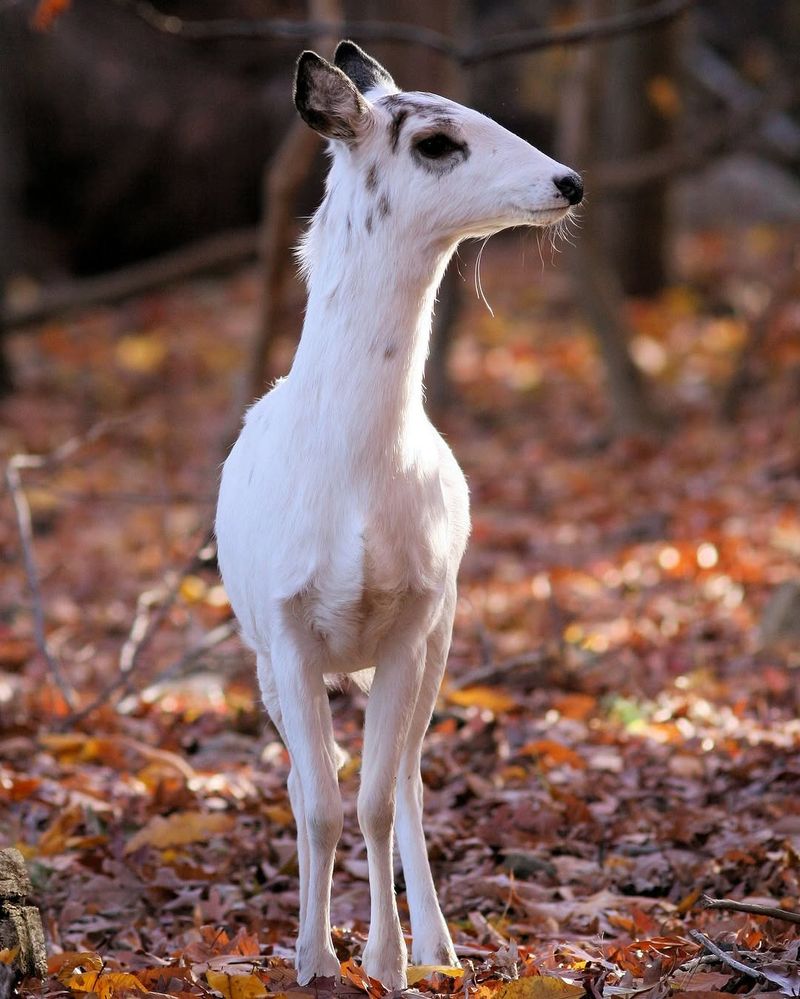
Not every white deer carries the same genetic story. The two most recognized conditions that can produce white or near-white coloring in white-tailed deer are albinism and leucism.
They work differently under the surface.
Albino deer typically lack melanin pigment throughout their bodies. This often results in a white coat, pink or reddish eyes, and pale-colored hooves.
Leucistic deer, on the other hand, may show white or patchy coats while still having normally pigmented eyes and other features. Leucism affects pigment distribution rather than eliminating it entirely.
From a distance or in low light, telling the difference between these conditions is genuinely difficult. Wildlife professionals caution against making confident diagnoses from a quick glance across a field.
A deer that appears fully white from the road may actually have subtle coloring you simply cannot see from that angle or distance.
Your Ohio Garden Changes Every Week. Your Plan Should Too.
Gardening in Ohio changes quickly throughout the season. Every Friday you’ll receive a simple weekly plan showing exactly what to plant, prune, fertilize, harvest, and protect so you never miss the right timing.
Piebald deer, which carry irregular patches of white and brown, represent another genetic variation that sometimes gets grouped into the same conversation. Each condition is distinct and requires careful observation to identify accurately.
If you want to learn more about deer coat genetics, the Ohio Division of Wildlife offers solid, source-based reading. University wildlife biology programs do too.
3. Seeing One Can Symbolize Peace, Wonder, And Protection
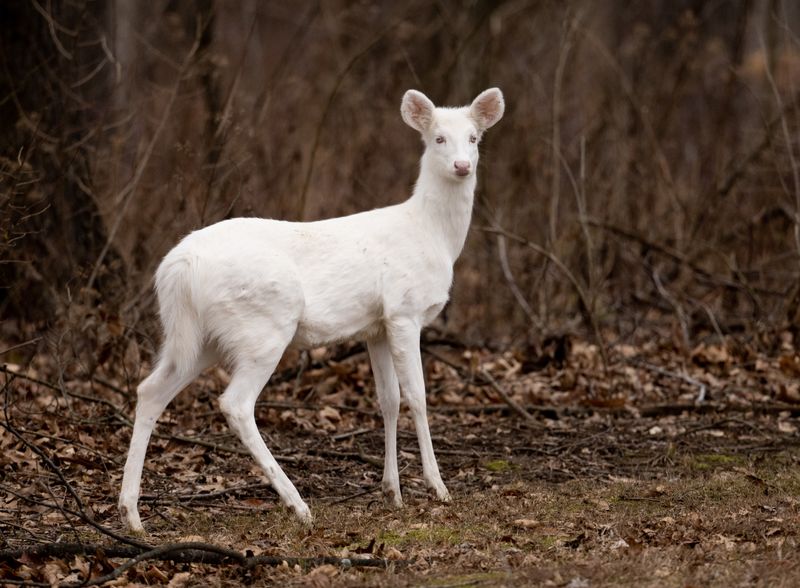
Across many cultures and personal belief systems, a white deer has long carried symbolic weight. People have connected white animals to themes of purity, innocence, protection, and rare blessings for centuries.
That tradition of meaning-making is deeply human and genuinely widespread.
Some people feel that spotting a white deer signals a time for reflection, a reminder to slow down, or a nudge toward gratitude. Others connect it to feelings of peace or a sense that something protective is nearby.
None of these interpretations are universally correct or incorrect.
Symbolism is personal. It depends on your cultural background, your spiritual beliefs, and what you were thinking or feeling in the moment the deer appeared.
Two people standing side by side watching the same animal might walk away with very different inner responses, and both responses are valid.
What most people agree on, regardless of belief, is that a white deer sighting tends to create a moment of genuine stillness. In a busy, noisy world, that pause can feel meaningful all on its own.
You may interpret the sighting as a spiritual message or simply as a beautiful wildlife encounter. Either way, the feeling of connection to the natural world is real and worth sitting with quietly for a moment.
4. Local Legends Make White Deer Feel Even More Meaningful
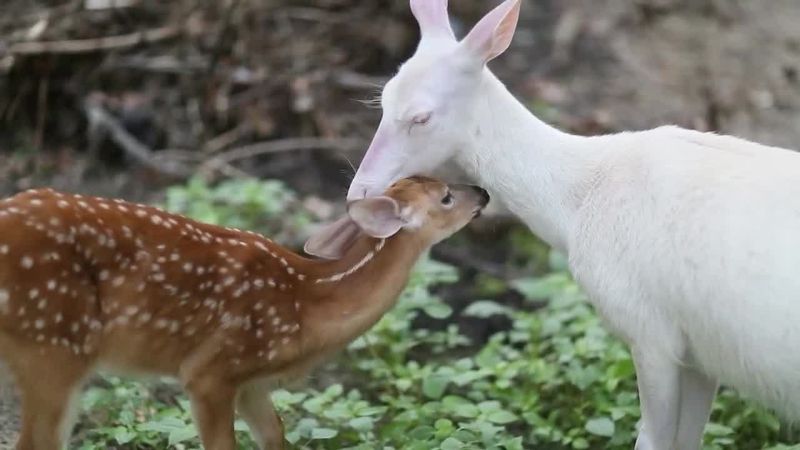
Communities across North America have built stories, protective traditions, and local lore around white deer for generations.
The Seneca people and other Indigenous nations historically regarded white deer as sacred or spiritually significant, treating sightings with reverence and care.
These are real cultural traditions, not invented tales.
Closer to home, some communities in this state have developed their own protective attitudes toward white deer that live or pass through a specific area.
Residents sometimes quietly agree not to disturb a known white deer and to alert neighbors when one is spotted nearby.
That community-level care reflects genuine respect for something unusual.
One well-known example outside Ohio involves the former Seneca Army Depot in New York. It became home to a protected population of white deer after decades of isolation inside its fenced grounds.
Stories like that show how place-based legend and real wildlife conservation can overlap in interesting ways.
Local legends can add beauty and meaning to a sighting, but they should never override practical wildlife safety or current legal rules. If you hear a story about a protected white deer in your area, check with local wildlife officials.
You can also contact the Ohio Division of Wildlife before drawing conclusions about its legal status. Stories are meaningful, and facts still matter.
5. A White Deer Still Needs The Same Space As Any Wild Deer
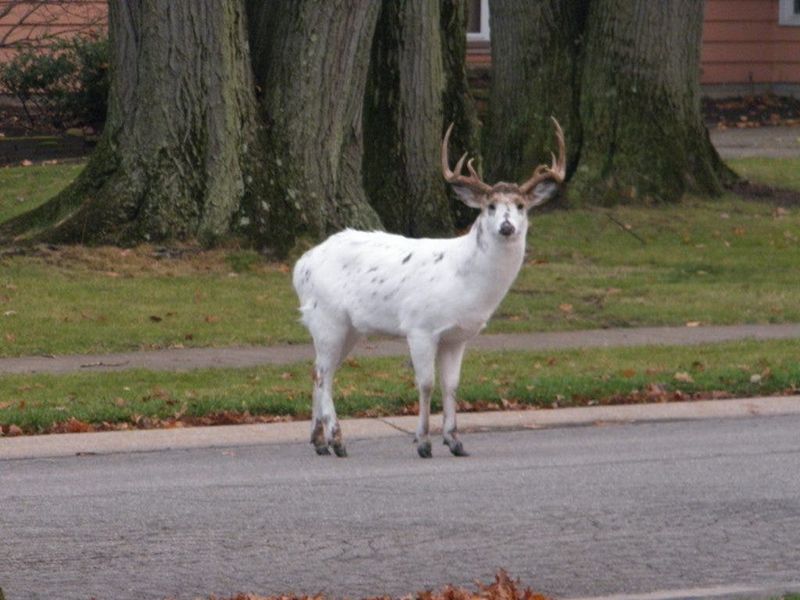
Something about an unusual-looking animal makes people want to get closer. A white coat, in particular, can make a deer seem approachable, almost tame.
That impression is misleading. A white-tailed deer with white coloring is still fully wild, and it has the same needs, instincts, and stress responses as any other deer in the herd.
Crowding a deer, even slowly and quietly, can push it toward roads, fences, or unfamiliar terrain. Deer that feel cornered or startled can move unpredictably, which creates risk for both the animal and anyone nearby.
Near busy roads, that kind of stress can become genuinely dangerous.
Photographers are especially tempted to move in for a better shot. A long lens or a patient wait from a fixed position will always produce better results than creeping forward and flushing the animal.
Respect the deer’s comfort zone, and you will likely be rewarded with a longer, calmer observation.
Pets should be kept indoors or on a leash when a deer is nearby. Even a dog that seems calm can trigger a flight response or, in rare cases, a defensive reaction from a deer protecting young.
Give the animal room to move freely on its own terms, and the encounter will be safer for everyone involved.
6. Feeding Or Approaching It Creates More Harm Than Help
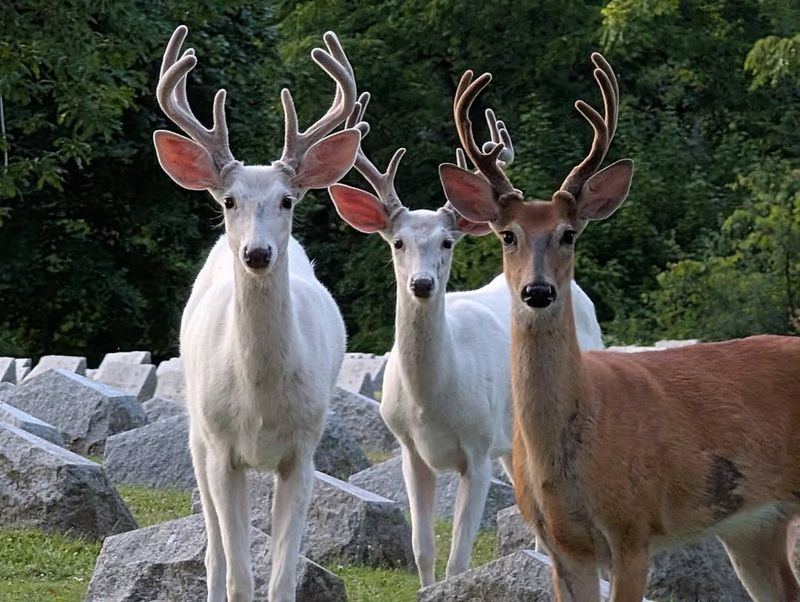
Watching a white deer and wanting to do something kind for it is a completely natural feeling. The impulse to leave food out, to coax it closer, or to make sure it is safe comes from a good place.
Wildlife agencies, including the Ohio Division of Wildlife, are clear that feeding wild deer causes more problems than it solves.
When deer learn to associate yards or driveways with food, they begin returning regularly and sometimes bringing others with them.
That habituation can pull deer closer to roads, into conflict with vehicles, and into neighborhoods where they were not previously a concern.
The feeding itself can also introduce nutrition problems, since human-provided food rarely matches what deer need.
Disease is another real concern. When deer gather in unnaturally tight groups around a feeding spot, the risk of disease transmission increases.
Wildlife health professionals have raised concerns about this pattern in multiple states, and this state is no exception to those risks.
The best thing you can do for a white deer you spot in your yard or along the road is to leave it alone. Do not lure it with corn, apples, or other attractants.
Do not try to guide it away from a road by chasing it. Contact the Ohio Division of Wildlife if you believe the animal is injured or in genuine distress.
7. A Repeat Sighting May Mean Deer Use Your Yard As A Route
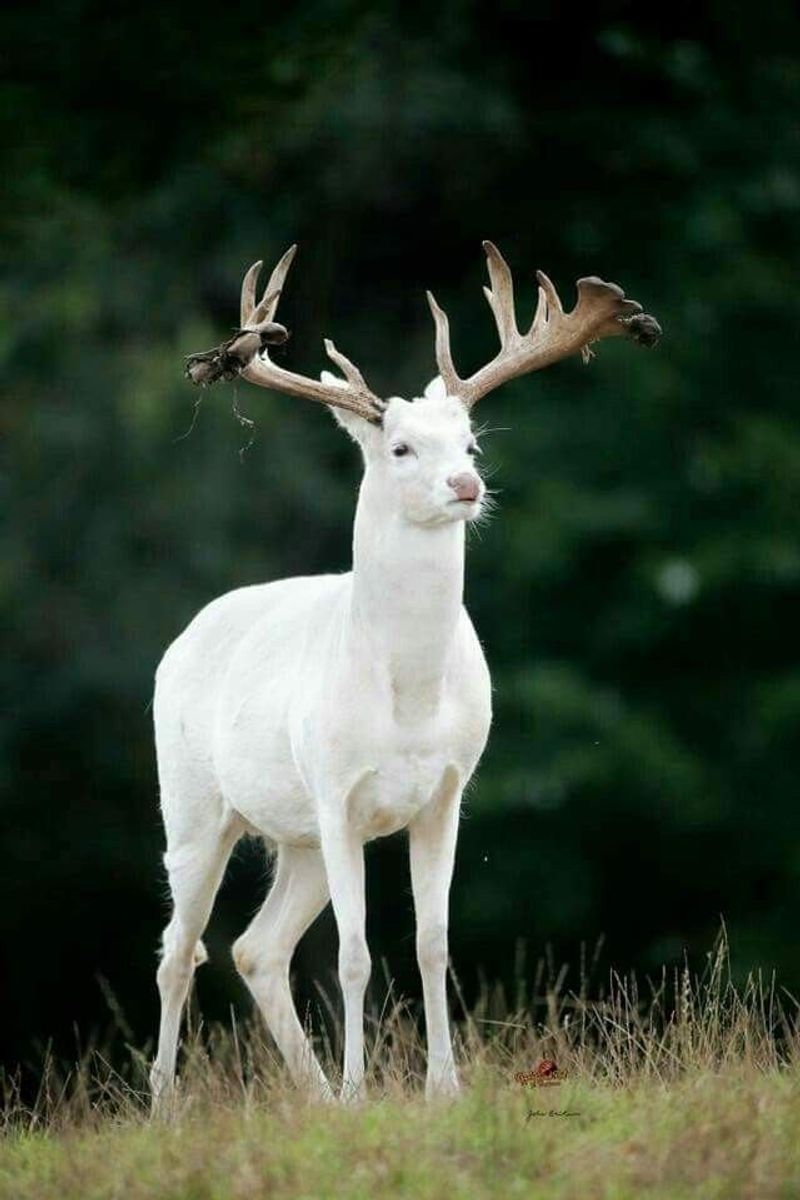
Seeing the same white deer twice in a week near your home can feel like a personal connection. Realistically, it likely means your property sits along a regular travel corridor that local deer use to move between food sources, cover, and bedding areas.
Deer are creatures of habit, and they tend to revisit routes that have worked well for them.
Yards with easy access to gardens, ornamental shrubs, fruit trees, or open lawn edges are especially attractive to deer. Tree lines nearby make them even more appealing as deer move through neighborhoods.
The white deer you are seeing may be part of a small local group that passes through on a predictable schedule, especially at dawn and dusk.
If deer are moving through regularly, a few practical steps can help reduce friction. Deer-resistant plantings around gardens, simple fencing around vegetable beds, and motion-activated lights can discourage repeated visits without harming the animals.
Driving slowly and carefully at dawn and dusk is especially important if you live near wooded lots or open fields where deer cross regularly.
Repeat sightings do not mean the deer has chosen your yard as a permanent home or that it is sending you a personal message. It simply means your property is part of a route that works for that animal.
Understanding that pattern helps you respond practically and thoughtfully without projecting more meaning than the situation warrants.
8. The Moment Is Best Treasured From A Safe Distance
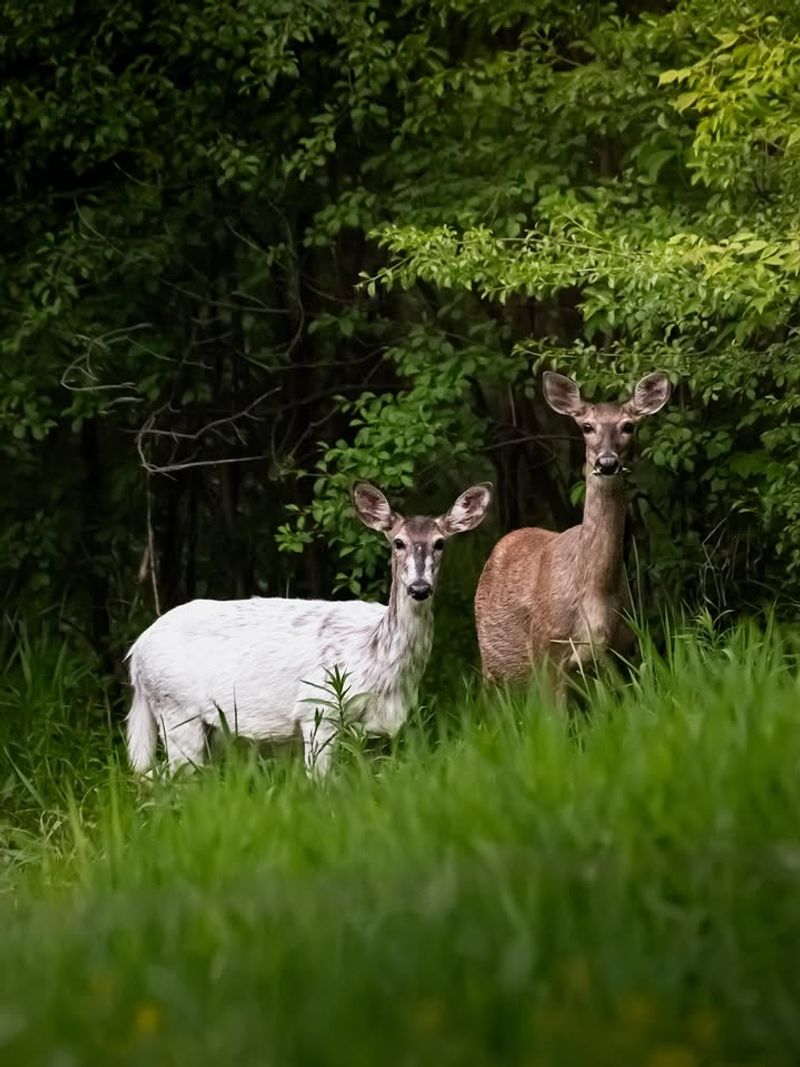
A white deer sighting is one of those moments that tends to stay with people for a long time. Years later, many describe exactly where they were standing, what the light looked like, and how the animal moved before it disappeared back into the brush.
The memory holds because the moment felt genuinely rare.
Binoculars or a camera with a zoom lens can make that memory even richer without requiring you to move an inch closer to the animal.
Settling in quietly, staying low, and waiting patiently often rewards you with a much longer and more natural view than rushing toward the deer ever would.
On the symbolic side, many people find that the act of watching quietly and letting the deer move on its own terms feels like the right response to something rare.
There is something grounding about witnessing a wild animal in its own world without trying to alter the moment or make it last longer than it naturally does.
Share the experience with people you trust, but think carefully before posting an exact location publicly. Crowds and repeated human traffic can stress local wildlife and change the character of a quiet area quickly.
Take your photo, hold the memory close, and let the animal carry on. That restraint is its own form of respect, and it costs you nothing.