These Are The Plants That Turn Tennessee’s Summer Heat Into Their Greatest Advantage
The heat hits like a wall you never saw coming, and suddenly your rose bed has already surrendered. Crispy stems, scorched petals, a garden that looks like it simply gave up.
Yet ten feet away, a zinnia bed blazes with color so outrageous it looks almost defiant against the parched grass. Tennessee heat has its own agenda.
It rolls in thick and relentless, stretching itself out for months and squeezing every drop of mercy from the air. You spend the hottest weeks playing defense, mourning wilted foliage.
Hauling hoses like you owe somebody money. But what if the secret was never about fighting the heat at all?
Some plants treat a 95-degree afternoon the way a competitor treats a tough crowd: pure fuel. They thicken their roots, deepen their color, and bloom with a stubborn joy that stops people mid-stride.
Tennessee summers belong to the bold. Plant smart, or watch the season swallow your garden whole.
1. Purple Coneflower
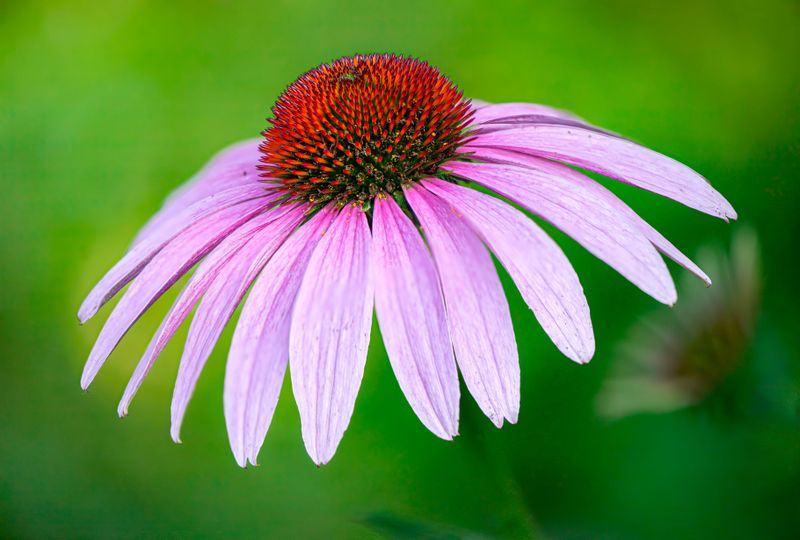
Few plants own a Tennessee summer like Purple Coneflower. Echinacea purpurea was thriving here long before anyone thought to garden with it.
Its daisy-like blooms, with drooping lavender petals and spiky copper centers, begin opening in late spring and keep going strong through early fall.
The more the sun beats down, the more flowers this plant pushes out.Gardeners love it for one big reason: it asks for almost nothing in return.
Plant it in well-drained soil, give it full sun, and then step back. Purple Coneflower handles drought with ease, making it a go-to choice when summer rain disappears for weeks at a time.
It actually struggles more in soggy soil than in dry conditions, which tells you everything about its personality.Pollinators cannot resist it.
Bees, butterflies, and even goldfinches flock to these blooms from morning to evening. Leave the seed heads standing after the flowers fade, and birds will treat your garden like a buffet well into fall.
That kind of layered benefit is rare in a single plant. Beyond its good looks, Purple Coneflower has deep roots in herbal medicine, used by Native Americans for everything from toothaches to infections.
Planting it connects your yard to something much older and more meaningful than just a pretty flower. This is one plant that earns its spot every single summer.
2. Black-Eyed Susan
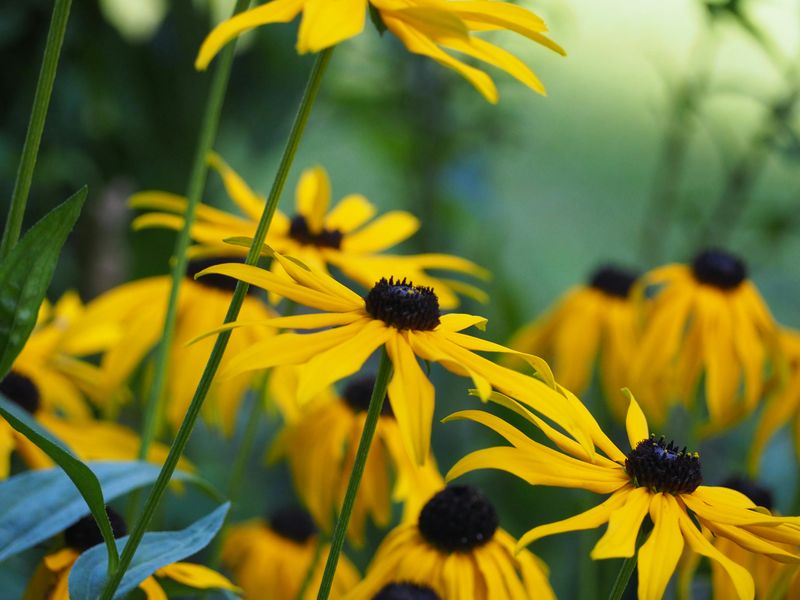
Sunshine yellow with a dark chocolate center, Black-Eyed Susan is the plant that looks like summer itself. Rudbeckia hirta is its official name, but most Tennessee gardeners just call it reliable.
This cheerful wildflower blooms from early summer all the way through October, shrugging off heat and humidity without missing a beat.
Technically a biennial or short-lived perennial, it sustains itself through generous self-seeding, filling in bare patches and creating sweeping drifts of gold year after year.
One of its most impressive qualities is its relationship with poor soil. Unlike fussier plants that demand rich, amended beds, Black-Eyed Susan actually prefers lean, slightly dry ground.
Give it too much fertilizer and it will produce lush leaves with fewer flowers. Less truly is more with this one.
Your Tennessee Garden Changes Every Week. Your Plan Should Too.
Gardening in Tennessee changes quickly throughout the season. Every Friday you’ll receive a simple weekly plan showing exactly what to plant, prune, fertilize, harvest, and protect so you never miss the right timing.
Heat is not its enemy; it is its fuel. During the hottest stretch of a Tennessee summer, when other plants look stressed and ragged, Black-Eyed Susan stands tall and keeps blooming.
Its fibrous root system pulls moisture from deep in the soil, making it surprisingly resilient during dry spells. Combined with its love of full sun, this plant was practically engineered for the South.
Pair it with Purple Coneflower or ornamental grasses for a naturalistic look that feels wild but intentional. Birds and bees adore the seed heads, so resist the urge to remove every spent bloom.
Leaving a few standing gives wildlife a reason to visit your garden long after the last warm day fades into autumn.
3. Russian Sage
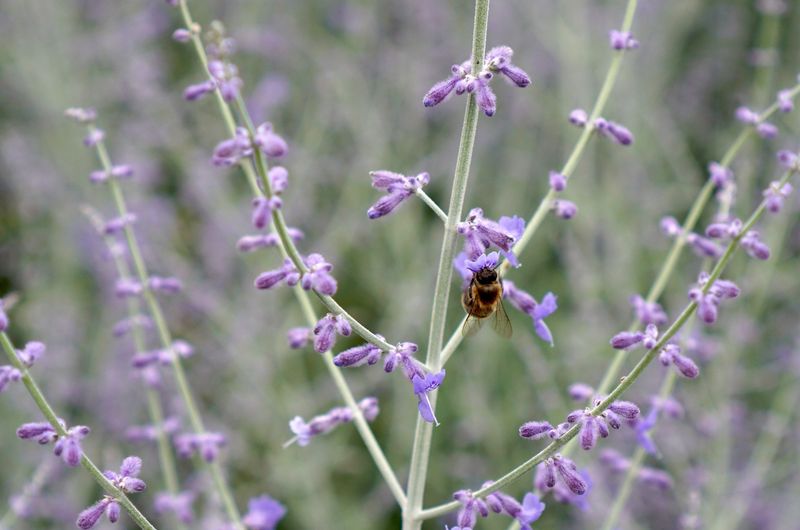
Russian Sage looks like a cloud of lavender planted directly in the ground. Its silvery stems and feathery blue-purple spikes create a dreamy haze in the summer garden.
Salvia yangii, as botanists now call it , thrives in exactly the conditions that break lesser plants: intense sun, poor soil, and weeks without meaningful rainfall.
Once established, it is about as close to a no-maintenance plant as a garden can offer. The secret to its toughness lies in its roots and foliage.
The leaves are coated in a fine silver fuzz that reflects sunlight and reduces water loss, acting like a built-in cooling system.
The deep taproot reaches far below the surface to find moisture even when the top inch of soil is bone dry. This combination makes it one of the most heat-tolerant perennials available to Southern gardeners.
Deer tend to avoid it, which is a bonus for anyone gardening near wooded areas. The aromatic foliage releases a sharp, sage-like scent when brushed, which most grazing animals find unpleasant.
Pollinators, on the other hand, absolutely love the tiny tubular flowers that line each stem from midsummer through early fall. Bumble bees are especially drawn to it in the late afternoon heat.
Russian Sage pairs beautifully with yellow-flowering plants like Black-Eyed Susan, creating a bold color contrast that looks intentional and striking.
Plant it toward the back of a border where its height, which can reach four feet, adds structure and movement. Few plants deliver this much visual drama with this little fuss.
4. Agastache
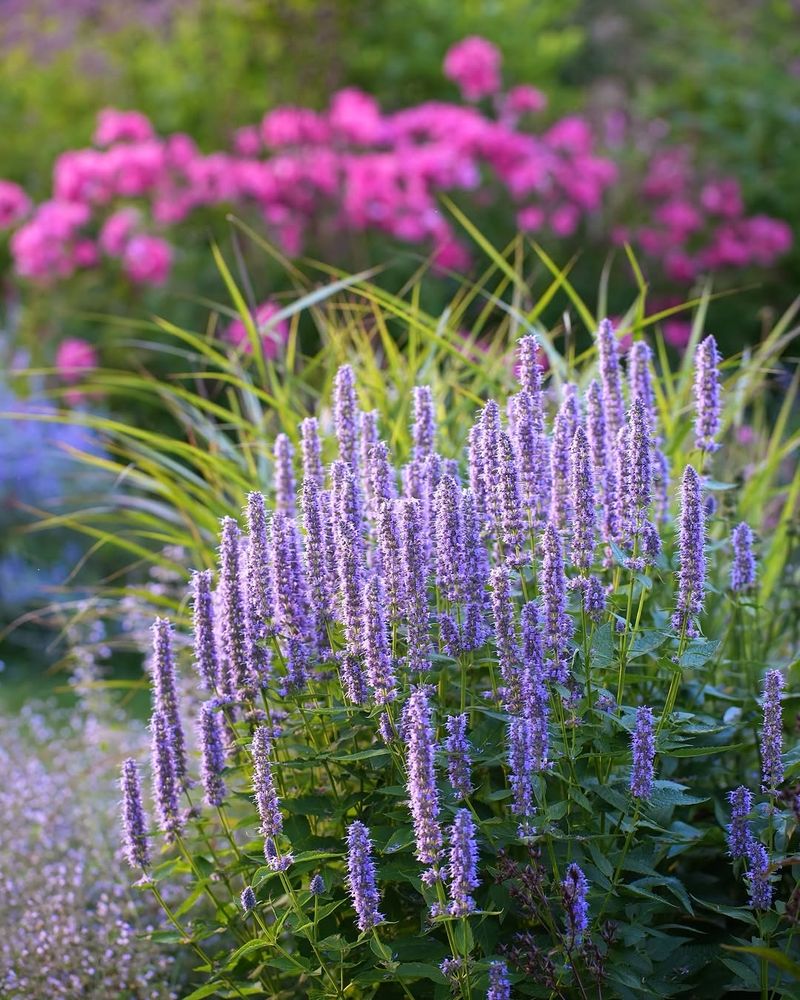
Some plants earn their place quietly. Agastache earns it loudly, with hummingbirds hovering at every spike and bees working the blooms from first light to dusk.
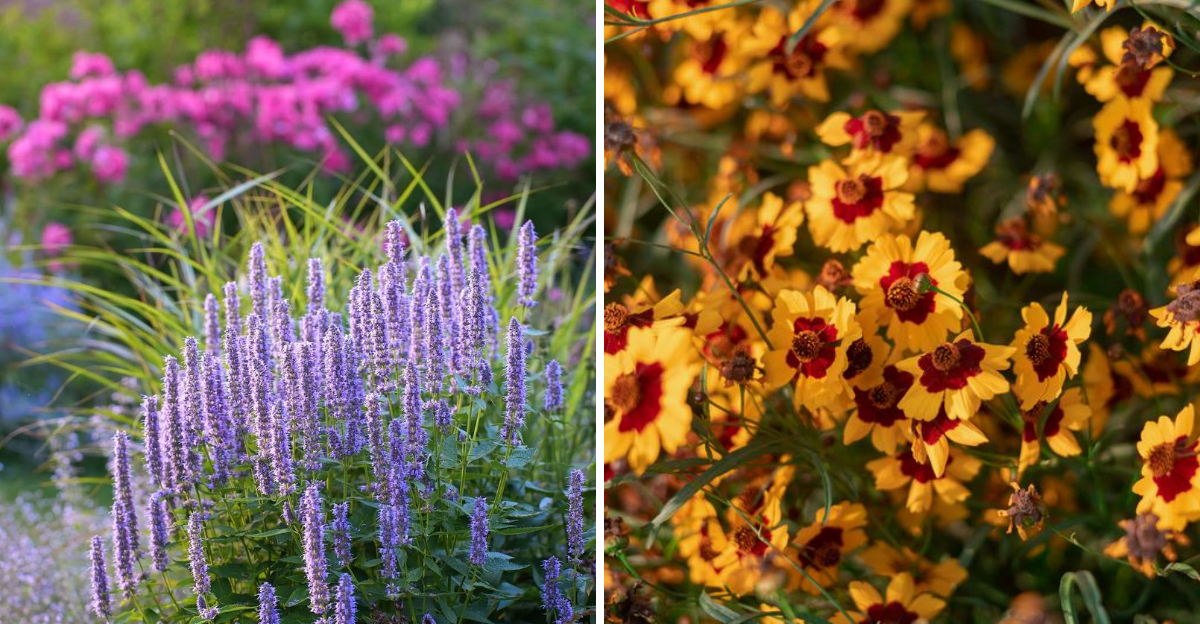
Also called Hummingbird Mint, this aromatic perennial produces tall, densely packed flower spikes in purple, blue, pink, orange, and red.
It blooms from midsummer straight through to the first frost. That is months of uninterrupted color in the heat of a Tennessee summer, which is no small thing.
The foliage smells like a mix of anise, mint, and licorice when brushed. It is a sensory experience just walking past it.
That same fragrance is exactly why deer and rabbits leave it alone. They find it unpleasant. Pollinators find it irresistible. Heat does not slow it down. Drought does not rattle it.
Once established, Agastache thrives in lean, well-drained soil with full sun and very little supplemental water. Good drainage is essential.
Clay-heavy soil can cause crown rot over winter, so consider a raised bed or a slope if your garden holds moisture.
It was practically designed for the conditions Tennessee throws at a garden every July and August. Plant it in full sun. Give it room to breathe.
For species types and most cultivars, removing spent spikes encourages a continuous flush of new flowers. Sterile cultivars like ‘Blue Fortune’ do not require removing and will rebloom on their own.
For Tennessee gardens, ‘Blue Fortune’ and ‘Blue Boa’ are the cultivars that handle the Southeast’s humid summers best.
Both grow two to four feet tall and deliver spectacular vertical structure to any border or pollinator planting. Non-invasive. Non-toxic. Drought tolerant.
This plant checks every box and then some. Agastache does not just survive a Tennessee summer. It performs.
5. Little Bluestem
Grasses rarely make the summer garden list. That is a mistake.
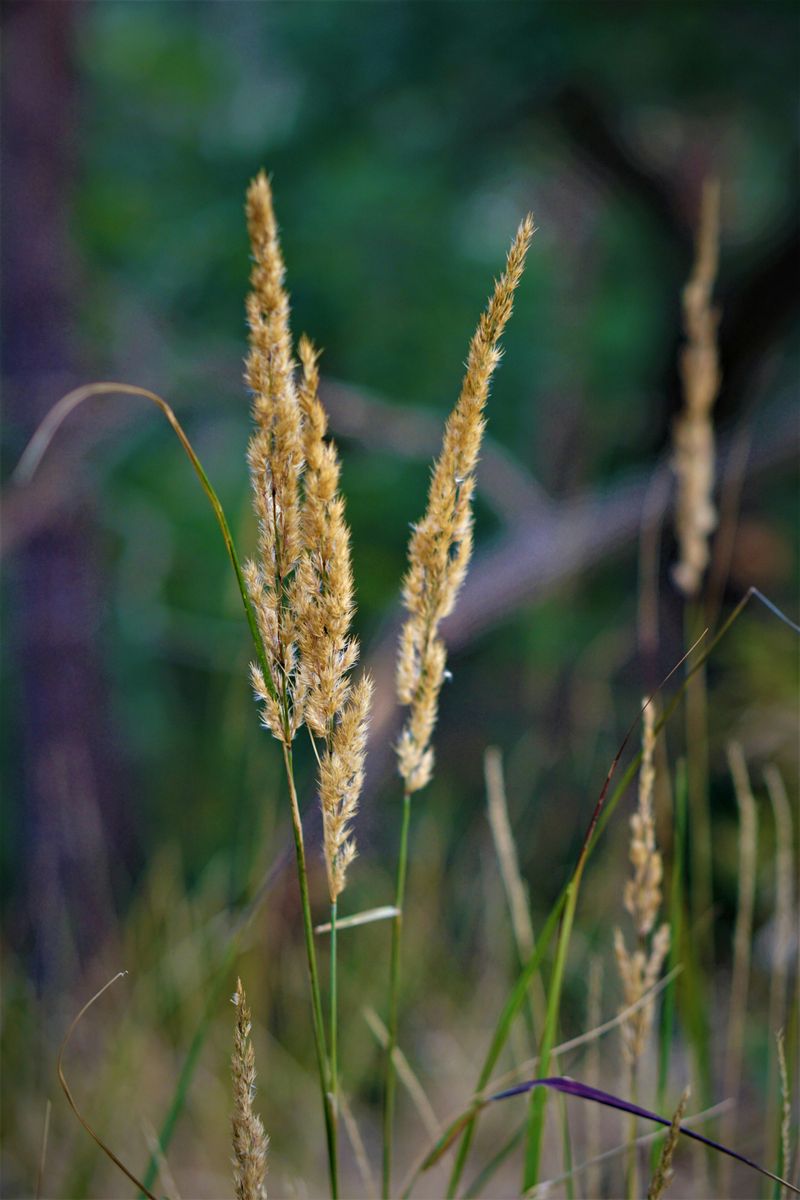
Little Bluestem (Schizachyrium scoparium) transforms a flat, predictable garden into something with real texture and movement.
During the summer months, its upright clumps glow blue-green in the sun, catching the light in a way that few flowering plants can match.
By fall, the foliage shifts to a warm copper-red that rivals any autumn bloom for sheer visual impact. Heat and drought are where this grass truly shines.
Native to the American prairies, Little Bluestem evolved over thousands of years to handle scorching temperatures and minimal rainfall.
Its roots extend five to eight feet below the surface, pulling moisture from deep in the earth long after the topsoil has dried out.
It grows in rocky, sandy, or clay soils without complaint, making it one of the most adaptable plants a gardener can add to a summer bed.
Wildlife benefits are significant and often underappreciated. Sparrows and other small birds nest in the dense clumps and feed on the feathery seed heads that appear in late summer.
Skipper butterflies use Little Bluestem as a larval host plant, meaning the caterpillars feed on the leaves before transforming. Planting it supports an entire food web, not just one species.
Design-wise, Little Bluestem works beautifully as a border edge or mass planting. Group several clumps together for a sweeping, meadow-inspired effect that feels both natural and intentional.
This understated grass quietly steals the show every single summer, and most visitors cannot figure out why the yard looks so good.
6. Sedum
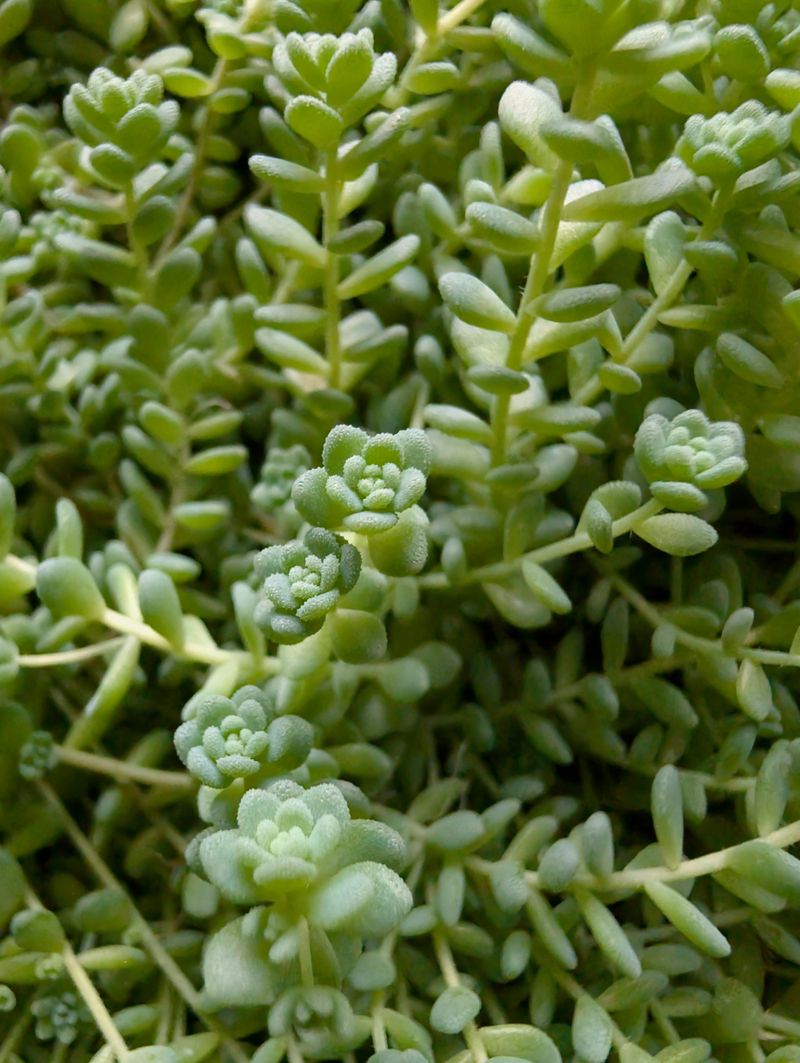
Sedum stores water in its leaves like a tiny, flowering camel. These succulents come in hundreds of varieties, from low-growing ground covers to upright clumps two feet tall.
The taller types, often called Stonecrop, produce flat-topped flower clusters in shades of pink, red, and white. Butterflies cannot ignore them, with peak bloom arriving in late summer and lasting well into fall.
The compact varieties spread across rock gardens and slopes, filling in gaps where other plants would struggle to survive.
Tennessee summers test every plant. Sedum builds quietly through the heat, then puts on its best show as temperatures ease.
Its thick, waxy leaves lock in moisture and resist evaporation, allowing it to go weeks without rainfall without showing any signs of stress.
Poor, gritty, or rocky soil is actually preferred over rich garden beds, which makes it a perfect candidate for spots where nothing else seems to grow.
Overwatering is the only real way to cause problems with this plant. Autumn Joy is one of the most popular upright varieties for Southern gardens.
It opens with blue-green rosettes in spring, shifts to pale pink flower heads by late summer, then settles into a rusty copper-bronze that holds through winter.
Leaving the dried flower heads standing through the cold months adds texture to an otherwise bare garden and provides seeds for birds. For a low-effort, high-reward plant, few options compete with Sedum.
It handles neglect gracefully, looks interesting in every season, and attracts pollinators without demanding anything complicated in return. That kind of reliability is genuinely hard to find.
7. Coreopsis
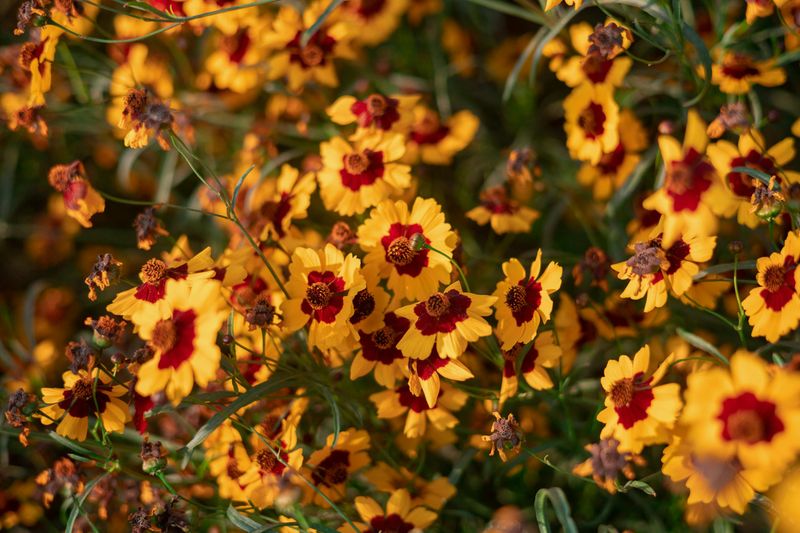
Coreopsis earned its nickname, Tickseed, from its tiny seed shape, but its reputation in the garden is anything but small.
This native perennial is one of the longest-blooming plants available to Southern gardeners, often flowering from late spring all the way through the first frost.
The golden-yellow daisy-like flowers appear in such abundance that the fine-textured foliage nearly disappears beneath them.
In a Tennessee summer, that kind of non-stop color is worth its weight in gold. Heat activates something almost rebellious in this plant.
While neighboring flowers slow their bloom cycle during the hottest weeks of summer, Coreopsis accelerates. Regular removing, simply pinching off spent blooms, encourages an even more intense flush of new flowers.
It responds to attention the way a good garden should, rewarding the extra ten minutes of effort with weeks of additional color.
Drought tolerance is genuinely impressive for such a delicate-looking plant. Thread-leaf varieties like Coreopsis verticillata have fine foliage that minimizes water loss in heat.
They establish quickly and tolerate the kind of clay-heavy soil that is common across much of the state. Full sun is essential, but beyond that, this plant is remarkably forgiving.
Note that C. verticillata cultivars tend to be more reliably perennial in Tennessee soils than other species, which can be short-lived or self-seeding in heavy clay.
Moonbeam is a beloved cultivar with soft pale-yellow flowers that pair beautifully with purple or blue perennials like Salvia.
Zagreb offers a deeper golden tone and a tighter, more compact growth habit. Either way, adding Coreopsis to a summer garden is one of the easiest wins any gardener can score this season.
8. Salvia
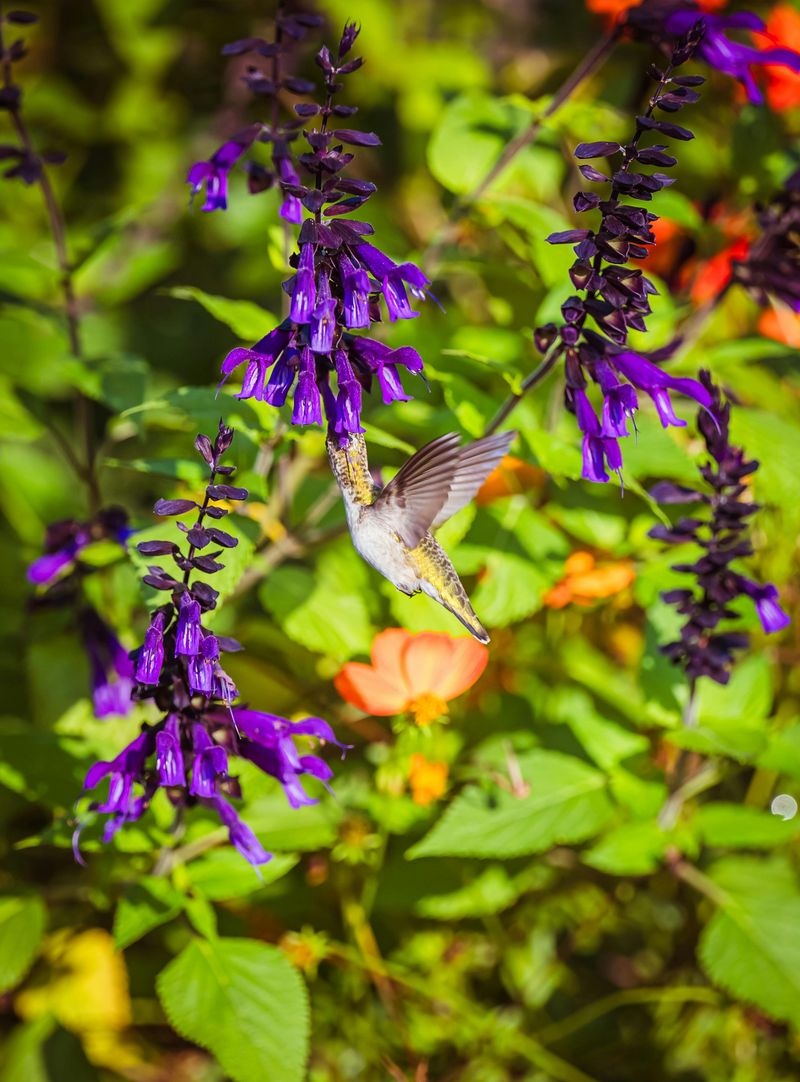
Blue is a rare color in the summer garden, which makes Salvia practically irreplaceable. Every Salvia built for Tennessee summers shares one trait: heat is fuel.
Salvia yangii (formerly Perovskia atriplicifolia), as botanists now call it, thrives in exactly the conditions that break lesser plants.
In most of Tennessee, treat it as a long-blooming annual. In the Memphis area (zone 8a), it returns reliably as a perennial.
Hummingbirds are obsessed with it, hovering around the tubular flowers like tiny, jeweled helicopters all afternoon.
Aromatic foliage is another feature that sets Salvia apart from most summer perennials. The leaves contain volatile oils that release a sharp, herbal scent when touched, which deer and rabbits find off-putting.
For gardeners dealing with wildlife pressure, that natural deterrent removes one major headache from the summer maintenance list.
The scent is pleasant to humans, though, adding a sensory dimension beyond just visual appeal. Mexican Bush Salvia, or Salvia leucantha, is another standout variety for the South.
Its velvety purple and white flower spikes emerge in late summer and create a dramatic focal point just as many other plants begin to fade.
It grows quickly into a large, shrubby clump that fills space beautifully and blooms right up until frost cuts it back. In zone 8a (the Memphis area), it may return from the roots with good drainage and a layer of mulch.
Across the rest of Tennessee, treat it as a spectacular annual and replant each season for the same bold effect.
Pairing it with Coreopsis creates a yellow-and-purple combination that looks bold and intentional from across the yard.
For anyone wanting to make the most of a Tennessee summer, Salvia belongs at the top of the planting list.
Few plants deliver this level of color, wildlife value, and heat-loving toughness all in one package. This is the plant that makes summer worth celebrating.