Why Desert Succulents Struggle In Arizona June And What Overwatering Looks Like
Few gardening situations are more frustrating than watching a succulent decline while trying to help it. The plant looked perfectly fine not long ago, so the natural reaction is to pay closer attention and give it a little extra care.
Most people assume that is the responsible thing to do.
Sometimes that is exactly where the trouble begins.
Succulents can be surprisingly difficult to read because their problems do not always show up the way people expect. A plant that looks thirsty may be dealing with something entirely different.
A harmless looking change can turn into a bigger issue if the signals are misunderstood.
That confusion becomes more common once summer settles in. Arizona gardeners often notice changes during June when temperatures rise and growing conditions become more demanding.
What appears to be a straightforward fix at first glance can end up sending a succulent in the wrong direction instead.
1. June Heat Changes How Desert Succulents Use Water
Blazing June temperatures flip the script on how succulents function. Most people assume heat means thirst, but desert succulents actually slow down in extreme heat.
Above 100 degrees, many species go into a kind of dormancy to protect themselves.
Cacti and succulents native to desert climates are built to store water, not chase it. When soil stays wet during a heat spike, roots sit in warmth and moisture at the same time.
That combination creates conditions for rot faster than cooler months.
June in Arizona brings intense solar radiation and low humidity early in the month. Succulents respond by closing their stomata during the day to reduce moisture loss.
Watering heavily during this phase does not help the plant absorb more. It just saturates the root zone.
A plant that looks wilted in June heat is not always thirsty. Sometimes it is simply reacting to high soil temperature or sun stress.
Watering without checking the soil first often makes things worse.
Nighttime temperatures in June rarely drop low enough to give roots a break from warmth. Soil retains heat well into the evening.
Wet, warm soil overnight is a recipe for fungal issues and stressed roots.
2. Soggy Soil Can Stress Desert Succulents
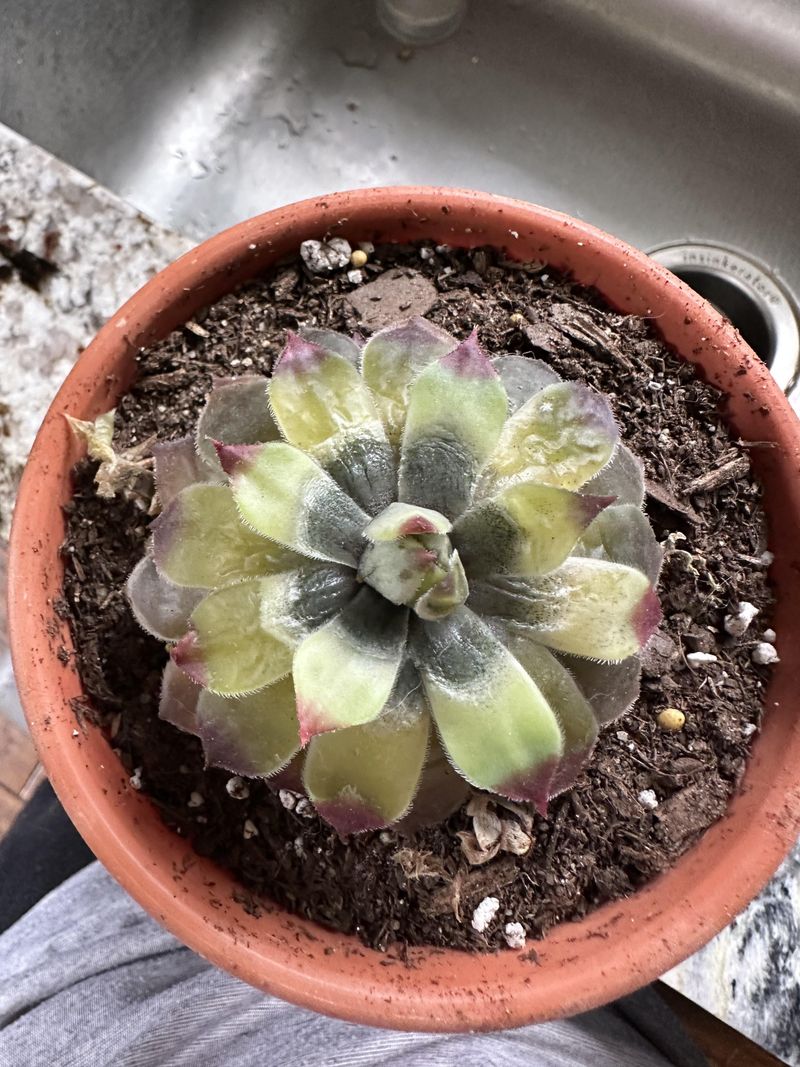
Soggy soil is one of the fastest ways to stress a desert succulent. These plants evolved in gritty, fast-draining ground where water moves through quickly.
Holding moisture around roots for too long disrupts everything they are designed to do.
When soil stays wet, oxygen cannot reach the root zone. Roots need air just as much as they need water.
Wet, compacted soil cuts off that air supply and weakens the root system over time.
Heavy clay soils are especially problematic in desert garden beds. Clay holds water longer than sandy or loamy mixes.
Even a single deep watering can leave clay soil saturated for several days in June heat.
Container succulents face a similar issue when pots lack drainage holes. Water pools at the bottom, and the lower roots stay submerged.
A plant sitting in that condition will start showing stress within a week or two.
Your Arizona Garden Changes Every Week. Your Plan Should Too.
Gardening in Arizona changes quickly throughout the season. Every Friday you’ll receive a simple weekly plan showing exactly what to plant, prune, fertilize, harvest, and protect so you never miss the right timing.
Fixing soggy soil starts with the mix itself. A blend of coarse sand, perlite, and potting soil drains much faster than standard garden soil.
Raised beds also help by allowing excess water to escape from the sides and bottom.
3. Yellowing Leaves May Signal Excess Moisture
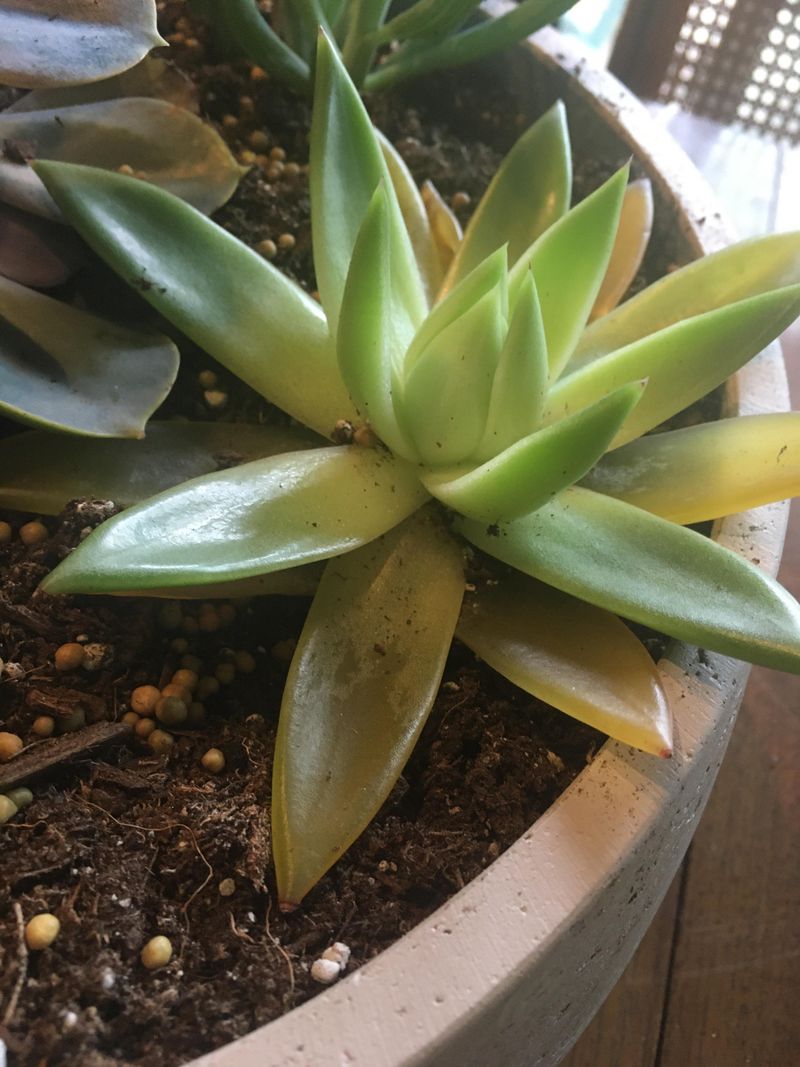
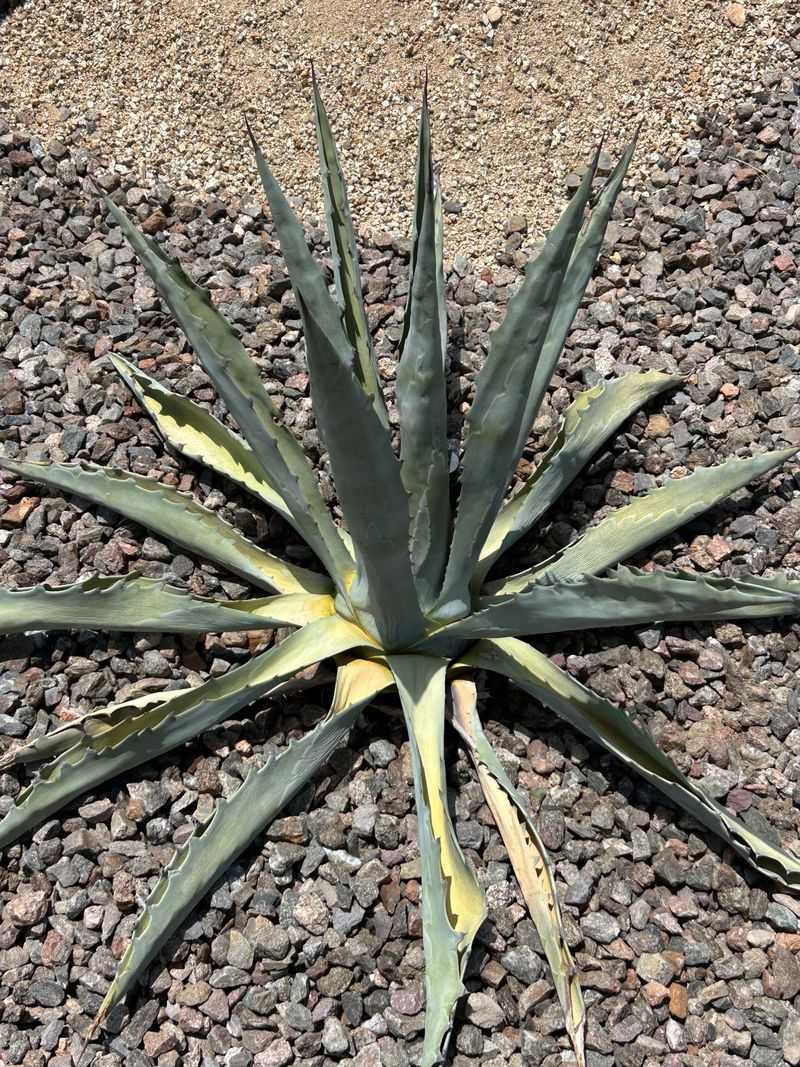
Yellow leaves on a succulent are not always a nutrient problem. More often than not, they point to water sitting in the root zone longer than the plant can handle.
Yellowing is one of the earliest visible warnings a plant sends out.
Overwatered leaves tend to look pale and slightly translucent. Press one gently with a finger.
If it feels mushy or releases moisture easily, excess water is almost certainly the cause. Healthy leaves feel firm and plump without being squishy.
Bottom leaves yellow first in most cases. Moisture stress tends to work its way up from the base.
If the yellowing starts at the top, the cause might be sunburn or nutrient deficiency instead. Location of discoloration matters when diagnosing the problem.
Sunburned leaves look bleached or brown and crispy at the tips. Overwatered leaves look soft and pale, sometimes with a slight translucent quality.
Those two issues look different up close once you know what to look for.
Reducing watering frequency is the first step when yellowing appears. Pull back to watering once every ten to fourteen days in June.
Let the soil dry out fully before adding more water. Most desert succulents respond well once the root zone gets a chance to breathe again.
4. Soft Stems Often Point To Overwatering
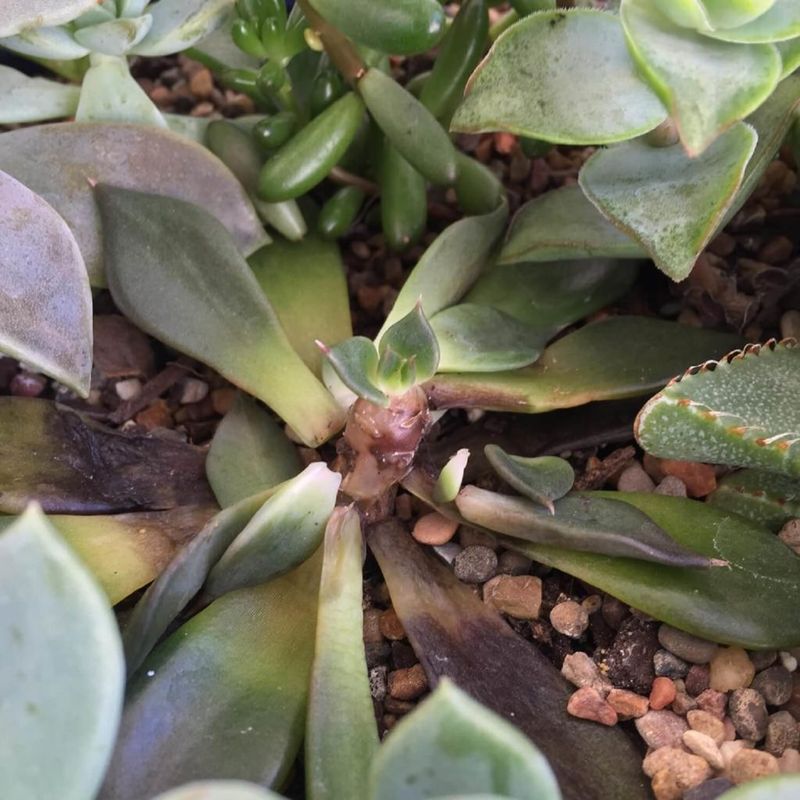
Soft, squishy stems are a red flag that should not be ignored. A healthy succulent stem feels solid and slightly firm to the touch.
When it starts to feel mushy or bendable near the base, the roots are likely struggling.
Root rot is the most common cause of stem softness in succulents. Excess moisture breaks down root tissue, and that damage travels upward into the stem over time.
By the time the stem feels soft, the roots below may already be severely compromised.
Stem softness near the soil line is especially concerning. That area stays in contact with wet soil the longest.
Check there first by gently squeezing the base of the stem between two fingers. Firmness is a good sign.
Softness means action is needed quickly.
Catching this early gives the plant a real chance at recovery. Remove it from the soil and inspect the roots.
Healthy roots look white or tan and feel firm. Rotted roots appear brown, black, or gray and feel slimy or fall apart when touched.
Trim away any rotted root sections with clean scissors. Let the plant sit in a dry, shaded spot for two to three days before replanting into fresh, well-draining soil.
5. Roots Need Time To Dry Between Watering
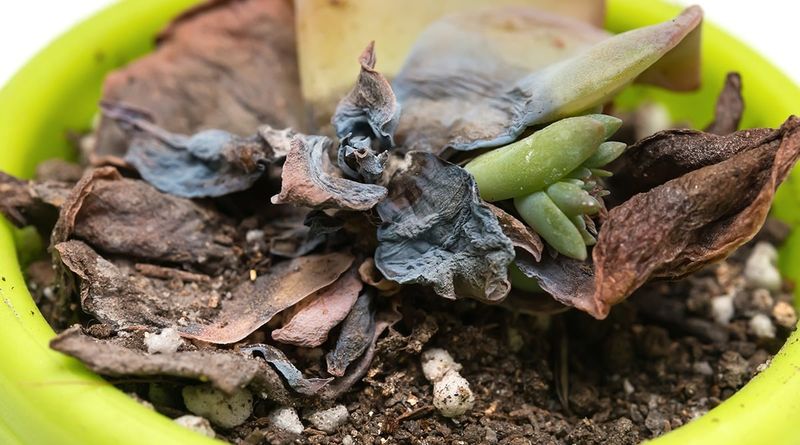
Root health is the foundation of a thriving succulent. What happens underground determines how the plant looks above ground.
Giving roots enough time to dry between waterings is one of the most practical habits a desert gardener can build.
Desert succulents evolved in environments where rain comes in short bursts followed by long dry periods. Their roots are designed to absorb quickly and then rest.
Constant moisture mimics a tropical environment, which is the opposite of what these plants need.
A good rule of thumb in summer is to water deeply but infrequently. Water thoroughly until it drains from the bottom of the pot.
Then wait until the top two to three inches of soil are completely dry before watering again.
Checking soil moisture with a finger is more reliable than following a fixed schedule. Weather, pot size, soil type, and plant size all affect how fast soil dries out.
A small terracotta pot in full sun dries faster than a large plastic container in partial shade.
Terracotta pots are popular among succulent growers for good reason. The porous walls allow moisture to evaporate from the sides, not just the surface.
That speeds up the drying cycle and keeps roots in better condition between waterings.
6. Poor Drainage Can Create Hidden Problems
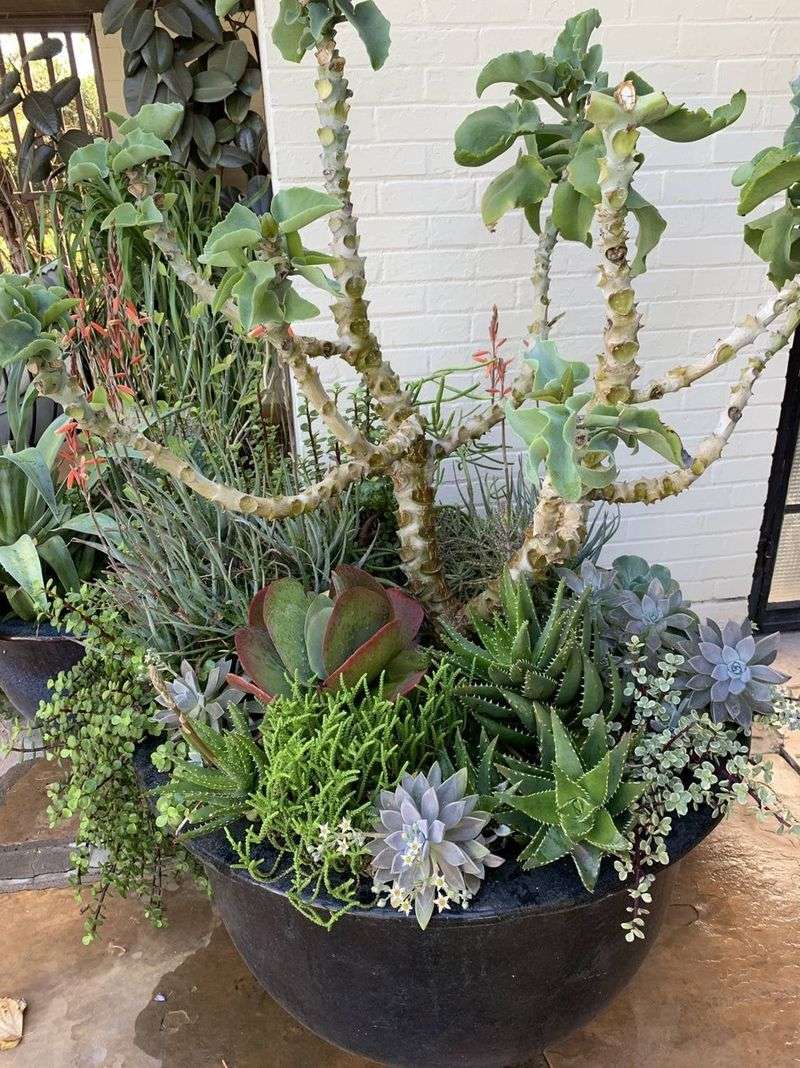
Bad drainage is sneaky. A plant can look completely fine on the surface while the roots below are sitting in standing water.
By the time visible symptoms appear, the underlying damage has often been building for weeks.
Drainage problems happen in both containers and garden beds. Pots without holes trap water at the bottom no matter how well the soil mix drains.
Garden beds with hardpan layers or compacted clay stop water from moving downward at a reasonable pace.
Hardpan is common in desert soils. It forms when calcium carbonate deposits create a dense layer just below the surface.
Water hits that layer and backs up, leaving roots in a saturated zone that looks dry at the top but stays wet underneath.
Breaking up hardpan with a pick or soil amendment helps over time. Adding coarse gravel or decomposed granite to the planting area improves drainage noticeably.
Raised beds bypass the problem entirely by placing plant roots above the native soil layer.
For containers, always choose pots with at least one drainage hole. Avoid using decorative pots without holes unless you place a well-draining liner pot inside.
Saucers that collect water under pots should be emptied after each watering.
7. Irrigation Schedules May Need Seasonal Adjustments
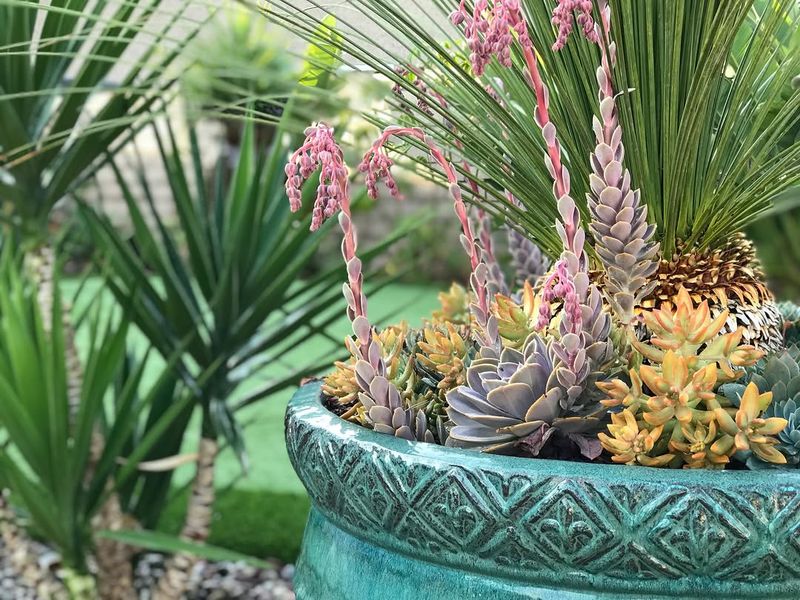
Automatic irrigation systems are convenient, but they can work against succulents if the schedule never changes. A setting that worked fine in March may deliver far too much water in June.
Seasonal adjustments are not optional for desert gardens.
Early June in the Southwest is typically hot and dry before monsoon rains arrive. Succulents need very little supplemental water during this stretch.
Running drip lines on a spring schedule during this period keeps soil wetter than it should be.
Monsoon season changes the equation again. Once rains arrive, usually in mid to late July, supplemental irrigation can be reduced even further.
Rain events can be heavy enough to fully saturate the soil, making additional watering unnecessary for days.
Checking the weather forecast before running irrigation is a simple habit that pays off. If rain is expected within two or three days, skip the scheduled watering.
Succulents handle skipped waterings far better than they handle being waterlogged.
Drip emitters placed too close to the base of a succulent can keep the crown area constantly moist. Move emitters at least six inches away from the main stem.
Water should soak into the outer root zone, not pool directly around the base of the plant.