Native Michigan Plants That Make Your Yard Less Inviting To Both Ticks And Deer
Dealing with ticks and deer separately is exhausting enough.
Dealing with both at the same time in the same yard is a problem that sends a lot of Michigan gardeners reaching for fencing, sprays, and other solutions that require constant upkeep and ongoing expense.
What tends to get overlooked is that a well-chosen planting strategy can address both pressures at once without any of that ongoing maintenance.
Certain native plants carry properties and growth habits that make them genuinely unappealing to deer while also reducing the kind of habitat that ticks depend on to survive and spread.
Building your yard around these plants is one of the most practical and lasting investments a Michigan gardener can make.
1. Northern Bush Honeysuckle
Few native shrubs work as hard as Northern Bush Honeysuckle without asking for much in return.
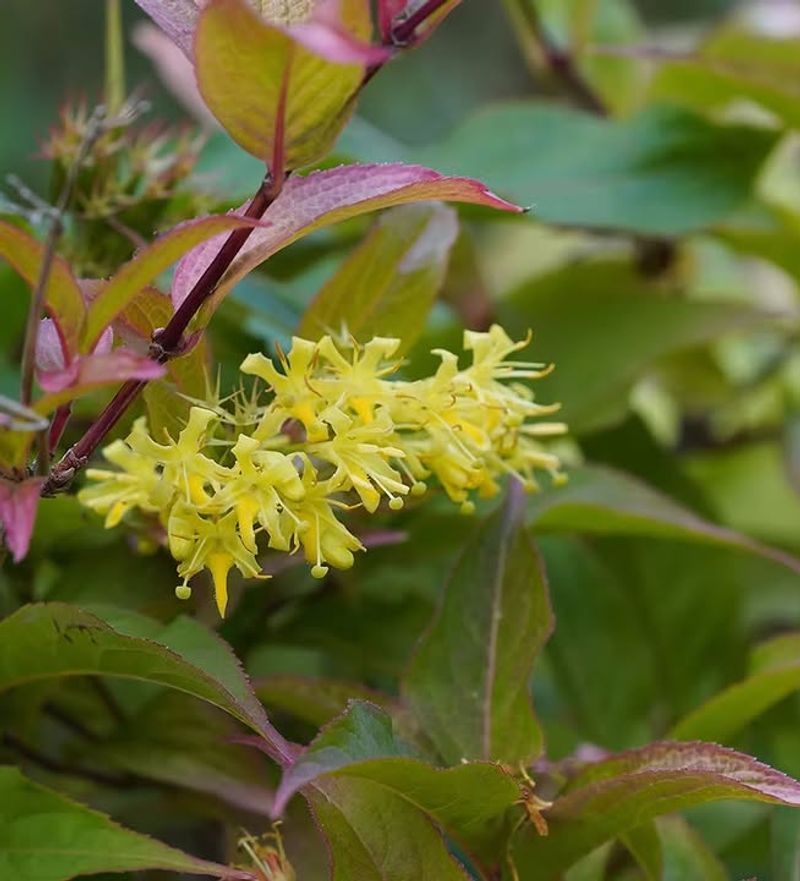
This dense, multi-stemmed beauty grows two to four feet tall and spreads eagerly through underground runners, forming thick colonies that ticks genuinely struggle to navigate through.
The woody, layered structure reduces the moist, shady leaf-litter zones where ticks prefer to wait for a host.
Deer tend to pass right by it, which makes it a reliable choice for Michigan yards where browsing pressure is high. Plant it in full sun to partial shade, and it will adapt without complaint.
It handles a wide range of soil types, from dry sandy ground to heavier clay soils, making it flexible for most landscapes.
Space plants about three feet apart to encourage a solid, connected mass planting. Once established, it needs almost no supplemental watering and rarely requires fertilizer.
Yellow flowers bloom in early summer, attracting native bees and butterflies while adding cheerful color to borders or slopes. It also shines as an erosion-control plant on hillsides.
Trim it back lightly every few years to keep growth tidy and encourage fresh stems from the base.
For a low-fuss, high-reward native shrub that quietly makes your yard less hospitable to ticks and deer, Northern Bush Honeysuckle earns a top spot on your planting list.
2. Spicebush
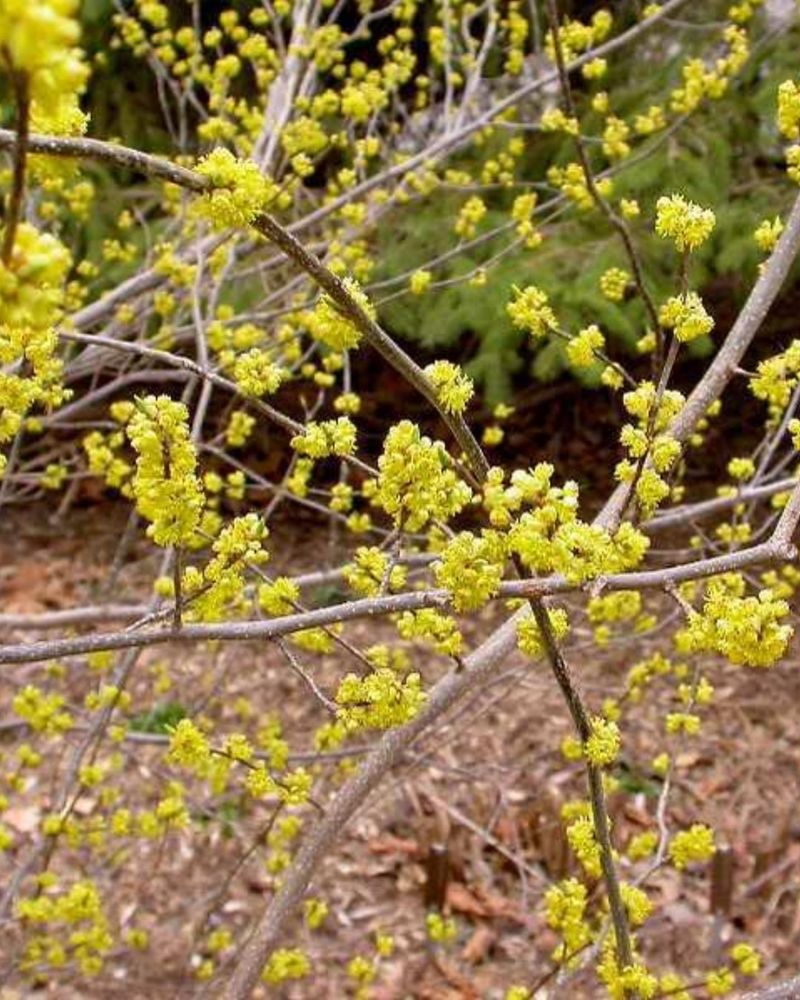
Walk past a Spicebush and brush against its leaves, and you will immediately understand why deer keep their distance.
The intensely spicy, almost medicinal fragrance released from the foliage, stems, and berries is a powerful natural deterrent that deer find off-putting.
That same aromatic quality creates an environment ticks find far less comfortable compared to unscented, dense vegetation.
Spicebush is one of the earliest native shrubs to flower in Michigan, offering small yellow blooms in March or April before the leaves even open. By fall, female plants produce brilliant red berries that migrating birds absolutely love.
It grows six to twelve feet tall and thrives in partial to full shade, making it a fantastic choice for woodland edges or shaded backyard borders.
Rich, moist, well-drained soil gives it the best start, though it adapts reasonably well to average garden conditions once settled in. Plant male and female shrubs together if you want berry production, spacing them about five to six feet apart.
Your Michigan Garden Changes Every Week. Your Plan Should Too.
Gardening in Michigan changes quickly throughout the season. Every Friday you’ll receive a simple weekly plan showing exactly what to plant, prune, fertilize, harvest, and protect so you never miss the right timing.
Spicebush is also the host plant for the Spicebush Swallowtail butterfly, adding another layer of ecological value to your yard. Maintenance is genuinely minimal since it rarely needs pruning and has strong natural resistance to pests and disease.
For a plant that does so much with so little, Spicebush is a true garden gem.
3. Mapleleaf Viburnum
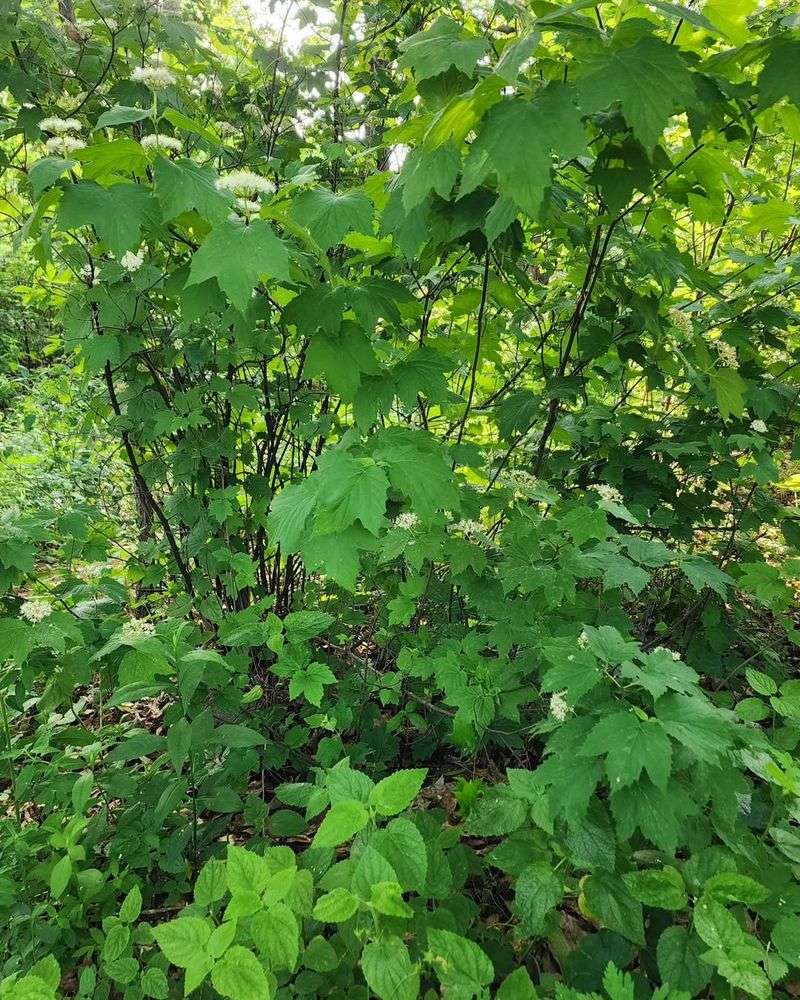
There is something quietly impressive about a shrub that thrives where others struggle.
Mapleleaf Viburnum is a woodland native that performs beautifully in deep shade, filling in the understory with dense, layered growth that cuts down on the open, humid zones ticks prefer for resting and waiting.
Its thick colony-forming habit means fewer gaps in your landscape where pests can find shelter.
Deer generally avoid this shrub, which researchers and gardeners alike have noted across Michigan and the broader Great Lakes region. It grows three to six feet tall and spreads slowly through root suckering, gradually building a natural hedge over time.
The maple-shaped leaves turn stunning shades of pink, red, and purple in autumn, giving your yard a serious seasonal color payoff.
Plant Mapleleaf Viburnum in partial to full shade with moist, well-drained, slightly acidic soil for the strongest results.
It handles dry shade better than most native shrubs once established, which is a real advantage under large trees where other plants tend to struggle.
Space plants four to five feet apart to allow natural spread without overcrowding. White flower clusters appear in late spring and attract pollinators, followed by dark purple berries that birds enjoy through winter.
Light pruning after flowering keeps the shape tidy. For shaded spots where you want low-effort, pest-discouraging coverage, this viburnum is a standout performer.
4. Leatherwood
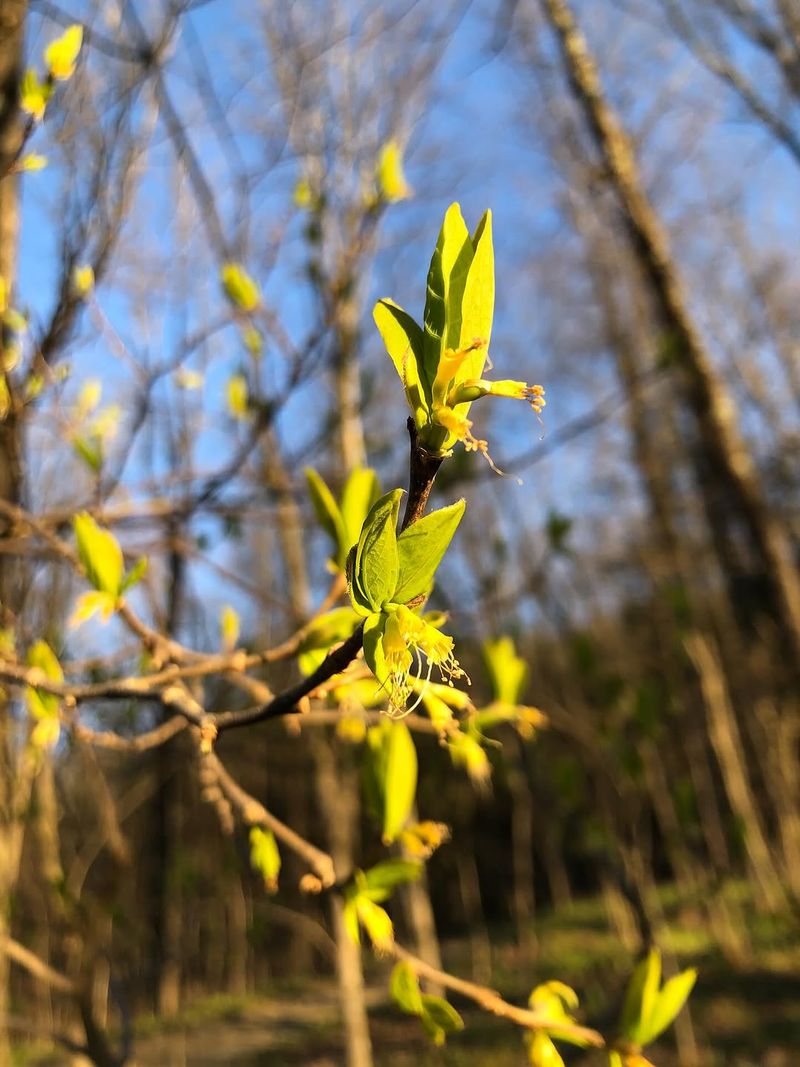
Leatherwood is one of Michigan’s most underappreciated native shrubs, and that is a genuine shame because it quietly solves several landscaping problems at once.
It grows slowly to about three to six feet tall with a rounded, dense form that fills shaded corners with tidy, layered foliage.
That dense habit reduces the humid, leaf-covered microclimates that ticks depend on to survive and ambush passing hosts.
Deer find Leatherwood unpalatable, largely because of its notably flexible yet tough stems and bitter bark chemistry.
Interestingly, its common name comes from the extreme pliability of its branches, which bend without snapping, a trait Native Americans historically used for binding and rope-making.
It is one of the first shrubs to bloom in Michigan, producing small clusters of pale yellow flowers on bare branches as early as March.
Rich, consistently moist, slightly acidic soil in partial to full shade suits it best, making it ideal for rain gardens, streambanks, or the shaded north side of a house.
Space plants four to five feet apart and water regularly during the first two growing seasons to help roots establish.
Once settled, it is remarkably self-sufficient and rarely needs pruning or fertilizing. Leatherwood grows slowly, so patience pays off, but the result is a graceful, well-behaved shrub that earns its place in any woodland garden.
Its quiet presence adds genuine ecological value year after year.
5. Blackhaw Viburnum
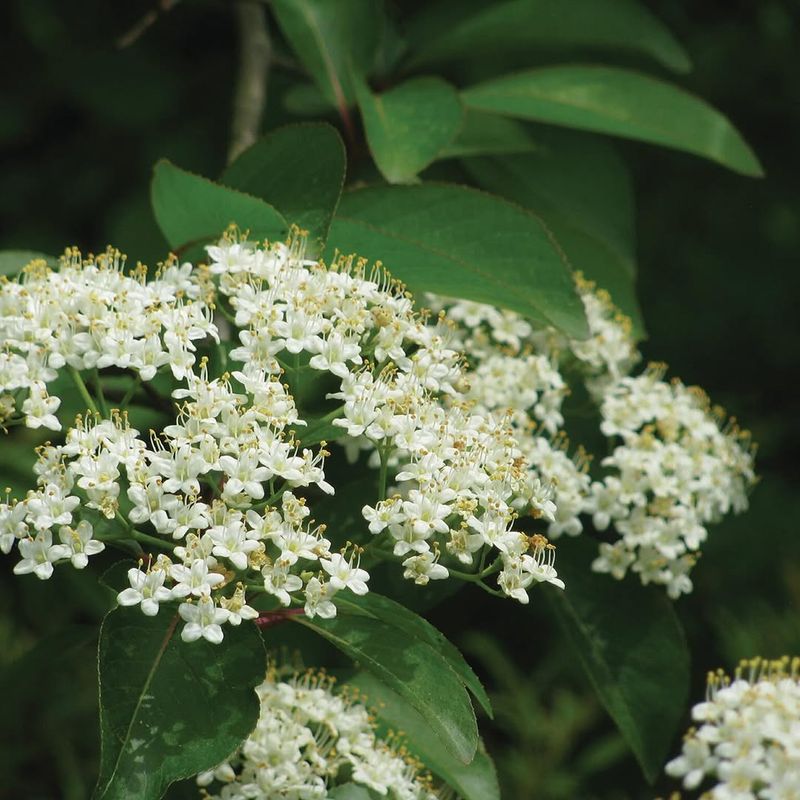
Blackhaw Viburnum is the kind of plant that pulls its weight in every single season. Spring brings flat-topped clusters of creamy white flowers that hum with pollinators.
Summer offers deep green, glossy foliage. Fall delivers stunning red-to-purple leaf color along with clusters of blue-black berries that songbirds flock to.
Even in winter, the layered branching structure adds visual interest while creating a dense barrier that ticks find difficult to navigate.
Deer largely avoid Blackhaw, which is well-documented among Michigan gardeners and native plant enthusiasts. The shrub grows eight to fifteen feet tall and can be shaped into a privacy hedge or left to grow naturally as a multi-stemmed specimen.
Either way, its thick branching habit reduces the open, shaded ground-level zones where ticks tend to rest between hosts.
Plant Blackhaw in full sun to partial shade in well-drained soil. It adapts to clay, loam, or sandy soil types, giving it broad appeal across Michigan’s varied landscapes.
Space plants six to eight feet apart for hedgerow plantings, or give a single specimen more room to develop its natural arching form. Water during dry spells in the first year, then step back and let it thrive on rainfall.
Pruning right after flowering keeps it tidy without sacrificing next year’s berry production. Blackhaw Viburnum is a genuinely versatile native that rewards you with beauty, wildlife value, and natural pest management all in one package.
6. Ninebark
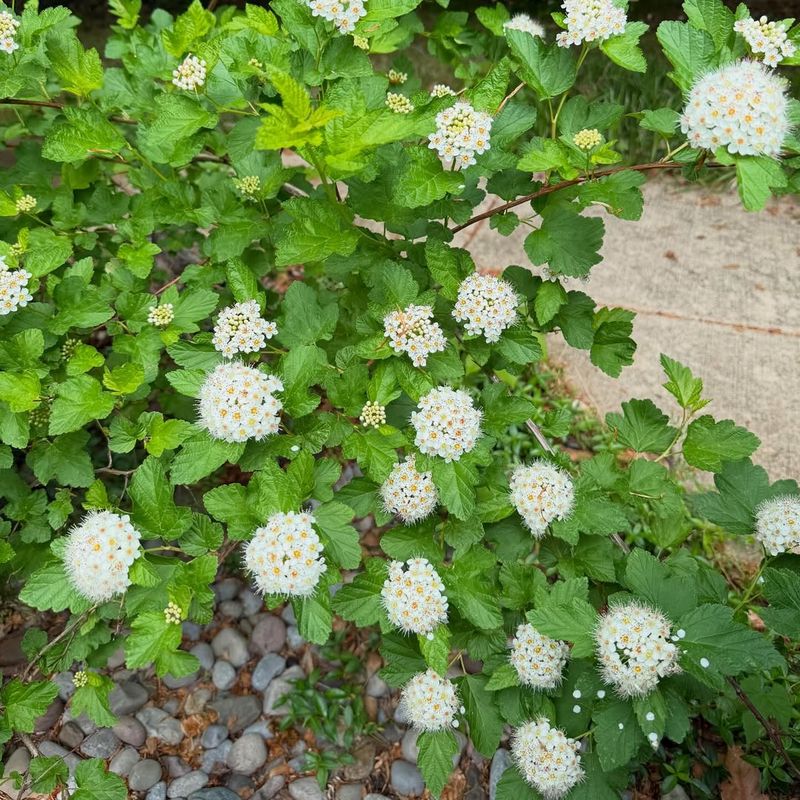
Ninebark gets its memorable name from the way its bark peels back in multiple layers, revealing cinnamon and tan tones underneath that make it genuinely interesting even in winter.
Beyond its looks, this native shrub is a practical powerhouse when it comes to creating a yard that ticks and deer find less appealing.
Its dense, twiggy branching structure forms a thick canopy close to the ground that limits the humid, shaded conditions ticks prefer.
Deer tend to avoid Ninebark, especially when other more palatable plants are available nearby. It grows five to ten feet tall with gracefully arching branches and thrives in full sun to partial shade.
White or pale pink flower clusters appear in late spring, followed by reddish seed capsules that add texture and color through fall and into winter.
One of Ninebark’s biggest selling points is its extraordinary adaptability. It tolerates wet soils, dry soils, clay, and poor fertility without complaint, which makes it one of the most forgiving native shrubs you can plant in Michigan.
Space plants four to six feet apart for a solid privacy screen, or use a single plant as a bold landscape focal point. Prune out older stems every few years right after flowering to keep the plant vigorous and shapely.
Ninebark also comes in purple-leaved cultivars derived from the native species, giving you extra ornamental options while keeping the ecological benefits intact.
7. Witch Hazel
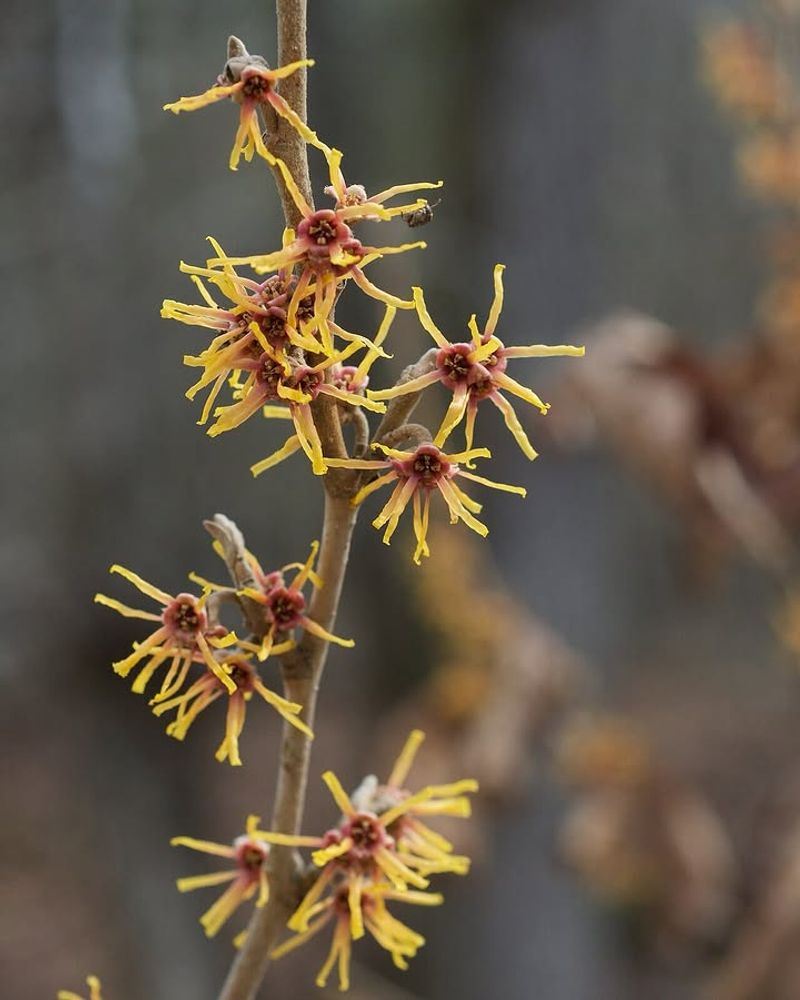
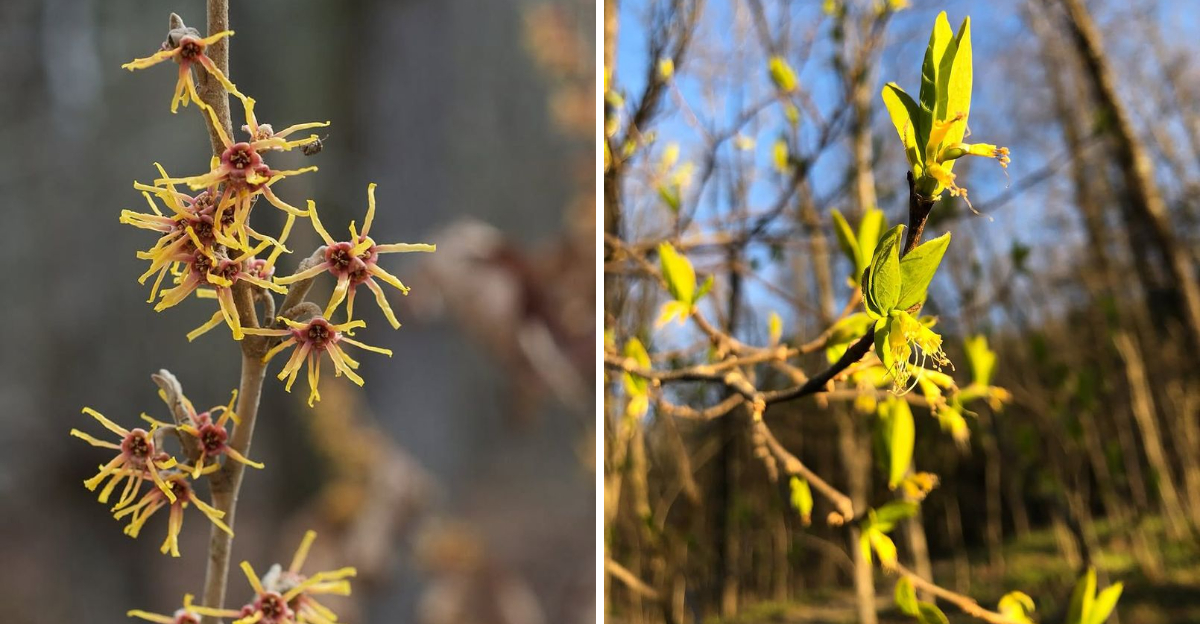
Witch Hazel has a party trick that no other Michigan native can match: it blooms in late October through December, sending out spidery, fragrant yellow flowers just as everything else is going dormant.
That alone makes it worth planting, but its value goes much deeper than seasonal novelty.
The aromatic compounds in its leaves and bark create an environment that deer find unpleasant, and its dense, layered understory growth reduces the humid leaf-litter zones where ticks thrive.
Growing ten to fifteen feet tall as a large shrub or small multi-stemmed tree, Witch Hazel fills shaded areas with elegant, spreading branches. Its broad, oval leaves turn golden yellow in fall before the flowers even open, giving you a spectacular double display.
It grows naturally along Michigan woodland edges and streambanks, so it is perfectly adapted to the state’s climate and soil conditions.
Plant it in partial to full shade with moist, slightly acidic, well-drained soil for best results. It tolerates clay soil reasonably well once established and rarely needs supplemental fertilizer.
Space plants eight to ten feet apart to allow the natural vase-shaped form to develop without crowding. Water consistently during the first two seasons, then reduce watering as roots deepen.
Pruning is rarely necessary beyond removing any crossing or damaged branches right after the late-season bloom. Witch Hazel is a genuinely special plant that brings beauty, wildlife value, and natural pest management to Michigan yards with very little fuss.
8. Sweetfern
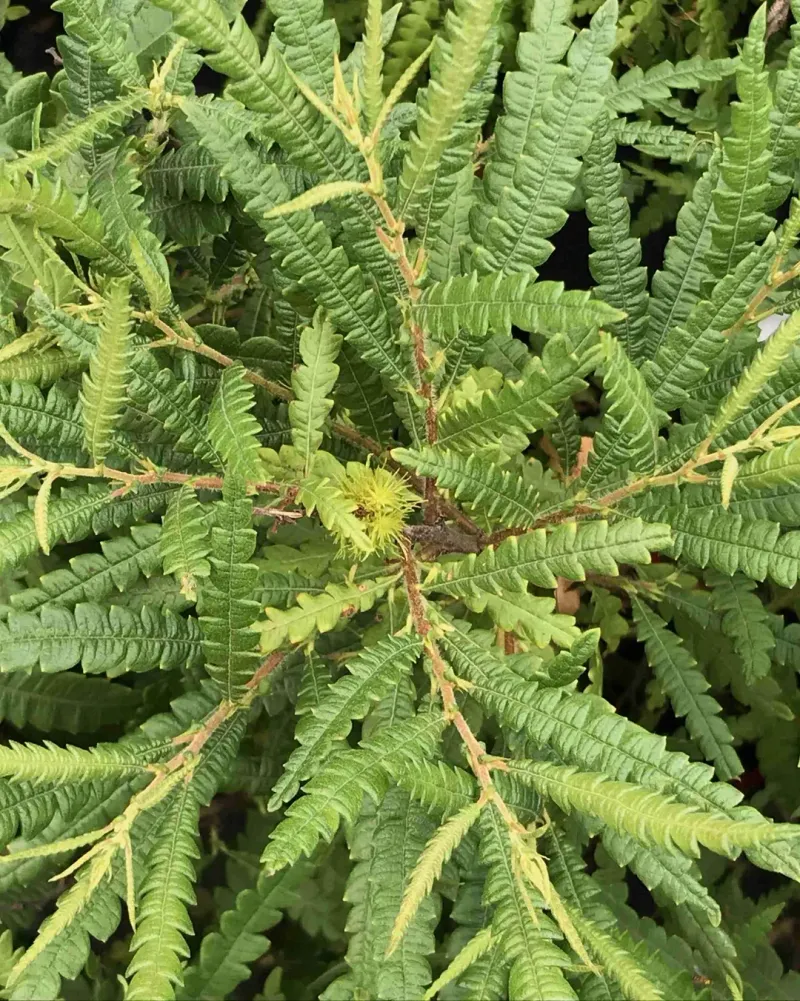
Despite its name, Sweetfern is not actually a fern at all. It is a low-growing native shrub that reaches about two to four feet tall and spreads through underground runners to form wide, fragrant colonies.
Crush a leaf between your fingers and you get a rich, resinous, almost woodsy scent that is genuinely pleasant to humans but strongly off-putting to deer.
That same aromatic quality creates a sensory barrier that ticks find inhospitable compared to neutral, unscented vegetation.
Sweetfern is one of the best native plants for difficult, low-fertility sites in Michigan. Sandy, dry, acidic soil in full sun is where it performs best, making it a natural fit for roadsides, slopes, lakefront properties, and open meadow edges.
It actually fixes its own nitrogen, meaning it improves poor soil over time rather than depleting it, which is a rare and valuable trait.
Plant it in groups spaced two to three feet apart and allow the colony to fill in naturally over two to three growing seasons. Avoid rich or clay-heavy soils, which can cause root rot and decline.
Once established, Sweetfern needs almost no care, no watering, no fertilizing, and very little pruning beyond occasional shaping to control spread.
It rarely experiences pest or disease issues, making it one of the most carefree native shrubs available to Michigan gardeners.
For sunny, sandy spots where you want fragrant, deer-resistant, tick-discouraging ground coverage, Sweetfern is an exceptional choice.
9. American Hazelnut
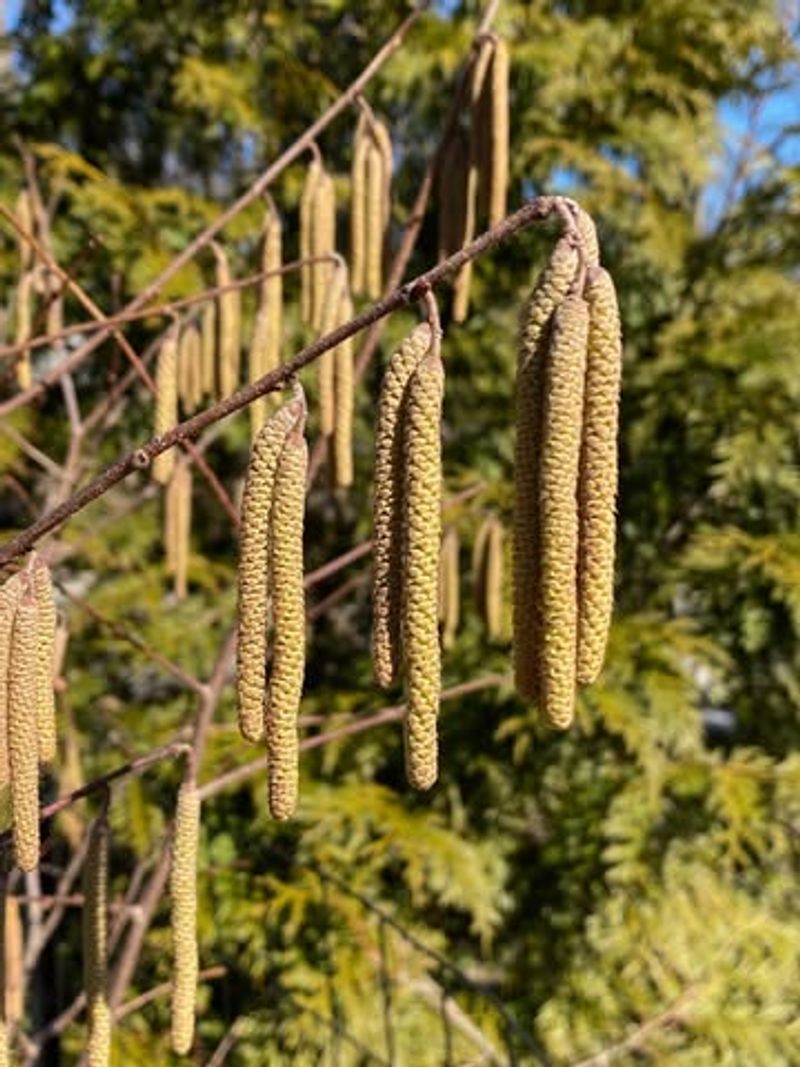
American Hazelnut brings a lot of personality to a Michigan landscape. It grows eight to twelve feet tall with a broad, multi-stemmed form that creates genuinely dense coverage from ground level upward.
That thick, bushy structure is exactly what you want when the goal is reducing tick-friendly habitat, since ticks prefer shaded, humid zones close to the ground where they can wait on low vegetation for a passing host.
Deer find American Hazelnut largely unpalatable, particularly once the plant matures and the foliage becomes tougher and less tender.
Male catkins dangle from the branches in early spring before the leaves emerge, providing one of the earliest pollen sources for native bees in Michigan.
By late summer, small clusters of edible hazelnuts ripen inside papery husks, attracting squirrels, wild turkeys, and a variety of other wildlife.
Full sun to partial shade suits it well, and it adapts to a wide range of soil types including clay, loam, and slightly sandy soils, as long as drainage is reasonable.
Space plants six to eight feet apart for hedgerow or border plantings, giving each shrub room to develop its natural rounded shape.
Water during dry periods in the first season, then let established plants fend largely for themselves. Light pruning every few years removes older stems and encourages fresh, vigorous growth from the base.
American Hazelnut is a productive, wildlife-friendly native that earns its spot in any Michigan yard focused on reducing pest pressure naturally.