Japanese Beetles Have Arrived In Iowa And Your Garden Needs Attention
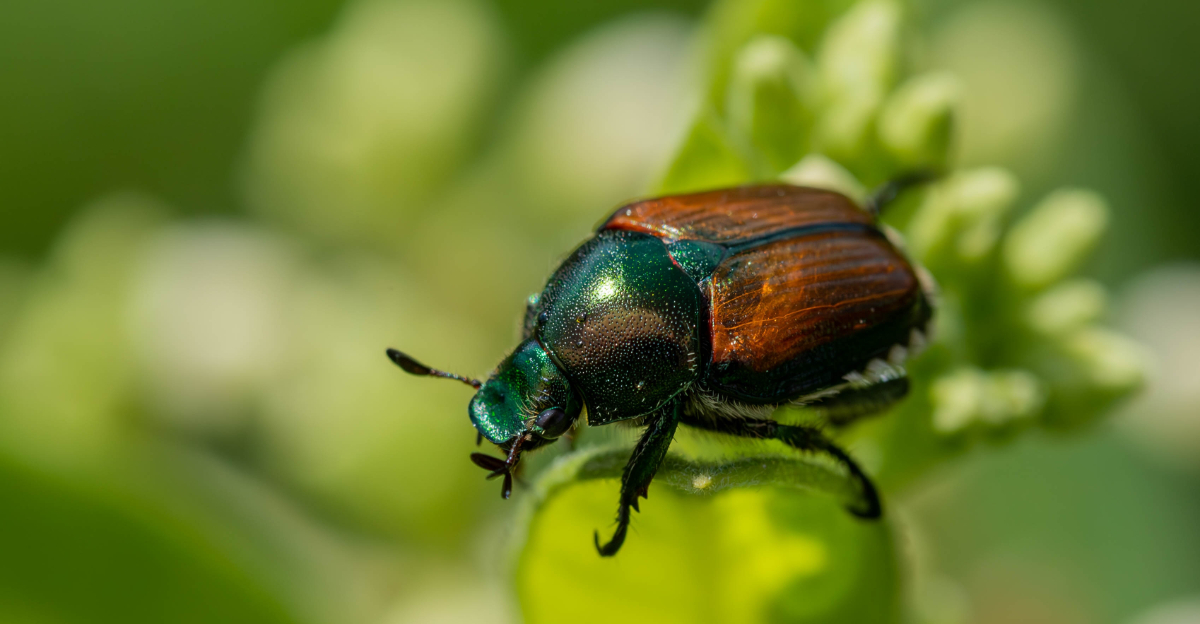
Something is chewing through Iowa gardens right now, and it is not subtle. Japanese beetles arrive every summer like they own the place, and this year is no different.
They are small enough to overlook at first, shiny, copper-winged, almost elegant, but the destruction they leave behind tells a different story.
Skeletonized leaves, hollowed-out blooms, entire rose bushes stripped down to the veins. These insects do not wander alone either. Where one shows up, dozens follow.
They are drawn to warmth, they are drawn to your best plants, and they are not in any hurry to leave. Iowa’s humid summers are basically ideal conditions for them to feed, multiply, and spread across your yard.
The window to act is short, and waiting costs you more than you think. Knowing what you are dealing with is the first step, and from there, the solutions are more straightforward than most people expect.
Japanese Beetles Are Hard To Miss Once You See Them Up Close
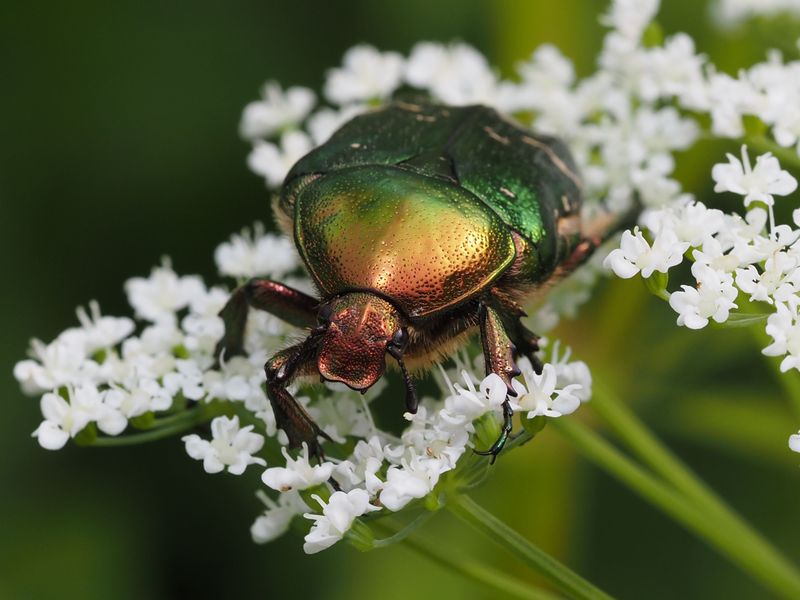
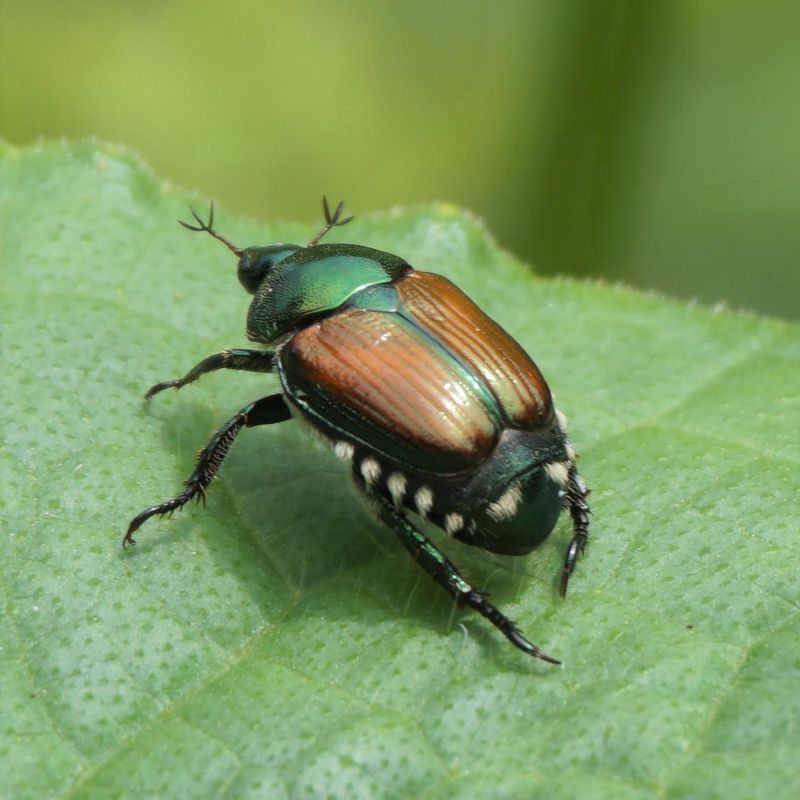
That flash of metallic green on your rosebush is not a jewel. It is a Japanese beetle, and it wants your whole plant.
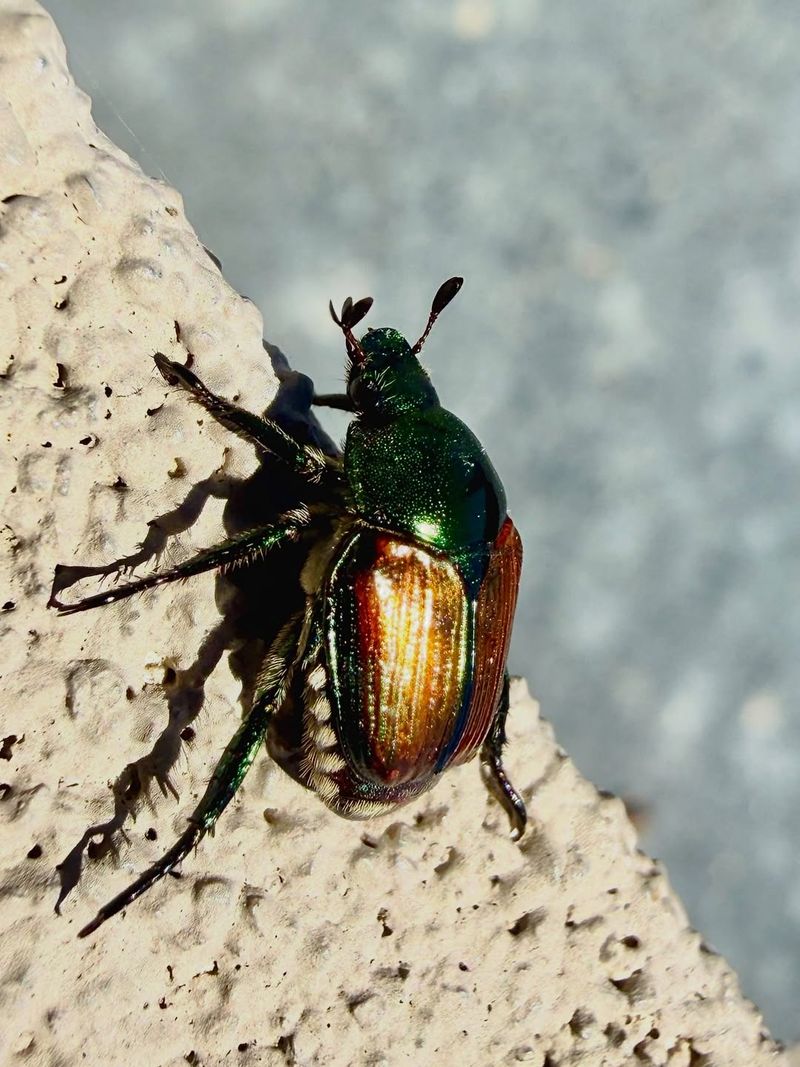
Adult Japanese beetles are about half an inch long. They have a shiny, emerald-green head and thorax paired with copper-brown wing covers.
Along their sides, you will notice small white tufts of hair. Those tufts are one of the easiest ways to confirm what you are dealing with.
Spotting them early makes a real difference in protecting your yard. Once you see one, look around because they rarely travel alone.
Groups of beetles often cluster on the same plant or even the same leaf. They are drawn together by scent, which makes infestations grow fast.
You might first notice them on roses, grapes, or linden trees. These are among their top targets in Iowa landscapes.
The beetles emerge from the soil in late June and stay active through August. Catching them in early July gives you the best chance to act.
Knowing what you are looking for puts you ahead of the problem. A quick morning walk through your garden can reveal a lot.
These Insects Have A Long List Of Favorite Plants
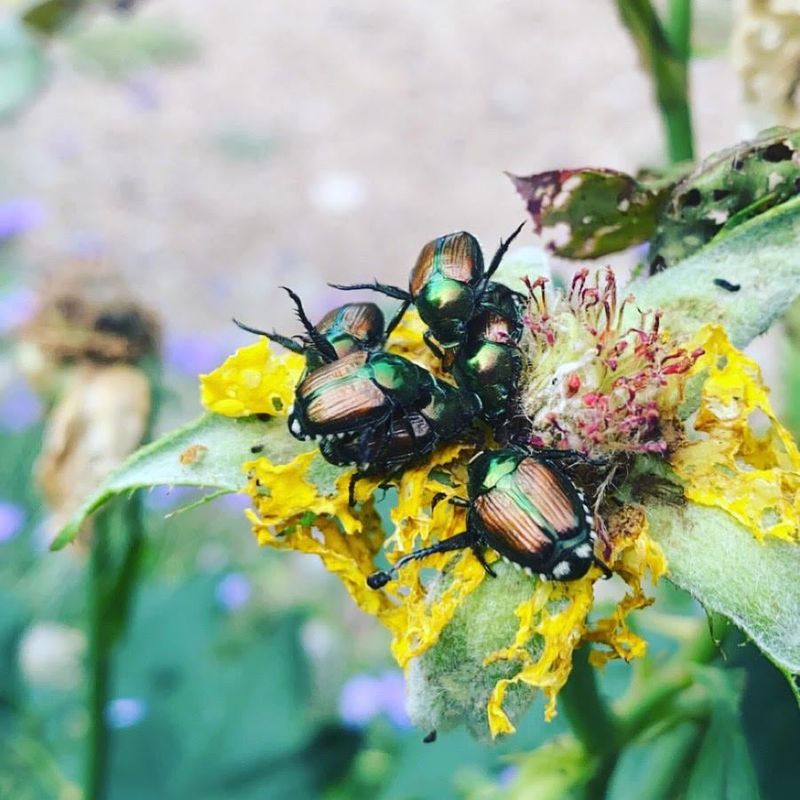
Japanese beetles are not picky eaters, and that is exactly what makes them so frustrating. They feed on over 300 plant species.
Roses are at the top of their hit list, followed closely by grapes, raspberries, and basil. If you grow any of these, your plants are at higher risk.
Linden trees, crabapples, and birch trees are also prime targets in Iowa yards. Ornamental plants tend to suffer the most visible harm.
Corn and soybeans can also attract beetles in larger numbers, especially near rural properties. Farmers and gardeners alike need to stay alert.
Even vegetable gardens are not safe. Beans, asparagus, and okra are among the edible plants these insects go after.
Interestingly, beetles tend to avoid certain plants like lilacs, dogwoods, and forsythia. Planting more of these near vulnerable species can help create a buffer.
Your Iowa Garden Changes Every Week. Your Plan Should Too.
Gardening in Iowa changes quickly throughout the season. Every Friday you’ll receive a simple weekly plan showing exactly what to plant, prune, fertilize, harvest, and protect so you never miss the right timing.
Knowing which of your plants are most at risk helps you focus your attention. Targeted monitoring saves time and catches problems sooner.
Protecting high-value plants first is a smart move. A little planning now can prevent a lot of heartbreak later in the season.
Japanese Beetle Damage Is Hard To Ignore
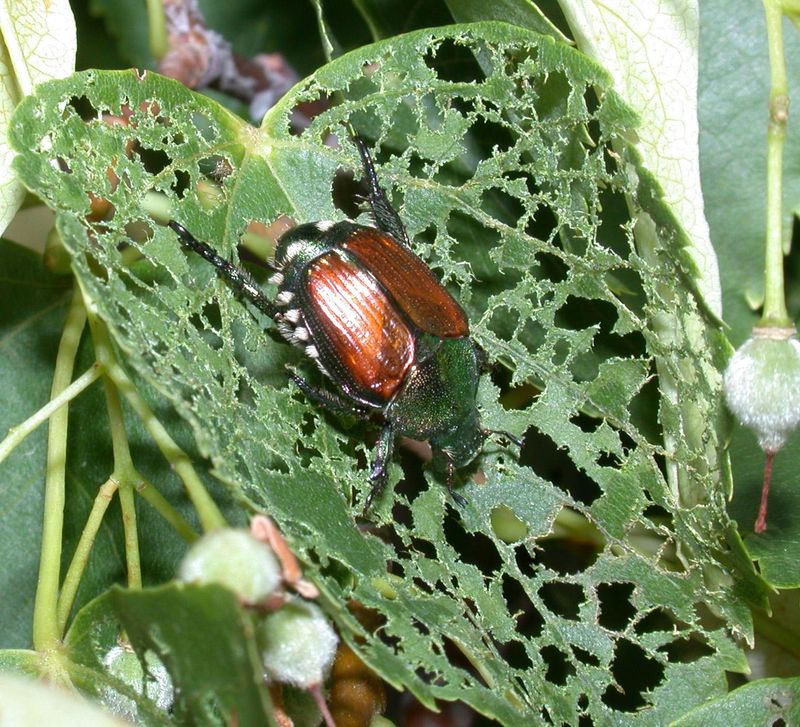
Walk past a plant that beetles have been feeding on, and the sight will stop you cold. The leaves look like green lace.
This feeding pattern is called skeletonization. Beetles eat the soft tissue between leaf veins, leaving a fragile, see-through structure behind.
Flowers do not fare any better. Beetles chew through petals and buds, leaving blooms ragged and browned before their time.
On fruit trees, you may notice damaged fruit in addition to tattered foliage. The combination of both types of harm weakens the plant quickly.
Heavy feeding can stress a plant enough to make it more vulnerable to disease. A weakened plant struggles to recover even after the beetles move on.
Young or newly planted trees and shrubs face the greatest danger. Their root systems are not yet established enough to handle serious stress.
Turf damage is another sign of an infestation, though it comes from the grub stage. Brown patches in late summer or fall often signal grubs feeding underground.
Recognizing both types of damage helps you respond to the full scope of the problem. Surface and underground harm often happen at the same time.
Japanese Beetles Are Most Active When The Heat Is On
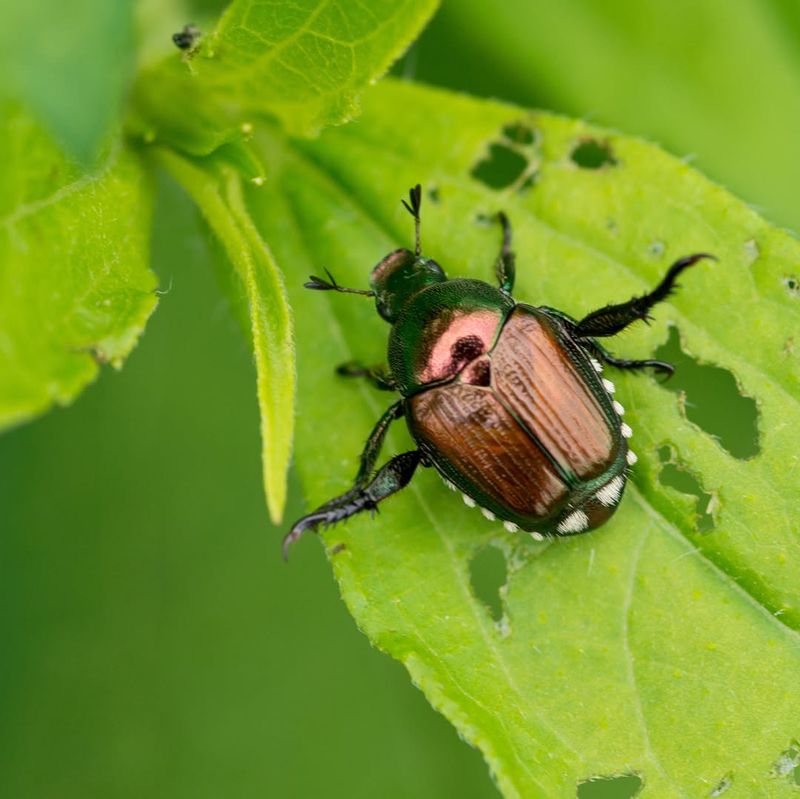
If you check your garden at noon on a hot July day, you will find the most beetles. Warm, sunny afternoons are their favorite time to feed.
Beetles tend to be most active when temperatures reach around 85 degrees Fahrenheit or higher. Cooler mornings and evenings slow them down considerably.
This behavioral pattern actually works in your favor. Timing your garden visits and treatments around their activity can improve your results.
Early morning is the best time to hand-pick or treat plants. Sluggish beetles are easier to catch before the heat of the day kicks in.
On cloudy or cooler days, beetle activity drops noticeably. You may get a short break during stretches of overcast Iowa weather.
Wind also plays a role in their movement. Strong breezes can reduce feeding activity because beetles prefer calm, warm conditions.
Knowing when they are most active helps you schedule treatments more effectively. Applying sprays during peak activity hours wastes product and effort.
Plan your garden defense around the beetles’ own schedule. Working smarter means fewer beetles and less damage over the course of the season.
Hand-Picking Works Better Than You Think
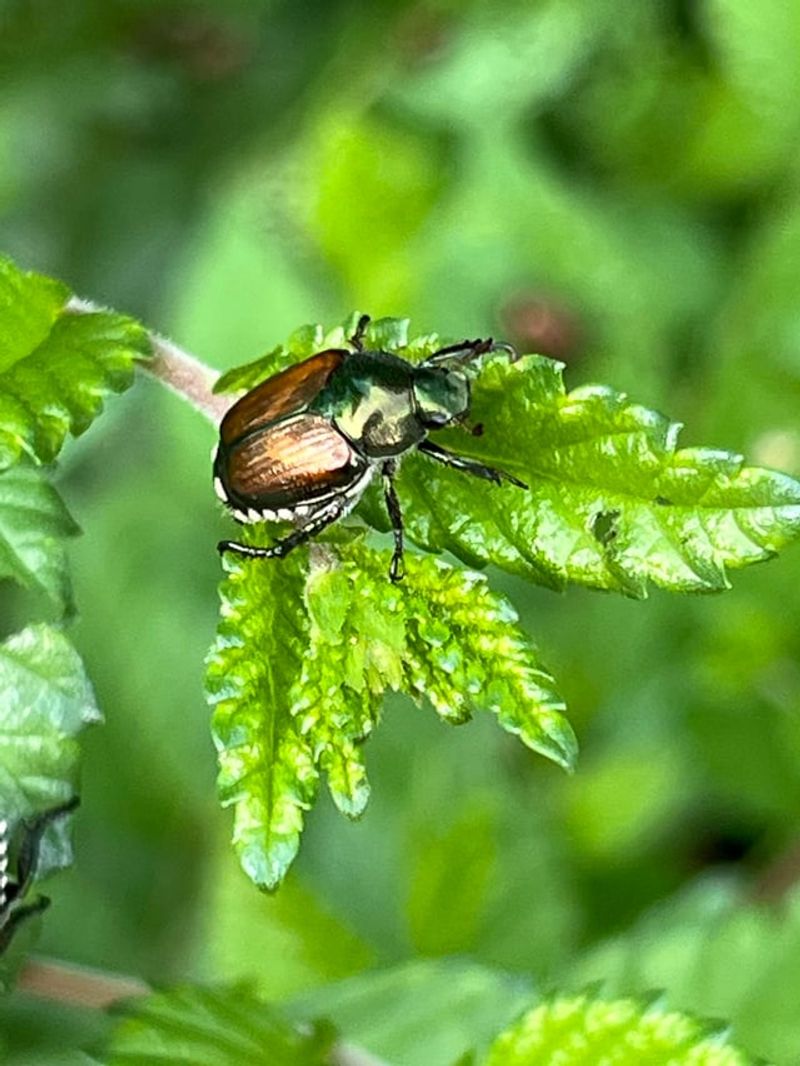
Grab a bucket, fill it with soapy water, and head outside in the morning. This low-tech method is surprisingly powerful.
Hold your bucket under a beetle-covered branch and give it a firm shake. The beetles will fall right in and cannot escape the soapy surface.
Dish soap breaks the water’s surface tension, so the insects sink quickly. You do not need chemicals or special equipment to get started.
Hand-picking works best when populations are still manageable. If you start early in the season, you can stay ahead of the numbers.
Check the same plants every day or every other day throughout July. Consistency is what makes this method actually work over time.
Some gardeners wear gloves to avoid the slight odor beetles release when disturbed. That scent can attract more beetles if left on your skin or clothes.
Focus your efforts on the most vulnerable plants first. Protecting your roses or grape vines early prevents the worst of the season’s harm.
Hand-picking may feel old-fashioned, but experienced gardeners swear by it. Sometimes the simplest solution is the one that gets the job done.
These Sprays And Treatments Actually Get The Job Done
Not every gardener has time to hand-pick beetles every morning. That is where sprays and soil treatments come in.
Neem oil is one of the most popular organic options for Iowa gardeners. It disrupts the beetles’ feeding and reproductive behavior without harming pollinators when used correctly.
Pyrethrin-based sprays are another effective choice for faster results. They work on contact and can knock back a large population quickly.
For those who prefer chemical options, products containing carbaryl or permethrin are widely available. Always read the label and follow application directions carefully.
Milky spore is a natural soil treatment that targets the grub stage underground. It takes time to establish but offers long-lasting protection over several years.
Beneficial nematodes are another soil-based solution worth considering. These microscopic organisms seek out and destroy beetle grubs before they become adults.
Avoid using Japanese beetle traps with pheromone lures near your garden. Research suggests they may attract more beetles than they catch, which can make the problem worse rather than better.
Choosing the right treatment depends on the size of your infestation. A combination of approaches often delivers the best overall protection.
Getting Ahead Of Japanese Beetles Is Easier Than Fighting Them Later
The smartest move you can make is preparing your garden before the beetles show up. Prevention beats reaction every single time.
Row covers made of lightweight fabric can shield vegetable plants during peak beetle season. Remove them periodically so pollinators can still reach your blooms.
Applying a preventive neem oil spray in late June creates a protective barrier on leaves. Reapply after rain to maintain its effectiveness throughout the season.
Healthy plants resist stress better than struggling ones. Make sure your soil is well-fed and your plants are properly watered before summer heat arrives.
Avoid over-fertilizing with nitrogen in early summer. Lush, soft new growth is exactly what Japanese beetles prefer to feed on first.
Consider planting beetle-resistant species near your most prized plants. Garlic and chives have shown some natural repellent properties, and some gardeners report similar results with catnip.
Grub-prevention treatments applied to your lawn in late spring can reduce the adult population later. Fewer grubs in the soil means fewer adult beetles emerging in July.
A little preparation in May and June goes a long way. Your future self, standing in a healthy garden in August, will be grateful you planned ahead.