The Native Iowa Wildflower That Spreads Through Your Lawn And Looks Great Doing It
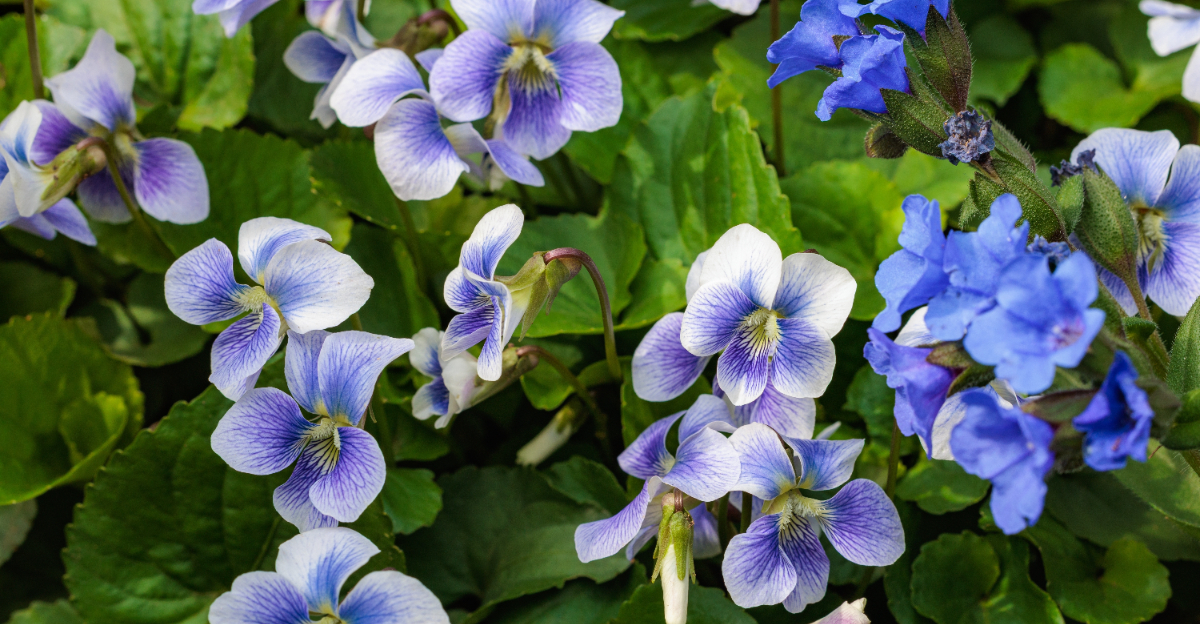
Most homeowners spend years trying to grow the perfect lawn. Viola sororia spends those same years quietly making it more interesting.
This small native wildflower does not wait for an invitation. It finds a gap between your grass blades, settles in, and comes back every spring without asking.
The blooms are purple, the leaves are heart-shaped, and the whole plant sits low enough to survive a mow. It spreads on its own terms, slowly, steadily, and in ways that actually benefit your yard.
Bees find it before almost anything else blooms. Several fritillary species depend on violet leaves to complete their life cycle. And for homeowners tired of a lawn that looks the same every single year, this little wildflower offers something different.
Not a garden project. Not a renovation. Just a native plant doing exactly what it has always done, turning ordinary Iowa grass into something worth looking at.
It Looks Like A Weed, But Your Lawn Might Actually Need It
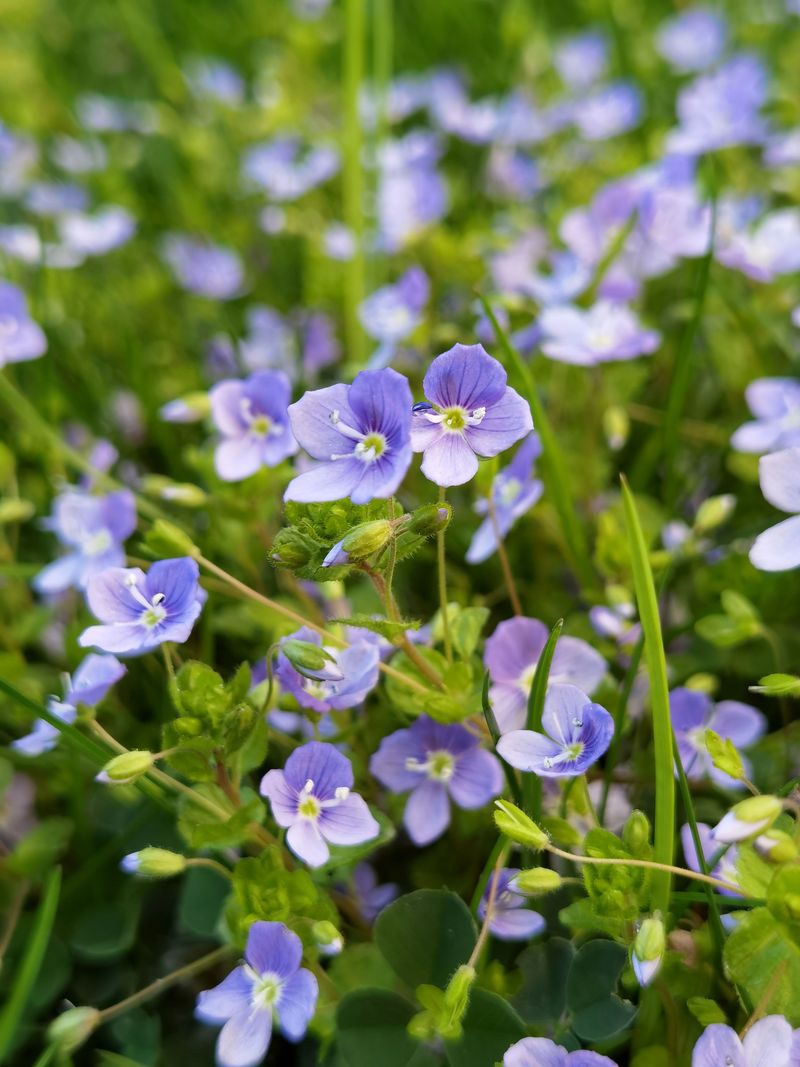
Most people yank it out without a second thought. That little purple flower tucked between your grass blades is not a pest.
It is Viola sororia, the common blue violet, and it has been growing across the Midwest for thousands of years. Lawns are not naturally diverse ecosystems. They are maintained monocultures that take enormous effort to keep uniform.
When a native wildflower moves in on its own, that is not failure. That is your yard trying to heal itself.
Blue violets thrive in the same conditions as your grass. They handle partial shade, clay soil, and dry spells without complaint. Your lawn already has the right conditions. The plant just showed up to prove it.
What makes this wildflower stand out is how it blends in. The heart-shaped leaves stay low and green all season. The purple blooms arrive in April and May, then quietly disappear. Nobody walking past your yard would call it messy.
Calling it a weed is a habit, not a fact. Weeds are plants we have decided we do not want. Once you understand what blue violet offers, that decision gets a lot harder to defend.
Your lawn might actually be better with it than without it.
What Makes This Wildflower Worth Keeping Around
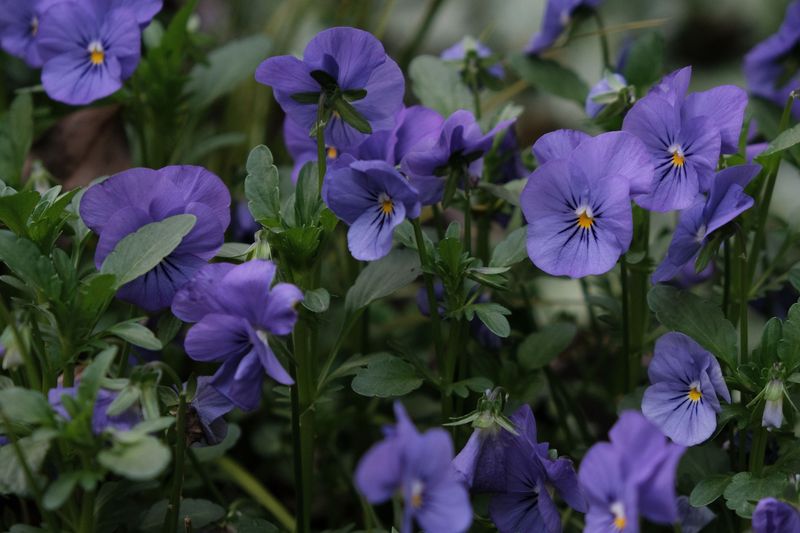
Not every plant earns its space. Blue violet earns it ten times over. It feeds caterpillars, supports bees, and asks for nothing in return. That is a rare deal in any garden.
Several fritillary species depend on violet leaves to complete their life cycle.
Keeping blue violet in your yard is one of the simplest ways to support a butterfly species facing habitat loss.
Beyond butterflies, early-season bees love the blooms. Flowers appear before most garden plants wake up. That early nectar matters when bees are just coming out of winter and food is scarce across the neighborhood.
Blue violet also produces a second round of hidden flowers close to the ground. These cleistogamous flowers never open but still produce seeds.
Your Iowa Garden Changes Every Week. Your Plan Should Too.
Gardening in Iowa changes quickly throughout the season. Every Friday you’ll receive a simple weekly plan showing exactly what to plant, prune, fertilize, harvest, and protect so you never miss the right timing.
That means the plant keeps reproducing even when pollinators are not around. It is surprisingly self-sufficient. From a lawn health standpoint, the roots hold soil in place during heavy spring rains.
The dense leaf cover shades out less desirable weeds. It fills bare patches where grass struggles.
Every one of those qualities would cost you money if you bought a product to do the same job. This wildflower does it all for free.
Why Viola Sororia Spreads Through Grass Without Crowding It Out
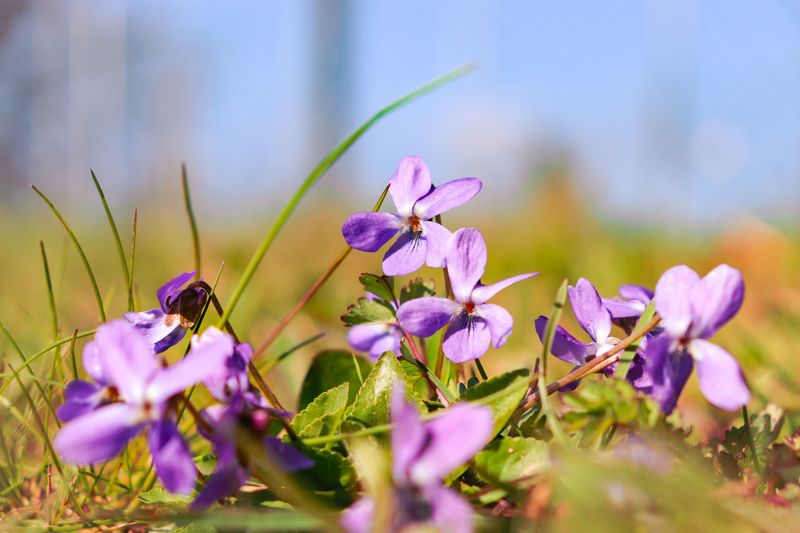
Some plants spread aggressively and choke everything nearby. Blue violet is not that plant. It moves through a lawn gradually, filling gaps without smothering the grass around it.
The spreading happens two ways. Rhizomes creep slowly underground, extending the plant’s reach by a few inches each season. Seeds drop in late summer and sprout the following spring. Neither method is explosive or destructive.
Grass and blue violet coexist because they occupy different layers. Grass grows upright and claims the sunny upper zone. Violet stays low and uses the shadier ground-level space.
They are not competing for the same light. That is why you see them growing side by side without competing for space.
The plant actually prefers spots where grass is thin. Compacted soil, tree roots, and dry shade are all places where turf grass gives up.
Blue violet steps in and covers those bare areas with something green and living. Your lawn looks fuller, not weaker.
Viola sororia spreads at a pace you can manage. If it starts moving somewhere you would rather it did not, a quick edge with a shovel stops it.
This native wildflower is assertive but not a bully. That balance makes it one of the most lawn-friendly wildflowers you can grow in the Midwest.
The Pollinators That Depend On It More Than Any Other Plant
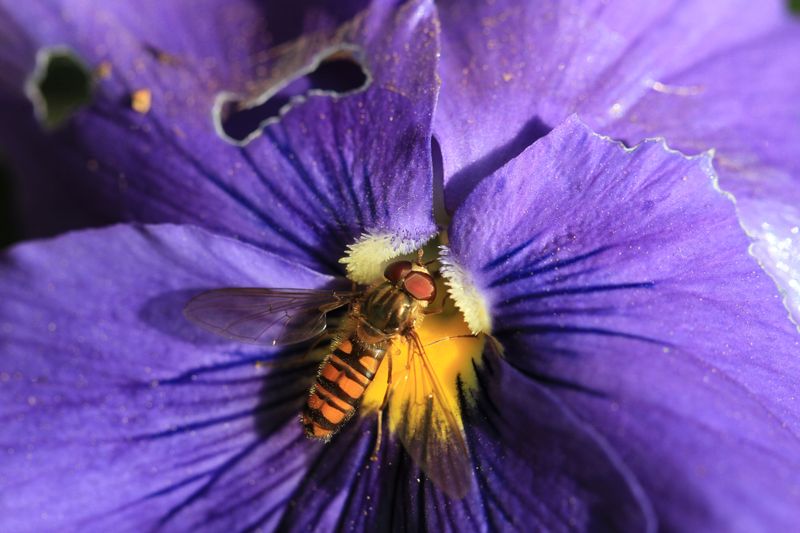
Few plants carry this much ecological weight. Blue violet is one of the primary larval host plants for several fritillary butterfly species. Without violets in the genus Viola, these butterflies struggle to complete their life cycle.
That is not an exaggeration. That is biology.
The great spangled fritillary, meadow fritillary, and variegated fritillary all lay eggs near violet plants. When the eggs hatch, the caterpillars eat the leaves.
If the plants are gone, the caterpillars starve. The butterflies disappear from your region entirely.
Early mining bees and bumblebee queens are among the first visitors when violet blooms open in spring. These insects emerge before most flowers open.
Blue violet is one of the first sources of pollen and nectar available each spring. Timing is everything for a bee coming out of winter.
The relationship between violet and pollinator is ancient. These relationships developed over a very long time.
When you remove the plant from your yard, you interrupt a chain that took an extraordinarily long time to build. Restoring it takes only a season.
Planting or keeping blue violet is one of the highest-impact choices a homeowner can make for local wildlife. You do not need a meadow or a wildlife sanctuary.
Even a small patch of violet in your lawn can make a meaningful difference for local butterfly populations. That kind of return on no effort is hard to argue with.
How To Tell If It’s Already Growing In Your Lawn
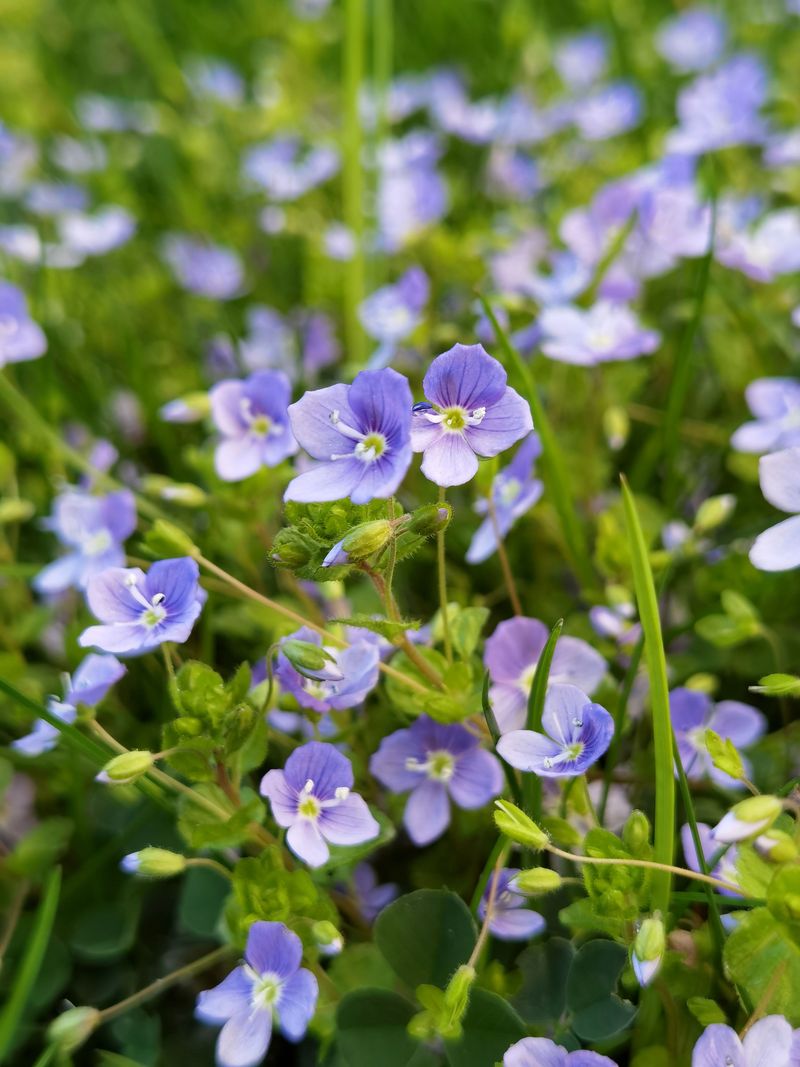
Spring is the easiest time to spot it. Look for small purple flowers with five petals growing on slender stems close to the ground. The blooms are usually half an inch to an inch wide.
They appear from April through early June depending on your location. The leaves are the giveaway year-round. Blue violet has distinctly heart-shaped leaves with slightly serrated edges.
They grow in a low rosette pattern directly from the base. Even after the flowers fade, those leaves stay green and recognizable through summer.
Color can vary a bit. Most plants produce blue-purple flowers, but some lean toward deep violet or even white. White-flowered plants are still Viola sororia. The leaf shape stays consistent even when the bloom color changes.
Check shaded areas first. Blue violet prefers spots under trees, along fence lines, and in low-traffic corners of the yard. It can handle sun but tends to show up first where grass is already thin.
If your lawn has bare patches under a big oak, there is a good chance violet is already moving in. Once you know what to look for, you will start seeing it everywhere.
Roadsides, parks, and wooded edges throughout the region are full of it. Your lawn is just one more place this native wildflower has decided to call home.
The Best Spots In Your Yard To Let Blue Violet Thrive
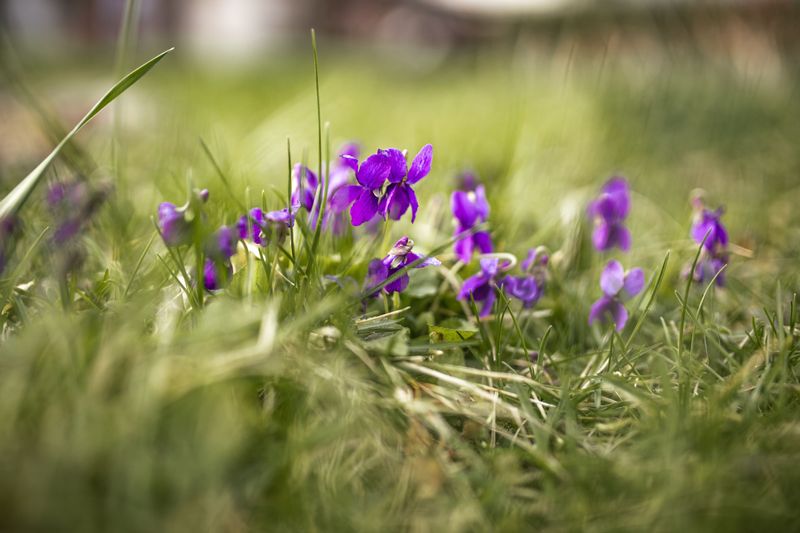
Location makes all the difference with this plant. Blue violet performs best where turf grass struggles most.
That overlap is not a coincidence. It is an opportunity.
Shaded areas under trees are the top choice. Grass thins out under a canopy because sunlight cannot reach it.
Blue violet handles that shade without missing a beat. It fills those bare patches with dense, attractive foliage and spring color.
Low spots that collect moisture are another perfect fit. Blue violet tolerates wet feet better than most lawn grasses.
If you have a corner that stays soggy after rain, this plant will grow there happily while your turf struggles to survive. Slopes and erosion-prone areas also benefit from violet’s spreading root system.
The rhizomes bind soil together and reduce runoff. On a steep bank where mowing is awkward and grass keeps washing out, a violet ground cover is both practical and attractive.
Along fence lines and garden borders, blue violet creates a soft natural edge. It blurs the hard line between lawn and garden bed in a way that looks intentional.
Gardeners who grow it along borders often say it makes the whole yard feel more cohesive. Wherever your lawn has a weak spot, blue violet is ready to step in.
Lean into those spots instead of fighting them. Your yard will look better and your effort level will drop significantly.